- Category
- Grains, flour and pasta
- State
- Dry
- Usual unit
- cup
What it is
Sushi rice is dry rice selected for the texture it develops when cooked: the grains become tender and cling together, making them easier to shape or roll. It is usually short-grain rice; Japanese-style sushi commonly uses japonica table rice. It is not the same as glutinous or sweet rice, which is much stickier and is mainly used for preparations such as mochi. The words “sushi rice” often appear on the package, but it is also useful to check the grain type and product directions. For sushi, the cooked rice is commonly seasoned with a mixture of rice vinegar, sugar and salt.
When to use it
Choose this rice when you want cooked grains to hold together for nigiri, maki, temaki or other sushi preparations. It can also be used as the base for a sushi bowl. The sticky texture of short-grain rice helps it hold a shape, but that does not make it glutinous rice: they are different types. Sushi rice is usually not the best choice for dishes where the grains should remain separate and fluffy. Check the package and adapt the cooking method to the variety you buy.
How to use it
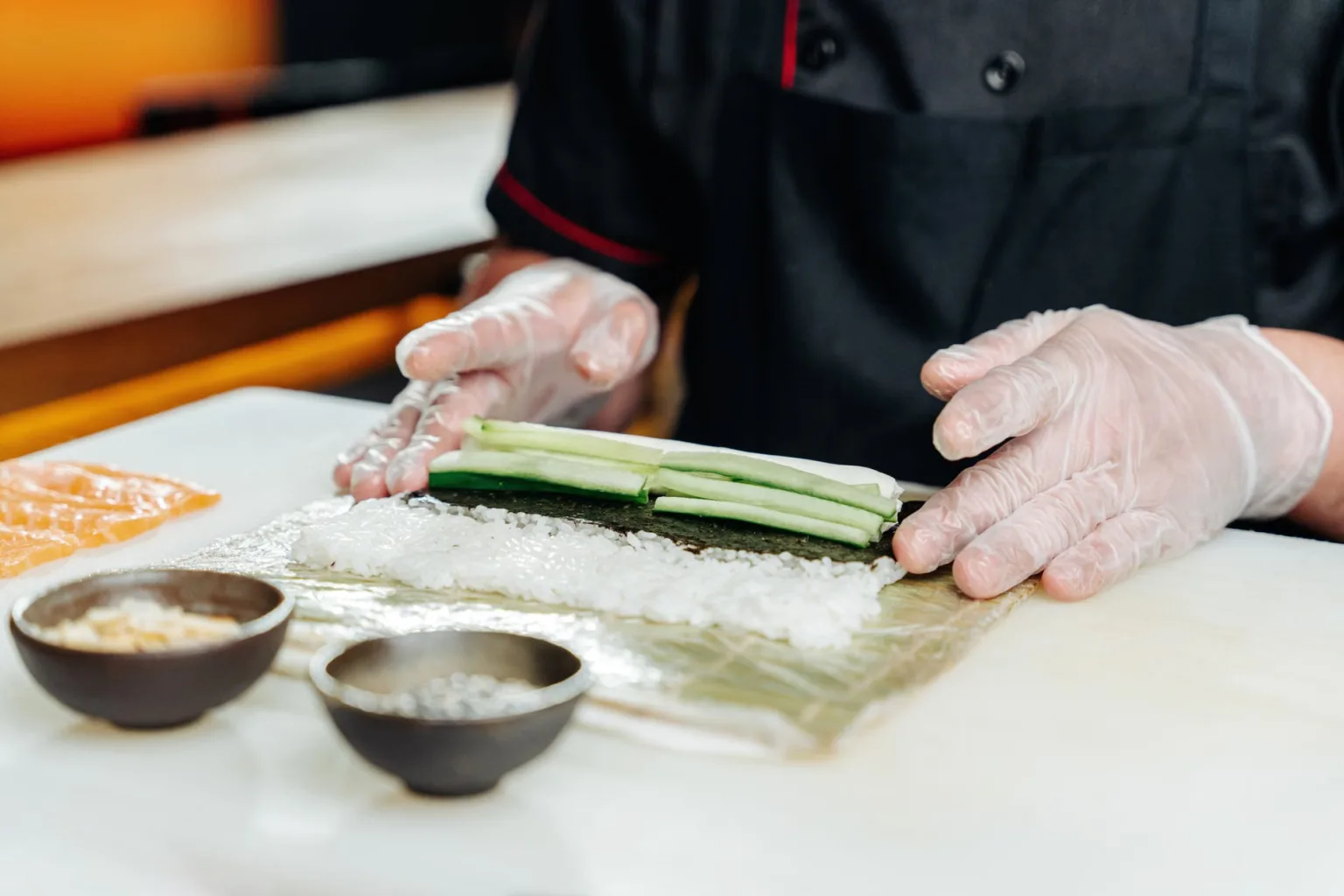
Measure the dry rice and rinse it several times in water, stirring gently, until the water is much less cloudy. Drain it, then cook it with water in a covered pot or rice cooker, following the package directions; amounts and cooking times can vary by product. Once cooking is complete, let the rice rest covered before uncovering it. Transfer it to a wide bowl and gently mix in a seasoning of rice vinegar, sugar and salt, taking care not to crush the grains. The seasoned rice can be shaped into nigiri or used for maki and temaki. Adjust the seasoning to taste, or use a prepared sushi seasoning according to its label.
Flavour and texture
Cooked sushi rice has a mild flavor that lets the seasoning and other ingredients stand out. Its defining feature is its texture: short grains become tender, moist and stickier than long-grain rice, so they stay together when shaped. The exact texture can vary with the variety, milling, amount of water and cooking method. Glutinous rice is even stickier and is not the same product as ordinary sushi rice.
How to choose it
Look for dry rice labeled “sushi rice” or a suitable short-grain variety. Check that the package is sealed and that the grains show no visible insects or discoloration. Short-grain rice generally becomes stickier when cooked than long-grain rice, which tends to stay separate. Do not confuse sushi rice with glutinous or sweet rice: that is a different type used for other preparations and has an especially sticky texture.
Storage
Keep dry rice in a clean, airtight, food-safe container in a cool, dry place, protected from moisture and insects. Close the package after each use and check the rice before cooking. Storage conditions and shelf life depend on the product and packaging, so follow the label. These directions apply to dry rice, not cooked or seasoned rice.
Substitutions
If rice labeled for sushi is unavailable, short-grain japonica rice is a suitable alternative because of its cooked texture. Round-grain rice, such as bomba, can also be used, though the result may not be identical. Do not assume that all rice behaves the same: long-grain rice tends to stay looser and can be harder to shape. Adjust the water and cooking method to the alternative product’s directions.
Common mistakes
Do not automatically replace sushi rice with long-grain rice when you need the grains to hold together. Do not mistake it for glutinous rice, which is a different type. Insufficient rinsing can leave more surface starch, while vigorous stirring after cooking can break the grains. Avoid repeatedly lifting the lid during cooking, and follow the package directions for water and resting.
Safety and allergens
Use potable water and clean utensils, and follow the package’s cooking and storage directions. Check dry rice for insects or discoloration before use.
Culinary uses
- Base for seasoned sushi rice
- Short-grain rice for Japanese-style rice bowls and molded rice preparations
Recommended techniques
- Rinse before cooking to remove some surface starch
- Cook covered, then allow the rice to rest
- Season cooked rice with rice vinegar, sugar and salt
Pairs well with
- Rice vinegar, sugar and salt
- Nori and fillings such as vegetables, fish, seafood or egg
Frequently asked questions
Is sushi rice the same as glutinous rice?
No. Sushi rice is usually short-grain rice that becomes sticky when cooked. Glutinous or sweet rice is a different, much stickier type mainly used for preparations such as mochi.
Can I use round-grain rice if I cannot find sushi rice?
Yes. Round-grain rice, such as bomba, can be used as an alternative, though the texture and result may differ. Follow the cooking directions for that product.
What can I make with sushi rice?
Once cooked and seasoned with vinegar, sugar and salt, it can be used for nigiri, maki, temaki and sushi bowls.
Ingredient allergens
Allergen listThere are no verified associations for these ingredients yet.
Sources and review
Automatically researched, cross-checked and validated content. Sources consulted:
- Client Challenge doi.org/10.2307/j.ctvndv9t9.22
- The Essential Glossary of Cooking Terms for the Culinary Arts - Escoffier www.escoffier.edu/blog/culinary-arts/the-essential-glossary-of-cooking-terms-for-the-culinar…
- Storing White Rice | USU extension.usu.edu/preserve-the-harvest/research/storing-white-rice
- Nutrition After Your Transplant - Health Online healthonline.washington.edu/sites/default/files/record_pdfs/Nutrition-After-Your-Transplant-…
- Food - Thematic Lists - Research Guides at University of Nebraska Kearney (UNK) guides.library.unk.edu/thematiclists/food
- Is Rice Good For You? - Kendall Reagan Nutrition Center www.chhs.colostate.edu/krnc/monthly-blog/is-rice-good-for-you/
- Rice • The Nutrition Source nutritionsource.hsph.harvard.edu/food-features/rice/
- Arsenic in Rice and Rice Products – Arsenic and You sites.dartmouth.edu/arsenicandyou/arsenic-in-rice-and-rice-products/
- Para la ciudadanía www.aesan.gob.es/para-la-ciudadania
- Cooking From Home www.stonybrook.edu/dining/dietitian-wellness/cooking-from-home.html
- Best Campus Dining www.rollins.edu/student-life/campus-dining/
- Arroz de sushi: la receta auténtica japonesa más fácil y tradicional www.directoalpaladar.com/recetas-de-arroces/como-preparar-el-arroz-para-hacer-sushi-casero
- Los ingredientes imprescindibles de la cocina japonesa - Gakko Sushi Formación gakkosushiformacion.es/los-ingredientes-imprescindibles-de-la-cocina-japonesa/
- La cocina de Rebeca: Arroz para sushi www.lacocinaderebeca.es/2020/08/arroz-para-sushi.html
- 10 tipos de sushi y cómo reconocerlos | ComerJapones comerjapones.com/sushi/