- Category
- Bread and dough
- State
- Fresh
- Usual unit
- unit
What it is
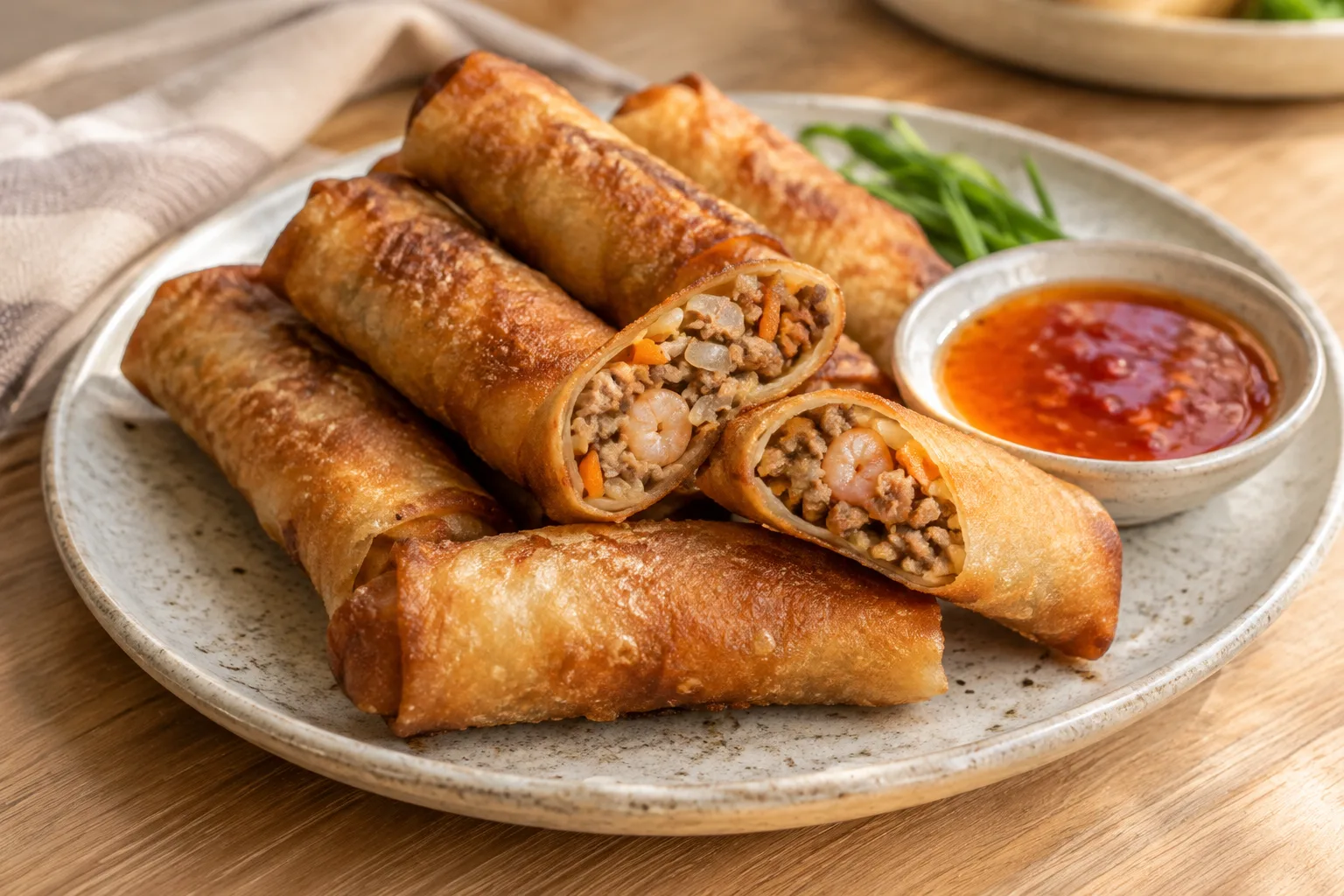
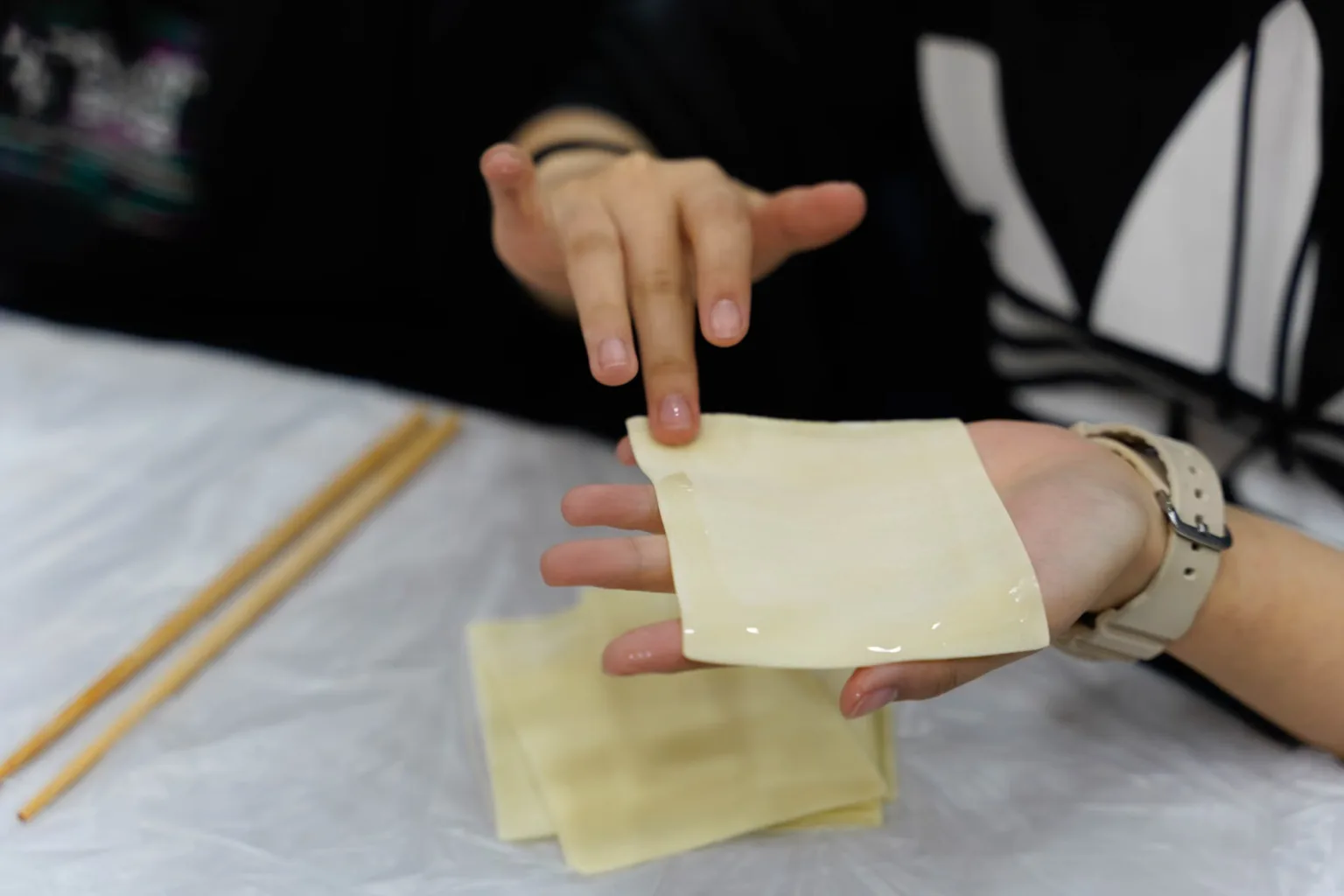
Thin lumpia wrappers are sheets of dough used to enclose a filling and shape it into a roll. There is no single universal ingredient list: recipes and products can differ, with wheat-flour and rice-flour versions described. The name alone therefore does not guarantee that every wrapper has the same texture, ingredients, or preparation directions. A typical recipe places a modest portion of filling on a sheet, folds in the sides, and rolls it closed. The assembled rolls may be fried, and some preparations bake them instead. Check the product label, particularly if you need to avoid an ingredient or your recipe calls for a different pastry, such as filo. Match the method to the wrapper you actually have rather than assuming all thin sheets behave alike.
When to use it
Use these wrappers when you want to enclose individual portions of filling and cook them as rolls, such as for an appetizer or side dish. They work with vegetable fillings and with meat-and-vegetable combinations; a vegetarian filling is another option. Choose the wrapper to suit the recipe: some recipes make wrappers with wheat flour, while other described versions use rice flour. Do not assume a thin lumpia wrapper is interchangeable with filo pastry or rice paper. Check its shape, ingredients, and package directions before substituting it, especially when a recipe depends on a particular kind of sheet.
How to use it
Prepare the filling first and let it cool so it is easier to handle. Lay one wrapper on a clean surface and place a modest amount of filling near one edge, leaving room to fold. Fold the sides inward and roll firmly enough to enclose the filling but not so tightly that the sheet tears. Close the final edge as directed by the product or recipe; some recipes use beaten egg to seal, but this is not required for every wrapper or preparation. Cook the rolls using a method suitable for the wrapper: recipes include frying, and some bake them. Watch for browning rather than relying on a universal cooking time, since products and thicknesses vary. Follow the package directions for handling and storing any unused sheets.
Flavour and texture
The wrapper is generally mild, allowing the filling to remain prominent. Its texture depends on the dough and cooking method: a thin sheet can become crisp when cooked, while an uncooked sheet is flexible enough to fold. Thickness, ingredients, and preparation all affect the finished result, so not every wrapper produces the same texture.
How to choose it
Read the ingredients and preparation directions, because wrappers differ in composition and format. Check whether the product is wheat- or rice-based and whether it suits your recipe. If you have an allergy or need to avoid gluten, check the full label and the manufacturer’s allergen information; the product name alone cannot establish its ingredients.
Storage
There is no single storage rule established here for every wrapper type or brand. Follow the package directions for storage before and after opening, and check whether the product requires refrigeration or gives other specific instructions. Protect unused sheets as directed and use them according to the date and guidance on the label.
Substitutions
Filo pastry can work for some roll preparations, but it is not identical to a lumpia wrapper and may call for a different folding approach or multiple layers. Rice paper is also used as an alternative in some recipes, but it handles differently and has its own preparation method. Choose a substitute to suit the recipe and its package directions rather than assuming quantities and techniques transfer unchanged.
Common mistakes
Do not treat every lumpia wrapper as identical to filo pastry or rice paper; their ingredients and handling can differ. Avoid overfilling, which leaves less room to close the roll, and do not assume every wrapper is sealed with egg. Check the label and adapt your method instead of applying one cooking time or technique to every product.
Safety and allergens
Check the label for ingredients and allergens, which can vary by product. Follow package directions for storage and preparation, and use a filling appropriate for the cooking method you choose.
Culinary uses
- Envoltura para rollitos rellenos
- Base crujiente para aperitivos salados
Recommended techniques
- Rellenar y enrollar
- Freír; algunas preparaciones también se hornean
Pairs well with
- Verduras salteadas
- Carne o tofu con salsa de soja o agridulce
Frequently asked questions
Are all lumpia wrappers made from wheat?
Not necessarily. Recipes may use wheat flour or rice flour, so check the ingredients of the specific product.
Can I use rice paper instead of lumpia wrappers?
It can work in some recipes, but it is a different product and needs to be prepared according to its own directions. Adjust the method to the package instructions.
Are lumpia wrappers fried or baked?
Recipes include both frying and baking. Choose a method that suits your recipe, wrapper, and filling.
Ingredient allergens
Allergen listThere are no verified associations for these ingredients yet.
Sources and review
Automatically researched, cross-checked and validated content. Sources consulted:
- Client Challenge doi.org/10.2307/j.ctvndv9t9.22
- Qué es eso llamado epistemología, para qué sirve, por qué es inexcusable para la universidad y para la paz | Reencuentro. Análisis de problemas universitarios doi.org/10.24275/uamxoc-dcsh/reencuentro/202386-14
- ¿Cómo modificar la textura de los alimentos? - FMC. Formación Médica Continuada en Atención Primaria www.fmc.es/es-como-modificar-textura-alimentos-articulo-S1134207219302324
- Matriz de maridaje por textura, acidez y grasa para cartas de restaurante | Winerim winerim.wine/article/matriz-maridaje-textura-acidez-grasa-restaurante
- - YouTube www.youtube.com/watch?v=DPsflNaV_FI
- Lumpias, la receta de los deliciosos rollitos de origen chino bonviveur.com/es/recetas/lumpias
- Cómo hacer LUMPIAS - Receta paso a paso recetas.elperiodico.com/receta-de-lumpias-caseras-25975.html
- Lumpias Caseras en 45 Minutos - Paulina Cocina www.paulinacocina.net/lumpias-caseras/34890
- Finas láminas de pasta para rellenar | Cocinar con Milagros cocinarconmilagros.wordpress.com/2015/02/18/finas-laminas-de-pasta-para-rellenar/