- Category
- Nuts and seeds
- State
- Dry
- Usual unit
- g
What it is
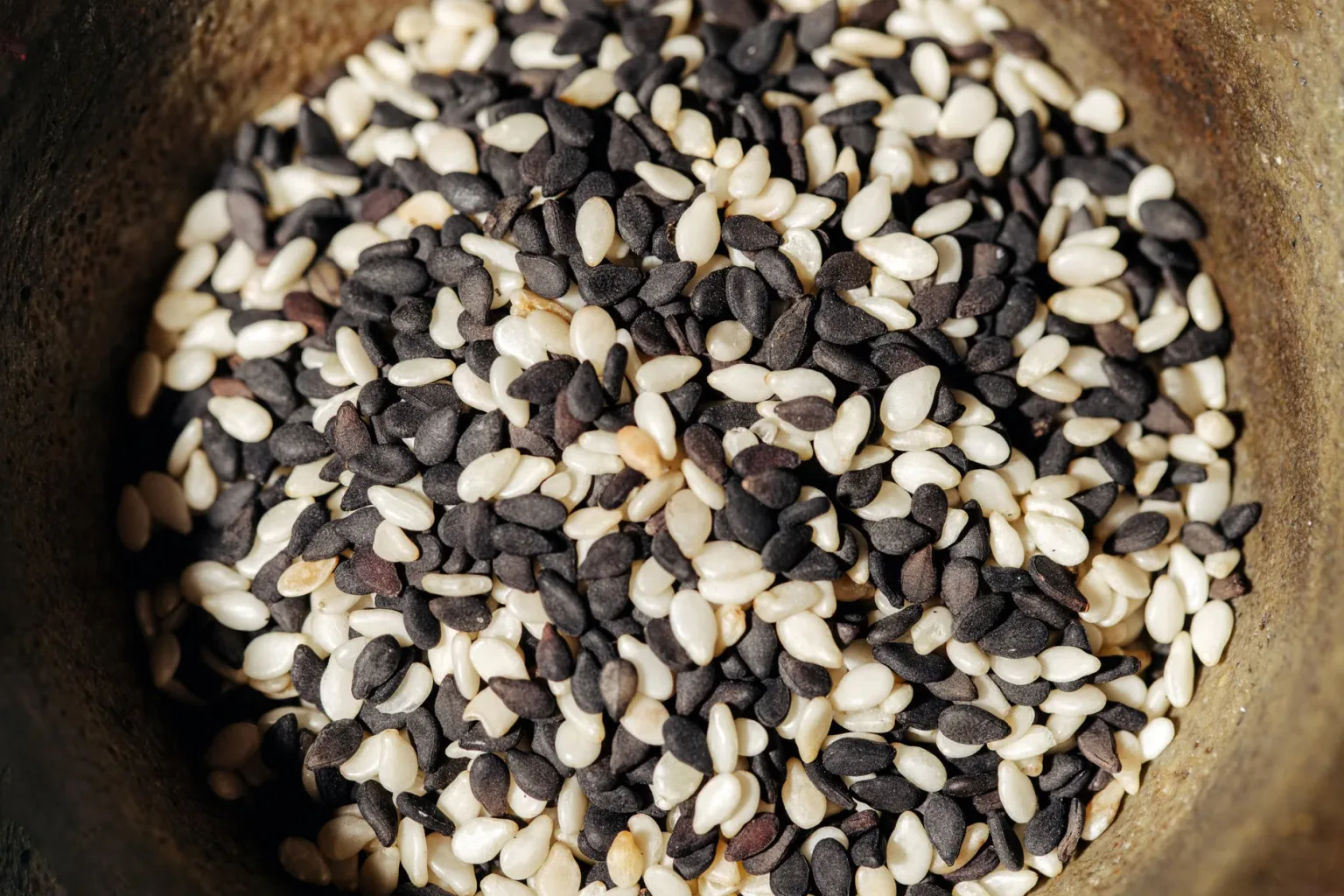
Toasted white sesame seeds are edible sesame seeds that have been heated to deepen their aroma and flavor. They are small, pale in color, and commonly sold ready to add to food. Compared with untoasted white sesame, they have a more pronounced taste and a crispier texture. Use them whole as a topping, mix them into baked goods, or grind them into a paste. The degree of toasting and the exact color can vary between products, so check the package if you need to confirm that they are already toasted. Because the ingredient is sesame, it should be clearly identified in food prepared for anyone with a sesame allergy.
When to use it
Use them when you want a crunchy, roasted accent without making a sauce or substantially changing a dish. They work well as a finishing touch for salads, rice, noodles, stir-fried vegetables, soups, and griddled foods, and can also be mixed into bread, crackers, or cookies. Add them near the end of cooking to help preserve their aroma and texture. In sweet recipes they provide contrast in doughs and desserts; in savory recipes they pair especially well with vegetables, rice, and dressings. If the product is already toasted, there is usually no need to toast it again.
How to use it
Sprinkle the whole seeds over a dish just before serving for aroma and crunch. Add them to salads, rice, noodles, soups, stir-fried vegetables, or griddled dishes. You can also mix them into bread, cracker, or cookie dough, or press them onto the surface of dough before baking. For a more concentrated flavor, crush them lightly in a mortar; grinding them fully lets you use them as the base for sesame paste, though the result depends on the equipment and quantity. Stir them into a vinaigrette or an Asian-style sauce for extra texture. Since they are toasted, they can generally be used as they are; avoid reheating them unnecessarily, as excessive toasting can make them taste bitter.
Flavour and texture
They have a roasted aroma and a mild, slightly sweet, nut-like flavor. Whole seeds give a noticeable crunch, while the strength of the flavor depends on the degree of toasting and the product. Their profile works in both sweet and savory dishes without necessarily overwhelming other ingredients.
How to choose it
Choose a package that clearly identifies the product as toasted white sesame seeds, and check the ingredient and allergen information. Pale color alone does not confirm whether the seeds have been toasted. If you plan to use them straight from the package as a topping, look for a product described as ready to use and make sure the package is intact.
Storage
Keep the seeds dry in a tightly sealed container in a cool place away from moisture, and follow the package directions. Avoid leaving them exposed to air or near heat, as they can lose aroma and crispness. Do not use seeds that have become damp, smell rancid, or look unusual. Follow the manufacturer's storage instructions and date.
Substitutions
Toasted black sesame can replace white sesame when a darker color and stronger flavor are acceptable. You can also start with untoasted white sesame and toast it gently while watching it closely. To replace only the crunch, use another seed or chopped nuts, keeping in mind that the flavor and allergen profile will differ.
Common mistakes
Do not assume pale seeds are untoasted; check the package before heating them. Toasting them again for too long can create bitter notes. Adding them long before serving to a moist dish can also soften their texture, so add them at the end for the best crunch.
Safety and allergens
Sesame is an allergen. Avoid it if you have a sesame allergy, and check the package for allergen and possible cross-contact information. Keep the product dry and discard seeds that smell rancid or show signs of moisture.
Culinary uses
- Crunchy finishing garnish
- Toasty flavoring for savory and sweet dishes
- Ingredient for breads and baked goods
- Base for sesame paste when ground
Recommended techniques
- Sprinkle over dishes just before serving
- Crush lightly in a mortar to release aroma
- Grind into a paste
- Mix into bread, crackers, or cookie dough
Pairs well with
- Rice and noodles
- Salads and vegetables
- Soups and stir-fries
- Bread and baked goods
- Soy-based sauces and vinaigrettes
Frequently asked questions
Do toasted white sesame seeds need to be cooked?
Usually not. If the package says they are already toasted, you can add them directly. Use them near the end to retain their crunch.
How can I use them in a savory dish?
Sprinkle them over rice, noodles, vegetables, salads, or soups. You can also mix them into a vinaigrette or savory dough.
Can sesame cause an allergy?
Yes. Sesame is an allergen. If you have a sesame allergy, avoid this ingredient and check the package for allergen and cross-contact information.
Ingredient allergens
Allergen listThere are no verified associations for these ingredients yet.
Estimated nutrition
- Fat
- 48 g
- Saturates
- 6.72 g
- Carbohydrate
- 26 g
- Sugars
- 0.48 g
- Fibre
- 16.9 g
- Protein
- 17 g
- Salt
- 1.47 g
Sources and review
Automatically researched, cross-checked and validated content. Sources consulted:
- Gastronomía del Perú - Wikipedia, la enciclopedia libre es.wikipedia.org/wiki/Gastronom%C3%ADa_del_Per%C3%BA
- Empleo de semillas como ingrediente saciante: chía y sésamo | Anales de Veterinaria de Murcia doi.org/10.6018/analesvet.411681
- Conocé las propiedades culinarias del sésamo | Recetas Nestlé www.recetasnestle.com.ar/escuela-de-sabor/ingredientes/sesamo
- Semillas de Sésamo - Javi Recetas www.javirecetas.com/semillas-de-sesamo/
- Sésamo: qué son estas semillas, propiedades y beneficios para la salud bonviveur.com/es/noticias/sesamo
- Semillas de sésamo: propiedades y beneficios sorprendentes www.academianutricionydietetica.org/veggie/propiedades-beneficios-semillas-sesamo/
- Estudio de la actividad antioxidante de diversas plantas ... upcommons.upc.edu/bitstreams/2ba9295d-50ba-4beb-8513-47ed2974095a/download
- - YouTube www.youtube.com/watch?v=4coeMaOcEyM
- Semillas de sésamo: qué son, cómo utilizarlas en cocina y qué recetas preparar con ellas además del tahini www.directoalpaladar.com/ingredientes-y-alimentos/semillas-sesamo-que-como-utilizarlas-cocin…
- Graines de sésame : bienfaits, variétés et utilisations en cuisine – nutandme www.nutandme.com/blogs/blog/semillas-de-sesamo-beneficios-tipos-y-usos-en-la-cocina?srsltid=…
- "Semillas de Sésamo Blanco Tostado 60g - Compra... www.cocinista.es/web/es/semillas-de-sesamo-blanco-tostado-60-g-10440.html
- Sésamo: tesoro culinario - Prama prama.com.ar/blog/sesamo/
- Food allergen labelling and information requirements technical guidance - GOV.UK www.gov.uk/government/publications/food-allergen-labelling-and-information-requirements-tech…