- Category
- Nuts and seeds
- State
- Paste
- Usual unit
- Variable
What it is
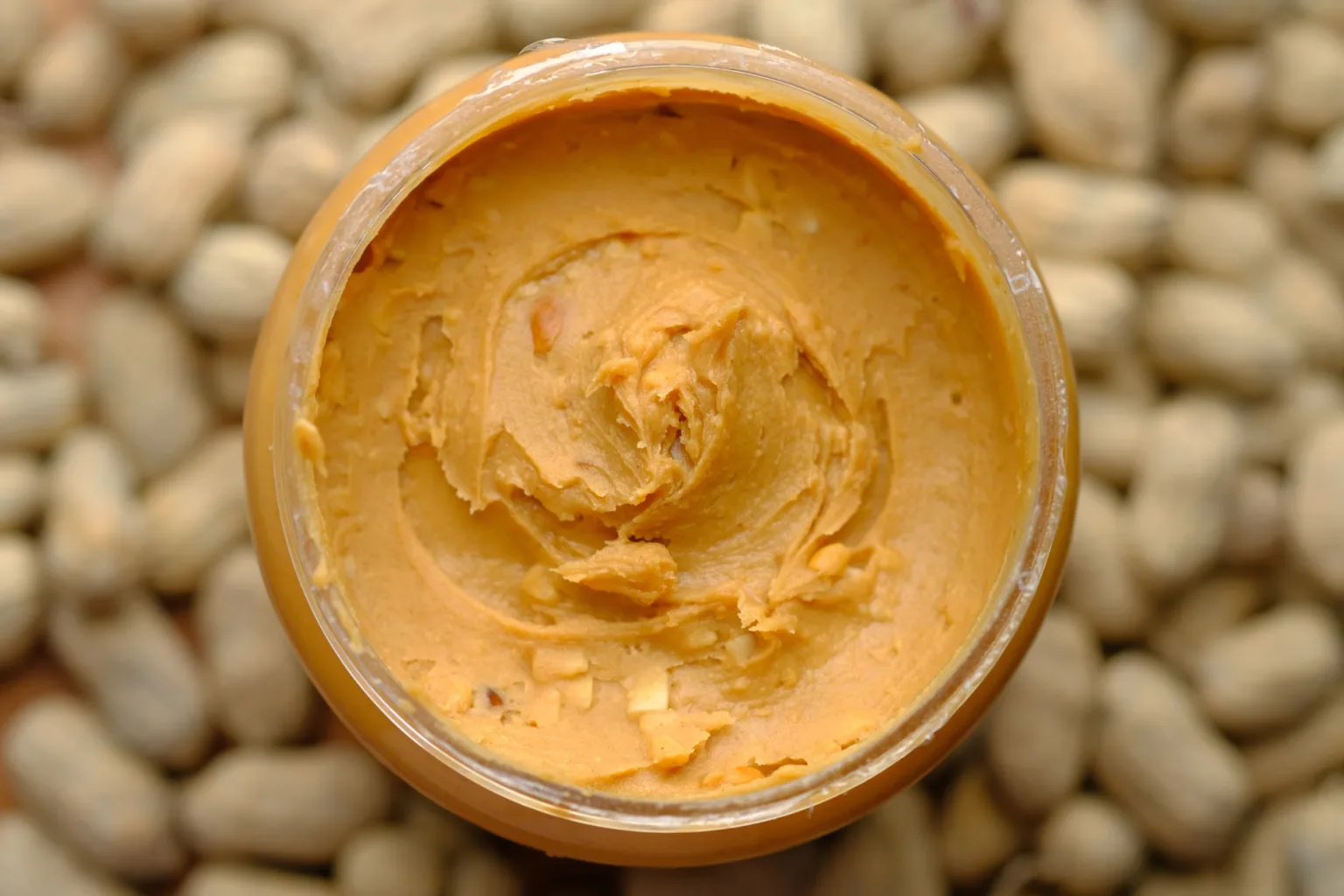
Peanut butter is a paste made mainly from ground peanuts, often roasted. Here, “unsweetened” describes a version with no added sugar; it does not mean that every product has the same ingredient list. Some commercial varieties include salt, oils, or other additions, so check the label. Grinding can produce either a smooth spread or one with small crunchy pieces. In products without stabilizers, oil may separate and collect on top; stir it back in to make the paste more uniform. Despite its name, peanut butter is not dairy butter: it is a peanut paste.
When to use it
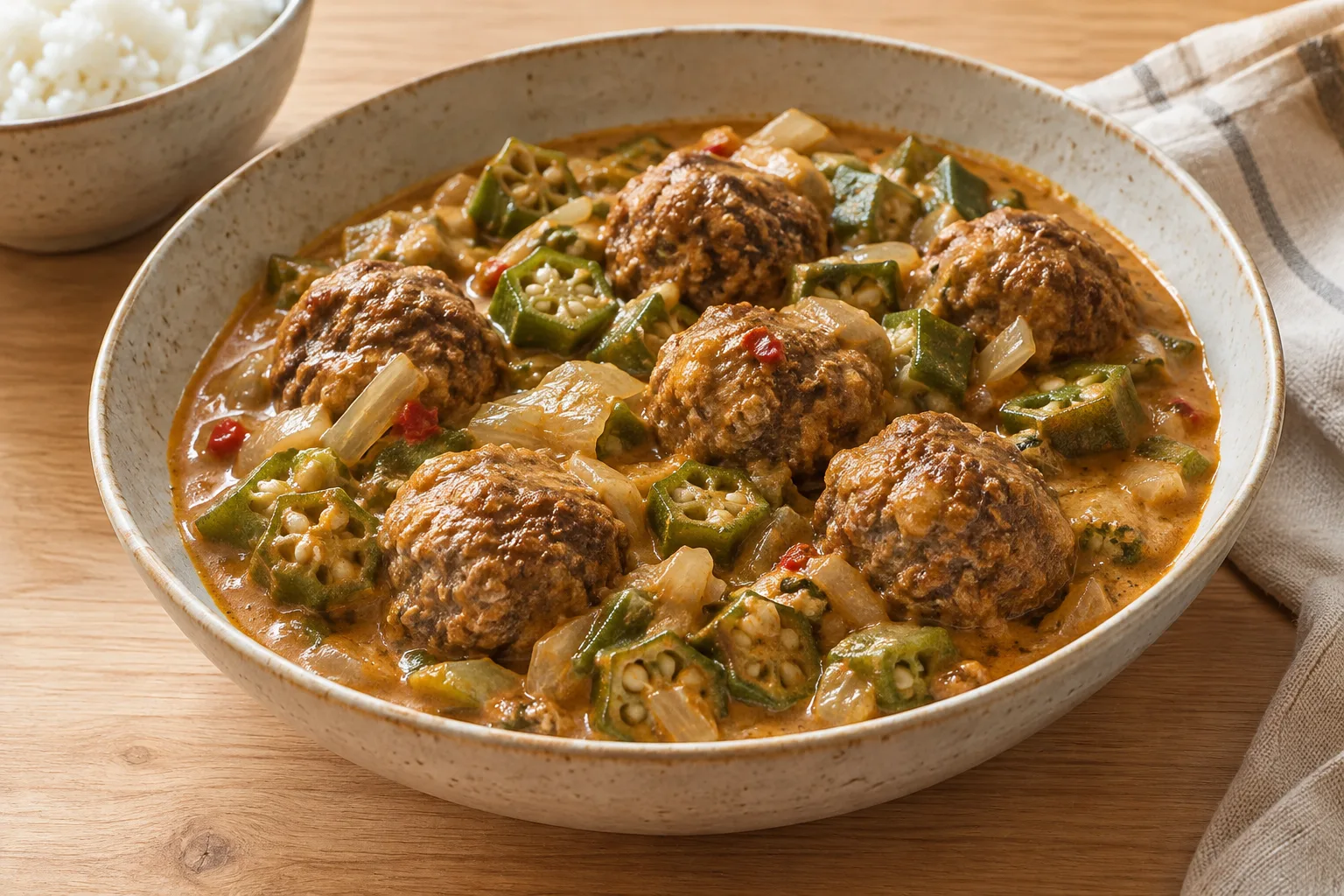
Use it when you want roasted-peanut flavor and a creamy texture in a spread, sandwich, or sweet preparation. It can also serve as a base or seasoning for sauces and soups, or be mixed with rice and vegetables. In baking, it works in cookies, snack bites, and other recipes that call for peanut butter. A no-added-sugar version is useful when you want to control how sweet a recipe becomes. Check the ingredient list to make sure the product fits that purpose, and account for any salt or other additions it contains.
How to use it
For a spread, stir the contents if oil has separated, then spread the amount you want on bread or toast. To make a sauce or add body to soup, stir in the paste gradually until it is distributed. If it is too thick for the preparation, add liquid a little at a time until it reaches a mixable consistency. In cookie or snack-bite dough, blend it with the wet ingredients before adding the dry ingredients, following the recipe’s proportions. It can also be combined with grains, rice, or vegetables, or used in a sweet preparation with fruit. Taste before adding salt or sweetener, because product formulations differ.
Flavour and texture
It has a pronounced peanut flavor, with roasted notes that vary by product. Smooth peanut butter spreads easily; crunchy varieties retain small pieces and add texture. The paste can be dense, and some products develop a separated layer of oil. A no-added-sugar version lacks the sweetness that an added sweetener would provide; flavor and saltiness also depend on the other ingredients listed on the label.
How to choose it
Read the ingredient list and make sure it contains no sugar or other sweeteners if you want a no-added-sugar version. Check for salt, oils, and other additions, which affect flavor and consistency. Choose smooth or crunchy according to how you plan to use it: smooth is easy to spread and mix, while crunchy adds pieces. Check the package and label to identify the product and follow its storage directions.
Storage
Keep the container closed and follow the storage directions on its label, since formulations and packaging can vary. If a layer of oil appears, stirring may be enough to bring the paste back together; separation alone does not show that the product has spoiled. Use clean utensils and avoid leaving the container open while preparing food. If the product’s smell, appearance, or condition seems changed, check the label and do not eat it if it appears spoiled.
Substitutions
Another nut butter may play a similar role in some recipes, but it will change the flavor and may introduce different allergens. Sweetened peanut butter can also replace it in some preparations, but reduce or omit some of the recipe’s other sweetener. Neither option is automatically suitable for someone with a peanut allergy; check ingredients and consider the needs of everyone who will eat the dish.
Common mistakes
Do not assume that “unsweetened” means the product contains only peanuts: check for salt, oils, and other ingredients too. If the paste is thick, do not add it all at once to a sauce or dough; incorporate it gradually and stir. If oil has separated, do not pour it off without considering whether the recipe needs a uniform mixture. Remember that another spread can change both the flavor and the suitability of the dish for someone with an allergy.
Safety and allergens
Contains peanuts. Do not serve it to anyone with a peanut allergy; check labels and avoid cross-contact when handling it. Keep the container closed and follow the storage instructions printed on the product.
Culinary uses
- crema para untar
- base o condimento para salsas y sopas
- ingrediente para repostería y mezclas
Recommended techniques
- untar directamente
- remover para reincorporar el aceite separado
- mezclar con líquidos o incorporar a masas
Pairs well with
- pan y otros cereales
- arroz y verduras
- fruta, como plátano
Frequently asked questions
What does “unsweetened” mean for peanut butter?
It describes a version with no added sugar, but the product may contain other ingredients. Read the label to see what is included.
Why is there oil on top?
Some peanut butters separate. Stirring the contents can help reincorporate the oil and restore a more even texture.
Can it be used in savory food?
Yes. It can be mixed into sauces or soups and paired with rice and vegetables. Add it gradually and stir.
Is it suitable for someone with a peanut allergy?
No. It contains peanuts and should not be served to someone with a peanut allergy.
Ingredient allergens
Allergen listDocumented presence
-
Peanuts
Unsweetened peanut butter
Sources and review
Automatically researched, cross-checked and validated content. Sources consulted:
- ¿Por qué la muerte es origen de miedos y tabúes? doi.org/10.64628/aao.fccyk3qj3
- Mantequilla de cacahuete - Wikipedia, la enciclopedia libre es.wikipedia.org/wiki/Mantequilla_de_cacahuete
- Le Chef Club | Culinary Institute Lenotre culinaryinstitute.edu/es/programas/ocio/le-chef-club/
- Food & Fun Afterschool - Super Snacks Parent Handout hsph.harvard.edu/wp-content/uploads/2024/10/Food-Fun-Parent-Handout-Super-Snacks.pdf
- Para la ciudadanía www.aesan.gob.es/para-la-ciudadania
- Recetas - Expanded Food and Nutrition Education Program efnep.tamu.edu/recipessp/
- Mantequilla de cacahuete o maní | Consumer www.consumer.es/alimentacion/mantequilla-de-cacahuete-o-mani.html
- LA DIABETES Y SU VIDA www.fcs.uga.edu/docs/Dec_Winter_DLL_B+W_-_Spanish.pdf
- Ladas Winter Garden Recipes Week 5 www.pediatrics.columbia.edu/file/78300/download?token=p2rmbzdp
- FSHN15-02S/fs279: Compras para la salud: merienda (refrigerio o tentempié) ask.ifas.ufl.edu/publication/FS279
- Bocaditos de avena y plátano con mantequilla de maní - Spend Smart Eat Smart spendsmart.extension.iastate.edu/recipe/bocaditos-de-avena-y-platano-con-mantequilla-de-mani…
- - YouTube www.youtube.com/watch?v=S5cyFYR5gX8
- Manteca de cacahuetes: análisis y comparativa de las mejores opciones para tus dulces caseros aliciascake.es/manteca-de-cacahuetes/
- Managing allergens | Food Standards Scotland www.foodstandards.gov.scot/business-guidance/running-a-food-business/managing-allergens