- Category
- Meat
- State
- Fresh
- Usual unit
- g
What it is
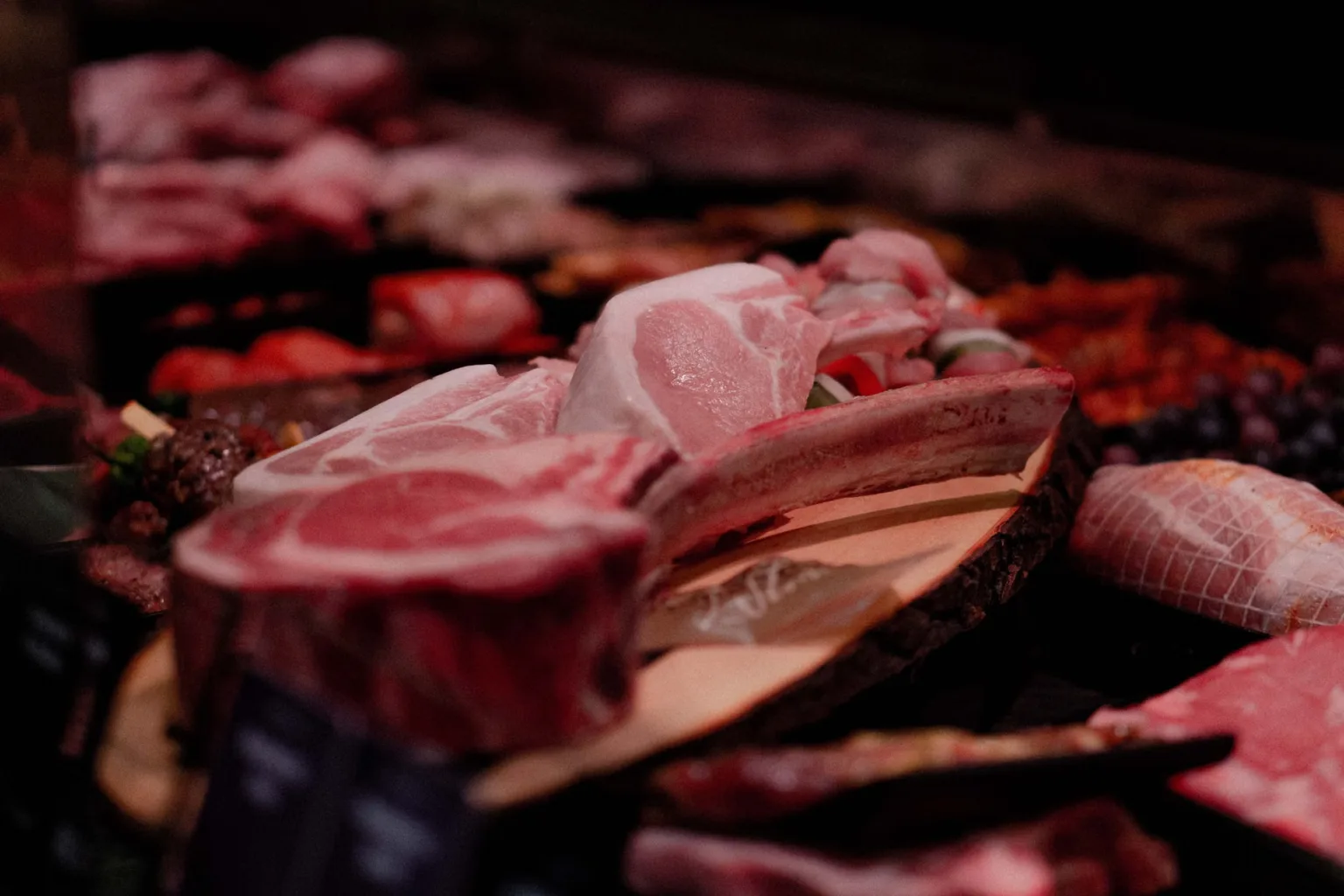
Venison is meat from deer. It may be sold fresh or frozen, as whole cuts or smaller portions, and also minced or made into products such as burgers and sausages. Its characteristics are not uniform: the animal, source and cut all affect flavor and texture. Meat associated with wild game is often described as darker, more pronounced in flavor and firmer, while some farmed venison can be tender and comparatively mild. Choose a cooking method with the particular cut in mind, and use the information supplied by the butcher or product label rather than assuming every piece behaves alike.
When to use it
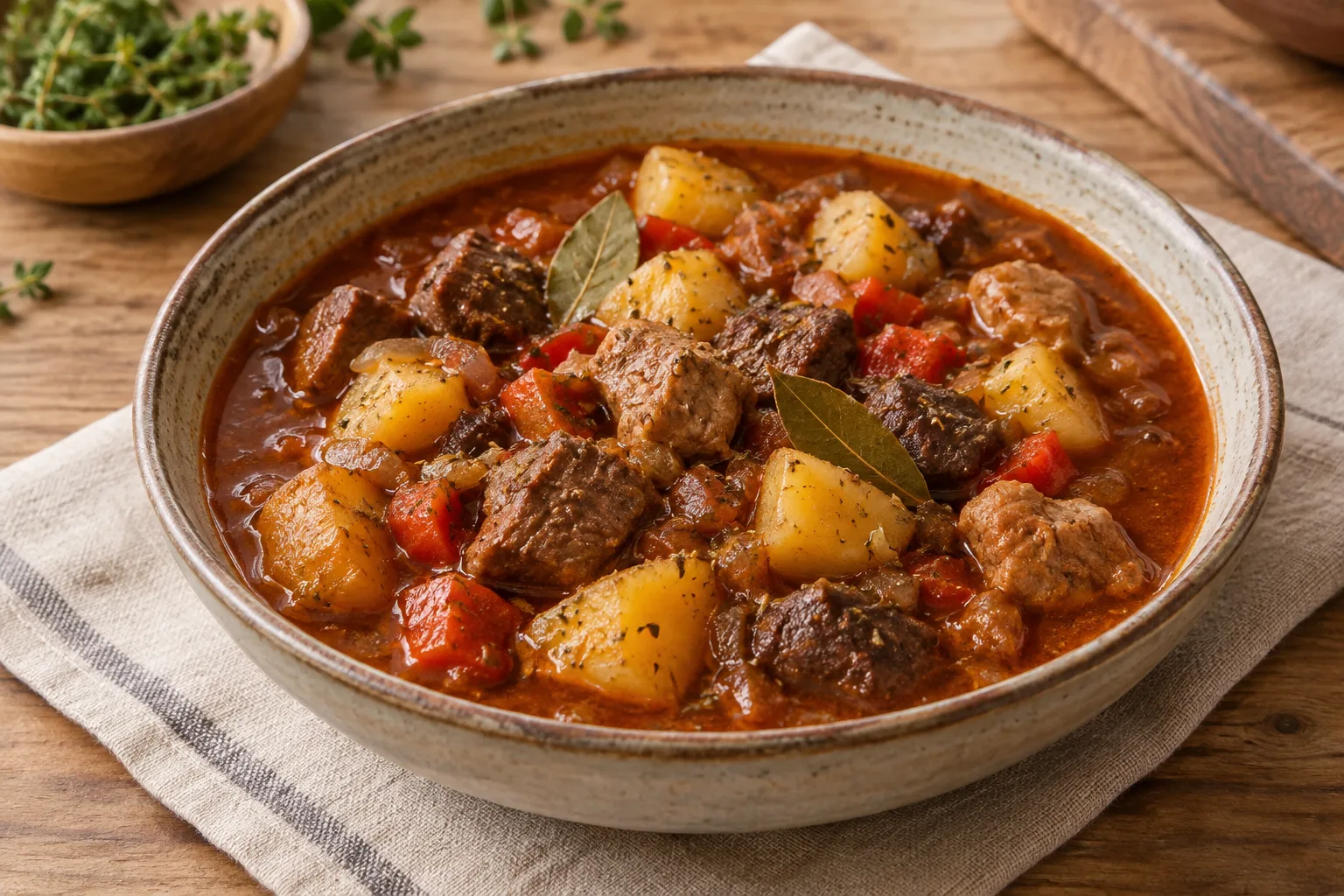
Choose venison when you want the distinctive character of game meat in a stew, ragù or braise, especially if the cut is firm and suited to longer cooking. Tender cuts may work for burgers, roasts or brief cooking in a hot pan or on a grill. Minced venison can also be shaped into burgers or meatballs. Because flavor and texture differ from one cut and source to another, do not assume that every piece needs a long marinade or that all venison cooks quickly. Match the method to the cut and the product information.
How to use it
Identify the cut first, and ask the butcher for guidance if it is unclear. For firm pieces intended for a stew, combine the meat with vegetables, red wine and herbs or spices, then cook gently until the texture suits the dish. For a tender cut, consider brief cooking in a hot pan or on a grill rather than automatically using stew-length cooking. Minced venison can be formed into burgers or meatballs, and suitable cuts can be roasted. Follow the package directions and official local food-safety advice for handling and cooking the meat.
Flavour and texture
The flavor ranges from relatively mild to pronounced and earthy. Some farmed venison is described as reminiscent of beef, while wild-game meat can taste more assertive. Texture varies too: some cuts are described as tender, others as firm or fibrous. Source and cut matter, so the ingredient name or color alone cannot predict exactly how a particular piece will cook.
How to choose it
Look for a clearly identified cut and ask whether the meat is wild or farmed if that information is available; knowing the cut helps you choose between stewing and quick cooking. Check that packaging is intact, read the date and follow its storage and use directions. For minced meat or burgers, confirm that the product is venison and check the label for any product-specific instructions.
Storage
Store venison according to the package directions or the butcher’s instructions; there is no single storage duration that applies to every format. If it is sold frozen, follow the package’s thawing directions. Do not infer shelf life from the cut or product name; consult the instructions for the meat you bought.
Substitutions
Wild boar can serve a similar role in a stew, though its flavor and texture will not necessarily match venison. Beef is another practical option for burgers or other minced-meat dishes, but the result will differ; venison may have a more distinctive flavor or a leaner texture depending on the cut. Adjust the cooking method to the meat used and follow the relevant safety directions.
Common mistakes
Do not assume all venison is tough, strongly flavored or suitable only for stews: some cuts are tender and can be cooked quickly. Conversely, do not treat every firm cut as suitable for quick cooking just because some farmed venison is tender. Identify the cut, ask how it is sold and do not treat marinating as a universal requirement.
Safety and allergens
Follow the package directions and local official food-safety advice for handling and cooking the meat. Do not apply generic cooking times or temperatures; consult the guidance relevant to the product you have.
Culinary uses
- Fresh meat for stews, ragù, burgers, roasts and chops
- Minced or processed meat, including sausages
Recommended techniques
- Slow braising or stewing for pieces used in hearty dishes
- Quick cooking on a hot pan or grill for suitable tender cuts
Pairs well with
- Red wine, especially in stews
- Vegetables and aromatic herbs or spices
Frequently asked questions
Does all venison need to be marinated?
Not necessarily. Marinating depends on the cut and its texture; some tender pieces may suit quick cooking, while others work better in stews. Ask about the particular cut.
What can I make with venison?
Venison can be used for stews, ragù, burgers, meatballs, roasts and some pan- or grill-cooked cuts. Choose a technique to suit the cut and the product directions.
What does venison taste like?
It varies. Some farmed venison is described as mild and reminiscent of beef, while wild-game meat may taste more pronounced and earthy.
Ingredient allergens
Allergen listThere are no verified associations for these ingredients yet.
Estimated nutrition
- Fat
- 5.26 g
- Saturates
- 2.65 g
- Carbohydrate
- 0 g
- Sugars
- 0 g
- Fibre
- 0 g
- Protein
- 28.1 g
- Salt
- 0.94 g
Sources and review
Automatically researched, cross-checked and validated content. Sources consulted:
- Client Challenge doi.org/10.2307/jj.27939689.16
- Publicaciones de Seguridad alimentaria www.aesan.gob.es/actualidad/publicaciones-seguridad-alimentaria
- Empowering Eaters Summit: Access, Affordability, and Healthy Choices - World Food Policy Center wfpc.sanford.duke.edu/empowering-eaters-summit-access-affordability-and-healthy-choices/
- Anup Joshi Named Among Zagat's 30 Under 30 | Institute of Culinary Education www.ice.edu/blog/anup-joshi-named-among-zagats-30-under-30
- FY 2026 Operating Budget Summary adhe.edu/File/UALR%20FY26.pdf
- Food Facts Archives - Classic Cooking Academy www.ccacademy.edu/category/food-facts/page/2/
- Master's Paper | The 2009 WIC Program Revisions: An ... cdr.lib.unc.edu/concern/masters_papers/05741w269
- Cuervo: Cosme & Óscar Castro | Jan. 22–23 - CAP UCLA cap.ucla.edu/event/cuervo
- Descubriendo la carne de ciervo de criadero y sus posibilidades culinarias www.lazyblog.net/2017/05/carne-ciervo-criadero-posibilidades-gastronomicas.html
- Receta de Guiso de Ciervo, una receta de caza tradicional www.eladerezo.com/recetas/guiso-de-ciervo.html
- Carne de caza. ¿Cuál elegir? | Chef Plus www.chefplus.es/robot-cocina/blog/cocina-practica-y-gastronomia/carne-de-caza-cual-elegir
- Carne de venado, sabor silvestre gourmet - Mercado de Chamartín mercadodechamartin.es/blog/carne-de-venado/