- Category
- Herbs and spices
- State
- Dry
- Usual unit
- teaspoon
What it is
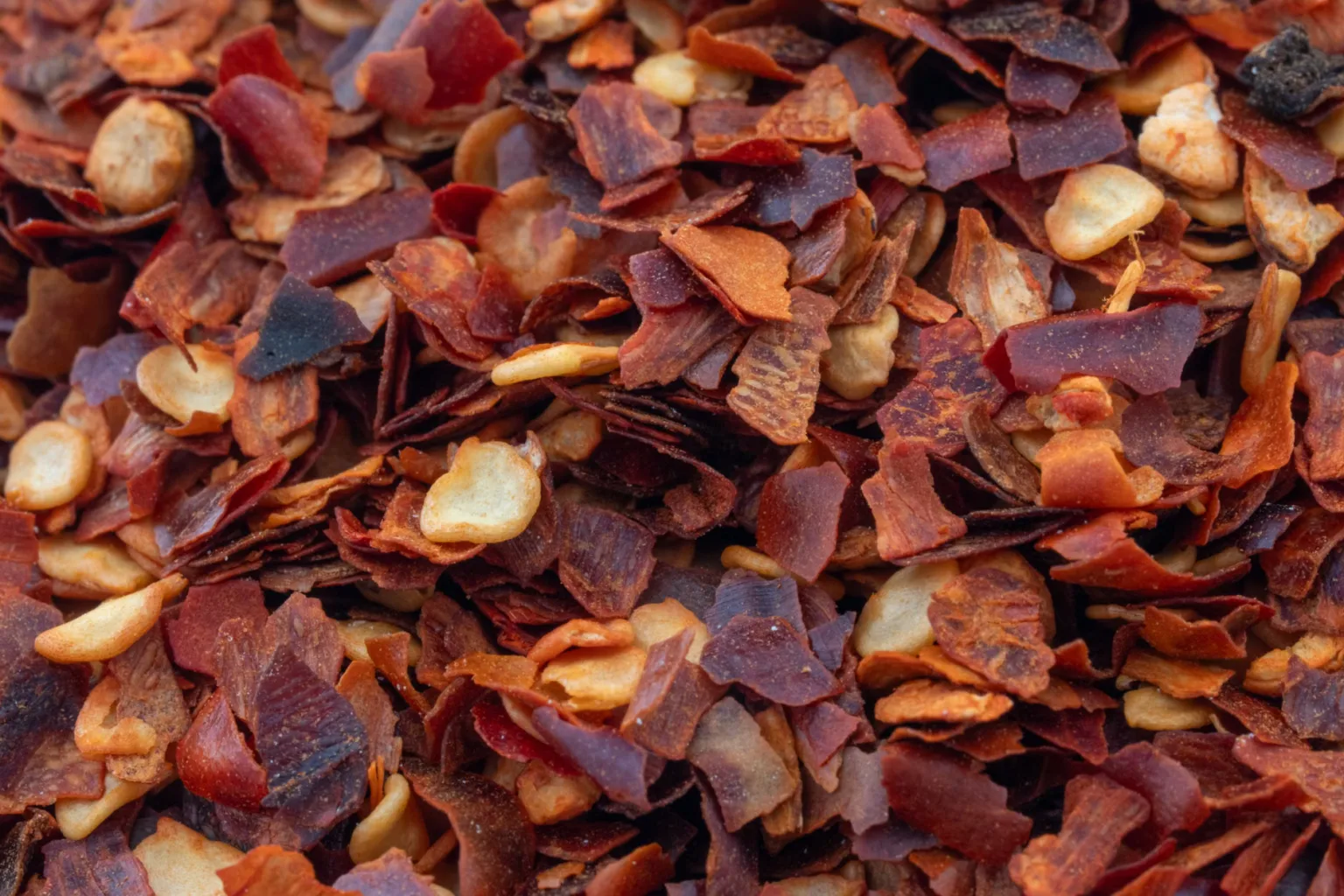
Chilli flakes are pieces of dried chilli that have been crushed rather than ground into a fine powder. They are used as a seasoning to add heat and chilli flavour. They are not one single variety: pungency, aroma, colour and flake size depend on the chilli and how the product was made. As a result, “very hot” does not describe an identical, precise heat level in every jar. Some flakes may include seeds and skin, depending on the product. They can be sprinkled directly onto food or mixed into sauces, pastes and other seasonings. Unlike fresh chilli, flakes are a dry, concentrated ingredient, so a small amount can noticeably affect a dish.
When to use it
Use them when you want noticeable heat and control over how much goes into a dish. They can season sauces, pasta, pizza, soups, stews, curries and stir-fries, and can be added to dressings or chutneys. If you do not know the product, begin with a pinch, mix it in and taste before adding more. For shared meals, serving the flakes separately lets each person adjust the heat. Add them during cooking if you want their flavour and pungency to spread through the dish; sprinkle them on at the end for a more concentrated, localised kick.
How to use it
Measure a small amount with a dry spoon and add it gradually to the dish. Stir well and taste before increasing the amount, since heat varies between products and cannot be accurately inferred from the name alone. Add flakes while soups and stews cook to distribute their heat, or mix them into sauces with the other ingredients. For a more direct finish, sprinkle a few over pasta, pizza or vegetables just before serving. They can also season marinades, chutneys and oil-based condiments, but do not assume that homemade chilli oil is safe to store at room temperature: use a tested preservation procedure. Avoid touching your eyes after handling chilli, and wash your hands and utensils with soap and water.
Flavour and texture
These flakes bring pronounced heat and a chilli flavour whose intensity and character vary with the variety and product. Their small pieces remain more noticeable than a fine powder and may include seeds and skin. Colour can vary too. Because products differ, taste a small amount before seasoning a whole dish, especially when using a new jar.
How to choose it
Check the label to confirm that you are buying dried chilli flakes and see whether the variety or heat level is identified. There is no single heat level for all flakes: the chilli variety and product affect the result. Choose an intact package and a product that looks dry, without obvious moisture or signs of deterioration. If you want a consistent result, use the same product and add it gradually rather than assuming different brands or blends will taste equally hot.
Storage
Keep the flakes in an airtight container in a cool, dry, dark place. Protect them from moisture and close the container after each use. They are a dry product, not fresh chilli, but their aroma and flavour can fade over time. For best flavour, aim to use them within a few months and follow any specific directions on the package. Do not use the product if it shows signs of moisture or deterioration.
Substitutions
Ground cayenne can replace the flakes for heat, but it has a finer texture and may differ in intensity; start with less and taste. You can also use flakes made from a milder chilli and increase the amount gradually. Neither substitute guarantees the same flavour profile or heat: the result depends on the chilli and the product.
Common mistakes
A common mistake is adding a large amount before tasting the product. Flakes described as very hot can vary substantially between varieties and packages. Adding them all at once can make an overly hot dish difficult to correct. Start with a pinch, stir, taste and adjust. Do not assume flakes and chilli powder have the same texture or distribute in the same way.
Safety and allergens
Handle chilli carefully and avoid touching your eyes or nose; it can irritate sensitive skin. Wash hands and utensils with soap and water after handling. Keep the package dry and follow its instructions. For preserving food in oil, use only a tested, suitable preservation procedure; do not improvise a preparation intended for room-temperature storage.
Culinary uses
- Aportar picor intenso
- Realzar salsas, guisos y otros platos
Recommended techniques
- Añadir una pizca durante la cocción para distribuir el picor
- Espolvorear al final para un picor más localizado
Pairs well with
- Ajo y jengibre
- Tomate, sopas y guisos
Frequently asked questions
What does “very hot” mean for these flakes?
It is a general description, not a uniform measurement. Heat depends on the chilli variety and product, so begin with a pinch and taste.
When should I add chilli flakes to a dish?
Add them during cooking to spread the heat, or at the end for a more localised kick. Add gradually and taste before increasing the amount.
How should I store the flakes?
Keep them tightly closed in a cool, dry, dark place and protect them from moisture. Follow the package directions.
Ingredient allergens
Allergen listThere are no verified associations for these ingredients yet.
Sources and review
Automatically researched, cross-checked and validated content. Sources consulted:
- ¿Por qué la muerte es origen de miedos y tabúes? doi.org/10.64628/aao.fccyk3qj3
- Washington State Food Access English-Spanish Glossary wpcdn.web.wsu.edu/wp-snaped/uploads/sites/2/2025/10/Food-Access-Spanish-Glossary.pdf
- Tipos de Chiles Secos Mexicanos: Características y Usos abarrotes.es/blog/chiles-secos-mexicanos-caracteristicas-y-usos/
- Salsa Picante de Jícama (Spanish) - National Center for Home Food Preservation nchfp.uga.edu/how/can/canning-salsa/spicy-jicama-relish-spanish/
- Hojuelas de chile (¿crudas?, ¿orgánicas?) | Fundación G+E www.diet-health.info/es/recetas/ingredientes/in/uy9408-copos-de-chile
- Chili flakes: Beneficios y recetas | Gastronosfera www.gastronosfera.com/tendencias/chili-flakes-beneficios-y-recetas
- Banquete para el día del partido: 3 recetas ganadoras para llevar los sabores del estadio de Notre Dame a tu hogar | Noticias e historias | Hospitalidad de Notre Dame | Universidad de Notre Dame hospitality.nd.edu/es/news/gameday-feast-3-winning-recipes-to-bring-notre-dame-stadium-flavo…
- - YouTube www.youtube.com/watch?v=z58qdJRiIfc
- Food & Nutrition | Colorado State University Extension foodsmartcolorado.colostate.edu/category/recipes-and-how-tos/recipe-index/pantry-staples-and…
- Chiles Picantes - Enero 2024 | OSU Extension Service extension.oregonstate.edu/node/226276
- Zanahorias Asadas con Chile Dulce sph.uth.edu/research/centers/dell/nourish/research-resources/BB-Legacy/Zanahorias%20Asadas%2…
- Crispy Baked Chicken/Pollo al Horno Empanizado (LCH) | CSU Northridge w2.csun.edu/wic/lets-cook-healthy/recipes/main-dishes/crispy-baked-chicken-pollo-al-horno-em…
- Chicken Palava – Community Nutrition Security Research Group web.uri.edu/community-nutrition/chicken-palava/
- ORIGEN DEL PICANTE – Salserellas salserellas.es/blogs/noticias/origen-salsa-picante?srsltid=AYCX9vJcpeqakIT9lwBmyYx3KrpyfPDH5…
- Chile de árbol: guía completa para cocinarlo en Europa – La Condesa lacondesabarcelona.com/chile-de-arbol/
- Especias tradicionales que podrían salvarte la vida paprikalosnovios.com/post_es/22/especias-saludables-podrian-salvar-tu-vida