- Category
- Fruit
- State
- Fresh
- Usual unit
- unit
What it is
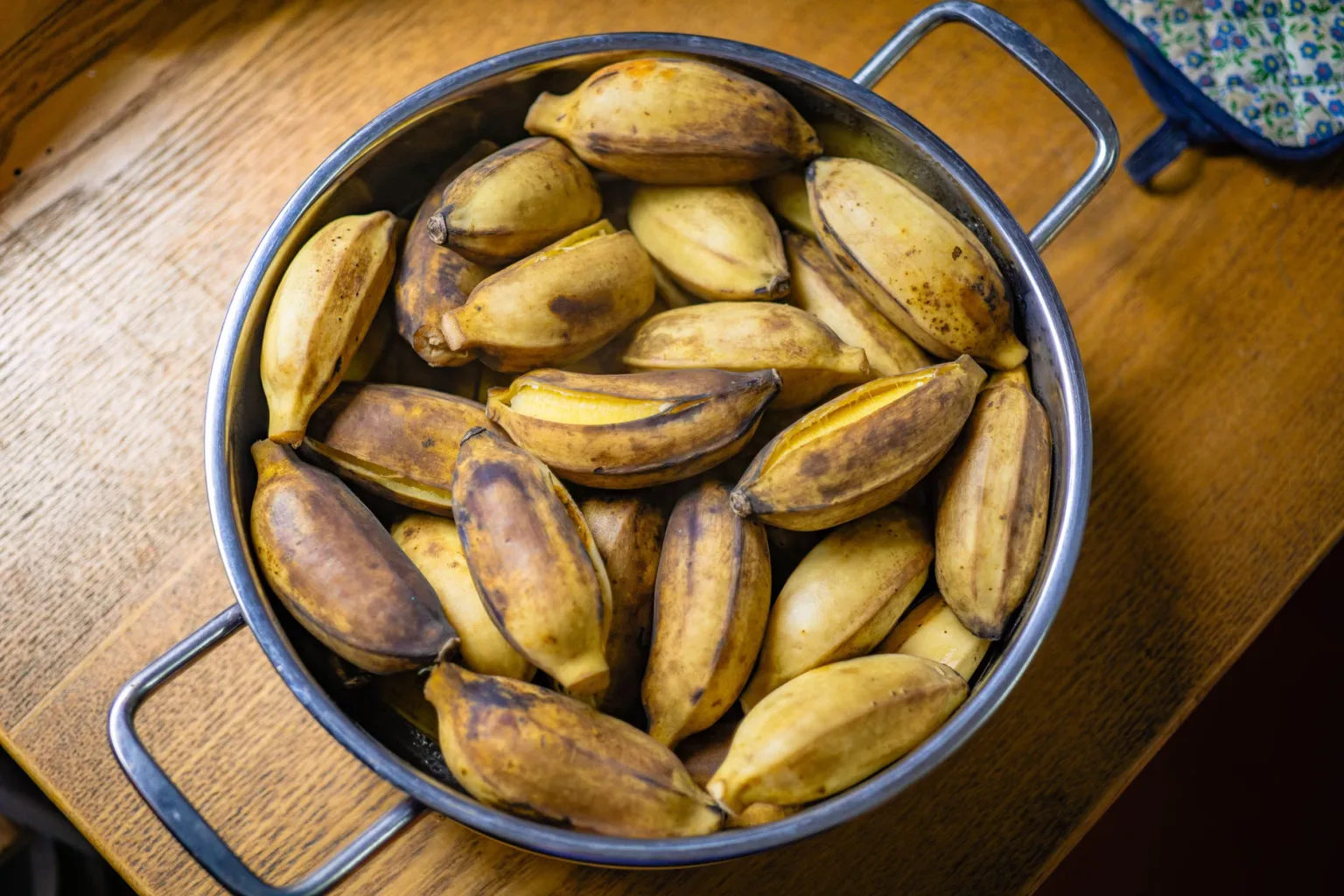
“Very ripe bananas” describes fruit that has progressed well in ripening, but the name can refer either to dessert bananas or to cooking bananas, which are not exactly the same. In cooking bananas, yellow skin may develop dark spots and can become completely dark; as the fruit ripens, its flesh becomes softer and sweeter. This profile gives specific guidance for ripe cooking bananas when that is the type of fruit you have. It does not assume that all bananas look, taste or cook alike.
When to use it
Use them when you want softer, sweeter flesh, especially in cooked preparations. Ripe cooking bananas can be fried, boiled, baked or roasted; fried slices make a straightforward side or snack. For cooking bananas, yellow skin with dark spots and soft flesh are described signs of riper fruit. If you have a dessert banana, do not assume it will have the same texture or behave like a cooking banana in a recipe.
How to use it
If you have a ripe cooking banana, peel it and slice it for frying, or cut it into pieces for boiling, baking or roasting. The slices can brown and caramelize when fried; the fruit can also be cooked whole or in pieces, depending on the preparation. For a sweet accompaniment, serve cooked fruit with white cheese or a little cinnamon. Very soft flesh can be mashed after cooking; boiled and mashed cooking banana is also used to thicken soups. Match the preparation to the kind of banana and the result you want.
Flavour and texture
As cooking bananas ripen, they become sweeter and their flesh softer. Frying can brown and caramelize the slices. Dessert bananas and cooking bananas do not necessarily have the same flavor or texture, so results can vary with the type of fruit and its ripeness.
How to choose it
For a ripe cooking banana, look for yellow skin with dark spots or very dark skin and soft flesh, signs described for riper fruit. Choose according to how you plan to cook it: softer fruit may suit preparations cooked until tender. Check that the fruit fits your intended use, and do not assume a dessert banana and a cooking banana will have the same sweetness or produce the same result.
Storage
The available information does not set a specific storage period or conditions for very ripe bananas. Check the fruit before use and plan to cook it while its texture still suits your recipe. Freezing is a practical way to preserve fruit, but thawed fruit can have a softer texture. Use well-sealed packaging and follow reliable fruit-freezing guidance for the preparation you have in mind.
Substitutions
A ripe cooking banana can replace another ripe cooking banana in similar preparations. A dessert banana may work as an alternative in a sweet preparation, but expect differences in sweetness and texture. Adjust to the particular fruit and avoid assuming the two types behave identically.
Common mistakes
Treating cooking bananas and dessert bananas as interchangeable can change a dish’s sweetness and texture. Do not expect very ripe fruit to behave like green fruit: in cooking bananas, the flesh becomes softer and sweeter as it ripens. Choose a technique suited to that texture and keep an eye on the fruit as it cooks.
Safety and allergens
Wash your hands before preparing the fruit. The available information identifies no specific safety warning for very ripe bananas.
Culinary uses
- Sweet side dish or snack
- Soft fruit for mashing into cooked dishes
- Ingredient for baked or roasted preparations
Recommended techniques
- Frying in slices
- Boiling
- Baking
- Roasting or grilling
Pairs well with
- White cheese
- Cinnamon
Frequently asked questions
How can I recognize a very ripe cooking banana?
Its skin may be yellow with dark spots or very dark, and the flesh of a cooking banana becomes softer and sweeter as it ripens.
Can it be eaten raw?
Some yellow, ripe cooking bananas can be eaten raw, although they are usually cooked. This should not be generalized to every kind of banana.
Which cooking methods work?
Ripe cooking bananas can be fried, boiled, baked or roasted. Flesh and results vary with the type of banana and its ripeness.
Ingredient allergens
Allergen listThere are no verified associations for these ingredients yet.
Sources and review
Automatically researched, cross-checked and validated content. Sources consulted:
- Ingredientes para Recetas de Salsa (Spanish) - National Center for Home Food Preservation nchfp.uga.edu/how/can/canning-salsa/ingredients-for-salsa-recipes-spanish/
- Plátano maduro - Wikipedia, la enciclopedia libre es.wikipedia.org/wiki/Pl%C3%A1tano_maduro
- Sabores de nuestras tierras/recetas - 2024 | Agricultura y Recursos Naturales ucanr.edu/site/agricultura-y-recursos-naturales/sabores-de-nuestras-tierras-recetas-2024
- Aplicaciones de la Biotecnología en Seguridad Alimentaria aesan.gob.es/dam/jcr:2eecb52a-e252-4339-b93a-db3e3c7faab6/biotecnologia.pdf
- Vamos a Conservar Alimentos: La Congelación de Frutas extension.psu.edu/vamos-a-conservar-alimentos-la-congelacion-de-frutas/
- A Mango in Main Street - Academic Commons commons.library.stonybrook.edu/cgi/viewcontent.cgi?article=4154&context=stony-brook-theses-a…
- Cuantitativo o cualitativo: ¿qué es más importante? - Fundación Muy Interesante doi.org/10.66806/fundacion_muyinteresante.623722
- Plátano macho: qué es, propiedades y cómo utilizarlo en la cocina www.directoalpaladar.com/ingredientes-y-alimentos/platano-macho-que-propiedades-como-utiliza…
- - YouTube www.youtube.com/watch?v=hpLAtRYsCvc