- Category
- Drinks
- State
- Liquid
- Usual unit
- l
What it is
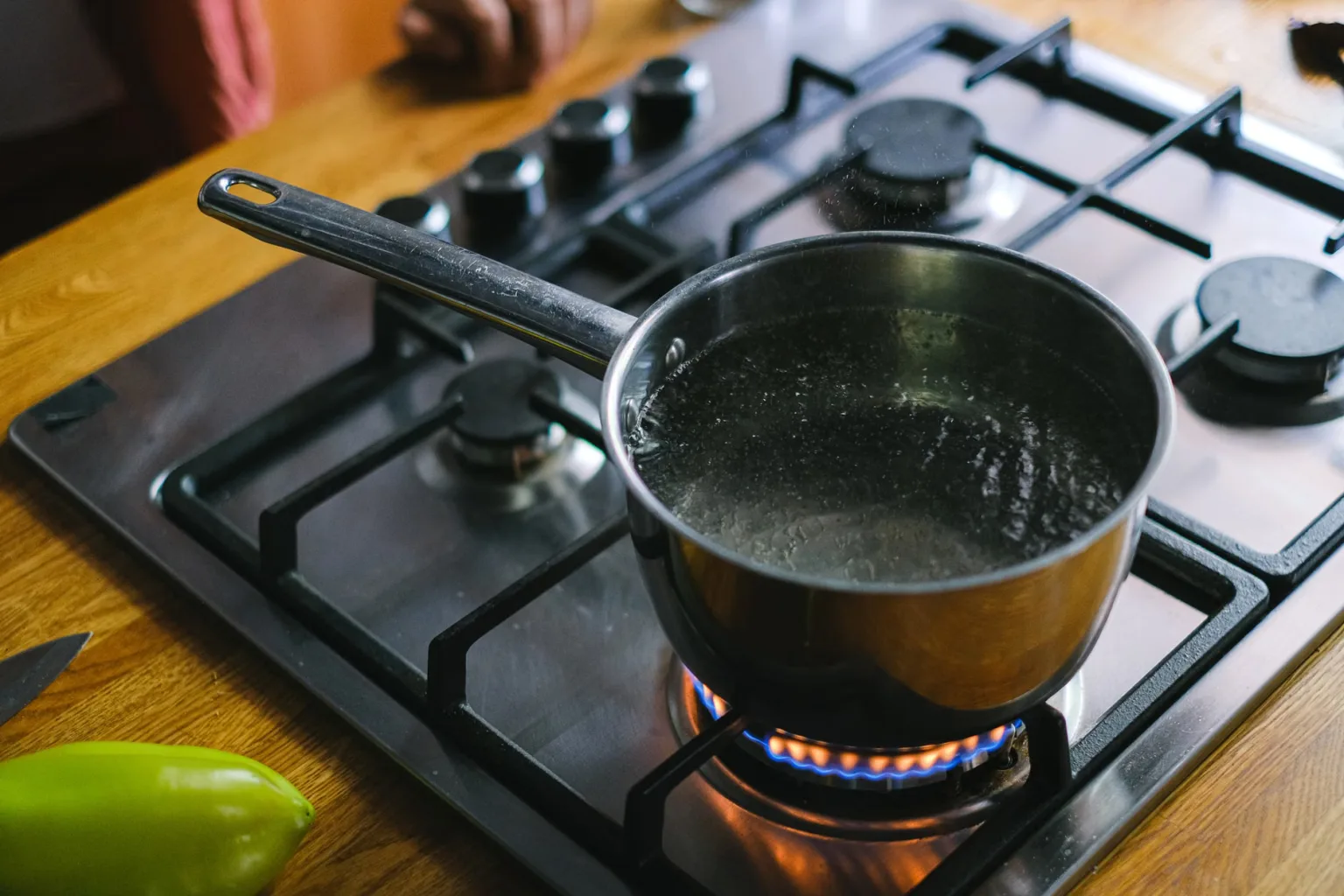
Water for boiling is water used as a cooking or soaking liquid. When food is heated in water, the liquid transfers heat and can hydrate components such as starches, while helping soften the fibers of some ingredients. Its role depends on the food and method: it may be used to boil, maintain a gentle simmer, or soak dried beans before cooking. Water can also form part of stews and other moist preparations. Because its flavor is mild, it does not replace seasoning or provide the flavor of stock on its own. The amount needed and the result vary with the recipe and the food being prepared.
When to use it
Use water when a recipe calls for boiling or cooking food in liquid, or when dried beans need soaking. It is a neutral choice for pasta, rice, and vegetables, and can also be used to cook eggs, meat, or fish when the recipe's method calls for it. In stews, liquid helps ingredients cook and exchange flavors. Choose water when you want the food's own flavor or the seasonings to stand out rather than adding the flavor of stock. The amount depends on the preparation: follow the recipe and check during cooking whether more liquid is needed.
How to use it
Measure or add the amount of water specified in the recipe, then heat it in a vessel suited to the food. For boiling, bring the liquid to a boil if the method calls for it; for gentler cooking, reduce the heat and maintain the simmer specified in the recipe. Add the food at the stated point and monitor both the liquid and the texture. Some preparations need water to cover the ingredients; others, such as certain stews, call for only some liquid. For dried beans, soaking and cooking are separate stages: use water to soak them, then follow a cooking recipe. Do not assume that one volume or method works for every food.
Flavour and texture
Water has a mild flavor and usually lets the flavors of the food and seasonings come through. During cooking, it can hydrate starches and help soften fibers, so the texture of the food changes. The result depends on the ingredient, cooking time, and amount of liquid; boiling and a gentle simmer do not produce identical results.
How to choose it
For cooking, choose water suitable for drinking and consider how its taste may affect a simple preparation. If using bottled water, check the label and that the container is intact. In recipes containing stock or already-salted ingredients, remember that water does not provide the same flavor or saltiness. There is no need to choose a special product for boiling: follow the recipe and use a clean cooking vessel.
Storage
If you keep water for cooking, store it in a clean, covered, food-safe container and prevent contact with raw ingredients or dirty utensils. Follow the label's storage directions for bottled water. Water that has already been in contact with food during cooking is a preparation liquid: keep or discard it according to the recipe and applicable official guidance.
Substitutions
Water can be replaced with stock or broth when it suits the dish, but these liquids add flavor and may contain salt. Adjust seasoning and expect a different result. A cooking liquid from another preparation can also work if its flavor fits the recipe. There is no universal substitute: the chosen liquid must suit both the food and the cooking method.
Common mistakes
Do not assume every food needs the same amount of water or keep it at a vigorous boil by default: follow the recipe's method and watch the texture. Another common mistake is replacing water with stock without adjusting seasoning, since stock can add flavor and salt. For dried beans, do not confuse soaking with cooking; they are separate steps.
Safety and allergens
Follow official food-safety guidance that applies to the foods you are cooking and handling. Observe any local official advice about which water is suitable for use.
Culinary uses
- Cooking liquid for boiling foods
- Hydration medium for dried beans and other ingredients
Recommended techniques
- Boiling and simmering
- Soaking dried beans
Pairs well with
- Pasta and rice cooked in water
- Vegetables, eggs, beans, meat, and fish prepared with water
Frequently asked questions
What is water for boiling used for?
It is used as a liquid to boil or gently cook foods such as pasta, rice, and vegetables, and to soak dried beans before cooking them.
Can I replace water with stock?
Yes, if the stock's flavor suits the preparation. It may add salt and other flavors, so adjust the seasoning.
Is soaking beans the same as cooking them?
No. Soaking is a separate step for dried beans; they still need to be cooked afterward according to an appropriate recipe.
Ingredient allergens
Allergen listThere are no verified associations for these ingredients yet.
Estimated nutrition
- Fat
- 1.36 g
- Saturates
- 0.23 g
- Carbohydrate
- 11.7 g
- Sugars
- 0.46 g
- Fibre
- 1.7 g
- Protein
- 2.37 g
- Salt
- 0.12 g
Sources and review
Automatically researched, cross-checked and validated content. Sources consulted:
- Client Challenge doi.org/10.2307/j.ctvndv9t9.22
- The Essential Glossary of Cooking Terms for the Culinary Arts - Escoffier www.escoffier.edu/blog/culinary-arts/the-essential-glossary-of-cooking-terms-for-the-culinar…
- El gran ingrediente: el agua en la cocina - Vitrinor vitrinor.com/trucos/el-agua-en-la-cocina/
- Eating Spain: National Cuisine Since 1900 - UKnowledge uknowledge.uky.edu/context/hisp_etds/article/1031/viewcontent/Eating_Spain_National_Cuisine_…
- How to Cook Dry Beans from Scratch | UNL Food | Nebraska food.unl.edu/article/how-cook-dry-beans-scratch/
- Cómo el agua de mar realza los sabores en la cocina www.winbiaguademar.com/noticias/id9-como-el-agua-de-mar-realza-los-sabores-en-la-cocina.html
- Expanded Food and Nutrition Education Program (EFNEP) | Community Nutrition | Extension/College of Agriculture, Health & Natural Resources | University of Connecticut communitynutrition.cahnr.uconn.edu/efnep/
- Para la ciudadanía www.aesan.gob.es/para-la-ciudadania
- Science of Eggs: How to Hard Cook an Egg | Exploratorium www.exploratorium.edu/explore/cooking/hard-cook-egg
- - YouTube www.youtube.com/watch?v=wcMHhCwkkRc
- La comida y sus historias: Food-centered Life Histories of ... via.library.depaul.edu/cgi/viewcontent.cgi?article=1402&context=dialogo