- Category
- Fish and seafood
- State
- Liquid
- Usual unit
- ml
What it is
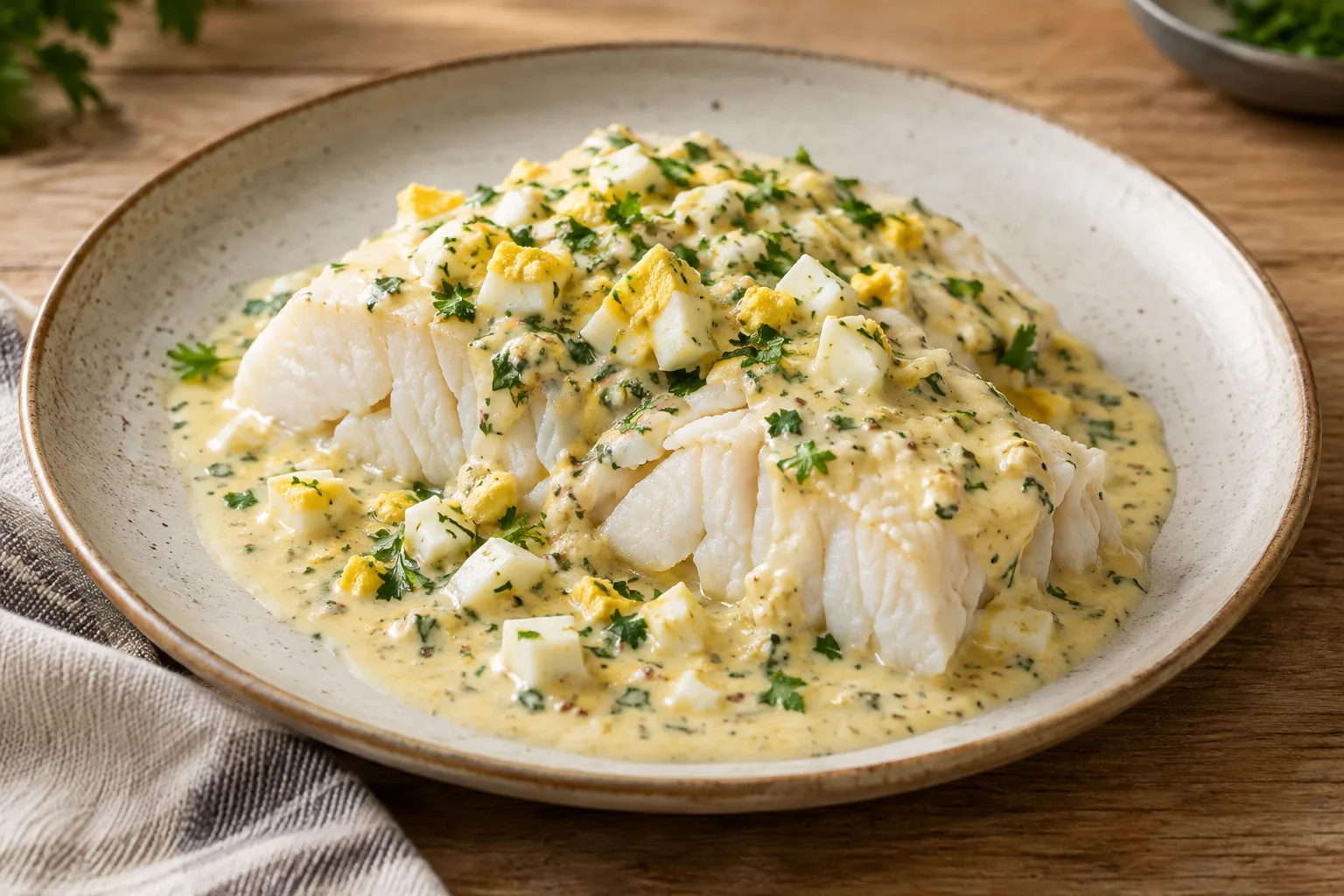
This is water used as the cooking medium for poaching or gently boiling fish. For a simple preparation, the fish is immersed in hot water, which may be seasoned with a little salt and vinegar or lemon juice. Water can also be made into a more aromatic broth with vegetables and herbs before the fish is cooked in it. Plain water has no strong flavor of its own; its main job is to transfer heat, while seasonings and aromatics add a subtle background taste. The cooking liquid is not automatically a broth: it becomes more flavorful when prepared with ingredients such as aromatic vegetables, herbs, or suitable fish trimmings.
When to use it
Use it when you want to cook fish submerged in liquid, as for poached or boiled fish. Plain water suits a mild result, especially when you plan to serve the fish with sauce, oil, or a flavorful accompaniment. For a deeper background flavor, make an aromatic broth first and cook the fish in it. Gentle poaching can suit delicate pieces that benefit from moist, controlled heat. Avoid a vigorous boil, which can break apart or damage the fish.
How to use it
Heat water in a pan and, if desired, season it with salt and a little vinegar or lemon juice. To make a more aromatic cooking liquid, simmer vegetables such as onion, leek, and carrot in the water first; herbs can also be added. Add the fish once the liquid is hot and keep the cooking gentle rather than stirring or boiling it vigorously. Cooking time varies with the fish and the thickness of the piece, so do not rely on a fixed time from this guide; check that the fish is properly cooked for the recipe. Lift it out carefully. Use the liquid as broth only when suitable for the recipe and safe handling; otherwise discard it or reserve it for a preparation that calls for that cooking liquid.
Flavour and texture
Plain water tastes neutral and has a thin, fluid texture, so it does not mask the fish's flavor. Salt and a little lemon or vinegar add a lightly savory, acidic note. Vegetables and herbs create a more rounded, fragrant liquid. Gentle moist cooking can help keep fish tender, although the result depends on the fish and on avoiding a hard, rolling boil.
How to choose it
A special product is usually unnecessary: use water suitable for cooking. If you prefer a ready-made base, choose a mild fish stock and check its label for ingredients and salt. Seawater is not interchangeable with ordinary cooking water and should not be substituted automatically; the available evidence does not support a general mixing ratio.
Storage
Unused water can be handled according to normal potable-water practice. Once it has been used to cook fish, it is no longer clean water: handle it according to applicable food-hygiene guidance and do not leave it at room temperature for later use. If making broth ahead, cool and store it promptly in line with local official guidance; this guide does not set a storage duration.
Substitutions
For more flavor, replace the water with a light fish stock or fumet. If you have no stock, use water and add salt, with a little lemon or vinegar if it suits the dish. A more aromatic liquid can change the final flavor, so adjust the seasoning and accompaniment accordingly. There is no single water-to-seasoning ratio that suits every fish.
Common mistakes
A common mistake is letting the liquid boil hard: delicate fish may break apart and cook less evenly. It is also easy to oversalt the water or add enough acid to overpower the fish. Do not confuse plain cooking water with fumet; a broth needs aromatic ingredients to develop a fuller flavor. Add seasonings gradually and keep the cooking gentle.
Safety and allergens
Use water suitable for cooking and handle the fish and cooking liquid hygienically. Follow applicable official food-safety guidance for preparing and storing fish.
Culinary uses
- Poaching medium for fish
- Base for fish broth or fumet
Recommended techniques
- Poaching
- Gentle simmering
Pairs well with
- Salt and lemon juice or vinegar
- Aromatics such as onion, leek, carrot, and herbs
Frequently asked questions
Can you cook fish in plain water?
Yes. Plain water works for poaching or boiling fish; add salt, lemon, or vinegar if you want a little extra flavor.
What is the difference between water and fumet?
Water is a neutral cooking medium. Fumet is a broth made with aromatic ingredients, such as vegetables and fish trimmings, and has more flavor.
Should the water boil while the fish cooks?
Avoid a vigorous boil. Gentle cooking helps keep the piece intact and is particularly useful for delicate fish.
Ingredient allergens
Allergen listThere are no verified associations for these ingredients yet.
Sources and review
Automatically researched, cross-checked and validated content. Sources consulted:
- Client Challenge doi.org/10.2307/j.ctvndv9t9.22
- The Essential Glossary of Cooking Terms for the Culinary Arts - Escoffier www.escoffier.edu/blog/culinary-arts/the-essential-glossary-of-cooking-terms-for-the-culinar…
- Duke University Dissertation Template dukespace.lib.duke.edu/bitstreams/e673585b-67b7-4e97-a14c-766083285457/download
- La diabetes y la alimentación: Cómo planificar y cocinar comidas sabrosas y saludables | CAES Field Report fieldreport.caes.uga.edu/publications/C1364-08-SP/la-diabetes-y-la-alimentacion/
- Cómo el agua de mar realza los sabores en la cocina www.winbiaguademar.com/noticias/id9-como-el-agua-de-mar-realza-los-sabores-en-la-cocina.html
- Consejos y técnicas culinarias | Técnicas culinarias más apropiadas para el pescado | Pescados y mariscos | EROSKI CONSUMER pescadosymariscos.consumer.es/consejos-culinarias/tecnicas-culinarias-mas-apropiadas-para-el…
- Recetas en 1 minuto www.cordonbleu.edu/madrid/recetas-en-1-minuto/es
- Para la ciudadanía www.aesan.gob.es/para-la-ciudadania
- ABSTRACT Title of Dissertation - UMD DRUM drum.lib.umd.edu/bitstreams/89f2f33d-601b-4939-8d27-f8e85f1d6d37/download
- Formas de cocinar pescado | Peix a Casa www.peixacasa.cat/es/blog/formas-de-cocinar-pescado/?srsltid=AYCX9vJ-L0G2WrB_fOnY4FF1xVNRrFd…
- Técnicas culinarias para el pescado - Pescaderías Charo www.pescadoscharo.es/consejos/tecnicas-culinarias-para-el-pescado/