- Category
- Vegetables
- State
- Fresh
- Usual unit
- unit
What it is
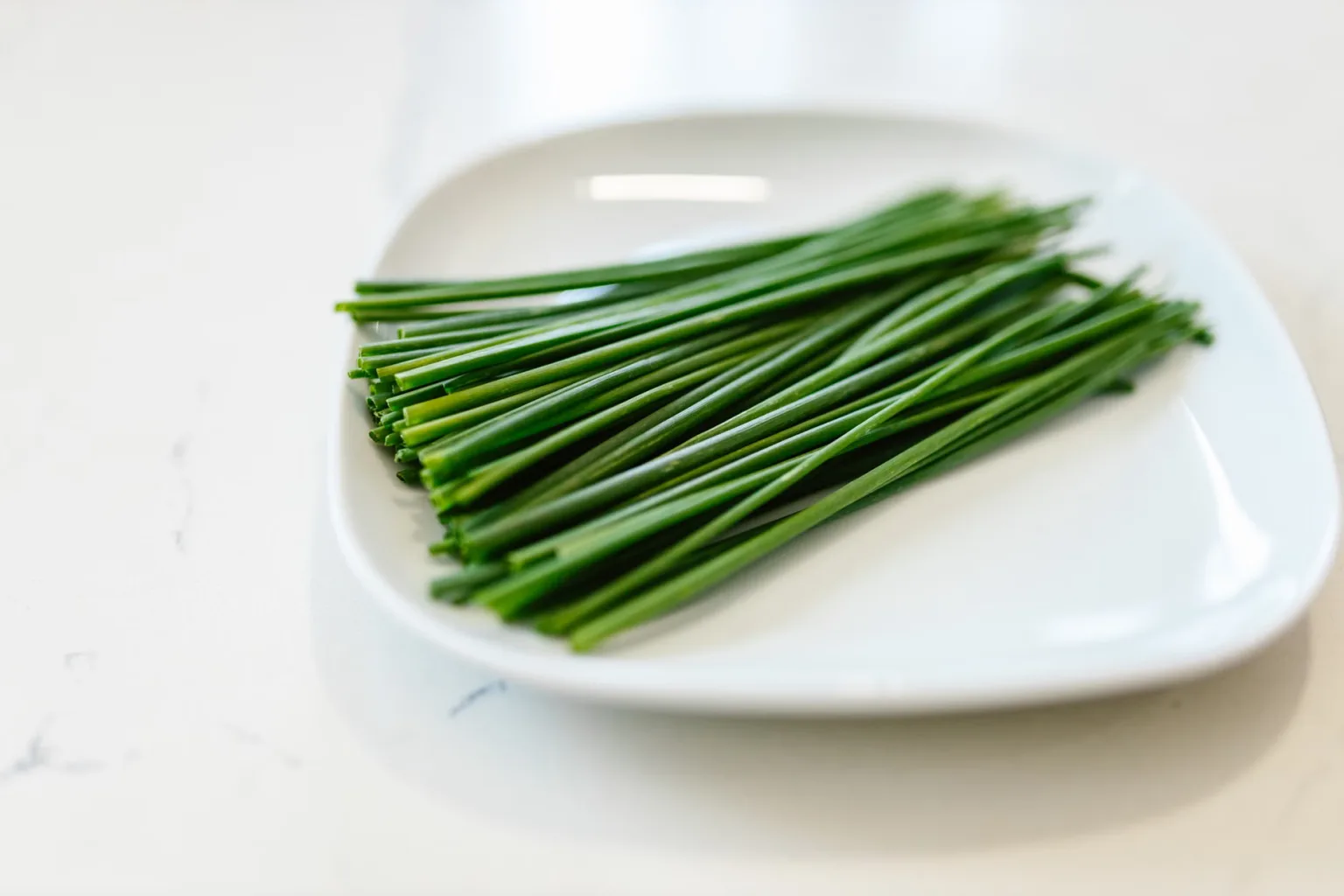
Common chives are an aromatic herb with slender, green, tubular leaves, used mainly to season food and provide a fresh finish. Their culinary flavor is generally delicate and onion-like, sometimes with a faint garlic note. The leaves are usually chopped or sliced into fine rings. Chives should not automatically be confused with scallions, leeks or garlic chives, which may differ in shape, intensity and cooking use. Common names also vary across regions. The culinary information available describes common chives and related herbs, but does not establish which exact species the name “West Indian chives” identifies in every market. The suggestions here therefore apply as a reference if the product has the fine tubular leaves associated with common chives; check the label or ask about the variety before assigning it a specific botanical identity.
When to use it
If the product matches the fine, tubular leaves of common chives, use it when you want a fresh, lightly allium-like note without making it the dominant flavor. It can finish omelets, eggs, potatoes, salads, soups, creamy dishes, sauces and sandwiches. It also adds color and freshness to soft cheese, flavored butter and dressings. Its mild character suits delicate dishes where onion or garlic might be too assertive. If the leaves are noticeably broader or the aroma much stronger, the product may be a different variety; adjust the amount to taste rather than assuming its flavor is the same. To preserve the fresh character of common chives, use them raw or add them near the end of cooking.
How to use it
Rinse the leaves and dry them gently. Remove wilted sections, then slice the fine leaves into rings or small pieces with a sharp knife; clean kitchen scissors also work. If the product resembles common chives, add it just before serving to omelets, salads, potatoes, soups, creamy dishes, sauces, vinaigrettes, soft cheese or butter. A few whole leaves can also serve as a garnish. In hot dishes, stir it in at the end or after removing the pan from the heat: prolonged cooking can diminish its delicate aroma. Start with a small amount and taste, especially if the bunch smells strong or the variety is unfamiliar. Dried or freeze-dried chives can stand in when fresh ones are unavailable, although their aroma and texture will differ.
Flavour and texture
Common chives usually have a delicate, fresh, mildly allium-like flavor, with a gentle onion note. Their fine leaves are tender and add a pleasant green contrast when fresh. Cutting releases more aroma, while prolonged cooking can make that freshness less noticeable. Varieties with broader leaves, such as garlic chives, may taste more assertive, so products sold under similar names do not necessarily share the same flavor profile. For a product called West Indian chives, check its appearance and aroma before treating this description as a confirmed identification.
How to choose it
Choose green, firm-looking leaves without slimy, yellowed or wilted patches. For a bunch, check that the stems are not crushed or excessively wet and that the smell is fresh rather than sour. Fine, tubular leaves are characteristic of common chives; much broader leaves may indicate a different Allium variety. Since market names differ between regions and “West Indian chives” alone does not identify a specific species, check the label or ask which variety is being sold if you need to distinguish it.
Storage
Keep fresh leaves refrigerated and avoid crushing or soaking them. To reduce surface moisture, gently dry them, wrap them in paper towel or a clean cloth, and place them in a container or bag. Check them regularly and remove any deteriorating sections. Fresh chives are perishable, so use them while they still look firm and smell fresh. You can also chop and freeze them in portions for later use; after thawing, their texture may be less suitable for garnish and their aroma may change.
Substitutions
Dried or freeze-dried chives are a convenient alternative when fresh ones are unavailable, but their aroma and texture may be less lively; begin with a small amount and adjust to taste. Garlic chives can work when you want a stronger flavor, but they are not an exact match. Tender leek can provide an allium note in some dishes, although it is firmer and does not reproduce chives’ delicate finishing quality. There is no fixed quantity conversion, and it is worth confirming which product is sold under the local name.
Common mistakes
Do not assume West Indian chives are the same species as common chives, or interchangeable with scallions, leeks or garlic chives: names can vary and the plants may differ. Avoid cooking common chives for a long time, since heat can dull their fresh aroma. Do not chop them with a blunt blade that crushes the leaves, or store them damp and compressed. Start with a small amount and taste before adding more, especially if the product has broad leaves or a strong aroma.
Safety and allergens
Use fresh leaves in good condition and discard any that are visibly spoiled. Rinse them before preparation and follow any storage directions on the label.
Culinary uses
- aromatic herb for seasoning
- garnish and finishing ingredient
Recommended techniques
- finely chop and add at the end
- use raw in salads, sauces and dressings
Pairs well with
- eggs and omelets
- potatoes, tomatoes and salads
- soft cheeses, butter and sauces
- fish and seafood
Frequently asked questions
Are West Indian chives the same as scallions?
That cannot be assumed. Common names vary by place, and the leaves and flavor may differ. Check the label or ask which variety is being sold.
When should I add chives to a dish?
Common chives are usually added at the end of cooking or just before serving to help preserve their delicate aroma and fresh appearance.
Can I freeze chives?
Yes. Chop them and freeze in portions for later cooking. Their texture may soften after thawing, so frozen chives are generally more useful in cooked dishes than as a garnish.
Ingredient allergens
Allergen listThere are no verified associations for these ingredients yet.
Sources and review
Automatically researched, cross-checked and validated content. Sources consulted:
- ¿Por qué la muerte es origen de miedos y tabúes? doi.org/10.64628/aao.fccyk3qj3
- Client Challenge doi.org/10.2307/jj.27939689.16
- Cebollino o cebollín, la elegante hierba aromática con un suave sabor entre el ajo y la cebolla: qué es y cómo usarlo en la cocina www.directoalpaladar.com/ingredientes-y-alimentos/cebollino-cebollin-elegante-hierba-aromati…
- Glosario de especias: cebollino | JUST SPICES ® www.justspices.es/blog/todo-sobre-la-cocina/glosario-de-especias/cebollino
- Gastronomía de Costa Rica - Wikipedia, la enciclopedia libre es.wikipedia.org/wiki/Gastronom%C3%ADa_de_Costa_Rica
- Cebollín: qué es, recetas con cebolla china y beneficios www.finedininglovers.es/explorar/noticias/que-es-el-cebollin-sus-propiedades-y-usos-en-la-co…
- CEBOLLINO - suave y fino sabor a cebolla - Manufacturas Salomón SL. www.salomonspices.com/cebollino-suave-y-fino-sabor-a-cebolla/
- Cebollino chino | Umami Madrid www.umami-madrid.com/2010/01/28/cebollino-chino/
- Cebollino | Gastronomía & Cía www.gastronomiaycia.com/cebollino/
- Cebollino: el ingrediente desconocido por culpa del ajo y la cebolla | El Correo www.elcorreo.com/jantour/despensa/cebollino-ingrediente-desconocido-por-culpa-del-ajo-y-la-c…
- El ingrediente del mes: el cebollino – Kitchen Community kitchencommunity.wordpress.com/2015/05/08/el-ingrediente-del-mes-el-cebollino/
- - YouTube www.youtube.com/watch?v=LK4M7mI-kkM