- Category
- Grains, flour and pasta
- State
- Dry
- Usual unit
- teaspoon
What it is
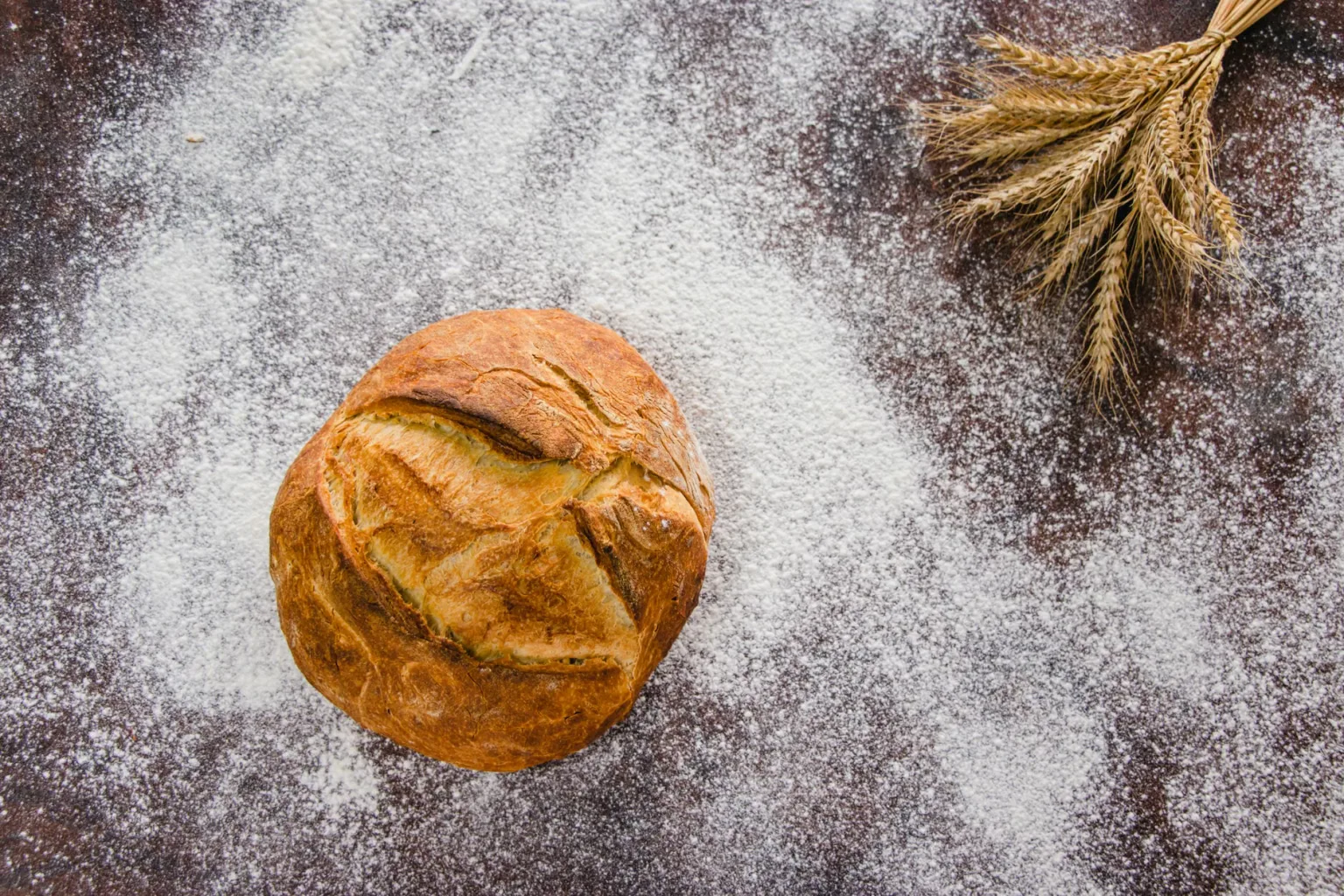
Wheat flour for dusting is not necessarily a special flour variety. It is wheat flour used in a small amount to lightly coat a work surface, hands, or a utensil. Flour is made by milling wheat grains, and products differ in fineness, refinement, and strength. Those differences affect water absorption and dough elasticity when flour is used as a substantial ingredient. For dusting, the practical priorities are that the product is wheat flour and that its texture suits the task; package names and flour classifications vary by country. This is a dry ingredient, not a fresh one, and it should not be confused with starch or flour made from another grain. Some dusting flour may become part of the dough during shaping or cooking, so use it sparingly rather than treating it as a separate thick coating.
When to use it
Use a light dusting when dough sticks to the worktop, rolling pin, or hands during rolling and shaping. It can help with bread, pizza, fresh pasta, and pastry dough, although different recipes behave differently. A little flour can also prepare a surface before rolling dough. Do not automatically add more flour whenever dough feels tacky: some doughs need to retain their hydration, and excess flour picked up from the surface can change their texture. Follow the recipe first, and dust only when sticking makes the dough difficult to handle.
How to use it
Begin with a clean, dry work surface. Sprinkle on a small amount of flour and spread it into a thin film rather than leaving piles. Place the dough on the surface and work gently; if it sticks again, add a little more only where needed. When rolling, you can lightly dust the rolling pin or your hands without covering the dough heavily. While shaping bread, pizza, fresh pasta, or pastry, remove obvious excess flour before proceeding if the recipe calls for it. Dusting flour can be incorporated into the dough, so too much may dry its surface or change the balance of flour and liquid. Flour type matters too: wheat flours vary in strength and refinement, which affect dough behavior.
Flavour and texture
Refined wheat flour generally has a fairly neutral taste, while less-refined types can be more aromatic and more pronounced in flavor. As a dusting, it forms a fine, dry coating; it does not create a crisp crust by itself. Fineness and color vary with milling and refinement, so different wheat flours may not look or feel exactly alike.
How to choose it
For a straightforward dusting flour, choose wheat flour without added ingredients and check the label to distinguish it from self-raising flour or another product. Flour strength and refinement vary, but a brief dusting task usually does not require a particular classification; follow the recipe. If you need to avoid wheat or gluten, read the label carefully and do not assume another flour will behave in the same way.
Storage
Flour is a dry product, but specific storage directions depend on the product and its packaging. Check the label and follow the manufacturer's instructions, especially after opening; a universal storage duration cannot be given here. Whole-wheat flour contains parts of the grain that can shorten its shelf life compared with white flour, so check the package and the condition of the product before use. Appearance alone cannot establish how long flour will keep.
Substitutions
Rice or corn flour can be tried instead of wheat flour for dusting, but they are not identical substitutes: the feel on the work surface and how they cling to dough may differ. In gluten-free cooking, changing the dusting flour alone does not ensure that a wheat dough recipe will behave as intended. Choose an alternative suitable for the recipe and check its label.
Common mistakes
A common mistake is using a lot of flour to fix sticky dough. Excess flour can be worked into the dough and change its texture or flour-to-liquid balance. It is also easy to confuse ordinary wheat flour with other milled products or flour that already contains raising agents. Dust gradually and check the recipe before adding more flour to the dough.
Safety and allergens
Wheat flour contains gluten. It is not suitable for people who need to avoid wheat or gluten. If you have an allergy or a medical dietary requirement, check the product label and do not use it; any alternative must be suitable for that requirement.
Culinary uses
- Espolvorear ligeramente la superficie de trabajo para manipular masas
- Ayudar a evitar que una masa se adhiera a la mesa o a las manos
Recommended techniques
- Espolvorear una capa fina y uniforme
- Enharinar ligeramente las manos o el rodillo
Pairs well with
- Masas de pan y pizza
- Masas de pasta fresca y repostería
Frequently asked questions
What does wheat flour for dusting mean?
It means wheat flour used sparingly on a work surface, hands, or a utensil to make dough easier to handle.
Can I use any wheat flour for dusting?
Wheat flour varies in fineness, refinement, and strength. Follow the recipe, and choose a product without added ingredients if you want a simple dusting flour.
Is wheat flour for dusting gluten-free?
No. Wheat flour contains gluten and is not suitable for someone who needs to avoid it.
Ingredient allergens
Allergen listThere are no verified associations for these ingredients yet.
Sources and review
Automatically researched, cross-checked and validated content. Sources consulted:
- Tipos de harina de trigo, un alimento básico en la cocina: guía para usarlas www.directoalpaladar.com/ingredientes-y-alimentos/guia-para-distinguir-diferentes-tipos-hari…
- Tipos de harina y su uso en la cocina profesional - EN LA COCINA Magazine enlacocina.telemesa.es/cocina/tipos-de-harina-y-su-uso-en-la-cocina-profesional/
- Tipos de harina, propiedades y usos | Consumer www.consumer.es/alimentacion/otros-tipos-harina-mas-alla-trigo
- Evaluación de harina de amaranto como ingrediente antioxidante para la preparación de matrices alimentarias funcionales doi.org/10.35537/10915/162211
- Harina de trigo: Qué necesitas saber: qué es, tipos, características y cómo usarla - Di Marco www.dimarco.it/es/noticias/harina-de-trigo/
- Harina: tipos y clases de harina para usar en la cocina bonviveur.com/es/noticias/harina
- Manihot esculenta - Wikipedia, la enciclopedia libre es.wikipedia.org/wiki/Manihot_esculenta
- ¿Qué es la harina? | ¡¡TE LO CONTAMOS TODO!! - Nutrición Duque restauranteduque.es/que-es-la-harina/
- Los secretos de las mejores harinas para cocinar y hornear | Whole Food Earth® wholefoodearth.com/es-es/wholesome/unveiling-the-secrets-of-the-best-flours-for-cooking-and-…
- Sustituye la Harina de Trigo por Harina Sin Gluten Natural alatria.com/como-sustituir-la-harina-de-trigo-por-harina-sin-gluten/
- Desarrollo de recetas de pastelería aplicando siete harinas alternativas | OpenAlex openalex.org/W2184517806
- Receta de Coulant "San Valentín" www.cordonbleu.edu/news/receta-coulant-san-valentin/es
- Food allergen labelling and information requirements technical guidance - GOV.UK www.gov.uk/government/publications/food-allergen-labelling-and-information-requirements-tech…