- Category
- Pulses
- State
- Other
- Usual unit
- cup
What it is
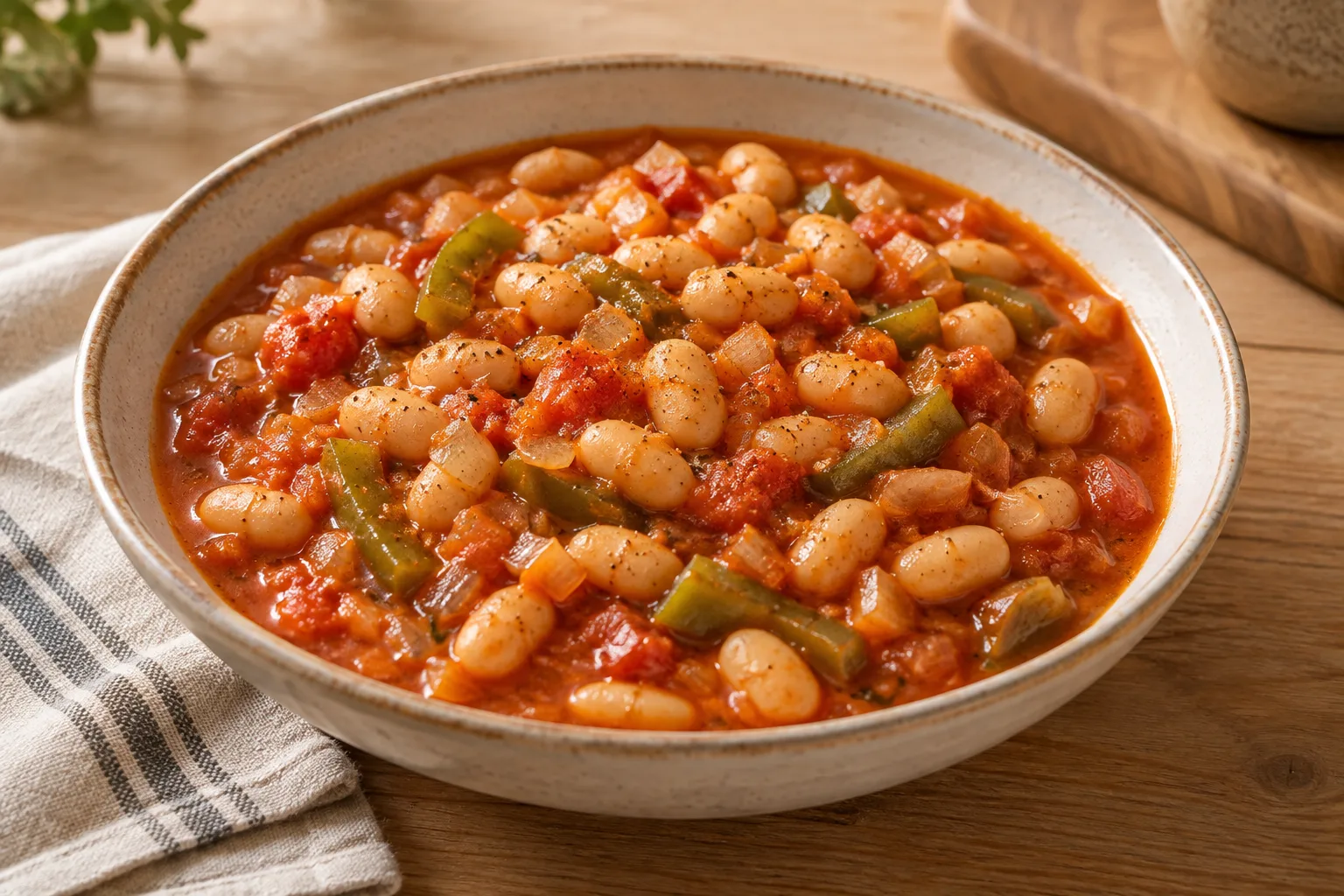
White beans are legumes used as a main ingredient in soups and stews. The name covers products in different forms: some recipes begin with dried beans that are soaked and cooked, while others use beans already cooked in a jar. Identify the form before you start and adjust the preparation accordingly. They can be served whole or mashed to add body to a dish, depending on the recipe and the texture you want.
When to use it
Use white beans when you want them to be the central ingredient in a soup or stew, or as a base to combine with vegetables, rice, chorizo or seafood. Recipes include simple bean stews as well as a preparation with clams and saffron. Dried beans need soaking and cooking, whereas cooked beans can be added later in the cooking process. Choose the form that suits the time you have and the texture you want in the finished dish.
How to use it
First check whether your beans are dried or already cooked. For dried beans, the recipes consulted suggest soaking them and cooking until tender; the cooking time can vary with the water and method. They can then be stewed with vegetables and chorizo or added to a dish with clams and saffron. If using cooked beans from a jar, drain and rinse them if the recipe calls for it, then add them at the appropriate stage. You can also mash vegetables to thicken a stew, or purée the beans themselves.
Flavour and texture
Recipes use white beans in spoonable dishes, where they remain whole or become part of a substantial broth. The final texture depends on the cooking and the product form: one recipe notes that some jarred beans can be so soft that they break apart when removed. Check their firmness before stirring vigorously, and adapt the cooking so they stay whole if that is the texture you want.
How to choose it
Decide whether you need dried or already cooked beans, since recipes handle the two forms differently. If choosing beans in a jar, check the product and its label; one recipe notes that some can be very soft and fall apart when removed. For dried beans, choose a clearly identified product and follow its package directions. The available information does not specify a particular size or variety to seek.
Storage
The available information does not establish specific storage times or conditions for white beans. Keep the product in its packaging and follow the storage directions on the label, whether it is dried or cooked in a jar. After opening a packaged product, consult its instructions for storage and use; do not infer a storage period from a recipe.
Substitutions
Recipes include both dried white beans and precooked beans from a jar, but the forms are not interchangeable without adjusting the preparation. Dried beans need soaking and cooking until tender; cooked beans are added later and may be delicate. If switching forms, adapt the order of the steps and watch the texture rather than automatically applying the same cooking time.
Common mistakes
Do not handle dried and already cooked beans as if they need the same process. Adding very soft jarred beans at the beginning of a long stew may cause them to break apart. Do not assume dried beans always take the same time to cook: one recipe notes that cooking time depends in part on water hardness. Check their texture as you cook.
Safety and allergens
If you have a food allergy, check the labels of packaged products and ask about the ingredients in unpackaged prepared dishes. The available information does not support a specific warning for white beans alone; recipes containing chorizo, seafood or other ingredients require those components to be checked separately.
Culinary uses
- Main ingredient in soups and stews
- Source of body in bean-based dishes
Recommended techniques
- Soak dried beans before cooking
- Simmer until tender
- Cook in a pressure cooker
- Mash or purée cooked beans
Pairs well with
- Chorizo
- Onion, carrot, pepper and celery
- Rice
- Clams and saffron
Frequently asked questions
Can I use dried or jarred white beans?
Yes. Recipes show both forms, but they require different steps: dried beans are soaked and cooked, while already cooked beans are added later in the dish.
What goes well with white beans?
Examples include stews with vegetables and chorizo, combinations with rice, and a dish with clams and saffron. Choose pairings to suit the preparation.
Why do some white beans fall apart?
Texture depends on the product and how it is cooked. Some cooked beans from a jar can be very soft, so check their firmness and handle them gently.
Ingredient allergens
Allergen listThere are no verified associations for these ingredients yet.
Estimated nutrition
- Fat
- 0 g
- Saturates
- 0 g
- Carbohydrate
- 14.6 g
- Sugars
- 0 g
- Fibre
- 4.6 g
- Protein
- 6.15 g
- Salt
- 0.73 g
Sources and review
Automatically researched, cross-checked and validated content. Sources consulted:
- Client Challenge doi.org/10.2307/jj.27939689.16
- Los japonesismos culinarios | OpenAlex openalex.org/W2906636610
- Gastronomía de la provincia de Valencia - Wikipedia, la enciclopedia libre es.wikipedia.org/wiki/Gastronom%C3%ADa_de_la_provincia_de_Valencia
- Noticias www.aesan.gob.es/actualidad/actualidad-noticias
- Food Allergies | FDA www.fda.gov/food/nutrition-food-labeling-and-critical-foods/food-allergies
- Food allergens | EFSA www.efsa.europa.eu/en/safe2eat/food-allergens
- Food Allergy Labeling Laws: International Guidelines for Residents and Travelers - PMC pmc.ncbi.nlm.nih.gov/articles/PMC10169132/
- Oficina Comunitaria de Variedades Vegetales (OCVV) | Unión Europea european-union.europa.eu/institutions-law-budget/institutions-and-bodies/search-all-eu-insti…
- - YouTube www.youtube.com/watch?v=gHmk2w4H6kw
- Variedades de Uva Denominación de Origen Rioja | Web Oficial DOCa Rioja riojawine.com/es/doca-rioja/variedades-de-uva/
- La IGP Melocotón de Cieza crece con más variedades y hectáreas de producción www.rtve.es/play/videos/noticias-murcia/igp-melocoton-cieza-crece-mas-variedades-hectareas-p…
- LAS VARIEDADES DEL CACAO - Magdalena, cocina y más delahuertaalacazuela.blogspot.com/2016/07/las-variedades-del-cacao.html
- Potaje ligero de alubias blancas con chorizo receta paso a paso saboresymomentos.es/potaje-ligero-de-alubias-blancas/
- Como cocinar alubias blancas con chorizo, las de toda la vida - Castey castey.com/como-cocinar-alubias-blancas-con-chorizo-las-de-toda-la-vida/
- Alubias blancas con chirlas y azafrán - Secretos Del Sur www.secretosdelsur.com/es/recetas/alubias-blancas-con-chirlas-y-azafran/