- Category
- Fish and seafood
- State
- Fresh
- Usual unit
- g
What it is
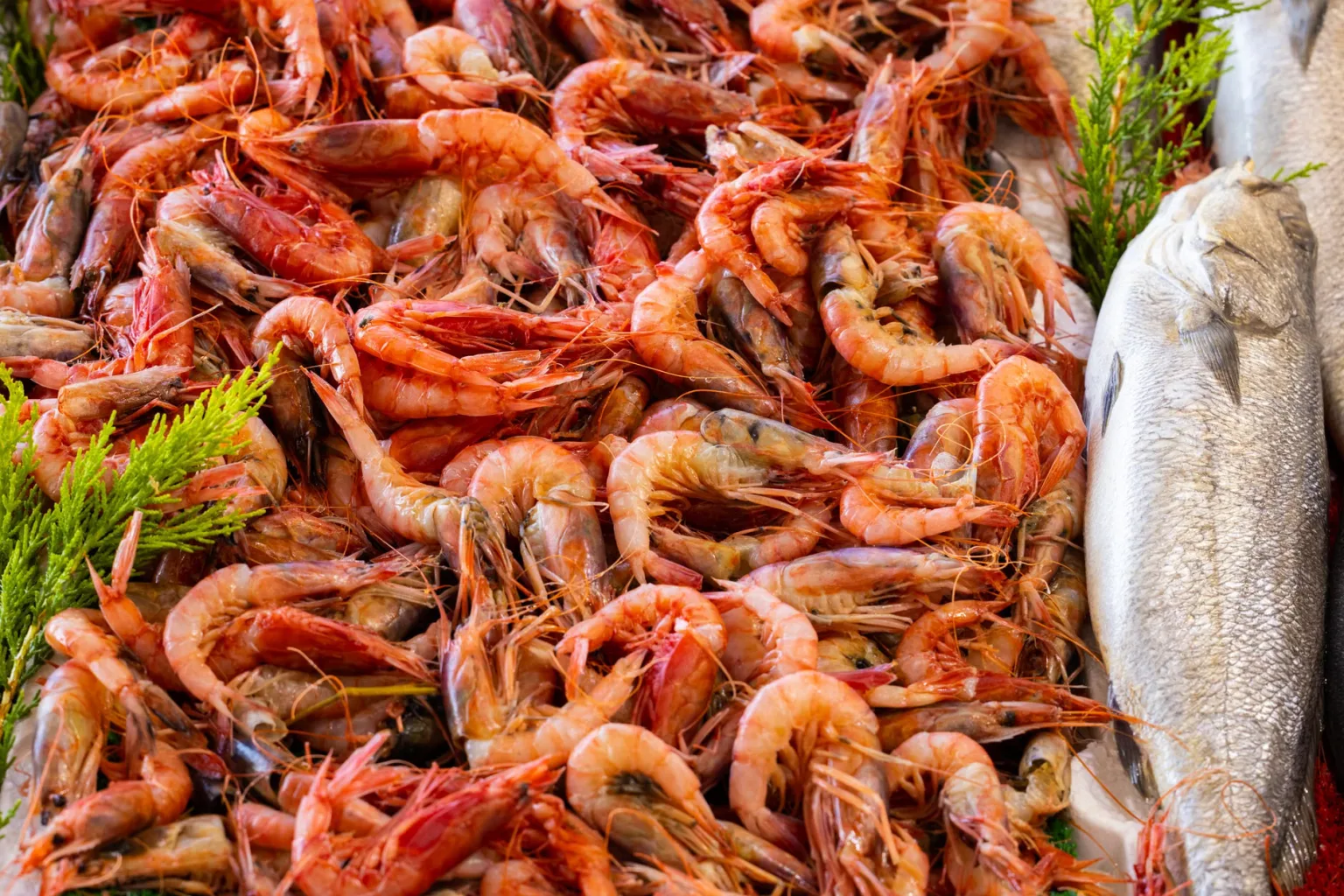
Shrimp are marine crustaceans with segmented bodies and shells, valued as an ingredient in many cuisines. In this guide, “whole” means the shrimp is sold with its head and shell, while “raw” means it has not been cooked. Commercial varieties can differ in size and color, so not every shrimp will look alike or suit every dish in the same way. Its flesh is described as tender and delicate, with a sea flavor that works alongside ingredients such as garlic, oil, parsley, rice and pasta. When you buy whole shrimp, you can cook it as it is or remove parts you do not want before cooking, depending on the recipe. Do not mistake raw shrimp for a ready-to-eat product: raw shrimp needs cooking for cooked preparations.
When to use it
Choose whole shrimp when you want seafood to be the focus, such as in a griddle-cooked dish or appetizer. Larger shrimp are often served on their own; medium-sized shrimp can go into rice, pasta and salads, while smaller shrimp suit soups, stews and fillings. They can also be used in broths and seafood dishes, although the result depends on the variety and recipe. Because the flesh is delicate and can lose juiciness if overcooked, add it near the end of dishes that are already almost ready.
How to use it
Keep raw whole shrimp refrigerated until you are ready to prepare it, and follow the package directions. For griddle cooking, cook it whole and serve it as an appetizer; garlic, olive oil and parsley are common accompaniments. You can also peel it before sautéing and adding it to pasta, rice, soup or a salad. In rice and pasta dishes, add shrimp towards the end to help prevent the delicate flesh from drying out or becoming too firm. Heads can contribute flavor to a broth or soup if the recipe uses them. Adjust the method and timing to the shrimp’s size and the dish; do not rely on appearance alone to judge whether it is cooked.
Flavour and texture
Shrimp flesh is known for a delicate sea flavor and a soft, tender texture. Size and variety can affect how strong the flavor seems and how it works in a dish. Prolonged cooking can make shrimp firmer and less juicy, so pay attention to doneness and avoid leaving it over heat longer than needed.
How to choose it
Choose shrimp that has been kept chilled, looks reasonably uniform and has a mild smell rather than a strong or unpleasant one. For whole shrimp, check that the head remains attached to the body; darkening at the join or a head that comes away easily can indicate reduced freshness. Species, size and color vary, so color alone does not establish quality.
Storage
Keep raw shrimp refrigerated and use it in accordance with the package or retailer’s instructions. Buy chilled seafood towards the end of your shopping trip and avoid breaking the cold chain on the way home. If it is sold frozen, follow the package directions for storage and thawing; do not handle it as though it were fresh, chilled shrimp.
Substitutions
In some dishes, shrimp can be replaced with prawns or other shrimp, but size, flavor and texture may differ. Other seafood can play a similar role in soups or rice dishes, though the result will not be identical. There is no universal substitute: choose according to the recipe and remember that shrimp is a crustacean and may pose the same issue for anyone who needs to avoid crustaceans.
Common mistakes
Do not assume that all shrimp have the same size, color or culinary use. Avoid unnecessarily long cooking, which can make the flesh firm and less juicy. Do not mistake raw shrimp for cooked shrimp that is ready to serve, or treat a strong smell or a loose head as normal signs of freshness.
Safety and allergens
Raw shrimp is not ready to eat: follow the package directions and official food-safety guidance. Shrimp is a crustacean, an allergen category that must be declared in foods containing it as an ingredient. If you have an allergy, check product information and ask about the ingredients and handling of the dish.
Culinary uses
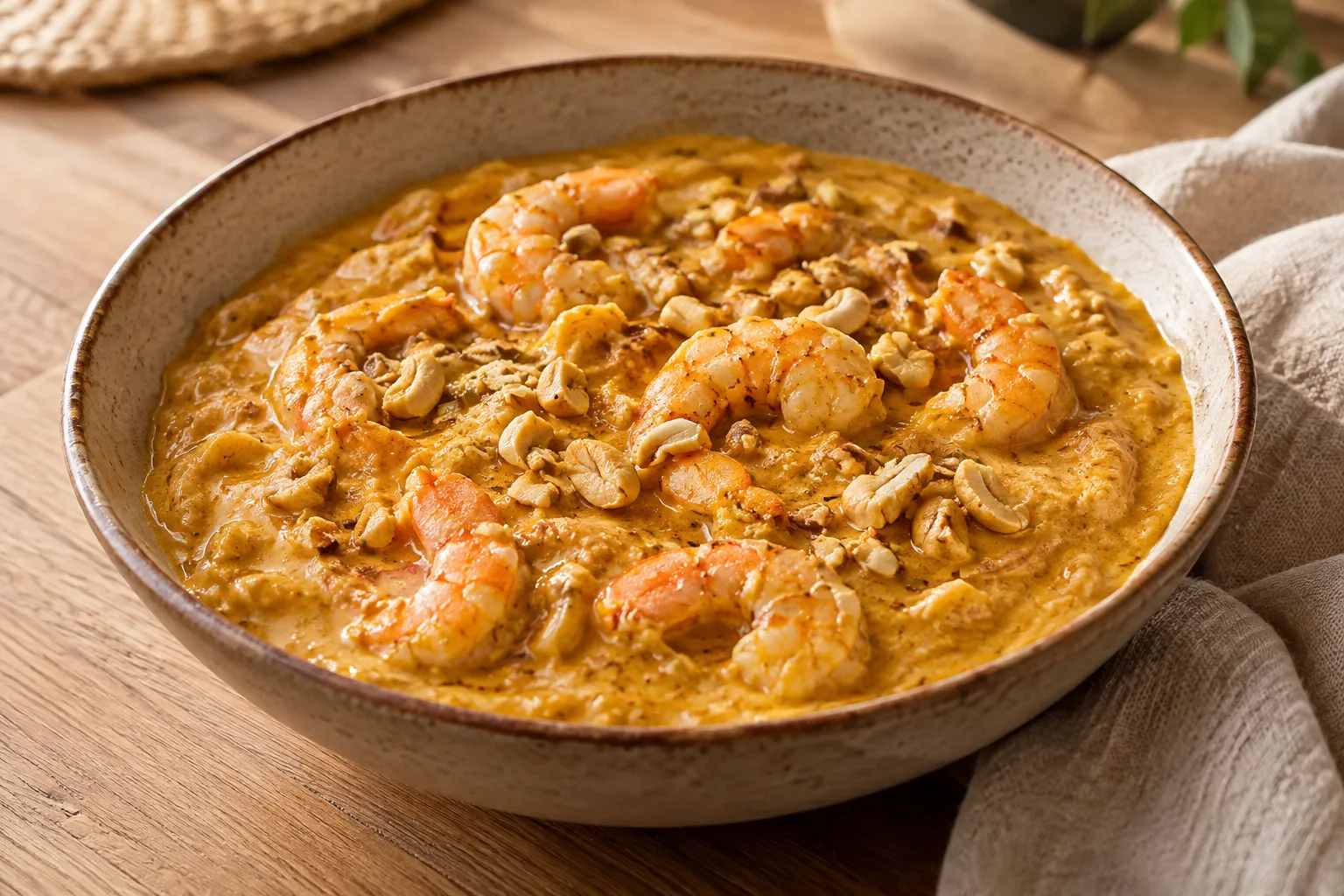
- Main ingredient for seafood dishes
- Flavorful addition to rice, pasta, soups and salads
Recommended techniques
- Grilling or cooking on a hot griddle
- Boiling, sautéing, frying or adding near the end of a dish’s cooking
Pairs well with
- Garlic, olive oil and parsley
- Rice, pasta, tomato, lemon and other seafood
Frequently asked questions
What does whole, raw shrimp mean?
It is sold with its head and shell and has not been cooked. It is not the same as cooked shrimp that is ready to serve.
Which dishes can I make with whole raw shrimp?
You can cook it on a griddle or use it in rice, pasta, soups, stews and salads, adjusting the preparation to its size.
Is shrimp an allergen?
Yes. Shrimp is a crustacean, one of the allergen categories that must be declared when present as an ingredient.
Ingredient allergens
Allergen listDocumented presence
-
Crustaceans
Whole raw shrimp
Estimated nutrition
- Fat
- 5.64 g
- Saturates
- 1.46 g
- Carbohydrate
- 0.14 g
- Sugars
- 0.07 g
- Fibre
- 0 g
- Protein
- 21.6 g
- Salt
- 0.28 g
Sources and review
Automatically researched, cross-checked and validated content. Sources consulted:
- Client Challenge doi.org/10.2307/jj.27939689.16
- Mayonesa - Wikipedia, la enciclopedia libre es.wikipedia.org/wiki/Mayonesa
- Gambas: origen, variedades, propiedades y cómo usarlas en la cocina www.abc.es/recetasderechupete/gambas-origen-variedades-propiedades-y-como-usarlas-en-la-coci…
- Gambas, del océano a un platillo delicioso | Recetas Nestlé www.recetasnestle.com.co/blog-del-sabor/ingredientes/gambas
- Propiedades y beneficios de las gambas - Compesca compesca.com/gambas-propiedades-beneficios/
- Agencia Española de Seguridad Alimentaria y Nutrición www.aesan.gob.es/
- Food Allergens - International Regulatory Chart | Food Allergy Research & Resource Program | Nebraska farrp.unl.edu/IRChart/
- Gambas, del océano a un platillo delicioso | Recetas Nestlé www.recetasnestle.com.ec/escuela-de-sabor/tips-de-recetas/gambas
- La cocina fusión: antecedentes y nuevas propuestas en 8 recetas aplicada en la cocina Italiano-Ecuatoriano | OpenAlex openalex.org/W84058138
- Allergies - Food Safety - European Commission food.ec.europa.eu/food-safety/campaign-2026/allergies_en
- Food Allergies | FDA www.fda.gov/food/nutrition-food-labeling-and-critical-foods/food-allergies
- Allergen guidance for food businesses - GOV.UK www.gov.uk/government/publications/allergen-guidance-for-food-businesses/allergen-guidance-f…
- Food allergens www.cfs.gov.hk/english/trade_zone/safe_kitchen/Food_allergens.html
- Gambas ¿frescas o congeladas? www.afuegolento.com/articulo/gambas-frescas-o-congeladas/87/
- - YouTube www.youtube.com/watch?v=2tZlO8vNMtk
- Gambas-Gastronomía - Región de Murcia Digital www.regmurcia.com/servlet/s.Sl?r=ReP-23128-DETALLE_REPORTAJESPADRE&sit=c%2C543%2Cm%2C3037