- Category
- Herbs and spices
- State
- Dry
- Usual unit
- unit
What it is
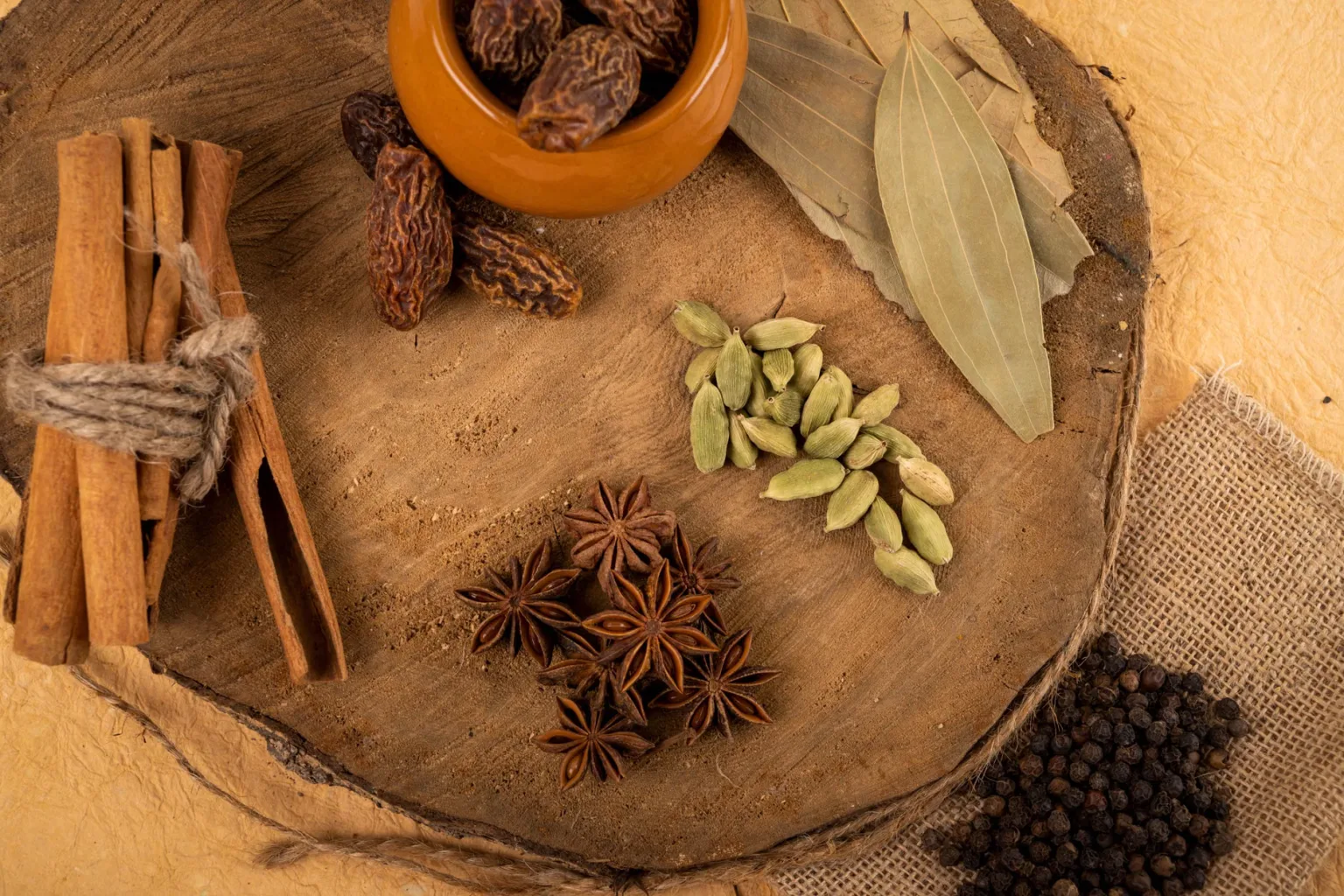
Whole star anise is the dried, star-shaped fruit of Illicium verum. Its hard, woody segments surround small seeds, and the spice is commonly sold dried for use whole or ground. Its sweet, spicy aroma recalls licorice and is potent enough to perfume liquids during cooking. It is not the same spice as anise seed: both can contribute anise-like notes, but they come from different plants, and star anise is identified by its star-shaped fruit. When used whole, it can be removed easily before serving.
When to use it
Choose whole star anise when you want a sweet, anise-like, warming background in a liquid or slow-cooked dish. It works in broths, soups, stews, braises, and marinades, as well as in hot drinks, infusions, compotes, syrups, and fruit desserts. It can also be part of spice blends for savory dishes. Because its aroma is persistent and can overpower other flavors, begin with a small amount and taste before adding more. It is especially practical when a recipe allows the whole piece to cook in the liquid and be removed before serving.
How to use it
Add one or more whole pieces to a broth, stew, drink, or syrup so they can infuse the liquid during cooking or steeping. Start with a small amount: the flavor is strong and can mask more delicate notes. Remove all whole pieces before serving, since they are hard and do not dissolve during cooking. For doughs, spice blends, or other recipes where the fruit cannot be removed, grind it finely and use it sparingly. Grinding shortly before cooking helps preserve its aroma. It can also be combined with cinnamon, clove, or ginger in sweet and savory preparations.
Flavour and texture
Its aroma is sweet, anise-like, and spicy, with a licorice-like note and a warm, lingering character. The whole fruit is hard, firm, and woody; it does not soften into a pleasant texture during cooking. Ground star anise blends more readily into doughs and spice mixes, but its fragrance disperses more easily. Strength can vary from one product to another, so taste the dish and add gradually rather than assuming every piece has the same potency.
How to choose it
Look for whole, dry, recognizable pieces with firm segments and a clear anise-like aroma when the package is opened. A product with many broken pieces or excess dust may be less convenient when you want to remove the spice easily from broth or a drink. Color can vary across brown shades, so do not judge quality by color alone. Avoid product with a damp, rancid, or faded smell. Whole pieces are usually easier to manage than ground spice when a recipe calls for controlled infusion and removal.
Storage
Keep dried star anise in a tightly sealed container in a cool, dry place, away from moisture and heat. Keeping the pieces whole until needed helps preserve their aroma better than grinding them well in advance. Make sure the container is clean and dry before closing it, and avoid leaving it open beside the stove, where it can absorb moisture and lose fragrance. Replace it if its aroma becomes faint or unpleasant.
Substitutions
Anise seed can provide a similar anise-like note, but it does not have exactly the same shape or flavor profile; start with less and adjust after tasting. Fennel seed can also work when a milder, sweet anise-like note is wanted. Neither alternative fully reproduces star anise's warm, lingering character. If a recipe depends on a whole piece that can be removed from liquid, a substitute may change how the dish is prepared.
Common mistakes
Using too much star anise can make it dominate a dish and obscure other aromas. Do not leave whole pieces in the served food: they are hard and should be removed after infusion or cooking. Do not confuse the fruit with anise seed just because both have anise-like notes, and do not automatically replace whole pieces with ground spice in the same amount. Adding ground spice without adjusting can intensify the flavor and make it harder to remove.
Safety and allergens
Use a moderate culinary amount and remove whole pieces before serving, as they are hard and are not intended to be eaten like a tender herb. The available reference material does not provide a specific official warning for ordinary culinary use of star anise.
Culinary uses
- whole-spice flavoring for liquids and slow-cooked dishes
- aromatic seasoning for sweet and savory recipes
- spice for infusions and spice blends
Recommended techniques
- infuse whole in a cooking liquid, then remove before serving
- crush or grind shortly before use
- add sparingly to slow-cooked dishes
Pairs well with
- cinnamon and clove
- ginger and garlic
- soy sauce and meat or poultry
- pear, apple, and citrus
- tea and warm drinks
Frequently asked questions
Is star anise the same as anise seed?
No. They are different spices that can share an anise-like note. Star anise is the dried, star-shaped fruit of Illicium verum; anise seed comes from another plant.
Should I remove whole star anise before serving?
Yes. It can infuse the liquid, but it is hard and does not dissolve during cooking. Remove it before serving.
Can I use star anise in desserts and drinks?
Yes. It can flavor infusions, hot drinks, compotes, syrups, and desserts. Start with a small amount because its aroma can become dominant.
Ingredient allergens
Allergen listThere are no verified associations for these ingredients yet.
Sources and review
Automatically researched, cross-checked and validated content. Sources consulted:
- Client Challenge doi.org/10.2307/jj.27939689.16
- **Juniperus communis www.mapa.gob.es/ministerio/pags/biblioteca/revistas/pdf_DYC/DYC_2005_83_133_146.pdf
- Aceite de Anís Estrellado doi.org/10.31003/uspnf_m8338_02_02
- Especia - Wikipedia, la enciclopedia libre es.wikipedia.org/wiki/Especia
- Anis estrellado propiedades, usos y recetas fáciles | Cocinatis www.cocinatis.com/como-cocinar/consejos-trucos/anis-estrellado_1_1146013.html
- Anís estrella en repostería: usos e infusión www.pastrypedia.net/blog/anis-estrella
- Conoce el anís estrellado en la cocina | Recetas Nestlé www.recetasnestle.com.ec/escuela-de-sabor/tips/anis-estrellado
- Anís estrellado | PAPRIMUR paprimur.es/productos/anis-estrellado/
- " El amor en los tiempos del cólera -- [Love in the Time of Cholera]" people.duke.edu/~garci/cibertextos/bilingues/GARCIA-MARQUEZ-G/AMOR-TIEMPOS-COLERA/AMOR-TIEMP…
- Maqueta.qxp:Maqueta Comità CientÃfico Nâ« 2 aesan.gob.es/dam/jcr:07120507-cbae-498b-85a7-2ec557b6becb/comite_cientifico_11.pdf
- La cocina técnico conceptual: origen, significado, características y propuesta gastronómica a partir de 25 productos cultivados, en la provincia del Azuay-Ecuador | OpenAlex openalex.org/W66629700
- Ingredientes que maridan con anís estrellado ✓ basmatic.com/maridaje/anis-estrellado
- Anís estrellado: análisis y comparativa de las mejores opciones asiáticas para cocinar y preparar sushi sukimotril.es/anis-estrellado/
- Infusión de anís estrellado: análisis y comparativa de las mejores opciones para potenciar tu café quemescafeteria.es/infusion-anis-estrellado/
- ¿Conoces las diferencias entre anís estrellado y matalauva? | El arte de comer bien | mentta www.mentta.com/blog/anis-matalauva-diferencias/?srsltid=AYCX9vKYB3Ha6Koy8OCC0oJyWbqRcGMVlNw3…