- Category
- Grains, flour and pasta
- State
- Powdered
- Usual unit
- g
What it is
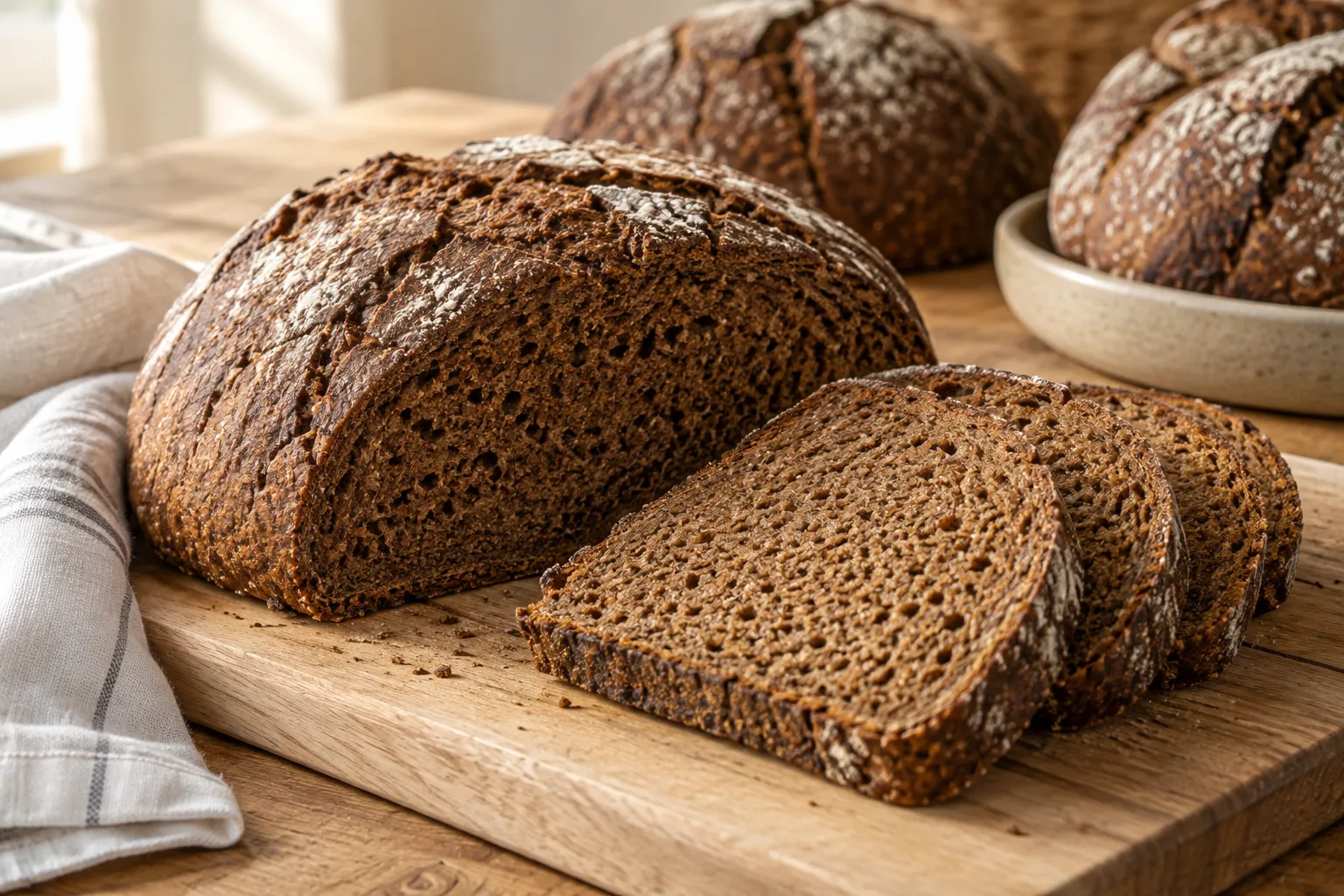
Whole-wheat flour is a milled powder made from the entire wheat grain. Unlike refined wheat flour, it retains all three parts: the outer bran, the germ and the endosperm. Wheat flour contains starch, and gluten in wheat helps give dough elasticity and structure. Whole-wheat products can vary in grind and texture, so they may not behave identically in every recipe. The flour is used for bread and other baked foods, including cakes, muffins and quick breads. Follow the recipe’s proportions and method, especially when changing from refined flour, because the finished texture can vary with the flour and preparation.
When to use it
Choose whole-wheat flour when you want a baked mixture made with the whole grain and are comfortable with a result that may differ from one made entirely with refined white flour. It is suitable for bread, yeasted doughs and quick breads, and can also be used for cakes, muffins and biscuits when the recipe allows. If you are adapting a recipe written for refined flour, begin by replacing only part of it and assess the dough rather than assuming the change will be invisible. The best proportion depends on the recipe and the particular flour.
How to use it
Measure the flour as directed and mix it with the other dry ingredients before adding liquids, unless the recipe specifies another order. For bread dough, it can be combined with water, yeast, salt and oil; mix and knead until the dough comes together and develops a workable structure. For quick baked goods, add the flour to the wet ingredients and avoid excessive mixing. When adapting a refined-flour recipe, start with a partial substitution or a blend of flours. Whole-wheat dough may require a different amount of liquid, so adjust gradually and check the consistency as you mix rather than adding a large amount at once.
Flavour and texture
Because whole-wheat flour retains bran and germ as well as endosperm, its texture differs from refined flour. The result depends on the grind and recipe; doughs may feel denser, and baked goods may have a less light crumb than versions made only with white flour. Blending it with refined flour changes the proportion of whole-wheat flour and the finished texture. There is no single flavor or texture that describes every product, so consider the flour you have and the outcome of the recipe.
How to choose it
Check that the package clearly identifies the product as whole-wheat flour and read the ingredient list to confirm that it matches what you need. Do not confuse whole-wheat flour with flour made from another grain or with refined wheat flour. Grind and texture can vary between products; if you are making a specific recipe, choose a product suited to that use and follow its package directions. Clear labeling helps prevent an unintended swap between flours that may behave differently.
Storage
Keep the flour in a tightly closed package or a clean, dry, airtight container, and follow the manufacturer’s storage directions. Protect it from moisture and contamination. If the package gives specific instructions after opening, use those as your guide. Before use, check that the flour looks and smells as expected for the product, and discard it if there are clear signs of moisture, contamination or spoilage.
Substitutions
For many baked recipes, you can replace only part of the refined flour with whole-wheat flour or use a blend of the two. A complete swap does not guarantee the same rise or texture: dough consistency and liquid absorption may change. Start with a partial replacement and adjust liquid gradually if the dough needs it. There is no single ratio that works identically for every loaf, cake and dough.
Common mistakes
A common mistake is replacing all the flour in a recipe with whole-wheat flour without checking the dough’s consistency. Adding too much liquid at once or overmixing quick-bread and cake batters can also affect the result. Use the flour type specified, measure carefully and make changes gradually. Do not assume that whole-wheat flours with different grinds will produce exactly the same crumb.
Safety and allergens
Wheat contains gluten. Keep hands and preparation surfaces clean, and follow the package and recipe directions. If you need to avoid wheat or gluten, check the label carefully and choose a product suitable for your needs.
Culinary uses
- bread and yeasted dough base
- flour for cakes, muffins, biscuits and quick breads
- thickener or structure-building ingredient in baked mixtures
Recommended techniques
- kneading
- mixing and folding
- baking
- blending with refined wheat flour
Pairs well with
- yeast and water for bread dough
- rolled oats in bread
- apple and cinnamon in quick breads
- vegetable oil in bread dough
Frequently asked questions
What makes this flour whole wheat?
It is milled from the entire grain and retains the bran, germ and endosperm, rather than containing only the endosperm.
Can I replace all the white flour in a recipe?
Some recipes allow a full swap, but texture and dough consistency may change. Try a partial replacement first and adjust gradually.
Can I use whole-wheat flour for bread?
Yes. It is used in bread, including yeasted doughs. Follow the recipe proportions and adjust the dough consistency gradually.
Ingredient allergens
Allergen listThere are no verified associations for these ingredients yet.
Estimated nutrition
- Fat
- 2.5 g
- Saturates
- 0.43 g
- Carbohydrate
- 72 g
- Sugars
- 0.41 g
- Fibre
- 10.7 g
- Protein
- 13.2 g
- Salt
- 0 g
Sources and review
Automatically researched, cross-checked and validated content. Sources consulted:
- Harina - Wikipedia, la enciclopedia libre es.wikipedia.org/wiki/Harina
- Evaluación de harina de amaranto como ingrediente antioxidante para la preparación de matrices alimentarias funcionales doi.org/10.35537/10915/162211
- Washington State Food Access English-Spanish Glossary wpcdn.web.wsu.edu/wp-snaped/uploads/sites/2/2025/10/Food-Access-Spanish-Glossary.pdf
- - YouTube www.youtube.com/watch?v=cmeTziX-ZWU
- Food & Fun Afterschool - Super Snacks Parent Handout hsph.harvard.edu/wp-content/uploads/2024/10/Food-Fun-Parent-Handout-Super-Snacks.pdf
- Para la ciudadanía www.aesan.gob.es/para-la-ciudadania
- Pan De Manzana - Expanded Food and Nutrition Education Program efnep.tamu.edu/pan-de-manzana/
- CATÁLOGO HARINA INTEGRAL PASTELERÍA molinocanuelas.com/sites/default/files/Catalogo%20Harinas%20Integrales_pasteleria.pdf
- Pan de Harina Integral en Bolsa extension.oregonstate.edu/es/node/192101/printable/print
- Evaluación de cinco proporciones de harina de trigo con ... bdigital.zamorano.edu/server/api/core/bitstreams/855e2ab4-2e3e-4b1d-ae1d-0ac43bb17874/conten…
- FSHN10-13s/FS217: De compras para salud: granos integrales ask.ifas.ufl.edu/publication/FS217
- Pan de trigo integral - Spend Smart Eat Smart spendsmart.extension.iastate.edu/pantry-picks/pan-de-trigo-integral/?lang=es
- Converting Recipes to Whole Grain Flour: Ratios & Tips nutrimill.com/es/blogs/life-in-healthy-balance/tips-and-tricks-for-converting-recipes-to-who…
- Maridajes para harina integral de trigo en Europa del este ✓ basmatic.com/maridaje/harina-integral-de-trigo/europa-del-este
- Food allergen labelling and information requirements technical guidance - GOV.UK www.gov.uk/government/publications/food-allergen-labelling-and-information-requirements-tech…