Documentary synthesis prepared with AI assistance. It does not replace specialist review or certify kitchen testing. · Updated 31 October 2026
A mountain cuisine shaped by place and exchange
Andorra is a small, landlocked country in the Pyrenees, between France and Spain. Its mountain environment and rural traditions help explain the prominence of livestock products, seasonal crops, preserved foods and warming soups and stews. Rivers and high mountain lakes also figure in the food story, most visibly through river trout. These are not ingredients of a sealed or uniform national repertoire: Andorran cooking shares dishes and culinary habits with neighbouring Catalan regions, while its proximity to France and Spain has contributed to a wider exchange of preparations and products.
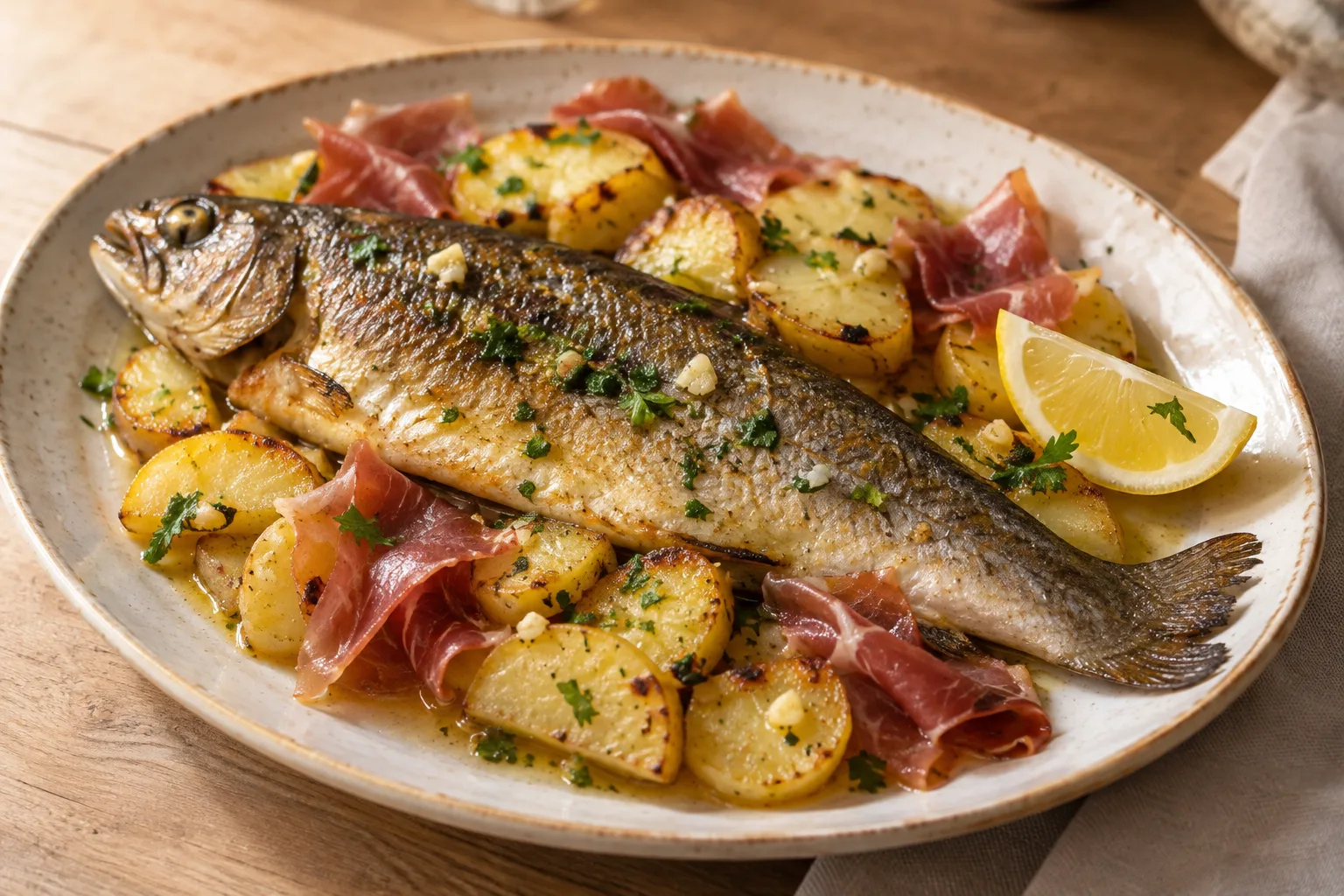
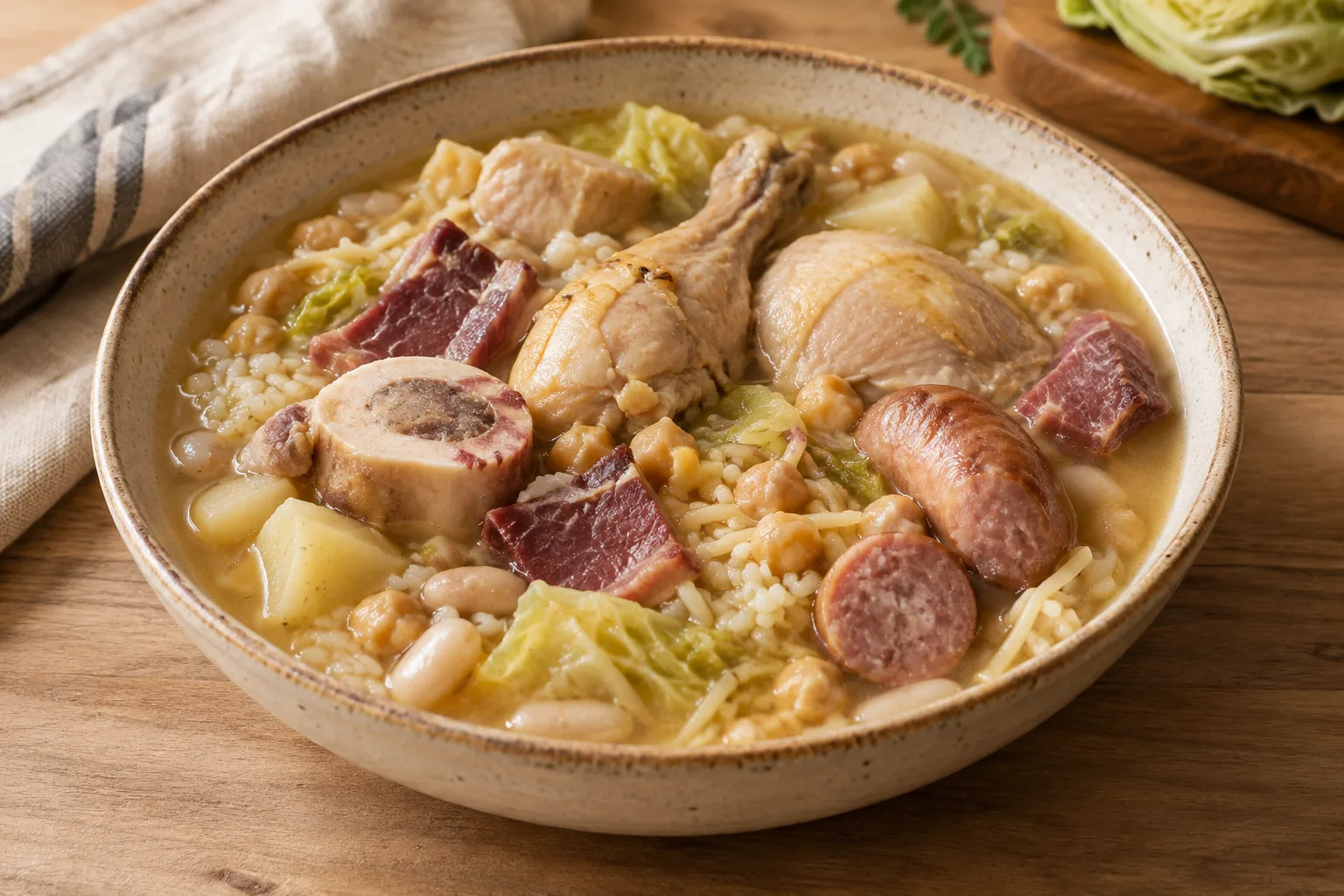
Two familiar dishes convey different aspects of this table. Escudella is a substantial soup or stew, with versions combining meat, vegetables, pulses and pasta or rice. Trinxat brings cooked cabbage and potato together, often with pork, in a dish associated with mountain cooking. Trout prepared with ham makes use of freshwater fish and a savoury cured meat. Alongside these are mushroom dishes, game, cheeses, honey and sweets associated with celebrations. The repertoire is best understood as a living Pyrenean food culture, shaped by season, household preference and connections across borders rather than by claims of culinary exclusivity.
Rural resources and shared culinary traditions
Descriptions of traditional Andorran food emphasize a mountain society in which agriculture, livestock raising and making use of available resources mattered. Meat, garden vegetables, cereals, bread, fish and wild foods form part of this account. Seasonal conditions are reflected in the prominence of winter soups and stews, spring greens and dishes that incorporate mushrooms or preserved fruit. This context helps explain the practical character of many preparations, without implying that every household ate the same foods or followed one fixed recipe.
Andorra’s culinary relationships are particularly close to those of neighbouring Catalan areas, including the Pyrenean regions around Cerdanya and Alt Urgell. Trinxat, snails cooked a la llauna, mushroom rice and some forms of coca belong to broader regional traditions as well as appearing in accounts of Andorran food. French and Spanish connections also form part of the country’s culinary setting. These overlaps are evidence of shared cultural and geographic ties, not grounds for assigning every dish an exclusive origin. Today, local producers continue to make or grow products such as meat, cured meats, cheese, honey, jams and fresh pasta, combining contemporary production with established local knowledge.
A pantry of livestock, crops and mountain produce
Meat has a long-standing place in accounts of Andorran cuisine. Local production includes beef, veal, lamb and kid, as well as pork and traditional cured meats. Pork products appear in dishes such as escudella and trinxat, while game preparations include stews made with wild boar and other game. Cured meats, including several kinds of sausage, may be served on their own or alongside bread and other foods. The prominence of these ingredients reflects both rural foodways and the work of contemporary producers; it does not mean every meal is meat-based.
The vegetable pantry includes potatoes, cabbage, onions and other seasonal produce, with pulses and cereals used in hearty dishes. Mushrooms, including prized varieties such as ceps and morels, can be cooked with rice, eggs, sauces or meat. Spring dandelion salad is a specifically documented use of a wild green. River trout provides a freshwater option; recipes also include salted cod, a preserved fish associated with periods when fresh sea fish was not readily available locally. Local food producers offer cheeses made with cow’s or sheep’s milk, fresh cheese such as mató, mountain honey and fruit preserves. Jams and jellies made with forest fruits bring seasonal produce into the pantry beyond its harvest period.
Savory depth, crisp edges and seasonal contrasts
Many well-known Andorran preparations build flavour through a combination of vegetables, pork, meat and slow cooking. Escudella can be rich and substantial, but its exact ingredients vary: versions include broth, meats, vegetables, pulses and pasta or rice. Trinxat has a different balance of textures. Cooked cabbage and potatoes are mashed or chopped together and often finished in a pan with garlic and pork. Depending on the cook, it may be served as a loose mixture or browned into a more compact, crisp-edged form.
Mushrooms add earthy notes to rice, omelettes, sauces and stews, while game is often described in combination with vegetables or mushrooms. Sweet-and-savoury pairings are also documented. Spinach with raisins and pine nuts brings dried fruit and nuts to a vegetable dish; Andorran-style cod is another preparation associated with contrasting ingredients. Quince allioli can accompany meat or be spread on bread, offering a distinctive sweet element alongside garlic and oil. Desserts include crema andorrana, a custard related to crème brûlée and crema catalana; descriptions differ over its topping, so it is more accurate to note that versions may use cream or meringue rather than assume a single universal finish. Regional and household variation is part of the flavour landscape.
Winter meals, festive foods and passing on recipes
Escudella is closely associated with cold weather and festive meals, including Christmas. Its adaptable mixture of meat, vegetables, pulses and pasta or rice makes it suitable for a substantial shared meal, while individual household versions differ. Accounts also describe communal escudella gatherings connected with January celebrations such as Sant Antoni and Sant Sebastià. These occasions are documented as local practices, not as a single identical ritual observed everywhere in Andorra. Trinxat, with its winter cabbage and potatoes, is likewise a familiar expression of mountain cooking.
The festive calendar includes several sweets and baked preparations. Coca masegada is associated with popular celebrations and special occasions, and orelletes are documented as an Easter sweet. Sweet fritters known as bunyols de vent are associated with All Saints’ Day. Recipes and products can be made at home, by bakers and by other local producers; the settings of transmission are therefore varied. Preserving forest fruit as jam is another way of carrying seasonal produce forward. These traditions persist alongside restaurants and contemporary food businesses, with recipes that can be maintained, adapted or interpreted differently. Continuity here does not require uniformity: an escudella may change from one kitchen to another while remaining recognizable as the same kind of substantial communal dish.
Simmering, mashing, frying and preserving
The preparation of escudella centres on cooking ingredients together in a pot. Meat and vegetables contribute to the broth, while pulses and pasta or rice make the result more filling. Recipes differ in the ingredients used and in how broth and solids are served, so there is no need to treat one version as definitive. Long, gentle cooking is also found in meat stews, including preparations with game and mushrooms.
For trinxat, cabbage and potatoes are cooked until soft, then mashed or chopped together. Garlic and pork may be included, and the mixture can be browned in a pan. The contrast between its soft interior and the browned surface is part of the appeal of this simple preparation. Andorran-style river trout uses a shorter sequence: season and flour the fish, fry it in a little oil or fat, cook ham in the same pan, then place the ham over the trout. The ham’s cooking fat adds flavour. Other documented methods include roasting or baking snails on a metal tray, incorporating mushrooms into omelettes and rice, and turning fruit into jams or jellies. These techniques belong to particular dishes, not to an unvarying rulebook for the whole cuisine.
From household pots to shared restaurant meals
A meal may be organised around a substantial soup, a vegetable-and-potato dish, a fish preparation or a stew, with its composition following season and household preference. Escudella can serve as the centre of a winter meal, bringing broth, meat, vegetables, pulses and pasta or rice together. Trinxat may be served as a main dish or as part of a wider meal. Trout with ham offers a freshwater fish course, while game and mushrooms appear in seasonal stews. Cured meats and cheeses can be served together as an appetiser or sharing platter.
Some restaurants operate in bordas, rural storehouses adapted for dining. These buildings provide a setting in which mountain dishes are served, but they are only one part of present-day eating in Andorra; restaurants also offer other styles of cooking, and home meals remain important. Festive pots and sweets may bring families or local communities together, without implying one prescribed way to arrange every meal. Producers and shops also make local cheeses, honey, preserves and drinks available beyond the household kitchen. Coffee is described as a common everyday drink, including in the morning and after lunch. Sharing can take the form of a common pot, a platter or a family meal—the occasion and food matter more than a single national table ritual.
A short glossary of dishes and products
These terms identify preparations and products found in accounts of Andorran food. Some are also familiar in neighbouring Catalan regions; their presence in Andorra describes a shared culinary landscape, not an exclusive claim of origin.
- Escudella: A hearty soup or stew combining broth with ingredients such as meat, vegetables, pulses and pasta or rice. Its recipe and serving style vary.
- Trinxat: A dish of cooked cabbage and potato, mashed or chopped together and often fried with garlic and pork.
- Truita de riu a l’andorrana: River trout seasoned and floured, fried, then served with ham cooked in the same pan.
- Cargols a la llauna: Snails roasted or baked on a metal tray, commonly accompanied by oil, salt and sometimes allioli.
- Coca masegada: A sweet, flat bread or pastry associated with celebrations and special occasions.
- Brossat: A fresh cheese valued in local food traditions and made by Andorran producers.
- Quince allioli: A quince-based accompaniment with oil and garlic, served with meat or spread on bread.
The names may appear in Catalan or in translated forms, and individual recipes can differ in ingredients and technique. Understanding the terms through their defining preparation is more useful than expecting one standard formula for every kitchen.
One country, many cuisines
Parish of Canillo
Canillo is documented in connection with high-altitude farm produce, including locally produced eggs from the Montaup and Ransol valleys. Dandelion, also called chicory in accounts of the dish, is associated with spring salad in Andorra and is identified as a characteristic preparation of this parish. These examples record specific products and a dish linked to Canillo; they do not establish a separate, uniform cuisine distinct from the rest of the country.
Cook