Documentary synthesis prepared with AI assistance. It does not replace specialist review or certify kitchen testing. · Updated 31 October 2026
Between desert, Gulf coast and oasis
The food traditions of the United Arab Emirates take shape across three connected environments: arid interior landscapes, settlements along the Gulf, and cultivated oases. They offered different resources and ways of living. Accounts of earlier diets describe dates, grains and pastoral foods inland, while coastal communities depended on fish and other marine resources. The oasis palm, especially, links agriculture to a food culture in which dates are eaten as they are or made into syrups and sweets.
Emirati cuisine is not a single unchanging menu. It includes foods associated with Bedouin life, fishing communities and farming, alongside dishes shaped by trade and contact with neighbouring regions. Present-day cities such as Dubai and Abu Dhabi are highly international, but traditional dishes remain visible in family gatherings, celebrations and heritage settings. The contrast between wheat-based harees and rice-based machboos, for example, hints at different ingredients and histories rather than one formula for national cooking. Landscape helps explain the pantry, while occasions and household practice help explain how its dishes are prepared and shared.
Local livelihoods and exchange over time
The region’s historical foodways drew on more than one livelihood. Pastoral and Bedouin diets included dates, camel milk, grains and meat; coastal diets made substantial use of Gulf fish; and oasis agriculture supported date cultivation. Preservation mattered where food had to last: accounts describe drying and salting, with dried lime and turmeric among the seasonings used in older preparations. These shared foundations should not be treated as a single uniform diet across every community.
Maritime trade brought new ingredients and influences, including spices associated with India and Persia. Rice became important alongside an older reliance on wheat, and it now forms the base of well-known dishes such as machboos. Such exchange helps explain the aromatic profiles of Emirati cooking, but it does not establish an exclusive origin for any dish. Many foods are shared across the Arabian Peninsula and the wider Gulf, with local versions and household variations.
Harees illustrates this regional connection especially clearly. Its knowledge and practices are recognized as shared heritage among the United Arab Emirates, Oman and Saudi Arabia. That recognition concerns this particular dish and its associated skills, social uses and transmission—not Emirati cuisine as a whole.
Grains, dates, fish and aromatic seasonings
Wheat and rice serve different culinary purposes. Wheat is central to harees, where long cooking and beating turn grain and meat into a cohesive, thick dish. Rice absorbs seasoned cooking liquid in machboos, which may be made with meat, chicken or fish. Dates are a defining oasis crop and appear as a snack, in sweets and as syrup. Ghee provides a rich finish to harees and other preparations. Milk and dairy products also belong to descriptions of pastoral foodways, though everyday use varies.
Fish links the table to coastal livelihoods. It may be grilled, included in a rice dish, or preserved by drying and salting. Lamb and chicken are common choices in slow-cooked dishes; camel meat is mentioned in connection with special occasions, not as a universal daily food. This combination of grains, dates, seafood and meat reflects the variety of local environments and ways of life.
Seasonings are chosen for fragrance and depth. Cardamom, saffron, turmeric and cinnamon appear in descriptions of rice, breads and sweets. Loomi, or dried lime, brings a sour, concentrated note to some stews and rice dishes. Bezar is a household spice blend rather than one fixed recipe: its composition can differ from family to family. These ingredients offer a useful guide to the pantry without suggesting that every dish uses them all.
Aromatic rice, smooth wheat and contrasting textures
Many Emirati preparations are aromatic rather than defined by intense heat. Cardamom, cinnamon and saffron bring warmth and fragrance; turmeric contributes color, while dried lime can cut through the richness of a broth with a sharp, tangy note. Spice balance differs between dishes and households, so there is no single profile that describes every meal.
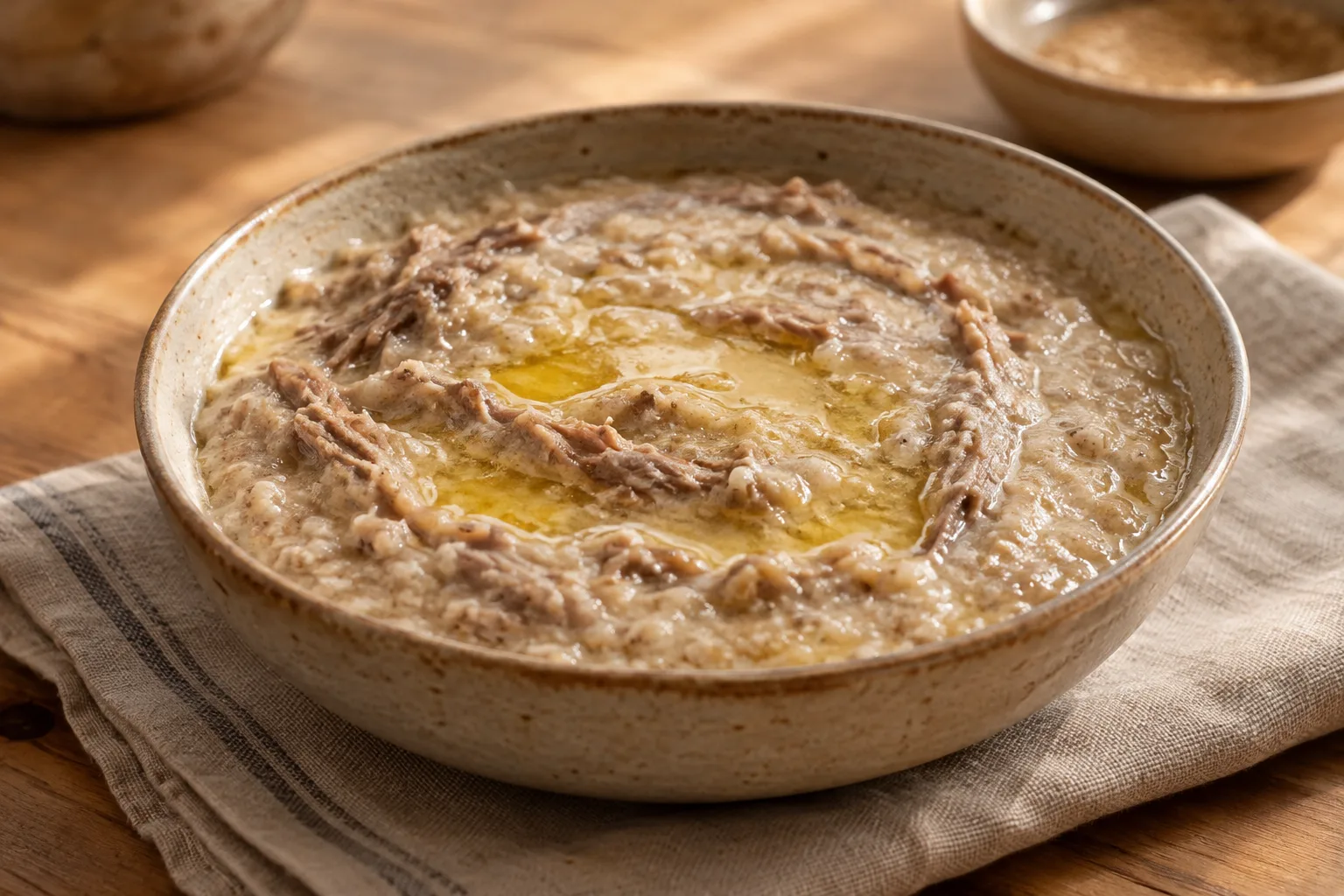
In machboos, rice cooks with seasoned broth and a choice of meat, chicken or fish. The grain takes on the liquid’s flavor, and a fish version connects the dish directly to coastal foodways. Harees offers a contrasting experience: wheat and meat are cooked together until very soft, then beaten into a smooth, substantial consistency. Ghee is commonly spooned over the finished dish. Its texture and restrained seasoning are as important to its character as its ingredients.
Other foods make different contrasts tangible. Balaleet pairs sweetened, spiced vermicelli with egg, bringing sweet and savory elements together at breakfast. Khameer is a soft bread, while thin raqaq can be crisp. Luqaimat are fried dough pieces with a browned outside and soft centre, often finished with date syrup or honey. These are specific culinary contrasts, not rules that apply to every Emirati dish.
Hospitality, Ramadan and shared knowledge
Food is part of welcoming guests and sustaining relationships. Arabic coffee, known as gahwa, is often offered with dates; the small serving and fragrant coffee make it a distinctive gesture of hospitality. Meals shared with relatives and guests may feature substantial dishes prepared in quantity, although the details of service belong to particular households and occasions rather than a uniform national protocol.
Harees has a particularly well-documented role in social life. It is prepared for different occasions, with special importance during Ramadan, when honouring guests, and at events such as weddings. Because cleaning and preparing the grain takes effort, it is commonly made in large quantities and served for several people to share. Preparing and serving it is associated with generosity and social connection. Knowledge and skills are transmitted within families and also through educational institutions, restaurants, hotels, media and official institutions. Its heritage recognition is shared by the UAE, Oman and Saudi Arabia.
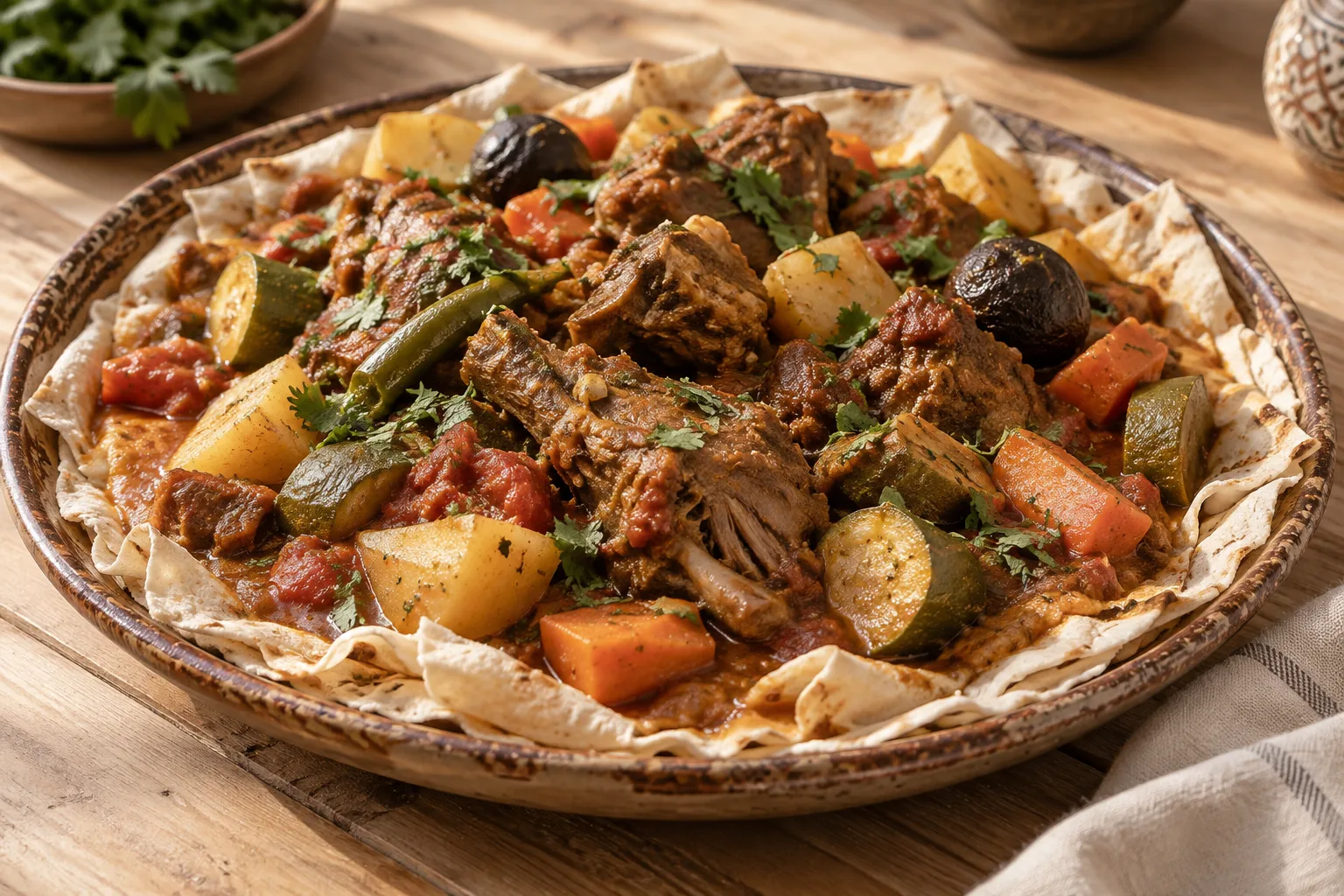
Thareed, a stew served over bread, is also associated with iftar in descriptions of Emirati food. Machboos and sweets such as luqaimat appear in festive and family settings. These examples show how occasions shape the menu and the scale of preparation. They do not mean that every family serves the same dishes, or that any one meal defines the country’s entire culinary tradition.
Slow cooking, beating and bread-making
Time and texture are central to several Emirati preparations. For harees, wheat and meat cook together until very tender. The mixture is then beaten until grain and meat are integrated into a thick, cohesive consistency. The process calls for care and sustained attention, especially when larger quantities are made; ghee is commonly added at serving. This is more than simply boiling ingredients together: the transformation into a smooth shared dish is a defining part of the preparation.
Machboos uses a different method. Meat, chicken or fish contributes flavor to the cooking liquid, and rice absorbs that seasoned broth. Thareed depends on assembly rather than beating: bread is placed beneath or alongside a meat-and-vegetable stew so that it takes up some of the liquid and softens. The bread used can affect the result.
Bread-making brings another set of techniques. Khameer is cooked into a soft, puffed bread, while thin raqaq is spread on a hot surface. Chebab is a thin, aromatic bread or pancake-style preparation. Descriptions of the wider food tradition also mention drying and salting as preservation methods and underground cooking in Bedouin contexts. These methods belong to particular foods and histories; they should not be assumed for every household or dish.
Breakfasts, visits and meals for a gathering
A traditional breakfast may bring together breads and sweet-savoury dishes. Khameer or chebab can be served with accompaniments such as cheese, honey or date syrup. Balaleet combines sweet vermicelli, often scented with saffron or cardamom, with egg. This assortment shows why a strict division between breakfast foods that are sweet and those that are savoury does not always fit Emirati dishes. It is a documented repertoire, not a claim that every household eats the same breakfast.
At a main meal, machboos can provide a generous rice dish made with meat, chicken or fish. Harees is suited to preparation in quantity and is served in large dishes for sharing. Thareed offers another complete meal, with stew and bread together. Ramadan, weddings and other gatherings can call for these larger preparations; the particular menu changes by household and occasion.
Hospitality can begin with coffee and dates before a meal is served. In some accounts, harees is eaten from a shared platter, while family meals more broadly may centre on food prepared for several people. The social meaning lies in welcoming and sharing, not in a single mandatory arrangement of the table. A visit, a morning meal and a festive gathering each have their own pace and food, and contemporary urban dining also includes many international cuisines alongside Emirati traditions.
A short guide to Emirati food terms
Names can have more than one English spelling, and household versions of a dish may differ. The terms below identify particular ingredients, preparations and uses documented in Emirati food traditions; they do not imply that each food is exclusive to the UAE.
- Harees: Wheat and meat cooked until very soft, then beaten into a smooth, thick dish; often finished with ghee and shared on social occasions.
- Machboos: A rice dish cooked with seasoned broth and meat, chicken or fish.
- Thareed: Stew served with bread, which softens as it takes up the cooking liquid.
- Balaleet: Sweetened, aromatic vermicelli served with egg; a documented breakfast preparation.
- Khameer: Soft bread, sometimes lightly sweet and scented with spices.
- Raqaq: Very thin bread, which may be cooked crisp and used with stew.
- Luqaimat: Small pieces of fried dough, commonly served with honey or date syrup.
- Gahwa: Arabic coffee offered as hospitality, often alongside dates.
- Loomi: Dried lime used to add a concentrated sour note to some rice and stew dishes.
- Bezar: A spice blend whose ingredients and proportions can vary between households.
One country, many cuisines
Gulf coastal communities
Fishing and seafood are important to the documented food history of communities along the Gulf. Fish may be grilled, dried or salted for preservation, or cooked with rice in dishes such as fish machboos. These foods reflect a coastal relationship with marine resources and differ in emphasis from the pastoral and oasis ingredients described for the interior. They do not imply that all coastal towns share an identical menu or set of preparations.
Al Ain and the inland oases
The inland oases are associated with date-palm cultivation, and dates have a prominent place in accounts of the region’s foodways. Descriptions of earlier diets also refer to pastoral foods such as camel milk, grains and meat. These details offer a documented contrast with the fishing traditions of the coast, while recognizing that ingredients and practices can overlap and that they do not establish rigid culinary boundaries.
Cook