Documentary synthesis prepared with AI assistance. It does not replace specialist review or certify kitchen testing. · Updated 31 October 2026
Land, seasons and local foodways
Armenia lies in the South Caucasus, between Georgia, Azerbaijan, Turkey and Iran. Its highlands, mountainsides and valleys offer different growing conditions, and foodways reflect both local landscapes and the agricultural calendar. Rather than one uniform national menu, there are household and community variations in ingredients, preparation and the plants gathered nearby. Armenian food traditions also extend beyond the country’s present borders through diaspora communities, whose histories and dishes can differ from those of Armenia today.
Wheat, bread, herbs, vegetables, fruit, dairy and meat are recurring elements in the documented foodways. Their combinations shift with the season and the dish. Thin lavash may accompany a meal, wrap cheese and herbs, or be torn to pick up other foods. A bowl of yogurt-and-wheat soup, a pan of seasonal greens or a grilled meat dish each reflects a different way of using the larder.
Seasonality is especially visible in foraging and preservation. In some highland communities, wild plants are gathered and used fresh or dried; jingalov hats, a flatbread generously filled with greens, is documented in the southern mountainous region. In the Ararat Valley, roadside sellers offer produce at its seasonal peak. These examples reveal local food practices without making them a single template for the whole country. [source marker removed]
Agriculture, exchange and changing kitchens
Armenian food history is connected to cultivation in the highlands, animal husbandry, migration and changing political circumstances. Archaeological finds at Erebuni include traces of barley, grapes, lentils, peas, plums, sesame and wheat. They establish that these crops were present in the past, but do not prove that any present-day recipe has remained unchanged since antiquity. Food history is best understood through evidence about ingredients, practices and communities, rather than a claim of unbroken sameness.
Armenians have lived across changing territories and under different administrations. Shared ingredients and similar preparations connect Armenian cooking with neighbouring food cultures, while migration has carried recipes and memories elsewhere. Such connections do not establish exclusive ownership or a single origin for dishes that are shared across the region. Terms and preparations may also take on different forms in different communities.
The Soviet period brought industrialisation, urbanisation, canteens and changes in the availability of food. In Armenia, home preserving became more popular during this period and remains part of household practice: families prepare vegetable preserves, jams, compotes and juices for storage. Bread-making offers another important strand of cultural history. Lavash and its preparation knowledge have been recognised as intangible cultural heritage; that recognition concerns a specific bread tradition, not the entirety of Armenian cuisine. Together, these histories show how kitchens respond to harvests, movement and social change. [source marker removed]
Grains, greens, dairy and preserved harvests
Wheat is used in flour, bread and grain preparations, including bulgur, parboiled cracked wheat. It appears in distinct dishes: harissa combines wheat and meat in a long, slow cook, while spas brings wheat together with fermented milk. Rice, legumes and nuts also feature in documented foodways, though their role depends on the preparation rather than following a fixed substitution pattern.
Herbs and gathered plants can be seasoning, accompaniment or the main ingredient. Parsley, coriander, basil, tarragon and mint are among the herbs described in Armenian cooking. Wild sorrel, nettle and other plants are gathered in particular local landscapes. Knowledge of where and when to forage is transmitted orally in some villages, and the plants selected vary from place to place. Wild species should only be eaten when identified with confidence; local knowledge matters.
Fresh fruit, dried fruit and fruit syrups extend harvest flavours into other seasons. Apricots, grapes, mulberries and nuts appear in descriptions of Armenian food. A sweet sujukh is made by coating walnuts with a thick fruit or grape syrup. Preservation includes drying fruits and herbs, pickling vegetables, fermenting dairy and making home preserves, jams, compotes and juices. These methods help households make use of seasonal produce and maintain a varied larder. They are documented across the country, not as practices exclusive to any single valley or village. [source marker removed]
Fresh herbs, sour dairy and contrasting textures
Many Armenian preparations place emphasis on the freshness and quality of ingredients, with herbs contributing substantially to flavour. This does not mean every dish tastes alike: fermented dairy brings acidity, dried fruit and syrup bring sweetness, and grilling lends smoke and char. The result depends on the ingredients, season and household version, not a single defining spice mixture.
Matsun, also written madzun, is fermented milk with a thick texture and tangy taste. It may be eaten on its own, used in soup or diluted with water to make tan. In spas, wheat is cooked with yogurt; versions may include onion and herbs and can be served hot or cold. These details describe variations rather than a rule about how the soup must be made.
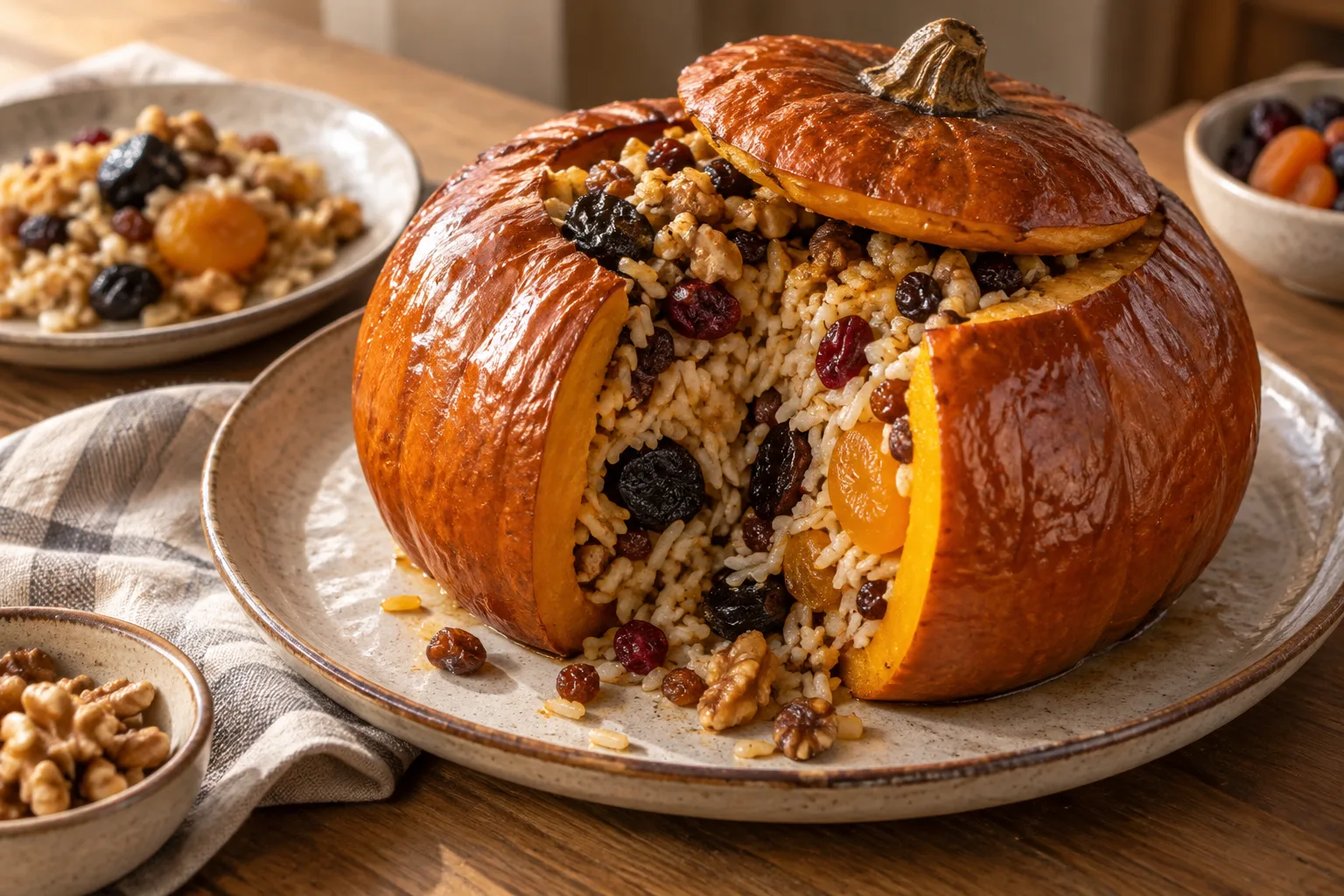
Bread offers another contrast in texture and use. Fresh lavash is thin and flexible, suitable for wrapping fresh cheese and herbs. Dried lavash can be kept for later use. Jingalov hats pairs flatbread with a generous filling of greens, with the actual mix guided by what grows locally. Grilled khorovats has a smoky character distinct from slowly cooked harissa. For a sweeter profile, ghapama combines pumpkin, rice and dried fruit, while gata is a sweet bread or pastry with regional variations. These are particular examples, not a single flavour profile for every Armenian meal. [source marker removed]
Celebrations, hospitality and passing on knowledge
Feasts and celebrations bring food to the centre of gatherings held to honour or commemorate a person or event. Compared with everyday meals, a feast may involve more dishes, different cooking methods and a more abundant way of serving. A documented celebratory spread can begin with khorovats—meat cooked over an open fire—followed by tolma, qyufta, salads, small dishes, sweets, fruit and drinks. The contents and scale vary; no single menu defines every gathering.
Some preparations are associated with particular occasions. Ghapama, a pumpkin filled with rice and dried fruit, is documented as a special-occasion dish and as food served between New Year and Armenian Christmas on January 6. The whole pumpkin can be brought to the table as its presentation. Khash, a long-cooked dish made with beef feet, is associated with an early-morning meal shared with others; garlic and bread are documented accompaniments. Practices and serving habits vary among households.
Food knowledge is also passed on through everyday work. Foraging knowledge may be taught orally between generations and adapted to the surrounding village landscape. Making dried arishta pasta, baking lavash, and preserving produce all require practical knowledge that can be shared within families and communities. Documented celebratory gestures include draping lavash over the shoulders of a newly married couple and offering honey. These are situated customs, not universal requirements for Armenian weddings or households. [source marker removed]
Tonir baking, grilling and slow cooking
The tonir is a traditional clay oven, described as sunk into the ground and used to bake lavash. The rolled dough is placed against the hot inner wall, where it cooks quickly. Making the bread calls for coordinated work: preparing and stretching the dough, placing it on the oven wall and removing it. Lavash can be eaten fresh or dried for storage. The oven is associated with other cooking in some accounts, but it is not a universal method for every Armenian dish.
Grilling over fire is central to khorovats. Meat is cooked on skewers over embers, and the smell of its preparation can signal the beginning of a celebratory gathering. Vegetables can also be grilled. The selection of meat and accompaniments varies; the method is more consistently described than one fixed ingredient list. A separate, slow-cooked preparation is harissa, in which wheat and meat soften together into a thick, integrated dish.
Drying, pickling and fermentation help preserve seasonal ingredients. Herbs and fruit may be dried; vegetables are pickled or made into preserves; fermentation is used for dairy products such as matsun. Arishta is hand-pulled pasta dried in long strands for later cooking. For ghapama, a pumpkin is hollowed, filled with partially cooked rice and dried fruit, covered with its top and baked until tender. These techniques serve distinct purposes: bread baking, grilling, slow cooking, drying and keeping a harvest. [source marker removed]
Everyday meals and occasions for sharing
At an everyday meal, bread may accompany cheese, fresh or pickled vegetables, butter and other dairy products. Lavash can be torn to gather food, used as a wrap or served beside a hot dish. This role links simple meals with celebratory tables, but the dishes and their order differ between households. Soup, vegetables or a grain dish may form part of one meal; another may be organised around a grilled or slow-cooked main dish.
Matsun may be served as a food in its own right, used in soup or diluted into tan. Yogurt-and-wheat soup offers a different meal from meat dishes. In the Lake Sevan area, fish preparations are documented, including ishkhan, the lake’s trout, cooked in several ways. Such examples show how local availability can shape a table; they should not be taken as a national menu followed everywhere.
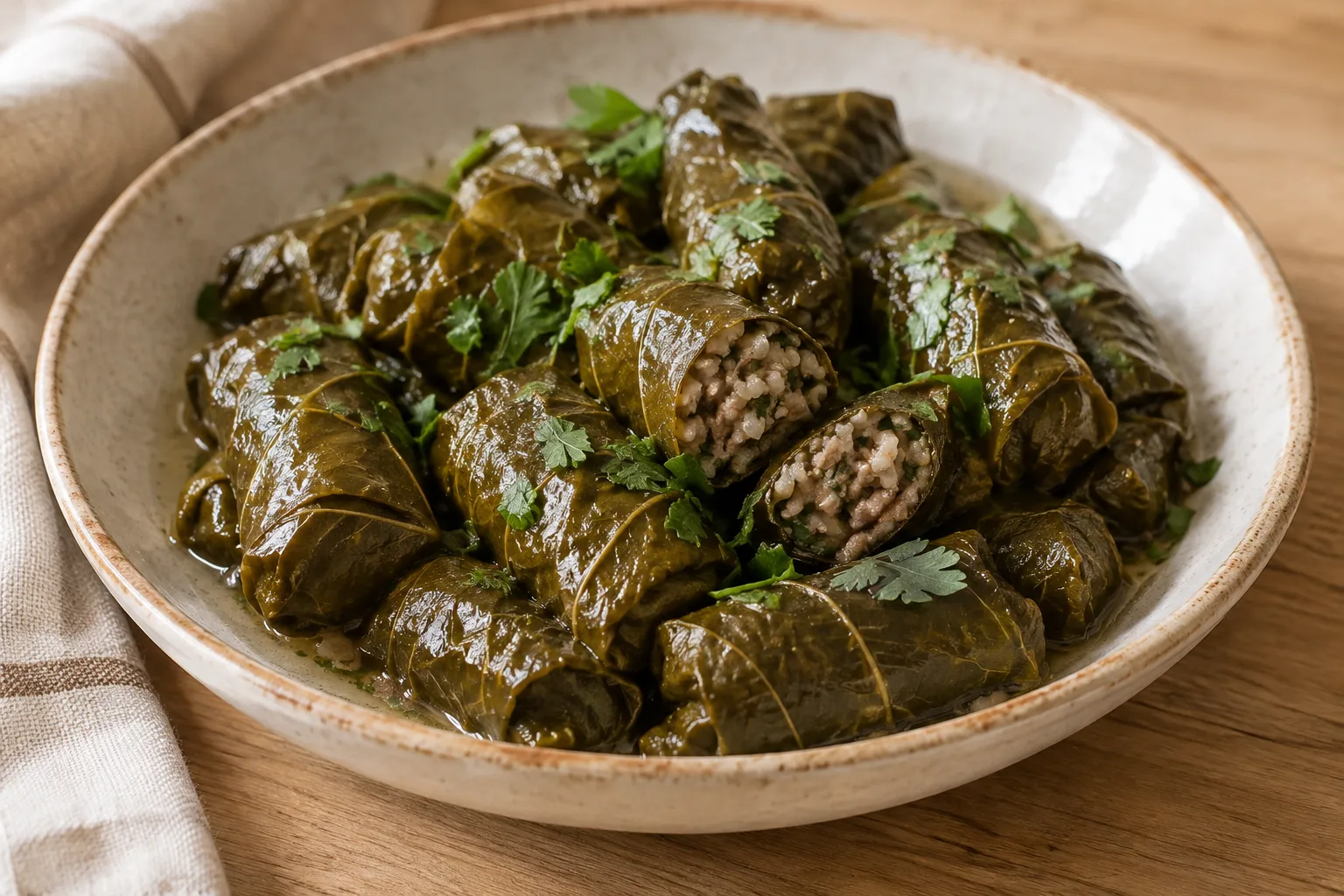
A feast can gather many dishes for sharing. Khorovats may be a focal point, alongside tolma, salads, small dishes, bread, fruit and sweets. Tolma can be wrapped in grape leaves, while summer versions put a filling into seasonal vegetables. A meal of khash is a distinct early-morning gathering, with the hot dish served alongside garlic and bread. For other occasions, including the New Year period, abundant food and sweets may be part of the celebration. The table changes with the occasion, the season and the people gathered around it. [source marker removed]
A short glossary of Armenian food terms
These terms refer to particular foods and preparations documented in Armenia. Spellings can vary between transliterations and communities; the definitions describe known forms without implying one mandatory recipe.
- Arishta: Hand-pulled pasta dried in long strands and kept for later cooking.
- Ghapama: A pumpkin hollowed and baked with rice and dried fruit; nuts or other additions may appear in different versions. It is associated with special occasions.
- Jingalov hats: Flatbread filled with a substantial mixture of greens and herbs. It is documented in Armenia’s southern mountainous region; the filling reflects local availability.
- Khorovats: Meat grilled over an open fire; grilled vegetables are also documented. It is served at gatherings and feasts.
- Lavash: Thin flatbread traditionally baked in a tonir. It accompanies food and can also wrap other ingredients.
- Matsun: Thick fermented milk, also known as madzun. It can be eaten, used in soup or diluted to make tan.
- Sujukh: A sweet made with walnuts coated in thick grape or fruit syrup.
- Tolma: A filled preparation wrapped in leaves, including grape leaves, or cooked inside seasonal vegetables. Fillings differ between versions.
- Harissa: Wheat and meat cooked slowly until thick and integrated. This Armenian dish is distinct from the similarly named North African chilli paste.
The vocabulary reflects breads, grains, fermented dairy, preserved fruit and filled foods. A name may cover different versions across households and communities, so ingredients, technique and occasion help clarify what a particular preparation means. [source marker removed]
One country, many cuisines
Vayots Dzor and Areni
Vayots Dzor is documented as a wine-producing region, and Areni is associated with grape growing and wine. The Areni Noir grape is linked with the region in the available descriptions, while an annual wine festival in Areni brings local sellers and producers together to offer food and other goods. This is evidence for a particular agricultural and social setting, not a claim that wine defines every local food tradition or that the region has one uniform cuisine.
Ararat Valley
The Ararat Valley is documented as an agricultural area where roadside stalls offer fruit and vegetables at their seasonal peak. The scene connects harvest, local selling and the availability of fresh produce, with visitors buying food before returning to Yerevan. Armenian household preservation practices—including drying fruit and herbs, pickling vegetables, and making preserves, compotes, jams and juices—are described more widely and should not be treated as exclusive to the valley.
Cook