Documentary synthesis prepared with AI assistance. It does not replace specialist review or certify kitchen testing. · Updated 31 October 2026
Landscapes and foodways
Azerbaijan lies between the Caspian Sea and the Caucasus, and its varied environments help explain the range of foods found across the country. Coastal communities have access to Caspian fish; other areas are associated with pasture, orchards, vegetables, and grains. Nakhchivan, separated from the main territory, has its own documented food customs. These contrasts matter: the country’s cuisine is not a single set of dishes prepared identically everywhere.
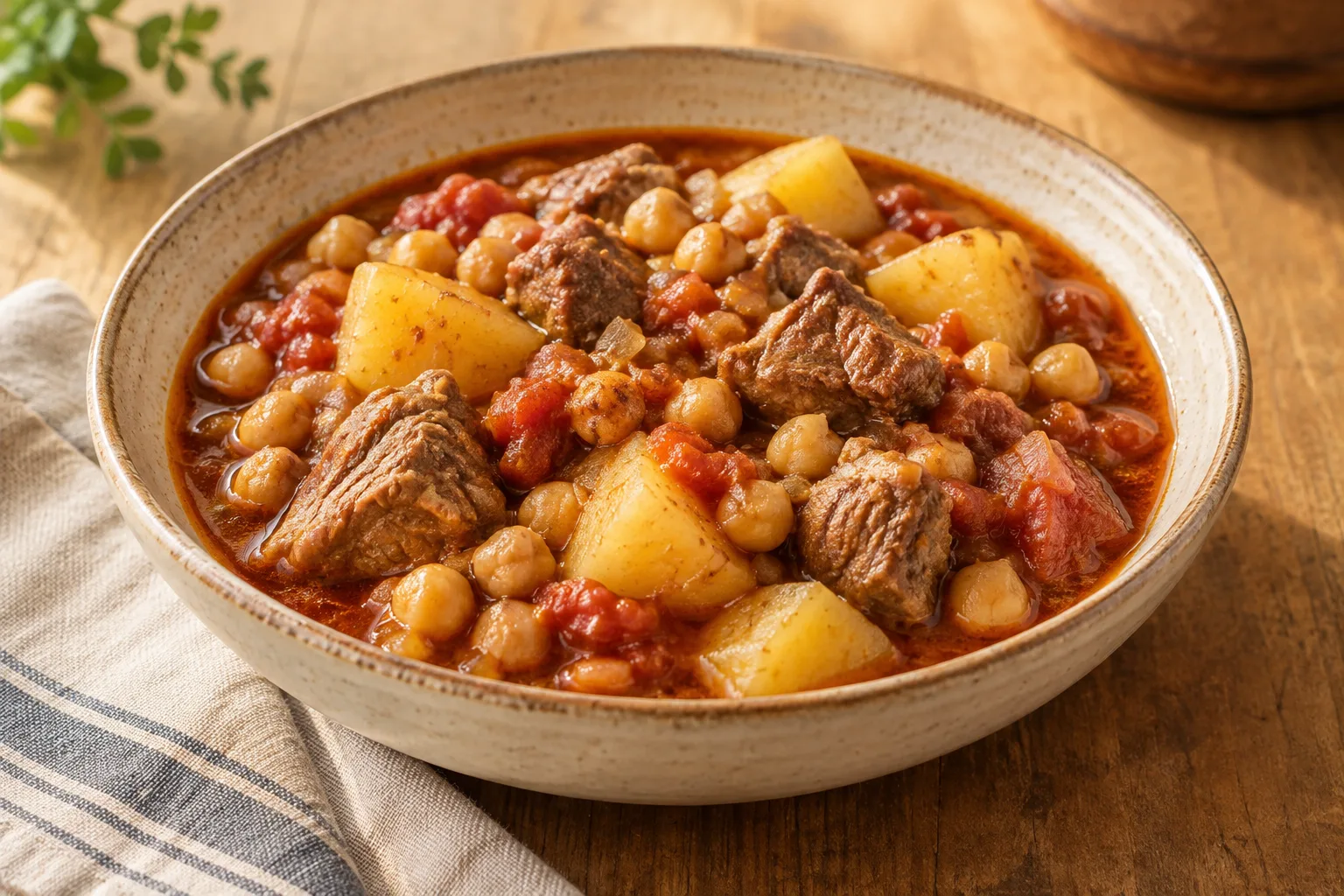
Rice, lamb, wheat flour, herbs, fruit, and dairy products recur in many accounts of Azerbaijani food. Their combinations take different forms: plov brings rice and its accompaniment together at the table, qutab folds fillings into thin dough, and piti cooks meat and chickpeas slowly in an individual pot. Such dishes offer useful points of entry, but no single preparation stands for every community or household.
Hospitality is also visible in the way food and drink are offered. Tea and small sweets can accompany a visit or a conversation, while larger meals bring together several dishes and shared accompaniments. Regional specialities, including Sheki’s piti and Lankaran’s lavangi, show how particular preparations are associated with particular places without defining the whole national cuisine.
A history of contact and local continuity
The territory of present-day Azerbaijan has been shaped by changing states and political borders. Its history includes periods of Seljuk and Safavid rule, later khanates, Russian imperial expansion, and Soviet rule; the modern republic declared independence in 1991. These broad historical changes form the setting for cultural and culinary exchange, but they do not by themselves establish when or where a particular dish originated.
Azerbaijan’s position at a meeting point between regions has encouraged contact among food traditions. Accounts of its cuisine describe Turkic, Iranian, Anatolian, and Eastern European influences alongside local ingredients and practices. Trade routes, including routes associated with the Silk Road, provide a context for exchange. Similarities with neighbouring cuisines should not be taken as proof of a single origin: dishes and methods have travelled, changed, and been maintained by communities in different places.
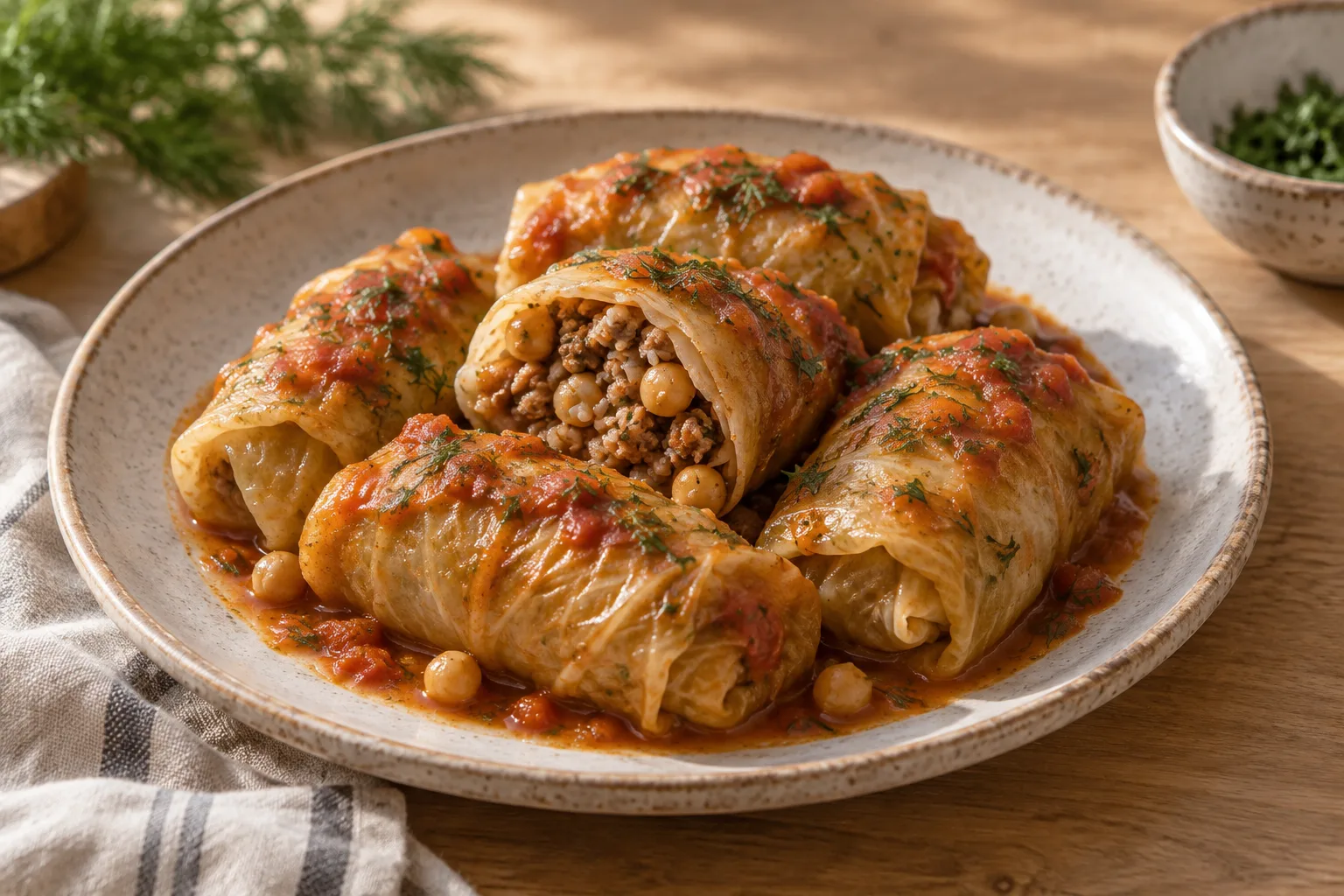
The dolma tradition offers a more specific example of continuity and shared practice. Its documented forms include fillings wrapped in leaves or placed inside fruits and vegetables. The heritage record describes different communities using different ingredients and methods, and identifies preparing and sharing dolma as a social practice passed between generations. This evidence concerns dolma-making and sharing; it should not be expanded into a claim about the history of every Azerbaijani dish.
Rice, herbs, meat, fruit, and preservation
The pantry described across Azerbaijan combines grains and flour with meat, vegetables, fruit, and dairy. Rice is central to many versions of plov, while wheat flour becomes breads and filled doughs. Lamb appears in stews, kebabs, and fillings; beef, poultry, and fish are also documented. Caspian fish connects the coast to a wider range of preparations, including grilled and cooked dishes.
Fresh herbs—such as coriander, dill, mint, parsley, and tarragon—bring fragrance and may be served alongside a meal or incorporated into a preparation. Tomatoes, eggplants, peppers, onions, and other vegetables appear in dishes such as roasted-vegetable salads and fillings. Yogurt, including qatıq, accompanies some foods and is also used in yogurt-based soups. The precise combination depends on the dish and local practice rather than a fixed national formula.
Fruit is eaten fresh, dried, or preserved, and may enter both savoury and sweet preparations. Plov variations can combine meat with dried fruit or chestnuts; walnuts are important in lavangi fillings. Saffron appears in descriptions of rice dishes, while sumac provides a tart seasoning. In Nakhchivan, govurma is a documented method of preserving meat by salting, cooking, and keeping it in fat for later use. Dried fruit and fruit preserves likewise extend the use of seasonal produce.
Fragrant, tart, savoury, and sweet-sour
Azerbaijani dishes often draw their character from contrasts among savoury meat, fresh herbs, tart seasonings, and sweet or sour fruit. Plov is a clear example of a composed rather than uniformly mixed dish: rice and its accompaniment, often called gara, are prepared separately in many versions and brought together at serving. Depending on the variation, the accompaniment may include meat, herbs, eggs, chestnuts, or dried fruit. Each combination gives the rice a different partner and texture.
Lankaran’s lavangi brings together fish or chicken with a filling commonly described with walnuts, onion, and plum ingredients. Some accounts also mention sumac or pomegranate molasses, which can sharpen the rich, nutty filling with acidity. The precise mixture varies, so lavangi is best understood as a family of related preparations rather than a single fixed recipe.
Piti offers another balance: long cooking produces a substantial broth and tender solids from meat and chickpeas, with local versions including ingredients such as potato, chestnut, or dried plum. Sumac and onion served alongside can add a bright, crisp counterpoint. Qutab, by contrast, ranges from herb-filled and savoury to fillings based on pumpkin, cheese, or chestnuts. Yogurt and herbs in dovga bring a tangy, fresh quality, and the soup is described as served hot or cold. Together, these dishes show varied textures and flavours, not one standard seasoning profile.
Celebrations, learning, and hospitality
Preparing and sharing dolma is a documented social tradition across Azerbaijan. Its forms include fillings wrapped in leaves or placed inside vegetables and fruit, with ingredients and techniques varying among communities. The heritage record describes dolma at family and community gatherings, celebrations, weddings, and festive events. It also records knowledge passed from one generation to another through observation, explanation, and practice. This is evidence about a particular living tradition, not a description of every meal or every culinary custom in the country.
Novruz, which marks the arrival of spring, is associated with family gatherings and sweets including pakhlava, şəkərbura, and qoğal. Regional practice adds further variation: Lankaran lavangi is described as a festive dish associated with Novruz and extended-family meals. Such examples show how a celebration may bring a local preparation into focus without implying that every household serves the same food.
Tea is a familiar offering to guests and can accompany conversation as well as sweets or fruit preserves. It is often served in a curved armudu glass. Tea houses, or çayxana, are also described as places for meeting and conversation. Culinary knowledge is transmitted in domestic and community settings, and some documented practices, including dolma-making and qutab preparation, are also taught in formal or organised settings. The shared meal thus carries both practical skills and ways of welcoming others.
Slow cooking, filled dough, and live fire
Different dishes call for different vessels and methods. Piti is closely associated with a small individual clay pot called a dopu, in which meat and chickpeas cook slowly in liquid. Some versions include potato or chestnut and dried plum. In Sheki, the pot and the method of serving are part of the dish’s regional identity. Contemporary descriptions also note that cooks may use ordinary pots when traditional ovens or vessels are unavailable.
Plov relies on a different kind of organisation. In many versions, rice and its gara are cooked separately, then served together. Saffron may perfume or colour the rice, while the accompaniment varies. Some descriptions identify shah plov as a preparation with rice enclosed or presented in a crust. The variety of plovs means that no one method should be treated as universal.
Filled doughs require careful shaping. Qutab is made with thin dough wrapped around fillings such as herbs, meat, pumpkin, or cheese, then cooked on a hot surface. Small dushbara dumplings enclose meat in folded pieces of dough and are served in broth. Bread such as chörek is associated with a clay oven called a tandir. Grilling over coals is used for kebabs and vegetables; roasting eggplant, tomato, and pepper before chopping them is one approach to mangal salad. Preservation is another transformation: govurma is stored for later use, while fruit may be dried or made into preserves.
Serving dishes, bread, and tea
Azerbaijani meals can bring several dishes and accompaniments to the table, but there is no single mandatory sequence. Accounts describe meals that include soup, a main dish, bread, fresh herbs, vegetables, and tea; the arrangement differs between everyday meals and larger gatherings. Shared plates and accompaniments let diners combine bites in different ways, while regional dishes can have their own particular serving customs.
Plov may be a centrepiece, with rice served alongside gara rather than mixed with it during cooking. The accompaniment can include meat, fruit, nuts, or herbs, and its selection varies. Kebabs, soups, and salads also appear in descriptions of meals. Bread accompanies many dishes and is especially integral to one distinctive way of serving piti.
For piti, the broth may be poured over pieces of bread in a bowl and eaten first; the remaining meat, chickpeas, and other solids follow as a second part of the meal. Onion and sumac are documented accompaniments. This two-part serving style is associated especially with Sheki’s piti, not with all Azerbaijani meals.
Tea provides another setting for sharing. Black tea is served in armudu glasses and may come with jam, dried fruit, nuts, or sweets. A visit may include tea and conversation, and çayxana offer a social setting beyond the family table. At Novruz and other gatherings, sweets or shared dishes give occasions a distinct character, while local customs remain varied.
A short glossary of dishes and objects
The terms below refer to preparations and serving objects documented in Azerbaijani food traditions. Spellings can vary in transliteration, and a familiar name may cover more than one local version.
- Plov: Rice served with an accompaniment, often called gara, which may include meat, herbs, eggs, chestnuts, or dried fruit. Many regional versions are documented.
- Piti: A slow-cooked meat-and-chickpea dish associated especially with Sheki. It is traditionally linked to an individual clay pot and may be served as broth followed by solids.
- Dolma: Preparations made by wrapping fillings in leaves or placing them inside vegetables or fruit. Ingredients and methods vary among communities.
- Qutab: Thin dough folded around fillings such as herbs, meat, pumpkin, or cheese, then cooked on a hot surface; associated with Baku and nearby villages.
- Lavangi: A stuffed chicken or fish preparation associated particularly with Lankaran, often described with walnuts, onion, and plum ingredients.
- Dovga: A yogurt-based soup with herbs, described as served either hot or cold.
- Dushbara: Small meat-filled dough pieces cooked and served in broth.
- Armudu: A curved glass used for serving tea.
- Govurma: Meat preserved in fat for later use, documented in Nakhchivan.
- Sumac: A tart seasoning that can accompany onion served with piti.
These names point to concrete foods and practices, not fixed recipes shared identically by every household. The setting and community help explain how a dish is prepared and served.
One country, many cuisines
Baku and the Absheron Peninsula
Baku and nearby villages are associated with qutab, thin filled dough that may contain herbs, meat, pumpkin, cheese, or chestnuts. The Caspian provides a context for fish dishes, while saffron is among the ingredients linked with Absheron in accounts of Azerbaijani food. These documented specialities describe particular products and preparations; they do not imply a uniform cuisine across the peninsula.
Sheki
Sheki, in northwestern Azerbaijan, is especially associated with piti. This slowly cooked dish brings meat and chickpeas together in a small individual clay pot called a dopu; local versions may include potato, chestnut, or dried plum. Its service in two parts distinguishes broth poured over bread from the solids eaten afterwards. Sheki is also linked with local sweets and pottery used for cooking.
Lankaran and the Talysh South
Lankaran lies in Azerbaijan’s subtropical south between the Caspian Sea and the Talysh mountains. Its documented foods include lavangi, chicken or fish stuffed with walnuts, onion, and plum ingredients, and a Talysh-style plov combining long-grain rice with fruit and chestnuts. Tea and the local sweet külçə are also mentioned. These are regional references rather than a template for the whole country.
Nakhchivan Autonomous Republic
Nakhchivan is separated from Azerbaijan’s main territory and has documented local food customs. Accounts highlight lamb alongside herbs, fruit, and vegetables, and describe combinations with preserved lemon, apricot, grape juice, or pomegranate. Govurma, meat preserved in fat for later use, is one local preparation; dried figs, apricots, peaches, and pears also appear in descriptions of the region’s food markets and produce.
Cook