Documentary synthesis prepared with AI assistance. It does not replace specialist review or certify kitchen testing. · Updated 31 October 2026
A Meeting Point of Landscapes and Foodways
Bosnia and Herzegovina lies in the Balkans, where its culinary traditions have developed through local practice and contact with neighboring and ruling cultures. The result is not one uniform national menu but a related set of regional and household foodways. Grilled meats and flatbreads sit alongside filled pastries, soups, vegetable dishes, and sweets; their names, ingredients, and preparation can differ from place to place.
The documented examples make that diversity concrete. Sarajevo is associated with its style of ćevapi and with begova čorba, a chicken and okra soup. Banja Luka is known for a distinctive connected form of ćevapi, while the Krajina is associated with kljukuša and varieties of pita. In eastern Herzegovina, japrak and cicvara are recorded regional preparations. Puračić, meanwhile, has a local dish, Puračka ćaska, linked to community gatherings and the transmission of culinary knowledge.
Across these settings, bread, meat, vegetables, dairy products, and patient cooking recur in different combinations. These common threads do not erase local distinctions: a dish’s name and method are part of its sense of place, not simply labels for interchangeable foods.
Historical Layers and Culinary Exchange
The country’s food reflects long periods of cultural and political change. Ottoman rule, beginning in the fifteenth century, forms an important part of this history. Ottoman-era foodways are associated with kebab-style meats, filled thin pastries, and dishes built around vegetables and meat. Later Austro-Hungarian rule added another historical layer, including influences on pastry and dessert traditions. These exchanges became part of local cooking; they should not be taken to mean that every dish has a single, clearly traceable origin.
Balkan, Mediterranean, and Central European connections are also identified in accounts of the country’s traditional dishes. Their influence is visible in a repertoire that ranges from grilled meat and baked pies to slow-cooked pots and sweets. Local ingredients and ways of cooking shaped how such forms were adopted and maintained. A dish shared across borders may therefore have a particular Bosnian name, filling, shape, or serving custom.
Regional comparison is especially useful here. Research on traditional dishes records differences in methods, names, and eating habits across Bosnia and Herzegovina, including contrasts between Mediterranean-influenced Herzegovina and northern and central areas. Culinary history is best understood as exchange and adaptation, rather than as a single sequence that explains every household’s food.
Ingredients, Breads, and Transformations
The documented pantry brings together meat, vegetables, grains, dairy, fruit, and nuts. Beef and lamb appear in grilled dishes and stews, while chicken is used in begova čorba. Potatoes, onions, tomatoes, carrots, cabbage, peppers, beans, and okra feature in descriptions of traditional cooking. Dairy foods include kajmak, a rich creamy accompaniment, and pavlaka, a sour-cream-like product. The ingredients vary by recipe and community; no single list defines every local kitchen.
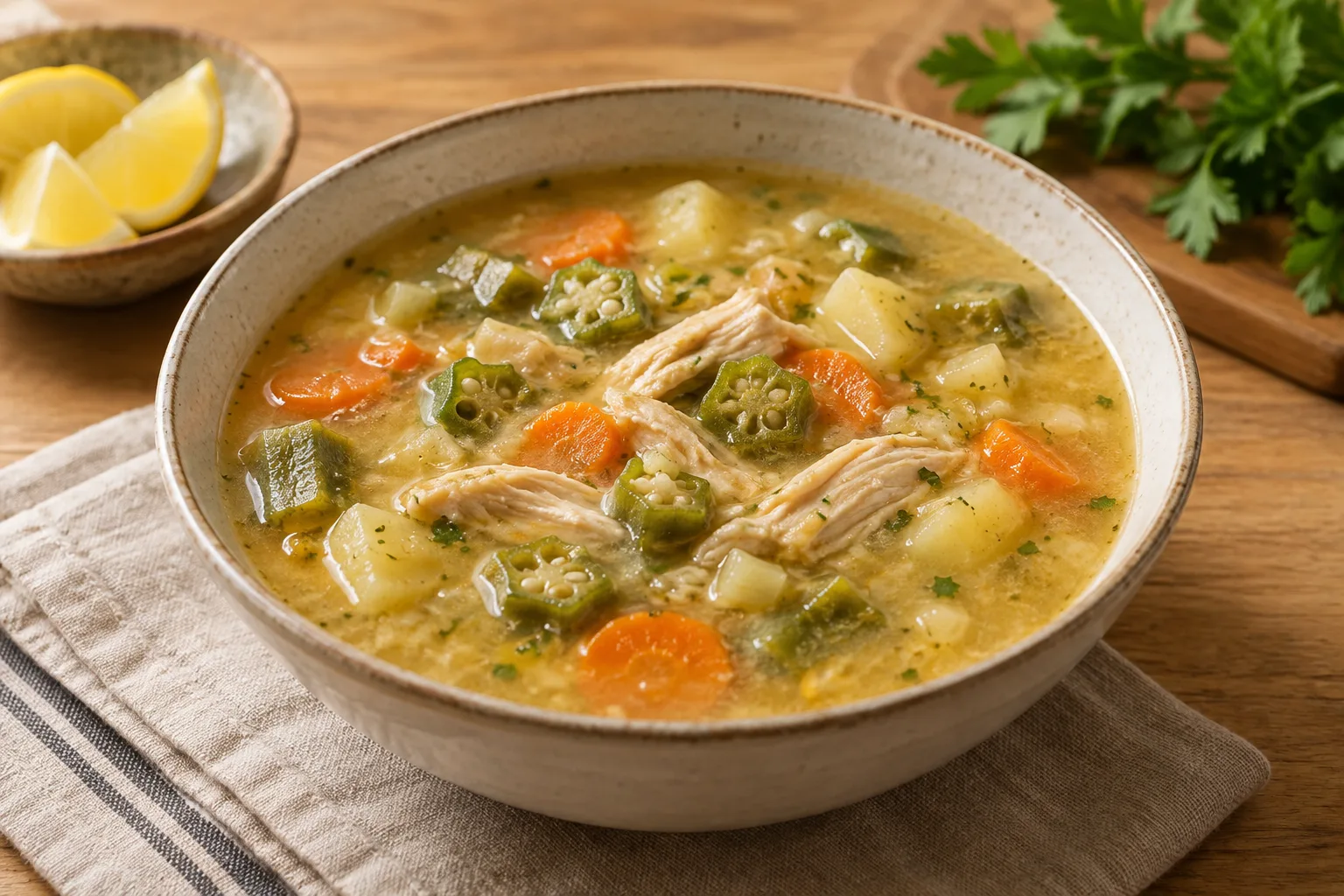
How ingredients are transformed matters as much as what is available. Minced meat is shaped and grilled for ćevapi. Meat and vegetables are layered in bosanski lonac and cooked slowly. In sarma, a filling of meat and rice is wrapped in pickled cabbage leaves. Okra gives begova čorba one of its identifying ingredients and helps distinguish this soup from other chicken broths.
Thin pastry becomes a family of baked pies. In Bosnian usage described here, burek is meat-filled; sirnica, zeljanica, and krompiruša name cheese, spinach, and potato versions. Nuts and fruit appear in sweets such as baklava and tufahija. The pantry is therefore a repertoire of ingredients and transformations, not a fixed inventory used in every region.
Juicy Grills, Tender Fillings, and Rich Broths
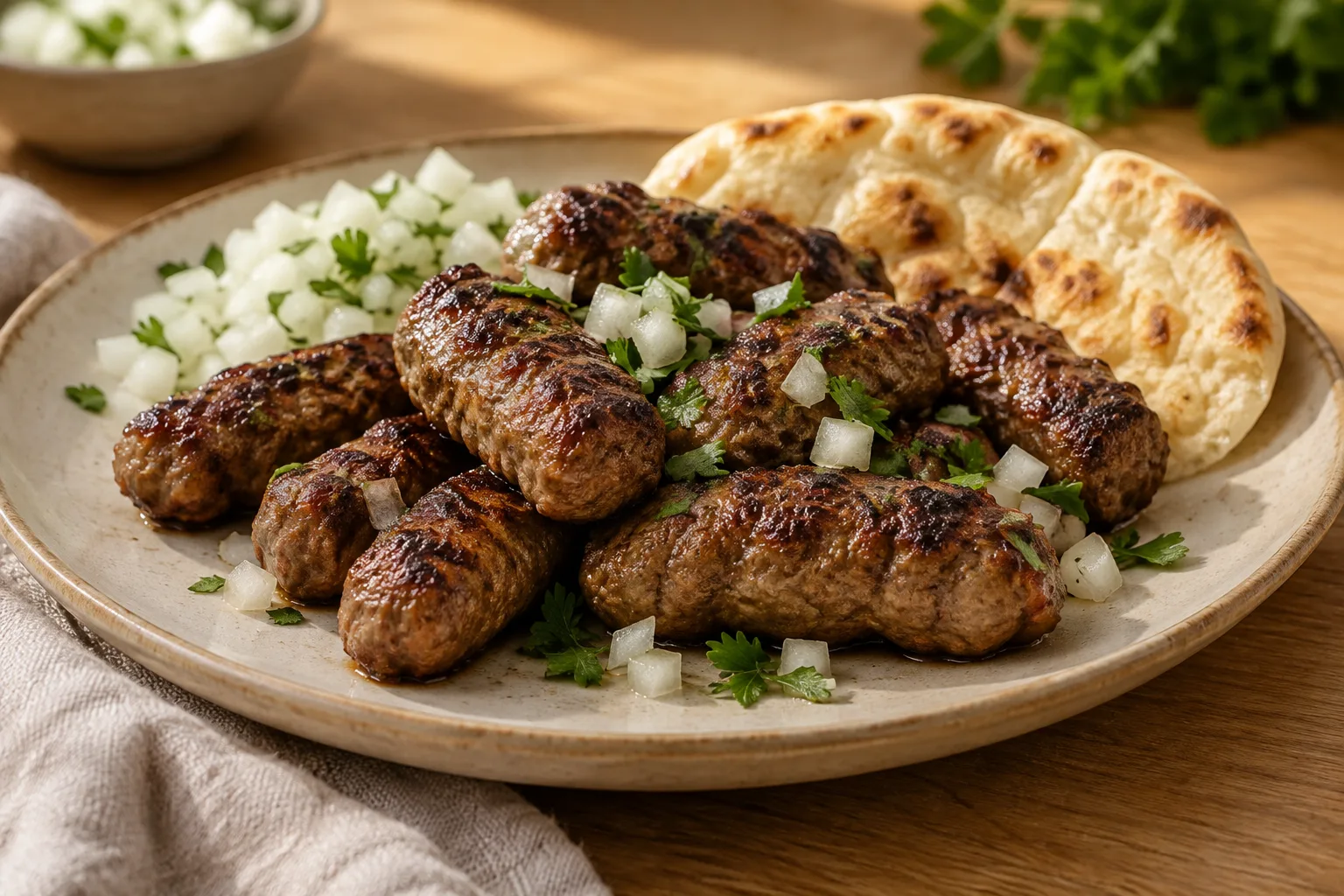
Rather than one national flavor profile, the dishes show a range of contrasts. Ćevapi are browned over a grill yet intended to remain juicy; warm somun accompanies them and can absorb meat juices. In Sarajevo, the customary service described includes chopped onion and kajmak. Banja Luka’s connected rows of meat make a different shape and presentation, illustrating how a familiar dish can acquire a local character.
Pita offers another kind of contrast: a crisp, baked exterior around a moist filling. The filling changes the name, so cheese, spinach, potato, and meat are not simply variants hidden under one undifferentiated label. In begova čorba, chicken and okra contribute to a substantial soup; okra is also valued for the thickening quality it can bring to a broth. These textures come from the ingredients and preparation, not from a single seasoning formula.
Long cooking gives stews a different character. In bosanski lonac, meat and vegetables cook together in a pot, while stuffed cabbage softens during its slow simmer. Sweets shift the experience again: baklava pairs thin pastry and nuts with syrup, while tufahija centers on a cooked apple and walnut filling. Grill, pastry, broth, and fruit each create distinct textures and tastes within the wider culinary landscape.
Gatherings and the Passing On of Knowledge
Food knowledge is sustained through everyday cooking, family practice, specialist food establishments, and local cultural activity. The best-documented community example here is Puračka ćaska, a traditional dish associated with Puračić. It was inscribed on Bosnia and Herzegovina’s national list of intangible cultural heritage in 2020. Its preparation is described as slow and carried out in an earthen pot, with the cooking and sharing connected to gathering, conversation, hospitality, and community ties.
A local event dedicated to Puračka ćaska makes transmission explicit. Its activities include preparing the dish and sharing knowledge and skills associated with it. The practice is particular to Puračić; its recognition does not make it a ritual followed throughout the country or a summary of all Bosnian food traditions.
Other dishes are documented in contexts of family meals and seasonal or festive gatherings. Sarma, for example, is described as food for winter meals, holidays, and family occasions in many homes. Such examples show that cooking can be both practical and social, while also reminding us that customs differ. Recipes and methods are passed on in particular households and places. Tradition here is lived through specific preparations and acts of sharing, not through a single national calendar.
Grilling, Pastry Work, and Slow Cooking
Grilling is central to the preparation of ćevapi. The meat is minced, shaped into small pieces, and cooked over heat; proportions, resting, shaping, and grilling all affect the result. The method is simple in appearance but produces a dish whose local versions are distinguished by shape, meat choices, and service. Warm somun completes the meal as an edible accompaniment rather than an incidental side.
Pita-making depends on working thin pastry around a filling and baking it until the outside is crisp. The choice of filling determines the local name: burek for meat, sirnica for cheese, zeljanica for spinach, and krompiruša for potato in the usage documented here. Those names preserve distinctions that a broad translation such as “pie” can obscure.
Slow cooking is another important technique. Bosanski lonac combines meat and vegetables in a deep pot, while sarma simmers after its filling has been wrapped in cabbage leaves. Cooking beneath a sač—a lid covered with hot coals—is also documented for meat. In Puračić, the earthen pot and unhurried cooking are part of the recognized practice of Puračka ćaska. Heat source, vessel, and time shape these particular dishes, rather than serving as generic advice for every meal.
Meals, Accompaniments, and Shared Eating
Meals may center on a bowl of soup, a pot of stew, a baked pita, or grilled meat served with bread. Ćevapi are commonly presented with somun and chopped onion; Sarajevo-style service also includes kajmak. Pita is sold and eaten in everyday settings, while begova čorba appears in traditional restaurants and family meals. These examples describe recognizable forms of service, not a fixed sequence that every household follows.
The term meze refers to an assortment of smaller foods that can include meat, cheese, vegetables, pickles, and bread. It is associated with lingering over food and conversation. This way of sharing differs from serving one central dish, and it makes the variety of accompaniments visible at the table. Local food establishments also have distinct roles: ćevabdžinicas specialize in ćevapi, while buregdžinicas focus on filled pies.
Bosnian coffee, prepared in a džezva, is another documented part of food and drink culture. Sweet dishes such as baklava may accompany coffee or follow a meal. These customs are not a universal formal ritual, but examples of how food and drink can extend hospitality and conversation. The table can be organized around a dish, a set of small plates, or a shared pot, with local habits shaping the occasion.
A Glossary of Local Dishes and Food Terms
These names identify particular products, preparations, and ways of serving food. Their use is documented across the country, though methods and habits can vary by place and household.
- Ćevapi: Small pieces of minced meat shaped and grilled, commonly served with somun and onion. Sarajevo and Banja Luka have documented local forms.
- Somun: Soft, flat bread served with grilled meat, including ćevapi.
- Burek: A meat-filled baked pastry in Bosnian usage. Sirnica is cheese-filled, zeljanica spinach-filled, and krompiruša potato-filled pita.
- Begova čorba: A substantial chicken and okra soup, also called Bey’s soup.
- Bosanski lonac: A slow-cooked pot of meat and vegetables.
- Sač: A domed lid covered with hot coals for cooking food beneath it.
- Meze: A selection of small foods, such as cheese, meat, vegetables, pickles, and bread, shared before or alongside a meal.
- Puračka ćaska: A traditional dish associated with Puračić, slowly cooked in an earthen pot and connected with community gathering and the transmission of culinary knowledge.
One country, many cuisines
Sarajevo and Central Bosnia
Sarajevo is documented for its local style of ćevapi and for begova čorba, the chicken and okra soup. Sarajevo ćevapi are described as small and served in somun with chopped onion and kajmak. These examples illustrate grilling and soup traditions in the capital, but do not represent every food practice in Bosnia and Herzegovina.
Herzegovina
Eastern Herzegovina is associated in research on traditional dishes with japrak and cicvara. Herzegovina is also documented as a wine-producing region, with local conditions suited to grape growing. These details distinguish examples from this southern region without implying that all households share one menu or that its food traditions are uniform.
Krajina and Banja Luka
The Krajina is associated with kljukuša and varieties of pita, while Banja Luka is known for its local ćevapi formed in connected rows. Research also records differences in names, preparation methods, and eating habits across the country. These are documented place-specific examples, not an exhaustive account of the northwest.
Puračić
Puračić is associated with Puračka ćaska, a traditional dish inscribed on Bosnia and Herzegovina’s national intangible cultural heritage list in 2020. It is cooked slowly in an earthen pot, and its preparation and sharing are linked to gathering, conversation, and passing on knowledge and skills. This is a local tradition, not a custom to generalize to the whole country.
Cook