Documentary synthesis prepared with AI assistance. It does not replace specialist review or certify kitchen testing. · Updated 1 November 2026
A varied landscape, a seasonal table
Bulgaria’s cooking is shaped by a landscape that includes fertile plains and vineyards, mountain regions, the Black Sea coast and the Danube. This variety supports a table where garden vegetables and dairy meet beans, grilled meats, baked pastries and fish. Tomatoes, cucumbers, peppers and onions appear in fresh preparations, while yogurt and white brined cheese provide distinctive sour and salty notes. Seasonality matters: spring and summer bring fresh vegetables and herbs; in colder weather, beans, potatoes, pickled vegetables and slow-cooked dishes become more prominent.
Some preparations offer a concise introduction to this range. Shopska salad combines tomatoes, cucumber, peppers, onion and sirene; tarator pairs yogurt and cucumber in a cold soup, often seasoned with garlic and dill. Neither dish stands for every Bulgarian meal. Together, however, they show how fresh produce, dairy and straightforward seasoning can make a meal feel complete. Meals may also include warm bread, a stew or grilled food, with wine or fruit brandy present on some occasions. The everyday repertoire is broad, and family and regional versions matter as much as familiar national favorites.
Shared histories and changing recipes
Bulgarian food belongs to a wider Balkan setting, where neighboring cuisines and historical contact have contributed to shared culinary forms. The evidence describes connections with Greek and Turkish cooking, Ottoman rule and broader Mediterranean and Anatolian influences; it also notes Byzantine influence. These histories help place foods such as stuffed leaves, layered pastries and stews within a regional conversation. They do not establish that any one dish belongs exclusively to a single modern nation, and many recipes have counterparts beyond Bulgaria.
Local ingredients and household preferences shape how shared forms are prepared. Bulgarian musaka, for example, is described with potatoes and minced meat, finished with a yogurt-and-egg topping, rather than the eggplant and béchamel version familiar elsewhere. Regional and family variations also appear in pastries, soups and stuffed leaves. Contemporary cooks continue to interpret traditional ingredients and dishes in new ways, while restaurants may present familiar foods with modern techniques. This history is therefore not a simple sequence in which one outside influence explains the whole cuisine: it is a record of exchange, adaptation and continuing local practice.
Dairy, vegetables, herbs and preserved harvests
Yogurt, sirene and kashkaval are important parts of the Bulgarian pantry. Yogurt contributes a lively acidity to cold soup and other preparations; sirene, a white cheese kept in brine, is crumbled over salads or used in pastry fillings. The garden supplies tomatoes, cucumbers, peppers, onions and other seasonal vegetables, while fruit—including cherries, peaches and apricots—also features in the country’s produce. Beans, rice and potatoes provide substance in soups, fillings and main dishes.
Herbs and seasonings bring definition without requiring every dish to be hot. Parsley, dill, mint, thyme and chubritsa (savory) are among the aromatics used, with paprika, cumin, garlic and onion appearing in the broader flavor repertoire. Preservation extends the harvest beyond its fresh season: cabbage is fermented, vegetables are pickled, and roasted peppers and tomatoes are cooked into lyutenitsa. These preparations have different roles: a briny or fermented vegetable can accompany a meal, while lyutenitsa is a spread. Wine and fruit brandies such as rakia also belong to the country’s food-and-drink culture, though what is served depends on the meal and occasion.
Tangy dairy, fragrant herbs and contrasting textures
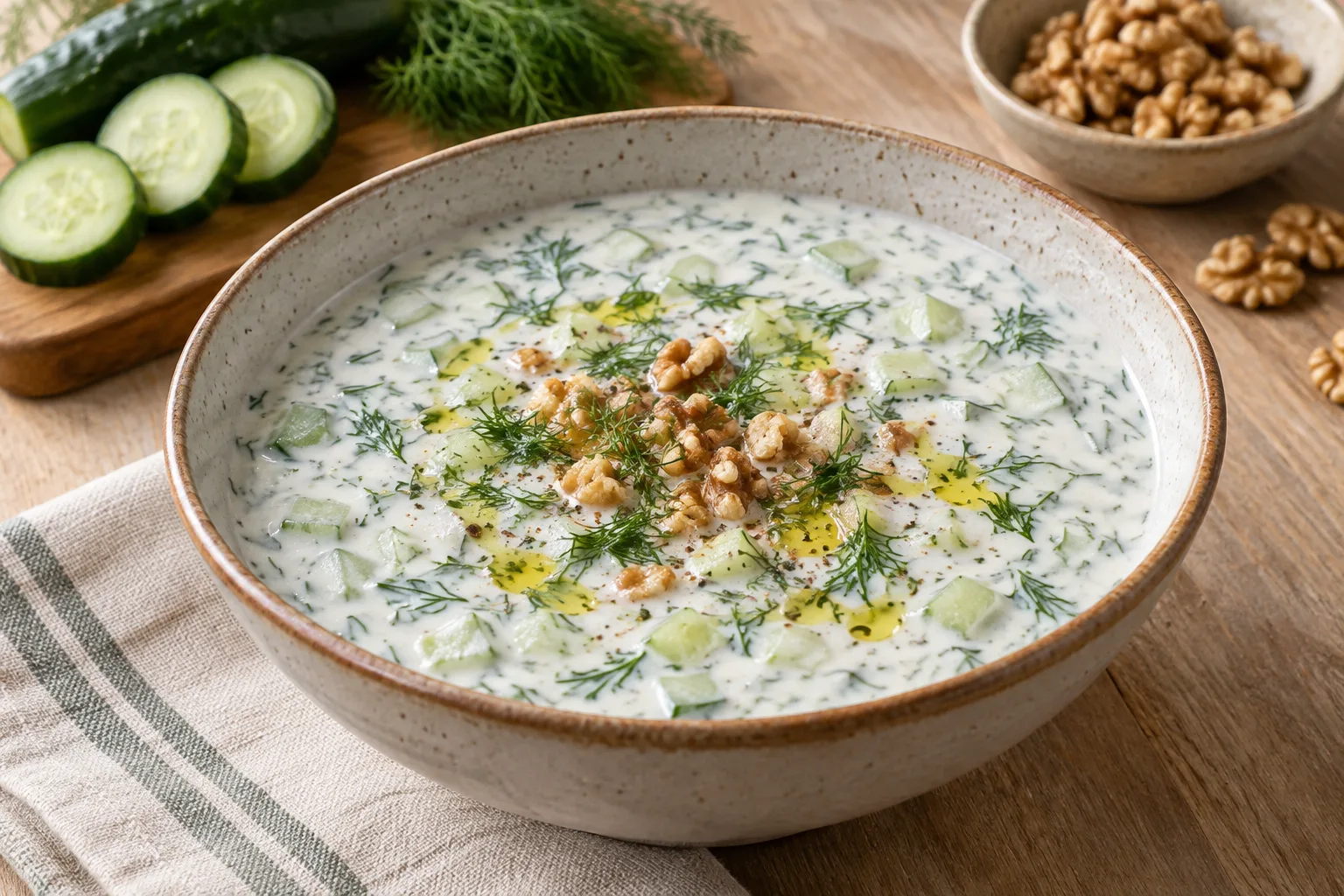
Acidity and salt are recurring points of balance. Plain yogurt tastes tangy; sirene adds a briny edge to salad, bread and pastry filling. In tarator, cucumber and yogurt are joined by garlic and dill, with walnuts included in many versions. Served cold, the soup can retain small pieces of cucumber or be made smoother; it may be spooned from a bowl or served in a more fluid consistency. The combination is cool and sharp rather than rich, and its texture depends on how finely the cucumber is cut and whether nuts are used.
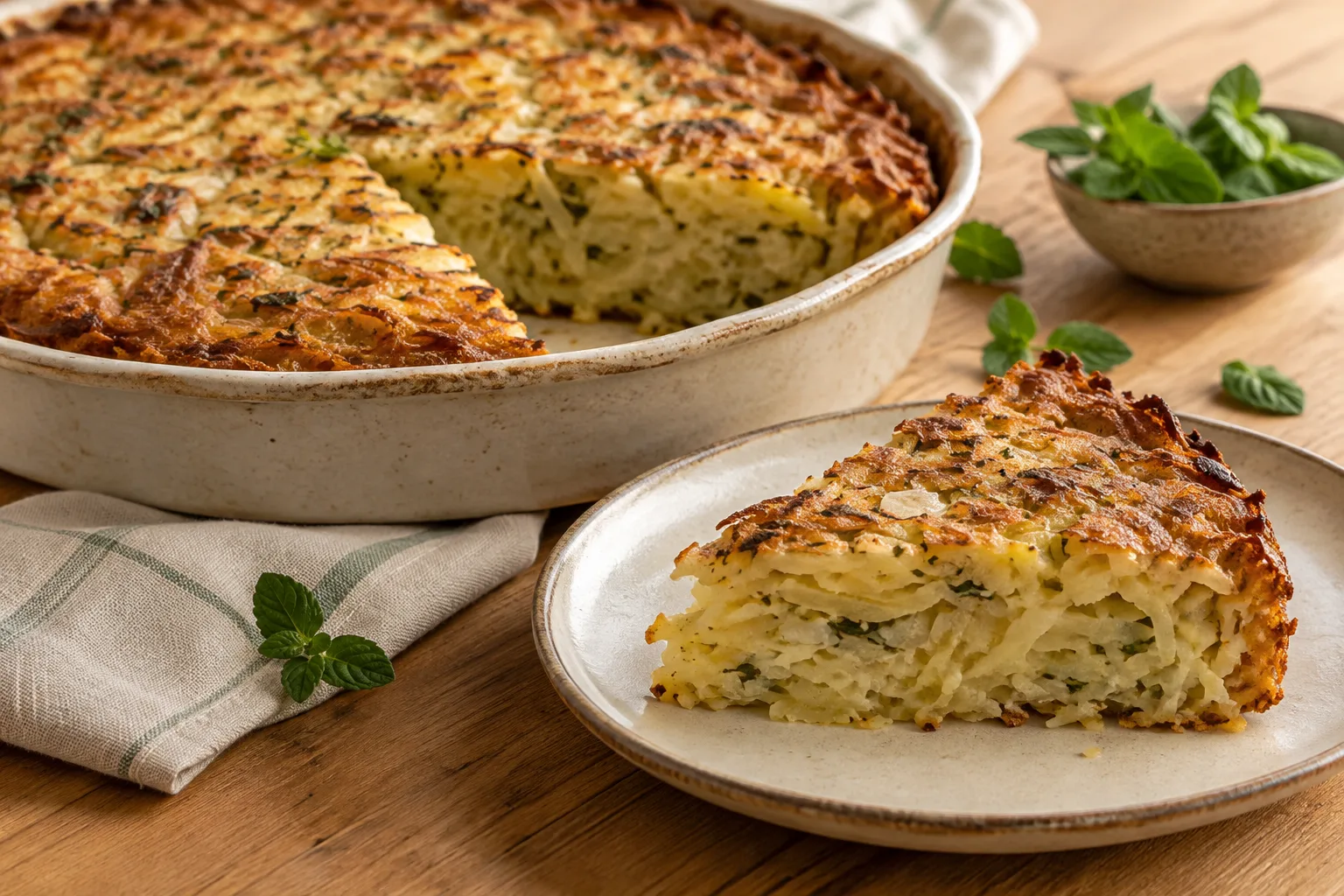
Other dishes make their appeal through contrast. Banitsa has crisp, browned layers of thin pastry around a softer filling, commonly involving cheese and egg. Grilled kebapche and kyufte have browned surfaces and seasoned meat interiors. Clay-pot stews bring vegetables and, depending on the version, meat or fish together through slow cooking. Paprika, cumin and savory provide aromatic depth in some dishes; mint and dill contribute different herbal notes. Vegetable cooking is not merely a side to meat: beans, potato preparations, salads and rice-filled leaves offer substantial meatless dishes as well. The overall range is savory and varied, rather than uniformly spicy or heavy.
Celebrations, harvests and everyday transmission
Banitsa belongs to both ordinary eating and festive occasions. It is found in bakeries and may be eaten for breakfast; fillings vary, with spinach, pumpkin or meat among the reported alternatives to cheese-based versions. A special New Year’s banitsa may contain hidden wishes or tokens associated with luck and prosperity. At Christmas Eve, meatless sarmi—rice and seasoning enclosed in cabbage or vine leaves—are documented alongside other festive foods. Bean soup, including bob chorba, is also associated with Christmas Eve in accounts of Bulgarian food traditions. Practices differ between households, so no single celebratory menu represents the entire country.
Food knowledge is passed on through repeated domestic tasks: making fillings, preparing dough, seasoning beans and preserving vegetables. These are practical skills as well as ways of maintaining family preferences. Some gatherings are linked to particular crops and local products. Documented examples include a bean festival in Smilyan, a tomato and pepper festival in Kurtovo Konare, and a cherry festival in Kyustendil. They bring attention to specific harvests and communities rather than serving as a single national festival of food. Shared meals, whether at home or in a guesthouse, can include local wine, bread and dishes made from regional produce, with the menu shaped by place and season.
Grilling, baking and slow cooking in clay
The cooking methods span quick assembly and patient heat. Kebapche is shaped as an elongated seasoned portion for grilling, while kyufte is rounder; both are associated with grilled meat cooking. Peppers can be roasted and peeled before being stuffed, as in chushki burek, or combined with tomatoes in lyutenitsa. Pastry-making takes another approach: thin dough is arranged in layers around a filling, then baked until the outside is browned and crisp, as in banitsa.
For stews, slow cooking allows vegetables, legumes and, in some versions, meat or fish to soften together. Gyuvetch is both the name associated with a clay cooking pot and the stew prepared in it; ingredients vary by season and locality. Fermentation, pickling and cooking down roasted vegetables are further ways to preserve produce. Tarator is different from these cooked preparations: it is mixed cold, with yogurt, cucumber and seasonings, and served chilled. Versions vary in texture, from distinct pieces of cucumber to a smoother soup. These methods are tied to specific foods and pantry needs, not a single technique that defines every Bulgarian kitchen.
Breakfasts, family meals and food to share
A Bulgarian meal can bring together salad, soup, bread, a baked pastry or a hot main dish; the combination changes with weather and household. Shopska salad is served as a salad or accompaniment. Tarator may be a cold first course or a light meal in warm weather, and its fluid consistency can make a bowl or glass equally practical ways to serve it. Banitsa is at home on a breakfast table as well as at celebrations, so pastry is not reserved for special days.
For a family meal, potato-and-meat musaka or a seasonal gyuvetch can be served in portions. In colder months, beans, cabbage rolls and pickled vegetables offer more substantial fare. Along the Black Sea coast and the Danube, fish and seafood are part of the documented local food landscape; mountain areas are associated with other regional dishes and products. Bread and locally made wine or rakia may accompany a gathering, but drinks and menus are not fixed rules. Meals are a way to share household cooking and local produce, and the foods on the table reflect what is available, the occasion and the region rather than one required national sequence.
A glossary of Bulgarian foods
Terms for dishes and ingredients:
- Tarator: A chilled soup of yogurt and cucumber, commonly seasoned with garlic and dill. Walnuts appear in many versions, and the soup may be served with visible pieces or a smoother texture.
- Sirene: White brined cheese, used crumbled over salad and in fillings such as those for banitsa.
- Banitsa: Layered, baked pastry, often filled with cheese and egg; regional versions may use other ingredients, including spinach, pumpkin or meat.
- Sarmi: Cabbage or vine leaves wrapped around a savory filling such as rice and seasoning. Meatless and meat-filled versions are both documented.
- Gyuvetch: A slow-cooked stew, often made with seasonal vegetables; the name also refers to the clay pot associated with its preparation.
- Chubritsa: Savory, an aromatic herb used in Bulgarian cooking, including in bean dishes and soups.
- Rakia: A fruit brandy, commonly made from grapes or plums, that may be served at meals or gatherings.
These names point to foods with variations, rather than one standardized recipe for every home. Knowing the term can identify a preparation or ingredient, while the exact filling, seasoning and texture may depend on the cook and locality.
One country, many cuisines
Rhodope Mountains
The Rhodope Mountains are associated with patatnik, a potato preparation with herbs and cheese, and klin, pastry filled with rice and cheese. The area is also linked to Smilyan beans, trout and homemade dairy served in local guesthouses. These examples document a mountain food repertoire grounded in regional products; they should not be taken as a description of every Bulgarian table.
Rila–Pirin
Around Bansko and Razlog, slow-cooked clay-pot dishes are associated with regional cooking. Named specialties include kapama and chomlek, as well as cured products such as banski starets and nafpavok. These foods are tied to particular mountain localities and traditions, while also existing alongside dishes found more widely across Bulgaria; they do not define a single uniform regional menu.
Thrace
The Thracian plain is described in connection with vineyards, wine and family cooking. Regional examples include bean stew with fermented cabbage, rice-filled banitsa and small vine-leaf rolls known as stanimashki sarmi. Together they point to agricultural produce and specific local preparations. The evidence supports these associations, not a claim that the dishes originated exclusively in Thrace or are found only there.
Northern Bulgaria and the Balkan Mountains
Northern Bulgaria and the Balkan Mountains are associated with grilled foods, bean dishes, mountain pastries and named meat products, including Elena filet and Gorna Oryahovitsa sausage. Villages in the area are also described as preserving local recipes alongside crafts and mountain ways of life. These references identify products and localities, rather than a uniform culinary boundary or a single set of foods shared by every community.
Black Sea Coast and Danube Valley
Fish and seafood are part of the documented food traditions in coastal and riverside communities. Examples include mussels with rice, grilled mackerel, fish soup, tarama and freshwater fish. Farmers’ markets near Varna and communities along the Danube provide further settings for local produce. The coast and river contribute distinct food references; they should not be collapsed into one identical regional tradition.
Cook