Documentary synthesis prepared with AI assistance. It does not replace specialist review or certify kitchen testing. · Updated 1 November 2026
Landscapes, communities, and everyday food
Landlocked in southern Africa, Botswana is a sparsely populated country whose landscapes include the Kalahari and the Okavango Delta. These varied environments provide context for a food culture that cannot be reduced to one menu. Local accounts describe cultivated grains and vegetables, seasonal wild foods, meat, and river fish; what is available differs with season and place. The Kalahari’s sandy areas, for example, are associated with wild melons that can be an important food and water resource for people living there.
A familiar everyday pattern pairs a cereal porridge with meat, vegetables, or a sauce. Sorghum and maize are important crops, and dishes made from them range from firm pap to softer bogobe. Beef is especially common, with goat, sheep, and chicken also appearing in the food repertoire. Beans, leafy greens, and seasonal produce make the picture broader than the often-repeated image of meat and maize alone.
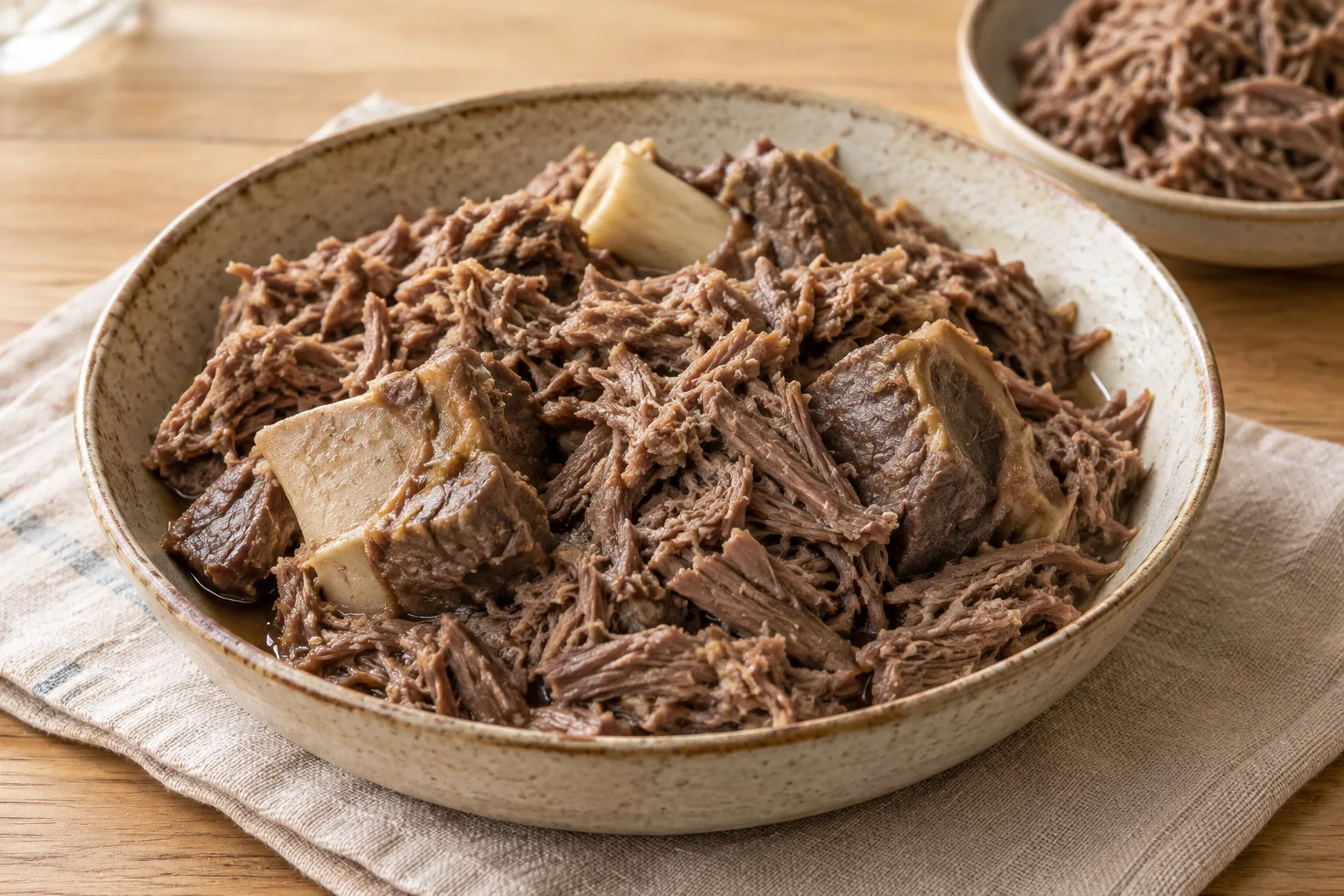
Botswana’s culinary traditions are diverse, with Tswana and Kalanga communities among the documented groups, and other languages and communities present as well. Some foods and methods have parallels in neighboring southern African cuisines; shared characteristics do not make every dish exclusive to Botswana or identical across households. Seswaa, slowly cooked and pounded or shredded meat, is widely recognized as a distinctive Botswana dish, but it sits within a much larger repertoire of porridges, vegetables, breads, legumes, and preserved foods.
Historical context and culinary exchange
Botswana became independent in 1966 after the territory had been known as Bechuanaland under British protection. This political history provides useful context for understanding the country’s connections, but it does not by itself explain the origin of particular dishes. The food evidence describes a mix of locally grown staples, imported products, and practices shared with other parts of southern Africa. It is more accurate to discuss that mixture than to assign a single origin to foods whose histories are not established here.
Sorghum and maize are described as the principal local crops, while wheat and rice, along with other cereals not grown locally, are imported. Imported wheat flour has become part of the contemporary bread repertoire, including diphaphatha and magwinya. Such foods show how an ingredient can enter local cooking and acquire an everyday place without displacing grain porridges or other established foods. Markets also bring together foods grown locally and products from neighboring countries.
The wider southern African setting is evident in foods such as pap, samp, and fried dough breads, which have parallels across national borders. At the same time, local names and preparations remain important: seswaa, for instance, is associated especially with Botswana. Sources also document particular Tswana and Kalanga preparations rather than one uniform national tradition. The evidence supports a picture of exchange, adaptation, and coexistence, not a claim that every shared technique or dish began in Botswana.
Grains, meat, greens, and seasonal stores
Sorghum and maize are central grains, with millet also used in porridges. Flour is stirred into boiling water and cooked slowly into a soft paste; with less water or longer cooking, the result can be firmer. Wheat and rice are part of the food landscape too, but are described as imported rather than principal local crops. Wheat flour supports breads and dumplings that sit alongside grain-based staples.
Beef is the most common meat described, followed by goat; sheep, lamb, and chicken are also eaten. River fish forms part of the country’s food repertoire. Mopane caterpillars are another documented food, prepared by boiling, drying, frying, or cooking in hot ashes. Beans include cowpeas, ditloo, and letlhodi, while peanuts and a broad range of vegetables add further variety. Leafy vegetables include cultivated greens and leaves gathered in season; some are dried or salted for later use.
Seasonal produce includes watermelon, lerotse or lekatane melons, and marula fruit. Wild melons found in sandy areas are described as an important food and water resource in those settings. Pumpkin, okra, tomatoes, onions, and other vegetables appear in accounts of the pantry and dishes. Preservation makes seasonal ingredients last beyond their fresh availability: meat can be cut into narrow strips and dried, and bean leaves and other vegetables can also be dried or salted. These practices make the pantry a changing combination of harvest, stored food, and imported goods.
Mild grains, sour fermentation, and varied textures
Many meals are built around a cereal base whose comparatively mild taste works with meat, vegetables, or cooking juices. Firm maize pap can accompany a stew or shredded meat, while bogobe ranges from a soft paste to a more fluid porridge. The texture depends on the grain, water, and cooking, rather than on a single fixed national formula. A plate may contrast the yielding fibers of seswaa with a compact porridge and cooked leafy greens.
Fermentation brings a clear sour note. Ting ya mabele is made from fermented sorghum meal, then cooked as porridge. In the documented preparation, a thicker version is called bogobe, while a thinner one is motogo. The sour grain may be served with meat, fish, or vegetables. Madila, fermented milk, is eaten on its own or added to porridge. Melon also joins grain in certain preparations: lerotse can be cooked with porridge, and a Kalanga-associated dish combines cooked melon and sour milk.
Not every dish is strongly seasoned. One account of seswaa emphasizes salt and the meat’s own flavor, while other meat preparations, such as mogodu, can include vegetables or spices. Beans bring a substantial, earthy element to dishes such as dikgobe, and leafy greens add a vegetal counterpoint. Together, these preparations show a range of sensations—soft or firm cereal, tender or shredded meat, sour fermented foods, and seasonal sweetness—rather than a single defining flavor profile.
Celebrations, seasonal knowledge, and transmission
Seswaa is particularly associated with weddings, funerals, and other special occasions. Its preparation in large quantities and its slow cooking make it well suited to a gathering, although practices vary among households and communities. Accounts describe meat being cooked until tender and then pounded or shredded. The dish is often served with a cereal porridge and greens. Its cultural importance is well documented, but it should not be treated as the only food through which Botswana’s communities express hospitality or celebration.
Grains and seasonal melons meet in other ceremonial foodways. Bogobe jwa lerotse combines melon with sorghum or maize flour and is associated with weddings in the available descriptions. A preparation of cooked melon, sour milk, and cereal porridge is identified as tophi in a Kalanga context. These examples show how a shared ingredient can be put to use in a particular community’s repertoire; they do not establish a single recipe followed by all Kalanga households.
Food knowledge also lives in fermentation and preservation. Preparing ting ya mabele requires allowing sorghum meal to ferment before cooking it. The available account describes this food as ceremonial at present among Tswana communities in South Africa, including at weddings and funerals. That specific observation should not be generalized to all Tswana communities in Botswana. Drying meat and leaves, and storing seasonal produce, are other practical forms of knowledge passed through cooking and household experience. These varied traditions connect ingredients to particular times, occasions, and ways of preparing food without implying one uniform national ritual.
Slow cooking, pounding, fermenting, and drying
The preparation of seswaa centers on a simple transformation: meat is simmered in water with salt until very tender, then pounded or shredded. A traditional three-legged iron pot over an open fire is documented for meat cooking. The long, moist cooking softens the meat, and pounding breaks it into fibers. Recipes and household practices can differ in details, so no single list of optional additions should be treated as a universal rule. The principle is tenderness achieved through time, followed by a change in texture.
Porridge-making begins by combining meal with hot water and stirring as it cooks. Fermented ting requires an additional step: sorghum meal is mixed with warm water and left to ferment before it is cooked into porridge. The thickness varies with the amount of water and cooking time; regular stirring helps keep the mixture smooth. These preparations show that cereal dishes are not simply interchangeable starches: grain, fermentation, and consistency produce distinct foods.
Preservation and breads use other methods. Meat can be cut into narrow lengths and dried as digwapa; bean leaves and other vegetables may also be dried. Mopane caterpillars are documented as boiled, dried and fried, or cooked in hot ashes. Wheat dough takes different paths: magwinya is deep-fried, while diphaphatha is cooked dry on a hot pan or surface. Together these techniques make use of fresh and stored ingredients, and of both slow, covered cooking and quick cooking on a hot surface.
Everyday meals and occasions for sharing
Some accounts describe lunch as the main meal of the day, with leftovers, bread, or tea at dinner. This is a reported pattern, not a timetable for every household. A pot of meat, beans, or vegetables can provide several portions, with porridge serving as the base of the meal rather than as a separate course. In that arrangement, meat juices or vegetable sauces are eaten together with the cereal.
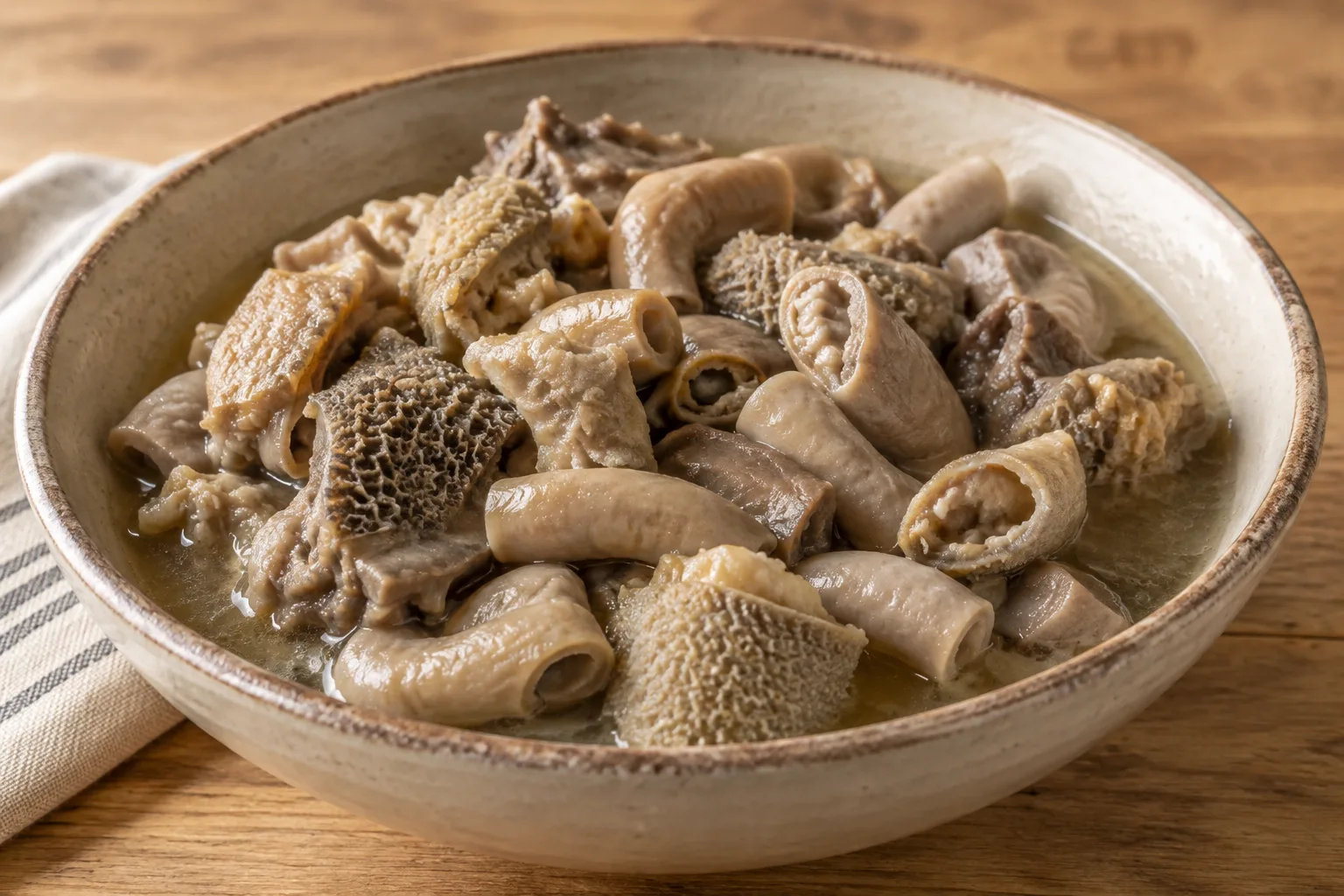
A common pairing is seswaa with pap and leafy greens such as morogo. Samp—dried maize kernels that have been hulled and broken—is cooked with beans and may be served with meat. Other meals include goat, chicken, or offal with porridge. Mogodu, made from tripe and intestines, is one example of a specific meat preparation; a documented Botswana recipe serves it with bogobe jwa lerotse or maize meal. These combinations illustrate how grain, animal foods, and vegetables come together in different ways.
Sharing also appears in accounts of hospitality and celebrations. Preparing traditionally raised chicken for a guest is described as a gesture of welcome. Some rural settings are associated with eating traditional dishes by hand, while restaurants commonly provide cutlery. These customs should be understood as variable, not as rules for all diners. Social occasions may include sorghum beer or non-alcoholic drinks, and meals can be eaten at home or at markets and cafés. What matters across these examples is not one prescribed table ritual, but the way substantial dishes can be prepared for guests, family, and gatherings.
A glossary of Botswana foods
Names and spellings can vary between sources and communities. The entries below refer to particular products and preparations documented in Botswana’s culinary repertoire; they are not claims that every term has exactly the same use in every household.
- Seswaa: Meat, commonly beef or goat, cooked slowly until tender and then pounded or shredded. It is strongly associated with celebrations and is often served with porridge and greens.
- Bogobe: A cooked porridge made from sorghum, maize, or millet meal. It may be soft or thick, and can also be made using fermented grain.
- Pap: A firm maize porridge served with meat, vegetables, or sauces. It has close relatives and equivalents in other southern African cuisines.
- Ting ya mabele: Porridge made by fermenting sorghum meal before cooking it. Ting refers to the fermented porridge and mabele to sorghum meal.
- Motogo: A thinner preparation of fermented sorghum porridge, contrasted in the documented account with thicker bogobe.
- Morogo: A name for leafy greens, including wild or cultivated leaves, cooked as a side dish.
- Mogodu: A preparation of tripe and other intestines cooked until tender; specific versions and accompaniments vary.
- Dikgobe: A bean-based preparation, described among the foods of Botswana and associated with cereal and, in some versions, meat.
- Magwinya: Fried dough, also known as fat cakes; a wheat-flour food that may be eaten by itself or with other foods.
- Diphaphatha: A flatbread cooked on a dry hot pan or surface, rather than deep-fried.
One country, many cuisines
Tswana Communities
Tswana foodways include documented preparations based on sorghum, notably ting ya mabele, fermented sorghum meal cooked as porridge. The preparation can be made thick as bogobe or thinner as motogo. Meat and leafy vegetables are also dried for storage in accounts of Setswana food practices. A description of ting as ceremonial at weddings and funerals specifically concerns Tswana communities in South Africa; it should not be extended automatically to all Tswana communities in Botswana.
Kalanga Communities
A preparation associated with the Kalanga combines cooked melon, sour milk, and cereal porridge, and is identified as tophi in the available description. Another documented food, bogobe jwa lerotse, brings melon together with sorghum or maize meal and is associated with wedding foodways. These examples give evidence for particular uses of grain and seasonal melon; they do not establish a single preparation followed by every Kalanga household or an exclusive origin for the foods.
Cook