Documentary synthesis prepared with AI assistance. It does not replace specialist review or certify kitchen testing. · Updated 31 October 2026
An Atlantic archipelago and its varied foodways
Cape Verde is an Atlantic archipelago off the western coast of Africa, made up of ten islands. Its island setting is part of the context for a cuisine that includes both foods from the sea and substantial preparations built around maize, beans, rice, and vegetables. The ingredients and dishes described across the country do not amount to one fixed menu: availability and household choices shape what appears on a table.
A Creole character is often used to describe this cuisine, whose documented influences include African and Portuguese foodways. That broad description is most useful when paired with concrete examples: a slow-cooked cachupa of maize and beans, fish or shellfish, steamed maize cuscuz, and sweets made with tropical fruits. These dishes sit alongside one another without requiring every meal, island, or family to share the same recipe. The archipelago’s culinary identity is therefore found in both recognizable preparations and the variations through which people cook them.
Colonial history and documented exchange
Cape Verde’s food history belongs to a wider history of colonization and Atlantic exchange. Portugal colonized the islands in the fifteenth century, and their mid-Atlantic position made them a stopover connected with the transatlantic slave trade. Enslavement profoundly shaped Cape Verdean society; the trade on the islands ended in 1876. These facts are essential historical context, not a complete explanation for the origin of any particular dish.
Descriptions of Cape Verdean cuisine identify African and European, especially Portuguese, influences. They point to maize, rice, and beans alongside Portuguese-associated stews and other foods. Over time, these influences formed a Creole culinary culture, but the available evidence does not establish an exclusive origin for each recipe or show that present-day dishes have remained unchanged. Cachupa is now especially prominent, yet the wider food repertoire includes seafood, sweets, and drinks as well. Cape Verdean language, music, and literature also express cultural identity and historical memory; their importance provides context for the cuisine without proving how any specific recipe was transmitted.
Maize, legumes, seafood, and fruit
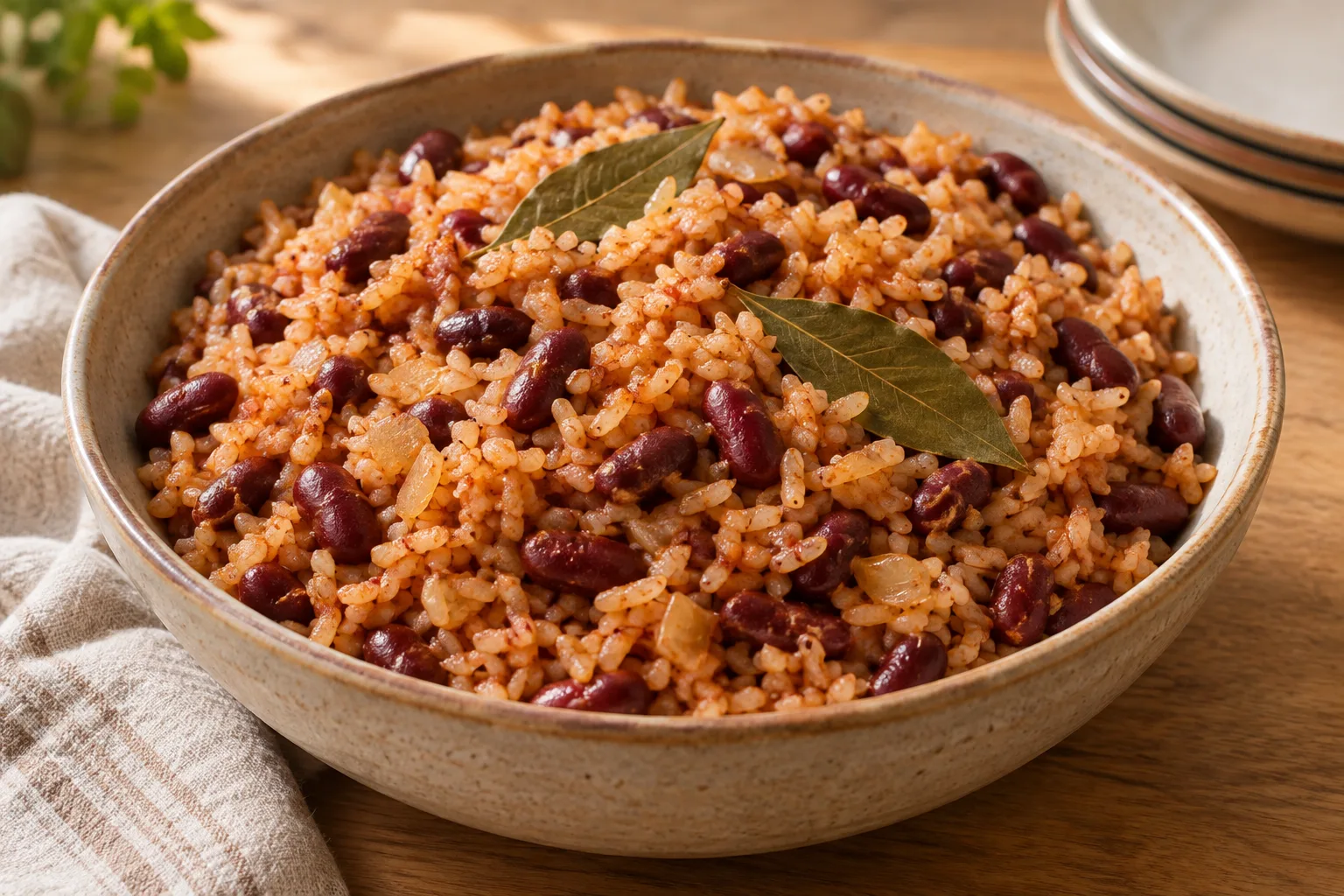
Maize is a central ingredient in the documented food repertoire. It forms the base of cachupa and of Cape Verdean cuscuz, a distinct steamed maize preparation rather than the semolina dish known by the same name elsewhere. Beans accompany maize in stews, while rice is another important staple. Depending on the version, cachupa may also include cassava, sweet potato, pumpkin, cabbage, or other vegetables; meat or fish may be added, but the ingredient combination is not fixed.
The Atlantic seafood repertoire described for Cape Verde includes tuna, octopus, squid, red mullet, sea bream, moray eel, and lobster. Which fish or shellfish is used can depend on the market and catch. Papaya, coconut, guava, and mango appear in descriptions of sweets, while cheese is paired with fruit in some preparations. Sugar cane is the raw material for grogue, a spirit associated particularly with Santo Antão. Fogo is also documented for wine production. These place-specific associations add detail to the pantry without implying that a product is exclusive to one island or eaten everywhere.
Hearty stews, seafood, and fruit sweets
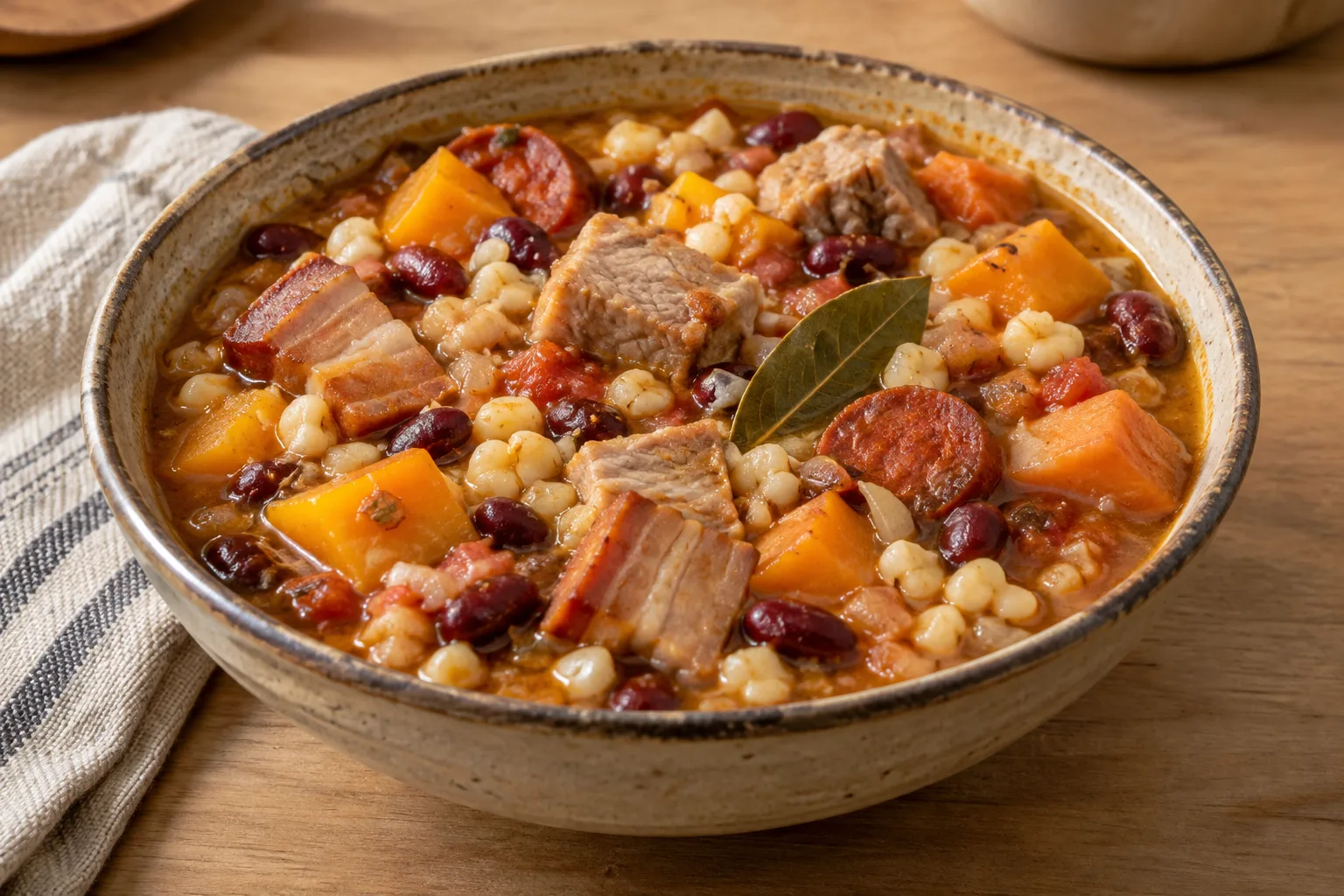
The character of cachupa comes from its slow-cooked grains and legumes: maize and beans soften into a substantial dish, sometimes joined by roots, vegetables, meat, or fish. As those additions vary, so do the stew’s texture and flavor. Some descriptions use the terms cachupa pobre and cachupa rica for simpler and more enriched versions, but they should not be treated as a universal classification that captures every household’s choices.
Seafood preparations offer a different set of textures and emphasize the fish or shellfish used. Fish may be grilled or cooked in stews and broths; lobster is also described grilled, while octopus and other seafood appear in varied preparations. The evidence supports a broad repertoire rather than one standard seasoning or method. Sweets bring another contrast: papaya may be cooked as a preserve and served with local cheese, and coconut and cheese also feature in dessert descriptions. Maize cuscuz, served hot with butter or cane honey in one documented account, is distinct from the wetter consistency of a stew. Together these foods show a range from dense and filling to sweet and fruit-forward.
Shared dishes and cultural continuity
Cachupa is widely recognized as a signature Cape Verdean dish. Its maize-and-bean base can be made in a substantial pot, with other ingredients varying from one preparation to another. Some accounts describe leftovers being made into cachupa refogada: reheated or fried, and in a described version served with egg and onion. This is a documented way of serving the dish again, not a rule that every household follows or a required breakfast tradition.
Food belongs to a wider culture in which Cape Verdean Creole language, music, storytelling, and literature help express identity and memory. The language is native, while Portuguese is the official language; music and writing in Creole are also described as important to cultural life. These connections offer context for understanding food as part of a living culture, but they do not establish a specific transmission history for each recipe.
The available accounts describe shared meals and festive occasions in general terms, but do not establish a single national culinary calendar or a dish required for every celebration. It is more accurate to recognize the prominence of cachupa, seafood, sweets, and other preparations while allowing for differences among households and islands than to impose one common ritual.
Slow simmering, steaming, and grilling
Slow cooking is closely associated with cachupa. Maize and beans are simmered until tender, with vegetables, roots, meat, or fish included according to the version. One description mentions pounding maize by hand before cooking; this is a documented technique, not evidence that every cook prepares the grain that way. The defining transformation is the long cooking of the staple ingredients into a cohesive, filling stew.
Cape Verdean cuscuz uses a different method: maize is prepared and steamed in a traditional terracotta vessel called a binde. It is described as being served hot with butter or cane honey. The name should not be confused with North African couscous made from semolina; the ingredients and preparation described here are different. Seafood, meanwhile, may be grilled or cooked in stews and broths, allowing the chosen fish or shellfish to remain central to the dish. Sugar cane is used to make grogue, though the available descriptions do not provide a complete production method. These examples document particular techniques, not an exhaustive account of cooking throughout the archipelago.
Meals, accompaniments, and occasions
A Cape Verdean meal may center on a substantial grain-and-legume dish, fish, or shellfish. Cachupa is notable for its flexibility: the basic maize and beans can be accompanied by different vegetables and roots, or enriched with meat or fish. When some remains, cachupa refogada offers another way to serve it, with one described version adding egg and onion. The practice is documented, but it does not define every household’s daily routine.
Seafood appears in descriptions of meals in coastal settings and port cities such as Mindelo and Praia. Tuna, octopus, and lobster are among the named ingredients, served in different forms, including grilled dishes and stews. Their presence does not mean every meal includes seafood or that the same products are equally available throughout the islands. A meal may also include rice or other accompaniments, depending on the dish.
Desserts include papaya preparations, coconut sweets, and cheese-based puddings. Drinks described in the repertoire include grogue, a sugar-cane spirit; ponche, made with grogue, honey, and lemon in one account; and wine associated with Fogo. These foods and drinks suggest a varied table rather than a single formal sequence. The particular combination depends on the occasion, locality, and ingredients at hand.
A glossary of Cape Verdean foods and drinks
These terms identify particular preparations and products in the Cape Verdean repertoire. They describe documented forms, not mandatory recipes; ingredients and serving styles can vary.
- Cachupa: A slowly cooked stew based on maize and beans, sometimes including roots, vegetables, meat, or fish.
- Cachupa pobre / cachupa rica: Names used in some accounts for simpler and more enriched versions. The distinction does not define every variation.
- Cachupa refogada: Leftover cachupa reheated or fried; one described serving includes egg and onion.
- Cuscuz: Cape Verdean steamed maize preparation, distinct from semolina couscous. It may be served hot with butter or cane honey.
- Binde: A traditional terracotta vessel associated with steaming Cape Verdean cuscuz.
- Grogue: A spirit made from sugar cane and especially associated with Santo Antão.
- Ponche: A drink described as combining grogue, honey, and lemon.
- Dulce de papaya: A sweet papaya preparation, sometimes served with local cheese.
One country, many cuisines
Santo Antão
Santo Antão is associated with the production of grogue, a spirit made from sugar cane. This documented connection offers a specific point of entry into the island’s food and drink, but the available evidence does not provide a full account of local varieties, production areas, or methods. The association should not be taken to mean that the drink is exclusive to Santo Antão, or that it represents the island’s entire culinary life.
Fogo
Fogo is documented as a wine-producing island, with a reference to wine from Chã das Caldeiras. This supports including local wine as a regional product, but does not provide enough detail to describe a wider set of island dishes, ingredients, or table customs. The connection does not establish that wine is exclusive to Fogo or present at every local meal.
Sal and Boa Vista
Sal and Boa Vista are linked in the available culinary descriptions with lobster, including lobster served grilled. This identifies a particular seafood association without suggesting that lobster is the only seafood eaten on either island or that the preparation is unique to them. The evidence provided does not develop other culinary distinctions between Sal and Boa Vista, so this entry remains focused on that documented connection.
Cook