Documentary synthesis prepared with AI assistance. It does not replace specialist review or certify kitchen testing. · Updated 31 October 2026
An island’s varied foodways
Cyprus is an island in the eastern Mediterranean, and its food traditions draw on agriculture, animal husbandry, fishing, household cooking, and exchange with other communities. A meal might bring together bread, olives, vegetables, herbs, cheese, pulses, meat, or fish; no single dish or menu represents every household or occasion. The documented repertoire includes both ordinary foods and preparations made for social and religious events.
The word meze describes a way of serving a variety of small dishes for sharing. Depending on the meal, these can include dips, vegetables, pulses, cheeses, meat, or fish. The format makes room for different tastes at the same table, but it is not a fixed sequence with identical contents everywhere. Coastal meals and food prepared in villages or mountain communities form part of a wider island cuisine, not separate, rigidly bounded culinary worlds.
Cypriot food is best understood through its ingredients, methods, and social settings together. Local food documentation covers production and preservation as well as cooking, trade, utensils, and dining. This wider perspective connects a plate of cheese or a bowl of soup to the knowledge and work behind it, while leaving room for the variations that distinguish households and communities.
History, contact, and culinary memory
Cyprus’s position in the Mediterranean has brought its communities into contact with different peoples and food traditions. Descriptions of the cuisine identify Greek and Middle Eastern influences, while other accounts discuss Ottoman and Levantine connections. These are useful contexts for understanding exchange, rather than labels that explain every dish or establish an exclusive origin. Foods and methods can travel, change, and acquire local meanings over time.
The history of food also lies in how people have grown, made, stored, traded, and eaten it. The Cyprus Food Museum documents changing food habits across historical periods and the development of cereals, dairy products, and foods derived from local species. Its subject matter includes olive oil, olives, wine, bread and other wheat foods, fruits, nuts, vegetables, wild herbs, meat, and dairy. Agricultural tools, storage containers, cooking vessels, hearths, and dining utensils are part of this record, too.
Cyprus participates in the multinational recognition of the Mediterranean diet as a cultural practice. That recognition concerns shared knowledge and ways of producing, preparing, and consuming food; it does not certify every Cypriot dish or define the whole island’s cuisine. Seen together, these records show a food culture formed through historical change and ongoing transmission, rather than a static collection of recipes.
Ingredients, dairy, and preserved foods
The documented pantry includes olive oil and olives; bread, wheat products, and pulses; fruit, nuts, vegetables, and wild herbs; and foods from livestock and the sea. These ingredients support a range of preparations, from simple accompaniments to cooked dishes and sweets. Fish and seafood belong to coastal food settings, while the island’s food record also includes meat and dairy products. Availability and household use can vary, so this is a repertoire rather than a universal daily shopping list.
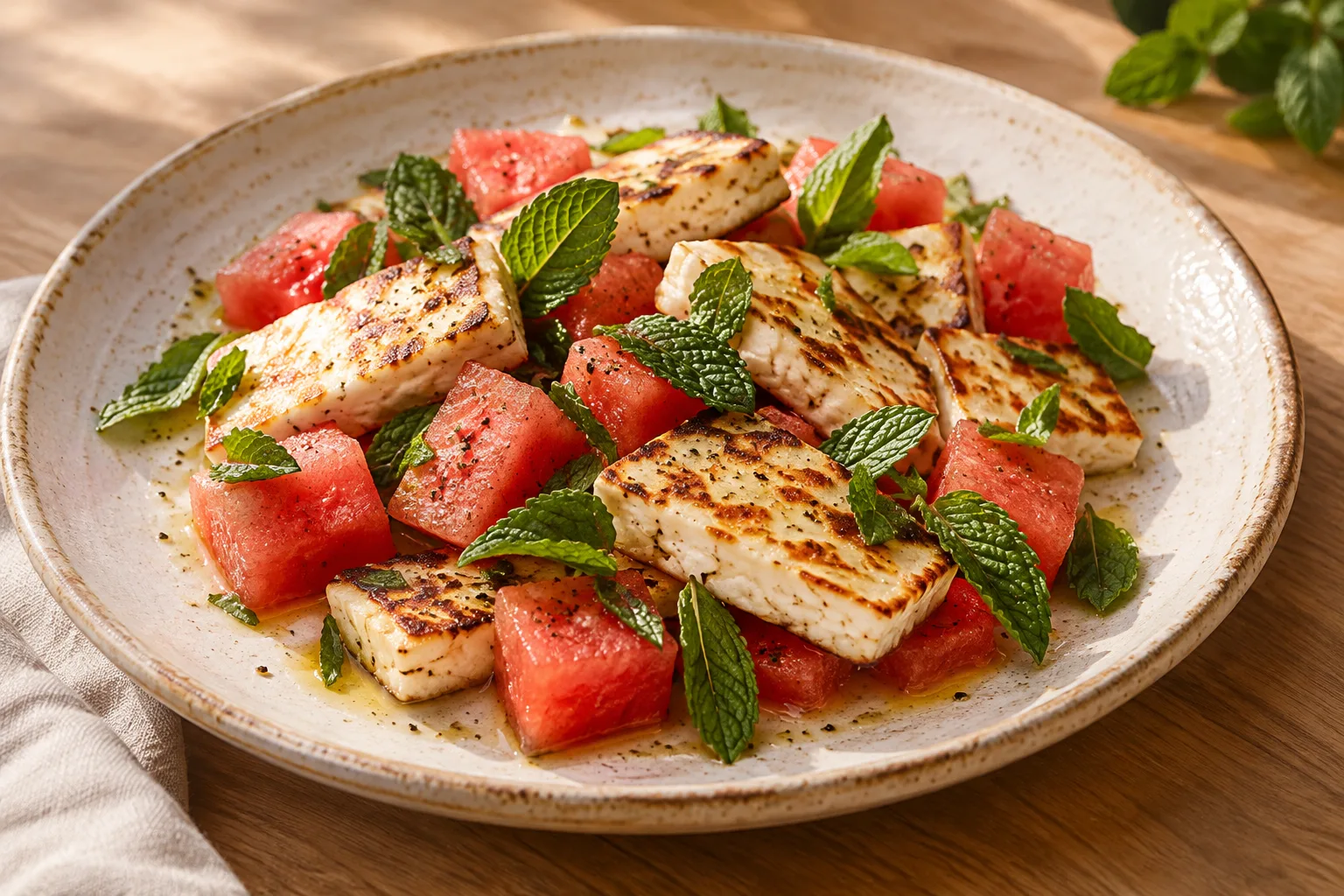
Two cheeses show how dairy can yield distinct products. Halloumi is a firm cheese traditionally made with sheep’s and goat’s milk; some versions also use cow’s milk. It can be grilled or fried while holding its shape. Anari is a softer cheese made from the whey left from cheesemaking. It can be eaten fresh, paired with honey, or used in pastries; when dried, it can be grated. These different textures give the cheeses different places in a meal.
Grape and carob products feature in the documented range of sweets, alongside fruit preserves and nuts. The island’s culinary heritage also encompasses wine, olive oil, bread, and foods made for keeping and later use. Such products link the kitchen to work beyond the cooking pot: harvesting, processing, storage, and distribution are all part of the food tradition.
Salty, fresh, smoky, and sweet
Cypriot food includes contrasts of taste and texture rather than one defining seasoning. Olive oil, herbs, vegetables, pulses, and citrus appear across the documented repertoire, while cheese contributes saltiness and a firmer or softer texture depending on how it is made and served. Grilled halloumi develops a browned exterior yet remains intact; fresh anari is soft and mild, while dried anari is firm enough to grate.
Cooking over a fire gives meat and cheese a browned surface and smoky character. Sheftalia combines minced meat with onion and parsley, wrapped in a thin membrane before grilling. Slow-cooked preparations offer a different experience: stifado is a meat stew with small onions, wine, and spices, while afelía is a pork dish made with wine and coriander. The coriander in this dish is seed, not leaf. These dishes have their own distinct combinations and should not be treated as interchangeable versions of one seasoning style.
The sweet side of the pantry includes fruit preserves and preparations based on grape or carob. Nuts and dairy appear in sweet foods as well. Together, these examples show a cuisine that can move from citrusy or salty notes to toasted, savory, and concentrated fruit sweetness. The balance depends on the particular dish and occasion, not on a single formula applied across the island.
Festivals, family cooking, and transmission
Food accompanies family gatherings, special occasions, and religious festivals in Cyprus. Local descriptions connect particular delicacies and recipes with these events and record family members gathering to prepare some specialties on designated days. Such accounts describe practices that are transmitted across generations, but they do not mean that every family follows the same routine. Recipes, ingredients, and the work of preparing them can vary between households.
Two examples make the connection between food and occasion concrete. Flaounes are cheese pastries associated with Easter. Souvla, large pieces of meat cooked slowly on a turning spit, is linked with Easter, family celebrations, and holidays. These foods show how a preparation can acquire a place in a festive meal without standing for every celebration or every community. Everyday cooking and tavern meals remain part of the wider picture.
Transmission involves more than remembering a recipe. It can include knowing how to make dairy products, preserve fruit, prepare wheat foods, and use the tools and vessels involved in production and cooking. Food heritage documentation in Cyprus addresses these materials and practices, from production sites to distribution and household kitchens. Traditions are therefore living knowledge: remembered and adapted through people’s work, shared meals, and changing circumstances.
Grilling, baking, simmering, and preserving
Cooking methods across the documented Cypriot repertoire include grilling, spit-roasting, baking, stewing, and preparing foods for storage. Direct heat gives meat a browned exterior, while halloumi can be grilled or fried without losing its shape. Souvla uses large pieces of meat cooked slowly on a turning spit. Its size and slower cooking distinguish it from smaller pieces cooked more quickly, and help make the preparation suited to a gathering.
Other dishes rely on slower, enclosed, or moist cooking. Kleftiko is meat cooked slowly in a closed parcel or vessel, traditionally in an oven. Ttavás is a baked dish associated with a cooking vessel, and stifado is a stew in which meat, onions, wine, and spices cook together. Afelía combines pork, wine, and coriander. These are distinct preparations, each with its own ingredients and method; a clay vessel, where used, is one element of the technique rather than a definition of the entire cuisine.
Food work extends beyond heat applied at mealtime. The island’s food record includes the production of bread, wine, olive oil, cheese, and preserved fruit, along with tools for farming, processing, storage, and cooking. Such methods connect what is served to seasonal harvests and household knowledge. They also remind us that culinary techniques include making and keeping ingredients, not only finishing a dish.
A table arranged for sharing
Meze is a characteristic format for a shared meal: a variety of small dishes are served for people at the table to eat together. A selection might include dips, vegetables, olives, pulses, cheese, meat, or fish. The contents vary, and there is no single required order or island-wide set menu. Bread and other local foods may accompany the dishes, while the particular selection depends on the meal and what is available.
Different occasions can make different preparations central. A family gathering or holiday may include souvla, while flaounes are associated with Easter. Elsewhere, a stew, baked dish, or fish meal can anchor the table. Coastal settings include fish and seafood in the documented repertoire; villages and mountain communities are also part of the island’s food landscape. These broad settings are not strict culinary borders, and the available evidence does not assign every dish to a particular place.
Eating together gives food a social role beyond nourishment. The multinational Mediterranean diet heritage recognized by UNESCO highlights shared practices and knowledge, including foodways connected with exchange and social life. This context helps explain why communal meals matter, without turning one serving style into a complete account of Cypriot cooking. From family kitchens to taverns, the table can bring together local products, particular occasions, and conversation.
A glossary of Cypriot foods
These terms name specific products and preparations found in the documented Cypriot repertoire. Some have associations with particular occasions; others can appear in shared meals or household cooking. Their definitions describe recognizable features without implying that every family makes them in exactly the same way.
- Halloumi: Firm Cypriot cheese, traditionally made with sheep’s and goat’s milk; it can be grilled or fried while retaining its shape.
- Anari: Soft cheese made from whey. It can be eaten fresh or dried and grated.
- Meze: A selection of small dishes served for sharing, with contents that can vary.
- Sheftalia: Minced meat with onion and parsley, wrapped in a thin membrane and grilled.
- Souvla: Large pieces of meat cooked slowly on a turning spit; associated with holidays and gatherings.
- Kleftiko: Meat cooked slowly in an enclosed parcel or vessel, traditionally in an oven.
- Stifado: A meat stew with small onions, wine, and spices.
- Afelía: A pork preparation made with wine and coriander.
- Flaouna: A cheese pastry associated with Easter.
The list is a starting point, not a complete inventory of the island’s foods. Bread and other wheat products, pulses, fruit preserves, carob preparations, fish dishes, and many other foods belong to the broader repertoire. Names help identify preparations, but they cannot by themselves describe all the variations or social meanings attached to them.
One country, many cuisines
Island of Cyprus
The island is documented as a varied culinary setting that includes coastal localities, villages, and mountain communities. Its food repertoire includes agricultural products, cheeses, meat preparations, and, in coastal contexts, fish and seafood. Meze and tavern meals offer settings for shared foods, while family and religious occasions are associated with particular dishes. The evidence supports this island-wide description but does not establish precise culinary boundaries or assign every preparation to a specific locality.
Cook