Documentary synthesis prepared with AI assistance. It does not replace specialist review or certify kitchen testing. · Updated 31 October 2026
Fields, forests, coast, and inland waters
Estonia’s food culture is closely connected to its landscape and changing seasons. Fields supply grains and potatoes; forests yield mushrooms and berries; and the Baltic coast, rivers, and lakes provide fish. These settings overlap, but they do not produce one uniform regional cuisine. Island and coastal food draws on the sea, while freshwater fish is especially associated with inland waters such as Lake Peipsi. Across the country, local ingredients and seasonal availability help explain what is eaten and how foods are preserved.
There is no single dish that represents every Estonian table. Dark rye bread, potatoes, pork, dairy, and fish are widely recognized staples, while regional preparations give particular places their own culinary character. Mulgimaa’s mulgi puder, for example, is a specific potato-and-barley tradition; Old Believer communities by Lake Peipsi have food customs centered on onions and fish. Tallinn’s long association with marzipan offers a different, urban historical reference. These traditions are best understood in their own settings, rather than treated as rules for the whole country.
Exchange, adaptation, and local continuity
Estonian food history reflects contact with neighboring cultures as well as the practical demands of local life. German, Russian, and Scandinavian influences are noted in accounts of the country’s cuisine, but contact does not establish an exclusive origin for any dish. Foodways change through exchange and adaptation, and familiar preparations may become part of local practice over time. Seasonal self-reliance also mattered: people relied on what they could grow, gather, or hunt, and preservation helped extend the use of available foods through winter.
Tallinn offers a distinct urban strand of this history. Marzipan has been made there since the Middle Ages, and the confection remains associated with the city’s historic center. In Tartu County, food history is linked to the Hanseatic League: travellers and the knowledge they carried contributed to the movement of flavors and practices into local recipes. Practical teaching, research, and food production continue to shape the region’s food culture. These examples show different kinds of continuity—urban craft, regional exchange, and everyday adaptation—without making any one of them a complete account of Estonia’s culinary past.
Grains, potatoes, fish, dairy, and forest foods
Rye is especially visible in Estonia’s dark bread, commonly called leib or rukkileib. Barley appears in several concrete preparations: it is combined with potato in mulgi puder, and barley bread called karask is associated with southern Estonia. Potatoes are an important staple in their own right and also provide the soft, substantial base for regional dishes. Pork and dairy products belong to the broader pantry described in accounts of Estonian food, alongside fish from coastal and inland waters.
Fish varies with place and preparation. Baltic herring, known as räim, is associated with western islands and coastal areas; it may be smoked, pickled, or fried. Lake Peipsi and other inland waters supply freshwater fish. Forests and fields contribute gathered mushrooms and berries, which are eaten in season or preserved. Dairy ranges from milk and sour cream to curd-based foods, including the sweet, chocolate-covered kohuke. A grain-and-pea flour mixture called kama is used in desserts and can be mixed with fermented dairy. These ingredients describe a pantry with regional and seasonal variation, not a fixed national recipe list.
Dense breads, grain textures, and seasonal contrast
Estonian preparations include textures built from sturdy grains and potatoes. In mulgi puder, mashed potato is combined with barley, whose grains remain firmer than the potato and make the dish more substantial. The barley bread karask offers a different expression of the same grain. Rye bread is another important form: western island bread is described as particularly dense, while dark rye loaves more generally are served with meals or used for open sandwiches.
Flavor changes with the ingredient and the way it is handled. Fish may be smoked, grilled, pickled, or fried; these are distinct preparations rather than a single national style. Berries and mushrooms bring seasonal forest flavors to dishes and preserves. Fermented and pickled foods add a tangy element to the winter pantry, and sour cream appears in a range of foods. Tallinn’s marzipan combines almonds and sugar in a confection with a long local history. Taken together, these foods suggest a varied palette shaped by grain, preservation, dairy, and the harvest, rather than a reliance on one defining seasoning or flavor profile.
Family cooking and traditions passed between generations
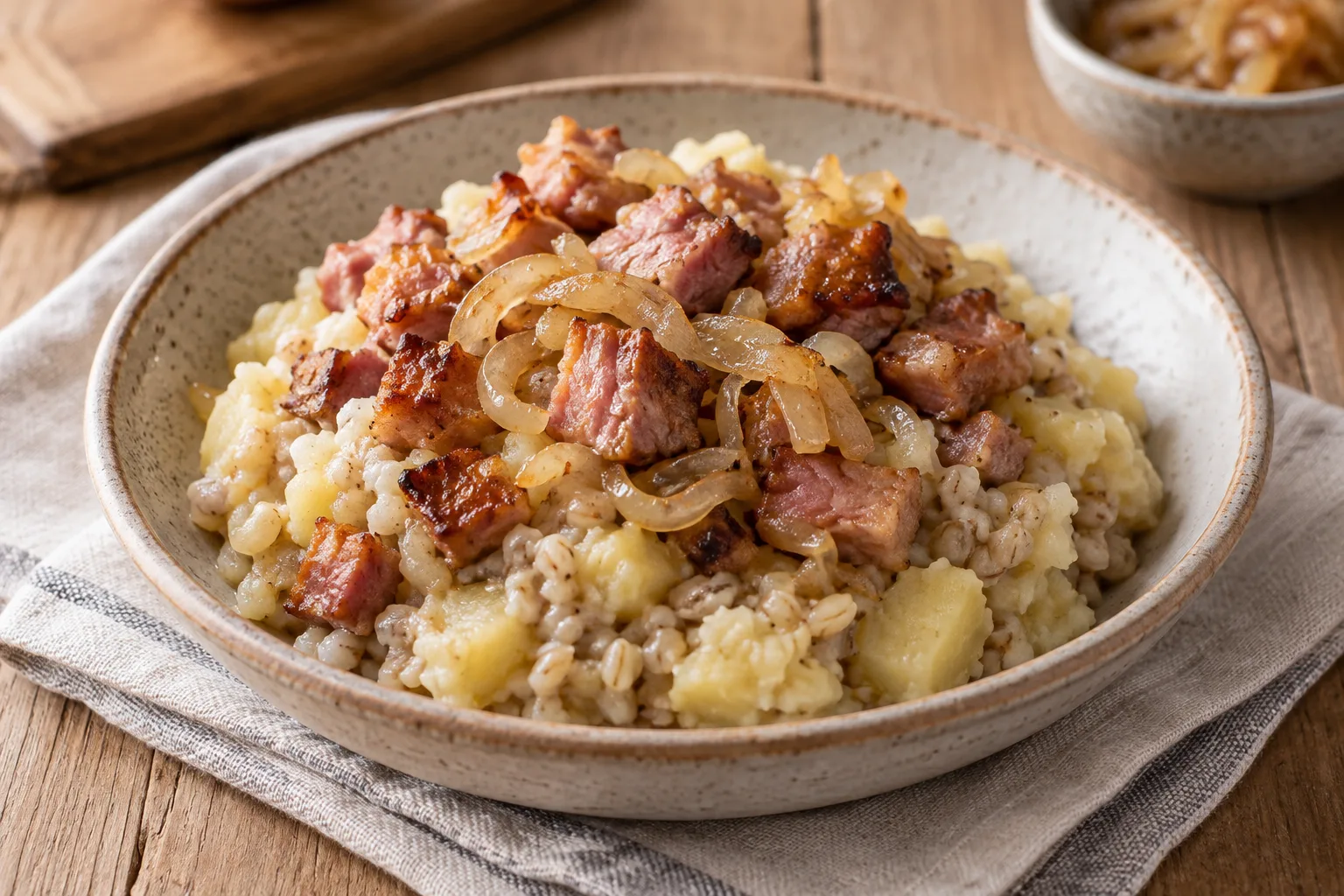
A particularly well-documented community tradition is cooking and eating mulgi puder in Mulgimaa. Sliced potatoes are placed in a pot, soaked barley is added on top, and the ingredients are salted, boiled until soft, and mashed. The dish may be served with pan-fried pork knuckle, either mixed into the mash or on the side, or with vegetables. It is often made in quantity for several days. Each family has its own way of preparing it, and people exchange recipes.
The tradition is transmitted mainly in families, and also through schools, hobby groups, and workshops organized by local organizations, community teachers, and the Institute of Mulgi Culture. People cook and eat the dish with family and friends, at work and school, and at community gatherings and celebrations. Its 2024 inscription on UNESCO’s Representative List concerns the practice of cooking and eating mulgi puder in Mulgimaa; it does not define all Estonian food culture.
Another specific community custom is the samovar tea-drinking tradition among Old Believers along Lake Peipsi, included in Estonia’s intangible cultural heritage inventory. It is a community practice, not a universal national ritual.
Cooking, smoking, pickling, and preserving
Preserving food extends the use of seasonal ingredients into colder months. Smoking, pickling, and fermenting are documented methods in Estonian food culture, used with different products and according to local practice. Fish provides a clear example of variation: western island accounts describe räim smoked, pickled, or fried, while fish from lakes and rivers appears in inland food traditions. These methods are part of a broad repertoire; the evidence does not establish one standard technique or recipe for every region.
The preparation of mulgi puder offers a specific sequence rather than a general rule: barley is soaked, added to sliced potatoes, and boiled with them until soft; the mixture is then mashed. It is commonly prepared in a quantity that can be eaten over several days. Berries and mushrooms are also preserved, while fruit and berries are made into drinks in western Estonia. Apple cider production, for example, includes pressing apples in late autumn and aging the cider in the bottle. The utensils and exact procedures used can vary; no single tool should be treated as representative of the country’s cooking as a whole.
Everyday meals, gatherings, and foods to share
The Estonian table encompasses everyday home food, shared community meals, and food served in restaurants. Dark rye bread accompanies many meals and can also serve as the base for open sandwiches. Fish, potatoes, dairy, and preserved foods appear in different combinations according to season and location. Accounts of eating in Estonia also describe cold dishes such as pickles and potato salad, alongside fish and other main dishes; the details vary between households and occasions.
Mulgi puder is a concrete example of cooking for more than one meal and sharing across social settings. It is eaten in Mulgimaa at home and also cooked with family and friends, at work or school, and at community celebrations. In western Estonia, local producers turn fruit and berries into cider and wines; coastal cafés serve fish with historical importance to local diets. In Tallinn, marzipan connects a present-day confectionery tradition with the city’s medieval past.
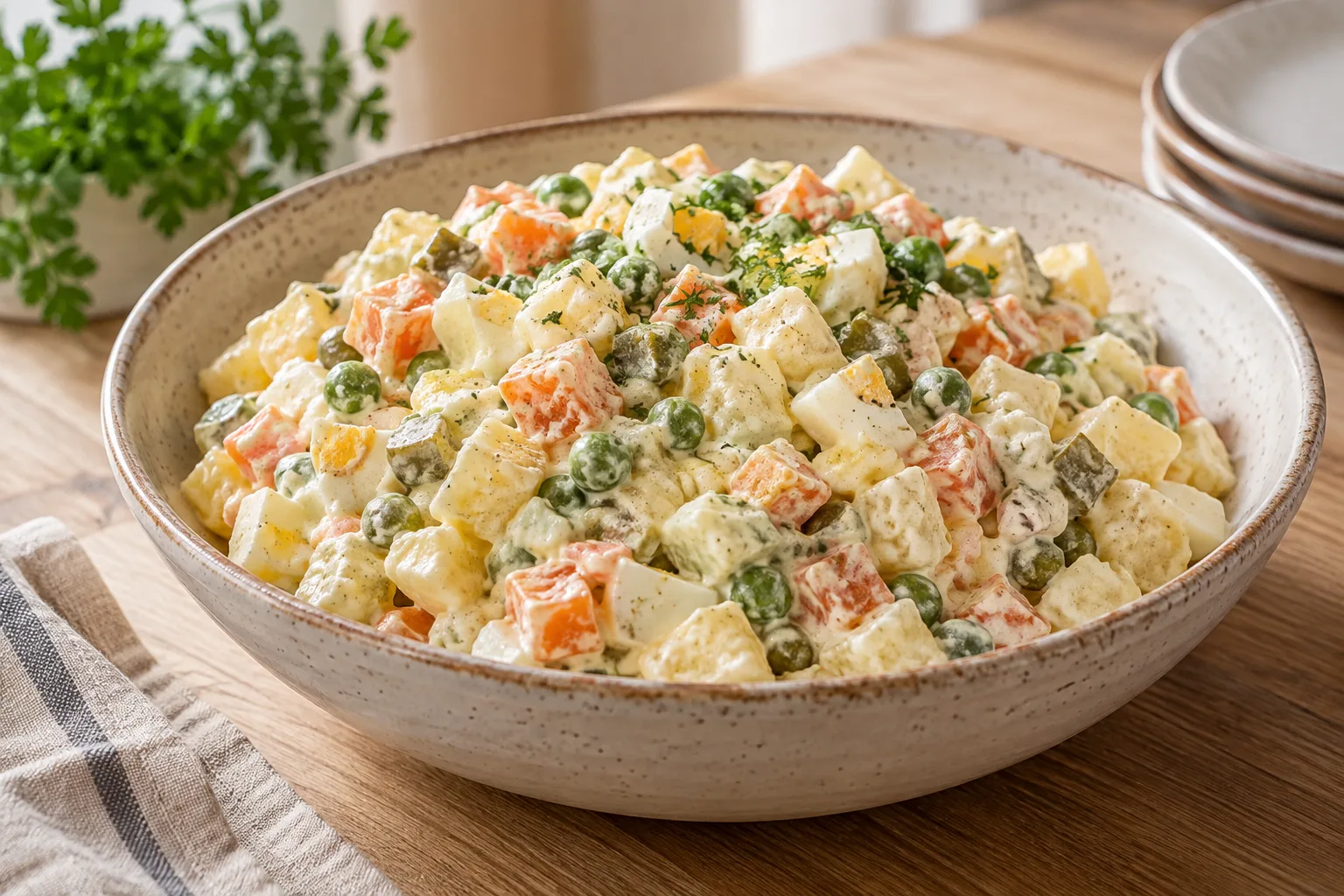
The KitchenPause recipe collection includes Estonian potato salad, kartulisalat. It is one home-cooking entry in the collection, distinct from the cultural references to mulgi puder, karask, and regional fish preparations. A recipe listing does not imply that one dish stands for all Estonian meals.
Names for breads, dishes, and ingredients
These terms identify particular foods and preparations. Some are closely associated with a region or community; others are found in broader accounts of Estonian food. Their meanings help distinguish ingredients and dishes without treating them as interchangeable or assuming that each has one recipe everywhere.
- Leib / rukkileib: Estonian dark rye bread. A particularly dense version is described on the western islands.
- Mulgi puder: Mulgimaa’s mashed potato and barley dish, often served with pan-fried pork knuckle or vegetables.
- Karask: A barley bread associated with southern Estonia.
- Räim: Baltic herring, prepared in different ways, including smoking, pickling, and frying.
- Kohuke: A sweet curd snack coated in chocolate.
- Kama: A flour mixture that may include barley, oats, rye, and peas; it can be mixed with kefir or other fermented dairy and used in desserts.
- Kartulisalat: Estonian potato salad; a version is included in the KitchenPause recipe collection.
The names do not imply uniform preparation throughout the country. Family recipes, local ingredients, and regional customs can shape how a food is made and served.
One country, many cuisines
Mulgimaa
South of Viljandi, Mulgimaa is associated with the Mulgi dialect and the tradition of cooking and eating mulgi puder. The dish combines potatoes and soaked barley, boiled until soft and mashed, and may be served with pan-fried pork knuckle or vegetables. It is made in family kitchens and shared at community gatherings; recipes are exchanged, and the tradition is also taught through schools and workshops.
Tartu County and the Lake Peipsi area
Tartu County lies between Lakes Võrtsjärv and Peipsi and along the Emajõgi River. Its food resources are associated with these waters, the surrounding forests, and cultivated fields: fish, mushrooms, berries, and grain are all noted in accounts of the region. Old Believer communities by Lake Peipsi maintain food traditions centered on onions and fish, as well as a samovar tea-drinking custom that is specific to those communities.
Tallinn, the coast, and the western islands
Tallinn is associated with the making of marzipan since the Middle Ages. Along the western coast and islands, Baltic fish is a prominent part of regional food traditions: räim, or Baltic herring, may be smoked, pickled, or fried. A particularly dense form of dark bread is also described on the western islands. These are documented features of particular places, not a single description of food throughout Estonia.
Cook