Documentary synthesis prepared with AI assistance. It does not replace specialist review or certify kitchen testing. · Updated 31 October 2026
A country between Adriatic and inland landscapes
Croatia’s culinary identity is best understood through its regional cuisines, shaped by the contrast between the Adriatic coast and the continental interior. Along the coast and islands, seafood, olive oil, and preparations such as grilled fish and black risotto are prominent. Inland, the documented repertoire includes slow-cooked stews, roasted meats, sausages, dairy foods, and freshwater fish. These are broad patterns rather than a strict division: regional cooking also reflects local terrain, livelihoods, and exchange.
The country’s culinary areas include Istria, Kvarner, Dalmatia, Slavonia and Baranja, and the Zagreb region. Istria combines a maritime edge with hills and woodland; Kvarner includes coastal and island communities; and Dalmatia brings together Adriatic cooking and dishes from its hinterland. Slavonia and Baranja are associated with agriculture, livestock, paprika, and river fish. Around Zagreb, meat, pastry, vegetables, and dairy products feature in documented dishes. The names describe culinary areas, not a complete map of every local identity.
Place matters at the table: Lim oysters, Kvarner Bay prawns, Istrian truffles, Slavonian kulen, and Dalmatian brudet are examples tied to particular regions or products. They offer a more precise picture than any claim that one dish or ingredient represents the whole country.
Historical contact and regional adaptation
Croatia’s position at a meeting point of cultural areas is reflected in the varied influences documented across its food traditions. Latin, Germanic, Slavic, and Turkish connections, alongside Venetian, Ottoman, Austrian, and Hungarian histories, are part of this account. Their presence and weight vary by place; they should not be treated as a single influence shared uniformly by every region. The contrast between coastal and inland foodways is especially visible in ingredients and preparation styles.
Specific dishes show how histories and local environments meet. Fiš paprikaš, associated especially with Slavonia and Baranja, is a freshwater-fish stew cooked with onion and paprika in a cauldron over a fire. The fish may include carp, catfish, or pike. On the coast, brudet uses several kinds of fish and is traditionally associated with fishermen’s cooking. Handmade pasta is documented in Istria and around Dubrovnik, but the shapes and dishes accompanying it differ.
The Mediterranean diet is recognized as shared intangible cultural heritage involving Croatia and other countries. This recognition concerns a living set of food-related practices, not an individual Croatian dish and not a claim that every regional tradition is identical. It is one documented example of foodways understood through practice and transmission rather than through a national “signature recipe.”
Ingredients, products, and preservation
The Croatian pantry reflects distinct coastal, island, woodland, agricultural, and inland settings. Along the Adriatic, fish and shellfish are cooked in stews or over a grill, while olive oil is an important ingredient in coastal preparations. Istrian accounts bring together seafood with woodland and hill products: truffles, wild asparagus, mushrooms, artisan cheeses, and handmade pasta. Local products remain geographically specific: Lim oysters and Kvarner Bay prawns are associated with particular waters, rather than standing for all Croatian seafood.
Inland foodways include livestock products, cured meats, vegetables, and freshwater fish. Slavonia and Baranja are associated with kulen, other sausages, and paprika-seasoned dishes. Carp, catfish, and pike are used in regional fish stews. In Međimurje, Zagorje, Podravina, and other areas, kukuruzna zlevka brings together corn flour, sour milk, fresh cow’s cheese, eggs, and cream; it may be savoury or sweet.
Several products illustrate how preservation and place shape the pantry:
- Pršut is cured ham; the documented distinction is sea-air drying in Istria and Krk, and smoking in Dalmatia.
- Kulen is a paprika-seasoned cured sausage associated with Slavonia.
- Olive oil and local wines feature in Istrian and other coastal food traditions.
- Freshwater fish, including carp and pike, support inland preparations such as fiš paprikaš.
Seafood, paprika, and contrasting textures
Coastal dishes show several distinct ways of working with seafood. Brudet is a fish stew, commonly made with several species and served with polenta; its broth and soft-cooked fish differ from the creamy texture of black risotto. In crni rižot, cuttlefish or squid ink gives the rice its dark colour, while garlic, onion, and white wine contribute to the preparation. Grilled fish offers another coastal expression, with the ingredient and cooking method kept in the foreground.
In Slavonia and Baranja, paprika is a defining seasoning in dishes such as fiš paprikaš. Inland stews may combine several meats with vegetables and spices, while river-fish versions draw on local freshwater species. The result is not simply a contrast between “light” coastal food and “heavy” inland food: both broad areas include varied ingredients and techniques, and particular dishes depend on local practice.
Other contrasts appear in dough and dairy preparations. Štrukli, filled with cheese, may be boiled or baked; the cooked versions have different textures and finishes. Kukuruzna zlevka can be served savoury or sweet. In Istria, seafood, truffles, mushrooms, cheeses, and pasta coexist within the same regional food landscape. A dish’s character comes from its particular ingredients and method, not from a single national flavour profile.
Festive dishes and living food practices
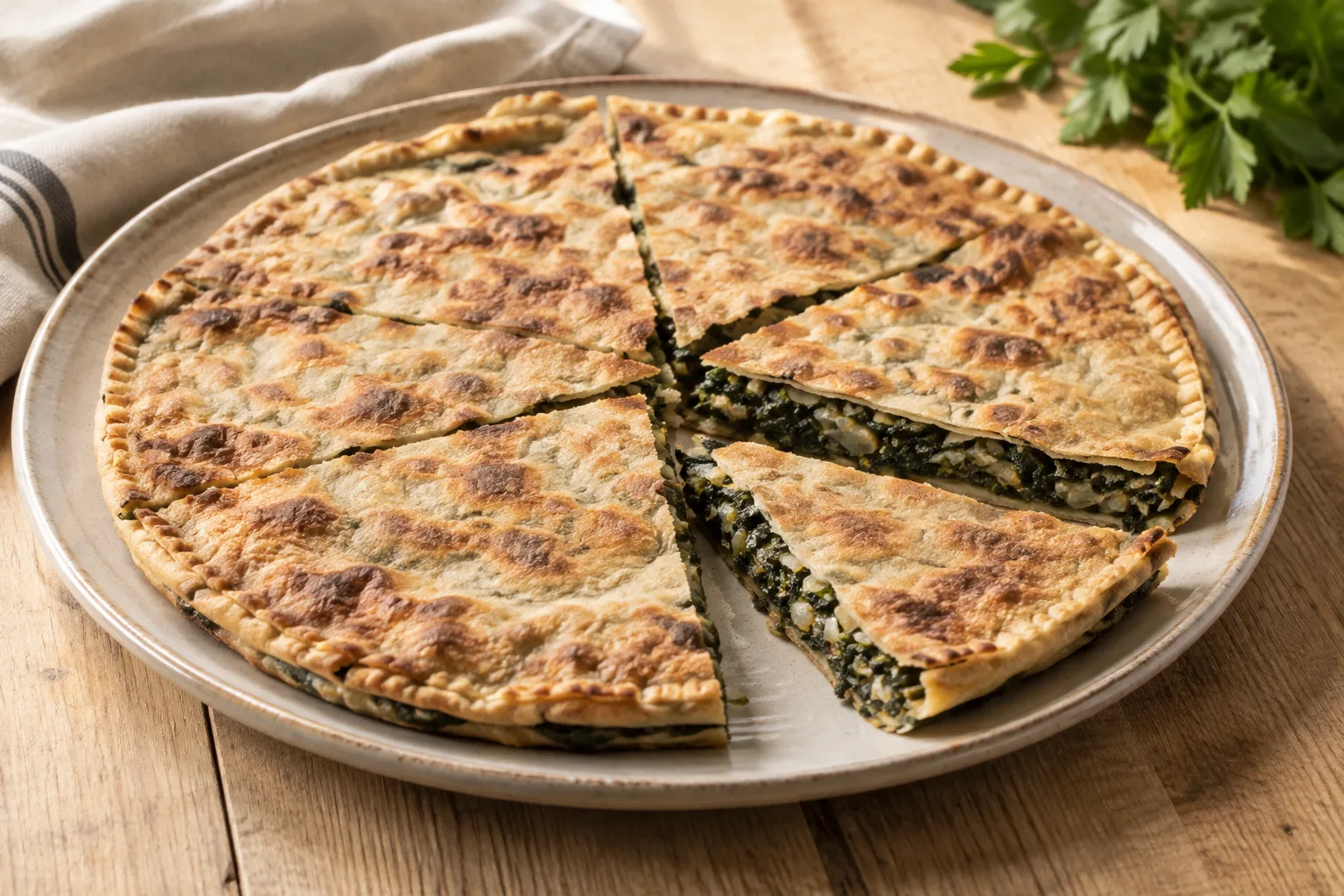
Some Croatian foods have documented links to particular celebrations or calendar occasions. In Dubrovnik, makaruli with meat ragù were prepared on the eve of the feast of Saint Blaise. The meatless version, served with sauce, is known as šporkani or šporki makaruli. Dalmatian pašticada is associated with festive meals and family celebrations. In Poljica, soparnik—a thin savoury pastry filled with chard and onions—was once eaten on days of fasting and is now known as a local specialty. These are distinct regional contexts, not a common ritual for the whole country.
Traditions also persist through ordinary acts of preparation: making pasta by hand, curing ham, cooking local fish, and using a peka bell. Such practices connect ingredients to places and skills passed between generations. The recognized Mediterranean diet is likewise described as a shared cultural practice, rather than a list of dishes. Its recognition should not be extended to claim that every Croatian food is separately inscribed or that one recipe stands for the whole tradition.
Contemporary accounts describe seasonal products and local producers as part of Croatia’s food culture. Markets and family meals are among the settings where regional ingredients and preparations can be encountered. The exact custom varies by community and household; no single form of gathering or celebration applies everywhere.
Grills, cauldrons, spits, and the peka bell
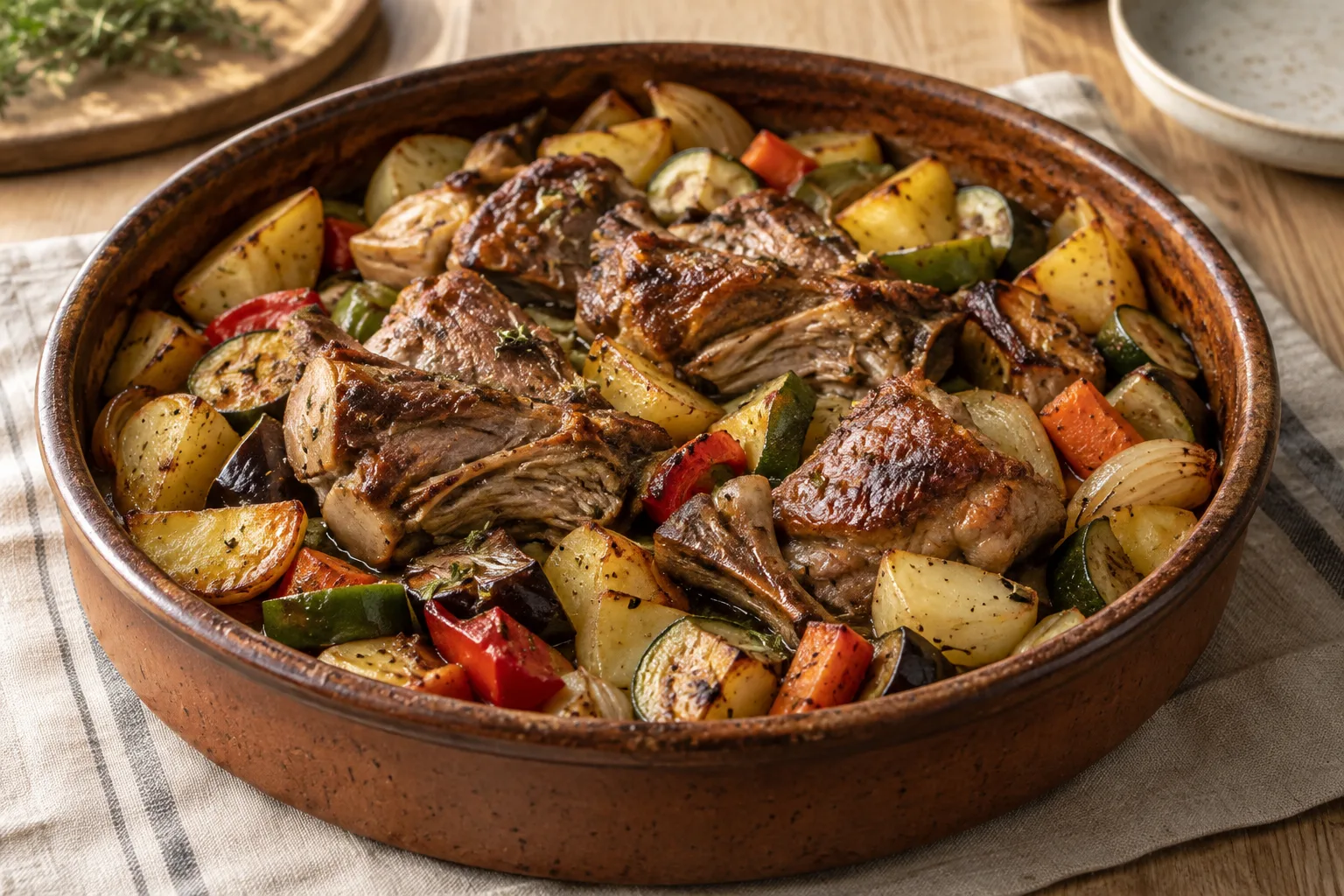
The peka is a distinctive method in which food cooks beneath a bell-shaped clay or wrought-iron cover placed over a fire and covered with hot coals. Documented preparations include lamb, other meats, octopus, and bread. In meat dishes, potatoes cook alongside the main ingredient and take on its juices. The word names a cooking method as well as the covered vessel; it does not refer to one fixed recipe.
Coastal fish is also prepared on gradele, or a grill, while ražanj refers to meat cooked on a spit. Spit-roasting is documented for lamb, pork, and young goat, using steady rotation and moderate heat. Long cooking is central to several stews: pašticada is slowly cooked after marinating, and fiš paprikaš is prepared in a copper cauldron suspended over a fire. These techniques are associated with particular dishes and regions rather than prescribed for every meal.
Other methods preserve food or give it a particular texture. The production of pršut varies by region, with sea-air drying in Istria and Krk and smoking in Dalmatia. Pasta is made in local forms, while cheese-filled štrukli may be boiled or baked. The KitchenPause recipe collection includes Croatian lamb peka; its oven preparation is a catalogue recipe, while the traditional method described here uses the covered vessel and embers.
Meals, accompaniments, and occasions to share
Documented Croatian meals vary according to place and occasion. Pašticada is served at festive meals and family celebrations, often with homemade dumplings; Dubrovnik makaruli carry a connection to the eve of Saint Blaise’s feast. Poljica soparnik has a history linked with fasting days, though its present identity is that of a regional specialty. These examples show different relationships between food and the calendar, not a single national meal ritual.
Accompaniments help define how a dish is served. Brudet is commonly paired with polenta, which accompanies its fish and broth. Meat cooked under a peka may be served with potatoes roasted in the cooking juices. Inland stews provide another kind of substantial meal, with meat or freshwater fish cooked with vegetables and paprika. In northern areas, cheese-filled štrukli may be served as a savoury preparation or made sweet.
The food philosophy described in contemporary accounts includes seasonal ingredients, regional products, and relaxed meals with conversation and family gatherings. This is a broad description, not a rule for every household. Local taverns, markets, and family-run settings appear as places where regional dishes and products are encountered, but the customs of eating and sharing differ across communities. Croatia’s table is plural: its occasions and accompaniments follow local dishes, rather than one uniform order of service.
A glossary of Croatian dishes and food terms
These terms name particular products, dishes, or methods documented in Croatian regional foodways. Local versions may differ in ingredients or presentation.
- Brudet: Coastal fish stew, traditionally made with several kinds of fish and commonly served with polenta.
- Crni rižot: Black risotto coloured with cuttlefish or squid ink; garlic, onion, and white wine are documented ingredients.
- Fiš paprikaš: Paprika-seasoned freshwater-fish stew associated especially with Slavonia and Baranja; it may use carp, catfish, or pike.
- Fuži: Handmade pasta associated with Istria, served with regional accompaniments.
- Kulen: Cured sausage associated with Slavonia and seasoned with paprika.
- Peka: Cooking beneath a clay or iron bell covered with hot coals; used for preparations including meat, octopus, and bread.
- Pršut: Cured ham. Istrian and Krk versions are dried in sea air, while Dalmatian versions are smoked.
- Štrukli: Cheese-filled dough preparation that may be boiled or baked, and may be savoury or sweet.
- Zlevka: A corn-flour and dairy preparation with eggs, found in northern and inland areas; served savoury or sweet.
One country, many cuisines
Istria
Istria combines a coastline with hills and wooded areas, reflected in a pantry that includes seafood, truffles, wild asparagus, mushrooms, artisan cheeses, olive oil, and local wines. Handmade pastas such as fuži and pljukanci are associated with the region. Istrian pršut is documented as dried in sea air.
Kvarner
Kvarner’s coast and islands are associated with seafood and island products. Documented regional examples include prawns from Kvarner Bay, island lamb, Pag cheese, Lovran chestnuts and cherries, and Žlahtina wine. These products illustrate the varied local settings of coast and islands rather than a single menu shared throughout the area.
Dalmatia
Dalmatian foodways include coastal fish and shellfish as well as dishes from the hinterland. Brudet is a fish stew, while pašticada is a slow-cooked meat dish associated with festive meals. Dubrovnik makaruli and Poljica soparnik have more specific local contexts. Peka is used to cook foods including meat, octopus, and bread; Dalmatian pršut is smoked.
Slavonia and Baranja
Slavonia and Baranja are associated with agriculture, livestock, paprika-seasoned food, and freshwater fish. Kulen is a notable cured sausage from the region. Fiš paprikaš is a freshwater-fish stew, commonly prepared with species such as carp, catfish, or pike and cooked with onion and paprika in a cauldron over a fire.
Zagreb and the northern regions
The Zagreb region is associated with meat, pastry, vegetables, and dairy products, including cheese-filled štrukli and turkey with mlinci. Further north, kukuruzna zlevka is documented in areas such as Međimurje, Zagorje, and Podravina. Made with corn flour, dairy ingredients, and eggs, it may be served savoury or sweet.
Cook