Documentary synthesis prepared with AI assistance. It does not replace specialist review or certify kitchen testing. · Updated 31 October 2026
An archipelago shaped by land and sea
The Cayman Islands lie in the western Caribbean, south of Cuba and northwest of Jamaica. The archipelago comprises Grand Cayman, Cayman Brac, and Little Cayman. Their shared food history reflects life on small islands: fishing and other foods from the sea complemented modest cultivation of roots and starchy vegetables, while imported staples filled gaps in the local larder.
A useful way to understand traditional Caymanian cooking is through the pairing of a meatkind—such as fish, salted meat, or another protein—with a breadkind, meaning a filling starch or root. Coconut milk and a small group of seasonings bring the elements together in substantial meals, often cooked slowly in a pot. This describes a flexible pattern, not a fixed menu shared by every household.
The present-day food scene includes local dishes, broader Caribbean traditions, and restaurants drawing on international cuisines. That variety makes it important to distinguish a specific Caymanian preparation from food that is simply available on the islands. Rundown, fish with fritters, and cassava heavy cake are documented local touchstones; they sit alongside contemporary dining rather than standing for every meal or every island household.
Seafaring, settlement, and exchange
The food story is closely connected to the islands’ maritime past. The Caymans were sighted by Columbus in 1503 and later served as a provisioning stop for mariners in the sixteenth and seventeenth centuries. Permanent settlement began in the early eighteenth century. Settlers arriving from the British Isles via Jamaica adapted to rocky, low-lying islands, where small-scale farming and fishing were important ways of obtaining food.
Garden crops included roots and other starchy provisions; households also raised some domestic animals. Meanwhile, salted cod, preserved meats, sugar, flour, and rice could be imported. The contrast between local harvests and imported goods helps explain the role of seafood, roots, and slow-cooked meals in accounts of older cooking. Rice, in particular, was described as an expensive luxury until the 1960s.
Turtling was a major industry from the first settlements until the middle of the twentieth century, placing sea turtles within the history of the islands’ maritime economy. This historical role should not be taken as a guide to present-day consumption. Culinary exchange also shaped the foodways: Caymanian cooking shares traditions with Jamaica and the wider Caribbean, while the modern food scene reflects influences from several places. These connections are evidence of exchange, not claims that a shared dish has only one origin.
Roots, coconut, seafood, and seasonings
The traditional larder joins garden-grown staples with the catch from surrounding waters. Documented starches include cassava, yam, breadfruit, and pumpkin. Cho-cho, or chayote, appears in descriptions of stews, and cornmeal is among the alternatives found in some versions of cassava cake. These ingredients provide substance and can be cooked alongside fish or meat rather than served only as separate side dishes.
Coconut is especially useful: its milk enriches stews, and coconut also contributes flavor to both savory and sweet preparations. Fish, conch, and lobster are prominent in accounts of island food. Sources also mention fish such as snapper, grouper, and mahi. Conch is described in stews, soups, fritters, and marinated preparations. The documented conch season runs from November through April; this is a seasonal note, not a claim that every preparation is available throughout the year.
Seasonings associated with traditional cooking include scallions, salt, black pepper, sweet peppers, and hot peppers such as Scotch bonnet. Imported or preserved foods, including salted cod and meat, flour, sugar, and rice, belong to the wider history of the pantry. Present-day cooking also makes use of ingredients from local farms and fisheries, while the ingredients available to a household or restaurant can vary.
Coconut richness, sea flavors, and heat
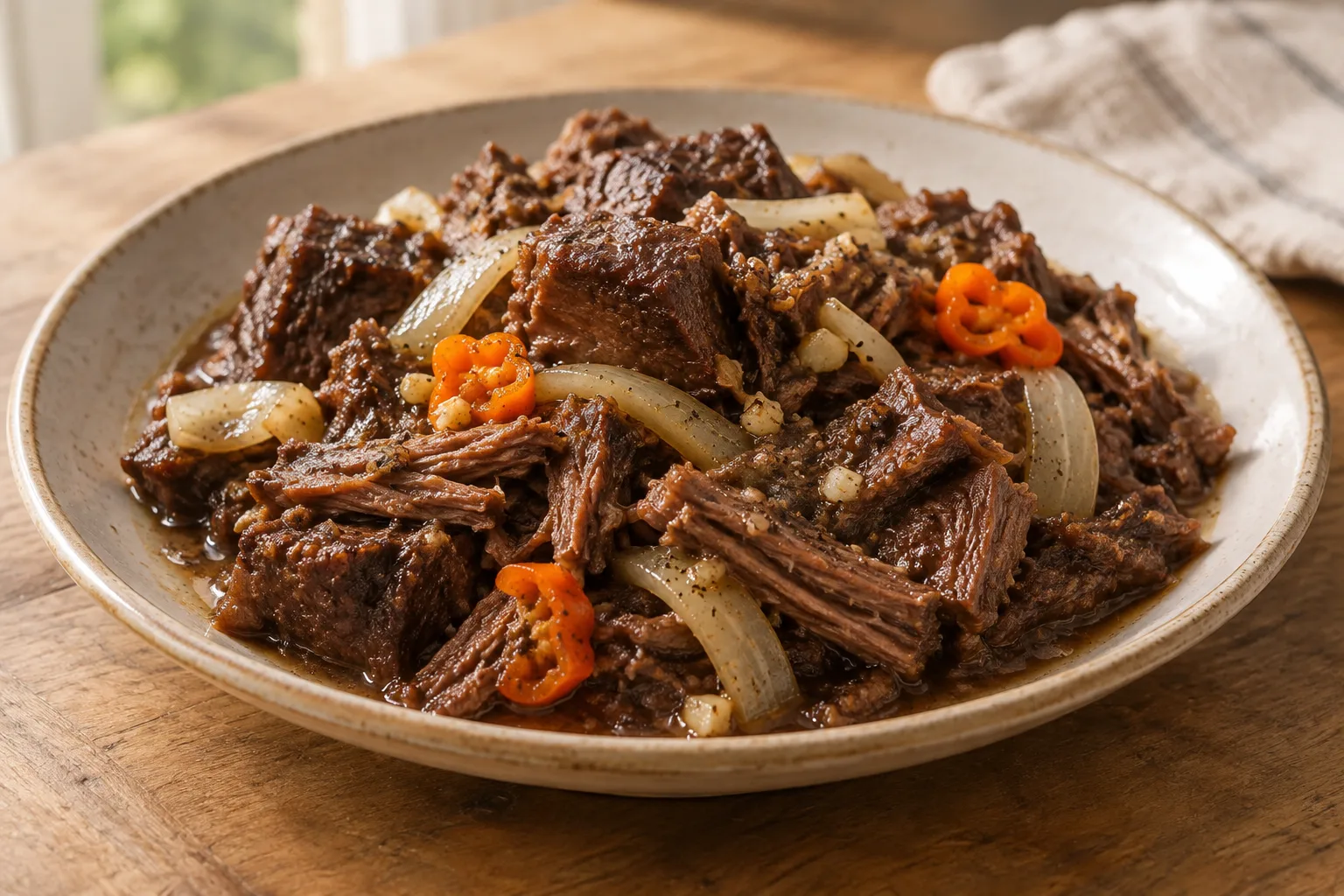
Caymanian dishes can combine the savory taste of fish or meat with coconut’s rounded richness, the sweetness of roots, and the heat of peppers. In rundown, coconut milk forms the base for a substantial stew with fish or salted meat and several starchy vegetables. Pumpkin, cho-cho, onion, and sweet or hot peppers appear among the described additions. The resulting dish is a pot meal whose ingredients soften and mingle over time; the precise mixture is not fixed.
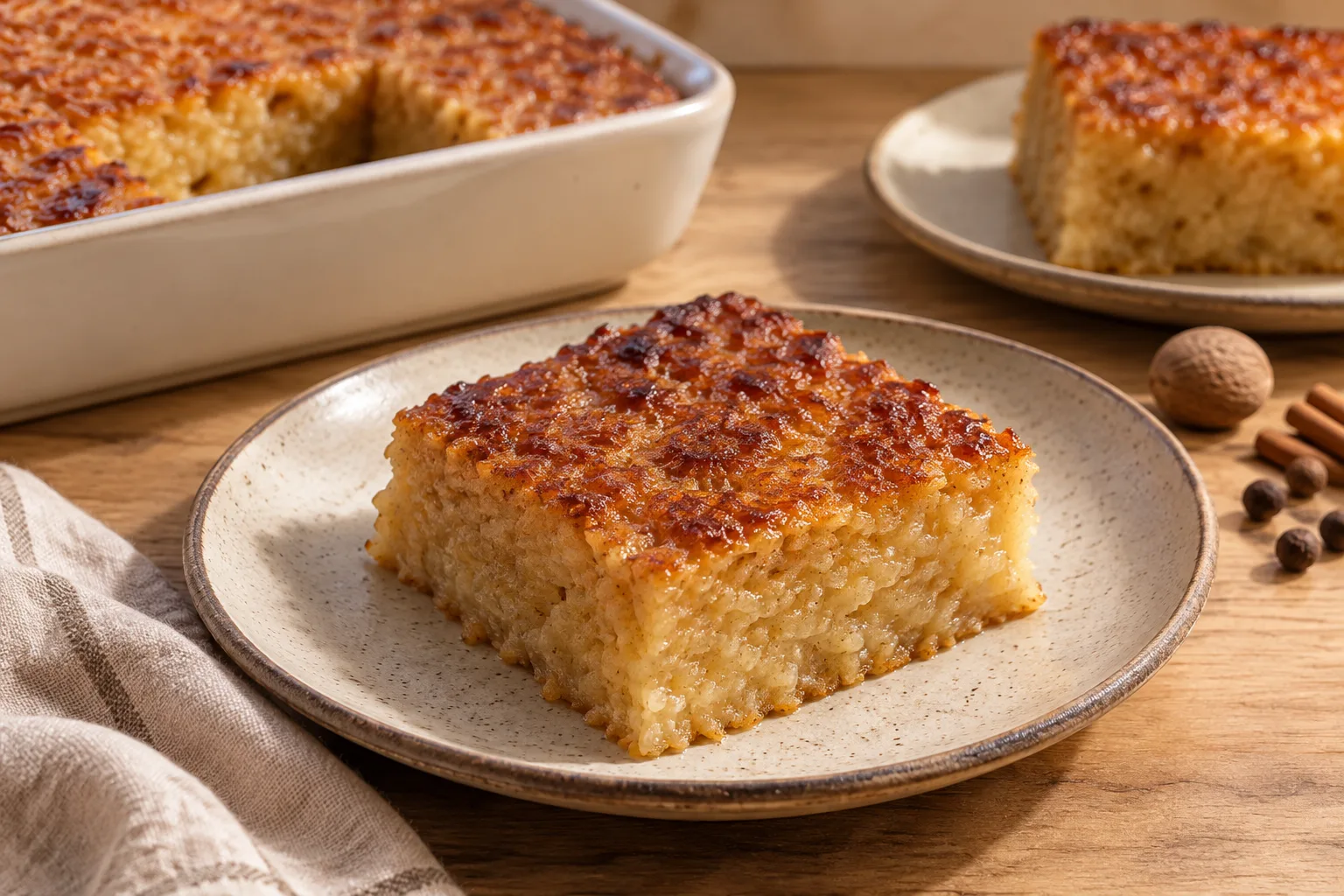
Texture is part of the character of these preparations. Stews and soups are moist and filling, while fish served with fritters brings together seasoned fish and fried pieces of dough. Cassava heavy cake is markedly different: a dense, sweet bake made with grated cassava, coconut milk, brown sugar, and spices. Descriptions of its texture emphasize its moist, almost sticky density rather than the light crumb of an airy cake.
Not every dish is defined by heat. Sweet seasoning peppers, coconut, and the flavor of the catch also have a place. Modern menus may set these familiar ingredients beside broader Caribbean or international approaches. The clearest way to recognize a local profile is to look at the actual combination of ingredients and preparation, rather than treating every spicy or coconut-based dish served in the islands as uniquely Caymanian.
Family knowledge and occasions for sharing
Accounts of traditional cooking describe recipes passed through practice and memory, including knowledge held by older cooks. Meals made slowly in covered iron pots are part of that domestic history. Such accounts point to labor and accumulated skill as well as ingredients: a dish with a short list of components could still demand long preparation. They do not imply that every family follows the same recipe or that one practice represents all three islands.
Some foods are associated with particular occasions. Beef and pork cooked together were described as Christmas food, while chicken could be served for Sunday dinner, though not necessarily every week. A dark fruit cake is connected with Christmas and weddings. These examples show how a dish may carry meaning as part of a gathering or calendar occasion, without establishing a single required menu for every celebration.
Food also appears in public cultural programming. Cayfest, an annual arts and crafts festival, includes opportunities to taste local cuisine alongside performances and other arts. The National Museum’s calendar includes an annual mango festival in July and a Christmas market in December. These events offer settings for public sharing and cultural activity, distinct from family meals. Together, household cooking and community events are among the documented contexts in which food and local traditions can be encountered.
One-pot cooking, frying, and baking
Slow cooking in a covered iron pot is a defining technique in descriptions of older Caymanian meals. A rundown brings together coconut milk, a main ingredient such as fish or salted meat, and a range of starchy vegetables. A long simmer allows the ingredients to cook together into a substantial stew. The method is more consistent than any single ingredient list: the main ingredient and accompanying provisions can vary.
Some homes had a separate outdoor cooking space called a cookrum. A caboose is described as a wooden box filled with sand in which firewood was placed. These terms give a sense of the setting and fuel used in historical domestic cooking; they should not be mistaken for equipment found in every household or as a description of all contemporary kitchens.
Frying and baking provide different textures. For fish with fritters, the fish is seasoned and fried without a batter coating, then served with fried dough. The Caymanian johnnycake is described as a bread rather than the fritter called by that name in Jamaica. For cassava cake, grated root is combined with coconut and sugar and baked into a dense sweet. Each technique contributes to a particular dish; none alone defines the whole cuisine.
Everyday meals, seasonal foods, and festive tables
A meal built around a pot of stew, a starchy provision, and seafood is one useful picture of traditional Caymanian eating, but it is not a universal menu. Fish with fritters is a specific pairing of seasoned fish and fried dough. Johnnycake can accompany a meal or be eaten with butter or jam; descriptions also mention it with fish. Conch may appear as stew, soup, fritters, or a marinated dish, and its documented season is November to April.
Special occasions bring other foods into focus. Beef and pork cooked together are associated with Christmas, as is dark fruit cake; the cake is also linked to weddings. Chicken is described as a possible Sunday meal. These references indicate occasions rather than rules about what people must serve. They also distinguish a celebratory dish from the broader range of food eaten day to day.
Today, the range of settings extends from informal seafood places to restaurants serving more elaborate menus. Local produce and fish can be featured in farm-to-table cooking, while festivals and markets provide public occasions to encounter food and locally made goods. These different settings offer ways to share meals without requiring a single order of courses or table ritual. The menu remains shaped by occasion, availability, and household or restaurant choices.
A glossary of Caymanian foods and kitchen terms
These terms identify particular foods, ingredients, or historical cooking arrangements described in connection with the Cayman Islands. Some names are shared across the Caribbean, so a local preparation should be understood through its ingredients and use, not through the name alone.
- ** Heavy cake (cassava cake):** A dense, sweet bake commonly made with grated cassava, coconut milk, brown sugar, and spices. Some versions use other starchy ingredients.
- ** Rundown (coconut dinner):** A substantial stew of fish or salted meat cooked with coconut milk and several starchy vegetables; documented additions include pumpkin, cho-cho, onion, and peppers.
- ** Cho-cho:** A local name for chayote, mentioned among the vegetables used in stew.
- Fish with fritters: Seasoned fish, traditionally fried without batter, served with small portions of fried dough.
- ** Johnnycake:** A Caymanian bread described as closer to soda bread than to the fritter known by the same name in Jamaica; it is not described as containing raisins.
- ** Cookrum and caboose:** A cookrum is a separate outdoor cooking space in historical accounts; a caboose is a wooden, sand-filled structure used to hold firewood.
The terms describe a varied repertoire rather than one standardized recipe. They help distinguish a dish, ingredient, or cooking setting when reading about Caymanian food.
One country, many cuisines
The Cayman Islands
The archipelago consists of Grand Cayman, Cayman Brac, and Little Cayman, south of Cuba and northwest of Jamaica. The documented food history links the islands collectively with seafaring, fishing, small-scale cultivation, and the use of imported staples. Sources describe shared Caymanian dishes and broader Caribbean connections, but do not establish a systematic set of culinary differences among the three islands. This entry therefore presents the documented archipelago-wide context without assigning unsupported food traditions to individual islands.
Cook