Documentary synthesis prepared with AI assistance. It does not replace specialist review or certify kitchen testing. · Updated 31 October 2026
A cuisine shaped by coast and interior
Oman lies at the southeastern edge of the Arabian Peninsula, with the Arabian Sea to the south and east and the Gulf of Oman to the northeast. Its long coastline and maritime connections sit alongside arid interior landscapes and communities with different access to fish, livestock, and other foods. This setting helps explain the presence of both seafood and meat in Omani cooking, without making either one the whole story.
Rice is a familiar foundation for substantial meals, served with meat, chicken, or fish. Wheat appears in preparations such as harees, while breads accompany meals or are eaten with sweet toppings. Dates have a place in everyday eating and in the act of welcoming guests. Aromatic spices, herbs, and dried lime bring complexity to dishes, but their combinations differ by preparation and household.
Hospitality is an important part of food culture: coffee and dates are a well-documented welcome, and shared dishes make a meal an occasion for company. The account that follows focuses on specific foods and practices rather than treating the country as a single, uniform culinary tradition.
Ports, exchange, and shared foodways
Oman’s position on Indian Ocean routes brought its ports into contact with trading and migratory networks linking the Arabian Peninsula with parts of Asia and East Africa. Accounts of Omani food describe the influence of those connections in the movement of spices and in the variety of dishes found in the country. They do not establish that any one route or outside cuisine alone explains the development of Omani cooking.
Cardamom, cinnamon, turmeric, ginger, saffron, and other seasonings appear in descriptions of the pantry. Rice dishes also have close counterparts across the Gulf and beyond. Majboos, also written as makboos or machboos, is one example: related preparations occur in neighboring cuisines, with differences in naming and method. Shared dishes are best understood as part of connected regional foodways, not as proof of exclusive origin.
Migration and community histories have also shaped particular local menus. In Muscat, a community with family ancestry from Bahrain is known as Bahranis or Baharnas, and Bahraini tikka is familiar within that community. These examples show how exchange and local identity can coexist: food travels, but it is prepared, remembered, and valued within particular households and communities.
Rice, wheat, dates, dried lime, and fish
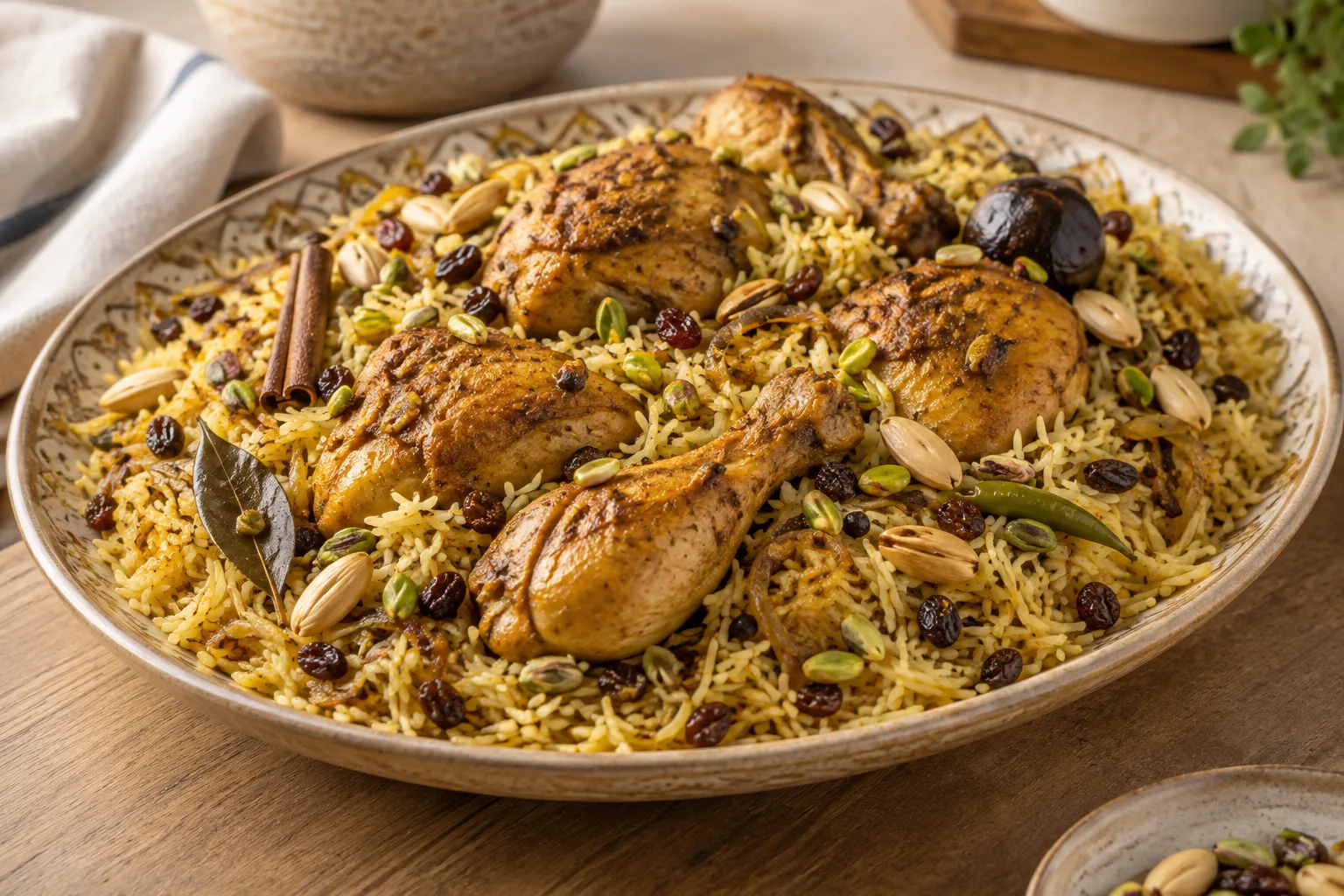
Rice, especially long-grain rice, is central to dishes such as majboos. Rather than being cooked only in plain water, the rice can take up the seasoned broth in which meat or chicken has already cooked. Wheat has a different role in harees, where it is simmered with meat until the grains and protein become a thick, integrated preparation. Ghee enriches harees and other foods.
Dates are an important crop and a frequent accompaniment to coffee. They may also appear in sweet foods or be served simply as a welcome. Loomi, dried lime, is valued for keeping qualities suited to hot, arid conditions and for its intense citrus character. In slow-cooked dishes, it has time to release its acidity into the broth. Garlic, onion, herbs, and spices—including cumin, coriander, cardamom, cinnamon, turmeric, and saffron—complete many savory preparations, though no single blend is universal.
The coast contributes fish to the food repertoire. Kingfish is named in accounts of mashuai, while other descriptions identify seafood more generally. Bread is another everyday companion: rukhal is a thin, round bread described as being eaten with savory foods or with date honey. Laban, a salty buttermilk drink, is also part of the documented pantry.
Fragrant spice, citrus, and contrasting textures
Omani dishes are often described as aromatic rather than defined by intense heat. Cardamom, cinnamon, cloves, cumin, coriander, and saffron contribute warm, fragrant notes; turmeric adds color, while dried lime gives a pronounced citrus edge. The result depends on the dish and on how much time the ingredients spend together. In majboos, rice cooked in seasoned meat or chicken broth absorbs the flavors of the cooking liquid, sometimes including the sharpness of loomi.
Different preparations offer distinct textures. Harees is thick and smooth, with wheat and meat cooked until they are difficult to distinguish as separate ingredients. Mashuai pairs cooked fish with rice and lemon in descriptions of coastal food. Shuwa, cooked slowly in a sealed underground pit or oven, is known for tender meat; its seasoning and wrapping vary between families and places.
Sweet foods and drinks create another contrast. Omani halwa is described as dense and sticky, with sugar or honey, spices, and sometimes rosewater and nuts. Kahwa is often infused with cardamom and served without sugar in accounts of the welcome tradition. Its bitterness meets the sweetness of dates or halwa. These combinations are recognizable, though recipes and serving habits are not identical everywhere.
Festive cooking and knowledge passed on
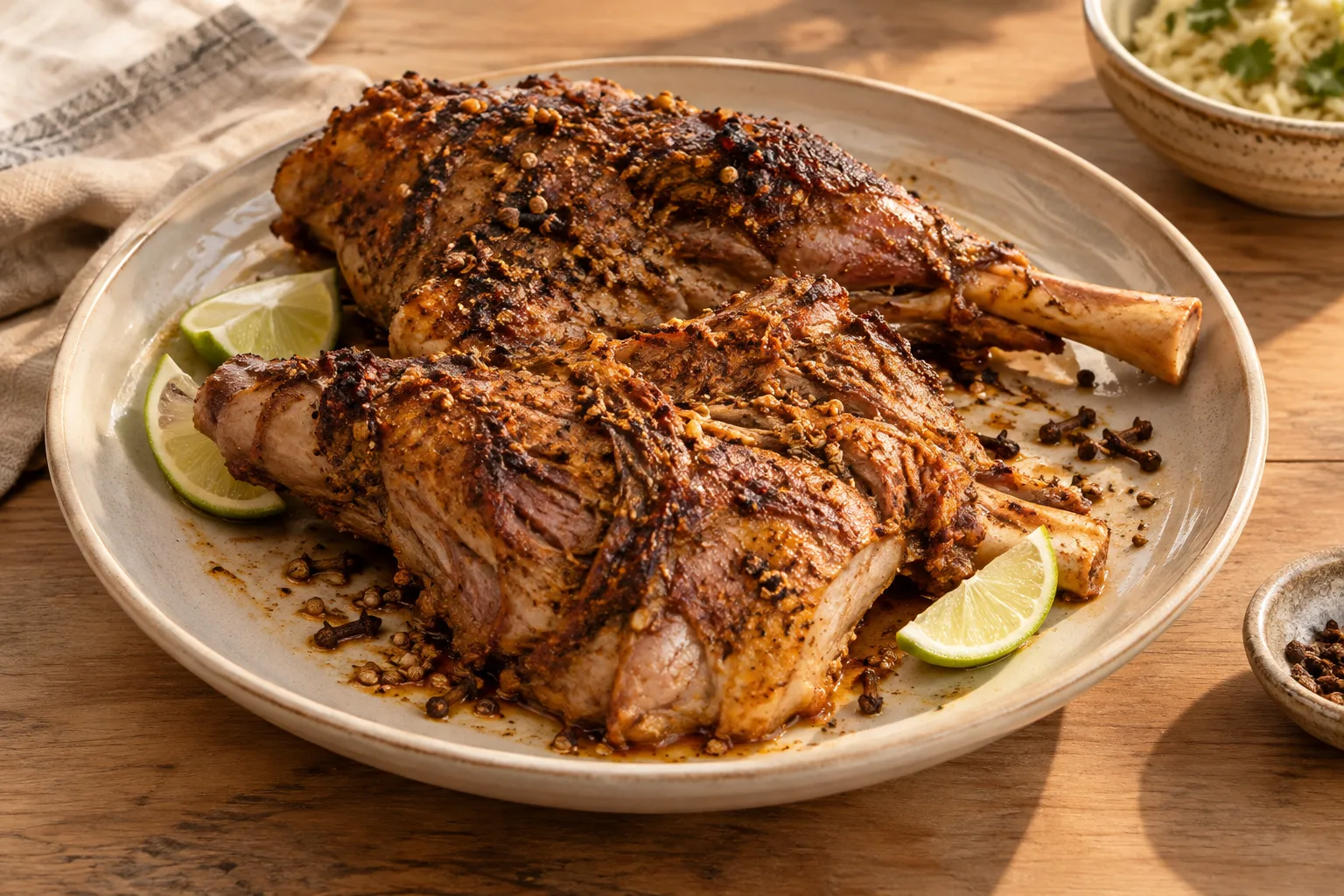
Shuwa is an elaborate meat preparation associated with major celebrations, including Eid. Meat is seasoned, wrapped in palm or banana leaves, and cooked slowly in an underground pit or oven. The method requires advance preparation and may involve several families or a wider community placing their parcels in a shared cooking space. Its long cooking time makes shuwa different in scale and rhythm from an everyday meal; it is commonly described as food for a gathering and served with rice.
Harees is prepared in Oman and neighboring countries, and its skills and social meanings are shared across communities. Wheat must be cleaned and ground, and the dish is often made in large quantities. It is particularly associated with Ramadan, welcoming guests, weddings, and other social occasions. Preparing and serving it is connected with hospitality and social bonds; knowledge is transmitted in families as well as through other forms of learning. This shared heritage should not be mistaken for an exclusively Omani origin.
Coffee and dates are a more everyday expression of welcome. Halwa may also be offered during visits or celebrations. These examples point to generosity and sharing without prescribing one fixed ritual for every home. Particular occasions, serving customs, and dishes vary across households and communities.
Pit cooking, broth cooking, and grilling
Shuwa depends on a sequence of preparation: meat is rubbed with a seasoned marinade, wrapped to retain moisture, and placed in a sealed underground cooking space. The residual heat cooks it slowly, sometimes over a period of one or two days. Palm and banana leaves are documented wrapping materials. The underground method is a distinctive feature of the preparation; an oven adaptation can produce slow-cooked meat but does not recreate the same cooking environment.
Majboos uses a different logic. Meat or chicken cooks first, and the seasoned broth then provides the cooking liquid for the rice. The grain takes on the flavors of the stock rather than being served as a separate plain accompaniment. In harees, wheat and meat simmer together until the dish becomes thick and cohesive; ghee may be added when serving. These methods create contrasting results from grain and protein: broth-infused rice in one case, a soft, blended preparation in the other.
Other techniques include grilling skewered meat for mishkak, roasting fish for mashuai, and cooking thin bread on a hot surface. They range from direct heat to long, carefully sealed cooking. Their tools, time requirements, and social settings differ, so they should not be collapsed into a generic idea of “spiced cooking.”
Shared platters and occasions for eating
Large platters of rice and meat make majboos suited to a family meal or a gathering. Fish may also be served with rice, and harees is commonly prepared in quantities meant to be shared. The shared dish is a practical form of serving as well as a social one: a preparation made for many people gives guests and family a common focus at the table. Some accounts describe eating harees by taking a portion with the thumb and forefinger; this is a practice associated with that dish, not a rule for every meal.
Shuwa belongs especially to celebrations because its preparation takes planning and time. Harees is linked to Ramadan, weddings, guest hospitality, and other social occasions. Sources also describe the midday meal as substantial and the evening meal as lighter in some households, but mealtimes and schedules vary. Such descriptions are useful context, not a template for every family.
Coffee and dates form a familiar welcome, with halwa sometimes accompanying them. Tea is also offered in accounts of hospitality. Bread can accompany savory dishes or provide a way to eat them. These foods make hospitality visible through concrete acts of offering and sharing, while leaving room for different household customs and preferences.
Names for dishes and ingredients
The following terms identify preparations and products documented in Omani foodways. Spellings can vary, particularly for dishes whose names are also used elsewhere in the Gulf.
- Shuwa: Seasoned meat wrapped in leaves and slowly cooked in an underground pit or oven; it is associated especially with celebrations and commonly served with rice.
- Majboos, makboos, or machboos: A rice dish cooked with seasoned broth from meat, chicken, or another protein. Related versions are found across the Gulf.
- Harees: Wheat and meat cooked until they form a thick, smooth preparation, often made in large quantities for Ramadan and social occasions.
- Loomi: Dried lime used to bring a concentrated citrus flavor to cooking, particularly to dishes with time to simmer.
- Kahwa: Spiced coffee, often flavored with cardamom and served with dates; halwa may also accompany it.
- Omani halwa: A dense, sticky sweet that can include sugar or honey, spices, rosewater, and nuts.
- Mashuai: A fish-and-rice preparation described in coastal food accounts, often served with lemon.
- Rukhal: A thin, round bread that can accompany savory food or be served with date honey.
One country, many cuisines
Dhofar
In southern Oman, Dhofar is documented with particular festive foods: celebrations in the region may begin with rice served alongside fried fish and a special dried meat. The wider southern area is also associated with local varieties of honey. These references describe regional examples rather than a uniform menu for every Dhofari household, and they sit alongside the broader importance of fish in coastal Omani cooking.
Muscat
Muscat is a port city where national dishes such as majboos are part of the food repertoire, alongside community-specific traditions. A community whose families have ancestry from Bahrain is known locally as Bahranis or Baharnas, and Bahraini tikka is familiar and appreciated within it. These details illustrate the diversity of food culture in the capital; they should not be taken as a single culinary description of all Muscat residents.
Cook