Oceania · Australasia

Australia

Australia’s foodways span Indigenous knowledge, colonial-era breads and pies, migration-shaped urban cooking and ingredients from diverse land and water environments. Barramundi, damper, ANZAC biscuits and pub-style parmigiana offer specific ways into this varied culinary landscape, while regional examples from the Top End, Tasmania and Melbourne show how place, community and changing habits meet at the table.

Food and eating habits

How people eat in Australia

50 indicators exploring everyday meals, ingredients and food culture. Information is completed progressively from documented evidence.

46 of 50 indicators with documented information

Not all data are comparable: food supply, purchases and intake are different measures. Check the period, population and method for each finding. Qualitative descriptions do not establish percentages or amounts.

Timing and company

6/8
Timing and company — Australia
IndicatorFindings and context
Meal times
Quantitative findingSurvey

On weekdays, breakfast from 7:00 to 7:59 accounted for 30 % of men and 34 % of women. On weekends, 43 % and 37 %, respectively, had breakfast at 9:00 or later.

Scope, method and limitations
Observation period
2011–2012
Unit
%; h:min
Population or sample
Adult breakfast consumers in the sample: 3545 men and 4127 women.
Geographic scope
Australia; NNPAS 2011–2012, reported breakfast times.
Definition and method
First twenty-four-hour dietary recall; weighted percentages from the all-breakfasts column, by sex and type of day.
Comparison limitations
Historical partial coverage: breakfast only among consumers with valid timing and minimum energy of 210 kJ. No lunch or dinner times or mean for breakfast skippers.
Meals per day Insufficient data in the sources consulted
Meal duration
Quantitative findingSurvey

Eating and drinking as a primary activity: daily mean 1:02 h for the whole population and 1:22 h among participants. No meal-specific breakdown.

Scope, method and limitations
Observation period
2024
Unit
h:mm·day⁻¹
Population or sample
Australian residents aged fifteen and over.
Geographic scope
Australia; 2024 Time Use Survey.
Definition and method
Activity diaries; original tables with percentages and durations in hours:minutes. The whole population is distinguished from participants.
Comparison limitations
Partial coverage: primary daily activity, without breakfast/lunch/dinner durations or days cooked per week. It is not all eating time during simultaneous activities.
Daily energy distribution Insufficient data in the sources consulted
Weekdays and weekends
Quantitative findingSurvey

Eating and drinking as a primary activity: 0:59 h per weekday and 1:10 h per weekend day, whole-population means.

Scope, method and limitations
Observation period
2024
Unit
h:mm·day⁻¹
Population or sample
Australian residents aged fifteen and over.
Geographic scope
Australia; 2024 Time Use Survey.
Definition and method
Activity diaries; original tables with percentages and durations in hours:minutes. The whole population is distinguished from participants.
Comparison limitations
Partial coverage: primary daily activity, without breakfast/lunch/dinner durations or days cooked per week. It is not all eating time during simultaneous activities.
Eating at home and away
Qualitative descriptionCultural context

Described settings include sidewalk-café brunches, backyard barbecues and al fresco restaurant dinners. No comparable location-percentage breakdown for breakfast, lunch and dinner is established.

Scope, method and limitations
Population or sample
No population sample; culinary examples.
Geographic scope
Australia; national or regional examples as labelled.
Definition and method
Institutional food and culinary catalogues; no observation year or frequency survey.
Comparison limitations
Partial coverage: limited to the stated categories, population and period. It does not represent the entire current population or establish unpublished quantities, frequencies or breakdowns.
Cooking frequency
Quantitative findingSurvey

61.6 % recorded cooking or food/drink preparation as a primary daily activity. Duration: 1:16 h among participants and 0:47 h across the whole population.

Scope, method and limitations
Observation period
2024
Unit
%; h:mm·day⁻¹
Population or sample
Australian residents aged fifteen and over.
Geographic scope
Australia; 2024 Time Use Survey.
Definition and method
Activity diaries; original tables with percentages and durations in hours:minutes. The whole population is distinguished from participants.
Comparison limitations
Partial coverage: primary daily activity, without breakfast/lunch/dinner durations or days cooked per week. It is not all eating time during simultaneous activities.
Eating together
Qualitative descriptionCultural context

Social practices include backyard barbecues with friends and shared café brunches. The shares of meals alone or with family are not measured.

Scope, method and limitations
Population or sample
No population sample; culinary examples.
Geographic scope
Australia; national or regional examples as labelled.
Definition and method
Institutional food and culinary catalogues; no observation year or frequency survey.
Comparison limitations
Partial coverage: limited to the stated categories, population and period. It does not represent the entire current population or establish unpublished quantities, frequencies or breakdowns.

Pantry and recipes

1/2
Pantry and recipes — Australia
IndicatorFindings and context
Most consumed ingredients
Quantitative findingObserved intake

Selected leading groups: cereal-based dishes 228.6 g per person per day; milk products and dishes 172.2 g; vegetable products and dishes 153.1 g; cereals and grains 142.1 g.

Scope, method and limitations
Observation period
2023
Unit
g·cap⁻¹·day⁻¹
Population or sample
People aged two and over in Australian private dwellings; very remote areas and discrete Indigenous communities are excluded.
Geographic scope
Australia; NNPAS 2023, first dietary recall.
Definition and method
One-day Intake24 recall. Whole-population means or the share consuming a group that day, as labelled. AUSNUT classification includes mixed dishes.
Comparison limitations
Partial coverage; one day does not measure usual frequency. Groups include dishes and are not pure ingredients. Possible under-reporting; no supplements, litre conversion or annual extrapolation.
Ingredient prevalence in recipes Insufficient data in the sources consulted

Cereals and plant foods

6/6
Cereals and plant foods — Australia
IndicatorFindings and context
Cereals and cereal products
Quantitative findingPurchases

Cereals and cereal products: apparent purchases of 125.8 g per person per day.

Scope, method and limitations
Observation period
2024-25
Unit
g·cap⁻¹·d⁻¹
Population or sample
Resident population: per-capita average from sales, not an individual dietary-intake sample.
Geographic scope
Australia; food and non-alcoholic beverages purchased from the retail sector.
Definition and method
Experimental estimate of apparent purchases in the original unit; financial year ending in June.
Comparison limitations
This is not intake: waste and stock changes are not deducted, and some catering and self-produced food are excluded. Groups are not necessarily additive. Partial coverage: no separate rice, wheat, maize and oat amounts; product weight as sold, without raw-to-cooked conversion.
Bread
Quantitative findingPurchases

Regular breads and bread rolls: apparent purchases of 50.0 g per person per day.

Scope, method and limitations
Observation period
2024-25
Unit
g·cap⁻¹·d⁻¹
Population or sample
Resident population: per-capita average from sales, not an individual dietary-intake sample.
Geographic scope
Australia; food and non-alcoholic beverages purchased from the retail sector.
Definition and method
Experimental estimate of apparent purchases in the original unit; financial year ending in June.
Comparison limitations
This is not intake: waste and stock changes are not deducted, and some catering and self-produced food are excluded. Groups are not necessarily additive. Not a combined total including all flat or sweet breads; ingredients and local varieties are not documented.
Pulses
Quantitative findingPurchases

Apparent purchases of legume and pulse products changed by -1.3 % from the preceding financial year.

Scope, method and limitations
Observation period
2024-25
Unit
%
Population or sample
Resident population: per-capita average from sales, not an individual dietary-intake sample.
Geographic scope
Australia; food and non-alcoholic beverages purchased from the retail sector.
Definition and method
Experimental estimate of apparent purchases in the original unit; financial year ending in June.
Comparison limitations
This is not intake: waste and stock changes are not deducted, and some catering and self-produced food are excluded. Groups are not necessarily additive. Partial coverage: a purchase change, not an intake quantity, weight total or consumption frequency; no breakdown by variety.
Vegetables
Quantitative findingPurchases

Vegetable products and dishes: apparent purchases of 180.9 g per person per day.

Scope, method and limitations
Observation period
2024-25
Unit
g·cap⁻¹·d⁻¹
Population or sample
Resident population: per-capita average from sales, not an individual dietary-intake sample.
Geographic scope
Australia; food and non-alcoholic beverages purchased from the retail sector.
Definition and method
Experimental estimate of apparent purchases in the original unit; financial year ending in June.
Comparison limitations
This is not intake: waste and stock changes are not deducted, and some catering and self-produced food are excluded. Groups are not necessarily additive. The classification includes potatoes and processed products; it is not fresh vegetables alone and does not establish individual frequency.
Fruit
Quantitative findingPurchases

Fruit and fruit products: apparent purchases of 138.1 g per person per day.

Scope, method and limitations
Observation period
2024-25
Unit
g·cap⁻¹·d⁻¹
Population or sample
Resident population: per-capita average from sales, not an individual dietary-intake sample.
Geographic scope
Australia; food and non-alcoholic beverages purchased from the retail sector.
Definition and method
Experimental estimate of apparent purchases in the original unit; financial year ending in June.
Comparison limitations
This is not intake: waste and stock changes are not deducted, and some catering and self-produced food are excluded. Groups are not necessarily additive. Not a fresh-fruit-only figure and not an amount attributable to every variety.
Potatoes, roots and tubers
Quantitative findingPurchases

Potatoes, chips and other potato products: apparent purchases of 39.2 g per person per day.

Scope, method and limitations
Observation period
2024-25
Unit
g·cap⁻¹·d⁻¹
Population or sample
Resident population: per-capita average from sales, not an individual dietary-intake sample.
Geographic scope
Australia; food and non-alcoholic beverages purchased from the retail sector.
Definition and method
Experimental estimate of apparent purchases in the original unit; financial year ending in June.
Comparison limitations
This is not intake: waste and stock changes are not deducted, and some catering and self-produced food are excluded. Groups are not necessarily additive. Partial potato-and-products coverage; not fresh-potato weight alone or a combined total of cassava, sweet potato and other tubers.

Protein foods

5/5
Protein foods — Australia
IndicatorFindings and context
Meat
Quantitative findingObserved intake

Meat, poultry and dishes in these groups: mean 133.2 g per person per day.

Scope, method and limitations
Observation period
2023
Unit
g·cap⁻¹·day⁻¹
Population or sample
People aged two and over in Australian private dwellings; very remote areas and discrete Indigenous communities are excluded.
Geographic scope
Australia; NNPAS 2023, first dietary recall.
Definition and method
One-day Intake24 recall. Whole-population means or the share consuming a group that day, as labelled. AUSNUT classification includes mixed dishes.
Comparison limitations
Partial coverage; one day does not measure usual frequency. Groups include dishes and are not pure ingredients. Possible under-reporting; no supplements, litre conversion or annual extrapolation.
Fish and seafood
Quantitative findingObserved intake

14.3 % consumed fish, seafood or dishes in that group on the recall day.

Scope, method and limitations
Observation period
2023
Unit
% people
Population or sample
People aged two and over in Australian private dwellings; very remote areas and discrete Indigenous communities are excluded.
Geographic scope
Australia; NNPAS 2023, first dietary recall.
Definition and method
One-day Intake24 recall. Whole-population means or the share consuming a group that day, as labelled. AUSNUT classification includes mixed dishes.
Comparison limitations
Partial coverage; one day does not measure usual frequency. Groups include dishes and are not pure ingredients. Possible under-reporting; no supplements, litre conversion or annual extrapolation.
Eggs
Quantitative findingObserved intake

19.6 % consumed egg products or dishes in that group on the recall day.

Scope, method and limitations
Observation period
2023
Unit
% people
Population or sample
People aged two and over in Australian private dwellings; very remote areas and discrete Indigenous communities are excluded.
Geographic scope
Australia; NNPAS 2023, first dietary recall.
Definition and method
One-day Intake24 recall. Whole-population means or the share consuming a group that day, as labelled. AUSNUT classification includes mixed dishes.
Comparison limitations
Partial coverage; one day does not measure usual frequency. Groups include dishes and are not pure ingredients. Possible under-reporting; no supplements, litre conversion or annual extrapolation.
Milk and dairy products
Quantitative findingObserved intake

Milk products and dishes: mean 172.2 g per person per day.

Scope, method and limitations
Observation period
2023
Unit
g·cap⁻¹·day⁻¹
Population or sample
People aged two and over in Australian private dwellings; very remote areas and discrete Indigenous communities are excluded.
Geographic scope
Australia; NNPAS 2023, first dietary recall.
Definition and method
One-day Intake24 recall. Whole-population means or the share consuming a group that day, as labelled. AUSNUT classification includes mixed dishes.
Comparison limitations
Partial coverage; one day does not measure usual frequency. Groups include dishes and are not pure ingredients. Possible under-reporting; no supplements, litre conversion or annual extrapolation.
Protein sources
Quantitative findingObserved intake

Protein contributions: beef, sheep and pork 15 %; poultry 13 %; cereal-main-ingredient dishes 12 %; breads and rolls 7.4 %; milk 6.1 %; fish, seafood and their dishes 5.7 %.

Scope, method and limitations
Observation period
2011-12
Unit
% protein
Population or sample
People aged two and over in Australian private dwellings; very remote areas and discrete Indigenous communities are excluded.
Geographic scope
Australia; historical 2011–2012 data.
Definition and method
One-day dietary recall; nutrient contributions, not food-weight shares. Meat groups include mixed dishes; partial breakdown.
Comparison limitations
Partial coverage; one day does not measure usual frequency. Groups include dishes and are not pure ingredients. Possible under-reporting; no supplements, litre conversion or annual extrapolation.

Fats, flavours and condiments

3/3
Fats, flavours and condiments — Australia
IndicatorFindings and context
Cooking fats
Quantitative findingObserved intake

31.1 % consumed foods in the “fats and oils” group on the recall day.

Scope, method and limitations
Observation period
2023
Unit
% people
Population or sample
People aged two and over in Australian private dwellings; very remote areas and discrete Indigenous communities are excluded.
Geographic scope
Australia; NNPAS 2023, first dietary recall.
Definition and method
One-day Intake24 recall. Whole-population means or the share consuming a group that day, as labelled. AUSNUT classification includes mixed dishes.
Comparison limitations
Partial coverage; one day does not measure usual frequency. Groups include dishes and are not pure ingredients. Possible under-reporting; no supplements, litre conversion or annual extrapolation.
Herbs and spices
Qualitative descriptionCultural context

Lemon myrtle adds citrus notes to food and drinks. Ground wattleseed is used in breads, cakes and biscuits, with nutty and coffee notes.

Scope, method and limitations
Population or sample
No population sample; culinary examples.
Geographic scope
Australia; national or regional examples as labelled.
Definition and method
Institutional food and culinary catalogues; no observation year or frequency survey.
Comparison limitations
Partial coverage: limited to the stated categories, population and period. It does not represent the entire current population or establish unpublished quantities, frequencies or breakdowns.
Sauces and condiments
Quantitative findingObserved intake

36.3 % consumed foods in the savoury sauces and condiments group on the recall day.

Scope, method and limitations
Observation period
2023
Unit
% people
Population or sample
People aged two and over in Australian private dwellings; very remote areas and discrete Indigenous communities are excluded.
Geographic scope
Australia; NNPAS 2023, first dietary recall.
Definition and method
One-day Intake24 recall. Whole-population means or the share consuming a group that day, as labelled. AUSNUT classification includes mixed dishes.
Comparison limitations
Partial coverage; one day does not measure usual frequency. Groups include dishes and are not pure ingredients. Possible under-reporting; no supplements, litre conversion or annual extrapolation.

Meal composition

6/6
Meal composition — Australia
IndicatorFindings and context
Breakfast composition
Qualitative descriptionCultural context

Breakfast and brunch examples include sourdough toast with avocado and a bacon-and-egg roll.

Scope, method and limitations
Population or sample
No population sample; culinary examples.
Geographic scope
Australia; national or regional examples as labelled.
Definition and method
Institutional food and culinary catalogues; no observation year or frequency survey.
Comparison limitations
Partial coverage: limited to the stated categories, population and period. It does not represent the entire current population or establish unpublished quantities, frequencies or breakdowns.
Main meal composition
Qualitative descriptionCultural context

Culinary examples include grilled or battered fish with chips and meat-and-seafood barbecues. They do not define one main-meal pattern for all households.

Scope, method and limitations
Population or sample
No population sample; culinary examples.
Geographic scope
Australia; national or regional examples as labelled.
Definition and method
Institutional food and culinary catalogues; no observation year or frequency survey.
Comparison limitations
Partial coverage: limited to the stated categories, population and period. It does not represent the entire current population or establish unpublished quantities, frequencies or breakdowns.
Dinner composition
Qualitative descriptionObserved intake

Dinner was the sample’s largest meal: meat, poultry or fish with vegetables, tubers and grains. Beef and chicken were the most frequent meats at this meal.

Scope, method and limitations
Observation period
2011–12
Population or sample
Australian sample of 12153 people aged two and over.
Geographic scope
Australia; NNPAS 2011–2012, consumers of each food.
Definition and method
Twenty-four-hour dietary recalls; meal composition by average food-group intakes.
Comparison limitations
Partial coverage: limited to the stated categories, population and period. It does not represent the entire current population or establish unpublished quantities, frequencies or breakdowns.
Appetisers and snacks
Qualitative descriptionCultural context

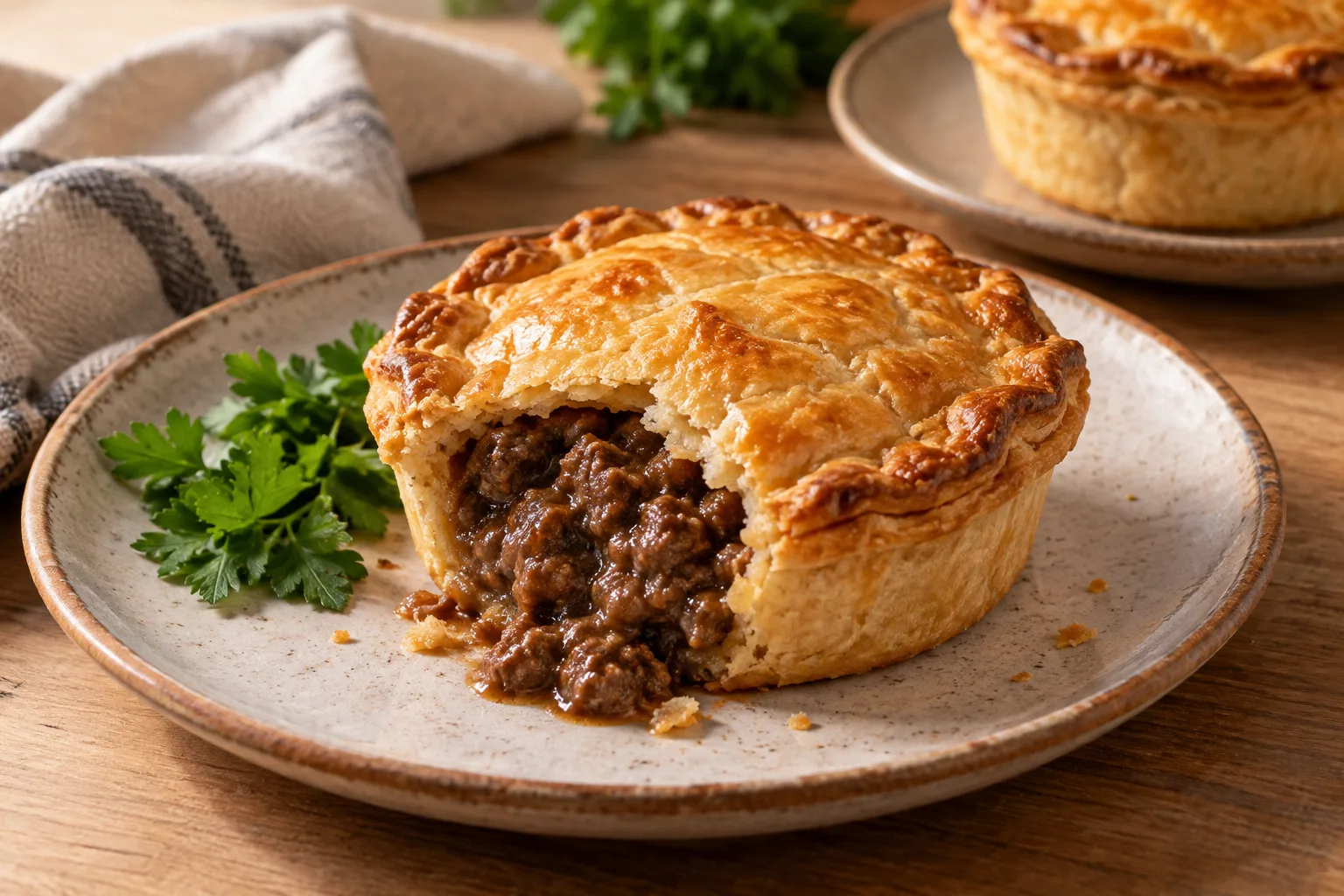
Meat pie is a takeaway snack: flaky pastry filled with minced or diced meat and gravy; the traditional version uses beef.

Scope, method and limitations
Population or sample
No population sample; culinary examples.
Geographic scope
Australia; national or regional examples as labelled.
Definition and method
Institutional food and culinary catalogues; no observation year or frequency survey.
Comparison limitations
Partial coverage: limited to the stated categories, population and period. It does not represent the entire current population or establish unpublished quantities, frequencies or breakdowns.
Desserts and sweets
Qualitative descriptionCultural context

Lamington is sponge cake coated in chocolate and desiccated coconut; some versions add jam or cream. Macadamias also appear in sweet treats.

Scope, method and limitations
Population or sample
No population sample; culinary examples.
Geographic scope
Australia; national or regional examples as labelled.
Definition and method
Institutional food and culinary catalogues; no observation year or frequency survey.
Comparison limitations
Partial coverage: limited to the stated categories, population and period. It does not represent the entire current population or establish unpublished quantities, frequencies or breakdowns.
Portion sizes
Quantitative findingObserved intake

Per-occasion medians, men/women: white bread 64/54 g; cooked rice 201/137 g; cooked beef steak 170/150 g.

Scope, method and limitations
Observation period
2011–12
Unit
g/eating occasion
Population or sample
Australian adults aged nineteen and over; sample of 9341.
Geographic scope
Australia; NNPAS 2011–2012, consumers of each food.
Definition and method
Weighted medians of grams per eating occasion from one twenty-four-hour recall; NNPAS comparison-table columns, by sex.
Comparison limitations
Historical partial coverage: consumer medians, not population means or recommended servings. Food definitions and cooking states retained.

Techniques and equipment

5/5
Techniques and equipment — Australia
IndicatorFindings and context
Cooking techniques
Qualitative descriptionCultural context

Barbecues grill sausages, burgers, steaks, lamb cutlets and seafood; fish-and-chip fish may be grilled or battered.

Scope, method and limitations
Population or sample
No population sample; culinary examples.
Geographic scope
Australia; national or regional examples as labelled.
Definition and method
Institutional food and culinary catalogues; no observation year or frequency survey.
Comparison limitations
Partial coverage: limited to the stated categories, population and period. It does not represent the entire current population or establish unpublished quantities, frequencies or breakdowns.
Vegetable preparation
Qualitative descriptionObserved intake

The sample records raw tomato and cucumber, cooked carrot and boiled potatoes. No national percentage breakdown of preparation techniques is established here.

Scope, method and limitations
Observation period
2011–12
Population or sample
Australian adults aged nineteen and over; sample of 9341.
Geographic scope
Australia; NNPAS 2011–2012, consumers of each food.
Definition and method
Weighted medians of grams per eating occasion from one twenty-four-hour recall; NNPAS comparison-table columns, by sex.
Comparison limitations
Historical partial coverage: consumer medians, not population means or recommended servings. Food definitions and cooking states retained.
Food preservation
Qualitative descriptionCultural context

Fermented products consumed in Australia include pickles, salami, cheese, yoghurt and sourdough. This describes products, not household-preservation frequency.

Scope, method and limitations
Population or sample
No population sample; culinary examples.
Geographic scope
Australia; national or regional examples as labelled.
Definition and method
Institutional food and culinary catalogues; no observation year or frequency survey.
Comparison limitations
Partial coverage: limited to the stated categories, population and period. It does not represent the entire current population or establish unpublished quantities, frequencies or breakdowns.
Fermented foods
Qualitative descriptionCultural context

The catalogue includes yoghurt, cheese, sourdough, kefir, tempeh, miso, sauerkraut, kimchi and kombucha. It does not measure consumer prevalence.

Scope, method and limitations
Population or sample
No population sample; culinary examples.
Geographic scope
Australia; national or regional examples as labelled.
Definition and method
Institutional food and culinary catalogues; no observation year or frequency survey.
Comparison limitations
Partial coverage: limited to the stated categories, population and period. It does not represent the entire current population or establish unpublished quantities, frequencies or breakdowns.
Kitchen equipment
Quantitative findingSurvey

In Western Australia, 93 % of households reported owning a microwave.

Scope, method and limitations
Observation period
2009
Unit
% households in Western Australia
Population or sample
Western Australian households, not all Australia.
Geographic scope
Western Australia; October 2009 survey.
Definition and method
Official household water and energy survey; reported microwave ownership.
Comparison limitations
Historical regional data, not extrapolatable to the current country. Ovens and pressure cookers not covered here; ownership is not use frequency.

Drinks

3/3
Drinks — Australia
IndicatorFindings and context
Everyday drinks
Quantitative findingObserved intake

Coffee and substitutes: 191.0 g per person per day; tea: 153.1 g; soft drinks and flavoured mineral waters: 118.1 g; pure fruit and vegetable juices: 58.8 g.

Scope, method and limitations
Observation period
2023
Unit
g·cap⁻¹·day⁻¹
Population or sample
People aged two and over in Australian private dwellings; very remote areas and discrete Indigenous communities are excluded.
Geographic scope
Australia; NNPAS 2023, first dietary recall.
Definition and method
One-day Intake24 recall. Whole-population means or the share consuming a group that day, as labelled. AUSNUT classification includes mixed dishes.
Comparison limitations
Partial coverage; one day does not measure usual frequency. Groups include dishes and are not pure ingredients. Possible under-reporting; no supplements, litre conversion or annual extrapolation.
Coffee and tea preparation
Qualitative descriptionCultural context

Perth offers espresso, long black and flat white, plus filtered, pour-over and cold-brew coffee. These are regional examples, without national shares or mean serving size.

Scope, method and limitations
Population or sample
No population sample; culinary examples.
Geographic scope
Australia; national or regional examples as labelled.
Definition and method
Institutional food and culinary catalogues; no observation year or frequency survey.
Comparison limitations
Partial coverage: limited to the stated categories, population and period. It does not represent the entire current population or establish unpublished quantities, frequencies or breakdowns.
Drinks with meals
Quantitative findingObserved intake

Alcoholic drinks were reported by 1.8 % at lunch and 10.5 % at dinner on the recalled day. Discretionary beverages, such as soft drinks or fruit drinks: 13.1 % at lunch and 13.5 % at dinner.

Scope, method and limitations
Observation period
2011–12
Unit
% population on recalled day
Population or sample
Australian sample of 12153 people aged two and over.
Geographic scope
Australia; NNPAS 2011–2012 survey population, recalled day.
Definition and method
Proportion of the entire sample reporting the beverage group at each meal; national persons table, not energy contributions.
Comparison limitations
Historical partial coverage; people reporting the drink at that occasion on the recalled day. Not usual frequency, advice or a water, coffee and tea breakdown.

Nutrition and dietary patterns

3/3
Nutrition and dietary patterns — Australia
IndicatorFindings and context
Energy and nutrients
Quantitative findingObserved intake

Average daily energy: male, 9068 kJ; female, 7177 kJ. Daily averages for both sexes: protein, 88 g; carbohydrate, 212 g; fat, 73 g.

Scope, method and limitations
Observation period
2023
Unit
kJ·cap⁻¹·d⁻¹; g·cap⁻¹·d⁻¹
Population or sample
Residents aged two years and over; weighted national results.
Geographic scope
Australia; reported food and beverage intake.
Definition and method
National nutrition survey: first-day dietary recall, not purchases or food availability.
Comparison limitations
Under-reporting and daily variation are possible; observed estimates, not personal recommendations. Energy by sex and macronutrients for both sexes have different denominators. Fibre in grams is missing. Sodium is not converted to salt; free and added sugars are not total sugars. Sodium may miss salt added in cooking or at the table.
Salt and sugars
Quantitative findingObserved intake

Sodium: 2375 mg per person per day. Free sugars: 43 g per person per day, including 38 g of added sugars.

Scope, method and limitations
Observation period
2023
Unit
mg·cap⁻¹·d⁻¹; g·cap⁻¹·d⁻¹
Population or sample
Residents aged two years and over; weighted national results.
Geographic scope
Australia; reported food and beverage intake.
Definition and method
National nutrition survey: first-day dietary recall, not purchases or food availability.
Comparison limitations
Under-reporting and daily variation are possible; observed estimates, not personal recommendations. Energy by sex and macronutrients for both sexes have different denominators. Fibre in grams is missing. Sodium is not converted to salt; free and added sugars are not total sugars. Sodium may miss salt added in cooking or at the table.
Dietary patterns
Quantitative findingSurvey

Among people aged fifteen and over, 5.3 % described themselves as vegetarian or vegan, as a combined category.

Scope, method and limitations
Observation period
2023
Unit
%
Population or sample
Residents aged fifteen and over.
Geographic scope
Australia; reported food and beverage intake.
Definition and method
Self-reported eating pattern at interview; vegetarian and vegan categories combined.
Comparison limitations
Partial coverage: no separate vegetarian, vegan or flexitarian percentages. Self-report does not prove exact dietary composition and is not directly comparable with the previous collection.

Shopping, prices and waste

6/7
Shopping, prices and waste — Australia
IndicatorFindings and context
Food expenditure
Quantitative findingPurchases

Food and non-alcoholic beverages: AUD 237 per household per week; about 17 % of goods-and-services spending. This is not a monthly per-person figure.

Scope, method and limitations
Observation period
2015-16
Unit
AUD·household⁻¹·week⁻¹; % spending
Population or sample
Australian private households excluding very remote areas; about ten thousand sampled households.
Geographic scope
Australia; financial year 2015–2016.
Definition and method
Household Expenditure Survey; published weekly mean and rounded share. No conversion to months or division by an assumed household size.
Comparison limitations
Partial coverage: limited to the stated categories, population and period. It does not represent the entire current population or establish unpublished quantities, frequencies or breakdowns.
Cost of a common basket
Quantitative findingPurchases

Healthy reference diet: mean cost 1176.30 AUD per fortnight for the six-person household; pooled 2023–2024 mean.

Scope, method and limitations
Observation period
2023–2024
Unit
AUD/reference household/fortnight
Population or sample
Reference six-person multigenerational Aboriginal and Torres Strait Islander household.
Geographic scope
Queensland; pooled mean across regions and 2023 and 2024 observations.
Definition and method
Healthy Diets ASAP protocol; outlet and online prices for a defined healthy reference diet for a fortnight.
Comparison limitations
Historical regional coverage; pooled mean, not a current national price. Standard brands; not identical to other countries’ baskets or actual purchases.
Cost of specific meals Insufficient data in the sources consulted
Grocery shopping locations
Quantitative findingPurchases

Online sales represented 6.0 % of food-retailing sales in December 2024, in the original series.

Scope, method and limitations
Observation period
December 2024
Unit
% food retail sales
Population or sample
Australian food-retailing businesses covered by the business survey.
Geographic scope
Australia; December 2024, original series without seasonal adjustment.
Definition and method
Online food sales divided by total food-retailing sales, the percentage published by ABS.
Comparison limitations
Partial coverage of one channel and month; business sales, not a population percentage. The remainder is not split among supermarkets, markets or shops.
Shopping frequency
Quantitative findingSurvey

Respondents in 2008: 38 % made one large weekly shop; 36 % a large shop plus smaller shops; 23 % several small shops during the week; 3 % fortnightly or monthly shops.

Scope, method and limitations
Observation period
April 2008
Unit
%
Population or sample
Respondents to the Australian grocery-consumer survey.
Geographic scope
Australia; April 2008 survey.
Definition and method
Response on usual grocery-shopping pattern; chart categories checked against the original.
Comparison limitations
Historical partial data on respondents, not the current habit of the whole population. No mean number of visits or mean basket weight or spend is published here.
Prepared food and delivery
Quantitative findingPurchases

Mean weekly household spending on fast food and takeaway: 31 AUD, excluding coffee and frozen food.

Scope, method and limitations
Observation period
2015–16
Unit
AUD/household/week
Population or sample
Australian private households excluding very remote areas; about ten thousand sampled households.
Geographic scope
Australia; financial year 2015–2016.
Definition and method
Household Expenditure Survey; published weekly mean and rounded share. No conversion to months or division by an assumed household size.
Comparison limitations
Partial coverage: limited to the stated categories, population and period. It does not represent the entire current population or establish unpublished quantities, frequencies or breakdowns.
Household food waste
Qualitative descriptionCultural context

Household waste causes include buying or cooking too much and poor storage. Unavoidable scraps include bones, shells and coffee grounds; no comparable per-person mass is verified here.

Scope, method and limitations
Population or sample
No population sample; culinary examples.
Geographic scope
Australia; national or regional examples as labelled.
Definition and method
Institutional food and culinary catalogues; no observation year or frequency survey.
Comparison limitations
Partial coverage: limited to the stated categories, population and period. It does not represent the entire current population or establish unpublished quantities, frequencies or breakdowns.

Seasons and celebrations

2/2
Seasons and celebrations — Australia
IndicatorFindings and context
Seasonal produce
Qualitative descriptionCultural context

Northern Territory mangoes are usually harvested from September to December. Queensland’s winter strawberry season runs from June to October. These are regional windows, not uniform national availability.

Scope, method and limitations
Population or sample
No population sample; culinary examples.
Geographic scope
Australia; national or regional examples as labelled.
Definition and method
Institutional food and culinary catalogues; no observation year or frequency survey.
Comparison limitations
Partial coverage: limited to the stated categories, population and period. It does not represent the entire current population or establish unpublished quantities, frequencies or breakdowns.
Celebration food
Qualitative descriptionCultural context

Christmas lunch may include fresh oysters, prawns and barbecued lamb cutlets. Lamb roasts are described at Easter. These are examples, not practices of every household.

Scope, method and limitations
Population or sample
No population sample; culinary examples.
Geographic scope
Australia; national or regional examples as labelled.
Definition and method
Institutional food and culinary catalogues; no observation year or frequency survey.
Comparison limitations
Partial coverage: limited to the stated categories, population and period. It does not represent the entire current population or establish unpublished quantities, frequencies or breakdowns.
Explore its cuisines

Australian Foodways: Native Ingredients, Shared Traditions and Regional Tables

Documentary synthesis prepared with AI assistance. It does not replace specialist review or certify kitchen testing. · Updated 3 November 2026

A continent of varied foodways

Australia’s culinary landscape is shaped by a very large continent and by different environments, from northern estuaries to temperate coasts and inland country. Barramundi, for example, lives across fresh, brackish and marine waters, including rivers, estuaries and coastal areas. Its range and life cycle make it a useful reminder that a dish or ingredient does not automatically belong to one city or state. The fish is also farmed, including in Australia, so a menu reference to barramundi does not by itself establish whether it is wild-caught or farmed.

Australian food is not a single, uniform repertoire. Indigenous food knowledge and native ingredients are part of the country’s culinary landscape, alongside meals shaped by migration and contemporary city life. Those strands can meet, but they should not be collapsed into one story: a modern dish using a native aromatic is not thereby an Indigenous traditional preparation. The specific eucalyptus-wrapped barramundi described by Baker Boy, for instance, is shared as a particular cultural account, not a template for all Indigenous cooking.

A useful starting map connects ingredients with the people and places documented around them. Northern barramundi habitats, Tasmania’s mention in relation to trout, and Melbourne’s recorded pub parmigiana culture point to different contexts rather than a complete inventory of regional cuisines. Australia’s foodways are best understood through such concrete examples, with their histories and community connections kept distinct.

Inheritance, adaptation and exchange

Several familiar Australian foods have histories of adaptation rather than simple, exclusive origins. Meat pies belong to a broader British pie tradition that took root in Australia; the form pairs pastry with a cooked filling, and local versions are often sold as individual pies. Damper is associated in the evidence with travelling stock workers and rural work, where a simple bread could be made from basic provisions and cooked over a fire. These histories are not interchangeable: damper in a settler-work context should not be used to stand in for Indigenous bread traditions.

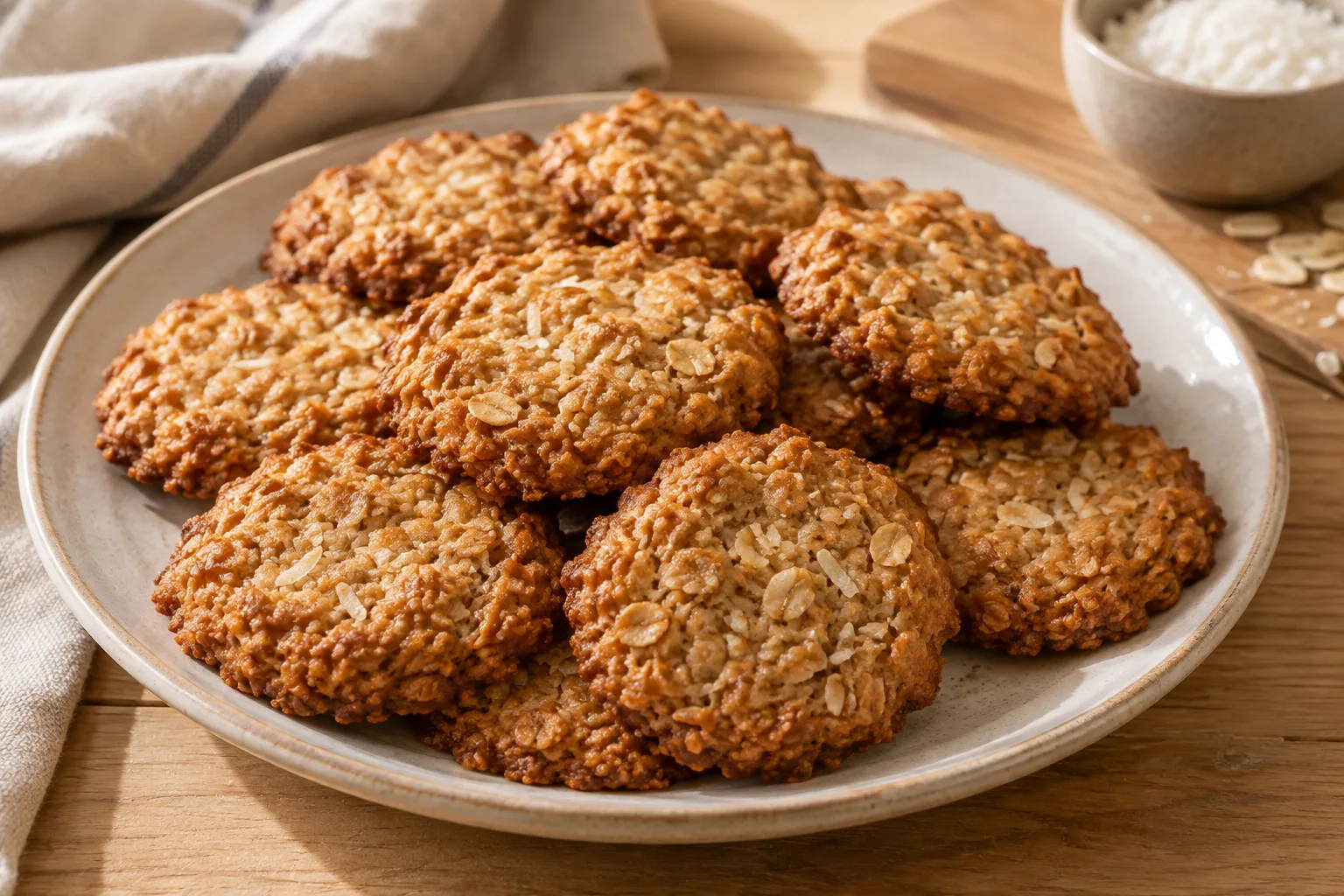
The ANZAC biscuit connects food with the shared history of Australia and New Zealand. The name refers to the Australian and New Zealand Army Corps, and the biscuit is associated with remembrance of the First World War and with ANZAC Day on 25 April. Accounts differ on the exact relationship between wartime food parcels and the later biscuit familiar today. The documented appearance of the name and recipe develops over several cookbooks and years, so the popular parcel story should not be presented as a settled account of the biscuit’s invention.

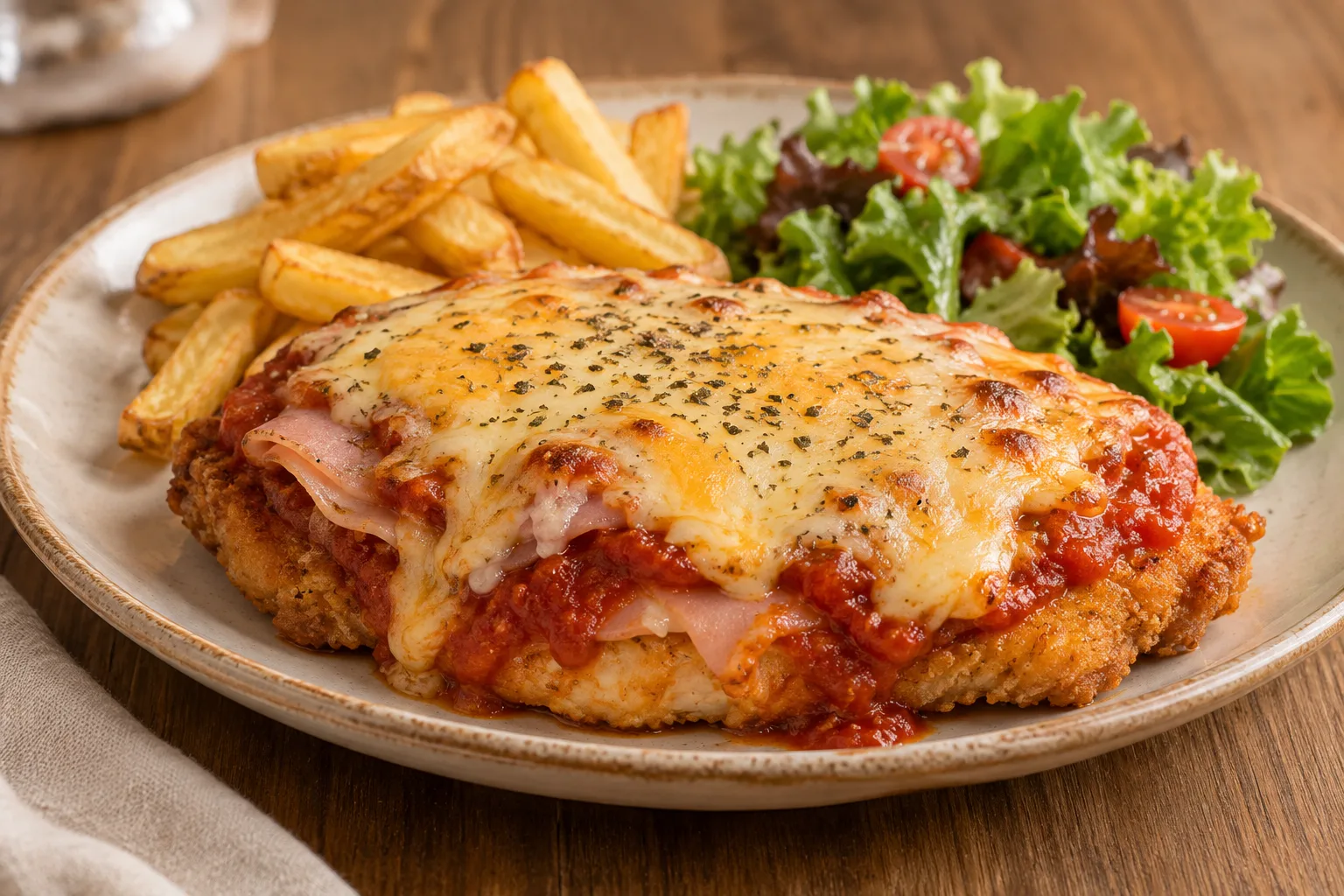
Migration has also shaped everyday Australian meals. Chicken parmigiana, commonly called “parma”, “parmi” or “parmy”, draws on Italian-associated culinary forms but became a pub staple in Australia. Accounts place its Australian history in the mid-twentieth century, while differing over the details and timing of its rise. Its Australian identity is therefore better described through its local pub life and changing serving customs than through a claim to a single inventor.

Native aromatics, fish and baking staples

A varied pantry emerges from the documented ingredients. Barramundi is a fish associated with northern Australia as well as a wider Indo-Pacific range; it occurs in fresh, brackish and marine environments and is also produced through aquaculture. In a specific contemporary recipe, it is crumbed and served with lemon myrtle, saltbush, native pepperberry and a salad that may include finger lime and macadamia. These ingredients do different work: the recipe uses lemon myrtle as an aromatic, finger lime as a citrus element, and macadamias as nuts. They are not a single interchangeable category of “bush flavour”.

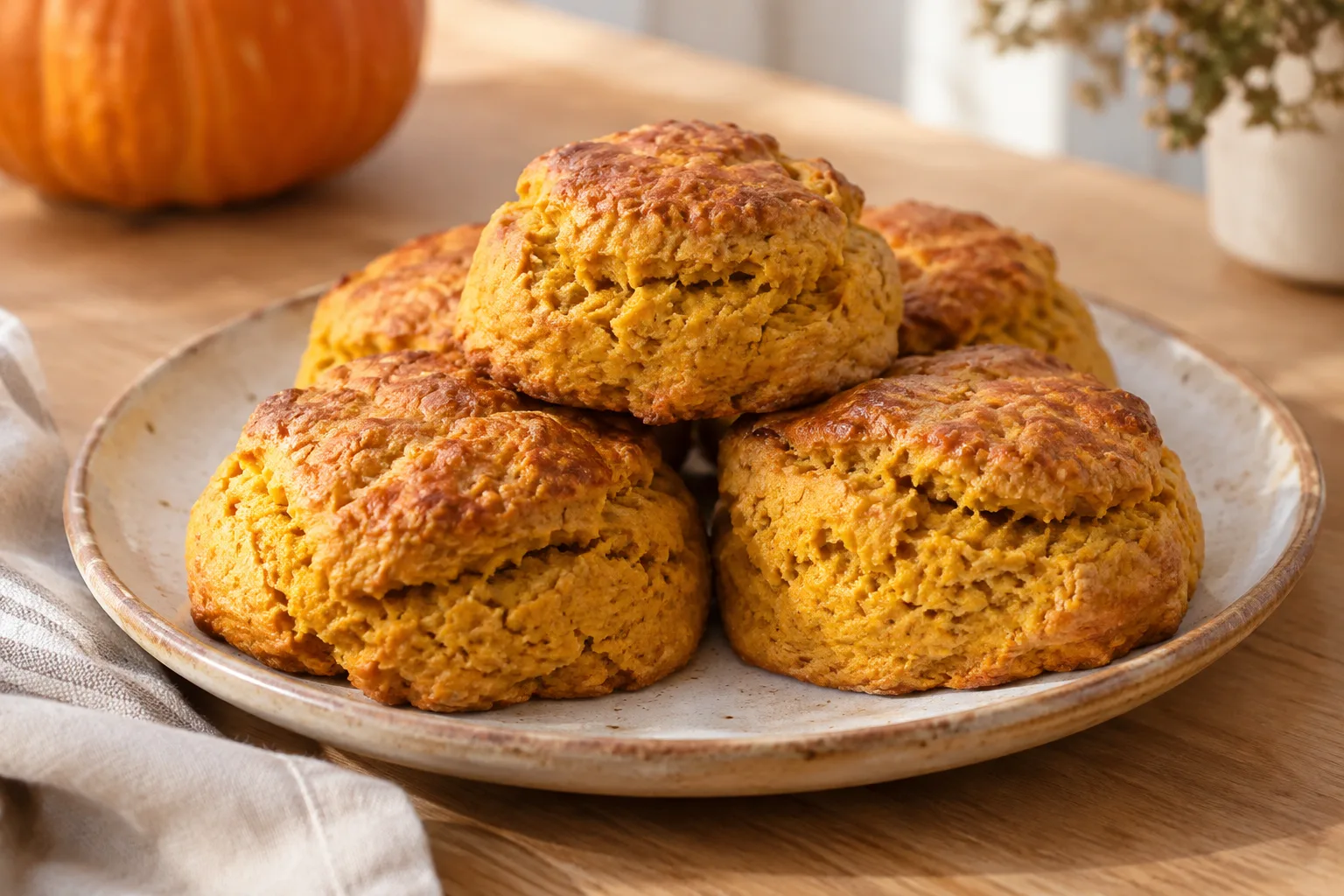
The baking pantry offers another kind of continuity. A basic damper relies on flour, water and salt; documented versions use raising agents, while modern variations add ingredients such as olives and rosemary. The catalogue’s olive-and-rosemary damper is one contemporary version, not a claim about every historical damper. ANZAC biscuits bring together rolled oats, flour, coconut, sugar, butter, golden syrup and bicarbonate of soda. Recipes vary, but this combination helps distinguish the biscuit from the simple bread and pastry foods elsewhere in the repertoire.

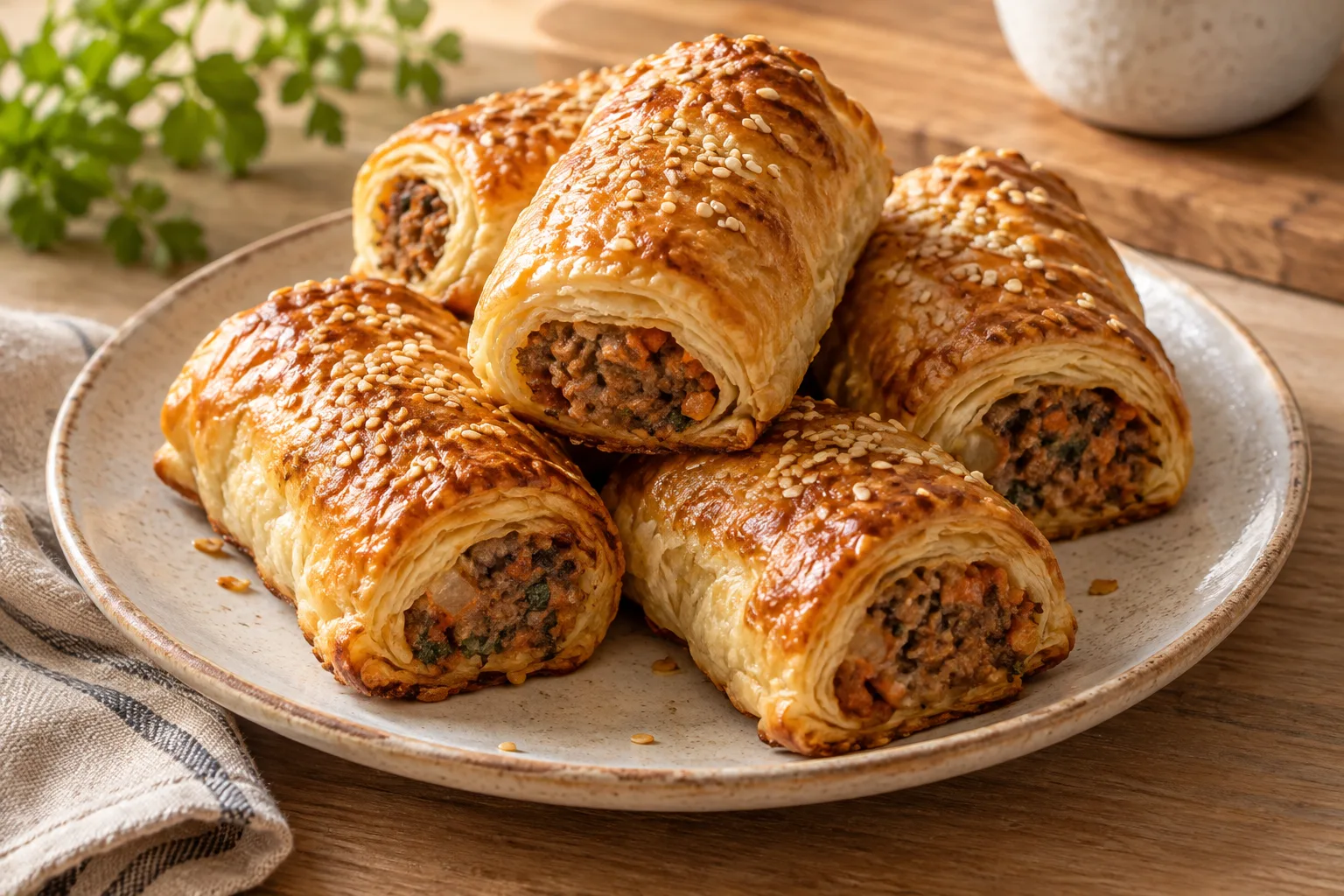
Pastry and meat form a separate, widely familiar pantry pairing in meat pies and sausage rolls. Pies enclose a cooked filling in pastry; sausage rolls wrap a seasoned meat mixture in pastry. Together these examples show how Australian cooking can draw on local fish and native ingredients while also making everyday use of grains, dairy, meat and baking traditions with wider histories.

Cereals and cereal products. Cereals and cereal products: apparent purchases of 125.8 g per person per day.

Observation period: 2024-25. Resident population: per-capita average from sales, not an individual dietary-intake sample. Australia; food and non-alcoholic beverages purchased from the retail sector. Experimental estimate of apparent purchases in the original unit; financial year ending in June. This is not intake: waste and stock changes are not deducted, and some catering and self-produced food are excluded. Groups are not necessarily additive. Partial coverage: no separate rice, wheat, maize and oat amounts; product weight as sold, without raw-to-cooked conversion.

Bread. Regular breads and bread rolls: apparent purchases of 50.0 g per person per day.

Observation period: 2024-25. Resident population: per-capita average from sales, not an individual dietary-intake sample. Australia; food and non-alcoholic beverages purchased from the retail sector. Experimental estimate of apparent purchases in the original unit; financial year ending in June. This is not intake: waste and stock changes are not deducted, and some catering and self-produced food are excluded. Groups are not necessarily additive. Not a combined total including all flat or sweet breads; ingredients and local varieties are not documented.

Pulses. Apparent purchases of legume and pulse products changed by -1.3 % from the preceding financial year.

Observation period: 2024-25. Resident population: per-capita average from sales, not an individual dietary-intake sample. Australia; food and non-alcoholic beverages purchased from the retail sector. Experimental estimate of apparent purchases in the original unit; financial year ending in June. This is not intake: waste and stock changes are not deducted, and some catering and self-produced food are excluded. Groups are not necessarily additive. Partial coverage: a purchase change, not an intake quantity, weight total or consumption frequency; no breakdown by variety.

Vegetables. Vegetable products and dishes: apparent purchases of 180.9 g per person per day.

Observation period: 2024-25. Resident population: per-capita average from sales, not an individual dietary-intake sample. Australia; food and non-alcoholic beverages purchased from the retail sector. Experimental estimate of apparent purchases in the original unit; financial year ending in June. This is not intake: waste and stock changes are not deducted, and some catering and self-produced food are excluded. Groups are not necessarily additive. The classification includes potatoes and processed products; it is not fresh vegetables alone and does not establish individual frequency.

Fruit. Fruit and fruit products: apparent purchases of 138.1 g per person per day.

Observation period: 2024-25. Resident population: per-capita average from sales, not an individual dietary-intake sample. Australia; food and non-alcoholic beverages purchased from the retail sector. Experimental estimate of apparent purchases in the original unit; financial year ending in June. This is not intake: waste and stock changes are not deducted, and some catering and self-produced food are excluded. Groups are not necessarily additive. Not a fresh-fruit-only figure and not an amount attributable to every variety.

Potatoes, roots and tubers. Potatoes, chips and other potato products: apparent purchases of 39.2 g per person per day.

Observation period: 2024-25. Resident population: per-capita average from sales, not an individual dietary-intake sample. Australia; food and non-alcoholic beverages purchased from the retail sector. Experimental estimate of apparent purchases in the original unit; financial year ending in June. This is not intake: waste and stock changes are not deducted, and some catering and self-produced food are excluded. Groups are not necessarily additive. Partial potato-and-products coverage; not fresh-potato weight alone or a combined total of cassava, sweet potato and other tubers.

Meat. Meat, poultry and dishes in these groups: mean 133.2 g per person per day.

Fish and seafood. 14.3 % consumed fish, seafood or dishes in that group on the recall day.

Eggs. 19.6 % consumed egg products or dishes in that group on the recall day.

Milk and dairy products. Milk products and dishes: mean 172.2 g per person per day.

People aged two and over in Australian private dwellings; very remote areas and discrete Indigenous communities are excluded. Australia; NNPAS 2023, first dietary recall. One-day Intake24 recall. Whole-population means or the share consuming a group that day, as labelled. AUSNUT classification includes mixed dishes. Partial coverage; one day does not measure usual frequency. Groups include dishes and are not pure ingredients. Possible under-reporting; no supplements, litre conversion or annual extrapolation.

Protein sources. Protein contributions: beef, sheep and pork 15 %; poultry 13 %; cereal-main-ingredient dishes 12 %; breads and rolls 7.4 %; milk 6.1 %; fish, seafood and their dishes 5.7 %.

Observation period: 2011-12. People aged two and over in Australian private dwellings; very remote areas and discrete Indigenous communities are excluded. Australia; historical 2011–2012 data. One-day dietary recall; nutrient contributions, not food-weight shares. Meat groups include mixed dishes; partial breakdown. Partial coverage; one day does not measure usual frequency. Groups include dishes and are not pure ingredients. Possible under-reporting; no supplements, litre conversion or annual extrapolation.

M. tetraphylla originates from coastal northern New South Wales and M. integrifolia from south-east Queensland. Documented historical food uses of some acacias include grinding the seeds into flour and cooking it like damper.

Macadamias are used raw or dry roasted as a snack, as well as in bakery products and ice cream. These are documented uses, not national consumption frequencies.

Mud crab inhabits sheltered estuaries, mud flats, mangroves and tidal reaches of rivers. Its documented distribution follows the coast from Exmouth in Western Australia through the Northern Territory and Queensland to the Bega River in New South Wales.

Documented crocodile cuts include tenderloin and tail fillet.

The documented seafood repertoire includes prawns, abalone, mussels, oysters and Moreton Bay bugs alongside barramundi. These are examples of products; the list does not establish that they occur on every coast or are eaten equally often.

Lemon myrtle flavours chocolate and cocktails; the lemon myrtle soda at Good Ways Deli in Sydney is a specific example of its use in drinks.

Crisp, rich, aromatic and bright

Rather than one national flavour profile, the documented dishes offer contrasts. In the crumbed barramundi recipe, the fish is coated and shallow-fried until golden, then paired with a dressed salad. Lemon myrtle and saltbush season the crumb, while a dressing built around lime, fish sauce, soy, ginger and chilli brings a different set of sharp, savoury and hot notes. Finger-lime pearls and macadamias add distinct elements to the salad. This is one contemporary combination, not a formula for all Australian fish cookery.

The eucalyptus-wrapped whole barramundi offers a contrasting preparation. The fish is seasoned and stuffed with lemon, covered with eucalyptus leaves and enclosed in banana leaves before cooking. The account describes a bush-oven method using coals and presents an oven or barbecue version for home cooking. Here, the flavour is tied to a specific method and cultural account; it should not be generalized into a universal practice.

Baked goods create a different range of textures. A meat pie contrasts a substantial pastry shell with a cooked meat filling, while a sausage roll is formed as a pastry-wrapped portion. Damper is a simple bread with a firmer, more rustic character than a risen loaf; versions with olives and rosemary add salty and herbal notes. ANZAC biscuits combine oats and coconut with a sweet, baked finish. Pavlova, in the documented description, contrasts crisp meringue outside with a softer centre, topped with cream and fruit. These examples show how texture and preparation distinguish dishes even when several share the same table.

Cooking fats. 31.1 % consumed foods in the “fats and oils” group on the recall day.

Sauces and condiments. 36.3 % consumed foods in the savoury sauces and condiments group on the recall day.

People aged two and over in Australian private dwellings; very remote areas and discrete Indigenous communities are excluded. Australia; NNPAS 2023, first dietary recall. One-day Intake24 recall. Whole-population means or the share consuming a group that day, as labelled. AUSNUT classification includes mixed dishes. Partial coverage; one day does not measure usual frequency. Groups include dishes and are not pure ingredients. Possible under-reporting; no supplements, litre conversion or annual extrapolation.

Herbs and spices. Lemon myrtle adds citrus notes to food and drinks. Ground wattleseed is used in breads, cakes and biscuits, with nutty and coffee notes.

Wattleseed can also contribute spice and chocolate notes.

Saltbush leaves bring salty, earthy notes: they can be oven-baked until crisp or ground as a seasoning. Kakadu plum is used in jams, sauces and desserts.

Remembrance, gathering and transmission

Food can carry public memory as well as everyday pleasure. ANZAC biscuits are closely associated with Australia and New Zealand’s remembrance of the First World War, and with ANZAC Day on 25 April. Their name and connection to the Army Corps are documented, while the familiar story that the present-day biscuit was routinely sent to soldiers should be treated cautiously: historical accounts distinguish earlier recipes and names from the version now called an ANZAC biscuit. The tradition is shared across the two countries, rather than an exclusively Australian claim.

Another documented shared occasion is the sausage sizzle. Sausages are cooked in quantity on a barbecue and served in bread with condiments and, in some versions, onions. These events can support schools, charities or sporting groups; the “democracy sausage” is the name associated with buying one at an Australian polling place. The combination of outdoor cooking, a simple serving format and a community purpose makes this a distinct social practice, not merely a sausage recipe.

Pavlova is also a dessert served across Australia and New Zealand, but its national origin remains disputed in the accounts. Its familiar form—meringue with cream and fruit—can be described without assigning it exclusively to either country. Other practices are more specifically documented in particular contexts: pub parmigiana has become a familiar Australian pub meal, while baking and sharing biscuits may accompany remembrance. Taken together, these examples show how food traditions travel through households, public gatherings and commercial settings, with different kinds of evidence and belonging.

Fire, pastry and careful assembly

In the 2023 survey,78.1% of people aged 2 years and over reported adding salt while cooking or preparing food, and 45.5% at the table. These reported practices can overlap within a person; they are not summed and do not indicate an amount of salt. Added salt may be incompletely captured in dietary recall.

Cooking methods give these foods their distinct forms. Damper is associated with cooking in the ashes or coals of a fire, with accounts also describing an iron pot. A modern oven-baked version follows the same broad idea of a quickly made bread but is not identical to a campfire method. Some contemporary catalogue versions add olives and rosemary, folded into the dough. This distinction matters: an ingredient-rich bakery or home version should not be mistaken for the plain bread described in accounts of travelling stock workers.

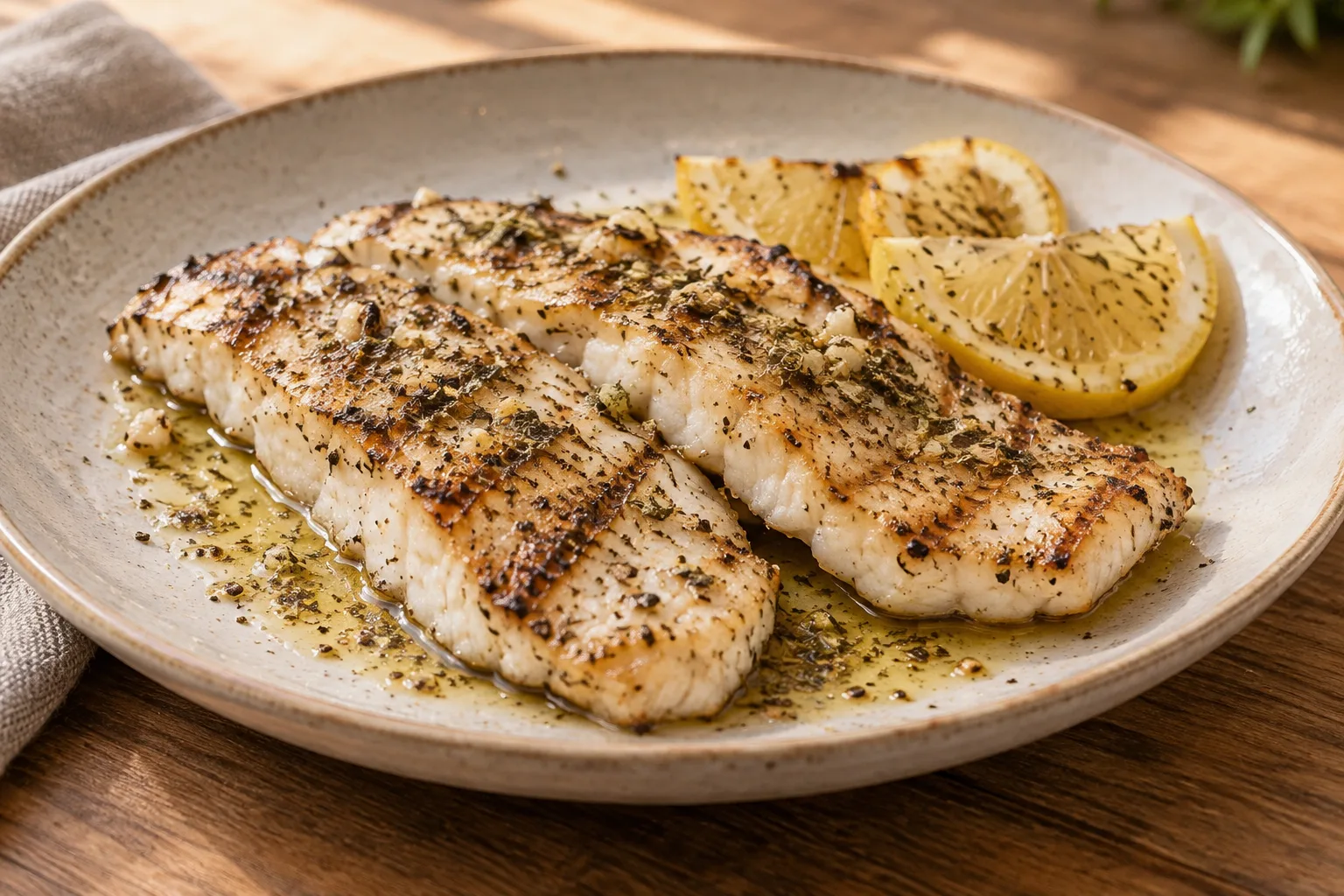
For barramundi, the sources document several methods. The fish may be crumbed and shallow-fried in pieces, grilled as fillets, or cooked whole, wrapped in leaves. In the specific eucalyptus recipe, banana leaves enclose the fish while eucalyptus leaves provide the aromatic wrapping; the account also describes direct cooking over coals in a bush oven. The leaves and cooking environment belong to that particular preparation and should be understood in its stated cultural context.

Pastry foods depend on shaping and enclosure. A meat pie holds a cooked filling beneath pastry, while a sausage roll wraps a meat mixture in pastry and is baked in portions. The method determines whether the result is a self-contained pie or a rolled snack. Pavlova uses a different skill: meringue is shaped and baked to create a crisp exterior and softer interior, then topped with cream and fruit. These techniques reveal a repertoire of fire cooking, frying, grilling, baking and assembly without implying that any one method defines Australian cooking as a whole.

Cooking techniques. Barbecues grill sausages, burgers, steaks, lamb cutlets and seafood; fish-and-chip fish may be grilled or battered.

Fermented foods. The catalogue includes yoghurt, cheese, sourdough, kefir, tempeh, miso, sauerkraut, kimchi and kombucha. It does not measure consumer prevalence.

Vegetable preparation. The sample records raw tomato and cucumber, cooked carrot and boiled potatoes. No national percentage breakdown of preparation techniques is established here.

Observation period: 2011–12. Australian adults aged nineteen and over; sample of 9341. Australia; NNPAS 2011–2012, consumers of each food. Weighted medians of grams per eating occasion from one twenty-four-hour recall; NNPAS comparison-table columns, by sex. Historical partial coverage: consumer medians, not population means or recommended servings. Food definitions and cooking states retained.

Kitchen equipment. In Western Australia, 93 % of households reported owning a microwave.

Western Australian households, not all Australia. Western Australia; October 2009 survey. Official household water and energy survey; reported microwave ownership. Historical regional data, not extrapolatable to the current country. Ovens and pressure cookers not covered here; ownership is not use frequency.

From the pub plate to the shared barbecue

Australian food is served in settings that range from a pub meal to an outdoor community gathering. Chicken parmigiana is documented as a pub main, often served with chips and salad; some accounts also describe ham under the sauce and melted cheese on top. Its regional names—parma, parmi and parmy—vary, and the sources describe disagreements over how chips should be arranged. The important point is not a fixed national etiquette but a recognisable meal format that has become part of pub culture.

A sausage sizzle is organised for sharing at a different scale. Sausages are cooked on a barbecue, placed in bread and served with condiments; onions may be included. Fundraising events and polling-day “democracy sausages” connect the food with a particular public occasion. The format is practical and communal, but it is documented as a practice with variants, not a compulsory ritual for every Australian gathering.

Pies and sausage rolls offer portable pastry foods, while damper may be served as bread alongside other food. ANZAC biscuits are linked with remembrance and may also be eaten as a sweet biscuit; pavlova, topped with cream and fruit, is an example of a dessert shared between Australian and New Zealand tables. These dishes do not make a single fixed menu. They show how meals can be shaped by location and occasion: pub service, outdoor fundraising, baking for remembrance, or a dessert brought to a gathering. Each has a documented role without standing for every community’s table.

A glossary of Australian foods

A few specific terms help distinguish ingredients, dishes and occasions in this varied repertoire:

  • Barramundi: Lates calcarifer, a fish found in fresh, brackish and marine waters across a broad Indo-Pacific range, including northern Australia. It appears in grilled, crumbed and whole-fish preparations.
  • Damper: A simple Australian bread associated in the sources with travelling stock workers and cooking over fire. Current versions may use raising agent or add ingredients such as olives and rosemary.
  • ANZAC biscuit: An oat-and-coconut biscuit named for the Australian and New Zealand Army Corps. It is linked with First World War remembrance and ANZAC Day; accounts distinguish the modern biscuit from earlier recipe names.
  • Sausage sizzle: A barbecue gathering where sausages are cooked and served in bread with condiments. When associated with election day in Australia, it is commonly called a democracy sausage.
  • Meat pie: A pastry-enclosed meat preparation, commonly made as an individual pie in Australia. It belongs to a wider pie tradition and should not be confused with a sausage roll.
  • Parma, parmi or parmy: Regional colloquial names for chicken parmigiana, a crumbed chicken dish with tomato sauce and melted cheese, commonly found on Australian pub menus.
  • Pavlova: A meringue-based dessert served with cream and fruit. Australia and New Zealand share its culinary association, while the accounts provided do not establish an uncontested national origin.

One country, many cuisines

Melbourne and Victoria

Melbourne is documented as a centre of pub-style chicken parmigiana, a dish with several local names and a familiar place on Australian pub menus. Victoria is also associated with the Great Australian Vanilla Slice Triumph, first held in Ouyen and later moved to Merbein. These examples document particular urban and regional food cultures, not the origin of every national dish.

Tasmania

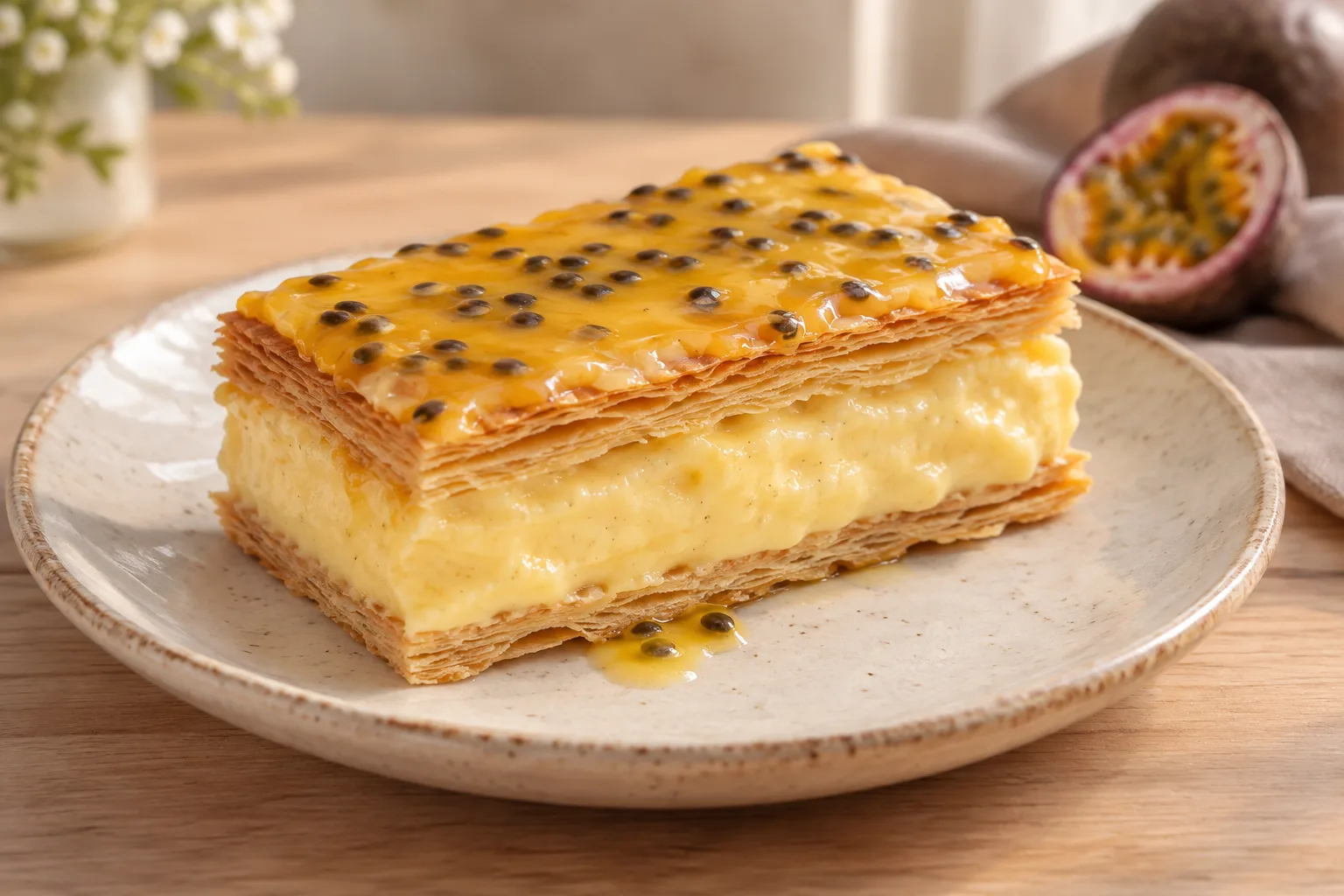
Tasmania appears in the evidence through two specific food references: trout is named among fish eaten in Australia, and a vanilla slice is pictured in a Tasmanian bakery. These examples support a limited regional description rather than a comprehensive account of the island’s foodways or seafood production.

The Top End and Darwin

Northern Australia is part of barramundi’s documented range, and the FAO species account identifies large-scale barramundi production near Darwin. The fish’s wider habitat includes fresh, brackish and marine waters. Together these sources connect the Top End with a specific fish and aquaculture context, without treating either as a complete account of local or Indigenous food cultures.

Cook

Everyday eating and the pantry

Selected leading groups: cereal-based dishes 228.6 g per person per day; milk products and dishes 172.2 g; vegetable products and dishes 153.1 g; cereals and grains 142.1 g. People aged two and over in Australian private dwellings; very remote areas and discrete Indigenous communities are excluded. Australia; NNPAS 2023, first dietary recall. One-day Intake24 recall. Whole-population means or the share consuming a group that day, as labelled. AUSNUT classification includes mixed dishes. Partial coverage; one day does not measure usual frequency. Groups include dishes and are not pure ingredients. Possible under-reporting; no supplements, litre conversion or annual extrapolation.

61.6 % recorded cooking or food/drink preparation as a primary daily activity. Duration: 1:16 h among participants and 0:47 h across the whole population. Australian residents aged fifteen and over. Australia; 2024 Time Use Survey. Activity diaries; original tables with percentages and durations in hours:minutes. The whole population is distinguished from participants. Partial coverage: primary daily activity, without breakfast/lunch/dinner durations or days cooked per week. It is not all eating time during simultaneous activities.

Breakfast and brunch examples include sourdough toast with avocado and a bacon-and-egg roll. Fermented products consumed in Australia include pickles, salami, cheese, yoghurt and sourdough. This describes products, not household-preservation frequency.

Meal times. On weekdays, breakfast from 7:00 to 7:59 accounted for 30 % of men and 34 % of women. On weekends, 43 % and 37 %, respectively, had breakfast at 9:00 or later.

Adult breakfast consumers in the sample: 3545 men and 4127 women. Australia; NNPAS 2011–2012, reported breakfast times. First twenty-four-hour dietary recall; weighted percentages from the all-breakfasts column, by sex and type of day. Historical partial coverage: breakfast only among consumers with valid timing and minimum energy of 210 kJ. No lunch or dinner times or mean for breakfast skippers.

Meal duration. Eating and drinking as a primary activity: daily mean 1:02 h for the whole population and 1:22 h among participants. No meal-specific breakdown.

Weekdays and weekends. Eating and drinking as a primary activity: 0:59 h per weekday and 1:10 h per weekend day, whole-population means.

Australian residents aged fifteen and over. Australia; 2024 Time Use Survey. Activity diaries; original tables with percentages and durations in hours:minutes. The whole population is distinguished from participants. Partial coverage: primary daily activity, without breakfast/lunch/dinner durations or days cooked per week. It is not all eating time during simultaneous activities.

Eating at home and away. Described settings include sidewalk-café brunches, backyard barbecues and al fresco restaurant dinners. No comparable location-percentage breakdown for breakfast, lunch and dinner is established.

Eating together. Social practices include backyard barbecues with friends and shared café brunches. The shares of meals alone or with family are not measured.

In the 2022 national survey, based on recall of the previous seven days, the published mean is 8.5 shared meals per week: 3.6 lunches and 4.9 dinners. The question concerns eating with someone known; it does not distinguish family, friends and other acquaintances or include breakfast.

Main meal composition. Culinary examples include grilled or battered fish with chips and meat-and-seafood barbecues. They do not define one main-meal pattern for all households.

Appetisers and snacks. Meat pie is a takeaway snack: flaky pastry filled with minced or diced meat and gravy; the traditional version uses beef.

Desserts and sweets. Lamington is sponge cake coated in chocolate and desiccated coconut; some versions add jam or cream. Macadamias also appear in sweet treats.

Documented uses of wattleseed include flavoured pavlovas and ice cream; Ochre Restaurant in Cairns provides the described example of these preparations. This is an application at a specific venue, without a national consumption frequency.

Dinner composition. Dinner was the sample’s largest meal: meat, poultry or fish with vegetables, tubers and grains. Beef and chicken were the most frequent meats at this meal.

Observation period: 2011–12. Australian sample of 12153 people aged two and over. Australia; NNPAS 2011–2012, consumers of each food. Twenty-four-hour dietary recalls; meal composition by average food-group intakes. Partial coverage: limited to the stated categories, population and period. It does not represent the entire current population or establish unpublished quantities, frequencies or breakdowns.

Portion sizes. Per-occasion medians, men/women: white bread 64/54 g; cooked rice 201/137 g; cooked beef steak 170/150 g.

Observation period: 2011–12. Australian adults aged nineteen and over; sample of 9341. Australia; NNPAS 2011–2012, consumers of each food. Weighted medians of grams per eating occasion from one twenty-four-hour recall; NNPAS comparison-table columns, by sex. Historical partial coverage: consumer medians, not population means or recommended servings. Food definitions and cooking states retained.

Regional harvests and festive meals

In the 2023 dietary survey, groups including mixed dishes do not represent an ingredient’s total intake: milk also appears in coffee and cereal dishes. The analysis uses the first dietary recall and excludes supplements; sub-major groups cannot be directly compared with 2011–12.

Northern Territory mangoes are usually harvested from September to December. Queensland’s winter strawberry season runs from June to October. These are regional windows, not uniform national availability.

Christmas lunch may include fresh oysters, prawns and barbecued lamb cutlets. Lamb roasts are described at Easter. These are examples, not practices of every household.## Nutrition and dietary patterns

Energy and nutrients. Average daily energy: male, 9068 kJ; female, 7177 kJ. Daily averages for both sexes: protein, 88 g; carbohydrate, 212 g; fat, 73 g.

Salt and sugars. Sodium: 2375 mg per person per day. Free sugars: 43 g per person per day, including 38 g of added sugars.

Observation period: 2023. Residents aged two years and over; weighted national results. Australia; reported food and beverage intake. National nutrition survey: first-day dietary recall, not purchases or food availability. Under-reporting and daily variation are possible; observed estimates, not personal recommendations. Energy by sex and macronutrients for both sexes have different denominators. Fibre in grams is missing. Sodium is not converted to salt; free and added sugars are not total sugars. Sodium may miss salt added in cooking or at the table.

Dietary patterns. Among people aged fifteen and over, 5.3 % described themselves as vegetarian or vegan, as a combined category.

Observation period: 2023. Residents aged fifteen and over. Australia; reported food and beverage intake. Self-reported eating pattern at interview; vegetarian and vegan categories combined. Partial coverage: no separate vegetarian, vegan or flexitarian percentages. Self-report does not prove exact dietary composition and is not directly comparable with the previous collection.

The 2023 questions about diets and eating patterns covered people aged 15 years and over; food avoidance questions covered people aged 2 years and over or their carers. Among people following a diet, 37.9% reported a food avoidance diet. This percentage does not refer to the whole population. Up to three diet types could be reported, so categories can overlap. Questionnaire changes prevent direct comparison of eating patterns with 2011–12.

In 2023, among people aged 2 years and over, 13.6% reported avoiding foods because of intolerances, 9.2% for cultural, religious or ethical reasons and 7.1% because of allergies. These are reasons for food avoidance reported at interview by the person or their carer; they do not establish a clinical diagnosis. The percentages are not added or interpreted as mutually exclusive shares.

Drinks

Everyday drinks. Coffee and substitutes: 191.0 g per person per day; tea: 153.1 g; soft drinks and flavoured mineral waters: 118.1 g; pure fruit and vegetable juices: 58.8 g.

People aged two and over in Australian private dwellings; very remote areas and discrete Indigenous communities are excluded. Australia; NNPAS 2023, first dietary recall. One-day Intake24 recall. Whole-population means or the share consuming a group that day, as labelled. AUSNUT classification includes mixed dishes. Partial coverage; one day does not measure usual frequency. Groups include dishes and are not pure ingredients. Possible under-reporting; no supplements, litre conversion or annual extrapolation.

Coffee and tea preparation. Perth offers espresso, long black and flat white, plus filtered, pour-over and cold-brew coffee. These are regional examples, without national shares or mean serving size.

Among the documented Perth examples, Tiisch includes matcha lattes in its described drinks offering; Small Print combines a bakery and coffee roasting. These examples concern individual venues in the city.

Drinks with meals. Alcoholic drinks were reported by 1.8 % at lunch and 10.5 % at dinner on the recalled day. Discretionary beverages, such as soft drinks or fruit drinks: 13.1 % at lunch and 13.5 % at dinner.

Observation period: 2011–12. Australian sample of 12153 people aged two and over. Australia; NNPAS 2011–2012 survey population, recalled day. Proportion of the entire sample reporting the beverage group at each meal; national persons table, not energy contributions. Historical partial coverage; people reporting the drink at that occasion on the recalled day. Not usual frequency, advice or a water, coffee and tea breakdown.

In 2024–25, retail purchases of coconut water equated to 7.3 g per capita per day: 46% above 2023–24 and 135% above 2018–19. The classification places it within nuts and nut products. These are adjusted retail-sales estimates, not amounts drunk: they exclude food service and food obtained outside retail, and do not deduct waste or inventory changes. Grams are not converted to millilitres here.

When interpreting these purchase figures, tea, coffee and many beverage flavourings are recorded mainly in their dry state. Their weight is not the weight of the prepared drink. The water category includes packaged water only; these data do not describe total fluid intake.

Beverage categories should not be added as though mutually exclusive: flavoured bottled water also appears in the groups defined by sweetening. Juices and flavoured milks are treated separately. These are retail purchases; tap water and drinks bought from cafes and restaurants are outside scope.

Shopping, prices and waste

Available sodium is estimated from food retail sales; it does not measure individual intake. Food service is excluded and the share of purchased salt used for non-food purposes is unknown.

Food expenditure. Food and non-alcoholic beverages: AUD 237 per household per week; about 17 % of goods-and-services spending. This is not a monthly per-person figure.

Observation period: 2015-16. Australian private households excluding very remote areas; about ten thousand sampled households. Australia; financial year 2015–2016. Household Expenditure Survey; published weekly mean and rounded share. No conversion to months or division by an assumed household size. Partial coverage: limited to the stated categories, population and period. It does not represent the entire current population or establish unpublished quantities, frequencies or breakdowns.

Classification changes what counts as food expenditure. In 2015–16, the survey’s food group included meals out and fast food. The COICOP table presents food and non-alcoholic drinks separately from restaurants and hotels. Their amounts therefore describe different baskets and should not be compared as a change in prices or consumption. These are weekly household expenditures, not individual intake, and relate to a historical period.

Cost of a common basket. Healthy reference diet: mean cost 1176.30 AUD per fortnight for the six-person household; pooled 2023–2024 mean.

Observation period: 2023–2024. Reference six-person multigenerational Aboriginal and Torres Strait Islander household. Queensland; pooled mean across regions and 2023 and 2024 observations. Healthy Diets ASAP protocol; outlet and online prices for a defined healthy reference diet for a fortnight. Historical regional coverage; pooled mean, not a current national price. Standard brands; not identical to other countries’ baskets or actual purchases.

Grocery shopping locations. Online sales represented 6.0 % of food-retailing sales in December 2024, in the original series.

Australian food-retailing businesses covered by the business survey. Australia; December 2024, original series without seasonal adjustment. Online food sales divided by total food-retailing sales, the percentage published by ABS. Partial coverage of one channel and month; business sales, not a population percentage. The remainder is not split among supermarkets, markets or shops.

Shopping frequency. Respondents in 2008: 38 % made one large weekly shop; 36 % a large shop plus smaller shops; 23 % several small shops during the week; 3 % fortnightly or monthly shops.

Respondents to the Australian grocery-consumer survey. Australia; April 2008 survey. Response on usual grocery-shopping pattern; chart categories checked against the original. Historical partial data on respondents, not the current habit of the whole population. No mean number of visits or mean basket weight or spend is published here.

Prepared food and delivery. Mean weekly household spending on fast food and takeaway: 31 AUD, excluding coffee and frozen food.

Observation period: 2015–16. Australian private households excluding very remote areas; about ten thousand sampled households. Australia; financial year 2015–2016. Household Expenditure Survey; published weekly mean and rounded share. No conversion to months or division by an assumed household size. Partial coverage: limited to the stated categories, population and period. It does not represent the entire current population or establish unpublished quantities, frequencies or breakdowns.

Household food waste. Household waste causes include buying or cooking too much and poor storage. Unavoidable scraps include bones, shells and coffee grounds; no comparable per-person mass is verified here.

How household waste was measured

The 2020/21 household research combined three measures: a survey of estimates from 2885 main or joint household food managers, a seven-consecutive-day electronic diary completed by 1462 participants, and a physical bin audit for a subgroup of 495. Records were linked to compare what people estimated, what they recorded and what appeared in general waste. These were stages of a historical study, rather than continuing observation of all present-day households.

The diary also recorded food fed to animals or disposed of through compost, worm farms or the sink. The physical audit weighed only material placed in the general-waste bin; the total-waste calculation incorporated diary information about other disposal routes. A quantity measured only in that bin and an estimate covering all disposal routes therefore have different boundaries. Neither is the same as retail losses or waste across the whole food chain.

Selection required weekly collection, a bin used by only one household and availability at home, and excluded combined food-and-garden-organics collection areas. The physical audit did not include South Australia, Tasmania or the Northern Territory; apartment households were screened out in audited states. The per-person calculation assigned children aged fourteen or younger an equivalence of 0.60 of an adult, based on recommended servings rather than observed child waste. Auditors grouped foods into thirteen visually identifiable categories instead of the diary’s forty-seven, and some classification of avoidable and unavoidable scraps depended on their judgement. These decisions qualify comparisons between the figures.

Daily intake of selected food groups

Group g per person per day
Cereal-based products and dishes 228.6
Milk products and dishes 172.2
Vegetable products and dishes 153.1
Cereals and grains 142.1

Means from the first dietary recall in 2023 among people aged two or older in private households. These are selected intake groups, not a complete ranking or shares of a total; very remote areas and discrete Aboriginal and Torres Strait Islander communities are excluded.

Retail purchases of plant oils equated to 9.3 g per capita per day in 2024–25. Among selected oils, olive oil accounted for 3.7 g, canola oil 2.15 g and the category labelled vegetable oil 2.1 g per capita per day. These categories retain their classification labels and are not added to the subtotal. They are estimates of availability from purchases, excluding food service and home production and without deducting waste or inventory changes; they do not indicate amounts ingested or each household’s usual oil.

In 2024–25 retail purchases, grains and cereals supplied 3.76 non-discretionary serves per capita per day. The food-group total, including contributions from discretionary foods, was 4.78 serves. These are modelled availability serves, not amounts eaten by each person or percentages of people meeting a recommendation.

In food availability estimated from 2024–25 retail purchases, cheese supplied 4.1 g of saturated fat per capita per day, accounting for 11.8% of total saturated fat. Milk supplied 3.4 g and 9.7%. These are contributions to estimated availability, not measurements of individual intake. Amounts and percentages come from separate table columns.
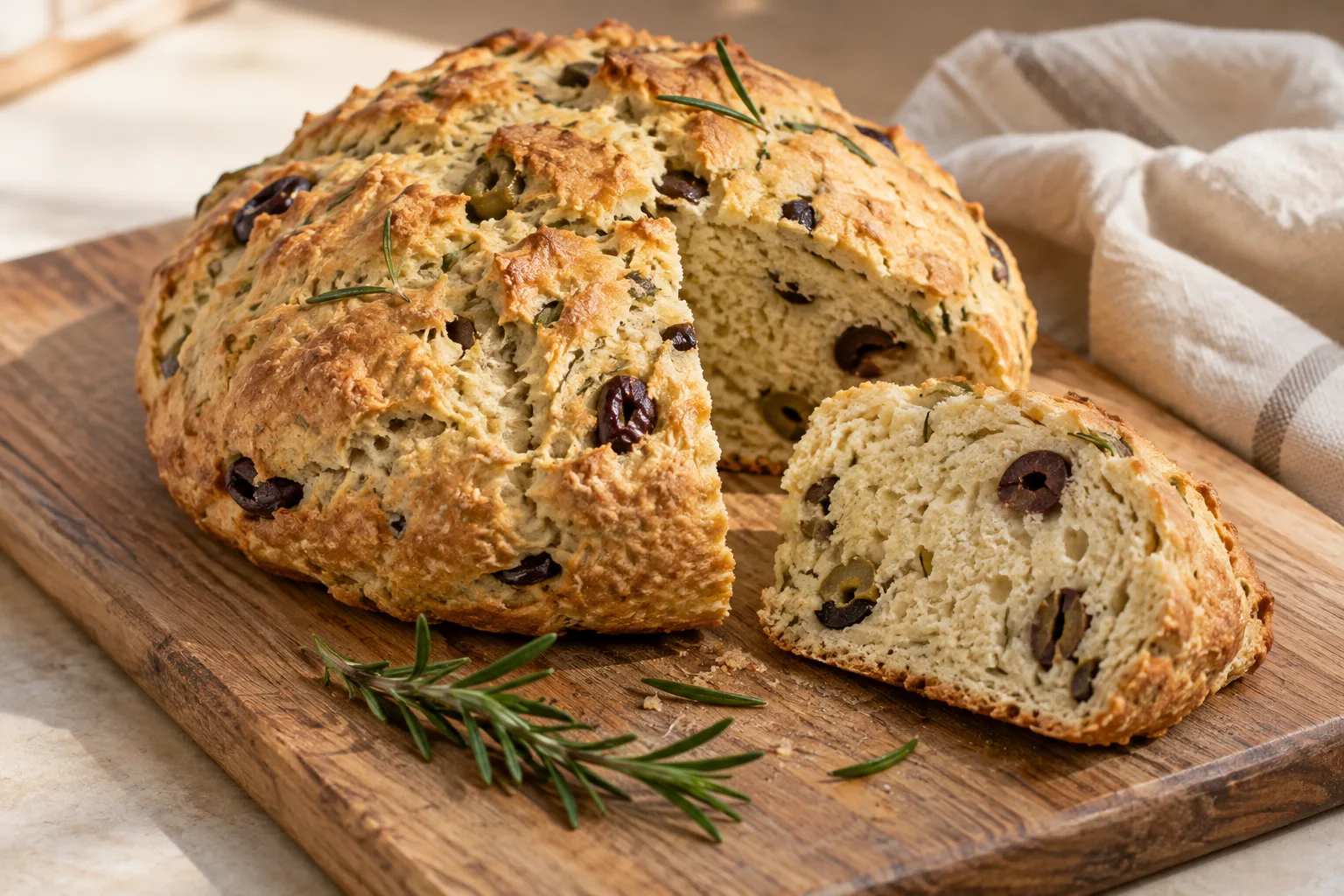
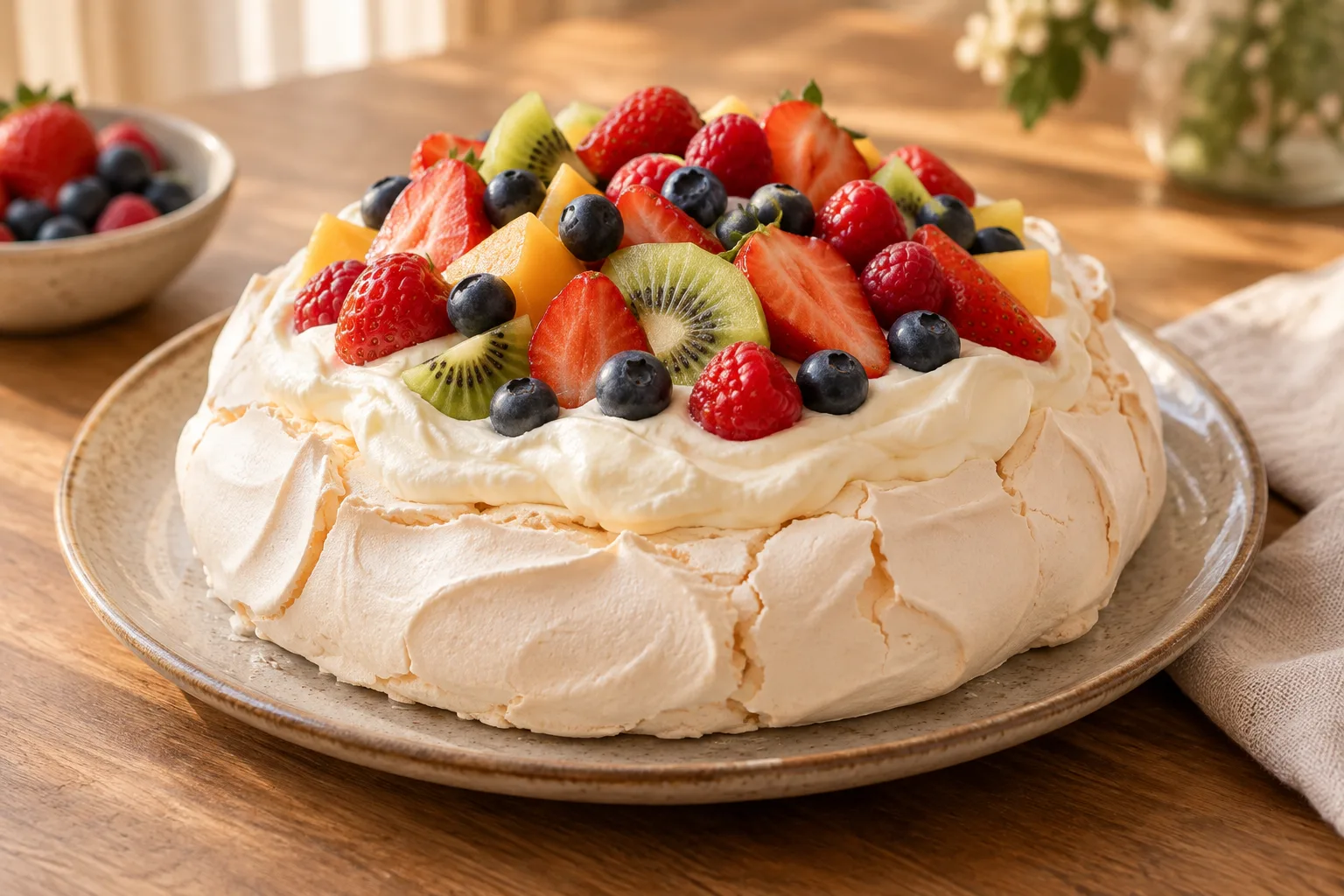
Read as an article ↗
Places and communities

One country, many cuisines

An initial selection of regions to explore. Culinary boundaries may differ from administrative divisions.

Australia

Melbourne and Victoria

Melbourne is documented as a centre of pub-style chicken parmigiana, a dish with several local names and a familiar place on Australian pub menus. Victoria is also associated with the Great Australian Vanilla Slice Triumph, first held in Ouyen and later moved to Merbein. These examples document particular urban and regional food cultures, not the origin of every national dish.

Australia

Tasmania

Tasmania appears in the evidence through two specific food references: trout is named among fish eaten in Australia, and a vanilla slice is pictured in a Tasmanian bakery. These examples support a limited regional description rather than a comprehensive account of the island’s foodways or seafood production.

Australia

The Top End and Darwin

Northern Australia is part of barramundi’s documented range, and the FAO species account identifies large-scale barramundi production near Darwin. The fish’s wider habitat includes fresh, brackish and marine waters. Together these sources connect the Top End with a specific fish and aquaculture context, without treating either as a complete account of local or Indigenous food cultures.

Cook

Recipes connected with Australia

Each recipe documents one version. Geographic associations do not imply an exclusive origin.

Australian pavlova
Image generated by the Kitchenpause team
470 minIntermediate

Australian pavlova

Baked meringue, crisp on the outside and soft inside, topped with whipped cream and fresh fruit.

View recipe
Australian sausage rolls
Image generated by the Kitchenpause team
20 minIntermediate

Australian sausage rolls

Puff pastry rolls filled with minced meat, carrot, onion, herbs and breadcrumbs, brushed with egg and baked until golden.

View recipe
ANZAC Biscuits
Image generated by the Kitchenpause team
32 minEasy

ANZAC Biscuits

Australian oat and coconut biscuits, baked until golden and made without eggs. Makes 12.

View recipe
Australian meat pie
Image generated by the Kitchenpause team
41 minIntermediate

Australian meat pie

Individual pies with a shortcrust base, beef in a thick gravy-style filling, and a puff pastry lid.

View recipe
Australian vanilla slice
Image generated by the Kitchenpause team
292 minAdvanced

Australian vanilla slice

An Australian pastry dessert with crisp puff pastry, thick vanilla custard and passionfruit icing.

View recipe

Sources consulted

Read the sources and each document’s scope. A heritage inscription concerns a particular practice, not all of a country’s cuisine.

  1. What do Australian adults eat for breakfast? Timing by type of day pmc.ncbi.nlm.nih.gov/articles/PMC7992839/ Deakin University / original analysis of ABS NNPAS Consulted: October 31, 2026
  2. How Australians use their time, 2024: TUSDC01.xlsx www.abs.gov.au/statistics/people/people-and-communities/how-australians-use-their-time/2024/… Australian Bureau of Statistics Consulted: October 31, 2026
  3. How Australians use their time, 2024: TUSDC04.xlsx www.abs.gov.au/statistics/people/people-and-communities/how-australians-use-their-time/2024/… Australian Bureau of Statistics Consulted: October 31, 2026
  4. Australian cuisine: dining customs and seasonal celebrations www.australia.com/en-ca/things-to-do/food-and-drinks/guide-to-australian-cuisine.html Tourism Australia Consulted: October 31, 2026
  5. Apparent Consumption of Selected Foodstuffs, Australia, 2024-25 financial year www.abs.gov.au/statistics/health/food-and-nutrition/apparent-consumption-selected-foodstuffs… Australian Bureau of Statistics Consulted: October 31, 2026
  6. Food and nutrients, 2023 www.abs.gov.au/statistics/health/food-and-nutrition/food-and-nutrients/2023 Australian Bureau of Statistics Consulted: October 31, 2026
  7. Dieting and food avoidance, 2023 www.abs.gov.au/statistics/health/food-and-nutrition/dieting-and-food-avoidance/2023 Australian Bureau of Statistics Consulted: October 31, 2026
  8. Food and nutrients: Australia, 2011–12 www.abs.gov.au/statistics/health/food-and-nutrition/food-and-nutrients/2011-12 Australian Bureau of Statistics Consulted: October 31, 2026
  9. Native Australian ingredients www.australia.com/en-us/things-to-do/food-and-drinks/native-australian-ingredients.html Tourism Australia Consulted: October 31, 2026
  10. Australia’s iconic food and drink experiences www.australia.com/en-sg/things-to-do/food-and-drinks/iconic-food-and-drink-experiences-every… Tourism Australia Consulted: October 31, 2026
  11. Typical Aussie foods to try www.australia.com/en-us/things-to-do/food-and-drinks/typical-aussie-foods-to-try.html Tourism Australia Consulted: October 31, 2026
  12. Exploratory analysis of meal composition in Australia: meat and accompanying foods pmc.ncbi.nlm.nih.gov/articles/PMC10261568/ Original analysis of ABS NNPAS / Public Health Nutrition Consulted: October 31, 2026
  13. Typical food portion sizes consumed by Australian adults pmc.ncbi.nlm.nih.gov/articles/PMC4726402/ University of Sydney / original analysis of ABS NNPAS Consulted: October 31, 2026
  14. Fermented foods consumed in Australia www.qld.gov.au/health/staying-healthy/food-pantry/food-labelling/food-product-guides/ferment… Queensland Health Consulted: October 31, 2026
  15. Western Australia household equipment, October 2009 www.abs.gov.au/AUSSTATS/abs%40.nsf/7d12b0f6763c78caca257061001cc588/89f25313fb753520ca257743… Australian Bureau of Statistics Consulted: October 31, 2026
  16. Perth’s coffee preparations www.australia.com/en/places/perth-and-surrounds/best-coffee-shops.html Tourism Australia Consulted: October 31, 2026
  17. Household Expenditure Survey, Australia, 2015–16 www.abs.gov.au/statistics/economy/finance/household-expenditure-survey-australia-summary-res… Australian Bureau of Statistics Consulted: October 31, 2026
  18. Diet Cost and Affordability in Queensland: A Two-Year Cross-Sectional Study pmc.ncbi.nlm.nih.gov/articles/PMC13115860/ Health and Wellbeing Queensland / University of Queensland Consulted: October 31, 2026
  19. Retail trade: online food sales, December 2024 www.abs.gov.au/statistics/industry/retail-and-wholesale-trade/retail-trade-australia/dec-202… Australian Bureau of Statistics Consulted: October 31, 2026
  20. Survey of grocery consumers, April 2008: shopping patterns www.accc.gov.au/system/files/Grocery%20inquiry%20report%20-%20July%202008.pdf Australian Competition and Consumer Commission Consulted: October 31, 2026
  21. Household food waste: causes and scope www.lovefoodhatewaste.nsw.gov.au/about-food-waste NSW Government / EPA Consulted: October 31, 2026
  22. Mango: harvest season in the Northern Territory nt.gov.au/environment/home-gardens/growing-vegetables-at-home/mango Northern Territory Government Consulted: October 31, 2026
  23. Queensland winter strawberry season hw.qld.gov.au/news/queensland-pick-your-own-strawberries-pick-of-the-crop/ Health and Wellbeing Queensland Consulted: October 31, 2026
  24. Christmas lunch and everyday Australian food customs www.australia.com/en-us/facts-and-planning/about-australia/everyday-aussie-things-to-try.htm… Tourism Australia Consulted: October 31, 2026
  25. Recipe Video: Easy Vanilla Slice - Queen Fine Foods queen.com.au/learn-item/recipe-video-easy-vanilla-slice/ queen.com.au Consulted: September 30, 2026
  26. Vanilla Slice Recipe | Traditional Australian Food www.theworldonaplate.co.uk/recipes/vanilla-slice theworldonaplate.co.uk Consulted: September 30, 2026
  27. Vanilla Slice - Baking Bites bakingbites.com/2009/11/vanilla-slice/ bakingbites.com Consulted: September 30, 2026
  28. How to make Australian vanilla custard slice | Cook Free Recipes from Australia's Best Brands | myfoodbook myfoodbook.com.au/tips/how-to-make-australian-vanilla-custard-slice myfoodbook.com.au Consulted: September 30, 2026
  29. Vanilla slice - Wikipedia en.wikipedia.org/wiki/Vanilla_slice en.wikipedia.org Consulted: September 30, 2026
  30. Pollo Parmesano /Chicken Parmigiana | lacocinadenorteasur.wordpress.com/2015/12/30/pollo-parmesano-chicken-parmigiana/ lacocinadenorteasur.wordpress.com Consulted: October 2, 2026
  31. Aussie Chicken Parmigiana - Easy Meals with Video Recipes by Chef Joel Mielle - RECIPE30 recipe30.com/aussie-chicken-parmigiana.html/ recipe30.com Consulted: October 2, 2026
  32. How to make easy Chicken Parmigiana (Chicken Parmesan) - Days of Jay daysofjay.com/chicken-parmigiana/ daysofjay.com Consulted: October 2, 2026
  33. Arepa Parmigiana Australiana – Día Mundial de la Arepa www.diamundialdelaarepa.com/australia-ingham-arepa-parmigiana-australiana/ diamundialdelaarepa.com Consulted: October 2, 2026
  34. Pollo parmesano - Wikipedia, la enciclopedia libre es.wikipedia.org/wiki/Pollo_parmesano es.wikipedia.org Consulted: October 2, 2026
  35. El plato típico australiano que también es un clásico en Argentina | SBS Español www.sbs.com.au/language/spanish/es/article/el-plato-tipico-australiano-que-tambien-es-un-cla… sbs.com.au Consulted: October 2, 2026
  36. Meat pies Australia: qué son y cómo hacerlos | Goldy Australia goldyaustralia.com/blog/meat-pies-australia/ goldyaustralia.com Consulted: October 7, 2026
  37. Pastel de carne (meat pie) - - Receta - Canal Cocina canalcocina.es/receta/pastel-de-carne-meat-pie canalcocina.es Consulted: October 7, 2026
  38. Meat Pie (Pastel de Carne Australiano) - Receta | 196 flavors www.196flavors.com/es/meat-pie-pastel-de-carne-australiano/?srsltid=AU7gw4U3d04gdVH53w8T6KUw… 196flavors.com Consulted: October 7, 2026
  39. Receta e Historia del Pay de Carne Australiano - Mixturis mixturis.org/2025/07/01/pastel-de-carne-australiano/ mixturis.org Consulted: October 7, 2026
  40. Deforestación por región - Wikipedia, la enciclopedia libre es.wikipedia.org/wiki/Deforestaci%C3%B3n_por_regi%C3%B3n es.wikipedia.org Consulted: October 7, 2026
  41. Anzac biscuits, recetas de las galletas más populares de Australia y Nueva Zelanda www.directoalpaladar.com/postres/anzac-biscuits-receta-iconicas-galletas-australia-nueva-zel… directoalpaladar.com Consulted: October 8, 2026
  42. Anzac Biscuits (Galletas de avena y coco) - Corazón de Caramelo www.corazondecaramelo.es/galletas-de-avena-y-coco-anzac-biscuits/ corazondecaramelo.es Consulted: October 8, 2026
  43. Galletas ANZAC - Receta Tradicional Australiana | 196 flavors www.196flavors.com/es/australia-galletas-anzac/?srsltid=AU7gw4Wj_cajJPz6TRBF1Z416GGj1JFCAyYb… 196flavors.com Consulted: October 8, 2026
  44. Anzac biscuit - Wikipedia, la enciclopedia libre es.wikipedia.org/wiki/Anzac_biscuit es.wikipedia.org Consulted: October 8, 2026
  45. Galletas ANZAC: del campo de batalla a la construcción de la paz. - El Arte de Alimentarte www.elartedealimentarte.com/cacao-vs-algarroba-el-secreto-dulce-que-tu-menopausia-necesita-y… elartedealimentarte.com Consulted: October 8, 2026
  46. Anzac Biscuits (avena y coco) – La Pomalaca lapomalaca.com/2018/04/25/anzac-biscuits-avena-y-coco/ lapomalaca.com Consulted: October 8, 2026
  47. Galletas de avena y coco, Anzac | Galletas para matilde galletasparamatilde.com/2016/09/06/galletas-de-avena-y-coco-anzac/ galletasparamatilde.com Consulted: October 8, 2026
  48. Cocina australiana: ¡galletas Anzac! 19 de enero - Lexis English lexisenglish.com/es/aussie-cooking-anzac-cookies-19-jan/ lexisenglish.com Consulted: October 8, 2026
  49. Galletas ANZAC - Receta Tradicional Australiana | 196 flavors www.196flavors.com/es/australia-galletas-anzac/?srsltid=AU7gw4X44ENDZuOdqaIzX_tidOv4xUiTuPJj… 196flavors.com Consulted: October 8, 2026
  50. Sausage rolls Australia (rollitos de salchicha) | Salteando ideas salteandoideas.com/2016/03/18/sausage-rolls-australia-rollizos-de-salchicha/ salteandoideas.com Consulted: October 11, 2026
  51. Sizzle de Salchichas - Receta Tradicional Australiana | 196 flavors www.196flavors.com/es/sizzle-de-salchichas/?srsltid=AU7gw4W25HxjeQCDA5R3MAB3yc8wIoOqVJigcEBF… 196flavors.com Consulted: October 11, 2026
  52. FAO-Lates calcarifer Bloch www.fao.org/fishery/docs/DOCUMENT/aquaculture/CulturedSpecies/file/es/es_barramundi.htm fao.org Consulted: October 13, 2026
  53. Lemon myrtle crumbed barramundi - Better Homes & Gardens Australia www.bhg.com.au/recipe/quick-easy/crumbed-barramundi/ bhg.com.au Consulted: October 13, 2026
  54. Receta de Barramundi a la parrilla || Australia – Barramundi | Guía paso a paso | Allrestaurants.eu allrestaurants.eu/es/recipes/es-europea/barramundi-a-la-parrilla-australia-barramundi-fadw allrestaurants.eu Consulted: October 13, 2026
  55. Eucalyptus baked whole barramundi recipe | SBS Food www.sbs.com.au/food/the-cook-up-with-adam-liaw/recipe/eucalyptus-baked-whole-barramundi/ai4c… sbs.com.au Consulted: October 13, 2026
  56. Barramundi with Olives, Tomatoes & Garlic - Detalles de Receta mobile.fatsecret.es/Default.aspx?pa=recd&recipeid=129306 mobile.fatsecret.es Consulted: October 13, 2026
  57. Barramundi vimafoods.com/barramundi/ vimafoods.com Consulted: October 13, 2026
  58. Lates calcarifer - Wikipedia, la enciclopedia libre es.wikipedia.org/wiki/Lates_calcarifer es.wikipedia.org Consulted: October 13, 2026
  59. Lates calcarifer, Barramundi : fisheries, aquaculture, gamefish, aquarium fishbase.se/Summary/speciesSummary.php?ID=346&lang=Spanish fishbase.se Consulted: October 13, 2026
  60. Comida típica de Australia: platos, precios y qué evitar goldyaustralia.com/blog/comidas-australianas/ goldyaustralia.com Consulted: October 13, 2026
  61. Tarta Pavlova australiana - Receta original recetas.elperiodico.com/receta-de-tarta-pavlova-australiana-12047.html recetas.elperiodico.com Consulted: October 15, 2026
  62. Cómo hacer tarta pavlova, el postre que enfrenta a Australia y Nueva Zelanda - Infobae www.infobae.com/espana/2024/08/15/como-hacer-tarta-pavlova-el-postre-que-enfrenta-a-australi… infobae.com Consulted: October 15, 2026
  63. Tarta Pavlova | Receta fácil y casera | Recetas Fáciles ✔️ www.recetasfaciles.com.es/receta-facil/tarta-pavlova/ recetasfaciles.com.es Consulted: October 15, 2026
  64. El enigma de la Pavlova: un dulce debate - López Echeto lopezecheto.com/el-enigma-de-la-pavlova/ lopezecheto.com Consulted: October 15, 2026
  65. Pan damper australiano. Receta paso a paso. - Cocinando Entre Olivos cocinandoentreolivos.com/2014/04/pan-damper-australiano-receta-paso-paso.html?print=print cocinandoentreolivos.com Consulted: October 25, 2026
  66. Pan damper australiano (Aussie Olive damper bread) - Lorraine Pascale - Receta - Canal Cocina canalcocina.es/receta/pan-damper-australiano-aussie-olive-damper-bread canalcocina.es Consulted: October 25, 2026
  67. Picreceta LDG – Australian Damper (Pan Damper Australiano) ladolcegula.com/2014/01/29/picreceta-ldg-australian-damper-pan-damper-australiano/ ladolcegula.com Consulted: October 25, 2026
  68. Damper (pan) - Wikipedia, la enciclopedia libre es.wikipedia.org/wiki/Damper_(pan) es.wikipedia.org Consulted: October 25, 2026
  69. Patty's Cake pattyscake-pbb.blogspot.com/2017/03/pan-damper-australiano-con-aceitunas-y.html pattyscake-pbb.blogspot.com Consulted: October 25, 2026
  70. Receta de damper, el pan australiano okdiario.com/recetas/receta-damper-pan-australiano-10827227 okdiario.com Consulted: October 24, 2026
  71. Damper - Receta Tradicional Australiana | 196 flavors www.196flavors.com/es/australia-damper/?srsltid=AU7gw4Umhhx310tnjD4IVF8CsN9D8B8WYEnWU8bF6cVl… 196flavors.com Consulted: October 19, 2026
  72. Pan Damper – Pan Australiano » Ampajua www.ampajua.com/2022/02/pan-damper-pan-australiano/ ampajua.com Consulted: October 21, 2026
  73. Pan damper australiano - - Receta - Canal Cocina canalcocina.es/receta/pan-damper-australiano-1 canalcocina.es Consulted: October 24, 2026
  74. Ingredientes nativos de Australia www.australia.com/en/things-to-do/food-and-drinks/native-australian-ingredients.html Tourism Australia Consulted: October 20, 2026
  75. Comida y experiencias del Top End www.australia.com/en/places/darwin-and-surrounds/top-end-farm-food-experiences.html Tourism Australia Consulted: October 20, 2026
  76. Experiencias de productos del mar en Tasmania www.discovertasmania.com.au/experiences/stories/top-seafood-experiences/ Tourism Tasmania Consulted: October 20, 2026
  77. Melbourne y sus alrededores www.australia.com/en/places/melbourne-and-surrounds/guide-to-melbourne.html Tourism Australia Consulted: October 20, 2026
  78. Hoy cocina Vivi: Pan damper australiano con aceitunas {Lok@s por Lorraine} hoycocinavivi.blogspot.com/2015/04/pan-damper-australiano-con-aceitunas.html hoycocinavivi.blogspot.com Consulted: October 24, 2026
  79. Damper - Receta Tradicional Australiana | 196 flavors www.196flavors.com/es/australia-damper/?srsltid=AU7gw4VH4EdNmvW9oIOfKxk44LVJ93DzuwD7rwwS0ZCZ… 196flavors.com Consulted: October 21, 2026
  80. Pan damper australiano con aceitunas - facilisimo.com facilisimo.com/cocina/pan-damper-australiano-con-aceitunas_1553692.html facilisimo.com Consulted: October 21, 2026
  81. Pan damper australiano. Receta paso a paso. - Cocinando Entre Olivos cocinandoentreolivos.com/2014/04/pan-damper-australiano-receta-paso-paso.html cocinandoentreolivos.com Consulted: October 24, 2026
  82. Damper - Receta Tradicional Australiana | 196 flavors www.196flavors.com/es/australia-damper/?srsltid=AYCX9vJlhyjlDD7rhnaQvBexDY1OzJAMXbHyjeszpcYf… 196flavors.com Consulted: October 24, 2026
  83. Harvard Research Addresses Food Waste, Hunger, and Climate Change Crisis in Australia | The Global FoodBanking Network www.foodbanking.org/es/news/harvard-research-addresses-food-waste-hunger-and-climate-change-… foodbanking.org Consulted: October 25, 2026
  84. Australia — Macadamia culture in NSW: botanical origins of food species www.dpird.nsw.gov.au/agriculture/horticulture/nuts/growing-guides/macadamia-culture-nsw NSW Department of Primary Industries and Regional Development Consulted: November 2, 2026
  85. Australia — Australian National Botanic Gardens: historical acacia seed food uses www.anbg.gov.au/acacia/introduction.html Australian National Botanic Gardens Consulted: November 2, 2026
  86. Australia — Mud crab coastal distribution and estuarine habitat, official NSW species profile www.dpird.nsw.gov.au/fishing/fish-species/species-list/mud-crab NSW Department of Primary Industries and Regional Development Consulted: November 2, 2026
  87. Sharing meals with others: How sharing meals supports happiness and social connections files.worldhappiness.report/WHR25_Ch03.pdf Wellbeing Research Centre, University of Oxford / World Happiness Report; primary authors and Gallup data Consulted: November 2, 2026
  88. World Happiness Report2025,Chapter3Appendix,TableA2 files.worldhappiness.report/WHR25_Ch03_Appendix.pdf World Happiness Report / Gallup research authors Consulted: November 2, 2026
  89. Australian household food waste: A summary of behaviours, attitudes, perceived and actual food waste www.lovefoodhatewaste.nsw.gov.au/sites/default/files/2021-07/FINAL-summary_report.pdf Karunasena, Pearson and Fight Food Waste Cooperative Research Centre Consulted: November 3, 2026

We use session and security technologies to provide our features. Only with your permission do we load Google Analytics to measure visits and Google Maps on Contact. Choose separately, reject or accept both.

Withdraw either permission here. Withdrawing analytics reloads the page to unload the running tag.

Cookie policy