Asia · Southern Asia
Bangladesh
Explore hilsa with mustard, steamed pitha, Dhaka biriyani and bakarkhani, and the movement of culinary knowledge between river communities and cities.
Food and eating habits
How people eat in Bangladesh
50 indicators exploring everyday meals, ingredients and food culture. Information is completed progressively from documented evidence.
44 of 50 indicators with documented information
Not all data are comparable: food supply, purchases and intake are different measures. Check the period, population and method for each finding. Qualitative descriptions do not establish percentages or amounts.
Timing and company
4/8
| Indicator | Findings and context |
|---|---|
| Meal times | Insufficient data in the sources consulted |
| Meals per day |
Interviews described skipping breakfast and delaying meals during examination preparation. Scope, method and limitations
|
| Meal duration | Insufficient data in the sources consulted |
| Daily energy distribution | Insufficient data in the sources consulted |
| Weekdays and weekends | Insufficient data in the sources consulted |
| Eating at home and away |
Meals in campus dining halls and canteens and visits to restaurants outside campus to vary dishes were described. Scope, method and limitations
|
| Cooking frequency |
Mean daily time on food and meals management and preparation was 3.31 hours for women, 0.10 for men and 1.91 overall. Scope, method and limitations
|
| Eating together |
Some friends shared dishes and costs when eating in canteens; joint meal preparation in rooms was also described. Scope, method and limitations
|
Pantry and recipes
1/2
| Indicator | Findings and context |
|---|---|
| Most consumed ingredients |
Published mean consumption per person per day: rice 328.92 g; vegetables 201.92 g; fruit 95.4 g; potatoes 69.70 g; fish 67.83 g. Scope, method and limitations
|
| Ingredient prevalence in recipes | Insufficient data in the sources consulted |
Cereals and plant foods
6/6
| Indicator | Findings and context |
|---|---|
| Cereals and cereal products |
Mean daily consumption per person: cereals 385.0 g, including rice 328.92 g and wheat 22.92 g. Scope, method and limitations
|
| Bread |
The “bread and bakery products” group recorded mean consumption of 13.44 g per person per day. Scope, method and limitations
|
| Pulses |
Mean pulse consumption: 17.15 g per person per day; the breakdown includes masoor 11.88 g and khasari 0.45 g. Scope, method and limitations
|
| Vegetables |
Mean vegetable consumption: 201.92 g per person per day, including leafy vegetables 54.44 g. Scope, method and limitations
|
| Fruit |
The fruit group recorded mean consumption of 95.4 g per person per day. Scope, method and limitations
|
| Potatoes, roots and tubers |
Mean potato consumption was 69.70 g per person per day in the general food table. Scope, method and limitations
|
Protein foods
5/5
| Indicator | Findings and context |
|---|---|
| Meat |
Mean consumption per person per day in the specified categories: beef 11.66 g and chicken/duck 26.17 g. Scope, method and limitations
|
| Fish and seafood |
COICOP categories per person per day: fresh/frozen fish 64.01 g; fresh/frozen seafood 2.50 g; dried or salted dried fish 1.33 g. Scope, method and limitations
|
| Eggs |
Mean egg consumption was 12.73 g per person per day. Scope, method and limitations
|
| Milk and dairy products |
COICOP categories per person per day: raw/pasteurised/UHT milk 31.85 g; condensed/powdered milk 0.89 g; yoghurt and milk products 0.22 g; cheese and curd 1.10 g. Scope, method and limitations
|
| Protein sources |
Published shares of estimated daily protein intake: cereals 42.9%; fish 16.9%; meat, poultry and eggs combined 15.4%; pulses 5.9%; milk and milk products 1.9%. Scope, method and limitations
|
Fats, flavours and condiments
3/3
| Indicator | Findings and context |
|---|---|
| Cooking fats |
Mean edible-oil consumption: 30.85 g per person per day; soybean oil 27.85 g and mustard oil 2.41 g. Scope, method and limitations
|
| Herbs and spices |
The standardized recipes include pumpkin with green chilli and turmeric, and mung bean with bottle gourd, coriander leaves and ginger paste. Scope, method and limitations
|
| Sauces and condiments |
A pangasius condiment was developed in the laboratory with mustard oil, vinegar, tamarind, tomato sauce and spices. The cooked, blended fish was fried and mixed with the seasonings. Scope, method and limitations
|
Meal composition
6/6
| Indicator | Findings and context |
|---|---|
| Breakfast composition |
Traditional rural breakfast examples include puffed, flattened or popped rice with milk or yoghurt, seasonal fruit or gur. Scope, method and limitations
|
| Main meal composition |
Dishes described for meals in affluent households include vegetable or fish bhorta, fried-vegetable bhaji, jhol with thin gravy and lentil dal. Scope, method and limitations
|
| Dinner composition |
The lunch and dinner offer in dining halls and canteens included rice, lentils, vegetables and fish or chicken; beef was described as very rare. Scope, method and limitations
|
| Appetisers and snacks |
Some students who went to bed late described snacks before sleeping, such as biscuits, dry cake, tea and coffee. Scope, method and limitations
|
| Desserts and sweets |
For formal or festive Muslim meals, zarda, saffron-coloured sweetened boiled rice, and firni-payesh, a rice pudding, are described; rasgolla and rasmalai are also mentioned. Scope, method and limitations
|
| Portion sizes |
Experimental portion offered: thick daal made from 37.5 g of raw lentils, approximately 200 g cooked, accompanied by 250 g of cooked white rice. Scope, method and limitations
|
Techniques and equipment
5/5
| Indicator | Findings and context |
|---|---|
| Cooking techniques |
In the described khichuri preparation, rice and lentils are mixed, fried in oil and then boiled. Scope, method and limitations
|
| Vegetable preparation |
In the standardized pumpkin recipe, slices are cooked covered with a little water; oil is then added and they are stirred until dry. Scope, method and limitations
|
| Food preservation |
Described fish-preservation examples include drying and sidhal in sealed earthen pots preserved underground. Scope, method and limitations
|
| Fermented foods |
Panta is described as boiled rice soaked in water overnight and allowed to ferment slightly. Scope, method and limitations
|
| Kitchen equipment |
53.3% of households possessed a refrigerator: 69.8% in urban areas and 46.8% in rural areas. Scope, method and limitations
|
Drinks
3/3
| Indicator | Findings and context |
|---|---|
| Everyday drinks |
The combined mineral-water, soft-drink and fruit-juice category recorded 16.60 g per person per day. Scope, method and limitations
|
| Coffee and tea preparation |
The combined coffee, tea and cocoa category recorded 1.83 g per person per day. Scope, method and limitations
|
| Drinks with meals |
Borhani is described as a spiced yoghurt drink served after meals. Scope, method and limitations
|
Nutrition and dietary patterns
3/3
| Indicator | Findings and context |
|---|---|
| Energy and nutrients |
Estimated daily energy was 2393.0 kcal per person and protein was 72.56 g per person per day. Scope, method and limitations
|
| Salt and sugars |
Mean estimated salt intake was 9.7 g/day, with mean urinary sodium excretion of 3.9 g/day. Scope, method and limitations
|
| Dietary patterns |
In a rural Mirzapur study, participants classified as vegetarian reported a plant-based diet without animal protein maintained for more than five years. Scope, method and limitations
|
Shopping, prices and waste
6/7
| Indicator | Findings and context |
|---|---|
| Food expenditure |
Food consumption expenditure was 14003 BDT per household per month; food accounted for 45.76% of total consumption expenditure. Scope, method and limitations
|
| Cost of a common basket | Insufficient data in the sources consulted |
| Cost of specific meals |
Chicken biriyani was listed at 1990 BDT per advertised menu item in the stated Grandiose menu edition. Scope, method and limitations
|
| Grocery shopping locations |
Traditional wet markets were the main purchase outlets; neighbourhood stores were prominent for dry goods, vegetables and eggs. Scope, method and limitations
|
| Shopping frequency |
Among households using each channel, reported visits averaged 14.03 days per month for wet markets and 10.49 for neighbourhood stores. Scope, method and limitations
|
| Prepared food and delivery |
Sample households reported eating outside the home on an average of 12 days per month. Scope, method and limitations
|
| Household food waste |
Studied households cited poor smell or taste, inadequate preservation, excess purchases and excess food on the plate among reasons for waste. Scope, method and limitations
|
Seasons and celebrations
2/2
| Indicator | Findings and context |
|---|---|
| Seasonal produce |
BARI Aam-2 mangoes are described as harvested in late June; BARI Aam-4 from late July to early August. Scope, method and limitations
|
| Celebration food |
Nabanna celebrates the new harvest in the Bengali month of Agrahayana by sharing preparations with relatives and friends. Decorated naksi pithas are described at weddings. Scope, method and limitations
|
Explore its cuisinesRead as an article ↗
Bangladeshi cooking: rivers, rice and regional traditions
Documentary synthesis prepared with AI assistance. It does not replace specialist review or certify kitchen testing. · Updated 4 November 2026
Rice and fish as starting points
Hilsa, called ilish in Bengali, and rice offer an introduction to the cuisines of Bangladesh. The official tourism documentation presents fish preparations, biriyani and breads with distinct identities. The current recipe collection adds steamed pitha, milk sweets and chingri malai curry. This selection lets you explore grains, doughs, dairy products and sauces without reducing the country to a single dish.
Bengali culinary culture also extends beyond present-day borders. A version published in the Bangladesh category documents that recipe within the catalogue; it does not present every family of dishes as exclusive to the country. To understand the differences, consider the product, technique, name and serving context.
Three regional routes
Dhaka: urban rice dishes and breads
The official portal associates kachchi biriyani with Dhaka and gives Old Dhaka bakarkhani its own entry. The first example brings together rice and meat; the second introduces a firm-textured bread and a breakfast tradition. Considering them together takes you from a main meal to smaller everyday eating occasions. The city can also be understood through its makers and establishments, alongside monuments and dish names.
Munshiganj and the river route of hilsa
The tourism entry for ilish places the fish around Munshiganj and connects it with river produce. The shorshe ilish in the recipe collection uses a mustard sauce whose intensity and texture help distinguish the version. Fish and seasoning have different tasks in the kitchen: organise the sauce without unnecessarily prolonging the cooking of the fish. Consult the specific instructions before choosing substitutions.
Sylhet: people who carry knowledge
The documentation on bakarkhani records connections between its makers in Dhaka and families from Sylhet. This route helps explore movement and the transmission of skills. The connection does not mean that all Sylheti cooking can be summed up in this bread, or that a migration history determines every current recipe. It does, however, invite questions about how techniques travel and acquire a new urban identity.
Steam, milk and other textures
The bhapa pitha in the catalogue involves steaming; roshogolla and mishti doi offer other ways of transforming dairy products. Before comparing them, identify the structure each preparation seeks: a dough-based bite, a chhana sweet or a different dairy preparation. Techniques and prepared ingredients are not interchangeable. Reading the complete recipe helps you choose the time and equipment each version requires.
Pitha do not share a single texture either. Sandesh pitha, also called poa pitha or teler pitha, combines rice flour, gud and water and is fried in mustard oil. Chitoi is described as rice, flour and water dry-cooked in a clay pan; it appears with thick chicken or duck gravy. Pati shapta is a rolled pancake filled with kheer or thickened milk. These distinctions place frying, clay-pan cooking and dairy fillings within the same family of names.
From the name to the kitchen work
Tourism sources place dishes and trades in context; current recipes explain the operations. These two layers complement each other when the reader can move from a region or product to a specific preparation. Starting with mustard fish and continuing with a pitha lets you explore two different techniques. You can learn from their contrasts and expand your repertoire without making this selection into a compulsory traditional menu.
Names that help you read a recipe
- Ilish: the Bengali name for hilsa, a fish connected with rivers and mustard preparations.
- Shorshe: a reference to mustard that helps explain the seasoning in shorshe ilish.
- Bhapa pitha: a steamed preparation from the pitha repertoire in the available recipe.
- Bakarkhani: a bread documented in Old Dhaka that offers a way to explore urban trades and firm textures.
A festive meal in Dhaka
The official cultural documentation places kachchi biriyani at weddings and celebrations. Its explanation distinguishes cooking rice and meat together from other preparations that cook them separately. It also records accompaniments such as salad and, sometimes, chutney, as well as borhani, a yoghurt drink. The example shows that the composition of a meal includes accompaniments and drinks, alongside the rice at its centre.
Mustard, coconut and dairy: different roles
The mustard fish, prawn curry and dairy sweets in the catalogue offer contrasts in aroma, consistency and sweetness. Mustard contributes to the character of a sauce; a coconut preparation builds a different base; chhana and other treatments of milk allow different dessert textures. Comparing them requires attention to the prepared product each recipe specifies: ingredients that look white or creamy can serve different functions.
A route between river, steam and city
To begin, alternate shorshe ilish with bhapa pitha and give the sweets a session of their own. Organise the technique you want to learn first: preparing a sauce, steaming or transforming a dairy product. The sources on Munshiganj and bakarkhani makers let you continue reading between river and city. This route also recalls the continuity of Bengali cultures beyond a present-day border.
From the region to the current recipe collection
The linked shorshe ilish and bhapa pitha offer a fish preparation and a steamed one. The catalogue also includes milk sweets and prawn curry. The recipes retain their connection with Bangladesh; the regional routes explain associations and the movement of knowledge without assigning every national version to one locality.
Drinks
Everyday drinks. The combined mineral-water, soft-drink and fruit-juice category recorded 16.60 g per person per day.
People in Bangladesh households covered by the national 2022 HIES survey, in rural and urban areas. Reported weight in an aggregate COICOP household-consumption category; not all water or all beverages. Survey with stratified two-stage cluster sampling; diary and two-day recall with alternate visits. Observation from January to December 2022. Partial coverage: household consumption estimated from diaries and recall, not measured individual intake or total hydration. Published grams are retained without conversion to litres, glasses or beverage-specific shares.
Coffee and tea preparation. The combined coffee, tea and cocoa category recorded 1.83 g per person per day.
People in Bangladesh households covered by the national 2022 HIES survey, in rural and urban areas. Reported weight of the combined group; does not isolate coffee, tea or cocoa, or the prepared beverage. Survey with stratified two-stage cluster sampling; diary and two-day recall with alternate visits. Observation from January to December 2022. Partial coverage: aggregate category without cups, serving size, preparation method, or separate added milk and sugar. Reported weight is not converted to prepared-drink volume.
Drinks with meals. Borhani is described as a spiced yoghurt drink served after meals.
Qualitative example of a beverage associated with meals, not a share of people drinking it. Qualitative description without frequency, amount or meal-specific shares. The review provides no consumption survey with a dated observation period.
Timing and company
Meals per day. Interviews described skipping breakfast and delaying meals during examination preparation.
Examination-related patterns; not a daily count of all meals. Qualitative local partial coverage: purposive-sample accounts, without representative Bangladesh frequencies or causal inference.
Eating at home and away. Meals in campus dining halls and canteens and visits to restaurants outside campus to vary dishes were described.
Locations mentioned by resident students; no meal-specific shares inside and outside home. Qualitative local partial coverage: purposive-sample accounts, without representative Bangladesh frequencies or causal inference.
Eating together. Some friends shared dishes and costs when eating in canteens; joint meal preparation in rooms was also described.
Examples of meals with friends and shared cooking; no proportions eating alone or with family. Qualitative local partial coverage: purposive-sample accounts, without representative Bangladesh frequencies or causal inference.
Cooking frequency. Mean daily time on food and meals management and preparation was 3.31 hours for women, 0.10 for men and 1.91 overall.
Bangladesh population aged 15 or older covered by the 2021 Time Use Survey. ICATUS food and meals management and preparation category, in hours per person per day; includes non-participants in the activity. Official satellite account based on the 2021 survey; published means by sex and overall. Reported hours are retained. Partial coverage: broader than cooking alone; does not establish cooking days per week. Pandemic fieldwork lasted three months; simultaneous activities were not separated and may not represent a normal year.
Pantry and recipes
Most consumed ingredients. Published mean consumption per person per day: rice 328.92 g; vegetables 201.92 g; fruit 95.4 g; potatoes 69.70 g; fish 67.83 g.
People in Bangladesh households covered by the national 2022 HIES survey, in rural and urban areas. Selected foods from the national table of reported household consumption, in grams per person per day. Survey with stratified two-stage cluster sampling; diary and two-day recall with alternate visits. Observation from January to December 2022. Partial coverage: estimated household quantities, not measured individual intake. The published daily unit is retained without conversion to annual kg. The summary table does not specify every raw or cooked weight basis; it does not measure ingredient prevalence in recipes.
In the cultural account of rural breakfasts, moodi or hudoom is puffed rice, cheera flattened rice and khoi popped rice. They are served with milk or yogurt and seasonal fruit such as mango, banana or jackfruit; gud, an unrefined sugar, also appears. The names distinguish cereal treatments and accompaniments beyond the boiled rice around which other meals are arranged.
Wheat supplies other structures. Roti, chapatti and nan are described as wheat-flour breads; parata differs by being fried in oil or butter oil. In the described combinations, roti can accompany vegetables, sugar or gud and tea, nan goes with kabab or meat, and parata with fried egg, vegetables, curry or halua. These are possible pairings rather than a compulsory composition for each bread.
Cereals and plant foods
Cereals and cereal products. Mean daily consumption per person: cereals 385.0 g, including rice 328.92 g and wheat 22.92 g.
People in Bangladesh households covered by the national 2022 HIES survey, in rural and urban areas. Cereal group and rice and wheat subgroups in the national general table. Survey with stratified two-stage cluster sampling; diary and two-day recall with alternate visits. Observation from January to December 2022. Partial coverage: household consumption estimated from diaries and recall, not weighed individual intake. Published weights retained without conversion between raw, dry and cooked states; no complete breakdown of varieties, ingredients or preparations.
Bread. The “bread and bakery products” group recorded mean consumption of 13.44 g per person per day.
People in Bangladesh households covered by the national 2022 HIES survey, in rural and urban areas. Combined COICOP bread and bakery category; not bread separately. Survey with stratified two-stage cluster sampling; diary and two-day recall with alternate visits. Observation from January to December 2022. Partial coverage: household consumption estimated from diaries and recall, not weighed individual intake. Published weights retained without conversion between raw, dry and cooked states; no complete breakdown of varieties, ingredients or preparations.
Pulses. Mean pulse consumption: 17.15 g per person per day; the breakdown includes masoor 11.88 g and khasari 0.45 g.
People in Bangladesh households covered by the national 2022 HIES survey, in rural and urban areas. Pulses in the general table, retaining the report’s masoor and khasari labels; the COICOP table classifies pulses as dried vegetables. Survey with stratified two-stage cluster sampling; diary and two-day recall with alternate visits. Observation from January to December 2022. Partial coverage: household consumption estimated from diaries and recall, not weighed individual intake. Published weights retained without conversion between raw, dry and cooked states; no complete breakdown of varieties, ingredients or preparations.
Vegetables. Mean vegetable consumption: 201.92 g per person per day, including leafy vegetables 54.44 g.
People in Bangladesh households covered by the national 2022 HIES survey, in rural and urban areas. Vegetables and their leafy subgroup in the general table; onion is listed separately under condiments. Survey with stratified two-stage cluster sampling; diary and two-day recall with alternate visits. Observation from January to December 2022. Partial coverage: household consumption estimated from diaries and recall, not weighed individual intake. Published weights retained without conversion between raw, dry and cooked states; no complete breakdown of varieties, ingredients or preparations.
Fruit. The fruit group recorded mean consumption of 95.4 g per person per day.
People in Bangladesh households covered by the national 2022 HIES survey, in rural and urban areas. Aggregate fruit category in the national general table. Survey with stratified two-stage cluster sampling; diary and two-day recall with alternate visits. Observation from January to December 2022. Partial coverage: household consumption estimated from diaries and recall, not weighed individual intake. Published weights retained without conversion between raw, dry and cooked states; no complete breakdown of varieties, ingredients or preparations.
Potatoes, roots and tubers. Mean potato consumption was 69.70 g per person per day in the general food table.
People in Bangladesh households covered by the national 2022 HIES survey, in rural and urban areas. Potatoes under the general table’s classification; other roots and tubers are not quantified here. Survey with stratified two-stage cluster sampling; diary and two-day recall with alternate visits. Observation from January to December 2022. Partial coverage: household consumption estimated from diaries and recall, not weighed individual intake. Published weights retained without conversion between raw, dry and cooked states; no complete breakdown of varieties, ingredients or preparations.
Protein foods
Meat. Mean consumption per person per day in the specified categories: beef 11.66 g and chicken/duck 26.17 g.
People in Bangladesh households covered by the national 2022 HIES survey, in rural and urban areas. Beef and chicken/duck in the national general table; not a total for all meat. Survey with stratified two-stage cluster sampling; diary and two-day recall with alternate visits. Observation from January to December 2022. Partial coverage: household-consumption estimate from diaries and recall, not weighed individual intake. Published categories and weights are retained without carcass-to-edible or raw-to-cooked weight conversion.
Fish and seafood. COICOP categories per person per day: fresh/frozen fish 64.01 g; fresh/frozen seafood 2.50 g; dried or salted dried fish 1.33 g.
People in Bangladesh households covered by the national 2022 HIES survey, in rural and urban areas. Amounts in COICOP preservation categories; not percentages or a species breakdown. Survey with stratified two-stage cluster sampling; diary and two-day recall with alternate visits. Observation from January to December 2022. Partial coverage: household-consumption estimate from diaries and recall, not weighed individual intake. Published categories and weights are retained without carcass-to-edible or raw-to-cooked weight conversion.
Eggs. Mean egg consumption was 12.73 g per person per day.
People in Bangladesh households covered by the national 2022 HIES survey, in rural and urban areas. Eggs in the national general table, in grams per person per day. Survey with stratified two-stage cluster sampling; diary and two-day recall with alternate visits. Observation from January to December 2022. Partial coverage: household-consumption estimate from diaries and recall, not weighed individual intake. Published categories and weights are retained without carcass-to-edible or raw-to-cooked weight conversion.
Milk and dairy products. COICOP categories per person per day: raw/pasteurised/UHT milk 31.85 g; condensed/powdered milk 0.89 g; yoghurt and milk products 0.22 g; cheese and curd 1.10 g.
People in Bangladesh households covered by the national 2022 HIES survey, in rural and urban areas. Published COICOP dairy categories shown separately; quantities in grams, not milk volumes. Survey with stratified two-stage cluster sampling; diary and two-day recall with alternate visits. Observation from January to December 2022. Partial coverage: household-consumption estimate from diaries and recall, not weighed individual intake. Published categories and weights are retained without carcass-to-edible or raw-to-cooked weight conversion.
Protein sources. Published shares of estimated daily protein intake: cereals 42.9%; fish 16.9%; meat, poultry and eggs combined 15.4%; pulses 5.9%; milk and milk products 1.9%.
People in Bangladesh households covered by the national 2022 HIES survey, in rural and urban areas. Selected groups from the national protein-intake distribution; the meat and poultry block includes eggs. National percentages published in the HIES protein-intake table; survey using diaries and two-day recall. Observation from January to December 2022. Partial coverage: estimate derived from the household survey, not individual clinical measurement. These are protein shares, not food-mass shares. Only selected groups are shown and are not renormalized; the combined meat, poultry and egg block cannot be separated here.
Fats, flavours and condiments
Cooking fats. Mean edible-oil consumption: 30.85 g per person per day; soybean oil 27.85 g and mustard oil 2.41 g.
People in Bangladesh households covered by the national 2022 HIES survey, in rural and urban areas. Oils in the national general table; soybean and mustard oils are subgroups of the total. Survey with stratified two-stage cluster sampling; diary and two-day recall with alternate visits. Observation from January to December 2022. Partial oil coverage: household quantities estimated from diaries and recall, not measured individual intake. No breakdown by culinary use or coverage of all other fats; no weight-to-volume conversion.
Herbs and spices. The standardized recipes include pumpkin with green chilli and turmeric, and mung bean with bottle gourd, coriander leaves and ginger paste.
Qualitative ingredient examples from vegetable preparations; not spice-use percentages. Partial coverage of a purposive sample, without national representativeness or calculated ingredient prevalence. Collection dates are not reported and are not inferred from the publication year.
Sauces and condiments. A pangasius condiment was developed in the laboratory with mustard oil, vinegar, tamarind, tomato sauce and spices. The cooked, blended fish was fried and mixed with the seasonings.
Example of fish-condiment formulation and preparation, not a description of a sauce in habitual national use. Partial experimental coverage: does not represent consumption frequency or household recipes. It does not establish a national culinary tradition or allow storage results to be generalized.
Meal composition
Breakfast composition. Traditional rural breakfast examples include puffed, flattened or popped rice with milk or yoghurt, seasonal fruit or gur.
Main meal composition. Dishes described for meals in affluent households include vegetable or fish bhorta, fried-vegetable bhaji, jhol with thin gravy and lentil dal.
Desserts and sweets. For formal or festive Muslim meals, zarda, saffron-coloured sweetened boiled rice, and firni-payesh, a rice pudding, are described; rasgolla and rasmalai are also mentioned.
Examples in the described cultural setting; no count of eating occasions. Undated qualitative partial coverage: examples in the described setting, without measured frequency, quantities or representativeness of the current population.
Dinner composition. The lunch and dinner offer in dining halls and canteens included rice, lentils, vegetables and fish or chicken; beef was described as very rare.
Resident students aged 17–25 at Shahjalal University of Science and Technology, Sylhet. Campus dining-hall offer, not amounts eaten or eating times. Qualitative study with purposive recruitment, in-depth interviews and focus groups; January–December 2016. Qualitative local partial coverage: purposive-sample accounts, without representative Bangladesh frequencies or causal inference.
Appetisers and snacks. Some students who went to bed late described snacks before sleeping, such as biscuits, dry cake, tea and coffee.
Accounts of late-night snacks, without measured population frequency. Qualitative local partial coverage: purposive-sample accounts, without representative Bangladesh frequencies or causal inference.
Portion sizes. Experimental portion offered: thick daal made from 37.5 g of raw lentils, approximately 200 g cooked, accompanied by 250 g of cooked white rice.
Girls aged 10–17 in selected adolescent clubs in Gazipur, Bangladesh. Portion served in the 2017 feasibility trial, not a habitual serving size or general recommendation. Crossover trial with convenience recruitment; daal weighed before and after consumption. Rice was offered as a standard portion without individual weighing. Partial local experimental coverage. Raw and cooked weights are those published by the authors, without our own conversion; rice offered does not equal intake.
Techniques and equipment
Cooking techniques. In the described khichuri preparation, rice and lentils are mixed, fried in oil and then boiled.
Cultural example of a cooking sequence; not a population distribution of methods. Undated qualitative partial coverage: examples in the described setting, without measured frequency, quantities or representativeness of the current population.
Food preservation. Described fish-preservation examples include drying and sidhal in sealed earthen pots preserved underground.
Cultural fish-preservation examples; no percentages of households practising each method. Undated qualitative partial coverage: examples in the described setting, without measured frequency, quantities or representativeness of the current population.
Fermented foods. Panta is described as boiled rice soaked in water overnight and allowed to ferment slightly.
Cultural description of a fermented food; not consumption frequency or quantity. Undated qualitative partial coverage: examples in the described setting, without measured frequency, quantities or representativeness of the current population.
Vegetable preparation. In the standardized pumpkin recipe, slices are cooked covered with a little water; oil is then added and they are stirred until dry.
Recipes from purposively selected low- or middle-income households in Gaibandha, Bogura, Chattogram and Dhaka city. Qualitative example of a standardized vegetable preparation, without raw-versus-cooked consumption shares. Face-to-face interviews and selection of recipes cited by households, followed by standardization for analysis. Partial coverage of a purposive sample, without national representativeness or calculated ingredient prevalence. Collection dates are not reported and are not inferred from the publication year.
Kitchen equipment. 53.3% of households possessed a refrigerator: 69.8% in urban areas and 46.8% in rural areas.
Bangladesh households covered by the 2022 demographic and health survey, with urban and rural breakdowns. Refrigerator possession by household; not a proportion of people or frequency of use. National household survey with stratified two-stage sampling; reported possessions in the household questionnaire. Fieldwork from June to December 2022. Partial equipment coverage: refrigerator possession only, without establishing functioning, culinary use or other appliances here. It is not a measurement of effective food preservation.
Nutrition and dietary patterns
Energy and nutrients. Estimated daily energy was 2393.0 kcal per person and protein was 72.56 g per person per day.
People in Bangladesh households covered by the national 2022 HIES survey, in rural and urban areas. Energy and protein derived from household food consumption; partial nutrient-profile coverage. Survey with stratified two-stage cluster sampling; diary and two-day recall with alternate visits. Observation from January to December 2022. Household per-capita estimate, not individual measurement or food availability. No verified fat, carbohydrate or fibre figures are provided here; food weight does not equal nutrient contribution.
Salt and sugars. Mean estimated salt intake was 9.7 g/day, with mean urinary sodium excretion of 3.9 g/day.
Observation period: 2017–2018. Adults aged thirty to fifty-nine from six urban and rural sites in Bangladesh; analytical sample of five hundred and nine people. Estimated salt and urinary sodium in the study sample; does not include sugar intake. Cross-sectional study between December and June; twenty-four-hour urine collection with completeness checks. Sodium-to-salt conversion performed by the authors. Partial coverage: sites in purposively selected divisions and first-come enrollment. One collection per person and many exclusions limit comparisons; neither usual individual intake nor a national mean is estimated.
Dietary patterns. In a rural Mirzapur study, participants classified as vegetarian reported a plant-based diet without animal protein maintained for more than five years.
Qualitative description of the definition used in one sample; not vegetarian prevalence in Bangladesh. Partial, local coverage. Group selection cannot yield national proportions. It does not classify vegan or flexitarian identity or verify the entire diet through continuous observation.
Shopping, prices and waste
Food expenditure. Food consumption expenditure was 14003 BDT per household per month; food accounted for 45.76% of total consumption expenditure.
People in Bangladesh households covered by the national 2022 HIES survey, in rural and urban areas. National nominal household average and share of consumption expenditure. Survey with stratified two-stage cluster sampling; diary and two-day recall with alternate visits. Observation from January to December 2022. Partial coverage: not an amount per person or a fixed basket. The denominator is consumption expenditure, not total expenditure or income; no adjustment to current prices.
Grocery shopping locations. Traditional wet markets were the main purchase outlets; neighbourhood stores were prominent for dry goods, vegetables and eggs.
Qualitative description of outlets used, without expenditure shares by channel. Urban sample with a strong presence of poor households during the pandemic; not representative of the current national distribution. Partial coverage: does not quantify the budget allocation across channels.
Shopping frequency. Among households using each channel, reported visits averaged 14.03 days per month for wet markets and 10.49 for neighbourhood stores.
Observation period: 2020. Households in North Dhaka, South Dhaka, Gazipur and Narayanganj with an adult responsible for food buying or preparation. Means conditional on using each outlet; days with visits, not number of trips. August telephone survey with income quotas and selection from contact lists; self-reported information. Urban sample with a strong presence of poor households during the pandemic; not representative of the current national distribution. Partial coverage: no conversion to weeks or verified average basket size.
Prepared food and delivery. Sample households reported eating outside the home on an average of 12 days per month.
Observation period: 2020. Households in North Dhaka, South Dhaka, Gazipur and Narayanganj with an adult responsible for food buying or preparation. Household eating outside the home, with medium and small restaurants the most frequently patronised outlets; not home delivery. August telephone survey with income quotas and selection from contact lists; self-reported information. Urban sample with a strong presence of poor households during the pandemic; not representative of the current national distribution. Partial coverage: household frequency, not individual frequency; does not quantify delivery, expenditure or number of dishes.
Cost of specific meals. Chicken biriyani was listed at 1990 BDT per advertised menu item in the stated Grandiose menu edition.
Observation period: 2024. One restaurant at Dhaka Regency Hotel & Resort in Dhaka. One operator’s tariff for the listed dish; includes service charge, VAT and supplementary duty. Reading of the operator’s original menu; period refers to the edition identified in the PDF title. Partial coverage: price per menu dish, without specified serving weight or diners per portion. Not a national average, home-cooking cost or confirmed current tariff.
Household food waste. Studied households cited poor smell or taste, inadequate preservation, excess purchases and excess food on the plate among reasons for waste.
Qualitative household waste reasons, without combining retail or food-service losses. Partial coverage: local self-reported reasons; no kg per person per year or verified edible/inedible boundary is provided here.
Seasons and celebrations
Seasonal produce. BARI Aam-2 mangoes are described as harvested in late June; BARI Aam-4 from late July to early August.
Agronomic harvest windows for two varieties, not commercial availability months for all mangoes. Partial, historical coverage: indicative timing varies with location, weather and season. Not a calendar of all foods or a guarantee of current local or imported supply.
Celebration food. Nabanna celebrates the new harvest in the Bengali month of Agrahayana by sharing preparations with relatives and friends. Decorated naksi pithas are described at weddings.
Qualitative examples of celebrations and associated foods; not an exhaustive calendar or a fixed Gregorian date. Partial coverage: practices vary by locality, family and community. Does not measure participation, frequency or amounts, or identify a specific annual edition.
The cultural account connects sweets with visits and family occasions, including births, birthdays, weddings and opening a home or business. It mentions taking a packet of sweets when visiting relatives and lists sandesh, pranhara, mohanbhog, khirmohan and kalajam alongside rasgolla and rasmalai as chhana sweets. These are examples from an account without an observation period, not a measure of current frequency or a uniform custom in every household.
Places and communities
One country, many cuisines
An initial selection of regions to explore. Culinary boundaries may differ from administrative divisions.
Munshiganj y paisaje fluvial
Sylhet y sus conexiones culinarias
Cook
Recipes connected with Bangladesh
Each recipe documents one version. Geographic associations do not imply an exclusive origin.
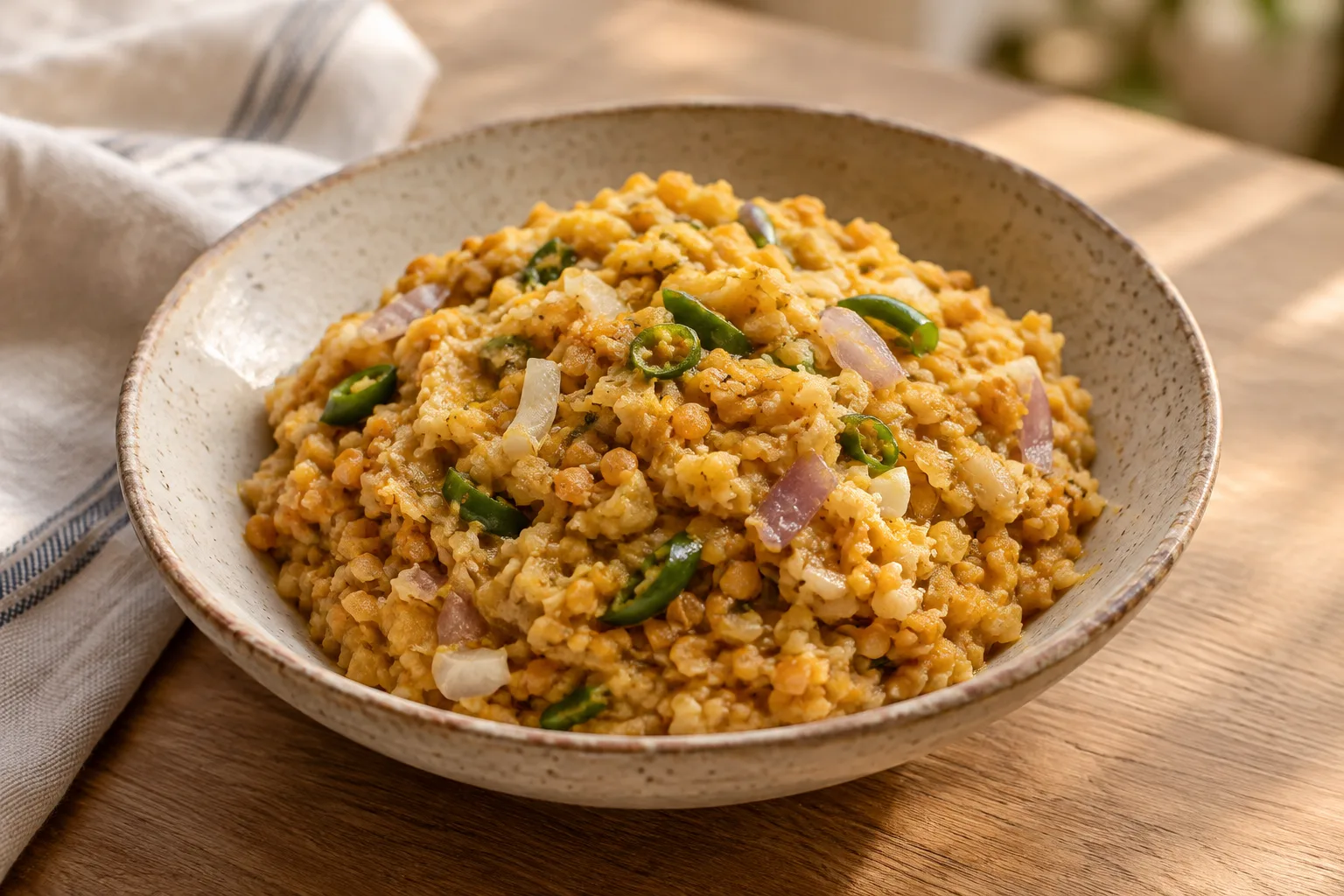
Red lentil dal bhorta
Cooked and mashed red lentils with garlic, green chili, onion, salt, and mustard oil—a Bangladeshi bhorta to serve with rice.
View recipe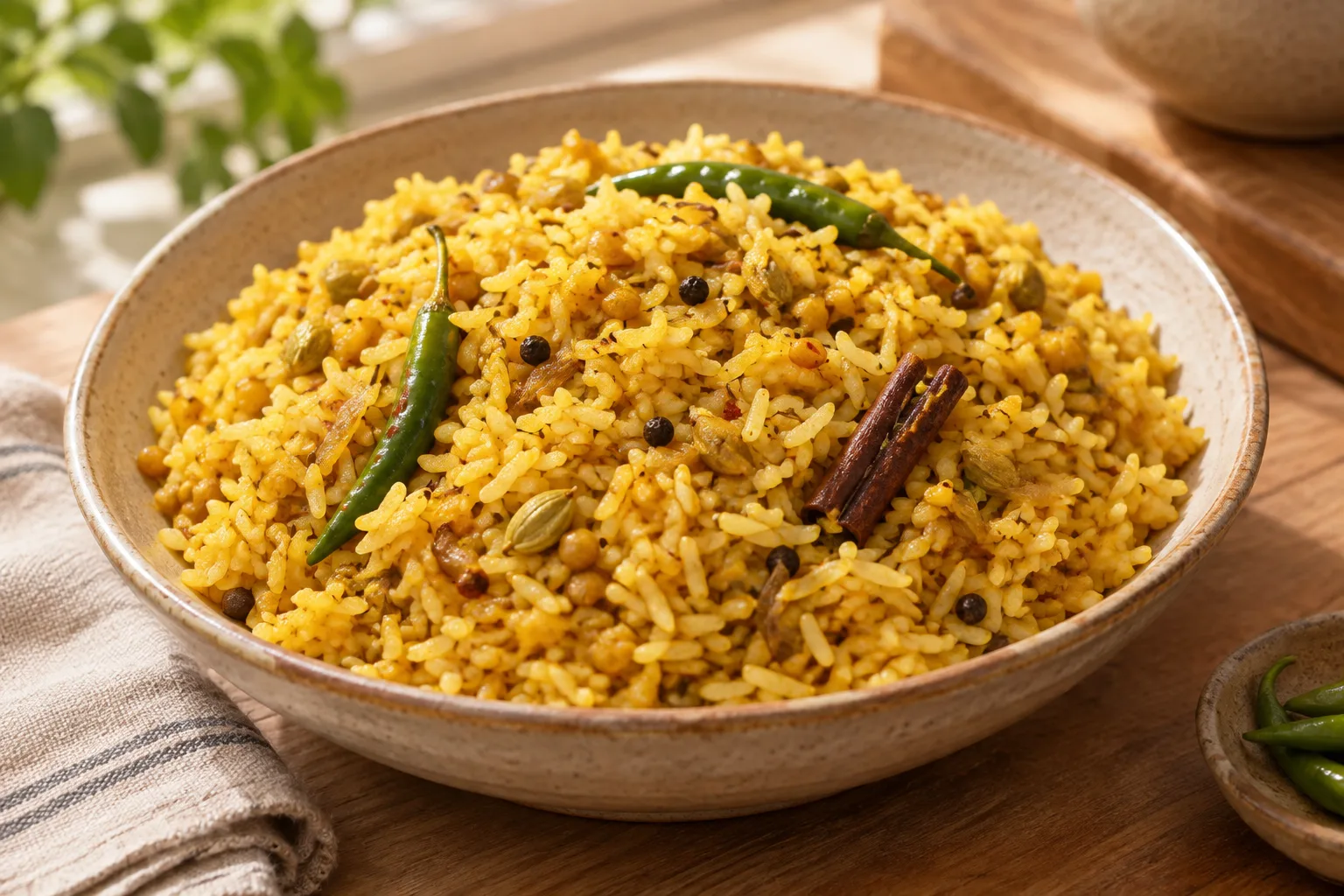
Bengali bhuna khichuri
A dish of basmati rice and lentils toasted with spices, then cooked until tender while keeping the grains distinct. Serves 8; timings are approximate.
View recipe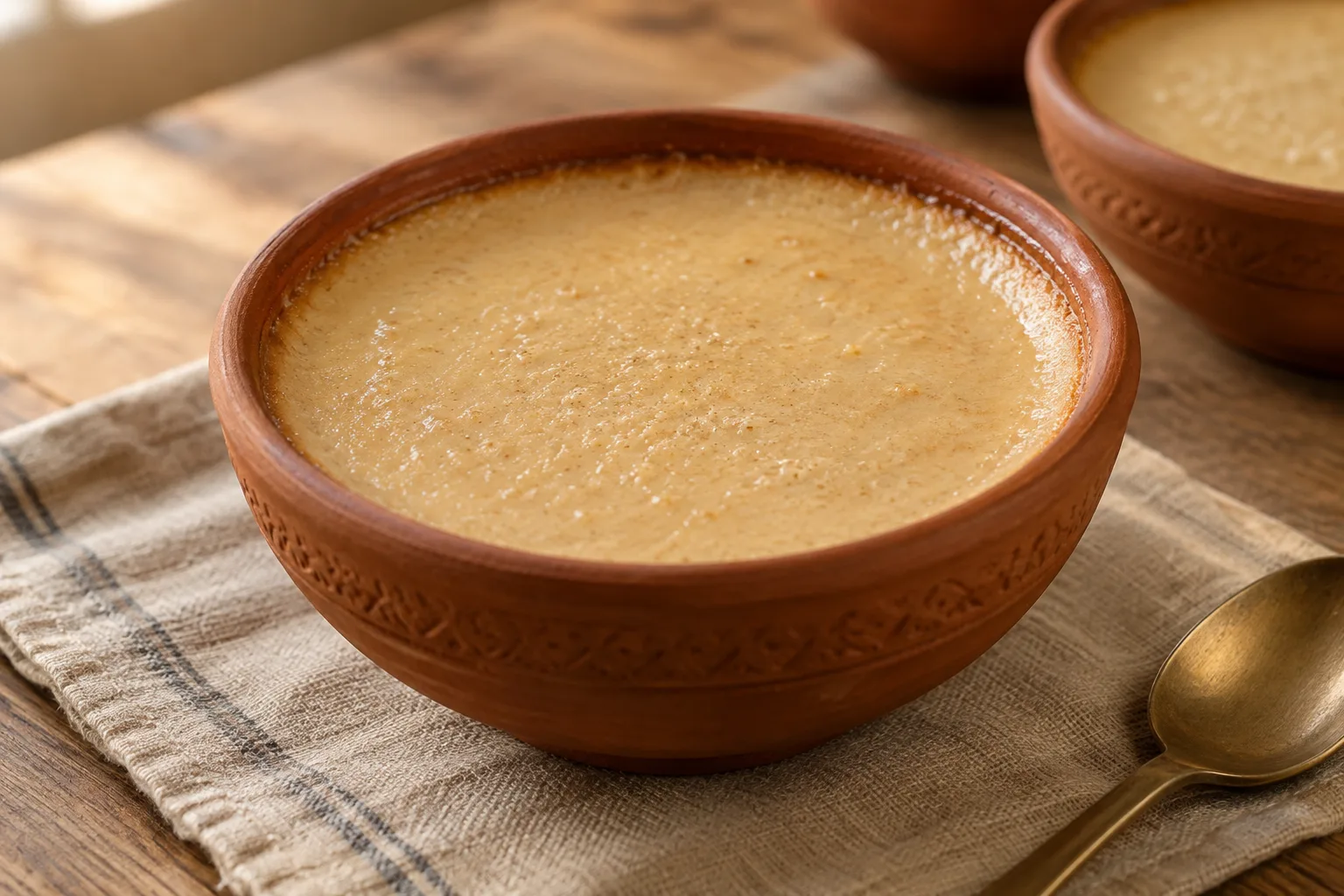
Mishti doi with jaggery
Sweet fermented yogurt from Bangladesh, made with reduced milk, sugar, jaggery, and plain yogurt as the starter.
View recipe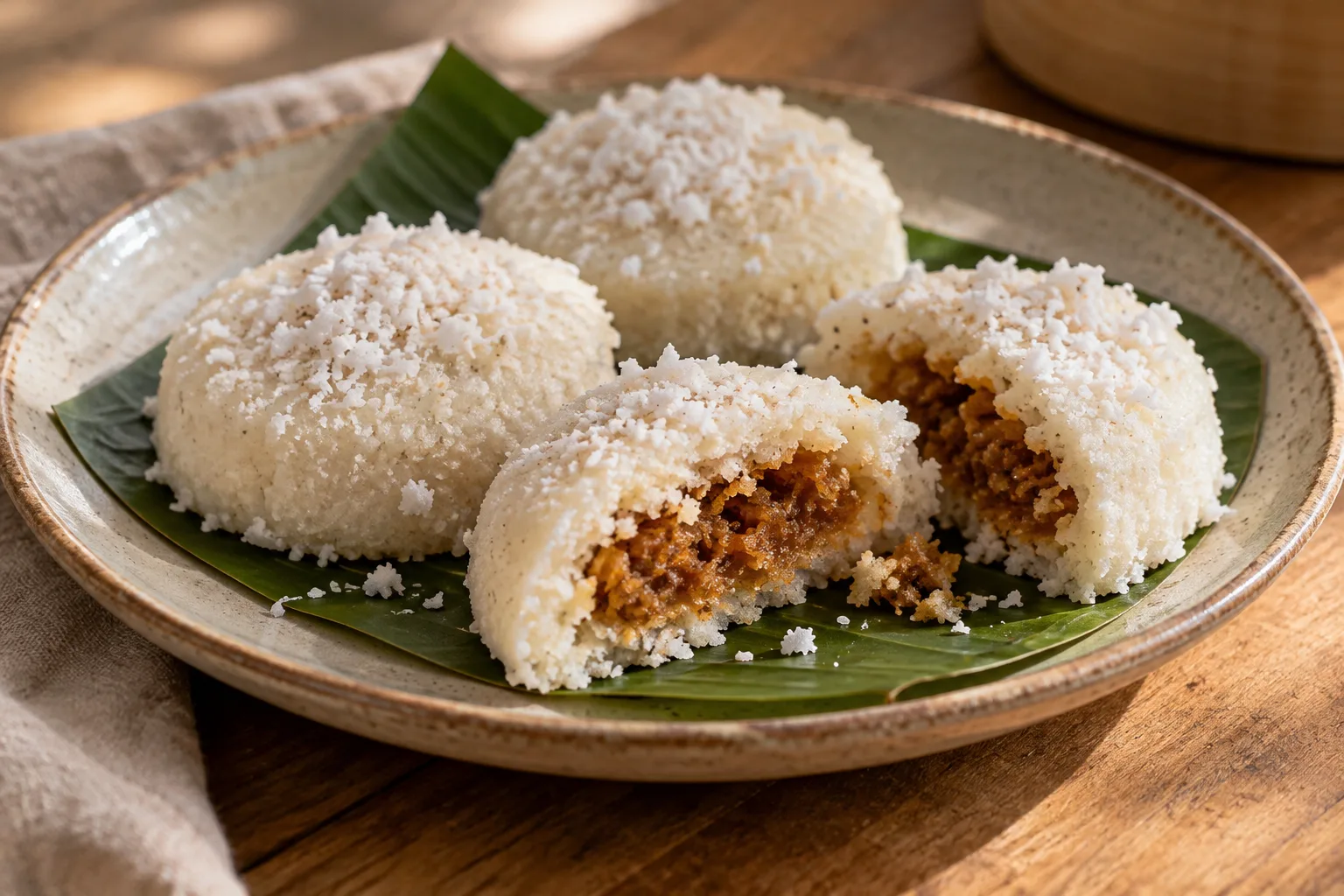
Bangladeshi steamed bhapa pitha
Bangladeshi rice-flour cakes steamed with a filling of fresh coconut and date-palm jaggery.
View recipe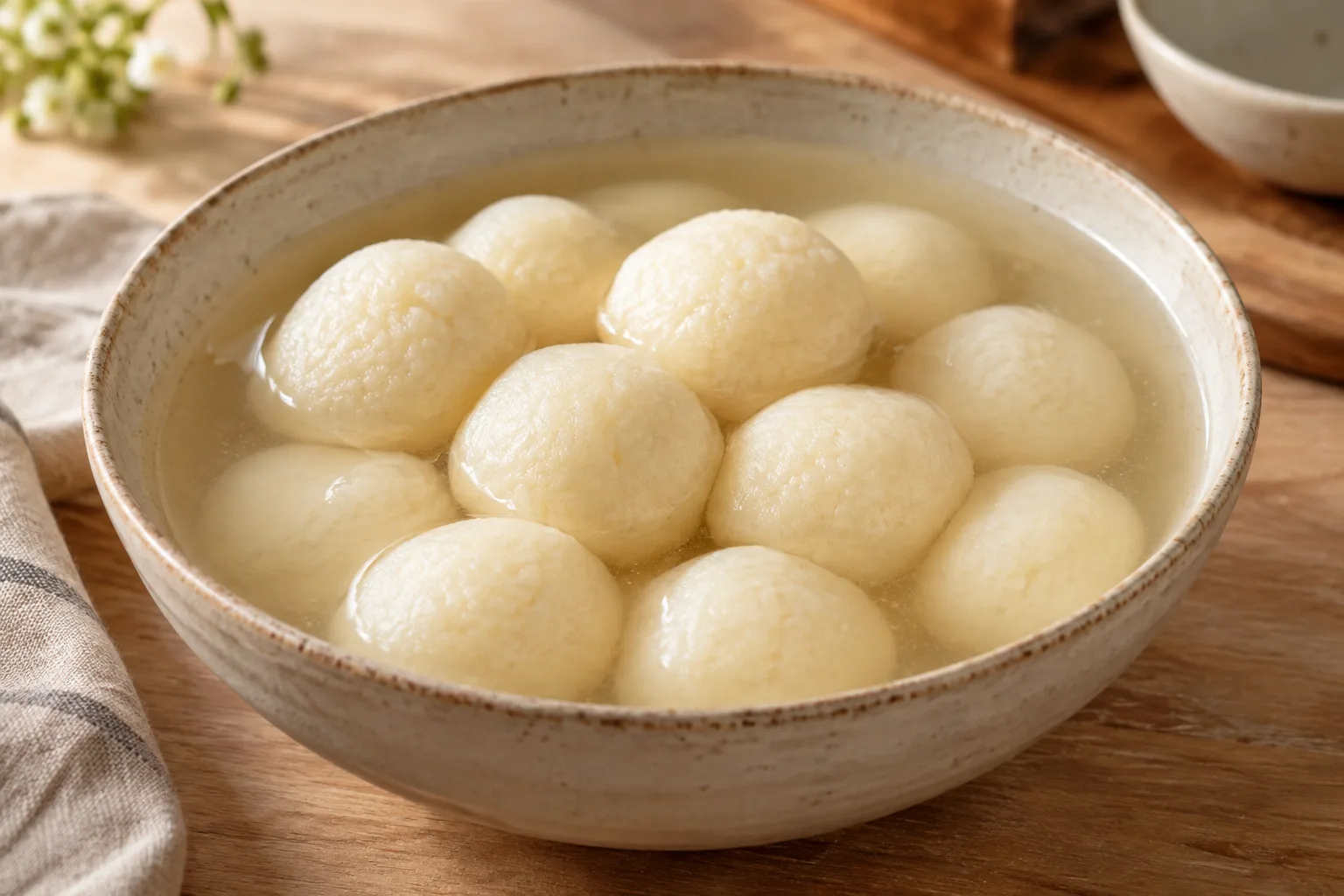
Bangladeshi Chhana Roshogolla
Spongy chhana sweets cooked in light syrup with fine semolina. Makes about 18–20 pieces.
View recipe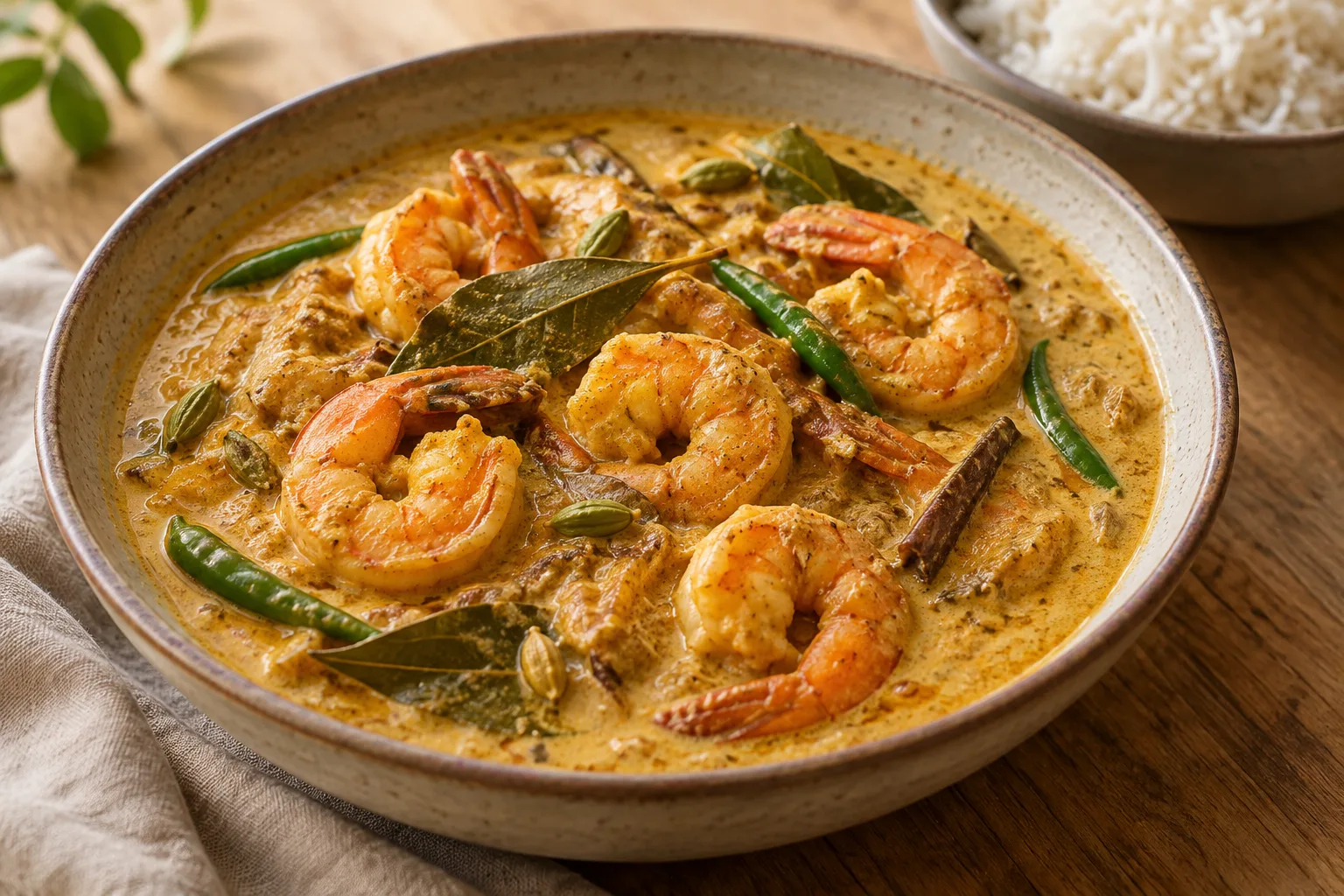
Chingri malai curry
Prawns in a creamy Bengali coconut milk sauce with onion, ginger, and spices. Makes 4 servings.
View recipe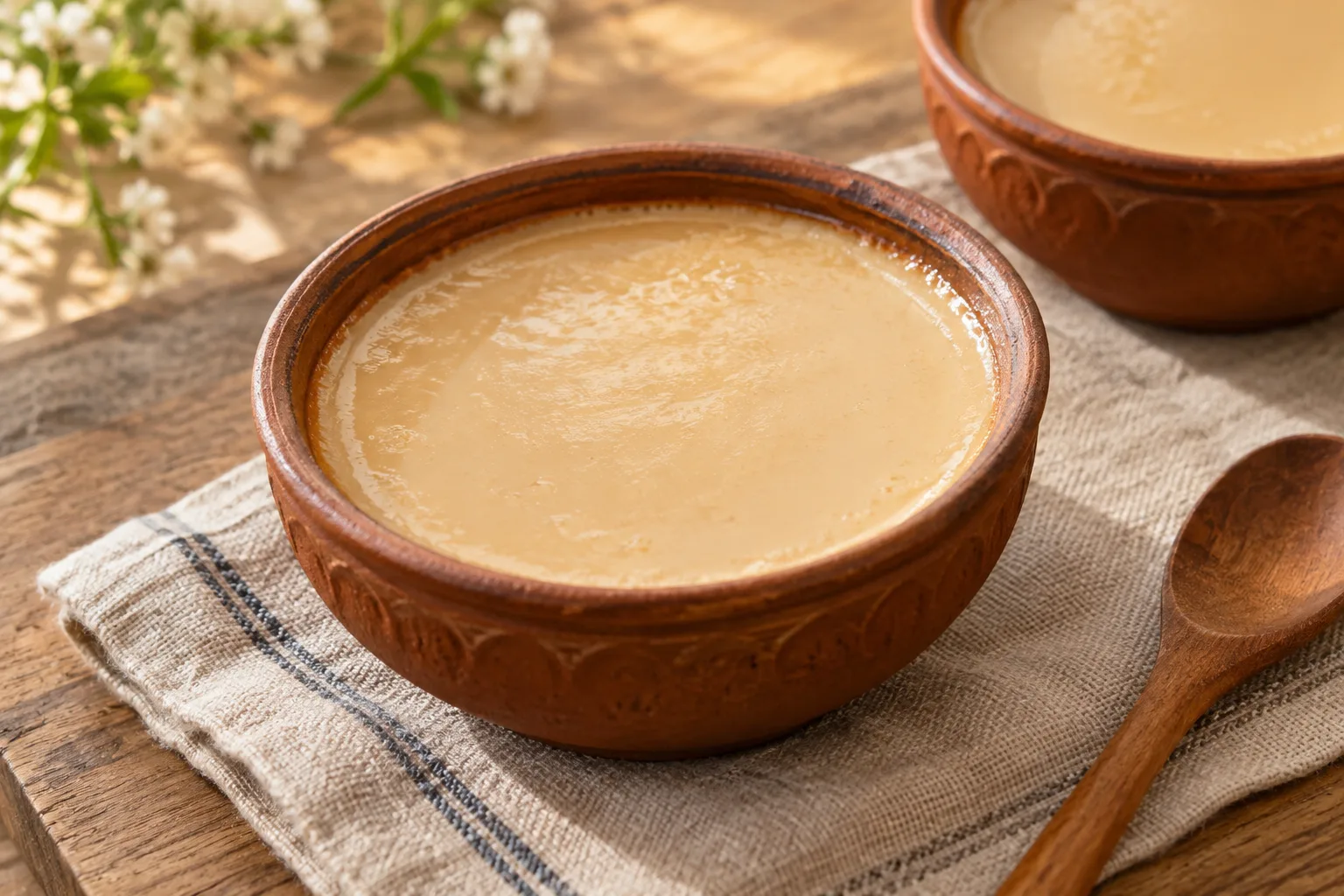
Mishti doi with caramelized sugar
A Bengali dessert of concentrated milk, caramelized sugar, and yogurt, fermented until set and served chilled.
View recipe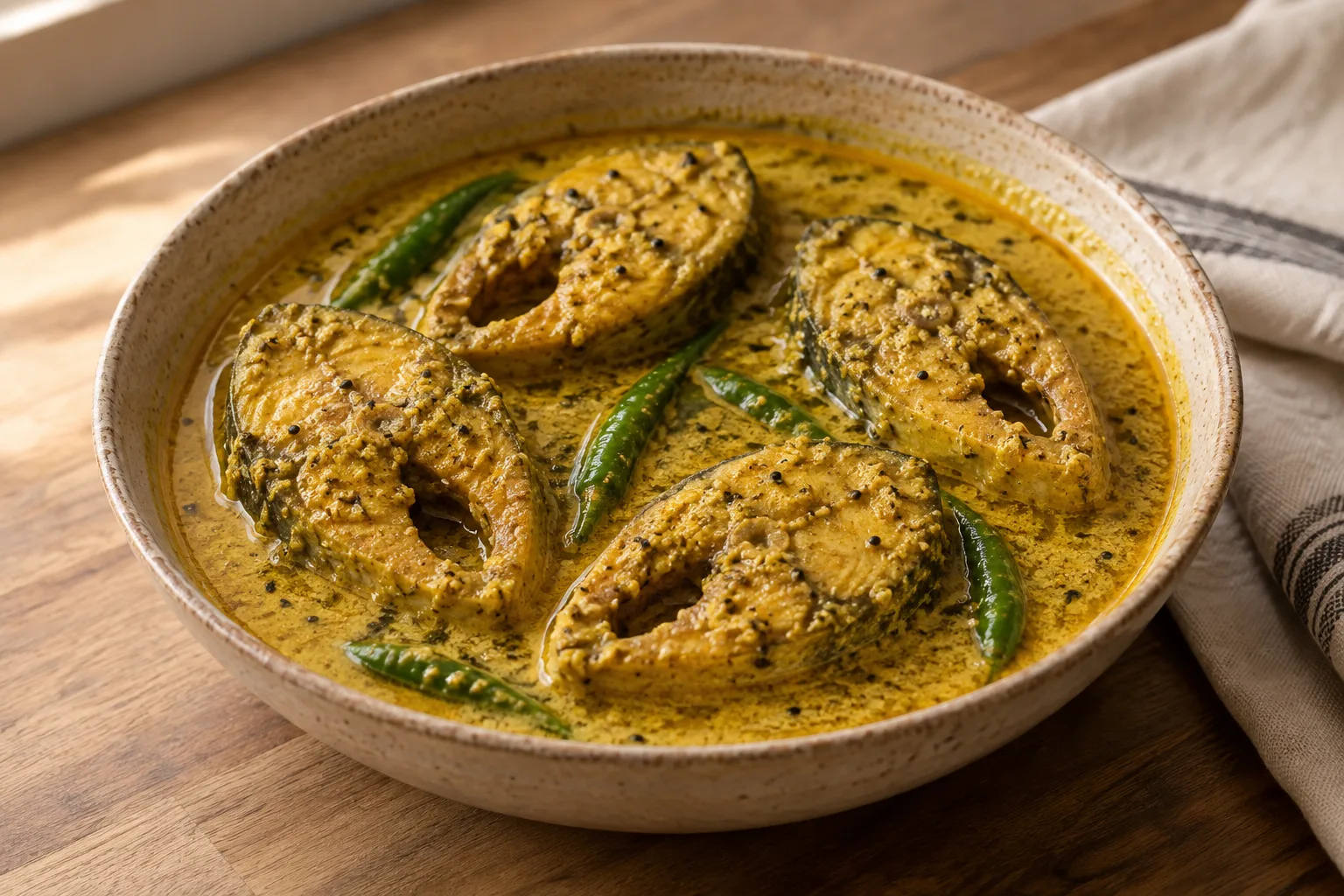
Shorshe ilish: hilsa in mustard sauce
Hilsa gently cooked in a Bangladeshi sauce of mustard seeds, turmeric, green chilies, and mustard oil.
View recipe
Sources consulted
Read the sources and each document’s scope. A heritage inscription concerns a particular practice, not all of a country’s cuisine.
- Household Income and Expenditure Survey HIES 2022: Final Report, Tables 5.2, 5.2.1 and 5.8 knowledgehub.pksf.org.bd/collections/file/view/c2tnMHlzMGxsNERHTjErb1puR3hGQT09 Bangladesh Bureau of Statistics, December 2023; original report preserved by PKSF Consulted: November 1, 2026
- Fermented and dairy beverages of Bangladesh: a rich source of probiotic lactic acid bacteria www.ijfsab.com/index.php/fsab/article/download/365/215/ Hossain, Khan and Ferdouse; Food Science and Applied Biotechnology 7(2), 2024; University of Chittagong authors Consulted: November 1, 2026
- Factors influencing eating behavior and dietary intake among resident students in a public university in Bangladesh: A qualitative study journals.plos.org/plosone/article/file?id=10.1371/journal.pone.0198801&type=printable Kabir, Miah and Islam, PLOS ONE, 2018 Consulted: November 1, 2026
- Unpaid Household Production Satellite Account of Bangladesh: Based on Time Use Survey 2021 bangladesh.un.org/sites/default/files/2025-09/UN%20Women%20%26%20BBS%20Report.pdf Bangladesh Bureau of Statistics, UN Women and Asian Development Bank, September 2025 Consulted: November 1, 2026
- Vegetable Recipe Variations in Urban and Periurban Bangladesh: Recipe Survey, Recipe Standardization, and Nutrient Analysis www.banglajol.info/index.php/BRC/article/download/74582/49203/205029 Afrin, Akter and Rahim; Bioresearch Communications, July 2024 Consulted: November 1, 2026
- Changes in sensory attributes of condiment prepared from Thai pangus (Pangasianodon hypophthalmus) during storage at different temperatures www.banglajol.info/index.php/JBAU/article/view/43223/31960 Hossain, Shikha and Naher; Journal of Bangladesh Agricultural University 17(3), 2019 Consulted: November 1, 2026
- Food Habits en.banglapedia.org/index.php/Food_Habits Banglapedia, Asiatic Society of Bangladesh; Enamul Haq Consulted: November 1, 2026
- Iron-fortified lentils to improve iron status among adolescent girls in Bangladesh: study protocol for a double-blind community-based randomized controlled trial d-nb.info/1186780827/34 Yunus et al.; Trials 2019,20,251; original author article preserved by German National Library Consulted: November 1, 2026
- Determination of an Acceptable Portion Size of Daal for a Bangladeshi Community-Based Iron Intervention in Adolescent Girls: A Feasibility Study pdfs.semanticscholar.org/e097/d54cfa2967b30efeb361cab7bc6f24114f13.pdf Yunus et al.; Nutrients 2021,13,1080; DOI10.3390/nu13041080 Consulted: November 1, 2026
- Bangladesh Demographic and Health Survey 2022: Final Report, Table 2.2 Household possessions preview.dhsprogram.com/pubs/pdf/FR386/FR386.pdf National Institute of Population Research and Training (NIPORT) and ICF, January 2024 Consulted: November 1, 2026
- Urinary Sodium and Potassium Excretion in Bangladeshi Adults: Results from a Population-Based Survey with 24-Hour Urine Collections pmc.ncbi.nlm.nih.gov/articles/PMC12273684/ Akhtar et al.; Global Heart 20(1):62, 2025; National Heart Foundation Bangladesh authors Consulted: November 1, 2026
- Nutrition and Lipid Profile in General Population and Vegetarian Individuals Living in Rural Bangladesh www.omicsonline.org/open-access/nutrition-and-lipid-profile-in-general-population-and-vegeta… Das et al.; icddr,b authors; Journal of Obesity & Weight Loss Therapy 2:123, 2012 Consulted: November 1, 2026
- Consumers’ health and food safety perceptions in the Dhaka metropolitan area edepot.wur.nl/550216 Snoek et al.; Wageningen University & Research and FAO Bangladesh, 2021 Consulted: November 1, 2026
- Grandiose restaurant menu, 2024 edition core.dhakaregency.com/folders/package/files/MENU-2024-%40-Grandiose-Restaurant_1719223127701… Dhaka Regency Hotel & Resort, Grandiose restaurant Consulted: November 1, 2026
- Estimation of Overall Food Losses and Waste at all Levels of the Food Chain objectstorage.ap-dcc-gazipur-1.oraclecloud15.com/n/axvjbnqprylg/b/V2Ministry/o/office-fpmu-m… Hassan et al.; Bangladesh Agricultural University; FAO/FPMU MUCH research, June 2021 Consulted: November 1, 2026
- Hand Book of Agricultural Technology objectstorage.ap-dcc-gazipur-1.oraclecloud15.com/n/axvjbnqprylg/b/V2Ministry/o/office-barc/2… Bangladesh Agricultural Research Council (BARC), AFACI; Chowdhury and Hassan, May 2013 Consulted: November 1, 2026
- Navanna – Harvesting festival beautifulbangladesh.gov.bd/event/160 Bangladesh Tourism Board; Ministry of Civil Aviation and Tourism Consulted: November 1, 2026
- Kachchi Biriyani beautifulbangladesh.gov.bd/index.php/district-destination/dhaka/tasty-food/43 Bangladesh Tourism Board Consulted: October 31, 2026
- Hilsa e ilish curry beautifulbangladesh.gov.bd/index.php/district-destination/munshiganj/tasty-food/45 Bangladesh Tourism Board Consulted: October 20, 2026
- Bakarkhani beautifulbangladesh.gov.bd/index.php/district-destination/dhaka/tasty-food/91 Bangladesh Tourism Board Consulted: October 20, 2026