Documentary synthesis prepared with AI assistance. It does not replace specialist review or certify kitchen testing. · Updated 1 November 2026
A long country, many culinary settings
Chile’s geography offers a useful starting point for understanding its food, but not a single recipe for the whole country. A broad national overview distinguishes the desert and Andean north, the fertile valleys of the central zone, and a southern area associated with seafood and Patagonian cooking. These are guides to different settings, not sealed culinary borders or claims that everyone within each area eats alike.
This varied landscape also shapes how a culinary journey might be organized: by asking what a preparation is made from, how it is cooked, and where its ingredients and traditions belong. The evidence here gives particular detail for chupe de jaiba, a baked crab preparation, and leche asada, a baked milk-and-egg dessert. They offer close views of two different kinds of cooking, but cannot stand in for all Chilean food.
The regional descriptions below follow the broad areas specified in the available documentation. Where a source names a landscape without describing its dishes in detail, the account stays at that level rather than filling the gap with assumptions.
Shared histories and changing preparations
Food history is best approached through particular dishes and the evidence available for them, rather than by assigning one origin to an entire national cuisine. In the case of chupe, accounts describe a wider South American family of preparations and connect the name with Quechua usage. They also describe a later combination with sofrito, seasonings, and cheese in a Spanish colonial context. This is one account of a dish’s development, not proof of an exclusive origin for Chilean cooking or of a single unchanging recipe.
The documented versions of crab chupe show how preparations can take different forms. Some use bread softened in milk, while another uses a white sauce made with butter, flour, and milk. Cheese may be mixed into the filling, layered in it, or used on top for browning. These differences are evidence of variation, not a reason to declare one version the definitive national form.
A different kind of continuity appears in leche asada: accounts describe it as a familiar Chilean dessert made from basic ingredients, with household versions differing in details. Taken together, these examples show culinary change and transmission at the scale the evidence supports: through named preparations and their variations.
Ingredients and transformations
The ingredients documented here belong to two very different preparations. For crab chupe, the central ingredient is jaiba, or crab meat. Recipes combine it with bread and milk or cream to create body, and may add onion, garlic, pepper, wine, herbs, or cheese. The proportions and selection vary: some versions include additional seafood, while others focus on crab. These are recipe-level differences, not a fixed national pantry.
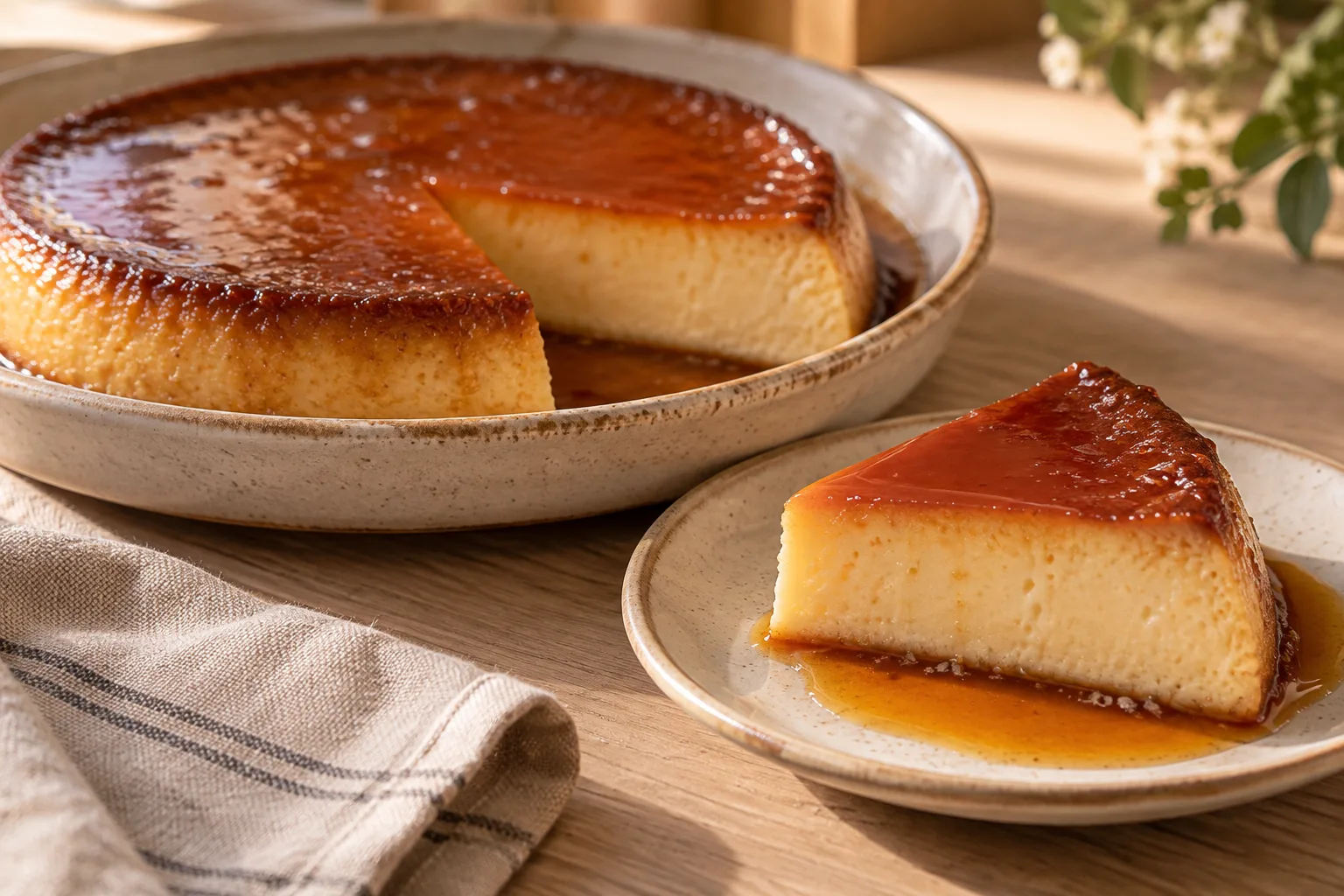
For leche asada, the recurring base is milk, eggs, and sugar. Vanilla appears in several versions; cinnamon appears in another. Caramel is used in recipes that line the baking dish, while some descriptions emphasize the browned surface formed during baking. A recipe may add flavourings, but the basic combination is recognizably spare.
These examples illustrate how ordinary ingredients are transformed in different ways. Bread soaked in milk thickens a savoury seafood mixture; eggs help a sweet milk mixture set. Cheese contributes to the savoury dish’s browned top in some versions, while sugar becomes caramel in the dessert. This small, well-documented selection is a window onto particular preparations—not a complete inventory of Chilean ingredients.
Savory depth, browned tops, and set textures
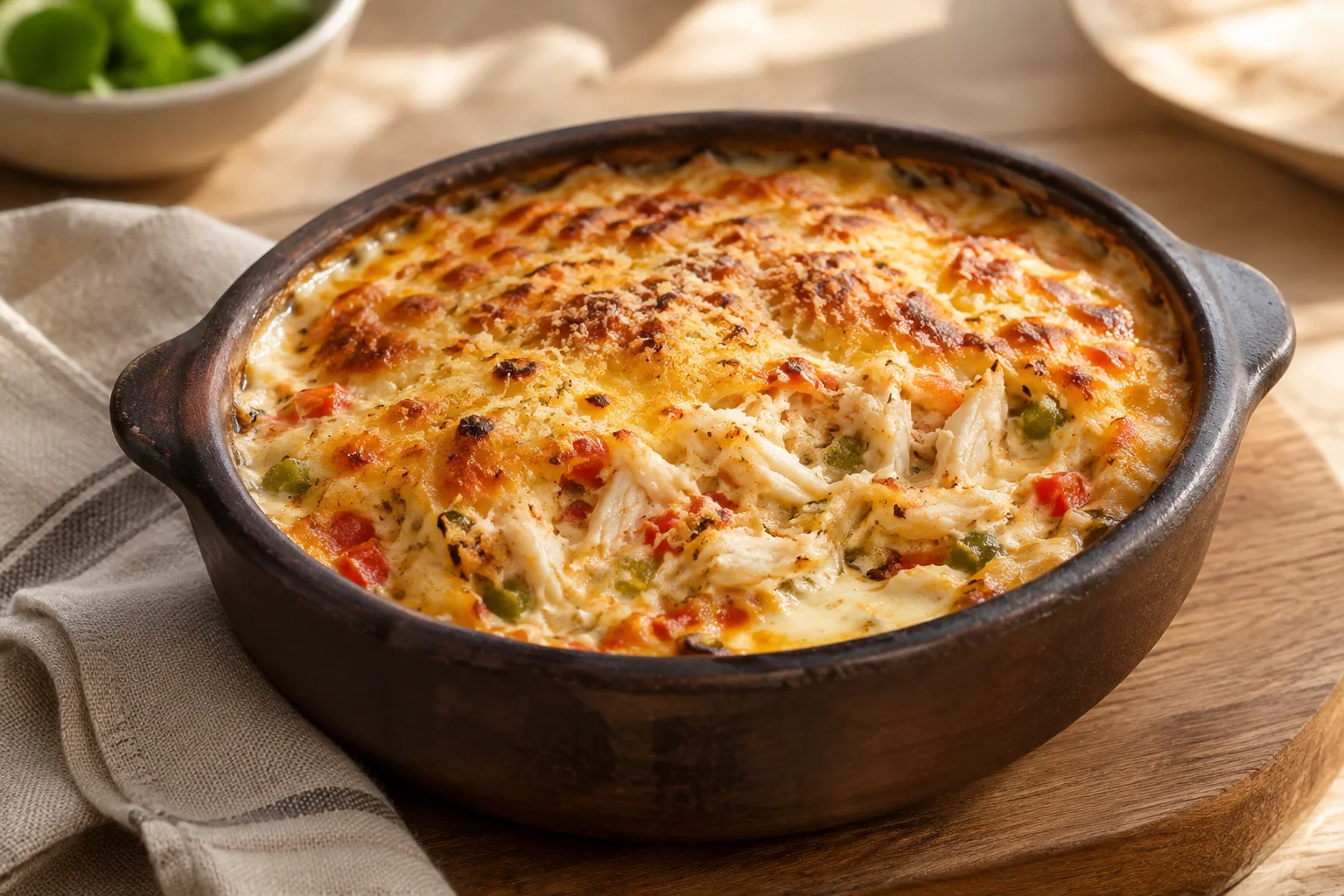
The available examples suggest a contrast between a substantial savoury bake and a simple sweet one. Crab chupe brings together the flavour of jaiba with a creamy or milk-softened base. Depending on the version, onion, garlic, oregano, paprika, pepper, or merkén season the mixture; some recipes also incorporate wine. Cheese may melt within the filling or brown on its surface. The result is described as a gratinated preparation, with the seafood remaining its defining feature.
Leche asada balances the sweetness of sugar with the mild richness of milk and eggs. Its characteristic surface is browned by baking, while descriptions distinguish its set, sometimes porous texture from the smoother texture associated with flan. The exact result varies with the recipe and method: some accounts bake the mixture directly, while another uses a water bath. Those differences matter when describing a version, so the dessert should not be reduced to one universal texture.
Across these dishes, browning is a visible part of the finish: it may come from melted cheese on the savoury bake or from the baked surface of the dessert. The shared visual cue does not make their methods or flavours the same.
Household cooking and occasions for sharing
The evidence presents chupe de jaiba as a dish served as a main course in some accounts, while smaller portions are also described for an appetiser. Individual oven-safe earthenware dishes appear in several versions, as do larger baking dishes. This makes the preparation suitable for different ways of portioning, but does not establish one formal serving ritual or a particular holiday association.
Leche asada is described as a familiar, home-style dessert. Its modest ingredient list and baked preparation make it possible to prepare in a larger dish or in individual portions, depending on the recipe. Some accounts place it among family meals and gatherings; the available evidence does not support assigning it to a single national celebration or season.
These dishes make food-sharing visible in practical ways: a savoury mixture can be baked and served in small vessels, and a dessert can be cooled and portioned for the table. Such details illuminate the everyday life of particular recipes without claiming that every Chilean household follows the same custom. Traditions are transmitted through versions and repeated preparations; they may be shared while remaining adaptable in ingredients, seasoning, and presentation.
Soaking, thickening, baking, and browning
The documented chupe recipes begin with different ways of building a cohesive filling. In some, bread is soaked in milk or evaporated milk and then combined with crab and seasoning. Another version thickens milk with breadcrumbs and cheese. A further method prepares a white sauce from butter, flour, and milk before joining it to the seasoned crab. These approaches share a goal—binding the ingredients—but should be followed as distinct recipe methods rather than combined indiscriminately.
The mixture is portioned into oven-safe dishes or placed in a larger baking vessel. A topping of grated cheese is common in the versions described, and baking finishes the dish by browning the surface. Some recipes call for individual earthenware dishes; the sources also allow other oven-safe containers. Crab and other seafood should be prepared as specified by the chosen recipe, since the evidence does not define one universal preparation sequence.
For leche asada, sugar may first be cooked into caramel and spread in the baking dish before the milk-and-egg mixture is added. Baking methods differ: documented recipes include direct oven baking and baking in a water bath. The surface colour and set are useful cues within a particular recipe, but oven temperature and timing are not interchangeable across versions.
Serving a savoury bake and a chilled dessert
A table featuring chupe de jaiba can centre on a hot, baked seafood dish portioned into individual oven-safe vessels or served from a larger dish. The documented versions describe it as a substantial preparation, and some present it as a main course. The evidence does not establish one required accompaniment. One recipe account suggests white wine alongside its own version, but that pairing should be understood as an option rather than a rule for Chilean meals.
Leche asada offers a contrasting finish: a sweet baked mixture that is allowed to cool, with some recipes chilling it before serving. Caramel may remain at the base or be served over the dessert, depending on how it is made. It can be presented in a family-sized dish or as individual portions. These are serving possibilities supported by the recipe descriptions, not evidence of a prescribed sequence for every meal.
Together, the dishes show two practical rhythms of cooking: a savoury preparation finished hot from the oven, and a dessert that can be made ahead and served cooled. They can introduce readers to particular Chilean preparations, while leaving space for the many other regional and household tables not detailed in these sources.
A glossary of documented dishes and ingredients
- Jaiba: The Chilean name used in these recipes for crab. In chupe de jaiba, its meat is combined with a thickening base and baked.
- Chupe: A name for a family of South American preparations described in the evidence as thickened dishes. The documented Chilean crab version is a savoury bake; its ingredients and methods vary by recipe.
- Leche asada: A Chilean baked milk-and-egg dessert sweetened with sugar. Recipes may use caramel and commonly describe a browned surface; its texture is often distinguished from flan.
- Paila de greda: An earthenware serving dish used for individual portions of chupe in documented recipes. Other oven-safe dishes are also described.
- Gratinar: To brown a prepared dish under strong oven heat. In the cited chupe recipes, grated cheese can form the browned topping.
These definitions refer to the specific food and equipment described in the evidence. They are not a comprehensive glossary of Chilean culinary language, nor do they imply that every household uses the same ingredients or terminology.
One country, many cuisines
Chiloé and Southern Chile
The broad southern setting is associated in the national overview with seafood and Patagonian cooking, and Chiloé is identified as a destination within that culinary landscape. The available evidence does not detail a distinct Chiloé pantry or a set of local preparations, so this entry stays with those documented geographic associations rather than assigning dishes to the island.
Northern Chile
The national overview characterizes the north through the desert and Andean heritage. This provides a broad geographic and cultural frame, but the available evidence does not name specific northern ingredients, recipes, or community practices. The description therefore signals the region as a culinary setting without presenting one food tradition as representative of the entire north.
Central Chile
The central zone is associated with fertile valleys and their characteristic food. The documented crab chupe material includes preparations described in connection with central Chile, offering a specific example of a seafood bake without defining all central-zone cooking. This broad region is an orientation for further exploration, not a claim of uniform tastes or practices.
Cook