Asia · Western Asia
Lebanon
Breads, pulses, markets and culinary transmission: explore the capital, Zahlé and Douma, connecting heritage with the Lebanese recipe collection.
Food and eating habits
How people eat in Lebanon
50 indicators exploring everyday meals, ingredients and food culture. Information is completed progressively from documented evidence.
48 of 50 indicators with documented information
Not all data are comparable: food supply, purchases and intake are different measures. Check the period, population and method for each finding. Qualitative descriptions do not establish percentages or amounts.
Timing and company
6/8
| Indicator | Findings and context |
|---|---|
| Meal times |
In the school sample, dinner was concentrated between 19:00 and 21:00 local time. Scope, method and limitations
|
| Meals per day |
During lockdown, 60.7% reported eating 3–4 meals daily and 68.1% eating breakfast on most days of the week. Scope, method and limitations
|
| Meal duration | Insufficient data in the sources consulted |
| Daily energy distribution | Insufficient data in the sources consulted |
| Weekdays and weekends |
In students’ accounts, weekdays featured Lebanese stews; Sundays were associated with mezze, and Fridays and Saturdays with eating out with friends. Scope, method and limitations
|
| Eating at home and away |
The recorded mean was 1.1 meals outside the home per person per week. Scope, method and limitations
|
| Cooking frequency |
The mean was 3.9 meals personally cooked at home per week, counting lunch and dinner. Scope, method and limitations
|
| Eating together |
Mezze was described as small dishes shared by the family, while eating out with friends offered more autonomous socializing. Scope, method and limitations
|
Pantry and recipes
2/2
| Indicator | Findings and context |
|---|---|
| Most consumed ingredients |
Among the groups with the highest mean intake were bread, cereals and grains at 317.18 g per person per day, fruit at 254.33 g and vegetables at 206.49 g. Scope, method and limitations
|
| Ingredient prevalence in recipes |
In the Lebanese recipe sample, vegetables were the most frequent ingredient category, followed by spices. Scope, method and limitations
|
Cereals and plant foods
6/6
| Indicator | Findings and context |
|---|---|
| Cereals and cereal products |
Cereals and cereal-based products, separated from bread in the comparison table, had a mean intake of 155.5 g per person per day. Scope, method and limitations
|
| Bread |
The bread group had a mean intake of 161.68 g per person per day. Scope, method and limitations
|
| Pulses |
Mean intake of the legumes and legume dishes group was 66.85 g per person per day. Scope, method and limitations
|
| Vegetables |
Mean intake of the vegetables group was 206.49 g per person per day. Scope, method and limitations
|
| Fruit |
Mean intake of the fruit, including dried fruit group was 254.33 g per person per day. Scope, method and limitations
|
| Potatoes, roots and tubers |
The starchy-vegetable group recorded 50.48 g per person per day; it grouped potatoes and potato dishes with corn, chips and popcorn. Scope, method and limitations
|
Protein foods
5/5
| Indicator | Findings and context |
|---|---|
| Meat |
Mean daily intakes per person were 41.34 g of red meat, 3.11 g of processed meat and 34.21 g of poultry, using the questionnaire groups. Scope, method and limitations
|
| Fish and seafood |
Mean intake of the fish and seafood group was 11.39 g per person per day. Scope, method and limitations
|
| Eggs |
Mean intake of the eggs group was 22.23 g per person per day. Scope, method and limitations
|
| Milk and dairy products |
Mean intake of the dairy products and dairy dishes group was 184.5 g per person per day. Scope, method and limitations
|
| Protein sources |
Mean intake was 31.28 g of animal protein and 29.45 g of plant protein daily in the older-adult sample. Scope, method and limitations
|
Fats, flavours and condiments
3/3
| Indicator | Findings and context |
|---|---|
| Cooking fats |
The added-fats-and-oils group recorded 11.51 g per person per day; it included oils, butter, margarine, animal fats, olives and avocado. Scope, method and limitations
|
| Herbs and spices |
Examples include parsley and mint in tabboula, sumac in fattoush, and cumin and coriander in falafel. Scope, method and limitations
|
| Sauces and condiments |
Tarator combines tahini and lemon juice, with water to adjust texture. In hommos it is mixed with chickpeas and garlic. Scope, method and limitations
|
Meal composition
6/6
| Indicator | Findings and context |
|---|---|
| Breakfast composition |
Breakfast may bring together labne, cheeses, olives, tomato and cucumber, as well as man’ouché with zaatar. Scope, method and limitations
|
| Main meal composition |
The main meal may start with tabbouleh or fattoush and continue with meat-and-vegetable stews accompanied by vermicelli rice. Scope, method and limitations
|
| Dinner composition |
Examples of light dinners include cheeses, labneh, olives and zaatar with olive oil, with Lebanese bread and sometimes soup. Scope, method and limitations
|
| Appetisers and snacks |
Snacks reported by the schoolchildren included fruit, sandwiches, chips and chocolate. Scope, method and limitations
|
| Desserts and sweets |
Mouhallabiya combines milk, sugar and nuts; riz bil halib uses rice with milk, sugar, rose water and orange-blossom water. Scope, method and limitations
|
| Portion sizes |
The mean reported portion of mdardara, lentils with rice, was 200 g in an adult volunteer sample. Scope, method and limitations
|
Techniques and equipment
5/5
| Indicator | Findings and context |
|---|---|
| Cooking techniques |
Meat-and-vegetable stews, fried cauliflower and pan-cooked kafta are examples of Lebanese preparations. Scope, method and limitations
|
| Vegetable preparation |
Preparations include dandelion greens cooked with browned onions, fried cauliflower with tahini, and stuffed zucchini, eggplants or vine leaves. Scope, method and limitations
|
| Food preservation |
Traditional preservation includes sun-dried fruit, jams and syrups. Kishk may be dried and ground into powder; drying alone does not guarantee the product’s microbiological safety. Scope, method and limitations
|
| Fermented foods |
Kishk combines cracked wheat or bulgur fermented with milk or yogurt. Ambarees, also called serdalli, is a fermented dairy product from parts of Bekaa and Shouf. Fermentation does not replace hygiene and safety controls. Scope, method and limitations
|
| Kitchen equipment |
In 2018–2019, 98.6% of households had a refrigerator, 86.7% a cooker with oven and 52.1% a microwave. Scope, method and limitations
|
Drinks
3/3
| Indicator | Findings and context |
|---|---|
| Everyday drinks |
Estimated mean intake was 1440.48 mL of drinking water and 546.83 mL of the hot-beverage group per person per day. Scope, method and limitations
|
| Coffee and tea preparation |
Coffee is prepared by boiling it in a rakwé and served in small cups. White coffee is made with orange-blossom water and hot water. Scope, method and limitations
|
| Drinks with meals |
Arak is associated with mezze, while orange-blossom white coffee is served at the end of a meal. Scope, method and limitations
|
Nutrition and dietary patterns
3/3
| Indicator | Findings and context |
|---|---|
| Energy and nutrients |
Adjusted mean intake was 1877.44 kcal and 16.64 g of fibre per day. Carbohydrates supplied 48.97% of energy, protein 14.7% and fat 36.97%. Scope, method and limitations
|
| Salt and sugars |
Total sugars supplied an adjusted mean of 10.83% of daily energy. Scope, method and limitations
|
| Dietary patterns |
In an online survey of 483 adults, 11.4% reported a vegan or vegetarian diet, combined in one category, and 88.6% an omnivorous diet. Scope, method and limitations
|
Shopping, prices and waste
7/7
| Indicator | Findings and context |
|---|---|
| Food expenditure |
53% of participants reported spending more than USD 300 a month on food purchases. Scope, method and limitations
|
| Cost of a common basket |
Average prices for a fixed selection: 800 g Arabic bread, USD 0.79; 900 g Egyptian rice, USD 1.01; 500 g pasta, USD 0.96. Scope, method and limitations
|
| Cost of specific meals |
Z Fattoush salad costs USD 8.00 per dish, VAT included; it contains lettuce, tomato, cucumber, herbs and baked bread with vinaigrette. Scope, method and limitations
|
| Grocery shopping locations |
64% named supermarkets or hypermarkets as their main shopping location, and 29% small specialist shops such as butchers, dairy shops and bakeries. Scope, method and limitations
|
| Shopping frequency |
55% reported buying food once or twice a week. Scope, method and limitations
|
| Prepared food and delivery |
During lockdown, 5.6% of participants in Lebanon reported ordering hot ready-to-eat food for delivery once a week. Scope, method and limitations
|
| Household food waste |
About 42% reported that their household discarded at least 250 g of still-consumable food per week. Scope, method and limitations
|
Seasons and celebrations
2/2
| Indicator | Findings and context |
|---|---|
| Seasonal produce |
Seasonal availability of local fruit: oranges from October to July; cherries from May to mid-August; apricots from May to early July. Scope, method and limitations
|
| Celebration food |
At Easter and Eid al-Fitr, marking the end of Ramadan, people share maamoul: pastries made with semolina, flour, butter and orange-blossom water, filled with dates, walnuts or pistachios. The tradition is found throughout Lebanon. Scope, method and limitations
|
Explore its cuisinesRead as an article ↗
Lebanon: Beirut, Bekaa and the northern mountains
Documentary synthesis prepared with AI assistance. It does not replace specialist review or certify kitchen testing. · Updated 2 November 2026
From pulses to bread and the table
Mujaddara, hummus, maamoul and sfouf offer different starting points in the Lebanese collection. Pulses, filled doughs and sweets involve different operations and reveal a broad pantry. This guide connects the current recipes with markets, breads and places where knowledge is passed on, without treating the selection as representative of every table in the country.
The culinary families of the Levant connect countries and communities. Classifying a version under Lebanon does not claim exclusive ownership of hummus or shared sweets. Names, ingredients and context help identify the published formulation and explain which cultural relationships are documented.
Three regional routes
Beirut: producers and kitchen stories
Souk El Tayeb brings together markets and kitchens where producers and cooks share products, stories and home cooking. The project offers a way to see rural repertoires entering an urban setting while retaining the voices of their makers. The Beirut route focuses on this relationship between people and food. The guide does not depend on a particular market location or opening schedule, which may change over time.
Bekaa and Zahlé: agriculture and urban culture
Zahlé connects gastronomy, grapes and cultural gatherings. The area invites attention to production and its transformations, as well as the dishes that reach the table. Culinary heritage exists alongside literature, celebrations and city life. The route does not assume that every ingredient in the recipe collection comes from Bekaa: the origin of a product and a recipe’s cultural association are different pieces of information.
Douma and the mountains of Batroun
Beit Douma is a traditional house with a kitchen open to participation and a clay oven for making bread. It provides a specific example of knowledge being passed on through shared work. The experience does not represent every northern household, but helps reveal hands, utensils and gestures that a written recipe does not always make visible.
Manouché: a bread and a practice
Manouché is a flatbread prepared in homes and bakeries, associated with breakfast and the transmission of knowledge. Its heritage recognition encompasses the work and social context as well as the finished product. The current catalogue does not yet offer a recipe for this preparation. The guide includes it as a heritage reference and links only to published recipes, so that a cultural route does not promise content that is unavailable.
Pulses and doughs in the collection
Mujaddara offers a way to study the coordination of pulses, grain and accompaniments. Semolina maamoul filled with dates involves preparing the casing and filling separately, adjusting consistencies and shaping individual pieces. In both cases, read the complete recipe before shopping or starting. Regional context broadens the view, while the recipe provides quantities and sequence. Comparing different kinds of work offers a concrete way to explore the repertoire without presenting a personal combination as a compulsory traditional menu.
Vocabulary for exploring bread and the table
- Man’ouche: a bread preparation documented by UNESCO as a Lebanese culinary and social practice.
- Mezze: a way of bringing together small preparations, inviting attention to relationships between dishes and accompaniments.
- Za’atar: a blend or aromatic reference whose composition should be checked in the specific recipe.
- Bekaa: an area that includes the Zahlé route and extends the view beyond Beirut.
Bread also organises the meal
A bread preparation can act as a complete bite, a base or an accompaniment. The shape of the dough and the moment when components are added change its function. Man’ouche offers an entry into this work and the trades that maintain it. Other Lebanese recipes in the catalogue lead towards pulses, vegetables and doughs, each with its own texture and way of serving.
Women cooks, markets and transmission
The projects of Souk El Tayeb and Douma place cooking among specific people and territories. Zahlé adds a regional context of products and knowledge. These starting points encourage attention to who explains and prepares food, beyond recognising a name on a menu. Culinary transmission also depends on everyday encounters and shared work that are not always visible in a written recipe.
A route for building contrasts
Man’ouche offers a way to follow breadmaking trades through the guide’s sources. For a practical exploration of the current catalogue, start with hummus and continue with mujaddara: a mashed pulse and a combination of lentils and grain organise a mouthful in different ways. Maamoul and sfouf extend the route towards published doughs and sweets. Notice which work is done in advance and which component is finished at serving. Bread, Beirut, Bekaa and the mountains place those operations within a broader food culture.
From the territory to the current recipe collection
The linked mujaddara and date-filled semolina maamoul provide a savoury and a sweet preparation. The catalogue also offers hummus and sfouf for further exploration. The recipes retain their Lebanese attribution; Beirut, Bekaa and Douma add context without inventing a region of origin for each national version.
Timing and company
Meal times. In the school sample, dinner was concentrated between 19:00 and 21:00 local time.
High-school students aged 14–19 in Greater Beirut. 2015–2016 school year; local pilot study. Self-administered questionnaire in a clustered school sample. Partial coverage: dinner among enrolled Beirut students only; no national breakfast or lunch times documented.
Meals per day. During lockdown, 60.7% reported eating 3–4 meals daily and 68.1% eating breakfast on most days of the week.
Adults in an online survey across six Lebanese governorates. 3–28 June 2020, during lockdown. Self-reported questionnaire; voluntary convenience sample, not nationally representative. Partial historical coverage; not necessarily representative of today’s population and no unpublished breakdown can be inferred.
Weekdays and weekends. In students’ accounts, weekdays featured Lebanese stews; Sundays were associated with mezze, and Fridays and Saturdays with eating out with friends.
Eating together. Mezze was described as small dishes shared by the family, while eating out with friends offered more autonomous socializing.
Lebanon; qualitative research without a verified fieldwork date. Partial nonrepresentative qualitative coverage; no quantified meal times, duration, meal counts or frequency of company.
Eating at home and away. The recorded mean was 1.1 meals outside the home per person per week.
Lebanese adults aged 25–64 in the STEPS survey. 2009 survey; national table published in the 2012 health report. Mean self-reported weekly meals outside the home; total row for both sexes. Partial historical figure; not a percentage and no breakfast, lunch or dinner breakdown.
Cooking frequency. The mean was 3.9 meals personally cooked at home per week, counting lunch and dinner.
Observation period: 2019–2020. Resident civilian noninstitutionalized population aged 15 or older. Lebanon, 2019 wave; fieldwork November 2019–January 2020. Weighted probability survey; recall of the preceding week. Partial coverage: meal count, not cooking days or daily minutes; breakfast excluded.
Pantry and recipes
Most consumed ingredients. Among the groups with the highest mean intake were bread, cereals and grains at 317.18 g per person per day, fruit at 254.33 g and vegetables at 206.49 g.
Lebanese adults aged 18–64 in a sample from eight governorates. May–September 2022 survey; food frequency referring to the preceding year. Semiquantitative food-frequency questionnaire administered by dietitians; published category means. Recruitment through centers, organizations and participant networks. Partial self-reported coverage; questionnaire groups, not purchases or food availability. No annual kilogram conversion or inference of unpublished individual foods, frequencies or raw/cooked weights.
Ingredient prevalence in recipes. In the Lebanese recipe sample, vegetables were the most frequent ingredient category, followed by spices.
Sample of 169 Lebanese recipes from Atbaki. Collection studied in a 2018 publication; extraction date not verified. Ingredient-category analysis; composite ingredients separated into components. Partial category coverage, not individual ingredient percentages. Not population intake; selection and deduplication insufficiently detailed for generalization.
Cereals and plant foods
Cereals and cereal products. Cereals and cereal-based products, separated from bread in the comparison table, had a mean intake of 155.5 g per person per day.
Bread. The bread group had a mean intake of 161.68 g per person per day.
Pulses. Mean intake of the legumes and legume dishes group was 66.85 g per person per day.
Vegetables. Mean intake of the vegetables group was 206.49 g per person per day.
Fruit. Mean intake of the fruit, including dried fruit group was 254.33 g per person per day.
Potatoes, roots and tubers. The starchy-vegetable group recorded 50.48 g per person per day; it grouped potatoes and potato dishes with corn, chips and popcorn.
Lebanese adults aged 18–64 in a sample from eight governorates. May–September 2022 survey; food frequency referring to the preceding year. Semiquantitative food-frequency questionnaire administered by dietitians; published category means. Recruitment through centers, organizations and participant networks. Partial self-reported coverage; questionnaire groups, not purchases or food availability. No annual kilogram conversion or inference of unpublished individual foods, frequencies or raw/cooked weights.
Protein foods
Meat. Mean daily intakes per person were 41.34 g of red meat, 3.11 g of processed meat and 34.21 g of poultry, using the questionnaire groups.
Fish and seafood. Mean intake of the fish and seafood group was 11.39 g per person per day.
Eggs. Mean intake of the eggs group was 22.23 g per person per day.
Milk and dairy products. Mean intake of the dairy products and dairy dishes group was 184.5 g per person per day.
Lebanese adults aged 18–64 in a sample from eight governorates. May–September 2022 survey; food frequency referring to the preceding year. Semiquantitative food-frequency questionnaire administered by dietitians; published category means. Recruitment through centers, organizations and participant networks. Partial self-reported coverage; questionnaire groups, not purchases or food availability. No annual kilogram conversion or inference of unpublished individual foods, frequencies or raw/cooked weights.
Protein sources. Mean intake was 31.28 g of animal protein and 29.45 g of plant protein daily in the older-adult sample.
Adults older than 60 recruited at a Beirut hospital and geriatric center. June–October 2025; clinical convenience sample. Study-specific food-frequency questionnaire; total column of the results table. Partial coverage, not nationally representative; protein grams, not food weights or percentages. No meat, fish, egg, dairy or legume breakdown or causal inference.
Fats, flavours and condiments
Cooking fats. The added-fats-and-oils group recorded 11.51 g per person per day; it included oils, butter, margarine, animal fats, olives and avocado.
Lebanese adults aged 18–64 in a sample from eight governorates. May–September 2022 survey; food frequency referring to the preceding year. Semiquantitative food-frequency questionnaire administered by dietitians; published category means. Recruitment through centers, organizations and participant networks. Partial coverage: weight of foods in the group, not pure lipid grams or amounts used exclusively for cooking. No breakdown by oil or fat.
Herbs and spices. Examples include parsley and mint in tabboula, sumac in fattoush, and cumin and coriander in falafel.
Sauces and condiments. Tarator combines tahini and lemon juice, with water to adjust texture. In hommos it is mixed with chickpeas and garlic.
Lebanon; qualitative description without a statistical observation period. Partial cultural coverage; no frequency, consumer or recipe percentages, serving sizes or whole-population habits quantified.
Drinks
Everyday drinks. Estimated mean intake was 1440.48 mL of drinking water and 546.83 mL of the hot-beverage group per person per day.
Lebanese adults aged 18–64 in a sample from eight governorates. May–September 2022 survey; food frequency referring to the preceding year. Semiquantitative food-frequency questionnaire administered by dietitians; published category means. Recruitment through centers, organizations and participant networks. Partial self-reported coverage. Drinking water is not total water from all foods. Hot beverages combine coffee, tea and other preparations; methods, sugar, milk and meal occasions are not separated.
Coffee and tea preparation. Coffee is prepared by boiling it in a rakwé and served in small cups. White coffee is made with orange-blossom water and hot water.
Drinks with meals. Arak is associated with mezze, while orange-blossom white coffee is served at the end of a meal.
Lebanon; qualitative description without a statistical observation period. Partial cultural coverage; no frequency, consumer or recipe percentages, serving sizes or whole-population habits quantified.
Meal composition
Breakfast composition. Breakfast may bring together labne, cheeses, olives, tomato and cucumber, as well as man’ouché with zaatar.
Main meal composition. The main meal may start with tabbouleh or fattoush and continue with meat-and-vegetable stews accompanied by vermicelli rice.
Desserts and sweets. Mouhallabiya combines milk, sugar and nuts; riz bil halib uses rice with milk, sugar, rose water and orange-blossom water.
Lebanon; qualitative description without a statistical observation period. Partial cultural coverage; no frequency, consumer or recipe percentages, serving sizes or whole-population habits quantified.
Dinner composition. Examples of light dinners include cheeses, labneh, olives and zaatar with olive oil, with Lebanese bread and sometimes soup.
Examples of Lebanese culinary practices and preparations. Lebanon; qualitative description without a statistical observation period. Reading of documented culinary descriptions and ingredients, preserving their scope. Partial cultural coverage; no frequency, consumer or recipe percentages, serving sizes or whole-population habits quantified.
Appetisers and snacks. Snacks reported by the schoolchildren included fruit, sandwiches, chips and chocolate.
School pilot study; fieldwork date not verified. Partial coverage of a selected school sample; not current national consumption. Snack types are described without transferring intervention percentages or odds ratios.
Portion sizes. The mean reported portion of mdardara, lentils with rice, was 200 g in an adult volunteer sample.
Fifty Lebanese adult volunteers in the preliminary survey. March–June 2004; mean used in developing a photographic atlas. Portions estimated with household measures in a consumption survey; the article reports the dish mean. Historical figure for one dish and a volunteer sample; not a dietary recommendation or current national portion. Designed photo portions are not confused with observed consumption.
Techniques and equipment
Cooking techniques. Meat-and-vegetable stews, fried cauliflower and pan-cooked kafta are examples of Lebanese preparations.
Lebanon; qualitative description without a statistical observation period. Partial cultural coverage; no frequency, consumer or recipe percentages, serving sizes or whole-population habits quantified.
Vegetable preparation. Preparations include dandelion greens cooked with browned onions, fried cauliflower with tahini, and stuffed zucchini, eggplants or vine leaves.
Examples of Lebanese culinary practices and preparations. Lebanon; qualitative description without a statistical observation period. Reading of documented culinary descriptions and ingredients, preserving their scope. Partial cultural coverage; no frequency, consumer or recipe percentages, serving sizes or whole-population habits quantified.
Food preservation. Traditional preservation includes sun-dried fruit, jams and syrups. Kishk may be dried and ground into powder; drying alone does not guarantee the product’s microbiological safety.
Fermented foods. Kishk combines cracked wheat or bulgur fermented with milk or yogurt. Ambarees, also called serdalli, is a fermented dairy product from parts of Bekaa and Shouf. Fermentation does not replace hygiene and safety controls.
Lebanon; qualitative description without a statistical observation period. Partial qualitative coverage, without national frequencies or validated home-preservation parameters. The regional study detected contamination; it does not establish that all fermented or dried products are safe.
Kitchen equipment. In 2018–2019, 98.6% of households had a refrigerator, 86.7% a cooker with oven and 52.1% a microwave.
Observation period: 2018–2019. Households living in residential dwellings in Lebanon. April 2018–March 2019; availability of appliances at home. Stratified two-stage probability survey; weighting for selection, nonresponse and calibration. Historical availability, not usage frequency or energy consumption. Excludes nonresidential units, refugee camps and informal settlements.
Nutrition and dietary patterns
Energy and nutrients. Adjusted mean intake was 1877.44 kcal and 16.64 g of fibre per day. Carbohydrates supplied 48.97% of energy, protein 14.7% and fat 36.97%.
Lebanese adults aged at least 20 with complete data in the 2008–2009 national survey. Fieldwork from May 2008 to August 2009; reported daily intake. National stratified cluster sampling and multiple-pass 24-hour dietary recall; ANCOVA-adjusted means. Historical reported intake, not recommendations or food availability. Macronutrients are energy shares and are not converted to grams. These figures do not describe the current diet.
Salt and sugars. Total sugars supplied an adjusted mean of 10.83% of daily energy.
Lebanese adults aged at least 20 with complete data in the 2008–2009 national survey. Fieldwork from May 2008 to August 2009; reported daily intake. National stratified cluster sampling and multiple-pass 24-hour dietary recall; ANCOVA-adjusted means. Partial historical coverage: total sugars, not free or added sugars. This result does not quantify salt or sodium and is not converted to grams.
Dietary patterns. In an online survey of 483 adults, 11.4% reported a vegan or vegetarian diet, combined in one category, and 88.6% an omnivorous diet.
Volunteer adults older than 18 living in Lebanon’s eight governorates. 17 April–26 June 2023; diet reported during the survey. Cross-sectional online form survey, shared on social media through snowball sampling; self-reported diet type. Nonprobability sample, predominantly female and university-educated; not a national prevalence estimate. Vegans and vegetarians are combined; no flexitarian percentage. Vegetarian excludes flesh foods and vegan excludes all animal products.
Shopping, prices and waste
Food expenditure. 53% of participants reported spending more than USD 300 a month on food purchases.
Volunteer adult participants in an online survey in Lebanon. January–March 2015; responses about household shopping and waste. Self-administered questionnaire circulated through universities, social media and other lists; descriptive statistics. Young, highly educated nonprobability sample; historical self-reports, not estimates of current national conditions. Not mean monthly spending per person or a household budget share.
Cost of a common basket. Average prices for a fixed selection: 800 g Arabic bread, USD 0.79; 900 g Egyptian rice, USD 1.01; 500 g pasta, USD 0.96.
Monitored shops in Lebanon’s eight governorates. March 2025; national average prices for the specified packs. Weekly price monitoring in a representative shop sample; annexed average prices by item. Partial component coverage, without a calculated basket total or pack conversions. Not a complete diet or internationally comparable basket.
Cost of specific meals. Z Fattoush salad costs USD 8.00 per dish, VAT included; it contains lettuce, tomato, cucumber, herbs and baked bread with vinaigrette.
Zaatar w Zeit menu for Lebanon; one defined commercial dish. October 2026 menu consulted on 31 October 2026. Original restaurant menu read; base price without optional cheese. One menu price, not a national average or home-preparation cost; portion weight and delivery fees unspecified.
Grocery shopping locations. 64% named supermarkets or hypermarkets as their main shopping location, and 29% small specialist shops such as butchers, dairy shops and bakeries.
Volunteer adult participants in an online survey in Lebanon. January–March 2015; responses about household shopping and waste. Self-administered questionnaire circulated through universities, social media and other lists; descriptive statistics. Young, highly educated nonprobability sample; historical self-reports, not estimates of current national conditions. Participant shares, not spending shares by channel.
Shopping frequency. 55% reported buying food once or twice a week.
Volunteer adult participants in an online survey in Lebanon. January–March 2015; responses about household shopping and waste. Self-administered questionnaire circulated through universities, social media and other lists; descriptive statistics. Young, highly educated nonprobability sample; historical self-reports, not estimates of current national conditions. Does not provide average purchase size.
Prepared food and delivery. During lockdown, 5.6% of participants in Lebanon reported ordering hot ready-to-eat food for delivery once a week.
Adult Lebanon residents participating in a multinational online survey. 28 April–2 June 2020; frequency during the pandemic. Online convenience survey; only the Lebanon column of the hot-food delivery table is used. Exceptional lockdown period and nonprobability sample; not current habits, spending or all prepared meals.
Household food waste. About 42% reported that their household discarded at least 250 g of still-consumable food per week.
Volunteer adult participants in an online survey in Lebanon. January–March 2015; responses about household shopping and waste. Self-administered questionnaire circulated through universities, social media and other lists; descriptive statistics. Young, highly educated nonprobability sample; historical self-reports, not estimates of current national conditions. Self-reported household amounts, without direct weighing or conversion to kg per person per year; still-consumable food only.
Seasons and celebrations
Seasonal produce. Seasonal availability of local fruit: oranges from October to July; cherries from May to mid-August; apricots from May to early July.
General seasonal calendar; observation year unspecified. Partial fruit coverage; maturity varies by area and altitude. Local seasonal availability, not an import calendar, current specific harvest or guaranteed daily availability.
Celebration food. At Easter and Eid al-Fitr, marking the end of Ramadan, people share maamoul: pastries made with semolina, flour, butter and orange-blossom water, filled with dates, walnuts or pistachios. The tradition is found throughout Lebanon.
Easter and Eid al-Fitr celebrations; cultural description without a statistical period. Partial festive example, without consumption frequencies, amounts or an exhaustive calendar. Recipes vary between families and regions.
Places and communities
One country, many cuisines
An initial selection of regions to explore. Culinary boundaries may differ from administrative divisions.
Bekaa y Zahlé
Douma y montañas de Batroun
Cook
Recipes connected with Lebanon
Each recipe documents one version. Geographic associations do not imply an exclusive origin.
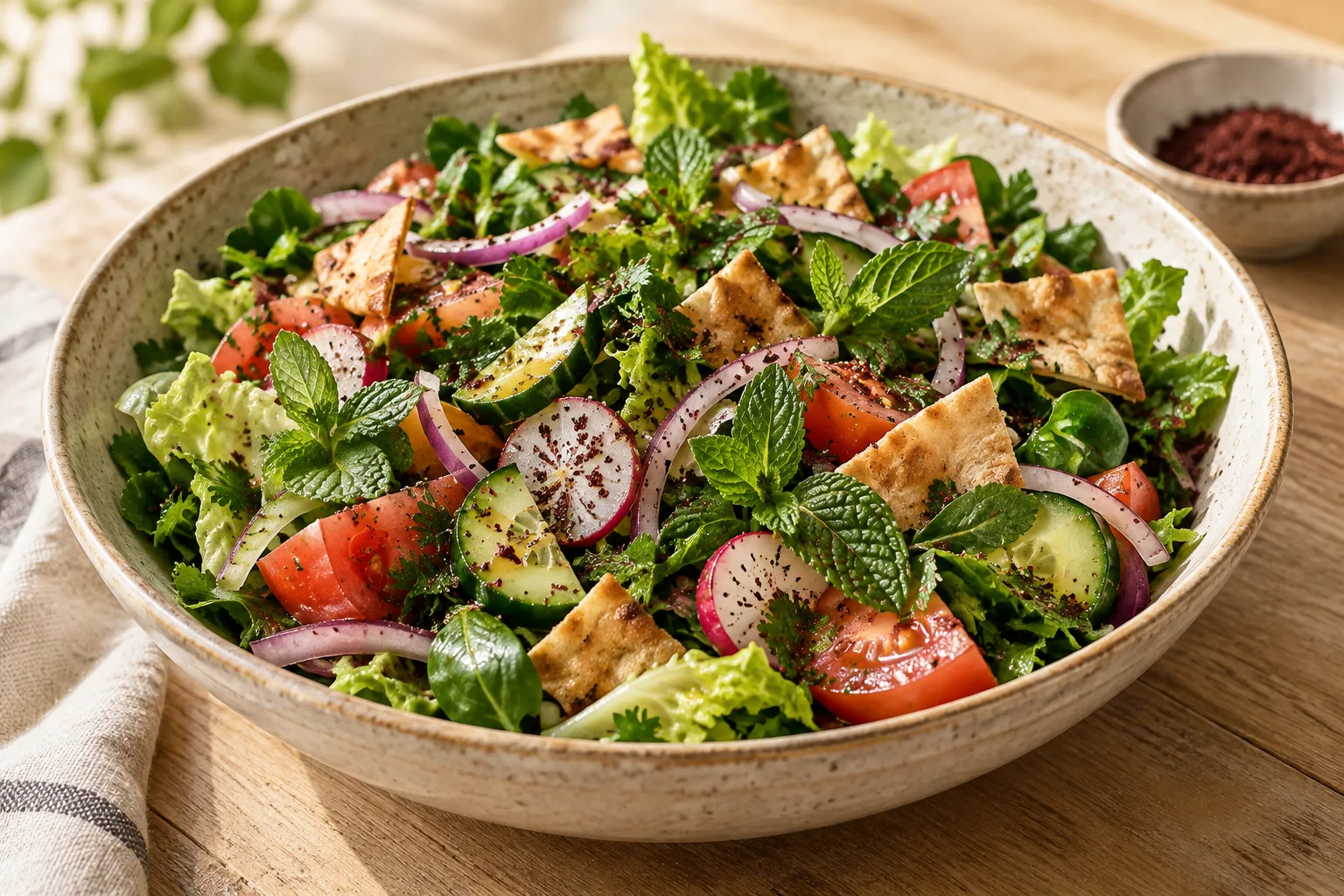
Lebanese Fattoush
A Lebanese salad of fresh vegetables, herbs, sumac and toasted flatbread, dressed with lemon and pomegranate molasses.
View recipe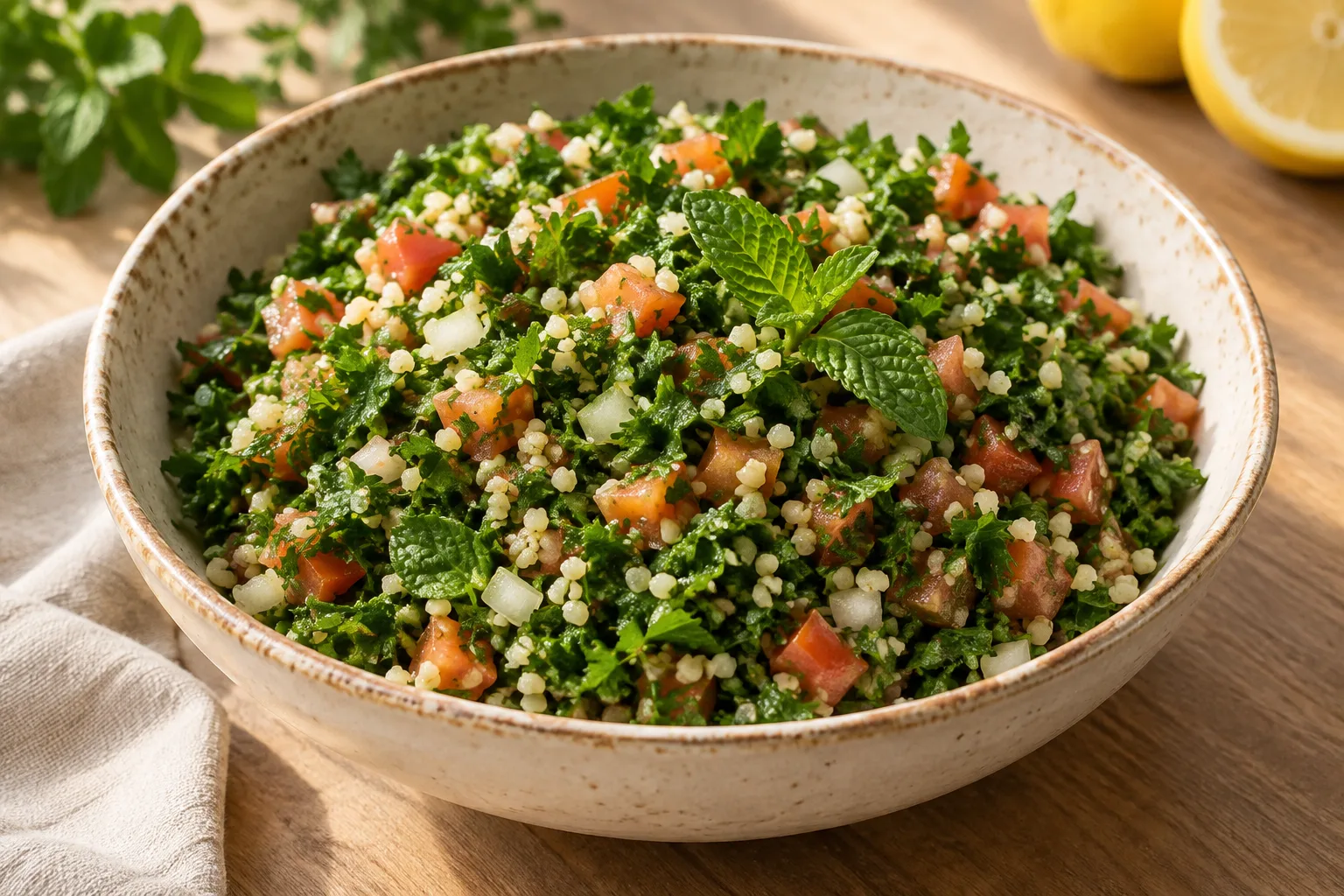
Lebanese Tabbouleh
A Lebanese salad of parsley and mint with a small amount of bulgur, tomato, onion, lemon, and olive oil. Serves 4.
View recipe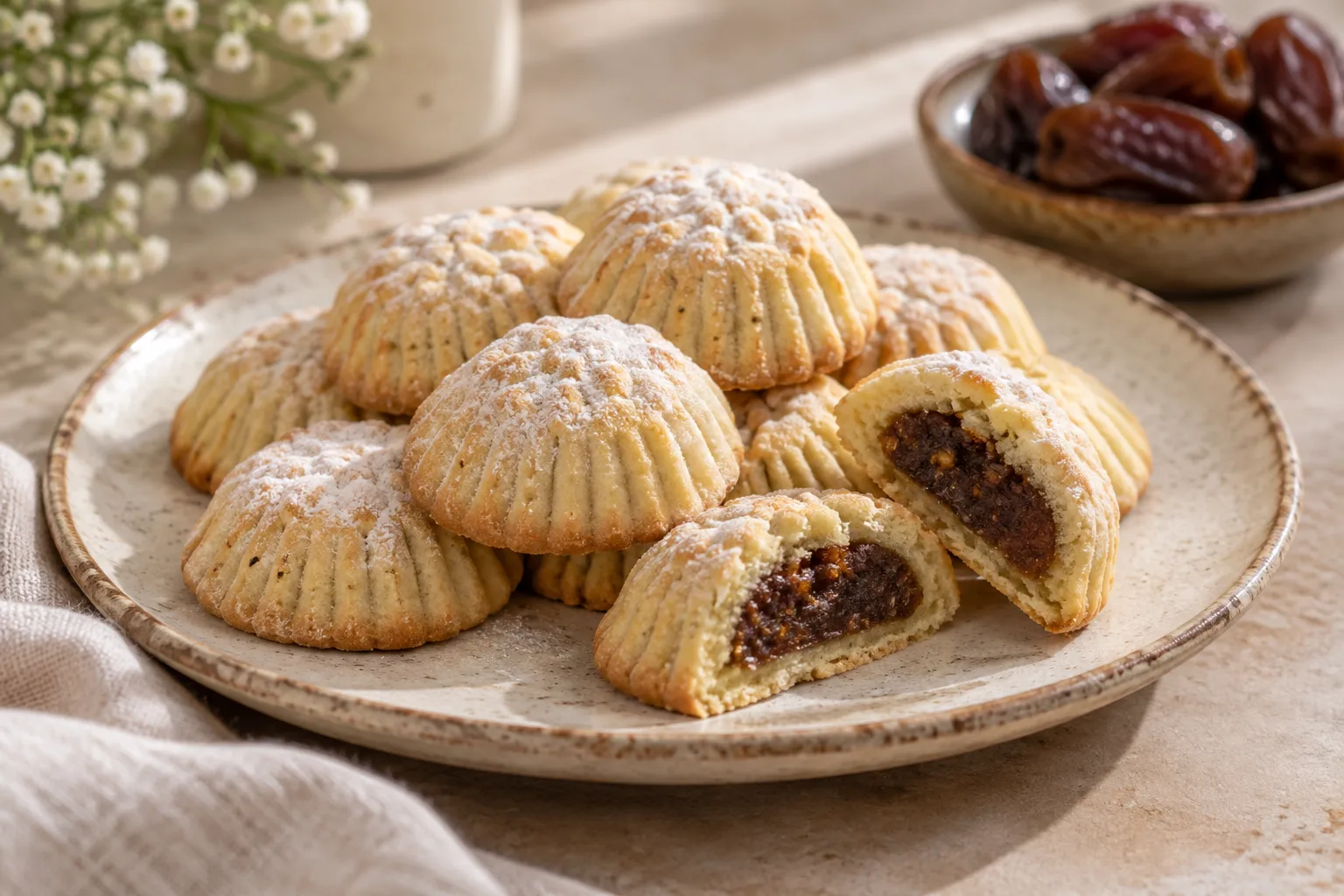
Semolina maamoul with dates and olive oil
Lebanese semolina and olive-oil cookies scented with rose and orange blossom water, filled with dates and baked until the bottoms are just lightly golden.
View recipe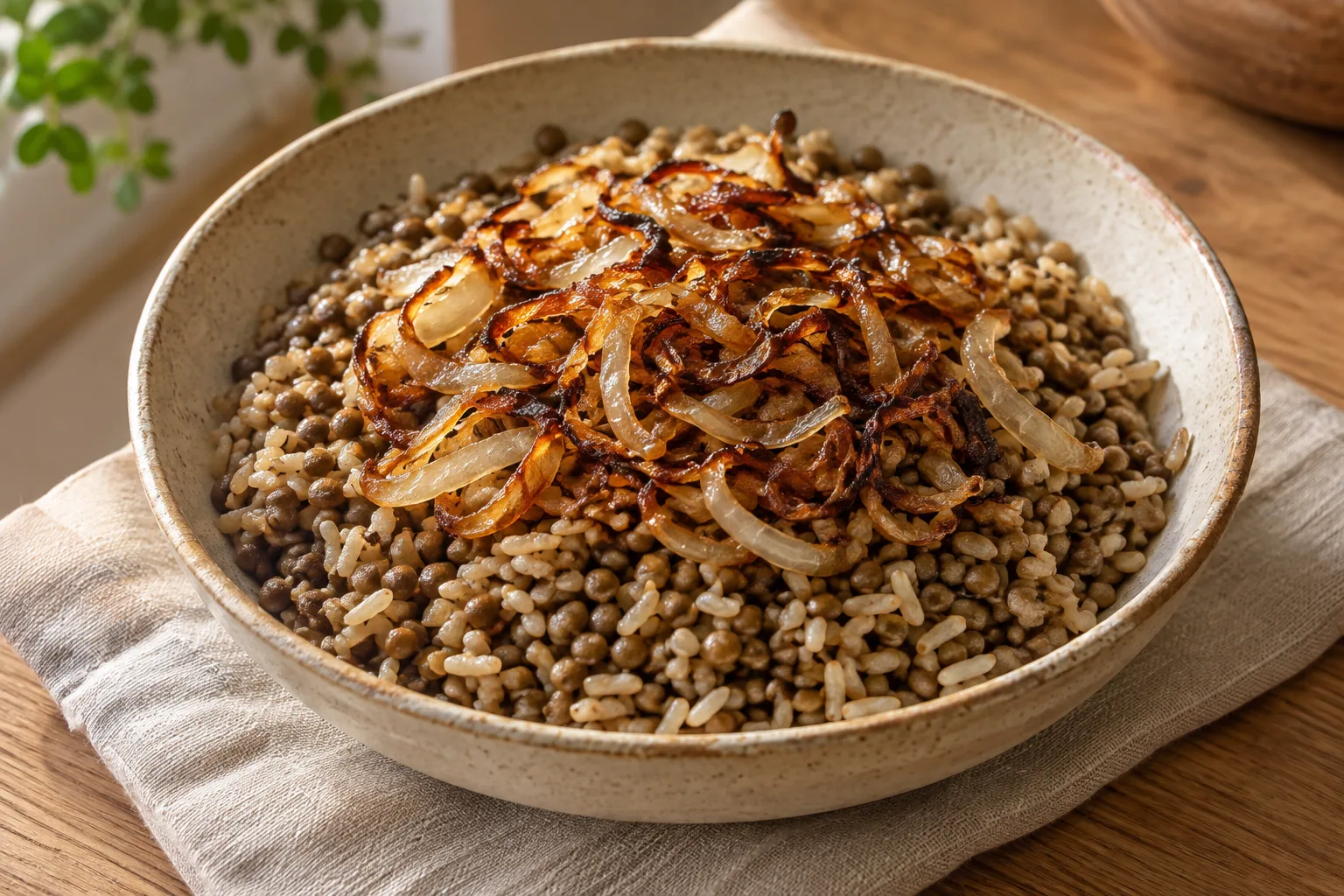
Lebanese Mujaddara
A Lebanese dish of lentils and brown rice cooked together, topped with golden onion and cumin.
View recipe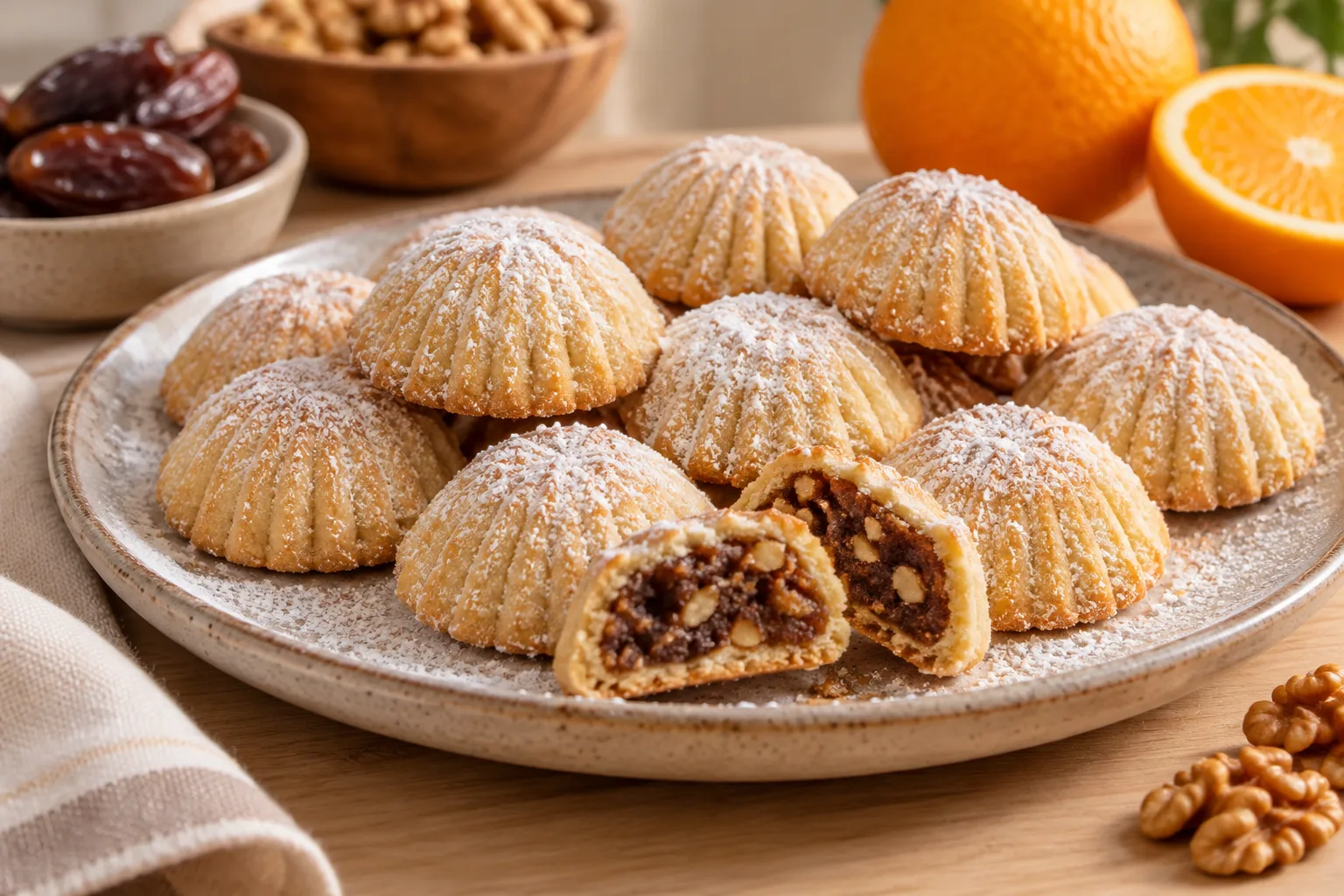
Flour maamoul with dates and walnuts
Maamoul cookies made with a flour-and-butter dough and filled with dates, walnuts, and citrus aromas. Makes 28.
View recipe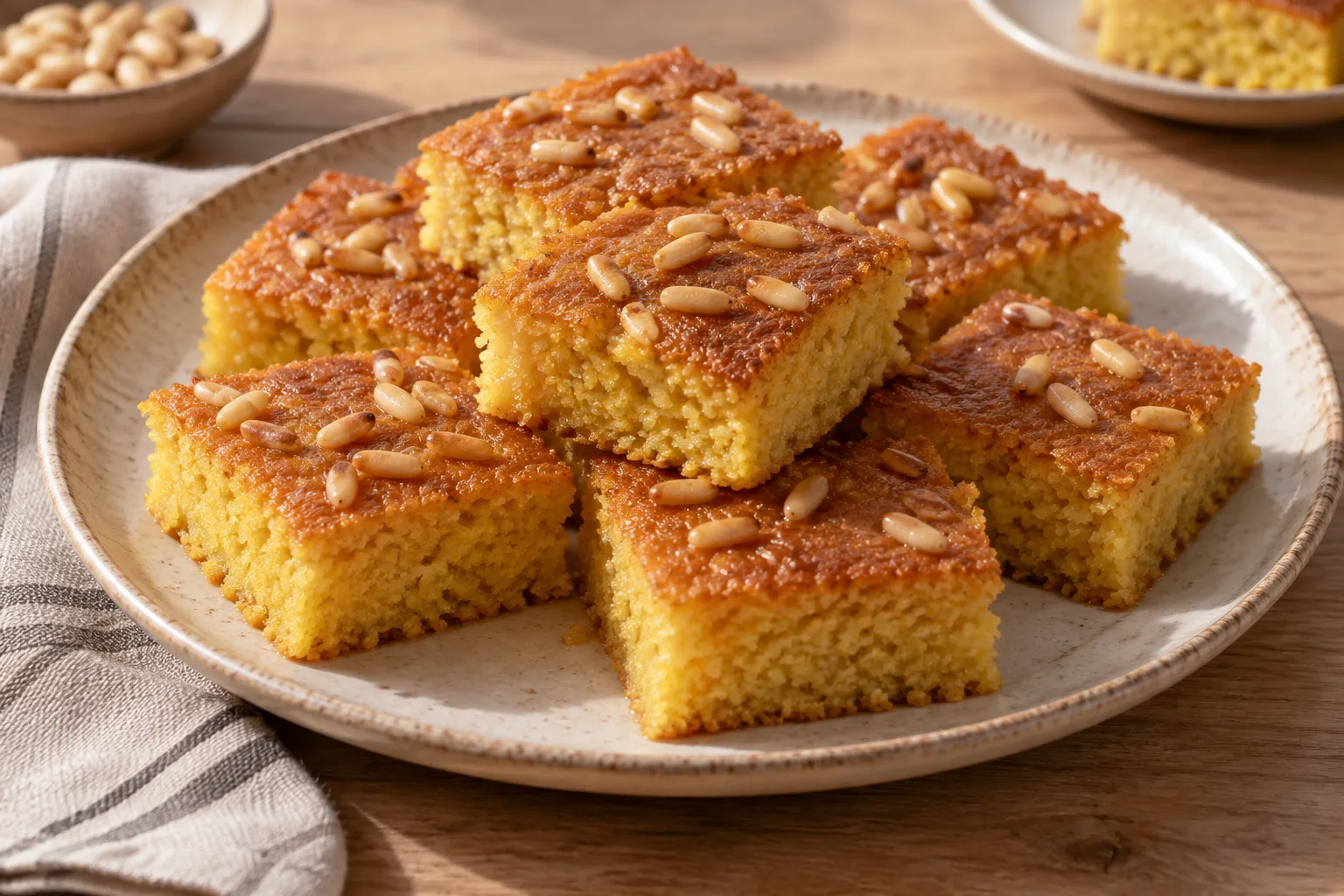
Lebanese Semolina and Turmeric Sfouf
An egg-free Lebanese cake made with semolina, turmeric, and pine nuts. Bake until golden, then cut into squares or diamonds.
View recipe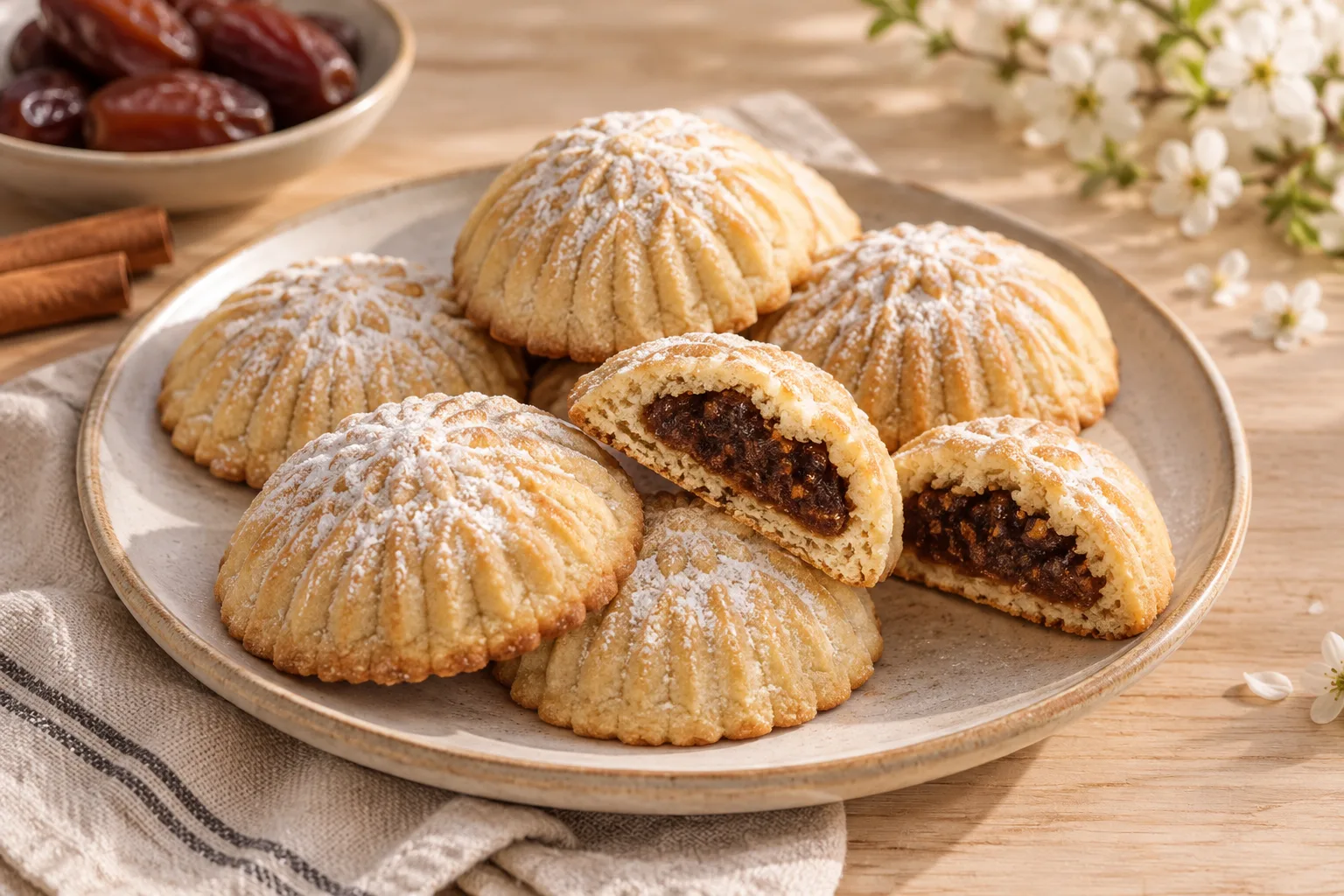
Semolina maamoul with dates and butter
Cookies made with fine and coarse semolina, scented with rose and orange blossom waters, and filled with a cinnamon date paste.
View recipe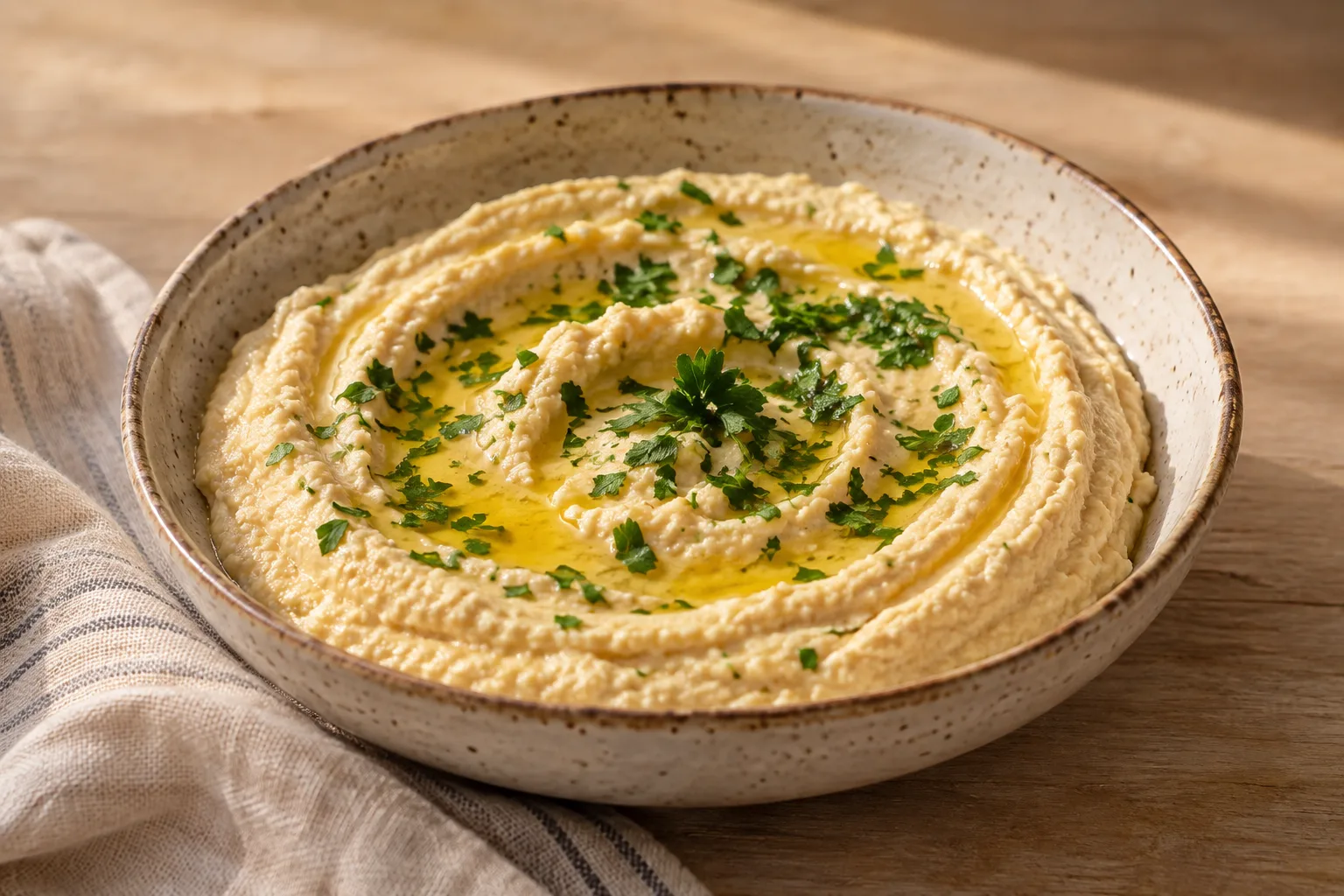
Lebanese Hummus
Lebanese chickpea spread with tahini, lemon, and garlic, finished with olive oil and parsley.
View recipe
Sources consulted
Read the sources and each document’s scope. A heritage inscription concerns a particular practice, not all of a country’s cuisine.
- Assessing sleep quality of Lebanese high school students in relation to lifestyle: pilot study in Beirut who-j40.corephp.org/emhj-volume-24-2018/volume-24-issue-8/assessing-sleep-quality-of-lebanes… Eastern Mediterranean Health Journal / WHO Consulted: October 31, 2026
- Dietary Habits and Lifestyle During Coronavirus Pandemic Lockdown: Experience From Lebanon pmc.ncbi.nlm.nih.gov/articles/PMC8435593/ Frontiers in Nutrition Consulted: October 31, 2026
- The Nutrition Transition’s Effect in Lebanon: A Qualitative Study Exploring Adolescents’ Perspectives in Both Urban and Rural Areas www.ajqr.org/download/the-nutrition-transitions-effect-in-lebanon-a-qualitative-study-explor… American Journal of Qualitative Research Consulted: October 31, 2026
- National Health Statistics Report in Lebanon 2012: Table 33 usj.edu.lb/intranet/annonce/files/pdf/175_pdf_1.pdf Ministry of Public Health, Lebanon Consulted: October 31, 2026
- A global analysis of cooking around the world: Year 2 www.gallup.com/file/analytics/513242/Gallup-Cookpad-Global%20Analysis%20Report-Year%202.pdf Gallup and Cookpad Consulted: October 31, 2026
- Dietary Intake among Lebanese Adults: Findings from the Updated LEBANON-FCS www.ebi.ac.uk/europepmc/webservices/rest/PMC11174657/fullTextXML Nutrients / author full text archived by Europe PMC Consulted: October 31, 2026
- Analysis of Food Pairing in Some Eastern Mediterranean Countries www.researchgate.net/publication/326096822_Analysis_of_Food_Pairing_in_Some_Eastern_Mediterr… IEEE CSIT 2018; author-deposited full text Consulted: October 31, 2026
- Association Between Animal-to-Plant Protein Intake and Low Skeletal Muscle Mass Among Lebanese Older Adults www.ebi.ac.uk/europepmc/webservices/rest/PMC13708050/fullTextXML Nutrients / author full text archived by Europe PMC Consulted: October 31, 2026
- Development of a Lebanese food exchange system based on frequently consumed Eastern Mediterranean traditional dishes and Arabic sweets www.ebi.ac.uk/europepmc/webservices/rest/PMC7931253/fullTextXML Scientific Reports / author full text archived by Europe PMC Consulted: October 31, 2026
- Lebanon: culinary traditions, meals and drinks www.intergastronom.net/lebanon/ International Academy of Gastronomy Consulted: October 31, 2026
- Promoting healthy eating and physical activity among school children: findings from Health-E-PALS, the first pilot intervention from Lebanon www.ebi.ac.uk/europepmc/webservices/rest/PMC4167260/fullTextXML BMC Public Health / author full text archived by Europe PMC Consulted: October 31, 2026
- Development and evaluation of a photographic atlas as a tool for dietary assessment studies in Middle East cultures www.cambridge.org/core/services/aop-cambridge-core/content/view/CA1B45BBD8854FDE26950CC886B1… Public Health Nutrition / Cambridge University Press Consulted: October 31, 2026
- Microbial Quality and Production Methods of Traditional Fermented Cheeses in Lebanon www.ebi.ac.uk/europepmc/webservices/rest/PMC11735057/fullTextXML Original research author full text archived by Europe PMC Consulted: October 31, 2026
- Labour Force and Household Living Conditions Survey 2018–2019 Lebanon www.cas.gov.lb/wp-content/uploads/2025/07/Labour-Force-and-Household-Living-Conditions-Surve… Central Administration of Statistics / International Labour Organization Consulted: October 31, 2026
- Differences in Dietary Intakes among Lebanese Adults over a Decade: Results from Two National Surveys 1997–2008/2009 www.ebi.ac.uk/europepmc/webservices/rest/PMC6723904/fullTextXML Nutrients / original author full text archived by Europe PMC Consulted: October 31, 2026
- Vitamin B12 deficiency and neuropsychiatric symptoms in Lebanon: A cross-sectional study of vegans, vegetarians, and omnivores www.ebi.ac.uk/europepmc/webservices/rest/PMC11023582/fullTextXML PLOS ONE / original author full text archived by Europe PMC Consulted: October 31, 2026
- Preliminary Insights on Household Food Wastage in Lebanon pubs.sciepub.com/jfs/4/6/2/ Journal of Food Security Consulted: October 31, 2026
- Lebanon Monthly Price Bulletin — March 2025 www.economy.gov.lb/media/14781/march2025_en.pdf Ministry of Economy and Trade / World Food Programme Consulted: October 31, 2026
- Zaatar w Zeit Lebanon menu — October 2026 menu.zaatarwzeit.com/menu.pdf Zaatar w Zeit Consulted: October 31, 2026
- An on-line survey of the behavioral changes in Lebanon, Jordan and Tunisia during the COVID-19 pandemic related to food shopping, food handling, and hygienic practices www.ebi.ac.uk/europepmc/webservices/rest/PMC7862026/fullTextXML Food Control / author full text archived by Europe PMC Consulted: October 31, 2026
- Lebanese Fresh Fruits and Vegetables www.agriculture.gov.lb/getattachment/6f47f218-c269-4317-ba4b-6e4130e51138/Lebanese-Fresh-Fru… Lebanese Ministry of Agriculture Consulted: October 31, 2026
- Maamoul — Register of Intangible Heritage of the Mediterranean Countries www.iheritage.eu/featured_item/maamoul/ iHERITAGE cultural heritage project Consulted: October 31, 2026
- Al-Man’ouché, an emblematic culinary practice in Lebanon - UNESCO Intangible Cultural Heritage ich.unesco.org/en/RL/al-man-ouche-an-emblematic-culinary-practice-in-lebanon-02000?RL=02000 UNESCO Consulted: October 31, 2026
- Zahlé, ciudad creativa de gastronomía www.unesco.org/en/creative-cities/zahle UNESCO Consulted: October 20, 2026
- Mercados y cocinas de productores www.soukeltayeb.com/ Souk El Tayeb Consulted: October 20, 2026
- Beit Douma www.soukeltayeb.com/beit/1/beit-douma Souk El Tayeb Consulted: October 20, 2026