Europe · Southern Europe
Spain
A journey through Spanish cuisines, their territories, exchanges and life around the table. A first guide to exploring their diversity without reducing it to one dish.
Food and eating habits
How people eat in Spain
50 indicators exploring everyday meals, ingredients and food culture. Information is completed progressively from documented evidence.
47 of 50 indicators with documented information
Not all data are comparable: food supply, purchases and intake are different measures. Check the period, population and method for each finding. Qualitative descriptions do not establish percentages or amounts.
Timing and company
8/8
| Indicator | Findings and context |
|---|---|
| Meal times |
Restaurants are described as serving lunch from 13:00 to 16:00 and dinner from 20:00 to 22:30. These are indicative service windows, not population modal meal times. Scope, method and limitations
|
| Meals per day |
Mean 4.11 eating occasions per day. Reported skipping: breakfast 1.99 %, mid-morning 34.90 %, mid-afternoon 29.80 % and dinner 0.30 %. Scope, method and limitations
|
| Meal duration |
Mean reported time: breakfast 12.5 minutes, lunch 19.6 minutes and dinner 18.7 minutes. Scope, method and limitations
|
| Daily energy distribution |
Daily energy by meal: breakfast 16.4 %, mid-morning 4.6 %, lunch 39.8 %, mid-afternoon 5.5 % and dinner 30.5 %. Published percentages without renormalisation. Scope, method and limitations
|
| Weekdays and weekends |
Industrial dishes gain prominence especially at weekends; dishes using cooking aids stand out on weekdays. Lunch and dinner preparation time falls in both periods. Scope, method and limitations
|
| Eating at home and away |
94.0 % have breakfast at home, averaging 6 times weekly. 96.0 % eat lunch or dinner at home, averaging 10.8 combined occasions weekly. Scope, method and limitations
|
| Cooking frequency |
62.4 % prepared meals as a primary activity on the diary day; participants spent a mean 1:12 h. Scope, method and limitations
|
| Eating together |
Having tapas with friends is described as a social occasion before lunch. It does not establish the shares eating alone, with family or with others. Scope, method and limitations
|
Pantry and recipes
1/2
| Indicator | Findings and context |
|---|---|
| Most consumed ingredients |
Selected purchases by weight include fresh fruit: 79.4 kg per person per year; fresh vegetables and potatoes combined: 67.1 kg; meat: 41.6 kg; bread: 27.4 kg. Scope, method and limitations
|
| Ingredient prevalence in recipes | Insufficient data in the sources consulted |
Cereals and plant foods
6/6
| Indicator | Findings and context |
|---|---|
| Cereals and cereal products |
Rice: 3.8 kg; pasta: 4.3 kg per person per year. This is not the cereal total. Scope, method and limitations
|
| Bread |
Bread: 27.4 kg per person per year; fresh and frozen: 21.5 kg; industrial: 5.9 kg. Scope, method and limitations
|
| Pulses |
Pulses: 3.4 kg per person per year; chickpeas: 1.4 kg, lentils: 1.0 kg and beans: 0.9 kg. Includes dry and cooked products. Scope, method and limitations
|
| Vegetables |
Fresh vegetables: 49.5 kg per person per year; tomatoes: 11.8 kg, onions: 6.0 kg and peppers: 4.3 kg. Scope, method and limitations
|
| Fruit |
Fresh fruit: 79.4 kg per person per year; oranges and mandarins: 16.4 kg, melons and watermelons: 14.2 kg, bananas: 13.0 kg and apples: 8.2 kg. Scope, method and limitations
|
| Potatoes, roots and tubers |
Potatoes: 25.8 kg per person per year in total; fresh potatoes: 17.6 kg. No cassava, sweet potato or other tuber figures. Scope, method and limitations
|
Protein foods
5/5
| Indicator | Findings and context |
|---|---|
| Meat |
Total meat: 41.6 kg per person per year. Within fresh meat: chicken, 12.5 kg; pork, 9.3 kg; beef, 3.9 kg. Scope, method and limitations
|
| Fish and seafood |
Fishery products: 18.0 kg per person per year; fresh fish, 7.3 kg; preserved fish and molluscs, 4.1 kg. Scope, method and limitations
|
| Eggs |
Eggs: 143 units per person per year. Scope, method and limitations
|
| Milk and dairy products |
Liquid milk: 61.8 litres per person per year. Dairy products: 32.4 kg per person per year; these categories have different units. Scope, method and limitations
|
| Protein sources |
Contribution to protein: meat and meat products, 33.14 %; grains, 17.38 %; dairy, 17.17 %; fish and shellfish, 10.63 %; eggs, 4.68 %; pulses, 3.32 %. Scope, method and limitations
|
Fats, flavours and condiments
3/3
| Indicator | Findings and context |
|---|---|
| Cooking fats |
Household purchases per person per year: olive oil, 5.6 litres; sunflower oil, 3.5 litres; olive-pomace oil, 0.3 litres. Olive oil is used to dress salads, in gazpacho and Spanish omelette, and for frying. Scope, method and limitations
|
| Herbs and spices |
Spanish cooking uses saffron, paprika, ñora pepper, bay leaf, garlic, rosemary, cayenne, oregano and parsley. Saffron flavours rice dishes, stews, meat and desserts; La Vera paprika is used in chorizo and sobrasada. Scope, method and limitations
|
| Sauces and condiments |
Alioli combines garlic and olive oil; some variants contain egg. Brava sauce accompanies fried potatoes and may contain paprika. In the Canary Islands, mojo picón combines pepper, vinegar, olive oil, garlic, cumin, salt and paprika; mojo verde uses parsley and coriander. They accompany papas arrugadas. Scope, method and limitations
|
Meal composition
6/6
| Indicator | Findings and context |
|---|---|
| Breakfast composition |
Sweet and savoury breakfasts coexist. Savoury breakfasts are described as later and taking longer to prepare; no complete food-combination breakdown is provided. Scope, method and limitations
|
| Main meal composition |
Single-course meals gain occasions at lunch and dinner. Dishes based on eggs, pasta, pulses and potatoes show positive change, without one national menu. Scope, method and limitations
|
| Dinner composition |
Dinner is studied together with lunch: simplification toward a single course and shorter preparation are observed. No dinner-only hot/cold dish or quantity breakdown is established. Scope, method and limitations
|
| Appetisers and snacks |
Grazing, between-meal occasions and afternoon snacks at home and elsewhere decline; taking food from home to eat elsewhere increases. Scope, method and limitations
|
| Desserts and sweets |
Household purchases of sweet bakery products and pastries: 12.5 kg per person per year. The group includes other eating occasions and is not desserts alone. Scope, method and limitations
|
| Portion sizes |
Reference servings: bread 40–60 g; dry pasta or rice 60–80 g; dry pulses 50–60 g or about 170 g prepared. Scope, method and limitations
|
Techniques and equipment
5/5
| Indicator | Findings and context |
|---|---|
| Cooking techniques |
Air fryers account for 4.0 % of recorded lunch-and-dinner preparation methods. This is not the share of households owning one. Scope, method and limitations
|
| Vegetable preparation |
In Murcian rice with vegetables and pork, artichokes and peppers are sautéed before beans, young garlic and tomato are added. A regional example, not a consumption share. Scope, method and limitations
|
| Food preservation |
The Balearic Islands document aubergine escabeche with apple vinegar, olive oil and spices. A preparation example, not household-preservation frequency or canning guidance. Scope, method and limitations
|
| Fermented foods |
Cheese is obtained by fermenting milk with bacteria and yeasts; types produced in Spain use different techniques and processes. Scope, method and limitations
|
| Kitchen equipment |
Equipped households: oven 77.1 %, microwave 90.0 %, refrigerator 99.6 % and dishwasher 53.1 %. Historical 2010 figures. Scope, method and limitations
|
Drinks
3/3
| Indicator | Findings and context |
|---|---|
| Everyday drinks |
Bottled water: 63.3 litres per person per year; still, 60.9 litres; sparkling, 2.4 litres. Liquid milk: 61.8 litres per person per year. Scope, method and limitations
|
| Coffee and tea preparation |
In Catalan coffee preparations, cortado adds a little milk; café con leche combines coffee and milk, and bombón uses condensed milk. Americano adds hot water to coffee. Scope, method and limitations
|
| Drinks with meals |
In the child and adolescent sample, water provided 62 % of fluid volume during main meals. Those meals accounted for 50 % of children’s daily fluid volume and 54 % of adolescents’ daily fluid volume. Scope, method and limitations
|
Nutrition and dietary patterns
3/3
| Indicator | Findings and context |
|---|---|
| Energy and nutrients |
Median energy: 1783 kcal per day. Energy contributions: carbohydrates 48.6 %, protein 16.8 %, fat 34.6 % and fibre 1.7 %. Scope, method and limitations
|
| Salt and sugars |
Median sodium: 1769 mg per day. This is not a measurement of salt or sugars. Scope, method and limitations
|
| Dietary patterns |
25.5 % of the child and adolescent sample had low Mediterranean-diet adherence, defined as fewer than four MDS-2 points. Scope, method and limitations
|
Shopping, prices and waste
5/7
| Indicator | Findings and context |
|---|---|
| Food expenditure |
Household food and drink spending: 148.9 euros per person per month; 1787 euros per person per year. Scope, method and limitations
|
| Cost of a common basket | Insufficient data in the sources consulted |
| Cost of specific meals | Insufficient data in the sources consulted |
| Grocery shopping locations |
Purchase shares: supermarkets 68.2 %, hypermarkets 12.5 %, online 2 % and traditional shops 10.6 %. Partial breakdown. Scope, method and limitations
|
| Shopping frequency |
Published frequency: 233 purchases a year, more than four per week. Mean basket: 6.1 kilograms/litres per purchase; mean receipt 19.4 EUR. Scope, method and limitations
|
| Prepared food and delivery |
Prepared dishes bought for home: 17.2 kg and 94.3 euros per person per year. This excludes delivery frequency and all out-of-home food. Scope, method and limitations
|
| Household food waste |
Household food waste: 23.59 kg or litres per person per year; 18.31 unused products and 5.28 prepared recipes. The published mixed unit is retained. Scope, method and limitations
|
Seasons and celebrations
2/2
| Indicator | Findings and context |
|---|---|
| Seasonal produce |
Mushrooms and chestnuts are gastronomically associated with autumn. Autumn mushroom foraging is documented in several regions; this is not a complete agricultural calendar. Scope, method and limitations
|
| Celebration food |
Christmas: turrón, mantecados, polvorones and marquesitas. Roscón is associated with Three Kings’ Day on 6 January. Scope, method and limitations
|
Explore its cuisinesRead as an article ↗
Spain: territories, pantries and ways of sharing
Documentary synthesis prepared with AI assistance. It does not replace specialist review or certify kitchen testing. · Updated 1 November 2026
One country, many cuisines
A Galician broth, a Valencian rice dish and a Costa Brava fish stew tell different stories. The ingredients, preservation methods, cooking vessels and occasions around the table change. The country provides an entry point; to understand a preparation, it helps to move on to its region and the version a family cooks or a source documents.
This first route explores five territories and several ways of learning to cook: recognising a pantry, distinguishing techniques and connecting a meal with its social setting. It does not attempt to cover every Spanish cuisine. The regional directory lets you continue the journey elsewhere.
Landscapes that shape the pantry
Andalusia brings together Atlantic and Mediterranean fishing, market gardens and inland olive groves. That diversity appears in fried fish, cold soups and pulse stews. Gazpacho, ajoblanco and salmorejo offer a way to compare preparations within a broad family without confusing their ingredients or textures. Andalusian cooking also includes home-cooked stews and almond and honey sweets.
Galicia combines produce from its estuaries with inland farming and livestock. Mussels, octopus and fish sit alongside potatoes, turnip greens, pulses and chestnuts. Broth and empanada show two ways of organising that pantry: bringing ingredients together in a pot or enclosing a filling in pastry. Documented empanadas include both meat and fish, a diversity that invites a separate look at each filling.
Exchange and culinary memory
Today's cuisines result from trade, population movements and agricultural change. The Mediterranean and connections with the Americas form part of this gastronomic history. That framework helps us view the pantry as a process, rather than a collection of products that have always occupied the same place.
The settings where knowledge is passed on also change. Recipes travel through homes, markets, workshops, books and restaurants. Following a preparation reveals what depends on technique, what on an ingredient's availability and what on a local custom. A national history cannot replace documentation of a particular dish's origins.
Catalonia: sea, mountains and foundational preparations
Catalan cooking brings together different settings: the coast, the Pyrenees, valleys and combinations of sea and mountain produce. Its repertoire includes fish suquets, the roasted vegetables of escalivada and combinations of seafood with inland meats. Olive oil, tomato, onion, garlic and herbs appear in preparations that share ingredients with other Mediterranean cuisines, although each recipe works with them differently.
One useful way to explore this Catalan diversity is to compare a seafood stew with a vegetable preparation. Notice how the cutting changes, when liquid is added and what final texture is sought. A cuisine's identity also lives in these everyday decisions, alongside its best-known dishes.
València: learning to distinguish rice dishes
Rice offers a particularly useful route for understanding the relationship between ingredient and technique. There are dry, creamy and brothy preparations, as well as named dishes such as arroz a banda and arroz negro. The result depends on the chosen preparation; adding more stock to any recipe does not by itself turn it into another traditional dish.
A documented version of Valencian paella offers its own ingredients and sequence to study. When comparing it with another rice dish, look at the vessel, the work on the flavour base, the distribution of ingredients and the specified finishing point. Times and quantities should come from the particular recipe you plan to cook. This atlas's context article develops that comparison.
Asturias: the product and the social practice
Asturian cider culture invites us to look beyond a drink. Its cultural significance brings together production knowledge, ways of serving and places to meet. This practice is documented and has heritage recognition. Understanding it requires attention to the people who sustain and transmit it, as well as to the finished product.
This distinction helps when reading about other food traditions: cultural recognition can concern knowledge and community relationships without declaring a single recipe for an entire region. Our cider article follows precisely that route through production, service and social encounters.
Vocabulary of techniques and preparations
- Sofrito: a foundational preparation that builds flavour before other components are added; its composition changes with the recipe.
- Suquet: a family of fish stews in the Catalan repertoire.
- Escalivada: a roasted vegetable preparation, structurally different from a cold soup or a stew.
- Arroz meloso: a result distinct from both dry and brothy rice; it requires a preparation designed for that consistency.
Texture, temperature and cooking vessel
Gazpacho, ajoblanco and salmorejo provide a useful reading exercise: they share the broad setting of cold soups, but do not have a single composition or texture. The comparison can continue with a Galician broth and a Valencian rice dish. The role of liquid, the vessel and the serving method change in each case. A dish's name provides orientation; its particular recipe explains how to achieve the intended result.
Products that reveal preservation
The regional guide lets us consider fresh pantry ingredients alongside processed and preserved products. An empanada brings together pastry and filling; a pulse stew combines pulses and other ingredients in a pot; cider links production and serving. Preservation does not belong only to the past: it remains part of how food is bought, prepared and shared. Recognising these operations helps explain the continuity between home, market and food establishment.
Building your own route
Choose one technique and two documented versions, rather than trying to represent the country through a single meal. You might compare rice dishes, filled pastries or fish stews. Note which ingredient forms the base, what work is done in advance and what is finished when serving. Then return to each recipe's region: moving between practice and territory reveals similarities and differences without turning Spanish cuisines into a fixed repertoire.
Sharing the table and continuing to learn
Andalusian tapas outings, Galician food celebrations and Asturian cider practices show different ways of connecting food with sociability. They are not uniform customs of the whole population. To explore them in your own kitchen, choose a preparation, read its context and organise a meal in which sharing it makes sense.
Start with a technique you want to understand: frying, a stew, a rice dish or a filled pastry. Then look for its variants and note what changes. KitchenPause recipes linked to Spain are gathered below; regional attributions are added when specific documentation exists. This lets you move from the map to a particular preparation and return to its sources with new questions.
Fats, flavours and condiments
Cooking fats. Household purchases per person per year: olive oil, 5.6 litres; sunflower oil, 3.5 litres; olive-pomace oil, 0.3 litres. Olive oil is used to dress salads, in gazpacho and Spanish omelette, and for frying.
Observation period: 2024. Residents in Spanish households; per-capita averages. Culinary description of Spain; includes examples from Andalusian cuisine. Annual household-purchase panel table; published figures without conversions. Culinary uses are qualitative descriptions without an observation date. Purchases, not intake or quantities used exclusively for cooking; excludes out-of-home consumption. Does not measure usage frequency. Partial coverage: no verified butter or other-fat quantity; displayed types do not constitute a total.
Herbs and spices. Spanish cooking uses saffron, paprika, ñora pepper, bay leaf, garlic, rosemary, cayenne, oregano and parsley. Saffron flavours rice dishes, stews, meat and desserts; La Vera paprika is used in chorizo and sobrasada.
Description of Spanish cuisine; includes regional examples such as La Vera paprika and La Mancha saffron. Qualitative evidence: it does not establish frequency or amounts. There is no recipe-sample size, selection, dating, or deduplication, so prevalence cannot be estimated.
Sauces and condiments. Alioli combines garlic and olive oil; some variants contain egg. Brava sauce accompanies fried potatoes and may contain paprika. In the Canary Islands, mojo picón combines pepper, vinegar, olive oil, garlic, cumin, salt and paprika; mojo verde uses parsley and coriander. They accompany papas arrugadas.
Spain; Catalan and Canarian examples, without generalising variants to every region. Unquantified cultural evidence: it does not establish frequency or amounts. No recipe sample with explicit size, selection, dates, and deduplication is provided.
Seasons and celebrations
Seasonal produce. Mushrooms and chestnuts are gastronomically associated with autumn. Autumn mushroom foraging is documented in several regions; this is not a complete agricultural calendar.
Spain; general seasonal association with regional variation. Partial coverage: no production months by species and region, quantities or retail availability; it does not establish that all products sold are local.
Celebration food. Christmas: turrón, mantecados, polvorones and marquesitas. Roscón is associated with Three Kings’ Day on 6 January.
Spain; examples from Christmas and Three Kings’ Day. Partial coverage: not all celebrations, regions, ingredients or variants are included; quantities and population participation are not measured.
Cereals and plant foods
Cereals and cereal products. Rice: 3.8 kg; pasta: 4.3 kg per person per year. This is not the cereal total.
Bread. Bread: 27.4 kg per person per year; fresh and frozen: 21.5 kg; industrial: 5.9 kg.
Pulses. Pulses: 3.4 kg per person per year; chickpeas: 1.4 kg, lentils: 1.0 kg and beans: 0.9 kg. Includes dry and cooked products.
Vegetables. Fresh vegetables: 49.5 kg per person per year; tomatoes: 11.8 kg, onions: 6.0 kg and peppers: 4.3 kg.
Fruit. Fresh fruit: 79.4 kg per person per year; oranges and mandarins: 16.4 kg, melons and watermelons: 14.2 kg, bananas: 13.0 kg and apples: 8.2 kg.
Potatoes, roots and tubers. Potatoes: 25.8 kg per person per year in total; fresh potatoes: 17.6 kg. No cassava, sweet potato or other tuber figures.
Observation period: 2024. Residents in Spanish households; per-capita averages. Spain; purchases for household consumption. Official institutional annual household-purchase tabulation; published values without conversions or rounding adjustments. Purchases, not individual intake; excludes out-of-home consumption. Partial variety and ingredient coverage. Dry and cooked weights are not equivalent; nutrient intake or personal frequency cannot be inferred.
Protein foods
Meat. Total meat: 41.6 kg per person per year. Within fresh meat: chicken, 12.5 kg; pork, 9.3 kg; beef, 3.9 kg.
Fish and seafood. Fishery products: 18.0 kg per person per year; fresh fish, 7.3 kg; preserved fish and molluscs, 4.1 kg.
Eggs. Eggs: 143 units per person per year.
Milk and dairy products. Liquid milk: 61.8 litres per person per year. Dairy products: 32.4 kg per person per year; these categories have different units.
Observation period: 2024. Residents in Spanish households; per-capita averages. Spain; purchases for household consumption. Official institutional annual household-purchase tabulation; published values without conversions or rounding adjustments. Household purchases, not individual intake; excludes out-of-home consumption. Partial coverage of varieties. Subgroups are not a complete breakdown and cannot establish protein intake. Original units are retained.
Protein sources. Contribution to protein: meat and meat products, 33.14 %; grains, 17.38 %; dairy, 17.17 %; fish and shellfish, 10.63 %; eggs, 4.68 %; pulses, 3.32 %.
Sample of 2009 residents aged nine to seventy-five; excludes Ceuta and Melilla. Spain; food-group contribution to the sample’s total protein intake. ANIBES dietary survey; percentages from the original table’s protein column. Fieldwork from September to November 2013. Historical reported intake, not purchases or current recommendations. Partial coverage: other food groups are omitted from this summary; do not treat its sum as the total. Does not represent children under nine or adults over seventy-five.
Drinks
Everyday drinks. Bottled water: 63.3 litres per person per year; still, 60.9 litres; sparkling, 2.4 litres. Liquid milk: 61.8 litres per person per year.
Observation period: 2024. Residents in Spanish households; per-person averages. Spain; household purchases of bottled water and liquid milk. Official institutional annual household-purchase tabulations; published litre quantities without conversions. Purchases, not intake; excludes tap water and out-of-home consumption. Partial coverage: no verified quantities for prepared coffee, tea, soft drinks or other beverages. Does not measure frequency or the percentage of people drinking them.
Coffee and tea preparation. In Catalan coffee preparations, cortado adds a little milk; café con leche combines coffee and milk, and bombón uses condensed milk. Americano adds hot water to coffee.
Spain; regional examples from Catalonia. Partial qualitative coverage: does not represent every Spanish practice. No verified frequencies, usual serving size, sugar quantity or tea methods; coffee recipes are not intake averages.
Drinks with meals. In the child and adolescent sample, water provided 62 % of fluid volume during main meals. Those meals accounted for 50 % of children’s daily fluid volume and 54 % of adolescents’ daily fluid volume.
Analysed sample of 146 children aged four to seventeen; recruitment by age, sex and area quotas. Spain; fluids during breakfast, lunch and dinner combined, with separate child and adolescent results. Cross-sectional study in April and May 2018; fluid diary over seven consecutive days, completed by parents for under-sixteens. Percentages refer to consumed volume, not people. Partial historical coverage: small sample, with no estimate for adults or the entire current population. Water as a share of mealtime volume is not the percentage of people choosing it. No complete other-beverage breakdown; school intake may be under-reported.
Nutrition and dietary patterns
Energy and nutrients. Median energy: 1783 kcal per day. Energy contributions: carbohydrates 48.6 %, protein 16.8 %, fat 34.6 % and fibre 1.7 %.
Salt and sugars. Median sodium: 1769 mg per day. This is not a measurement of salt or sugars.
Dietary patterns. 25.5 % of the child and adolescent sample had low Mediterranean-diet adherence, defined as fewer than four MDS-2 points.
Observation period: 2012–2014. National sample of 1862 children aged six months to seventeen years in non-institutional households. Spain; ENALIA survey from 2012 to 2014, children and adolescents. Random cluster sampling; two non-consecutive food diaries or recalls plus a frequency questionnaire. Intake medians, energy percentages and adherence indices are distinguished. Historical child coverage: cannot be extrapolated to adults or the entire current population. Sodium is not converted to salt; this summary provides no sugars, fibre in grams or vegetarian/vegan prevalence.
Meal rhythms and company
Meal times. Restaurants are described as serving lunch from 13:00 to 16:00 and dinner from 20:00 to 22:30. These are indicative service windows, not population modal meal times.
Eating together. Having tapas with friends is described as a social occasion before lunch. It does not establish the shares eating alone, with family or with others.
Meals per day. Mean 4.11 eating occasions per day. Reported skipping: breakfast 1.99 %, mid-morning 34.90 %, mid-afternoon 29.80 % and dinner 0.30 %.
Meal duration. Mean reported time: breakfast 12.5 minutes, lunch 19.6 minutes and dinner 18.7 minutes.
Daily energy distribution. Daily energy by meal: breakfast 16.4 %, mid-morning 4.6 %, lunch 39.8 %, mid-afternoon 5.5 % and dinner 30.5 %. Published percentages without renormalisation.
Sample of 1655 Spanish adults aged eighteen to sixty-four. Spain; September to November 2013 data. Three-day digital record, two weekdays and one weekend day, with pictures and start/end times. Means from the study table’s total column. Historical adult coverage; excludes over-sixty-fours and institutions. Self-report, not external timing or causal evidence. Published percentages are not renormalised.
Weekdays and weekends. Industrial dishes gain prominence especially at weekends; dishes using cooking aids stand out on weekdays. Lunch and dinner preparation time falls in both periods.
Spain; domestic eating practices in 2024. Partial coverage: no complete individual meal, ingredient or portion breakdown. Weekly at-home occasions are not total daily meals; preparation is not eating duration.
Eating at home and away. 94.0 % have breakfast at home, averaging 6 times weekly. 96.0 % eat lunch or dinner at home, averaging 10.8 combined occasions weekly.
People and eating occasions in Spanish households. Spain; domestic eating practices in 2024. Institutional MAPA data summary; people, occasions and preparation are distinguished. Partial coverage: no complete individual meal, ingredient or portion breakdown. Weekly at-home occasions are not total daily meals; preparation is not eating duration.
Cooking frequency. 62.4 % prepared meals as a primary activity on the diary day; participants spent a mean 1:12 h.
Observation period: 2002-2003. People aged ten and over living in Spanish households. Spain; 2002–2003 Time Use Survey. Primary-activity diary; daily participation percentage and mean duration among participants, in hours:minutes. Historical data without extrapolation to the present. No breakfast/lunch/dinner or weekly cooking-day breakdown; not all simultaneous activity is included.
Pantry and recipe repertoire
Most consumed ingredients. Selected purchases by weight include fresh fruit: 79.4 kg per person per year; fresh vegetables and potatoes combined: 67.1 kg; meat: 41.6 kg; bread: 27.4 kg.
Residents in Spanish households; per-person means. Spain; household food purchases in 2024. Institutional tabulation of the MAPA household-purchase panel; published units are retained. Purchases, not intake; excludes out-of-home consumption. No personal frequency or exhaustive ingredient, recipe or eating-occasion classification is implied.
Meal composition
Breakfast composition. Sweet and savoury breakfasts coexist. Savoury breakfasts are described as later and taking longer to prepare; no complete food-combination breakdown is provided.
Main meal composition. Single-course meals gain occasions at lunch and dinner. Dishes based on eggs, pasta, pulses and potatoes show positive change, without one national menu.
Appetisers and snacks. Grazing, between-meal occasions and afternoon snacks at home and elsewhere decline; taking food from home to eat elsewhere increases.
Spain; domestic eating practices in 2024. Partial coverage: no complete individual meal, ingredient or portion breakdown. Weekly at-home occasions are not total daily meals; preparation is not eating duration.
Dinner composition. Dinner is studied together with lunch: simplification toward a single course and shorter preparation are observed. No dinner-only hot/cold dish or quantity breakdown is established.
People and eating occasions in Spanish households. Spain; domestic eating practices in 2024. Institutional MAPA data summary; people, occasions and preparation are distinguished. Partial coverage: no complete individual meal, ingredient or portion breakdown. Weekly at-home occasions are not total daily meals; preparation is not eating duration.
Desserts and sweets. Household purchases of sweet bakery products and pastries: 12.5 kg per person per year. The group includes other eating occasions and is not desserts alone.
Residents in Spanish households; per-person means. Spain; household food purchases in 2024. Institutional tabulation of the MAPA household-purchase panel; published units are retained. Purchases, not intake; excludes out-of-home consumption. No personal frequency or exhaustive ingredient, recipe or eating-occasion classification is implied.
Portion sizes. Reference servings: bread 40–60 g; dry pasta or rice 60–80 g; dry pulses 50–60 g or about 170 g prepared.
Observation period: 2022 (guideline edition). General guidance population; not an intake sample. Serving definitions of the stated edition. Official guidance: reference weights, not calculated intake means. The period indicates the edition, not an observation year. Recommended servings, not observed sizes or an individual prescription. No comparison of actual national habits. Dry and prepared weights distinguished.
Techniques and equipment
Cooking techniques. Air fryers account for 4.0 % of recorded lunch-and-dinner preparation methods. This is not the share of households owning one.
People and eating occasions in Spanish households. Spain; domestic eating practices in 2024. Institutional MAPA data summary; people, occasions and preparation are distinguished. Partial coverage: no complete individual meal, ingredient or portion breakdown. Weekly at-home occasions are not total daily meals; preparation is not eating duration.
Vegetable preparation. In Murcian rice with vegetables and pork, artichokes and peppers are sautéed before beans, young garlic and tomato are added. A regional example, not a consumption share.
No statistical sample; cultural or regional examples. Spain; the regional or restaurant-service scope stated in the text. Institutional description; not a national survey of habits or consumption frequency. Partial coverage: limited to the stated categories, population and period. It does not represent the entire current population or establish unpublished quantities, frequencies or breakdowns.
Food preservation. The Balearic Islands document aubergine escabeche with apple vinegar, olive oil and spices. A preparation example, not household-preservation frequency or canning guidance.
Fermented foods. Cheese is obtained by fermenting milk with bacteria and yeasts; types produced in Spain use different techniques and processes.
Kitchen equipment. Equipped households: oven 77.1 %, microwave 90.0 %, refrigerator 99.6 % and dishwasher 53.1 %. Historical 2010 figures.
Households in permanently occupied Spanish dwellings. Spain; SPAHOUSEC I fieldwork in 2010. Telephone and face-to-face surveys; national equipment-availability results, “Total Spain” column. Historical ownership, not usage frequency. The 2021 study offers stratified exports; device counts, dwellings and percentages are not mixed or presented as current figures.
Shopping, costs and waste
Food expenditure. Household food and drink spending: 148.9 euros per person per month; 1787 euros per person per year.
Prepared food and delivery. Prepared dishes bought for home: 17.2 kg and 94.3 euros per person per year. This excludes delivery frequency and all out-of-home food.
Residents in Spanish households; per-person means. Spain; household food purchases in 2024. Institutional tabulation of the MAPA household-purchase panel; published units are retained. Purchases, not intake; excludes out-of-home consumption. No personal frequency or exhaustive ingredient, recipe or eating-occasion classification is implied.
Grocery shopping locations. Purchase shares: supermarkets 68.2 %, hypermarkets 12.5 %, online 2 % and traditional shops 10.6 %. Partial breakdown.
Shopping frequency. Published frequency: 233 purchases a year, more than four per week. Mean basket: 6.1 kilograms/litres per purchase; mean receipt 19.4 EUR.
Spanish household purchases. Spain; 2025 food-consumption panel. Official panel summary; annual frequency and per-purchase means, without our own weekly or kilogram conversions. Purchases, not intake or individual frequency. Channel shares are not population percentages. Published mixed kilograms/litres unit retained.
Household food waste. Household food waste: 23.59 kg or litres per person per year; 18.31 unused products and 5.28 prepared recipes. The published mixed unit is retained.
Residents in Spanish households; per-person means. Spain; waste within households in 2024. Official quantification panel; unused products and discarded recipes, with published per-capita figures. “Kg or litres” is not kilograms of solids; it is not converted or directly compared with statistics including inedible parts or other supply-chain stages.
Places and communities
One country, many cuisines
An initial selection of regions to explore. Culinary boundaries may differ from administrative divisions.
Galicia
Cataluña
Comunitat Valenciana
Asturias
Cook
Recipes connected with Spain
Each recipe documents one version. Geographic associations do not imply an exclusive origin.
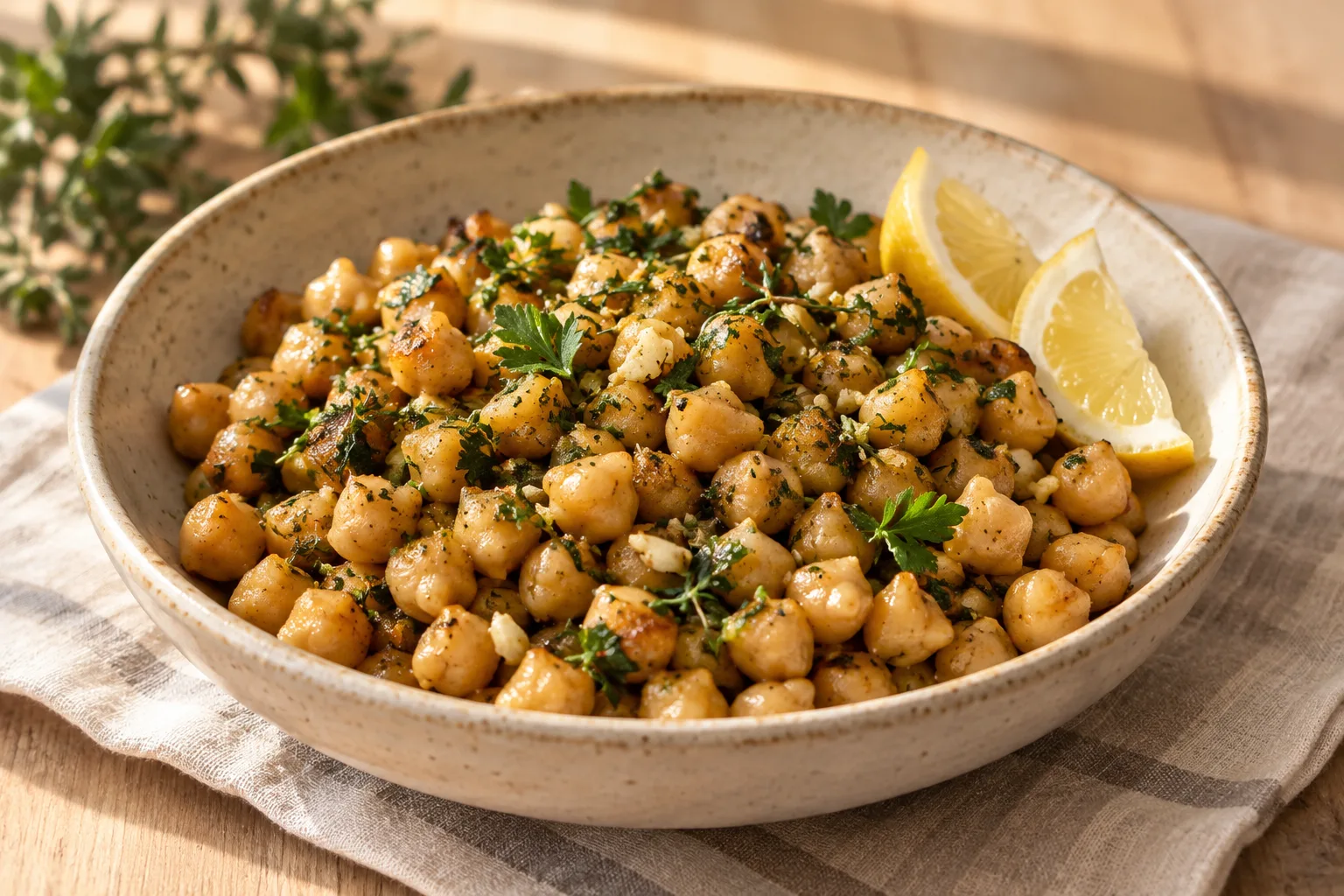
Sautéed Chickpeas with Aromatic Herbs
Cooked chickpeas browned in a pan with garlic, lemon, and fresh herbs.
View recipe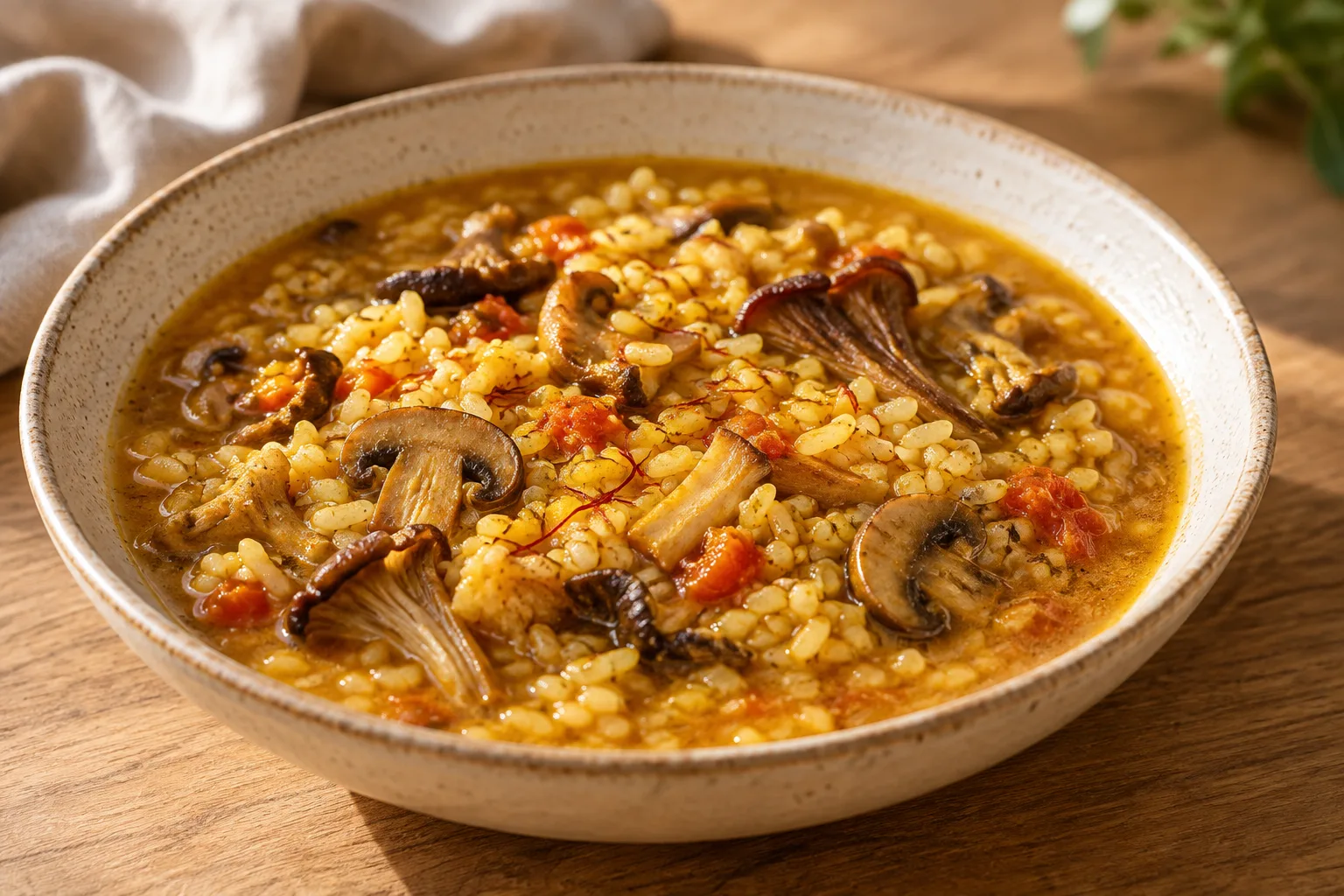
Brothy Rice with Mushrooms and Saffron
Round rice cooked with mushrooms, saffron, and vegetable stock at a ratio of 4 parts stock to 1 part rice.
View recipe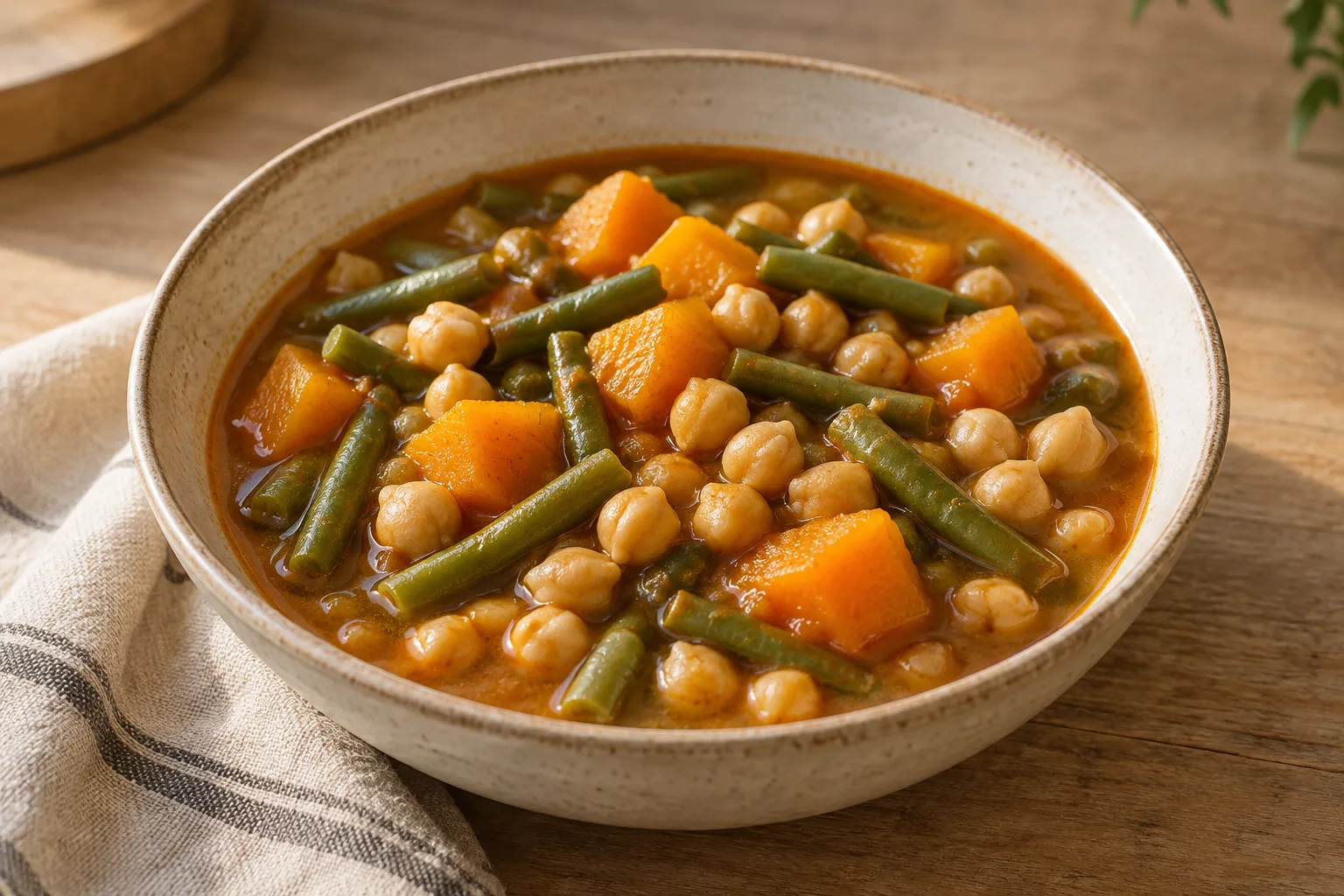
Chickpea and Vegetable Stew with Pumpkin
A vegetarian stew for 4 made with dried chickpeas, pumpkin and green beans.
View recipe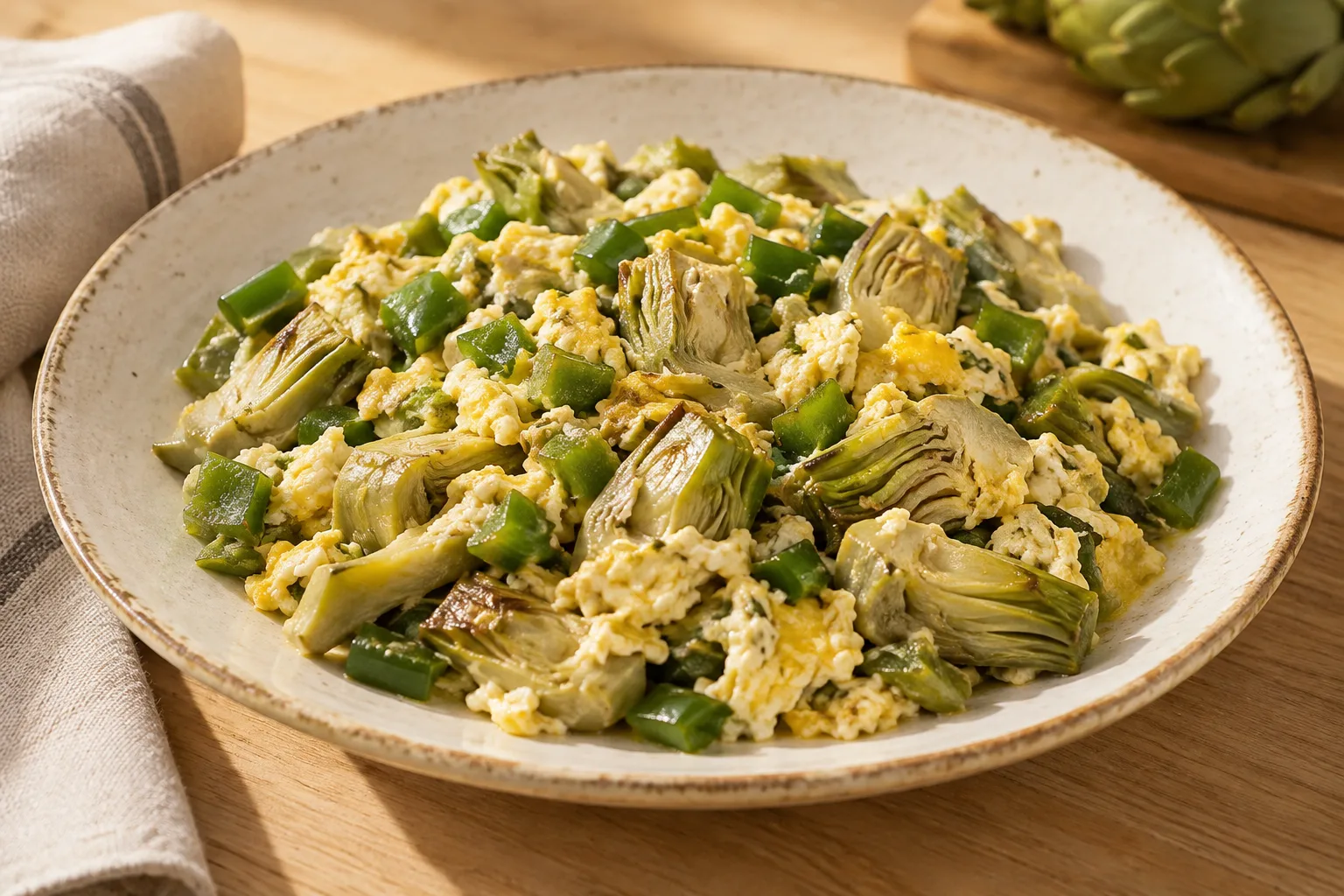
Artichoke and pepper scramble
A scramble for 4 made with artichokes, green pepper and eggs.
View recipe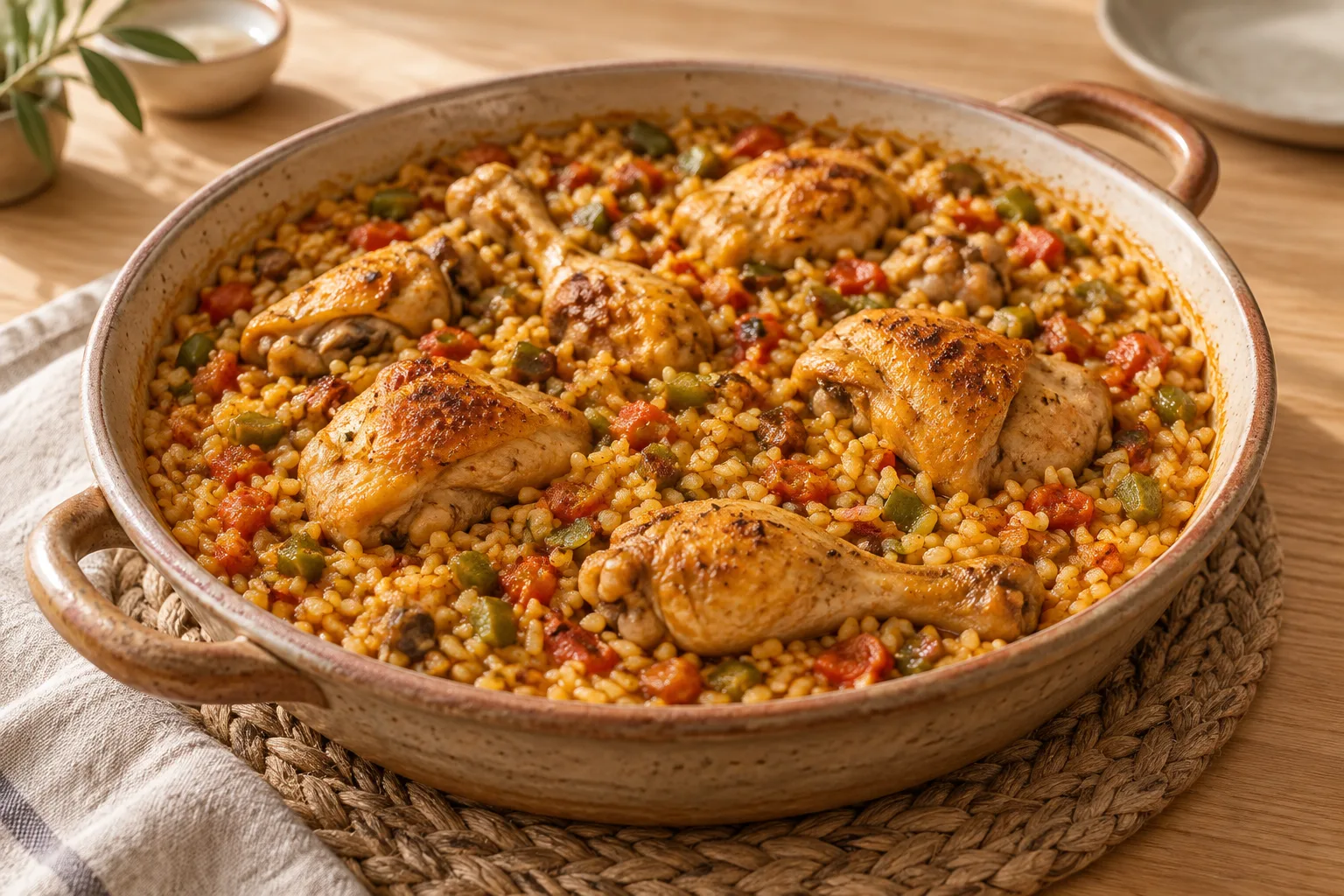
Dry Chicken Rice with Homemade Stock
Dry yet juicy rice with browned chicken, a vegetable sofrito, and homemade chicken stock.
View recipe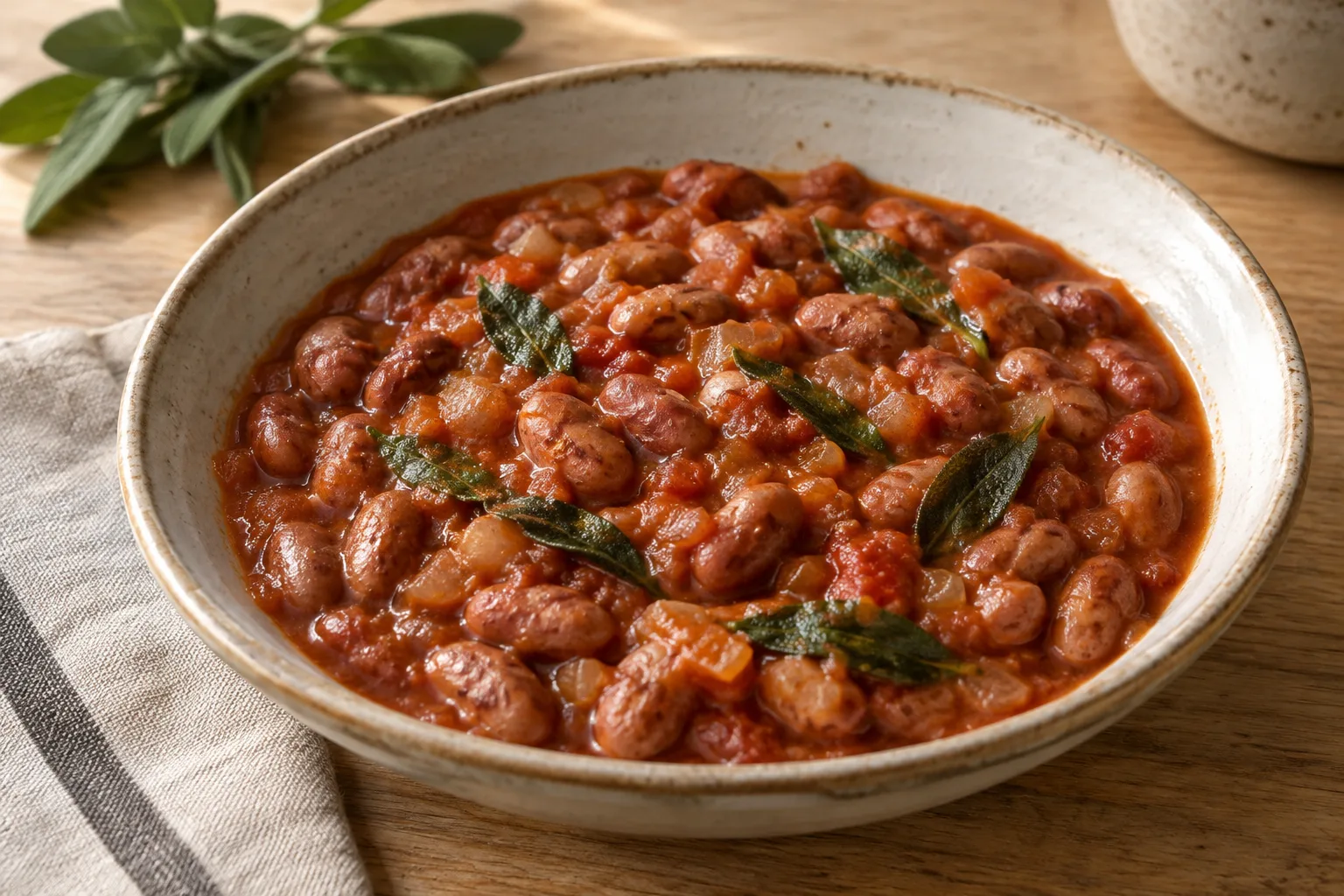
Stewed Pinto Beans with Aromatic Herbs
Dried pinto beans, cooked and finished in a tomato, onion, garlic and sage sauce.
View recipe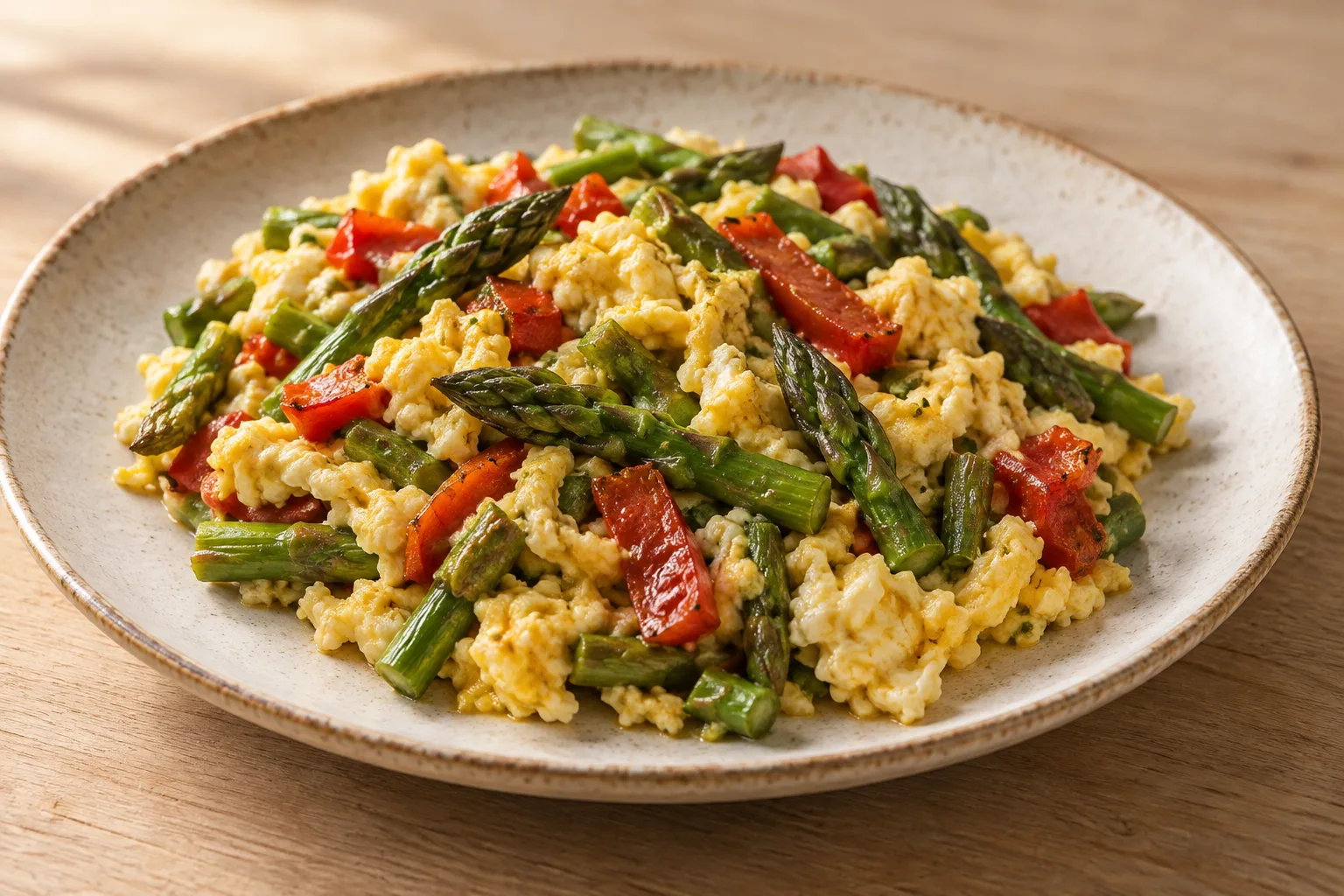
Asparagus and Pepper Scramble
A vegetarian asparagus and pepper scramble cooked in a frying pan and finished with fully set eggs.
View recipe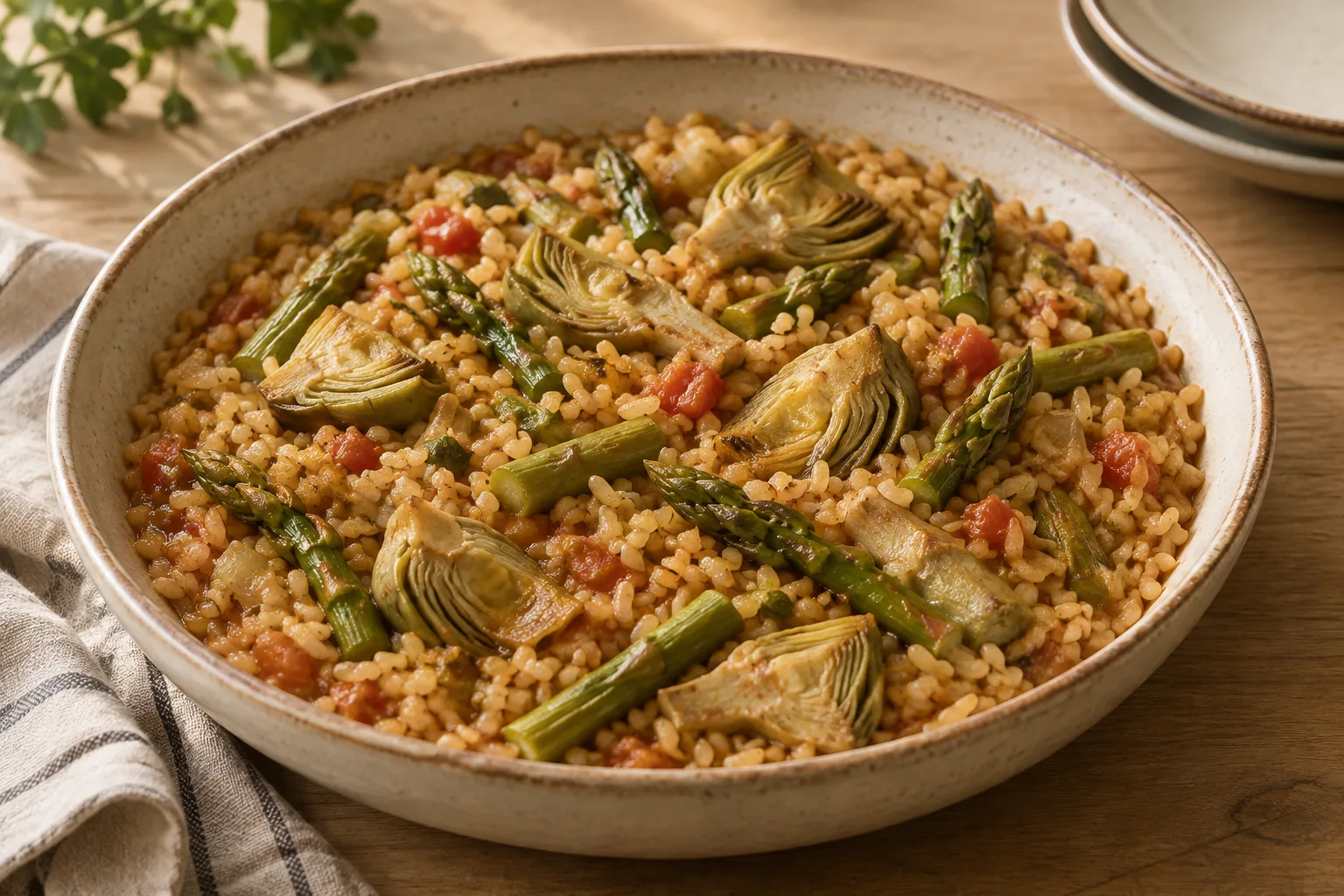
Dry Artichoke Rice with Homemade Stock
Dry rice for four with artichokes, asparagus, and homemade stock made from vegetable trimmings.
View recipe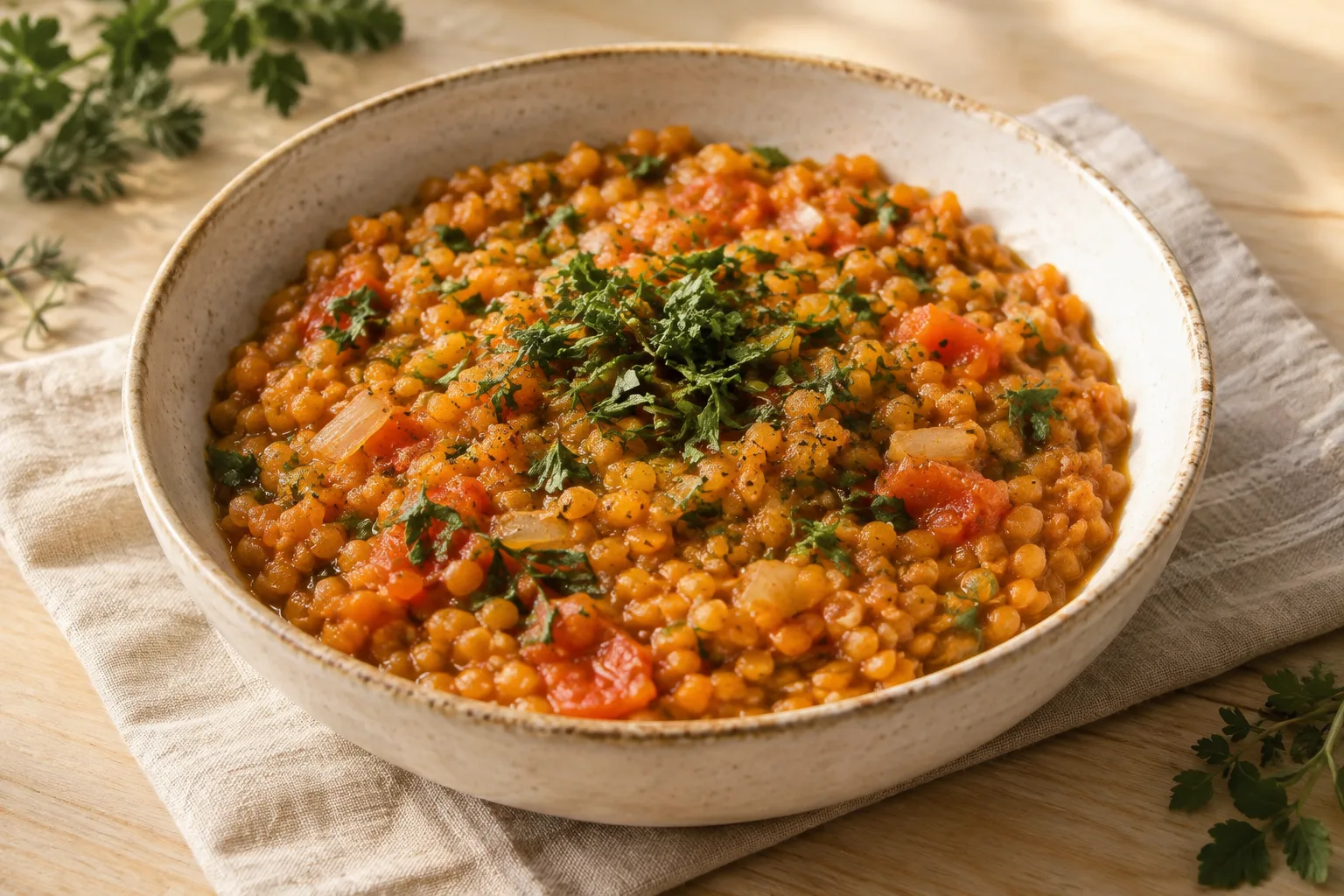
Spiced Red Lentils with Aromatic Herbs
Red lentils cooked with shallot, tomato, anise, and a mixture of fresh herbs.
View recipe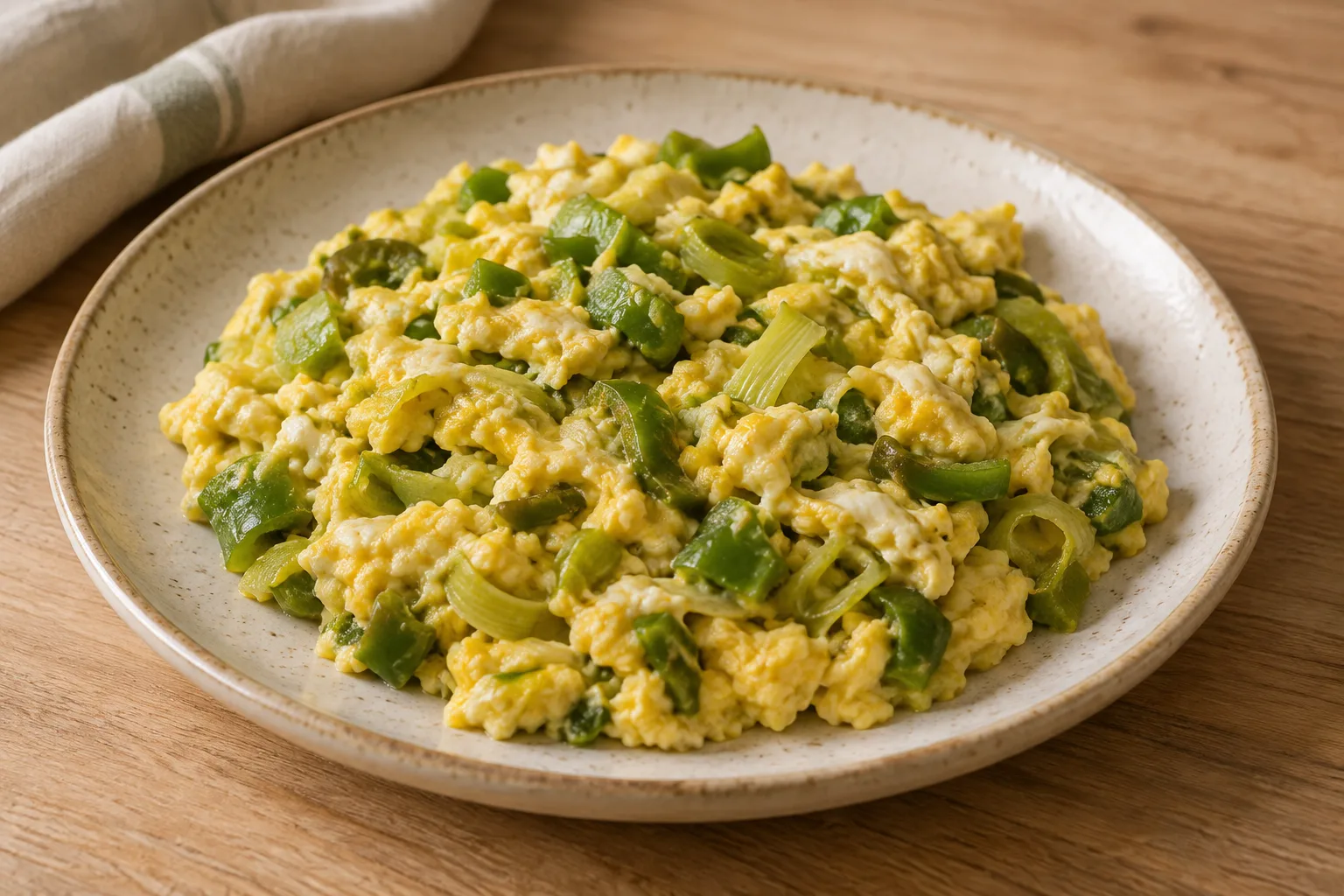
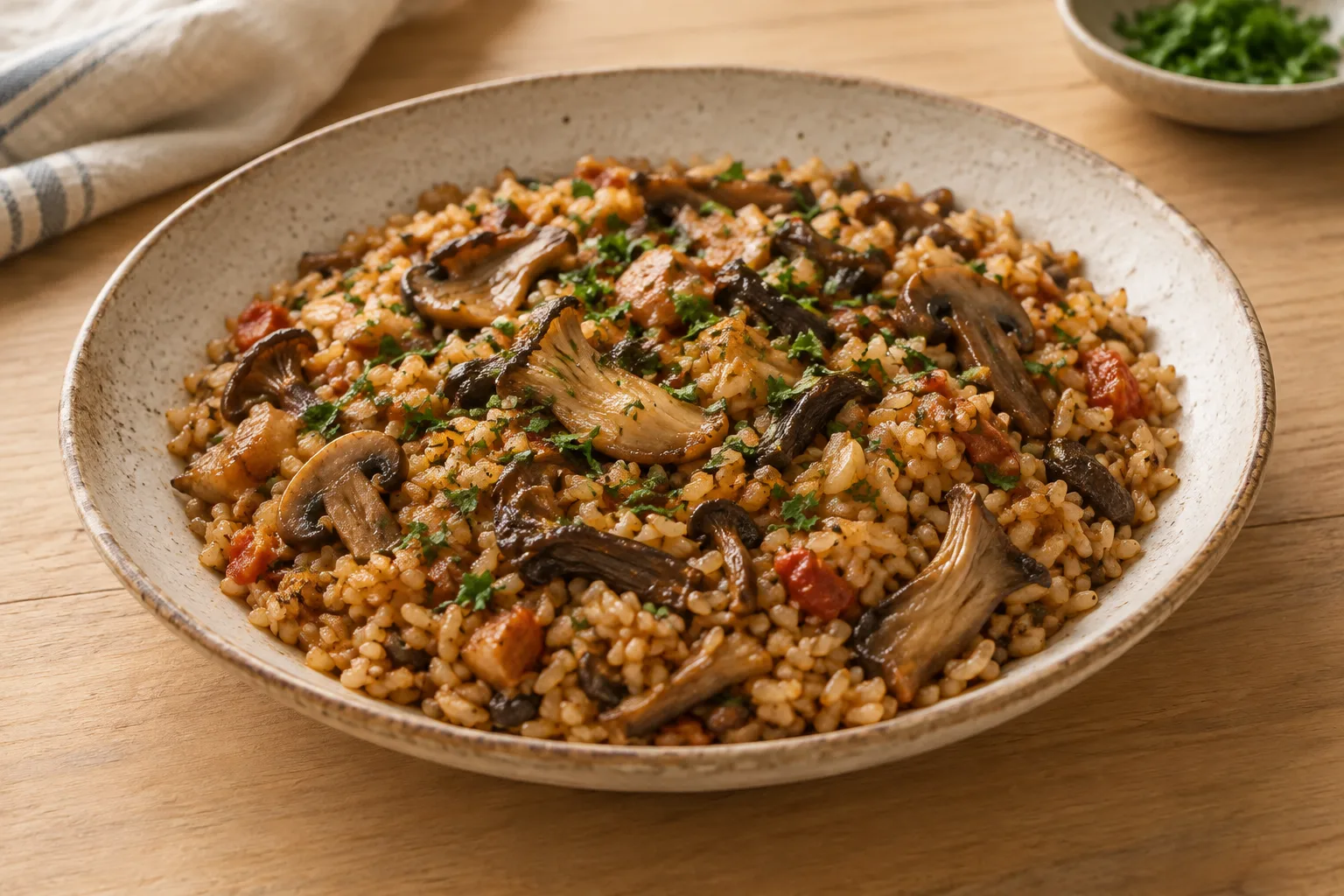
Dry mushroom rice with homemade stock
A dry vegetarian rice dish with mushrooms, an onion and tomato sofrito, and homemade vegetable stock.
View recipe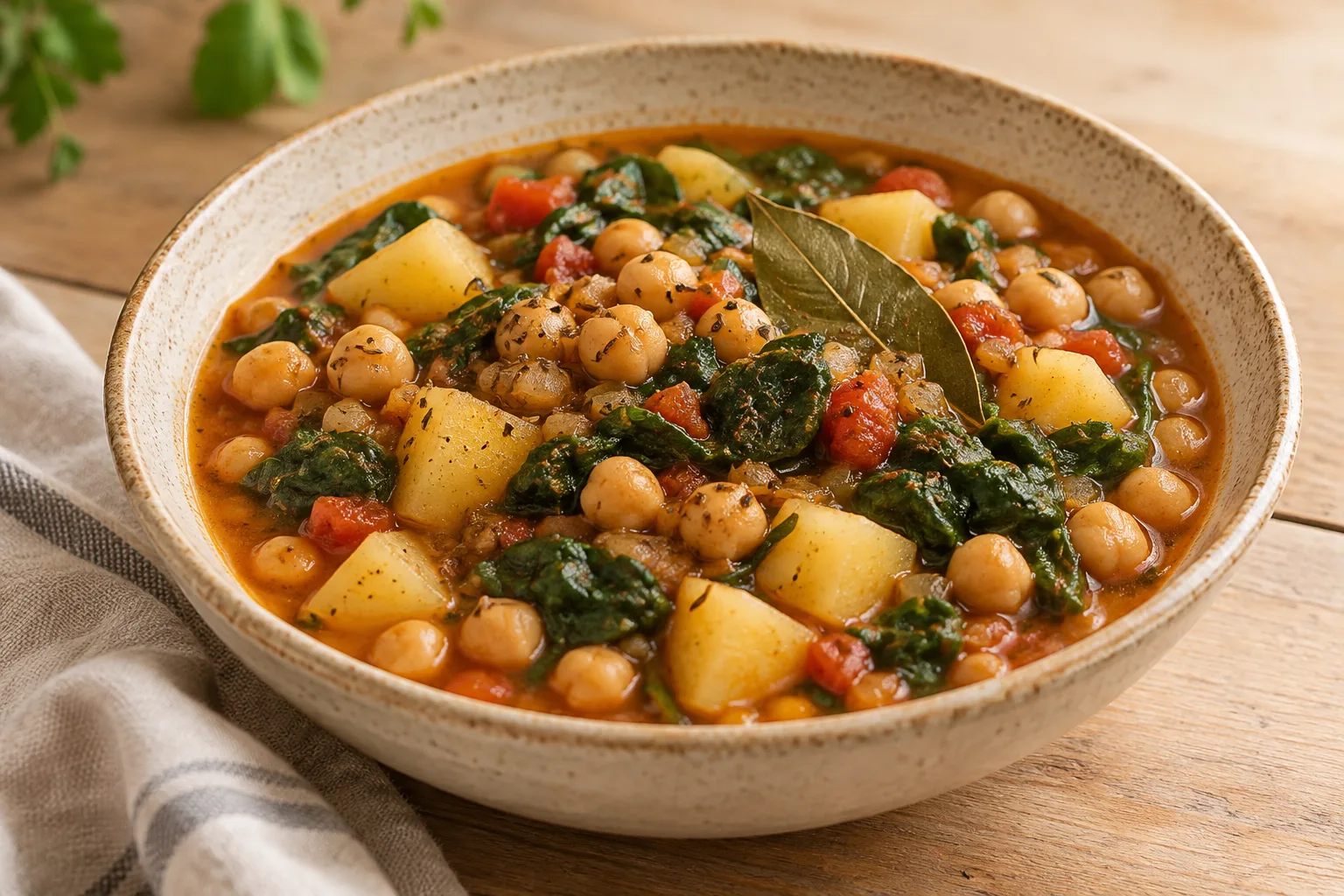
Chickpea Stew with Aromatic Herbs
A vegetarian stew for 4 made with cooked chickpeas, potato, spinach, bay leaves, and cumin.
View recipe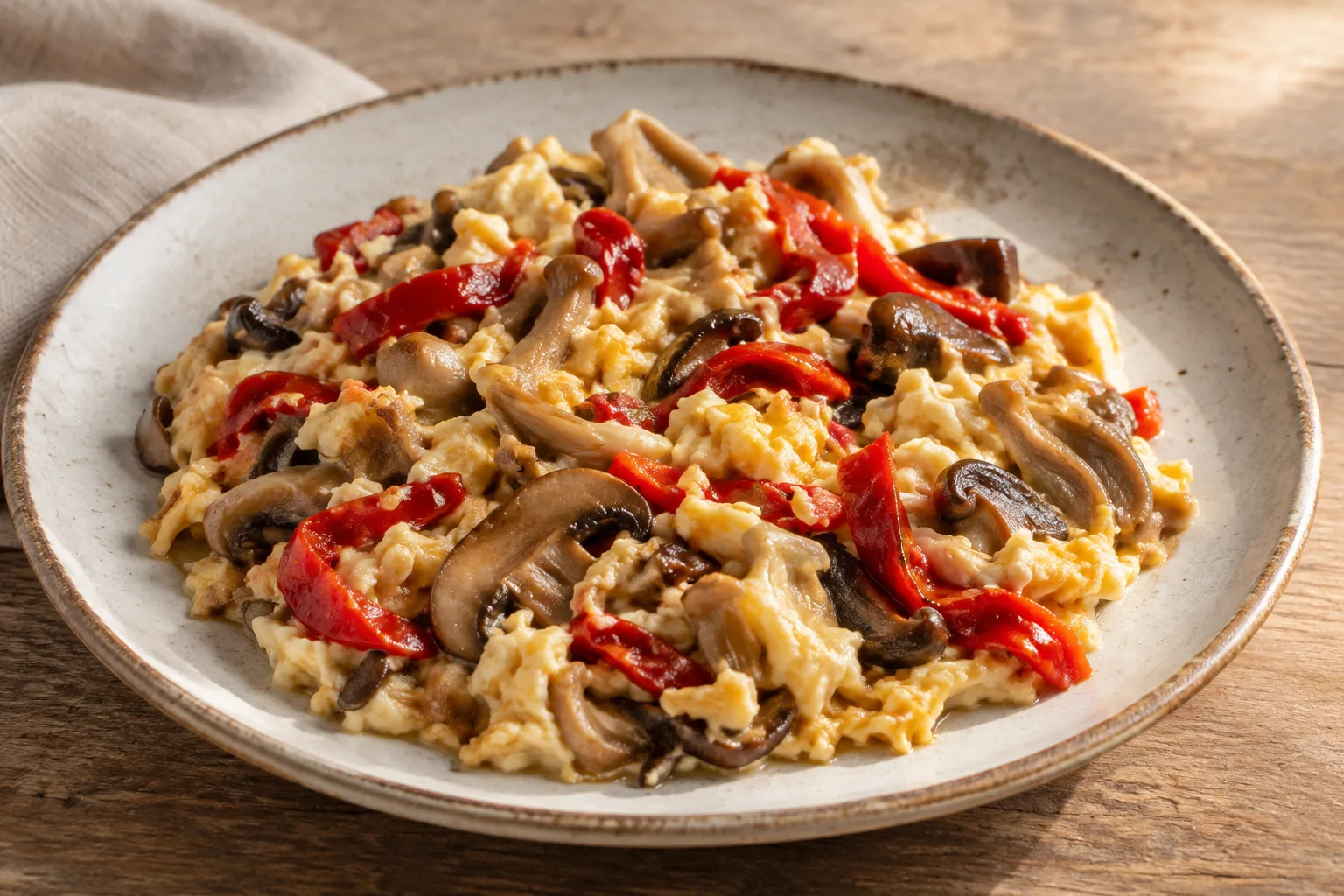
Mushroom and Pepper Scramble
Sautéed mushrooms and piquillo peppers are finished with lightly beaten eggs for a succulent scramble.
View recipe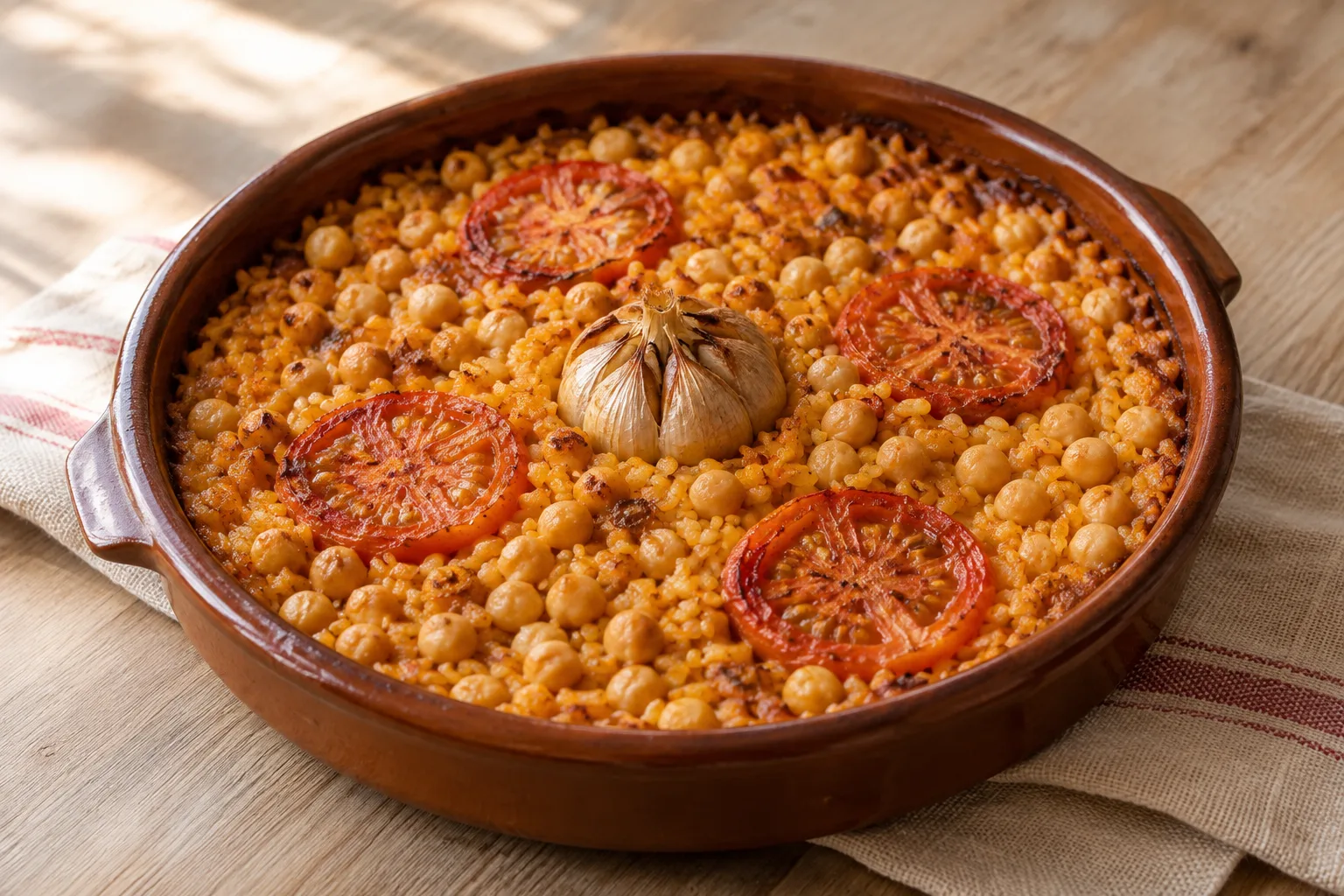
Dry Chickpea Rice with Homemade Stock
Oven-baked rice with cooked chickpeas, tomato, and homemade stock, using 2 parts stock to 1 part rice.
View recipe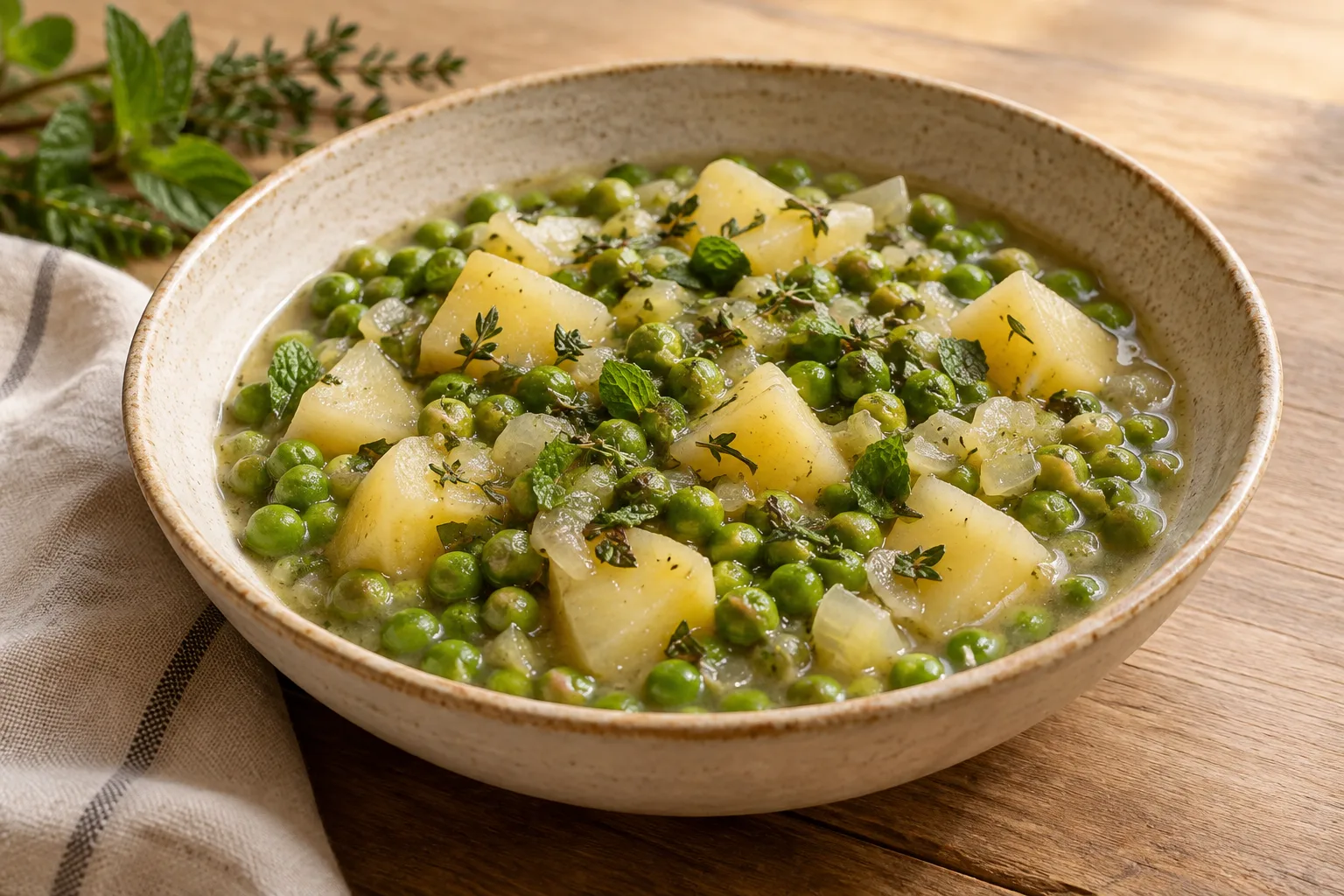
Pea Stew with Aromatic Herbs
A vegetarian stew of peas, potato and onion, lightly thickened with flour and scented with mint and thyme.
View recipe
Sources consulted
Read the sources and each document’s scope. A heritage inscription concerns a particular practice, not all of a country’s cuisine.
- Spanish cuisine and its essential condiments | The art of eating well | mentta mentta.com/blog/en/spanish-condiments?srsltid=AU7gw4XyWg6coc2JyLU92NNjF03WwvTvI2iPzb44zNswsb… mentta.com Consulted: October 31, 2026
- Aceite de oliva: consumo de los hogares, 2024 www.mercasa.es/publicaciones/alimentacion-en-espana/aceite-de-oliva/aceite-de-oliva/ Mercasa Consulted: October 31, 2026
- Otros aceites: consumo de los hogares, 2024 www.mercasa.es/publicaciones/alimentacion-en-espana/oleaginosas/aceites-de-semillas/ Mercasa Consulted: October 31, 2026
- Spain's Essential Herbs and Spices www.spainfoodsherpas.com/spains-essential-herbs-and-spices/?srsltid=AU7gw4WdM2qXcYof1aKF01hB… Spain Food Sherpas Consulted: October 31, 2026
- Flavours of Spain, a country with good taste www.spain.info/en/discover-spain/flavours-spain-country-good-taste/ Turespaña / Spain.info Consulted: October 31, 2026
- 20 recommended and highly popular Spanish tapas www.spain.info/en/top/recommended-popular-spanish-tapas/ Turespaña / Spain.info Consulted: October 31, 2026
- The cuisine of the Canary Islands www.spain.info/en/gastronomy/canary-islands-cuisine/ Turespaña / Spain.info Consulted: October 31, 2026
- Spain in autumn www.spain.info/en/discover-spain/spain-autumn/ Turespaña Consulted: October 31, 2026
- Five very Christmassy culinary experiences in Spain www.spain.info/en/discover-spain/christmas-gastronomic-experiences-spain/ Turespaña Consulted: October 31, 2026
- Consumo y gasto alimentario de los hogares, 2024 www.mercasa.es/publicaciones/alimentacion-en-espana/consumo-alimentario/ Mercasa Consulted: October 31, 2026
- Consumo y gasto en pan de los hogares, 2024 www.mercasa.es/publicaciones/alimentacion-en-espana/harinas/pan/ Mercasa Consulted: October 31, 2026
- Consumo y gasto en legumbres de los hogares, 2024 www.mercasa.es/publicaciones/alimentacion-en-espana/legumbres/ Mercasa Consulted: October 31, 2026
- Frutas, hortalizas y patatas: consumo doméstico, 2024 www.mercasa.es/publicaciones/alimentacion-en-espana/frutas-y-hortalizas/frutas-y-hortalizas/ Mercasa Consulted: October 31, 2026
- Carne y productos cárnicos: hogares, 2024 www.mercasa.es/publicaciones/alimentacion-en-espana/carnes/carnes-y-productos-carnicos/ Mercasa Consulted: October 31, 2026
- Productos de la pesca y la acuicultura: hogares, 2024 www.mercasa.es/publicaciones/alimentacion-en-espana/productos-de-la-pesca-y-la-acuicultura/ Mercasa Consulted: October 31, 2026
- Gasto y consumo per cápita en hogares, 2024 www.mercasa.es/publicaciones/alimentacion-en-espana/gasto-y-consumo-per-capita-en-hogares/ Mercasa Consulted: October 31, 2026
- ANIBES: diseño y metodología www.fen.org.es/anibes/index.php/es/diseno_metodologia Fundación Española de la Nutrición Consulted: October 31, 2026
- Macronutrient Distribution and Dietary Sources in the Spanish Population: Findings from the ANIBES Study pmc.ncbi.nlm.nih.gov/articles/PMC4808903/ Ruiz et al., Nutrients Consulted: October 31, 2026
- Aguas envasadas: compras de los hogares, 2024 www.mercasa.es/publicaciones/alimentacion-en-espana/aguas-envasadas/ Mercasa Consulted: October 31, 2026
- El café en Cataluña: tipos y preparaciones gremicafe.cat/es/el-cafe-a-catalunya/ Gremi del Cafè, Torradors de Catalunya Consulted: October 31, 2026
- Are Spanish children drinking enough and healthily? An update of the Liq.in7 cross-sectional survey in children and adolescents scielo.isciii.es/scielo.php?pid=S0212-16112021000300446&script=sci_arttext Iglesia-Altaba et al., Nutrición Hospitalaria / SciELO Consulted: October 31, 2026
- ENALIA 2012–2014: resumen de la encuesta nacional infantil y adolescente www.aesan.gob.es/dam/jcr:334b12e9-adf8-4967-b6c7-92c4287a4dbe/Resumen_Enalia_2014.pdf AESAN / AECOSAN Consulted: October 31, 2026
- Horarios habituales de la restauración en España www.spain.info/es/consejos-viaje/horarios-dias-festivos-espana/ Turespaña / Spain.info Consulted: October 31, 2026
- ANIBES: meal frequency, duration and energy distribution pmc.ncbi.nlm.nih.gov/articles/PMC5582404/ Complutense University / CIBER OBN / original ANIBES study Consulted: October 31, 2026
- España: usos de consumo en el hogar, 2024 www.mercasa.es/publicaciones/alimentacion-en-espana/comercializacion-de-alimentos-y-bebidas/ Mercasa / MAPA Consulted: October 31, 2026
- Encuesta de Empleo del Tiempo 2002–2003: resultados nacionales www.ine.es/daco/daco42/empleo/empleotiempo03_nacional.pdf INE Consulted: October 31, 2026
- Raciones de referencia, diciembre de 2022 www.aesan.gob.es/AECOSAN/docs/documentos/nutricion/RECOMENDACIONES_DIETETICAS.pdf AESAN Consulted: October 31, 2026
- Arroz con verduras, magra y costillejas de la Región de Murcia www.turismoregiondemurcia.es/es/receta?receta=5-2002 Consejería de Cultura y Turismo / Región de Murcia Consulted: October 31, 2026
- Baleares: ejemplo culinario de berenjenas en escabeche einasalut.caib.es/web/ciudadania-activa/-/conserva-de-berenjenas-en-escabeche Govern de les Illes Balears / EINAsalut Consulted: October 31, 2026
- Quesos: fermentación de la leche www.juntadeandalucia.es/agriculturaypesca/ifapa/servifapa/registro-servifapa/09c48390-9f95-4… Junta de Andalucía / IFAPA Consulted: October 31, 2026
- SPAHOUSEC I: equipamiento de hogares de España en 2010 www.idae.es/uploads/documentos/documentos_Informe_SPAHOUSEC_ACC_f68291a3.pdf IDAE Consulted: October 31, 2026
- Consumo alimentario de 2025: frecuencia, tamaño y canales de compra www.lamoncloa.gob.es/serviciosdeprensa/notasprensa/agricultura/Paginas/2026/300726-informe-c… Gobierno de España / MAPA Consulted: October 31, 2026
- Desperdicio alimentario en España, 2024: hogares www.mapa.gob.es/dam/mapa/contenido/alimentacion/temas/estrategia-desperdicios/nueva-web-2022… Ministerio de Agricultura, Pesca y Alimentación Consulted: October 31, 2026
- Cocinas regionales de España www.spain.info/es/consulta/cocinas-regionales-espana/ Turespaña Consulted: October 20, 2026
- Cocina de Andalucía www.spain.info/es/gastronomia/cocina-andalucia/ Turespaña Consulted: October 20, 2026
- Cocina de Galicia www.spain.info/es/gastronomia/cocina-galicia/ Turespaña Consulted: October 20, 2026
- Cocina de Cataluña www.spain.info/es/gastronomia/cocina-cataluna/ Turespaña Consulted: October 20, 2026
- Qué comer en València www.visitvalencia.com/que-hacer-valencia/gastronomia/que-comer-valencia Fundación Visit València Consulted: October 20, 2026
- Paella valenciana www.comunitatvalenciana.com/es/turismo-gastronomico/recetas/paella-valenciana Turisme Comunitat Valenciana Consulted: October 20, 2026
- Cultura asturiana de la sidra www.asturias.es/temas/cultura/tradicion-cultura/cultura-asturiana-sidra Principado de Asturias Consulted: October 20, 2026
- Food and intangible heritage, a flavourful relationship www.unesco.org/en/articles/food-and-intangible-heritage-flavourful-relationship UNESCO Consulted: October 20, 2026