Asia · Southeast Asia

Thailand

Recipes connected with Thailand

Food and eating habits

How people eat in Thailand

50 indicators exploring everyday meals, ingredients and food culture. Information is completed progressively from documented evidence.

49 of 50 indicators with documented information

Not all data are comparable: food supply, purchases and intake are different measures. Check the period, population and method for each finding. Qualitative descriptions do not establish percentages or amounts.

Timing and company

7/8
Timing and company — Thailand
IndicatorFindings and context
Meal times
Quantitative findingSurvey

Mean breakfast time was 08:03 and dinner time 18:00, in local time.

Scope, method and limitations
Observation period
Since October 2014; observation cutoff not reported
Unit
local time hh:mm
Population or sample
2133 patients with prediabetes at a Bangkok hospital clinic; shift workers were excluded.
Geographic scope
Baseline data from a cohort started in October 2014; the 2018 article does not specify the observation cutoff.
Definition and method
Dietary recall for the previous twenty-four hours recorded the time of each eating occasion.
Comparison limitations
Partial clinical coverage with a high mean age, not national modal times. No lunch time is reported here, and publication year is not treated as collection year.
Meals per day
Quantitative findingSurvey

Daily main meals: three, 89.4%; more than three, 4.1%; two without breakfast, 4.6%; two without lunch, 1.1%; two without dinner, 0.7%; one, 0.1%.

Scope, method and limitations
Observation period
2017
Unit
%
Population or sample
People aged six and over in private households in Thailand.
Geographic scope
National food consumption behaviour survey, 2017; published percentages exclude unknown responses.
Definition and method
Household interviews and weighted estimates; official main-meal table, checked against the original count table.
Comparison limitations
Historical self-reports. Daily snack counts are not included; rounded percentages are neither added nor renormalised.
Meal duration Insufficient data in the sources consulted
Daily energy distribution
Quantitative findingObserved intake

Published daily energy distribution across breakfast, lunch, dinner and snacks: men, 26%, 34%, 35% and 5%; women, 26%, 32%, 30% and 12%, respectively.

Scope, method and limitations
Observation period
2012
Unit
%
Population or sample
215 healthy sedentary workers aged twenty to fifty from four Bangkok workplaces.
Geographic scope
February–April 2012; local convenience sample.
Definition and method
One-day recall and two consecutive non-weighed food-record days, Friday and Saturday; nutritional coding.
Comparison limitations
Partial historical coverage, with possible under-reporting. Not representative of the entire Thai population.
Weekdays and weekends
Quantitative findingSurvey

Usual weekend lunch with family was reported by 75 participants in the inadequate dietary-diversity group and 119 in the adequate-diversity group.

Scope, method and limitations
Observation period
2023-2024
Unit
participants
Population or sample
304 schoolchildren aged ten to nineteen from three schools in Samoeng, a rural mountainous area of Chiang Mai.
Geographic scope
Interviews from October 31, 2023 to February 28, 2024; reported family habit.
Definition and method
Affirmative-response counts in the table by dietary-diversity group; no addition or conversion into new percentages.
Comparison limitations
Partial local coverage. Not a comparison of weekday and weekend timing or energy; food records covered school days only. Neither national prevalence nor causality is estimated.
Eating at home and away
Qualitative descriptionSurvey

Most participants reported eating breakfast at the office.

Scope, method and limitations
Observation period
2012
Population or sample
215 healthy sedentary workers aged twenty to fifty from four Bangkok workplaces.
Geographic scope
February–April 2012; local convenience sample.
Definition and method
One-day recall and two consecutive non-weighed food-record days, Friday and Saturday; nutritional coding.
Comparison limitations
Partial historical coverage, with possible under-reporting. Not representative of the entire Thai population.
Cooking frequency
Quantitative findingSurvey

Average of 7.6 lunches or dinners personally cooked at home per week.

Scope, method and limitations
Observation period
2022
Unit
meals/week
Population or sample
People aged fifteen and over; Thai survey of 1000 face-to-face interviews, August 10 to October 27, 2022.
Geographic scope
Recall of the previous seven days; meals prepared at home from ingredients.
Definition and method
Probability-based, weighted survey; separate lunch and dinner questions. Figure read from the report’s country map.
Comparison limitations
Partial coverage: excludes breakfast, premade food and reheated leftovers. Pattani, Narathiwat, Yala and some districts were excluded for security, together representing less than 4% of the population. Not a count of recipes or portions prepared.
Eating together
Quantitative findingSurvey

11.1% reported eating alone four or more times per week, using the study definition.

Scope, method and limitations
Observation period
2013
Unit
%
Population or sample
Cohort of 39820 adults responding to the 2013 follow-up, recruited among distance-learning students living nationwide.
Geographic scope
Eating alone during the seven days before the questionnaire.
Definition and method
Self-administered questionnaire; reported frequency and classification in the study table.
Comparison limitations
Partial cohort coverage, not a nationally representative prevalence. This is not the share of all meals eaten alone and does not establish causal effects on wellbeing.

Pantry and recipes

2/2
Pantry and recipes — Thailand
IndicatorFindings and context
Most consumed ingredients
Quantitative findingFood supply

Estimated food availability was 172.49 kg of rice and products, 71.68 kg of fruit excluding wine and 42.44 kg of vegetables per person per year.

Scope, method and limitations
Observation period
2023
Unit
kg/person/year
Population or sample
Thailand’s population in the national balance.
Geographic scope
Year 2023.
Definition and method
National food balance. Three selected product groups with original units. The rows carry estimate flag E.
Comparison limitations
Average availability for human food use. It does not measure individual intake or rank all foods.
Ingredient prevalence in recipes
Quantitative findingRecipe sample

Garlic appeared in 60% of preparations, brown sugar in 52% and palm oil in 51%.

Scope, method and limitations
Observation period
2024
Unit
%
Population or sample
90 distinct curry-over-rice menu items from 13 shops at Chiang Mai University.
Geographic scope
August and September 2024 survey. Study published in 2026.
Definition and method
Interviews about menus offered throughout the year and a list of unique dishes. Recipes were standardized by cross-reviewing Wongnai entries.
Comparison limitations
Frequencies in the standardized recipe set. They measure neither intake nor sales. The Wongnai access date and exact rules for grouping variants are not detailed.

Cereals and plant foods

6/6
Cereals and plant foods — Thailand
IndicatorFindings and context
Cereals and cereal products
Quantitative findingFood supply

Estimated availability was 172.49 kg of rice and products, 20.33 kg of wheat and products and 10.12 kg of maize and products per person per year.

Scope, method and limitations
Observation period
2023
Unit
kg/person/year
Population or sample
Thailand’s population in the national balance.
Geographic scope
Year 2023.
Definition and method
National food balance. Original categories and units are retained. The rows carry estimate flag E.
Comparison limitations
Average availability for human food use. It does not measure individual intake, consumption frequency or cooked serving weights.
Bread
Qualitative descriptionCultural context

Roti Tae Chieo is described as a roti bread with a sesame and bean filling, sprinkled with brown sugar.

Scope, method and limitations
Population or sample
Bang Noi Floating Market, Samut Songkhram.
Geographic scope
Tourism guide, April 2020 edition.
Definition and method
Culinary description of the market in an official guide.
Comparison limitations
Local example. The source measures neither bread consumption per person nor frequency.
Pulses
Quantitative findingFood supply

Estimated availability of the pulses group was 2.79 kg per person per year.

Scope, method and limitations
Observation period
2023
Unit
kg/person/year
Population or sample
Thailand’s population in the national balance.
Geographic scope
Year 2023.
Definition and method
National food balance. Original categories and units are retained. The rows carry estimate flag E.
Comparison limitations
Average availability for human food use. It does not measure individual intake, consumption frequency or cooked serving weights.
Vegetables
Quantitative findingFood supply

Estimated availability was 4.26 kg of tomatoes and products, 1.66 kg of onions and 36.52 kg of other vegetables per person per year.

Scope, method and limitations
Observation period
2023
Unit
kg/person/year
Population or sample
Thailand’s population in the national balance.
Geographic scope
Year 2023.
Definition and method
National food balance. Original categories and units are retained. The rows carry estimate flag E.
Comparison limitations
Average availability for human food use. It does not measure individual intake, consumption frequency or cooked serving weights.
Fruit
Quantitative findingFood supply

Estimated availability was 10.11 kg of bananas and 7.42 kg of the oranges and mandarins category per person per year.

Scope, method and limitations
Observation period
2023
Unit
kg/person/year
Population or sample
Thailand’s population in the national balance.
Geographic scope
Year 2023.
Definition and method
National food balance. Original categories and units are retained. The rows carry estimate flag E.
Comparison limitations
Average availability for human food use. It does not measure individual intake, consumption frequency or cooked serving weights.
Potatoes, roots and tubers
Quantitative findingFood supply

Estimated availability was 5.12 kg of potatoes and products, 3.28 kg of cassava and products and 0.12 kg of sweet potatoes per person per year.

Scope, method and limitations
Observation period
2023
Unit
kg/person/year
Population or sample
Thailand’s population in the national balance.
Geographic scope
Year 2023.
Definition and method
National food balance. Original categories and units are retained. The rows carry estimate flag E.
Comparison limitations
Average availability for human food use. It does not measure individual intake, consumption frequency or cooked serving weights.

Protein foods

5/5
Protein foods — Thailand
IndicatorFindings and context
Meat
Quantitative findingFood supply

Estimated availability per person per year was 12.67 kg of pigmeat, 10.23 kg of poultry meat and 1.45 kg of bovine meat.

Scope, method and limitations
Observation period
2023
Unit
kg/person/year
Population or sample
Thailand’s population in the national balance.
Geographic scope
Year 2023.
Definition and method
National food balance. Original categories and units. Rows carry estimate flag E.
Comparison limitations
Availability for human food use. It does not measure individual intake. These are weights of balance categories, without equivalence to cooked servings.
Fish and seafood
Quantitative findingFood supply

Estimated availability per person per year was 11.29 kg of pelagic fish and 8.86 kg of freshwater fish.

Scope, method and limitations
Observation period
2023
Unit
kg/person/year
Population or sample
Thailand’s population in the national balance.
Geographic scope
Year 2023.
Definition and method
National food balance. Original categories and units. Rows carry estimate flag E.
Comparison limitations
Availability for human food use. It does not measure individual intake. These are weights of balance categories, without equivalence to cooked servings. It does not separate fresh and preserved products.
Eggs
Quantitative findingFood supply

Estimated availability per person per year was 11.69 kg of eggs.

Scope, method and limitations
Observation period
2023
Unit
kg/person/year
Population or sample
Thailand’s population in the national balance.
Geographic scope
Year 2023.
Definition and method
National food balance. Original categories and units. Rows carry estimate flag E.
Comparison limitations
Availability for human food use. It does not measure individual intake. These are weights of balance categories, without equivalence to cooked servings. The mass unit is retained, without conversion to egg counts.
Milk and dairy products
Quantitative findingFood supply

In the milk excluding butter category, estimated availability was 31.93 kg per person per year. In the butter and ghee category, it was 0.22 kg.

Scope, method and limitations
Observation period
2023
Unit
kg/person/year
Population or sample
Thailand’s population in the national balance.
Geographic scope
Year 2023.
Definition and method
National food balance. Original categories and units. Rows carry estimate flag E.
Comparison limitations
Availability for human food use. It does not measure individual intake. These are weights of balance categories, without equivalence to cooked servings. The milk aggregate does not separate liquid milk, cheese and yoghurt.
Protein sources
Quantitative findingObserved intake

Median animal-protein intake was 30 g/day in men and 31 g/day in women, with interquartile ranges of 14 g and 11 g, respectively.

Scope, method and limitations
Observation period
2012
Unit
g/day
Population or sample
Convenience sample of 75 men and 140 women aged 20 to 50 in sedentary jobs at four worksites in metropolitan Bangkok.
Geographic scope
Data collected between February and April 2012.
Definition and method
A 24-hour recall and a two-day nonweighed food record. Nutrients calculated using the Thai database and medians analysed by sex.
Comparison limitations
Local observation with possible underreporting. It provides neither protein percentages from pulses, meat, fish, eggs and dairy here nor a national estimate.

Fats, flavours and condiments

3/3
Fats, flavours and condiments — Thailand
IndicatorFindings and context
Cooking fats
Quantitative findingFood supply

Estimated food availability was 3.66 kg of palm oil, 3.02 kg of soybean oil, 0.43 kg of coconut oil and 0.36 kg of rice bran oil per person per year.

Scope, method and limitations
Observation period
2023
Unit
kg/person/year
Population or sample
Thailand’s population in the national balance.
Geographic scope
Year 2023.
Definition and method
National food balance. Original categories and units, with estimate flag E.
Comparison limitations
Availability for human food use. It does not measure individual intake, frequency of use or the distribution of oils in households.
Herbs and spices
Qualitative descriptionCultural context

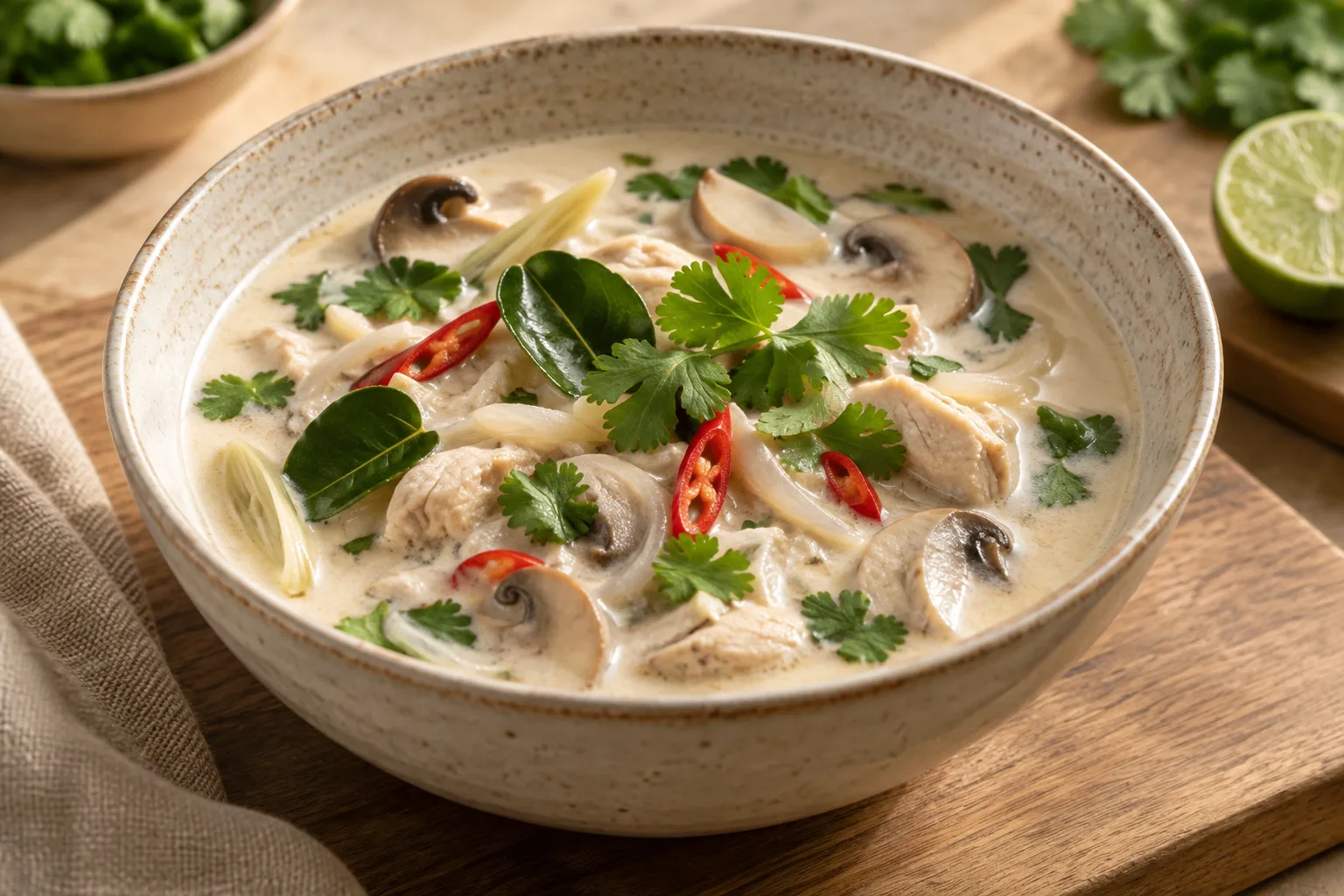
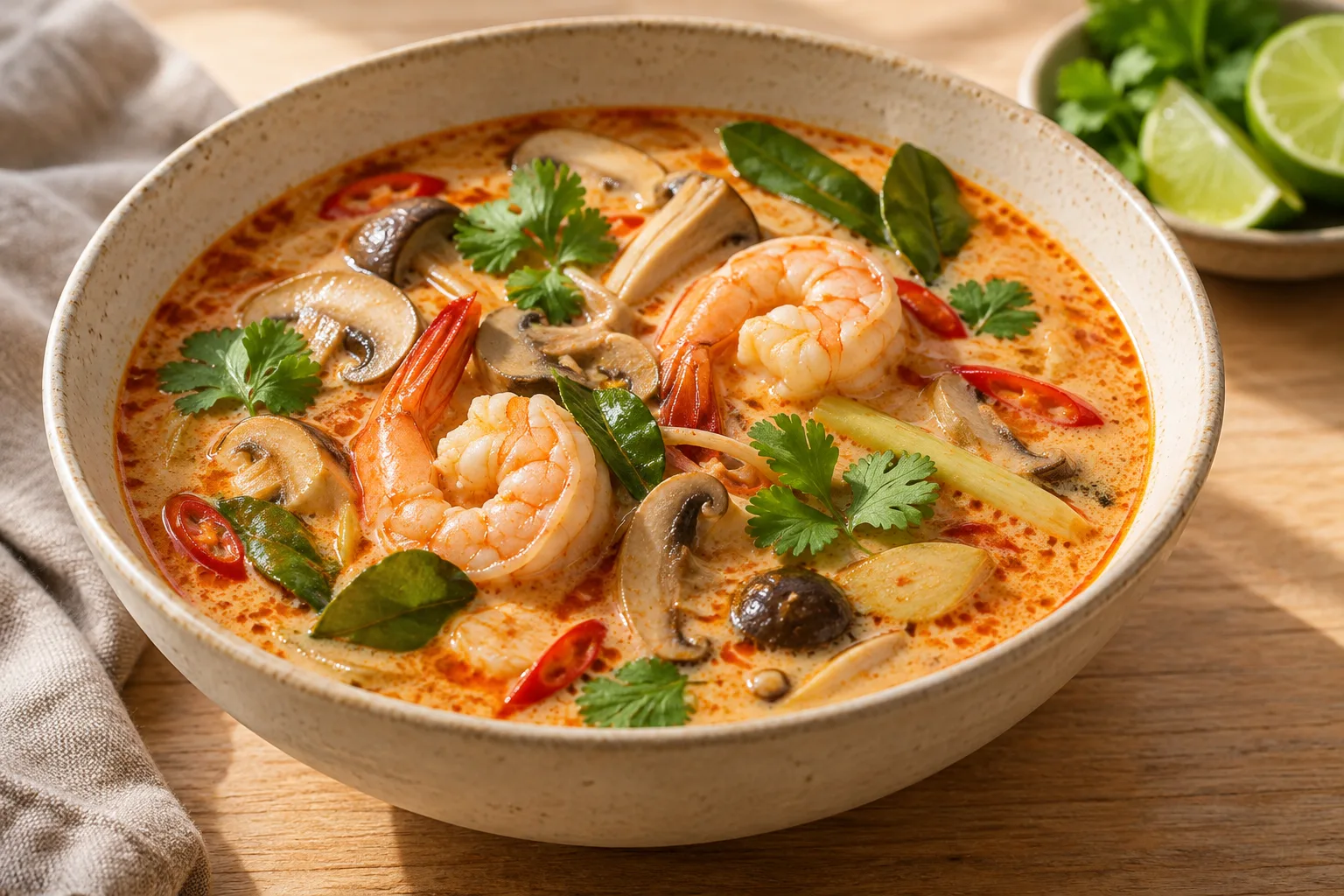
Thai cuisine is described as using fresh herbs and spices; examples given include garlic, galangal, coriander, lemongrass, shallots, pepper, kaffir lime leaves, and chilies. The institutional tomyum kung recipe lists lemongrass, galangal and shallots.

Scope, method and limitations
Population or sample
Description of Thai culinary tradition; not a population sample.
Geographic scope
Cuisine of Thailand; no regions are specified in the description.
Definition and method
Qualitative cultural description of ingredients and flavors; no recipe frequency was calculated.
Comparison limitations
The examples do not establish frequency or amounts, nor estimate prevalence in a defined recipe sample.
Sauces and condiments
Qualitative descriptionCultural context

Thai meals are served with sauces and condiments to accompany dishes. One example is phrik nam pla, made with fish sauce, lime juice, chopped chilies, and garlic; dried chili flakes, sweet chili sauce, and chilies in rice vinegar are also mentioned. The institutional tomyum kung recipe combines fish sauce and lime juice.

Scope, method and limitations
Population or sample
Description of Thai culinary practices; not a population sample.
Geographic scope
Thai meals and restaurants in Thailand; no regions are specified in the description.
Definition and method
Qualitative cultural description of condiments and how they are served; use and amounts were not measured.
Comparison limitations
The examples do not establish frequency or consumption and do not describe every regional variation.

Meal composition

6/6
Meal composition — Thailand
IndicatorFindings and context
Breakfast composition
Qualitative descriptionSurvey

Office breakfasts described in the sample included coffee, pastries, sandwiches, congee and grilled pork with sticky rice.

Scope, method and limitations
Observation period
2012
Population or sample
Convenience sample of sedentary workers aged 20 to 50 at four worksites in metropolitan Bangkok.
Geographic scope
February-April 2012.
Definition and method
A 24-hour recall and a two-day nonweighed food record, with observations described by the research team.
Comparison limitations
Historical local observation. It gives no frequencies for each breakfast food and underreporting is possible.
Main meal composition
Qualitative descriptionSurvey

Dishes in the surveyed set combined steamed rice with options such as curries, stir-fries, deep-fried dishes or other sides.

Scope, method and limitations
Observation period
2024
Population or sample
Curry-over-rice shops at Chiang Mai University.
Geographic scope
August and September 2024 survey.
Definition and method
Interviews at all thirteen shops about menus offered throughout the year, identifying ninety unique menu items.
Comparison limitations
Meal format in a local sample. It establishes neither a national menu nor a fixed number of courses.
Dinner composition
Qualitative descriptionCultural context

Northern khantoke dinner is described with sticky rice, chicken or pork curry, fried chicken, vegetables, soup, fried pork skin and chilli dips.

Scope, method and limitations
Population or sample
Culinary culture of northern Thailand.
Geographic scope
Description published in 2020.
Definition and method
Cultural description of khantoke dinner and its service.
Comparison limitations
Regional example. It does not measure everyday dinner or its population frequency.
Appetisers and snacks
Quantitative findingSurvey

The table lists 46356496 people consuming snacks, 16105372 not consuming them and 610475 with unknown information, out of 63072343 people aged six or over.

Scope, method and limitations
Observation period
2017
Unit
persons
Population or sample
People aged six or over in private Thai households represented in the survey.
Geographic scope
Year 2017.
Definition and method
Weighted household-interview estimates, with nonresponse adjustments and calibration by age, region and municipal area.
Comparison limitations
The definition includes food and drinks between meals except plain water. These are published population counts, without calculated percentages or weekly frequency.
Desserts and sweets
Qualitative descriptionCultural context

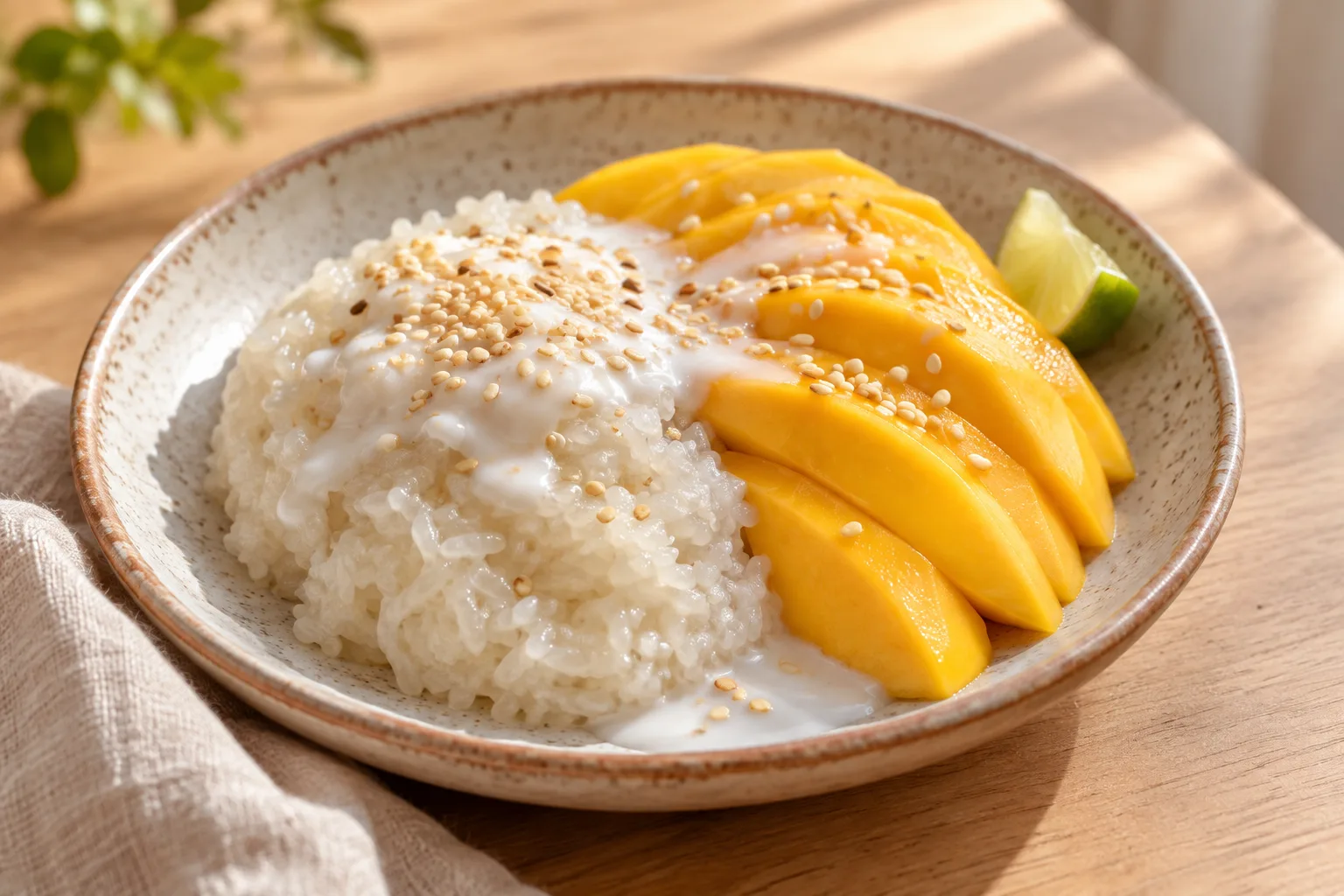
The description of Bang Noi Floating Market includes sweet coconut balls among its desserts.

Scope, method and limitations
Population or sample
Bang Noi Floating Market, Samut Songkhram.
Geographic scope
Guide, April 2020 edition.
Definition and method
Description of market products in an official guide.
Comparison limitations
Local example without a recipe, quantities per person or consumption frequency.
Portion sizes
Quantitative findingSurvey

Mean total served weight of rice with two menu choices was 375 g, with a 95% margin of error of 6 g.

Scope, method and limitations
Observation period
2025
Unit
g
Population or sample
Rice dishes with two menu choices at Chiang Mai University’s Engineering canteen, within a sample of six hundred and fifty dishes.
Geographic scope
30 January to 21 February 2025.
Definition and method
Point-of-sale weighing. Published mean for three hundred and forty-three dishes in this category and margin of error for total weight.
Comparison limitations
Observed served weight without leftover adjustment. It is neither a recommendation nor the mass of a single ingredient. Separate from the 2024 menu survey.

Techniques and equipment

5/5
Techniques and equipment — Thailand
IndicatorFindings and context
Cooking techniques
Quantitative findingRecipe sample

In the menu sample, 48% were stir-fried dishes, 27% curries and soups and 7% deep-fried dishes.

Scope, method and limitations
Observation period
2024
Unit
%
Population or sample
Ninety unique menu items at thirteen curry-over-rice shops at Chiang Mai University.
Geographic scope
August and September 2024 survey.
Definition and method
Interviews about menus offered throughout the year and classification by preparation type.
Comparison limitations
Three selected sample categories, retaining published percentages without recalculation. They are not home-cooking frequencies.
Vegetable preparation
Qualitative descriptionSurvey

Products collected at the markets included pickled or fermented mustard greens, bamboo shoots and ginger.

Scope, method and limitations
Population or sample
Commercial products collected from markets in different Thai regions.
Geographic scope
Study published in 2024. No collection period is specified here.
Definition and method
Collection of forty-five samples of ten fermented-vegetable types, followed by laboratory characterisation.
Comparison limitations
Product presence in the sample. It does not measure dietary shares of raw, boiled, roasted or stir-fried vegetables.
Food preservation
Qualitative descriptionCultural context

One salted-fish process in Ranong involves salting, wrapping and sheltered burial in sand, followed by washing, air-drying without sunlight and refrigeration before packaging.

Scope, method and limitations
Population or sample
One Sea-Salt-Sand preparation described for Ranong.
Geographic scope
Description published in February 2025.
Definition and method
Official description of one salted-fish producer’s process.
Comparison limitations
Example of a specific process. It estimates neither household practices, national prevalence nor a verified shelf life.
Fermented foods
Qualitative descriptionCultural context

Pak-sian-dorng is described as fermented leaves or shoots of Cleome gynandra, prepared with salt and cooked rice.

Scope, method and limitations
Population or sample
Home-industry production described for northeastern Thailand.
Geographic scope
Descriptive record without a stated observation period.
Definition and method
Institutional record of pak-sian-dorng ingredients and production.
Comparison limitations
One documented preparation. It does not quantify consumption or frequency or establish a single formulation for all producers.
Kitchen equipment
Quantitative findingSurvey

84.5% of private households had a refrigerator or freezer and 19.5% had a microwave or oven, using the published combined categories.

Scope, method and limitations
Observation period
2010
Unit
%
Population or sample
Private Thai households in the population and housing census.
Geographic scope
Census date in September 2010.
Definition and method
National census, Table nineteen of the Whole Kingdom report. Percentages of households owning each appliance category.
Comparison limitations
Historical data. Refrigerator and freezer, and microwave and oven, are combined categories without separate percentages or measurements of cooking use.

Drinks

3/3
Drinks — Thailand
IndicatorFindings and context
Everyday drinks
Quantitative findingObserved intake

Mean daily consumption of the studied sugar-sweetened beverages was 474.0 mL in 2018 and 453.8 mL in the second wave, labelled 2019.

Scope, method and limitations
Observation period
2018-2019
Unit
mL/day
Population or sample
5594 participants aged six or older present in both waves of a Thai household survey.
Geographic scope
First wave: May-December 2018; second: June 2019-January 2020.
Definition and method
Face-to-face interviews on typical-week frequency and servings using package pictures; multistage sampling.
Comparison limitations
Partial coverage: selected sugar-sweetened beverages only. It does not measure all water or beverage intake. One-litre packages were excluded. Self-report and attrition; no proof of a causal tax effect.
Coffee and tea preparation
Qualitative descriptionCultural context

Cha nom yen is a sweet orange-coloured iced milk tea prepared with milk and condensed milk; it may include vanilla.

Scope, method and limitations
Population or sample
Culinary description of one Thai beverage type.
Geographic scope
An example served at stalls and cafés; no observation period specified.
Definition and method
Institutional description of ingredients and serving style.
Comparison limitations
Partial qualitative coverage: no serving volumes, added-sugar quantities, intake or coffee preparations quantified.
Drinks with meals
Qualitative descriptionSurvey

In the worker sample, coffee was among the foods and drinks described for breakfasts eaten at the office.

Scope, method and limitations
Observation period
2012
Population or sample
215 healthy sedentary adults aged twenty to fifty, recruited by convenience at four workplaces in metropolitan Bangkok.
Geographic scope
Data collected between February and April 2012.
Definition and method
Qualitative study observation, with one twenty-four-hour recall and a two-day food record.
Comparison limitations
Local partial coverage: no proportion drinking coffee with breakfast or complete beverage data by meal. It does not represent all Thailand.

Nutrition and dietary patterns

3/3
Nutrition and dietary patterns — Thailand
IndicatorFindings and context
Energy and nutrients
Quantitative findingObserved intake

In the national survey, daily means for men and women respectively were: energy 1597.4 and 1320.0 kcal; carbohydrate 241.2 and 199.1 g; protein 60.97 and 51.4 g; fat 40.4 and 35.1 g. In a separate local worker sample, median fibre intake was 7.8 and 8 g/day.

Scope, method and limitations
Observation period
2004-2005; 2012
Unit
kcal/day; g/day
Population or sample
National survey: adults aged eighteen to seventy, excluding pregnant and breastfeeding women. Fibre: healthy sedentary adults at four Bangkok workplaces.
Geographic scope
Energy and macronutrients: January 2004-February 2005. Local fibre: February-April 2012.
Definition and method
National stratified three-stage sample, twenty-four-hour recall, frequency questionnaire and INMUCAL analysis. Local fibre: convenience sample, recall plus a two-day record.
Comparison limitations
Historical self-reported data. National means and local medians come from different samples; fibre is not a national estimate. These are neither recommendations nor food availability.
Salt and sugars
Quantitative findingObserved intake

Estimated weighted mean sodium intake was 3636 mg/day.

Scope, method and limitations
Observation period
2019-2020
Unit
mg/day
Population or sample
1599 adults with valid twenty-four-hour urine collections in a nationwide sample of Thai adults.
Geographic scope
April 2019-May 2020 survey.
Definition and method
Multistage sampling and population weighting. Urinary excretion was increased by 10% to allow for non-urinary losses, following the published method.
Comparison limitations
Sodium estimate, without our own salt conversion or sugar data. Collections mainly at weekends, potentially incomplete samples and participation differences not fully adjusted for.
Dietary patterns
Quantitative findingSurvey

In this sample selected for engagement with vegetarian eating, 31.1% identified as vegetarian, 28.2% as flexitarian and 10.4% as vegan.

Scope, method and limitations
Observation period
2022
Unit
%
Population or sample
241 valid questionnaires from participants in Thailand; not a sample of the whole population.
Geographic scope
September-December 2022 survey.
Definition and method
English-language questionnaire with purposive, convenience and snowball sampling. Flexitarian: mostly vegetarian with occasional meat or fish; vegetarian excludes meat and fish; vegan excludes animal products.
Comparison limitations
Self-identifications in a sample already engaged with vegetarian consumption. Non-probability selection and overrepresentation of graduates prevent interpretation as national prevalence. Categories are not added together.

Shopping, prices and waste

7/7
Shopping, prices and waste — Thailand
IndicatorFindings and context
Food expenditure
Quantitative findingPurchases

Mean monthly household expenditure on food, beverages and tobacco was 8005 THB, or 35.9% of total expenditure.

Scope, method and limitations
Observation period
2024
Unit
THB/household/month; %
Population or sample
Thai households covered by the nationwide socio-economic survey.
Geographic scope
January-December 2024; baht amounts for the survey period.
Definition and method
National household expenditure survey with monthly collection in municipal and non-municipal areas.
Comparison limitations
Combined category includes alcohol and tobacco; it is not food-only spending. Per household, without conversion to a per-person amount or another period. Includes valuation of consumption not paid for in cash.
Cost of a common basket
Quantitative findingPurchases

The practical model basket for the pattern labelled 1600 kcal had a calculated cost of 73.08 THB per day.

Scope, method and limitations
Observation period
2023
Unit
THB/day per model basket
Population or sample
Prices from four selected Bangkok outlets: Ying Charoen and Klong Toei markets, a Ratchathewi market and a Big C supermarket in Saphan Khwai.
Geographic scope
Prices collected in September-October 2023.
Definition and method
Published scenario with twenty-one foods, item-specific quantities and equal serving allocation within each group. Available-price means and edible-portion/cooking adjustments are defined by the model and are not recalculated here.
Comparison limitations
Local modelled cost with auditable quantities in the supplement, without an observed complete purchase. No comparison with baskets of different foods or proof of nutrient adequacy, acceptability or household feasibility.
Cost of specific meals
Quantitative findingPurchases

The most frequent prices for rice with one, two and three accompanying dishes were respectively 35, 40 and 50 THB per plate.

Scope, method and limitations
Observation period
2024
Unit
THB/plate
Population or sample
Curry-over-rice shops at Chiang Mai University; table bases vary by number of accompanying dishes.
Geographic scope
August-September 2024 survey.
Definition and method
Shop-reported selling prices, retaining the published modes.
Comparison limitations
Local university sample, not national estimates or home-cooking costs. The table uses thirteen shops for one and two choices and four for three. No currency conversion or assumption of equal plate sizes.
Grocery shopping locations
Quantitative findingPurchases

Mean expenditure shares at wet markets, supermarkets and other outlets respectively: fresh fruit and vegetables 55.5/36.8/7.6%; fresh meat 53.4/40.3/6.1%; fresh fish 62.4/31.0/7.1%; packaged goods 30.1/59.9/10.0%; beverages 17.9/69.1/13.0%.

Scope, method and limitations
Observation period
2007
Unit
% product-category expenditure
Population or sample
201 people responsible for most household food shopping in Bangkok and Chachoengsao.
Geographic scope
2007 interviews; reported spending in a typical month.
Definition and method
Face-to-face interviews with age quotas in districts containing both wet markets and supermarkets. Mean reported shares by category.
Comparison limitations
Historical local sample. Published rounding and categories retained, without adding or adjusting percentages. Not national total food spending or current/online channel shares.
Shopping frequency
Quantitative findingSurvey

At least weekly, 64% shopped in-store at local or convenience retailers, 50% at supermarkets and 29% used on-demand grocery platforms.

Scope, method and limitations
Observation period
2025
Unit
% at least weekly
Population or sample
521 survey participants in Thailand.
Geographic scope
January-February 2025.
Definition and method
Self-reported use of each channel at least weekly, distinguishing in-store and online categories.
Comparison limitations
Categories overlap. Not expenditure shares, average visit counts or basket size. The summary does not establish national probability representativeness.
Prepared food and delivery
Quantitative findingSurvey

78% bought prepared foods at least once a week and 70% ordered a meal to their home weekly or more often.

Scope, method and limitations
Observation period
2025
Unit
% at least weekly
Population or sample
521 survey participants in Thailand.
Geographic scope
January-February 2025.
Definition and method
Reported frequency of buying prepared foods and ordering meals to the home.
Comparison limitations
Categories may overlap. No expenditure or dish-type quantities and no established nationally representative prevalence. Not equivalent to all ultra-processed food intake.
Household food waste
Quantitative findingSurvey

Estimated household food waste was 86 kg per person per year.

Scope, method and limitations
Observation period
2022
Unit
kg/person/year
Population or sample
National Thailand estimate assembled from local household waste data.
Geographic scope
Estimate for 2022 published in the 2024 report; underlying studies have different dates.
Definition and method
Synthesis and extrapolation of local data, with medium confidence assigned to the Thai estimate.
Comparison limitations
Includes food and associated inedible parts. Not a nationwide 2022 weighing survey or restaurant/retail waste. It cannot establish growth against another report edition.

Seasons and celebrations

2/2
Seasons and celebrations — Thailand
IndicatorFindings and context
Seasonal produce
Qualitative descriptionCultural context

Salika durian from Phang Nga is typically in season from May to July.

Scope, method and limitations
Population or sample
Salika variety and the Kapong area in the southern province of Phang Nga.
Geographic scope
Indicative local calendar published in August 2026.
Definition and method
Institutional description of this variety’s season in its producing area.
Comparison limitations
Partial coverage of one fruit and region. Local conditions can shift the harvest; not nationwide year-round availability or imported fruit.
Celebration food
Qualitative descriptionCultural context

Songkran takes place in mid-April. In a historical account of the central region, khao nio daeng and kalamae desserts were prepared as offerings to monks. In Si Racha, Kong Khao is described with food and sweets in banana-leaf containers, shared after the offering.

Scope, method and limitations
Population or sample
Songkran traditions in Thailand, with distinct examples from the central region and Si Racha, Chonburi.
Geographic scope
Cultural description of the calendar and regional practices; no consumption-frequency survey.
Definition and method
Documentary description of festive traditions and regional offerings.
Comparison limitations
Local and historical examples, without quantifying their current prevalence. They are not a complete festival calendar or ingredient inventory.

Coverage in progress

The editorial guide for this country is in preparation. You can already explore its recipes; regional attributions are added when documented.

Guide available in other languages: Español

Places and communities

One country, many cuisines

An initial selection of regions to explore. Culinary boundaries may differ from administrative divisions.

Thailand

Llanura central y Bangkok

Thailand

Isan y el nordeste

Thailand

Norte y repertorios Lanna

Cook

Recipes connected with Thailand

Each recipe documents one version. Geographic associations do not imply an exclusive origin.
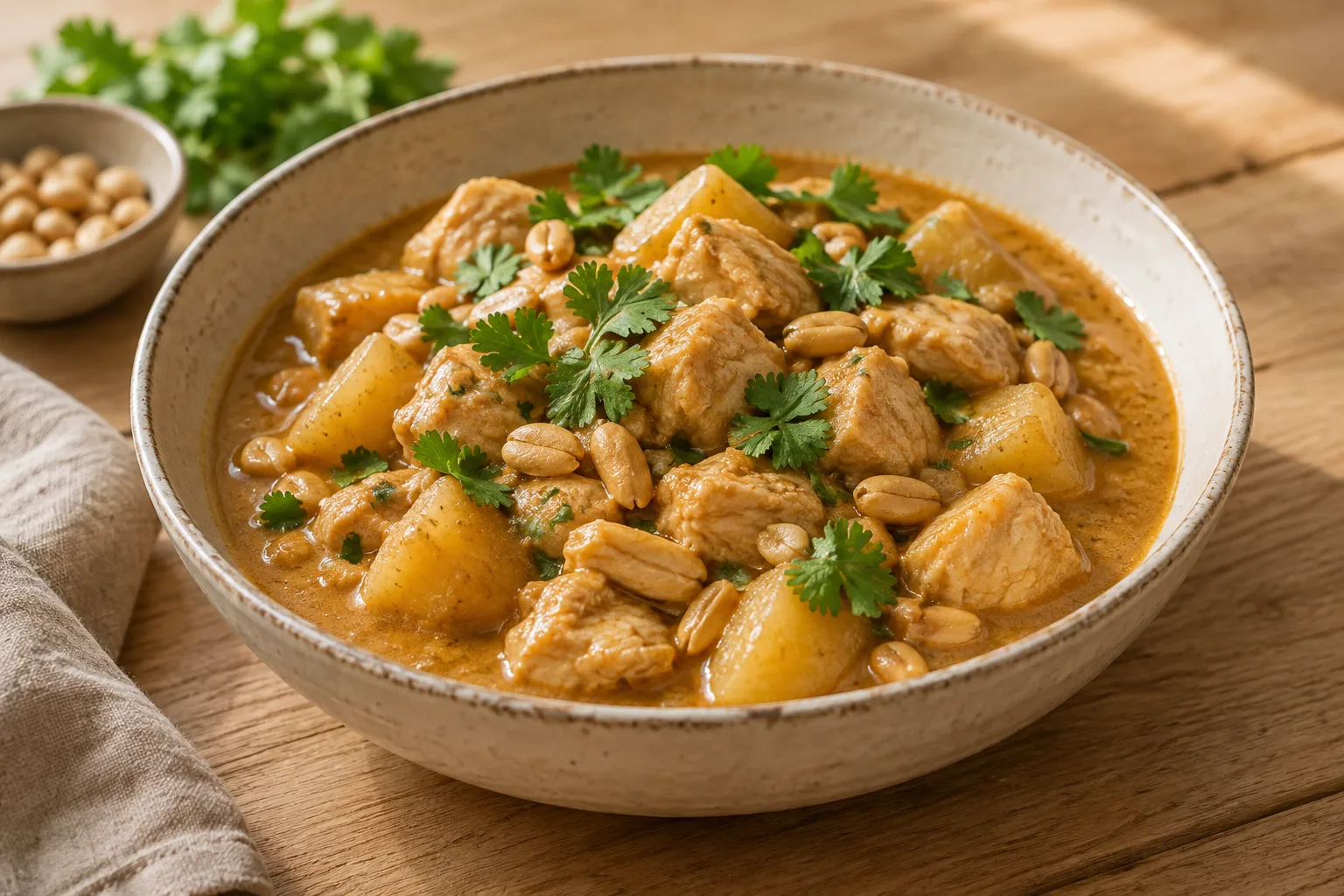
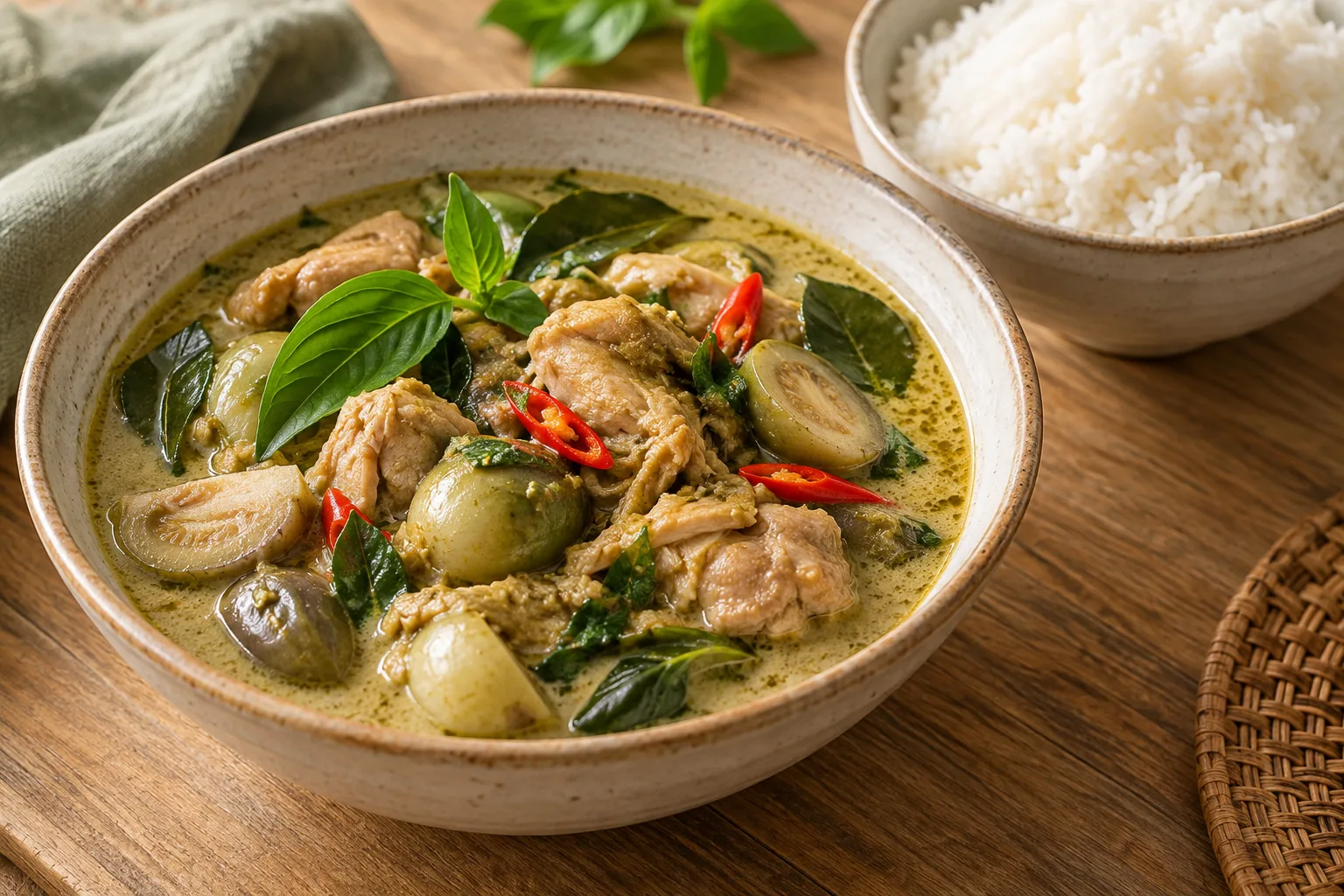
Thai Green Chicken Curry
Image generated by the Kitchenpause team
50 minIntermediate

Thai Green Chicken Curry

Green chicken curry with aubergine, coconut milk and Thai basil, served with jasmine rice. Serves 4; timings are approximate.

View recipe
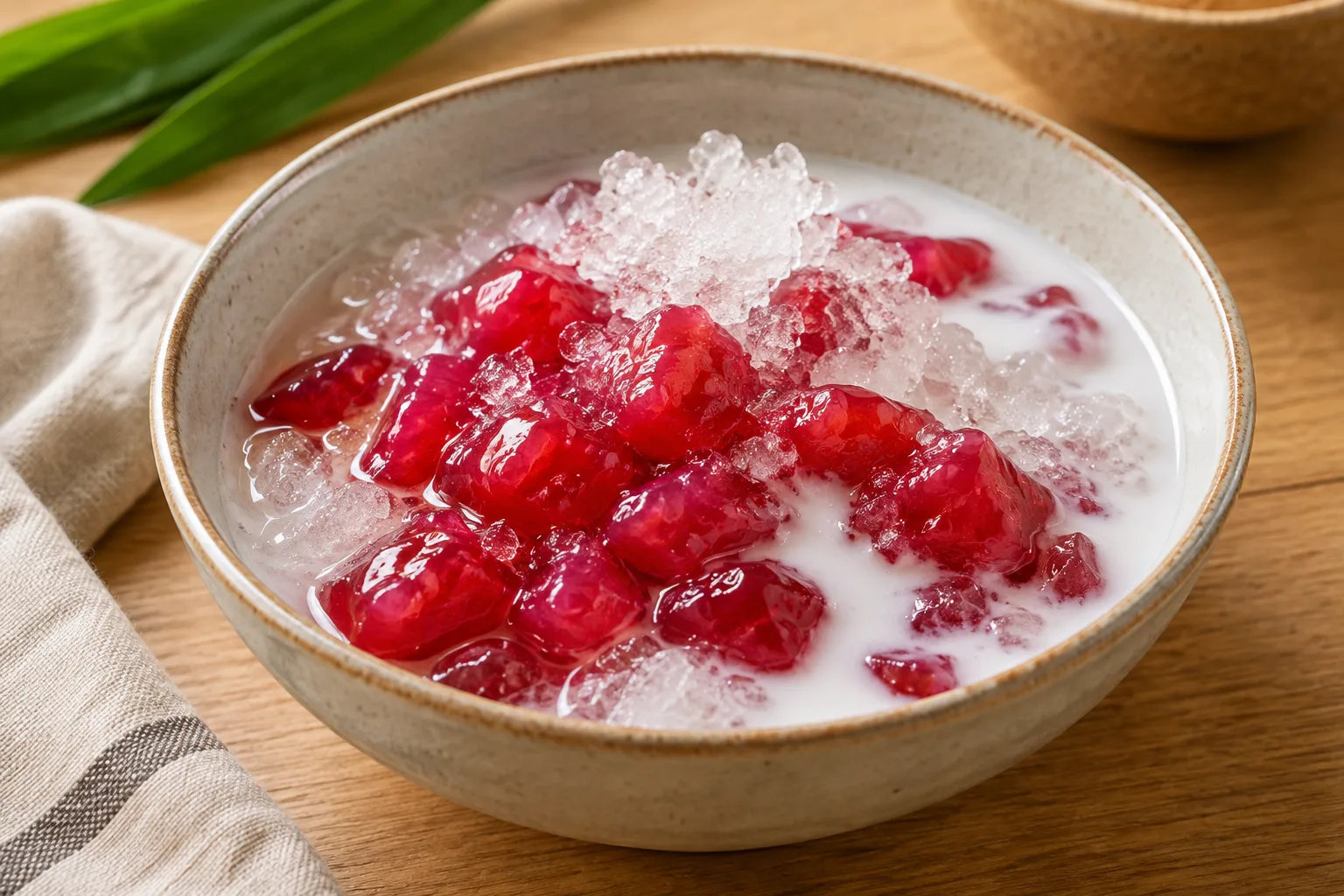
Tub tim grob (Thai ruby dessert)
Image generated by the Kitchenpause team
31 minIntermediate

Tub tim grob (Thai ruby dessert)

Red-dyed water chestnuts coated in tapioca starch and cooked until translucent. Serve with syrup, coconut milk and crushed ice.

View recipe
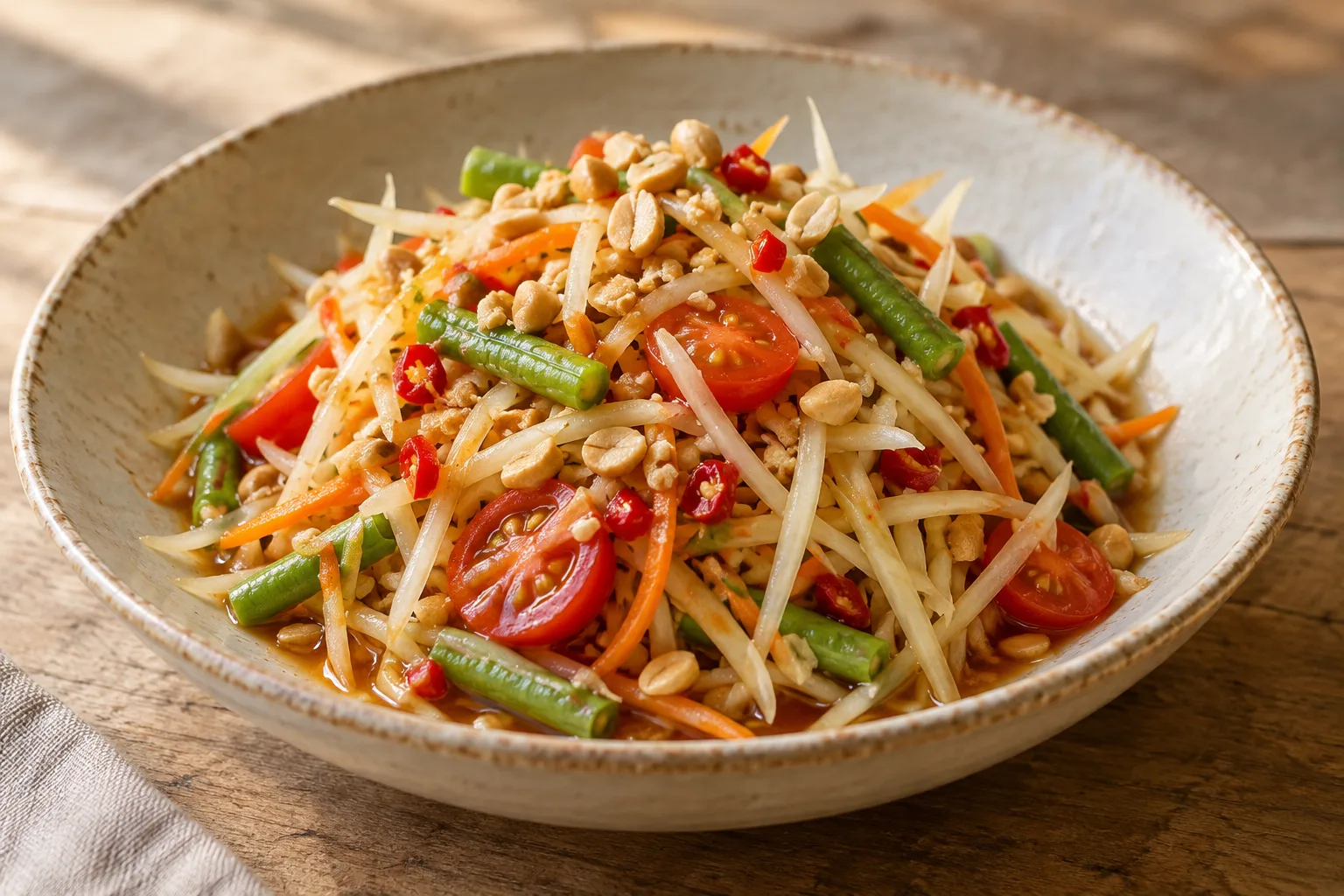
Vegetarian green papaya som tam
Image generated by the Kitchenpause team
20 minEasy

Vegetarian green papaya som tam

A crunchy Thai salad of green papaya, long beans and tomatoes with a tangy, sweet and spicy dressing. This vegetarian version uses soy sauce instead of fish sauce.

View recipe
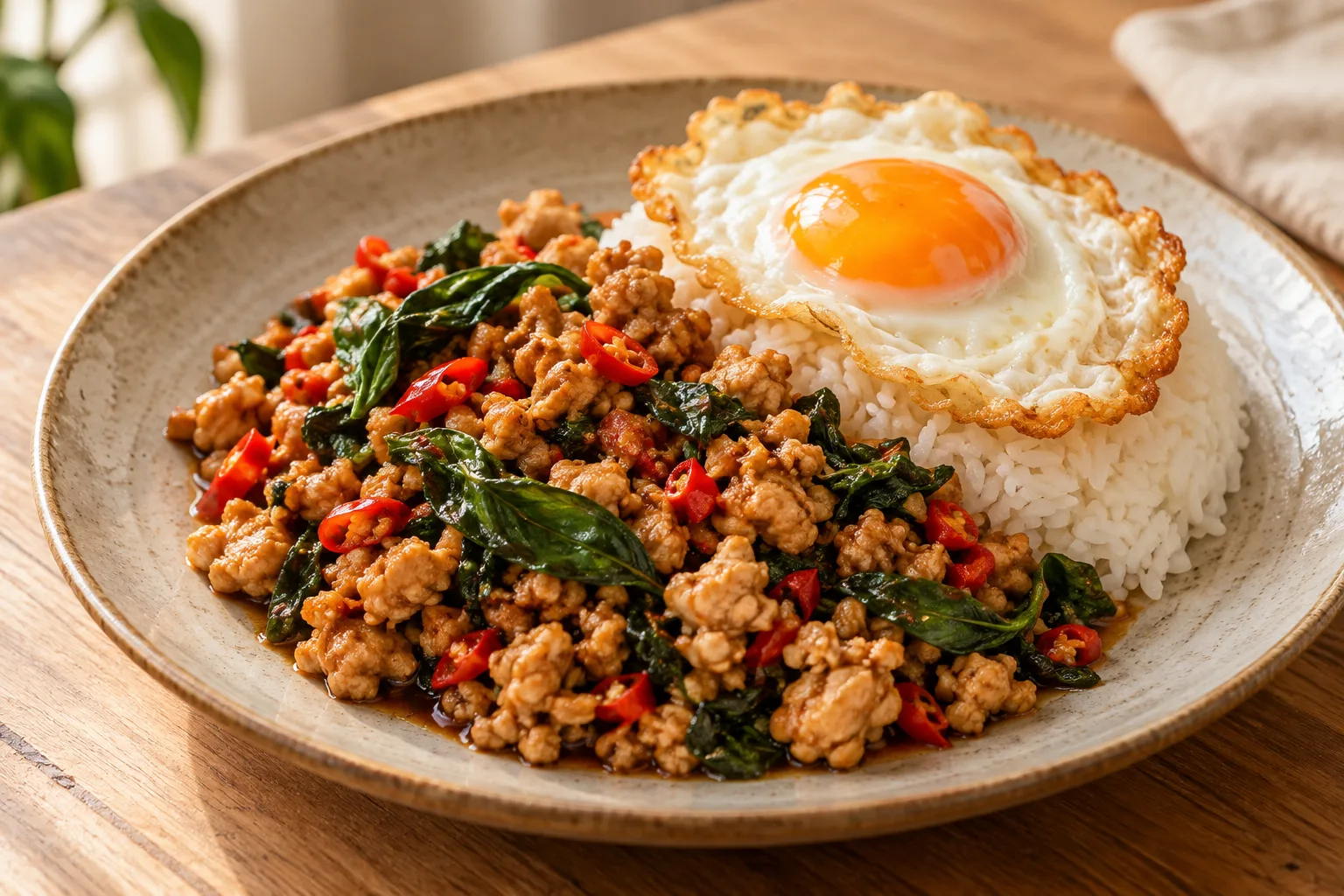
Chicken pad kra pao
Image generated by the Kitchenpause team
30 minEasy

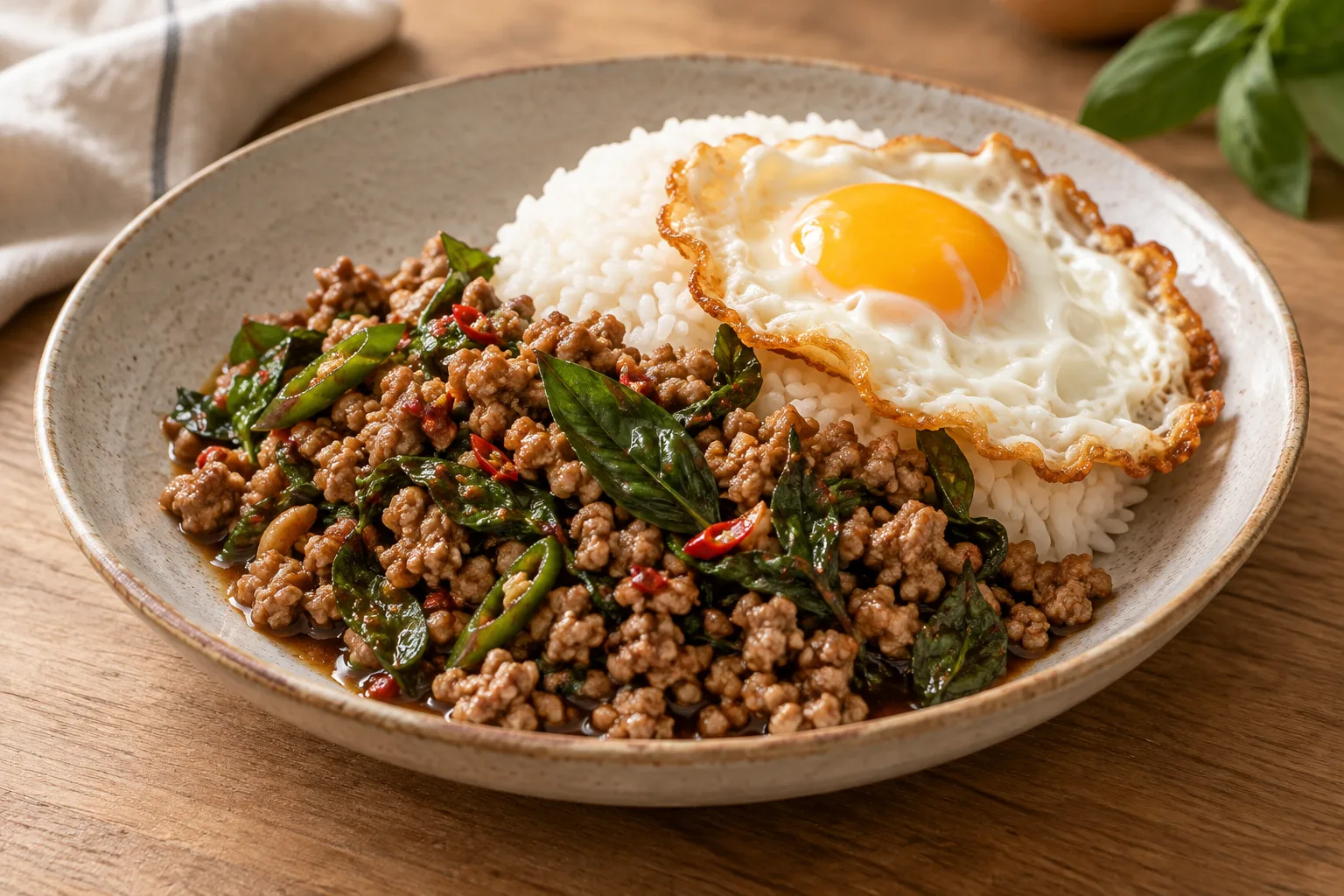
Chicken pad kra pao

Thai stir-fried minced chicken with garlic, chili and holy basil, served with jasmine rice and a fried egg.

View recipe
Sources consulted

Read the sources and each document’s scope. A heritage inscription concerns a particular practice, not all of a country’s cuisine.

  1. FAOSTAT Food Balances www.fao.org/faostat/en/#data/FBS FAO Consulted: November 4, 2026
  2. Thai cuisine - Wikipedia en.wikipedia.org/wiki/Thai_cuisine Wikipedia Consulted: November 4, 2026
  3. Tom Yum Kung (Spicy Prawns Soup) www.doae.go.th/en/tom-yum-kung/ Department of Agricultural Extension, Ministry of Agriculture and Cooperatives, Thailand Consulted: November 4, 2026
  4. Climate and nutritional implications of Thai curry-over-rice menus: a recipe-level assessment of carbon footprints and dietary quality www.frontiersin.org/journals/sustainable-food-systems/articles/10.3389/fsufs.2026.1902426/fu… Frontiers in Sustainable Food Systems Consulted: November 4, 2026
  5. Thailand Market Guide — Bang Noi Floating Market www.thailandtourismus.de/fileadmin/user_upload/E_Broschueren/Spezialthemen/Thailand_Market_G… Tourism Authority of Thailand Consulted: November 4, 2026
  6. The Intake of Energy and Selected Nutrients by Thai Urban Sedentary Workers: An Evaluation of Adherence to Dietary Recommendations pmc.ncbi.nlm.nih.gov/articles/PMC4267465/ Journal of Nutrition and Metabolism Consulted: November 4, 2026
  7. Much-loved, must-eat dishes from different regions of Thailand www.tatnews.org/2020/01/much-loved-must-eat-dishes-from-different-regions-of-thailand/ Tourism Authority of Thailand Consulted: November 4, 2026
  8. The 2017 Food Consumption Behavior Survey, Table 3 www.nso.go.th/nsoweb/storage/ebook/2023/20230510184012_98619.pdf National Statistical Office of Thailand Consulted: November 4, 2026
  9. Physicochemical, Nutritional, and Antioxidant Properties of Traditionally Fermented Thai Vegetables mdpi-res.com/d_attachment/foods/foods-13-02848/article_deploy/foods-13-02848.pdf Foods Consulted: November 4, 2026
  10. Salted Fish Buried in Sand Without Sun en.fda.moph.go.th/oryor-quality-award/31-salted-fish-buried-in-sand-without-sun Food and Drug Administration of Thailand Consulted: November 4, 2026
  11. Pak-sian-dorng — Database of Fermented Foods of Thailand www.jircas.go.jp/en/database/thaifermented/pak-sian-dorng Japan International Research Center for Agricultural Sciences Consulted: November 4, 2026
  12. The 2010 Population and Housing Census (Whole Kingdom), Table 19 www.nso.go.th/nsoweb/storage/ebook/2023/20230511101432_25695.pdf National Statistical Office of Thailand Consulted: November 4, 2026
  13. Changes in Population-Level Consumption of Taxed and Non-Taxed Sugar-Sweetened Beverages after Implementation of SSB Excise Tax in Thailand: A Prospective Cohort Study pmc.ncbi.nlm.nih.gov/articles/PMC7692763/ Nutrients / Mahidol University Consulted: November 4, 2026
  14. タイティー(タイ式ミルクティー) www.thailandtravel.or.jp/thai-tea/ Tourism Authority of Thailand Consulted: November 4, 2026
  15. Risk Factors for Overweight and Obesity among Thai Adults: Results of the National Thai Food Consumption Survey pmc.ncbi.nlm.nih.gov/articles/PMC3257614/ Nutrients / Mahidol University Consulted: November 4, 2026
  16. Estimated dietary sodium intake in Thailand: A nation-wide population survey with 24-hour urine collections www.nephrothai.org/wp-content/uploads/2021/01/Estimated-dietary-sodium-intake-in-Thailand_-A… Journal of Clinical Hypertension / Thai Low Salt Network Consulted: November 4, 2026
  17. Cultural influences on vegetarian food consumption: a cross-cultural comparison of Germany and Thailand edoc.ku.de/id/eprint/36395/1/bfj-12-2024-1326en.pdf British Food Journal / Emerald Consulted: November 4, 2026
  18. The 2024 Household Socio-Economic Survey: Whole Kingdom www.nso.go.th/nsoweb/downloadFile/survey/fL7/20260128091234_26301.pdf National Statistical Office Thailand Consulted: November 4, 2026
  19. Food-level nutrient-to-price analysis and modelled costs of Thai dietary guideline baskets using prices from selected retail outlets in Bangkok, Thailand www.nature.com/articles/s41598-026-78195-w Scientific Reports / Mahidol University Consulted: November 4, 2026
  20. Supplementary information: Food-level nutrient-to-price analysis and modelled costs of Thai dietary guideline baskets static-content.springer.com/esm/art%3A10.1038%2Fs41598-026-78195-w/MediaObjects/41598_2026_7… Scientific Reports / Mahidol University Consulted: November 4, 2026
  21. Investigating Thai Shopping Behaviour: Wet-Markets, Supermarkets and Food Quality ageconsearch.umn.edu/record/51054/files/gorton_sauer_supatpongkul45.pdf Gorton, Sauer and Supatpongkul / Agricultural Economics Society Consulted: November 4, 2026
  22. Voice of the Consumer Survey 2025: Thailand Snapshot www.pwc.com/th/en/asia-pacific/2025/voice-of-the-consumer-survey/assets/voice-of-the-consume… PwC Thailand Consulted: November 4, 2026
  23. Food Waste Index Report 2024 wedocs.unep.org/bitstream/handle/20.500.11822/45230/food_waste_index_report_2024.pdf United Nations Environment Programme Consulted: November 4, 2026
  24. Taste Thailand’s South by Season with Southern MUST TASTE Thai Fruits www.tatnews.org/2026/08/taste-thailands-south-by-season-with-southern-must-taste-thai-fruits… Tourism Authority of Thailand Consulted: November 4, 2026
  25. Songkran in Thailand image.mfa.go.th/mfa/0/kjBTSaxCcf/Songkran/Songkran_in_Thailand.pdf Ministry of Foreign Affairs / Department of Cultural Promotion, Thailand Consulted: November 4, 2026
  26. The Songkran Festival qrcode.culture.go.th/pdfbook/songkran.pdf Ministry of Culture, Thailand Consulted: November 4, 2026
  27. Statistical Yearbook Thailand: main-meal frequency2017 and2021, Table5.3 www.nso.go.th/public/e-book/Statistical-Yearbook/SYB-2021/237/ National Statistical Office Thailand Consulted: November 4, 2026
  28. Health, Happiness and Eating Together: Thai Cohort Study pmc.ncbi.nlm.nih.gov/articles/PMC4802060/ Yiengprugsawan et al., Global Journal of Health Science Consulted: November 4, 2026
  29. A Global Analysis of Cooking Around the World, Year5 static.cookpad.com/worldcookingindex/Cookpad_WorldCookingIndex_Report_Year5.pdf Gallup and Cookpad Consulted: November 4, 2026
  30. World Poll Country Data Set Details: Thailand2022 www.gallup.com/file/services/177797/World_Poll_Dataset_Details_022026.pdf Gallup Consulted: November 4, 2026
  31. Morningness-Eveningness, Sleep Duration, Social Jetlag and BMI in Asian Patients With Prediabetes www.frontiersin.org/journals/endocrinology/articles/10.3389/fendo.2018.00435/full Anothaisintawee et al., Frontiers in Endocrinology Consulted: November 4, 2026
  32. Associated Factors of Dietary Patterns among Adolescents in Rural Northern Thailand pmc.ncbi.nlm.nih.gov/articles/PMC11203095/ Siviroj et al., Healthcare2024 Consulted: November 4, 2026
  33. Tomyum Kung ich.unesco.org/en/RL/tom-yum-kung-01879 UNESCO
  34. Thainess: repertorios regionales awmc.royalrain.go.th/awmc2024/pdf/thailand/Thainess.pdf Royal Rainmaking and Agricultural Aviation Department / materiales de cultura tailandesa

We use session and security technologies to provide our features. Only with your permission do we load Google Analytics to measure visits and Google Maps on Contact. Choose separately, reject or accept both.

Withdraw either permission here. Withdrawing analytics reloads the page to unload the running tag.

Cookie policy