- Category
- Meat
- State
- Preserved
- Usual unit
- slice
What it is
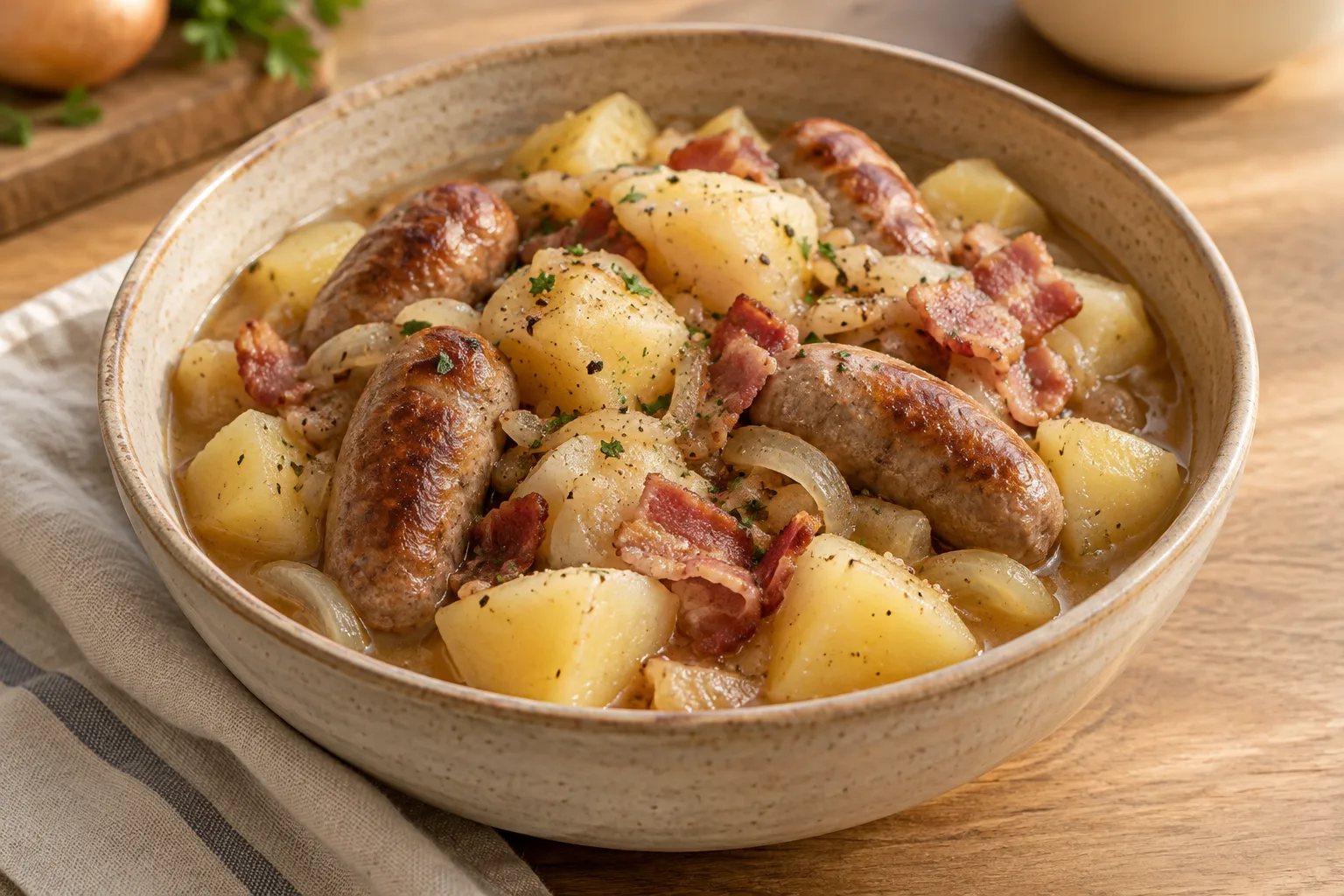
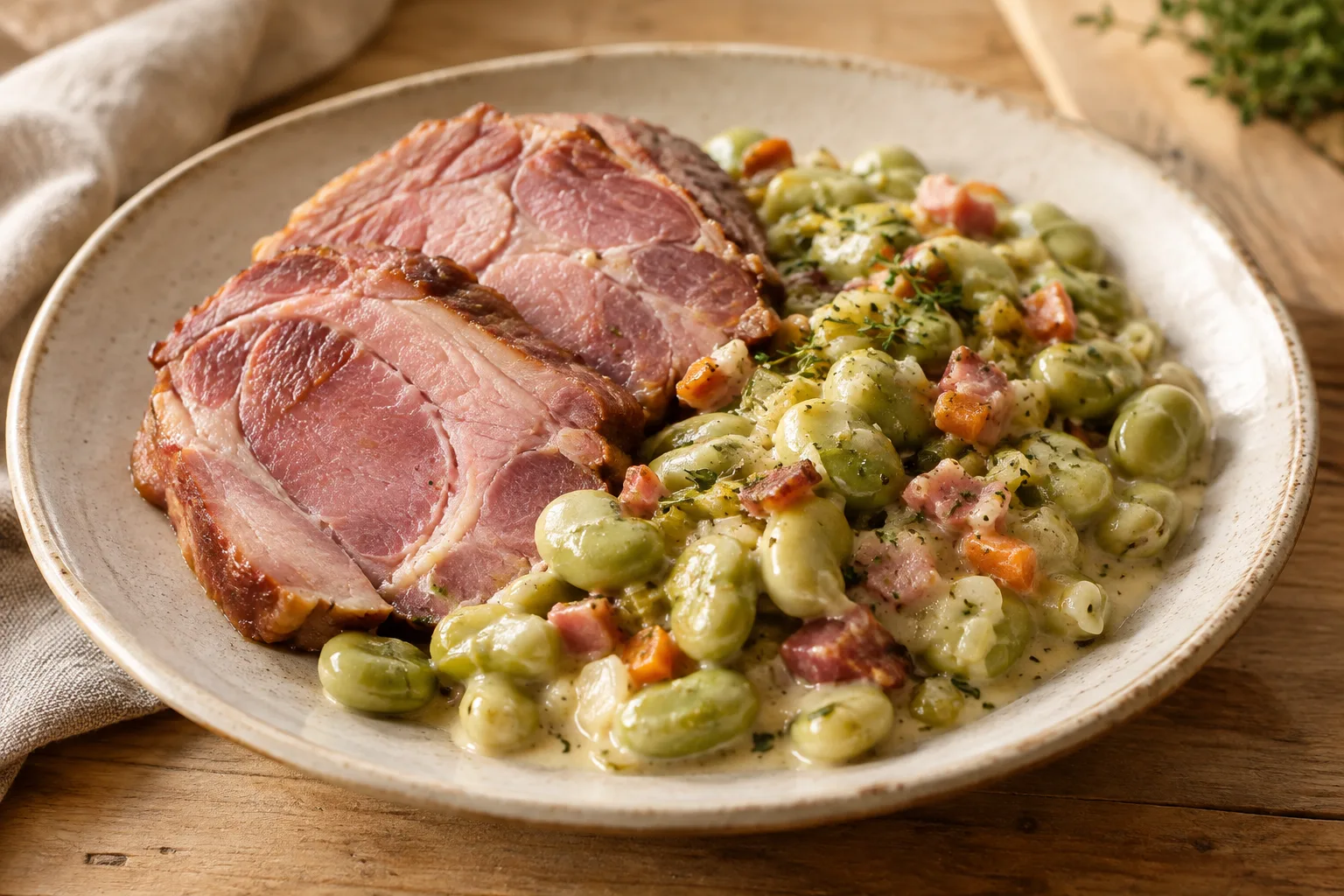
Bacon is a pork product that is cured and often smoked. It can be made from different cuts, including pork belly or back cuts, so slices vary in their balance of meat and fat, flavor, and texture. Products are sold in different styles and formats; check the package to identify the cut and preparation and to find out whether cooking is required. In cooking, bacon is used as a side or as an ingredient that gives savory dishes a distinctive flavor. It is not automatically interchangeable with every product called pancetta or pork belly: the cut, cure, and smoking can differ.
When to use it
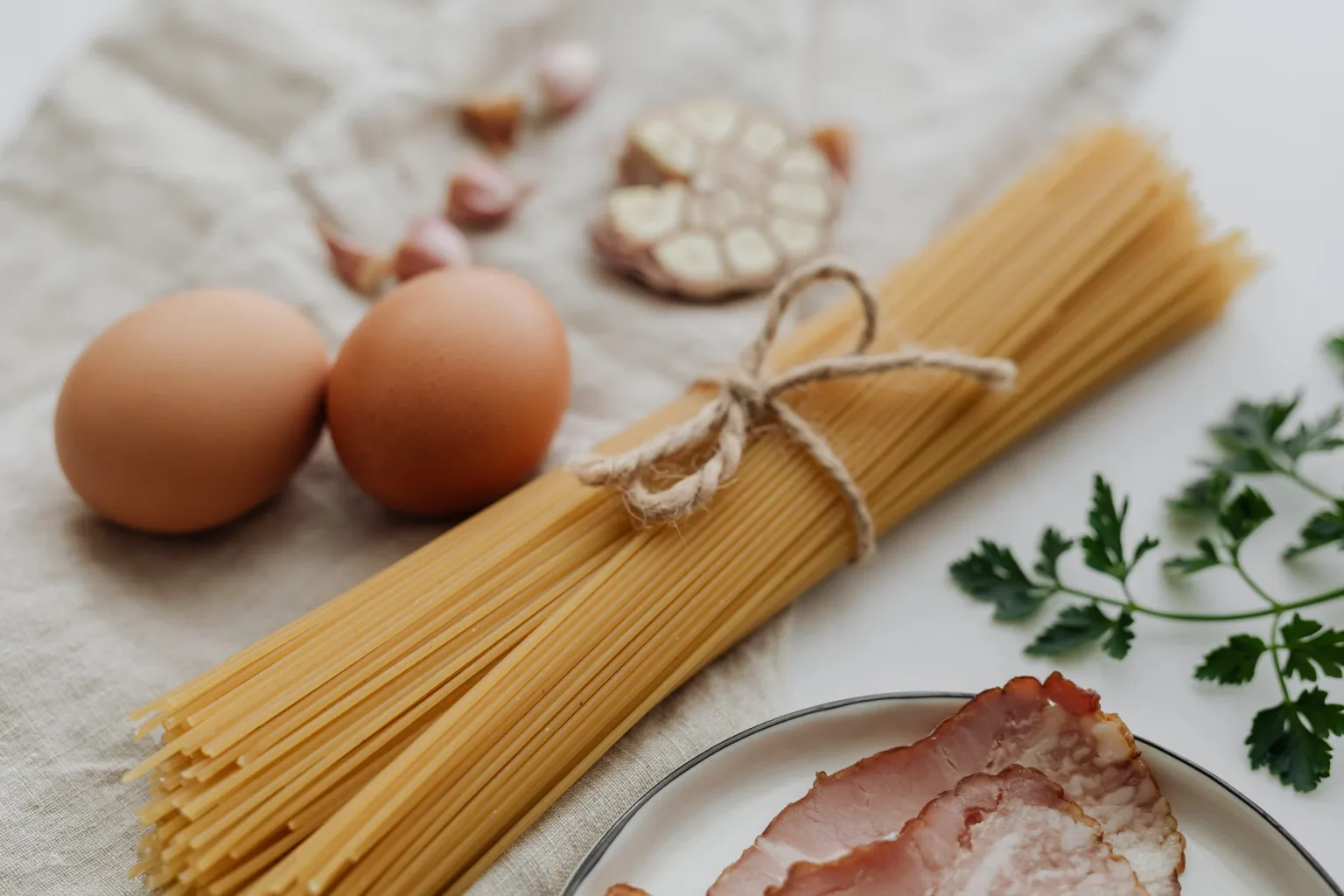
Use bacon when you want the distinctive flavor of cured or smoked pork and a savory texture in a dish. It can be served alongside eggs at breakfast, added to sandwiches with lettuce and tomato, or used in salads and burgers. It also appears in pasta dishes, quiches, risottos, and baked dishes. Because its flavor can be strong and its fat content varies with the cut, start with a moderate amount and taste before adding more. Choose whole slices for a sandwich or smaller pieces to distribute flavor through a recipe.
How to use it
Check the package to see whether the product requires cooking, and follow its preparation directions. To cook it in a pan, lay the slices on the cooking surface and avoid excessive heat that may brown some areas before others; watch them and remove them when they reach the texture you want. To bake, arrange the slices in a single layer on a baking tray without overlapping. The oven can cook several slices at once, but results depend on thickness and product type. Serve cooked slices in a sandwich, or crumble them over salads, eggs, pasta, or quiche. Account for bacon's pronounced flavor before seasoning the rest of the dish.
Flavour and texture
Bacon usually tastes savory and salty, with smoky notes when it has been smoked. Texture depends on the cut, thickness, and cooking: it may remain flexible and tender or become firmer and crisp. Its fat renders during cooking and contributes to both flavor and mouthfeel. Products are not identical, so check the package and adjust cooking to the slice thickness and texture you prefer.
How to choose it
Read the label to identify the cut, degree of smoking, and preparation and storage directions. Slices can come from different cuts and vary in fat, thickness, and flavor, so choose a format that suits the dish: whole slices for sandwiches or pieces to cook into a recipe. Check that the package is intact and read its printed information. Do not assume that every product labeled bacon is ready to eat.
Storage
Store bacon according to the package directions, which may vary by product and package status. After opening, follow the maker's directions for resealing or storing it. If the label gives freezing instructions, follow them. Do not assume every kind of bacon has the same storage method or time limit: check the product information, and do not infer storage life from appearance or smell.
Substitutions
Pancetta can work in some recipes, but its cut, curing, and degree of smoking may differ from bacon. Other smoked pork slices may also suit a dish when their flavor profile fits; check the label and adjust seasoning. A substitute will not necessarily match the saltiness, fat, or texture of the original, so adjust the amount and taste before adding extra salt.
Common mistakes
Do not assume every style has the same cut, thickness, smoke level, or cooking requirement. Very high heat can leave some areas overly browned while others are less cooked, so monitor the process and adjust the heat. In the oven, avoid crowding or overlapping slices if you want more even cooking. Bacon can add a strong salty flavor, so season the rest of the dish carefully.
Safety and allergens
Follow the preparation and storage directions on the package. If the product says it requires cooking, do not eat it raw.
Culinary uses
- Savory ingredient and topping
- Flavoring component for breakfast dishes, sandwiches, salads, pasta, quiches, and risottos
Recommended techniques
- Pan-cooking
- Oven-baking
Pairs well with
- Eggs
- Lettuce and tomato
Frequently asked questions
Is bacon the same as pancetta?
Not always. Bacon can come from different cuts and may be smoked; pancetta can differ in cut, curing, and flavor. Check the label.
Can bacon be baked in the oven?
Yes. Arrange slices in a single layer on a tray and follow the product directions, keeping an eye on them because thickness and results vary.
What dishes go well with bacon?
It is used with eggs, in sandwiches with lettuce and tomato, and as an ingredient in salads, pasta, quiches, and risottos.
Ingredient allergens
Allergen listThere are no verified associations for these ingredients yet.
Estimated nutrition
- Fat
- 41.2 g
- Saturates
- 14.7 g
- Carbohydrate
- 0 g
- Sugars
- 0 g
- Fibre
- 0 g
- Protein
- 29.4 g
- Salt
- 4.55 g
Sources and review
Automatically researched, cross-checked and validated content. Sources consulted:
- ¿Por qué la muerte es origen de miedos y tabúes? doi.org/10.64628/aao.fccyk3qj3
- Client Challenge doi.org/10.2307/jj.27939689.16
- Cultura del pan en España - Wikipedia, la enciclopedia libre es.wikipedia.org/wiki/Cultura_del_pan_en_Espa%C3%B1a
- Gastronomía de Francia - Wikipedia, la enciclopedia libre es.wikipedia.org/wiki/Gastronom%C3%ADa_de_Francia
- SELECTION AND USE OF BACON - University Digital Conservancy conservancy.umn.edu/server/api/core/bitstreams/71b678d8-c177-419a-9e94-76b47a0c67e7/content
- \r\n \n Premier Culinary School in the South | Louisiana Culinary Institute\n \r\n www.lci.edu/
- El bacon en la cocina friolisa.es/es/blog/el-bacon-en-la-cocina.html
- El sabor de la humildad: el tomate seco (de Caspe, por ejemplo) | OpenAlex openalex.org/W25292779
- Del aguacate a la espirulina: globalización, biodiversidad y descolonización alimentaria en México | OpenAlex openalex.org/W4413314690
- El fallo más habitual al cocinar beicon (y cómo solucionarlo fácilmente) recetas.elperiodico.com/articulo-el-fallo-mas-habitual-al-cocinar-beicon-y-como-solucionarlo…
- La técnica que cambia totalmente cómo se cocina el beicon www.google.com/goto?gsessionid=iwEed52C3KkprAYkjXltcasjZhSB2ALFUiHZyb7StAfm7tvHf6NK4Q&url=CA…