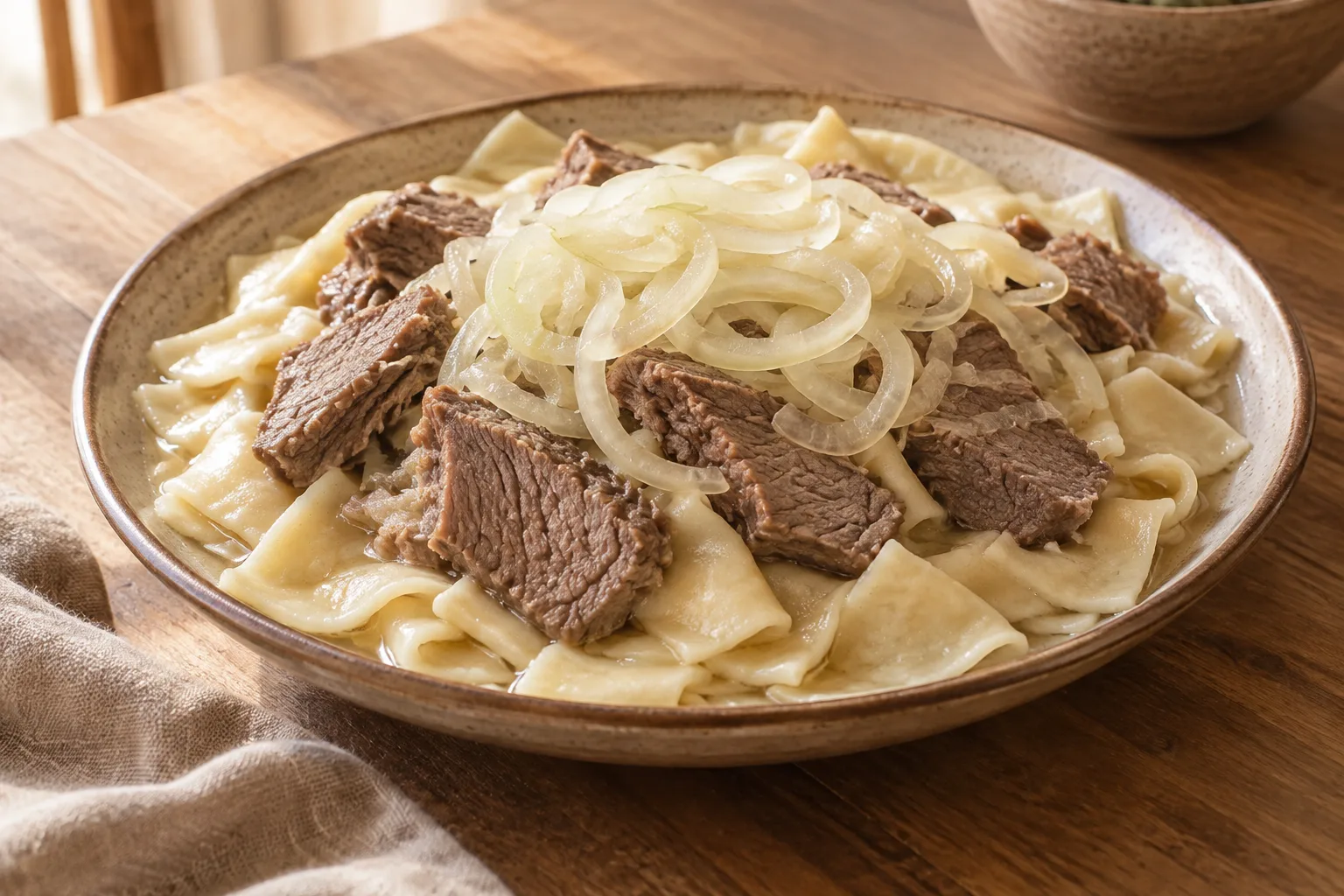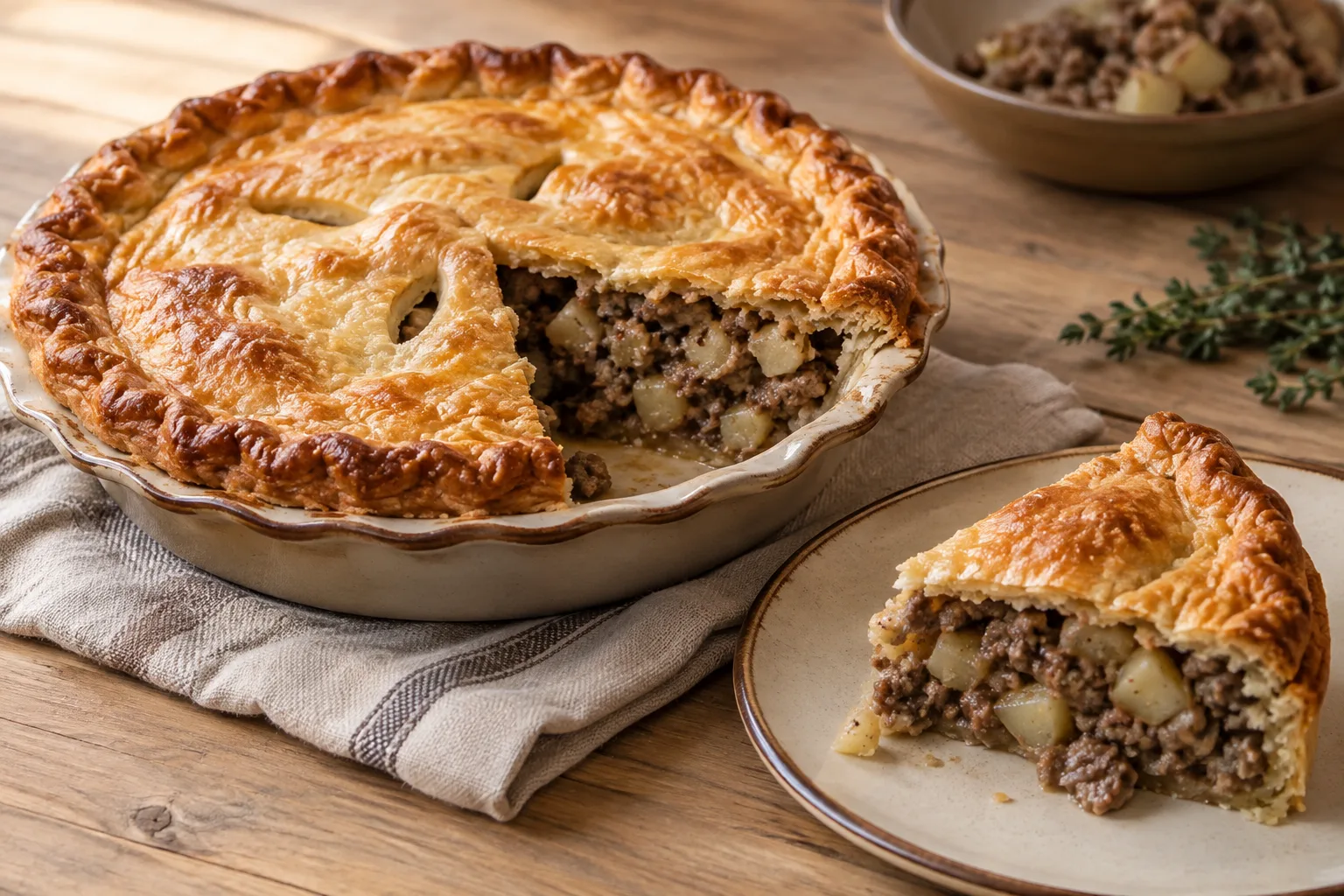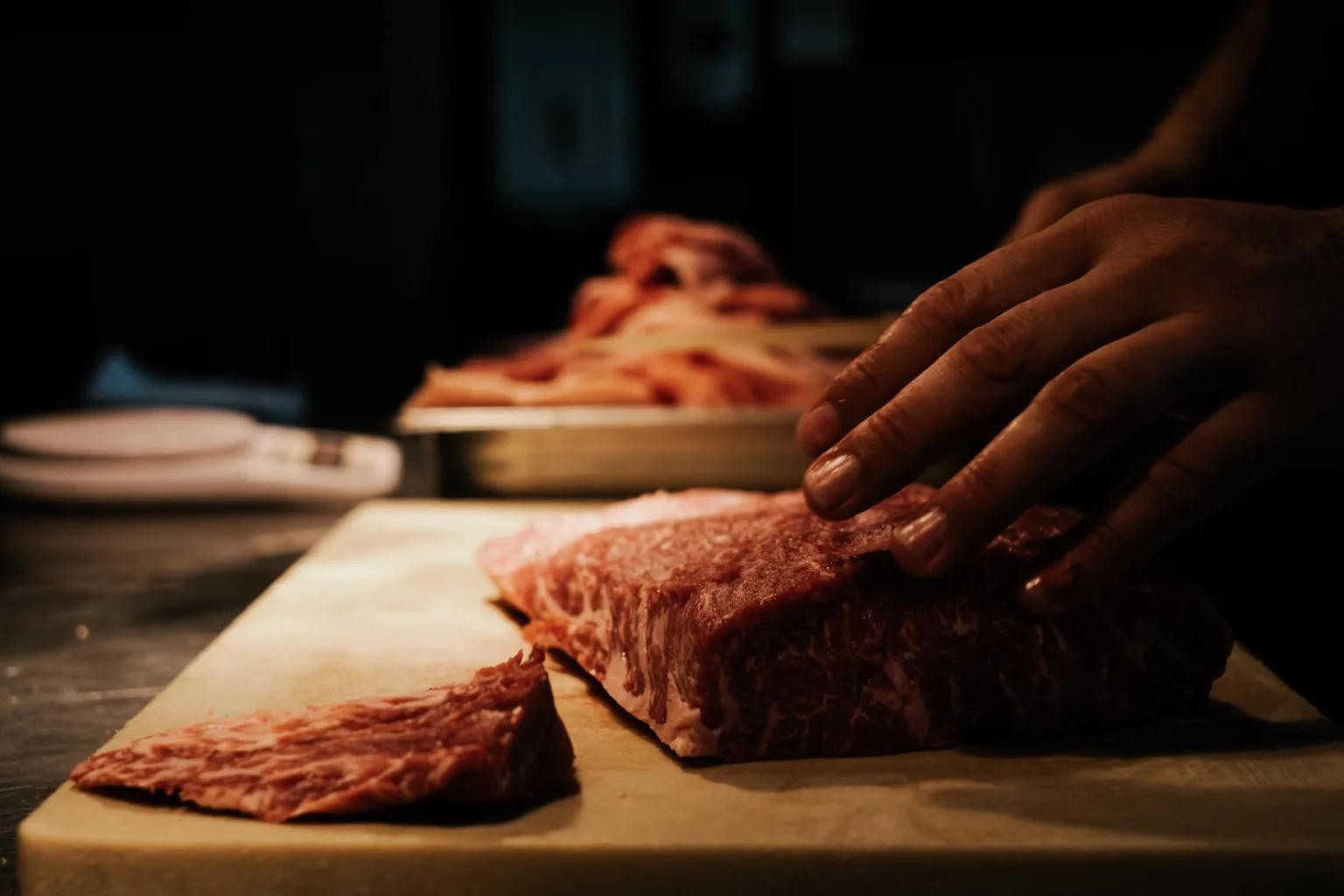
- Category
- Meat
- State
- Fresh
- Usual unit
- g
What it is
Beef is meat from cattle and is sold in cuts with different characteristics. The word “veal” is used for meat from younger cattle in some places, while “beef” may refer to cattle of different ages; commercial naming varies by country and label. Check the product description and cut rather than assuming that every beef cut cooks alike. Loin, tenderloin, chuck, and leg cuts differ in firmness, muscle structure, and visible or internal fat. Those differences affect how quickly the meat cooks and whether it is better suited to high heat or a longer, moist method. There is no single cooking technique that works best for every beef cut.
When to use it
Choose the cut to suit both the dish and the time available. For tender steaks, medallions, or other quick-cooking preparations, look for a cut intended for pan-searing or grilling, such as loin or tenderloin. Firmer cuts are often a better fit for braising or stewing, where slow cooking with liquid suits their texture. Some lean cuts can also be fried, breaded, or roasted, but the result depends on the cut and thickness. If using ground beef, cook it thoroughly and follow the specific safety guidance for ground meat rather than relying on guidance for whole cuts.
How to use it
Keep beef refrigerated until preparation and do not rinse it; splashes can spread raw juices around the kitchen. Wash your hands after handling raw meat, and clean utensils and surfaces that have touched it. For pan-searing or grilling, use a cut suited to quick cooking and a hot cooking surface; avoid direct contact between the meat and flames. For stew, you can brown the pieces and then simmer them with liquid and vegetables. Roast whole cuts according to their cut and thickness. Check internal temperature with a food thermometer: the supplied guidance gives 145°F (63°C) followed by a 3-minute rest for whole cuts, and 160°F (71°C) for ground beef. Also follow current local recommendations.
Flavour and texture
Flavor and texture vary with the cut, its fat, and the product itself. Loin and tenderloin are commonly described as tender, while some other cuts are firmer and better suited to prolonged moist cooking. Visible or marbled fat can contribute to juiciness, but fat levels are not the same in every cut. Meat from younger and older cattle can also differ, and commercial terms vary across regions. Appearance alone does not determine the best cooking method: check the cut description and choose a technique to match.
How to choose it
Choose a cut for the dish you plan to make, and ask for clarification if the label does not identify it clearly. For quick cooking, look for cuts sold for steaks or grilling; for stew, choose pieces intended for slow cooking. Check that the package is intact, the meat is kept refrigerated, and the date and storage instructions are readable. Color can vary between cuts and products, so do not use color as your only measure of quality or freshness.
Storage
Keep fresh beef refrigerated in its packaging or in a container that catches any juices and keeps them away from other foods. Follow the package date and storage directions, and do not leave the meat at room temperature longer than needed for preparation. If you will not use it within the stated period, freeze it according to the package directions or local recommendations. After handling raw beef, wash hands and clean utensils and surfaces that contacted it.
Substitutions
Lamb can replace beef in many stews and roasts, but it has a different flavor and the cooking time may need to suit the cut. Pork can work in some cooked dishes when you choose a suitable cut. For a meat-free option, lentils or mushrooms can add substance, but they will not reproduce beef’s exact texture or cooking behavior. Adjust the liquid and cooking method to the substitute rather than copying the beef method automatically.
Common mistakes
A common mistake is treating every cut alike: a tender steak and a firm stewing cut do not necessarily need the same method. Do not rinse raw meat, and do not reuse utensils for ready-to-eat foods without washing them first. Do not judge safety only by color or cooking time; check internal temperature, especially for ground beef. Also consider how a substitute changes the flavor and cooking requirements.
Safety and allergens
Wash hands and clean surfaces and utensils after handling raw beef; do not rinse the meat. Keep it refrigerated and prevent raw juices from contacting ready-to-eat foods. Use a thermometer to check the center: the supplied guidance is 145°F (63°C) for whole cuts followed by a 3-minute rest, and 160°F (71°C) for ground beef. Requirements can vary by jurisdiction, so follow the official guidance that applies where you are.
Culinary uses
- Main course protein
- Stew and braise ingredient
- Grilling and pan-searing ingredient
- Ground-meat ingredient
Recommended techniques
- Pan-searing
- Grilling
- Roasting
- Braising and stewing
- Breaded frying
Pairs well with
- Onions and garlic
- Potatoes and carrots
- Celery and bay leaf
- Broth and wine
- Lemon and aromatic herbs
Frequently asked questions
Which beef cut should I use for stew?
Choose a firmer cut identified for stewing or braising and cook it slowly with liquid. Cut names vary by region, so ask for help if the label is unclear.
Can I use any beef cut on the grill?
Cuts do not all behave alike. Tender cuts suited to quick cooking are often better for grilling, while firmer cuts usually need longer cooking.
What temperature should beef reach?
The supplied guidance is 145°F (63°C) for whole cuts followed by a 3-minute rest, and 160°F (71°C) for ground beef. Check with a thermometer and follow current local official guidance.
Ingredient allergens
Allergen listThere are no verified associations for these ingredients yet.
Estimated nutrition
- Fat
- 6.25 g
- Saturates
- 4.46 g
- Carbohydrate
- 0 g
- Sugars
- 0 g
- Fibre
- 0 g
- Protein
- 19.6 g
- Salt
- 0.54 g
Sources and review
Automatically researched, cross-checked and validated content. Sources consulted:
- The Essential Glossary of Cooking Terms for the Culinary Arts - Escoffier www.escoffier.edu/blog/culinary-arts/the-essential-glossary-of-cooking-terms-for-the-culinar…
- Comprobando su navegador doi.org/10.31428/10317/10619
- Estofado de Ternera En Olla de Cocción Lenta | Extension extension.unh.edu/recipe/estofado-de-ternera-en-olla-de-coccion-lenta
- Cortes De Ternera Y Usos Culinarios (I) • ISARO Gastronomía www.isarogastronomia.com/blog/cortes-de-ternera-y-usos-culinarios-i/
- La Carne de Ternera: Sabor, Nutrición y Versatilidad en Tu Cocina - The Butcher Society www.thebutchersociety.com/la-carne-de-ternera-sabor-nutricion-y-versatilidad-en-tu-cocina/
- Ternera Gallega - USOS CULINARIOS www.terneragallega.com/usos-culinarios.html
- Culinary Arts - Culinary School with Housing Opportunity coloradomtn.edu/es/programs/culinary-arts/
- Receta del mes – Estofado de ternera - Spend Smart Eat Smart spendsmart.extension.iastate.edu/spendsmart/2025/01/06/receta-del-mes-estofado-de-ternera/?l…
- Factores determinantes del precio de la carne de ternera ageconsearch.umn.edu/record/28777/
- Para la ciudadanía www.aesan.gob.es/para-la-ciudadania
- Recipes from Our Chefs: St. Patrick's Day | News and Stories | Notre Dame Hospitality | University of Notre Dame hospitality.nd.edu/es/news/recipes-from-our-chefs/
- ¿Se puede comer con seguridad? Use un termómetro de alimentos para estar SEGURO. (Is it safe to eat? Use a food thermometer to be SURE.) | VCE Publications | Virginia Tech pubs.ext.vt.edu/FST/FST-28/FST-28NP-C/FST-28NP-C.html
- Carne de vaca vs carne de ternera: ¿En qué se diferencian? www.miguelvergara.com/actualidad/blog/carne-de-vaca-vs-carne-de-ternera-diferencias/