- Category
- Meat
- State
- Fresh
- Usual unit
- g
What it is
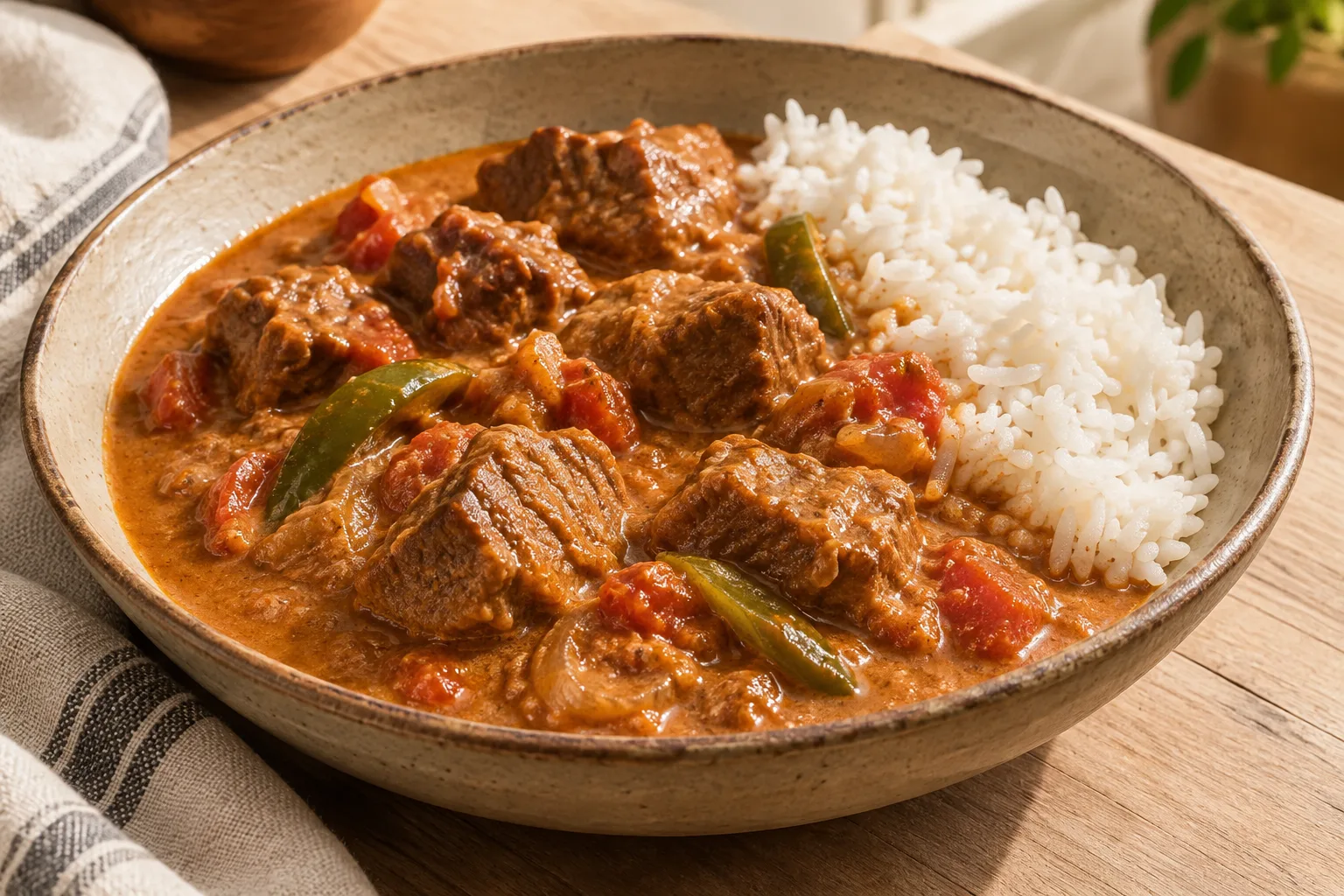
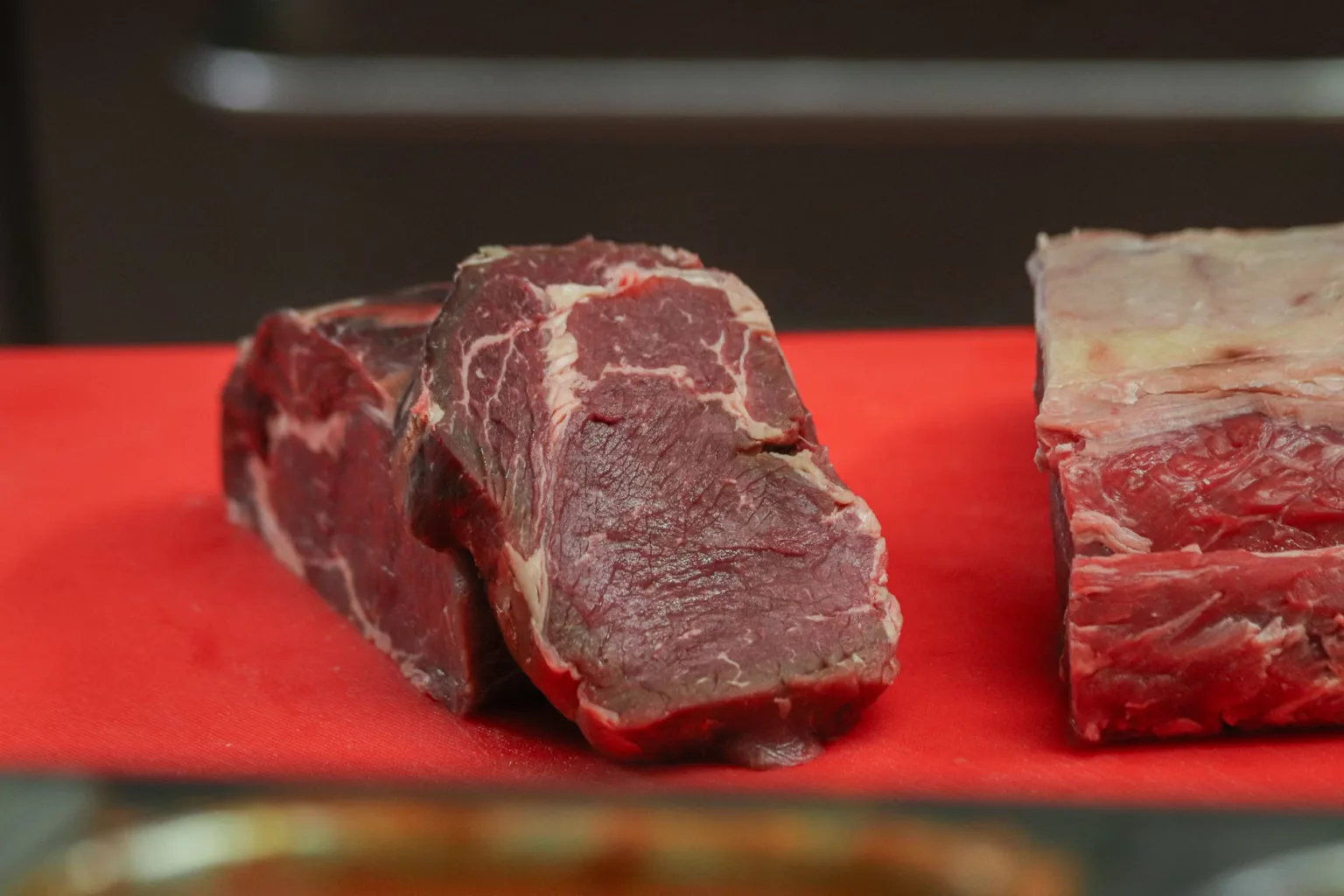
Beef cut into pieces is beef divided into portions, with size and shape varying according to the seller and intended recipe. The name does not identify a particular part of the animal or guarantee that every piece contains the same amount of fat or connective tissue. The best cooking method therefore depends on the cut: some pieces suit slow cooking in liquid, while others may be better for quicker preparations. This beef can be browned before being cooked with vegetables, stock, or wine in a stew or braise. If the cut is not identified, ask the butcher what cooking method it is suited to rather than relying on the piece size alone.
When to use it
Choose beef pieces when you are making a stew or braise in which the meat cooks with vegetables and liquid. For these dishes, select pieces identified as suitable for slow cooking and let the cut guide the method; do not assume that every piece will behave the same way. Pieces can also be used in sauced preparations; beef neck, for example, is used in sauce or minced. If you want to cook the meat quickly, first confirm that the cut suits that method. Not all beef sold in pieces for stewing is suitable for a quick cook.
How to use it
Before cooking, check the size and, if possible, identify the cut. For a stew or braise, brown the beef in a pan or cooking pot with oil, then transfer it to a pot with vegetables. Add wine and let it reduce; add stock or water if needed, then continue cooking slowly until the dish is ready to your preference. Cooking time depends on the cut and the size of the pieces, so there is no single time that applies to all beef pieces. For grilling or pan-searing, use only a cut suited to that method; do not treat a piece intended for long cooking as a tender steak. Season to taste and use the cooking juices as a base for sauce.
Flavour and texture
Flavor and texture vary with the cut, its fat, and the cooking method; “cut into pieces” describes only the format. Some cuts become more tender with prolonged, moist cooking, while others can turn dry or tough if cooked in an unsuitable way. Browning creates a more deeply colored surface, and cooking with liquid lets the meat combine with a sauce. Piece size matters too: uneven pieces may cook at different rates, so cutting them to a similar size can help them finish more evenly.
How to choose it
Ask which cut is in the pack or what cooking method the seller recommends; diced or cubed meat cannot be identified by shape alone. For stews, choose beef that the seller describes as suitable for slow cooking. For a grill or pan, select a cut suitable for quick cooking rather than assuming that any beef in pieces will work. If origin or a quality designation matters to you, check the label and available traceability information. Also inspect the packaging and follow its storage instructions.
Storage
Store the beef according to the package directions and maintain the cold-storage conditions specified for the product. There is no single storage period for all beef pieces: packaging, dates, and refrigeration conditions can differ. For a specific recommendation, follow the use-by date and instructions on the pack or from the seller; do not apply a storage period for a whole vacuum-packed joint to meat that has already been cut. If freezing the product, follow the applicable instructions and thaw it safely before cooking.
Substitutions
You can replace these pieces with another beef cut if that cut suits the same cooking method. For a stew, choose a cut recommended for slow cooking; replacing it with one intended for quick cooking can change the texture. Beef neck can be used in a sauced preparation, and other parts may suit stews according to their characteristics. Cuts do not have an exact one-to-one equivalence across every recipe, so ask how a replacement cut is best cooked.
Common mistakes
A common mistake is assuming that all beef pieces are interchangeable or cook in the same amount of time. The name describes the format, not the cut, so a piece intended for a stew may be tough if cooked briefly. Very different piece sizes can also finish cooking at different times. For slow cooking, check the meat as it cooks; for a quick method, first confirm that the cut is suitable.
Safety and allergens
Handle raw beef hygienically and follow the package directions and current official food-safety guidance for storage and cooking. Use the product instructions for its specific conditions of use.
Culinary uses
- Main ingredient in stews and braises
- Main ingredient in quick-cooking dishes when the pieces come from a cut suited to that method
Recommended techniques
- Braising or stewing
- Searing before slower cooking
- Grilling or pan-searing when the cut and piece size suit quick cooking
Pairs well with
- Vegetables
- Wine or stock in braises
- Aromatic herbs
- Potatoes
Frequently asked questions
Which beef cut is best for stewing in pieces?
Choose a cut the seller identifies as suitable for stews or slow cooking. The fact that the meat is cut into pieces does not identify the cut.
Can I pan-sear any beef cut into pieces?
Not necessarily. Pan-searing is better suited to cuts intended for quick cooking, so find out which cut you have before choosing the method.
What liquid can I add to a beef stew?
Wine can be used, with stock or water added if more liquid is needed. Vegetables and aromatic herbs can also be cooked with the beef.
Ingredient allergens
Allergen listThere are no verified associations for these ingredients yet.
Sources and review
Automatically researched, cross-checked and validated content. Sources consulted:
- Romanica Olomucensia : «¿Qué pinga es esto?». Usos disfemísticos en el español de Cuba doi.org/10.5507/ro.2021.007
- The Essential Glossary of Cooking Terms for the Culinary Arts - Escoffier www.escoffier.edu/blog/culinary-arts/the-essential-glossary-of-cooking-terms-for-the-culinar…
- Mesa para dos. La Gastronomía en la Poesía y el Cine ... scholarworks.umass.edu/bitstreams/94f2bb58-aa83-42c3-b0a4-80b44d98e21c/download
- - YouTube www.youtube.com/watch?v=59tZSQ3yCc0&vl=es-ES
- Supervivencia Básica: Alimentos | Servicio de Extensión de OSU extension.oregonstate.edu/es/catalog/em-9331-s-supervivencia-basica-alimentos
- Evaluación de la calidad y composición química de la carne ... scholar.uprm.edu/bitstreams/0cdc5e7c-1df0-4957-a60e-c8d46c55f9d3/download
- Cortes De Ternera Y Usos Culinarios (I) • ISARO Gastronomía www.isarogastronomia.com/blog/cortes-de-ternera-y-usos-culinarios-i/
- La Carne de Ternera: Sabor, Nutrición y Versatilidad en Tu Cocina - The Butcher Society www.thebutchersociety.com/la-carne-de-ternera-sabor-nutricion-y-versatilidad-en-tu-cocina/
- Ternera Gallega - USOS CULINARIOS www.terneragallega.com/usos-culinarios.html
- Project MUSE -- Verification required! muse.jhu.edu/article/968749
- Comité Científico aesan.gob.es/dam/jcr:a7c4e553-46f5-4def-9ede-b6d1e19b3948/comite_cientifico_42.pdf
- Estudio de la actividad antioxidante de diversas plantas ... upcommons.upc.edu/bitstreams/2ba9295d-50ba-4beb-8513-47ed2974095a/download
- 23 recetas con carne de ternera: platos tradicionales y otras opciones para sorprender bonviveur.com/es/recetas/lista/vacuno/