- Category
- Meat
- State
- Fresh
- Usual unit
- g
What it is
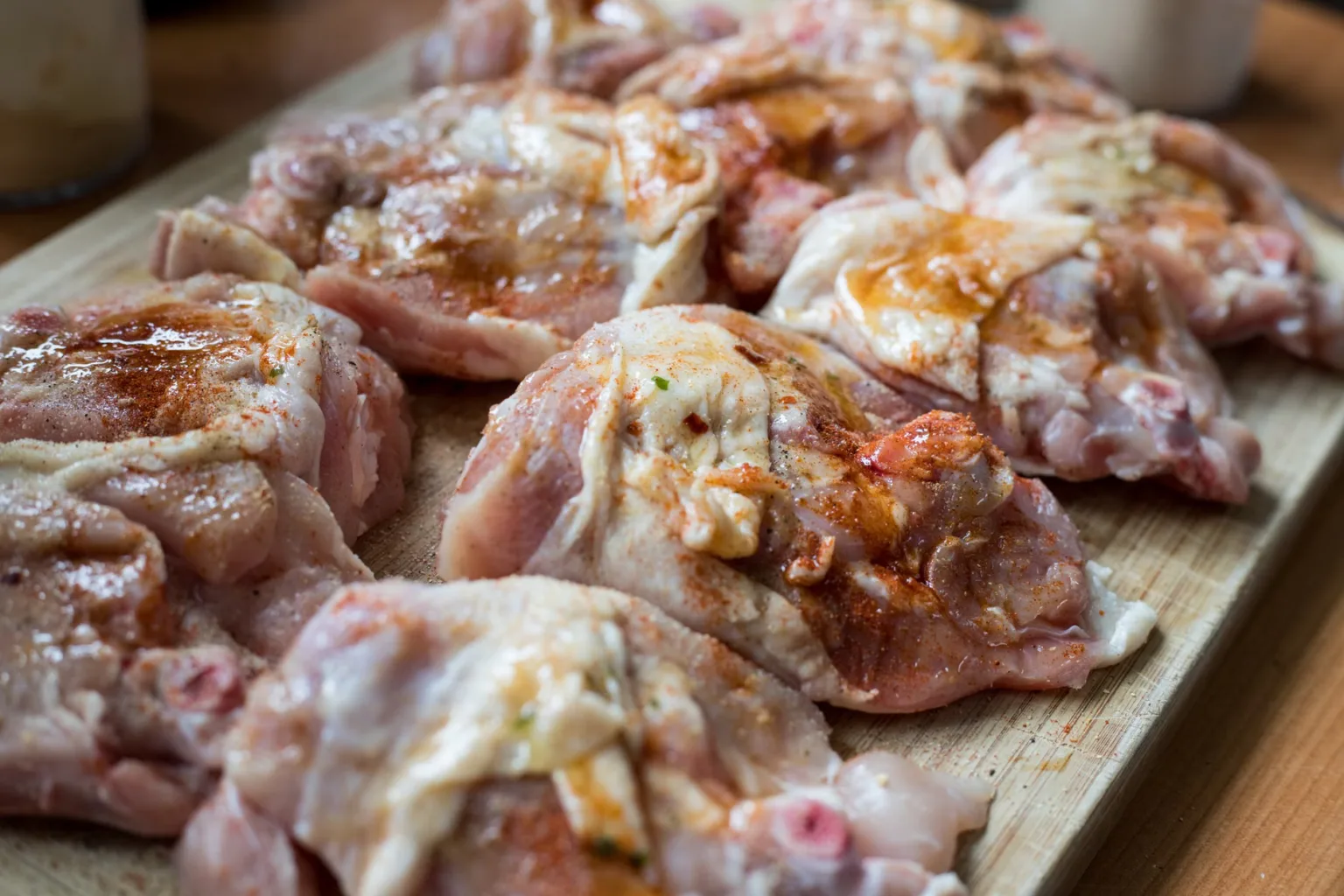
Bone-in, skin-on chicken pieces are portions of poultry meat that retain both the bone and skin. They may include cuts such as thighs, drumsticks or wings, but the name alone does not specify which cuts or their size. The pieces are not interchangeable in every recipe: wings generally have less meat, while thighs and drumsticks are useful in longer-cooked dishes. Bone can contribute character to stocks and stews, and skin affects the texture of the cooked piece. Because these features vary with the cut, check which parts are in the package before choosing a recipe.
When to use it
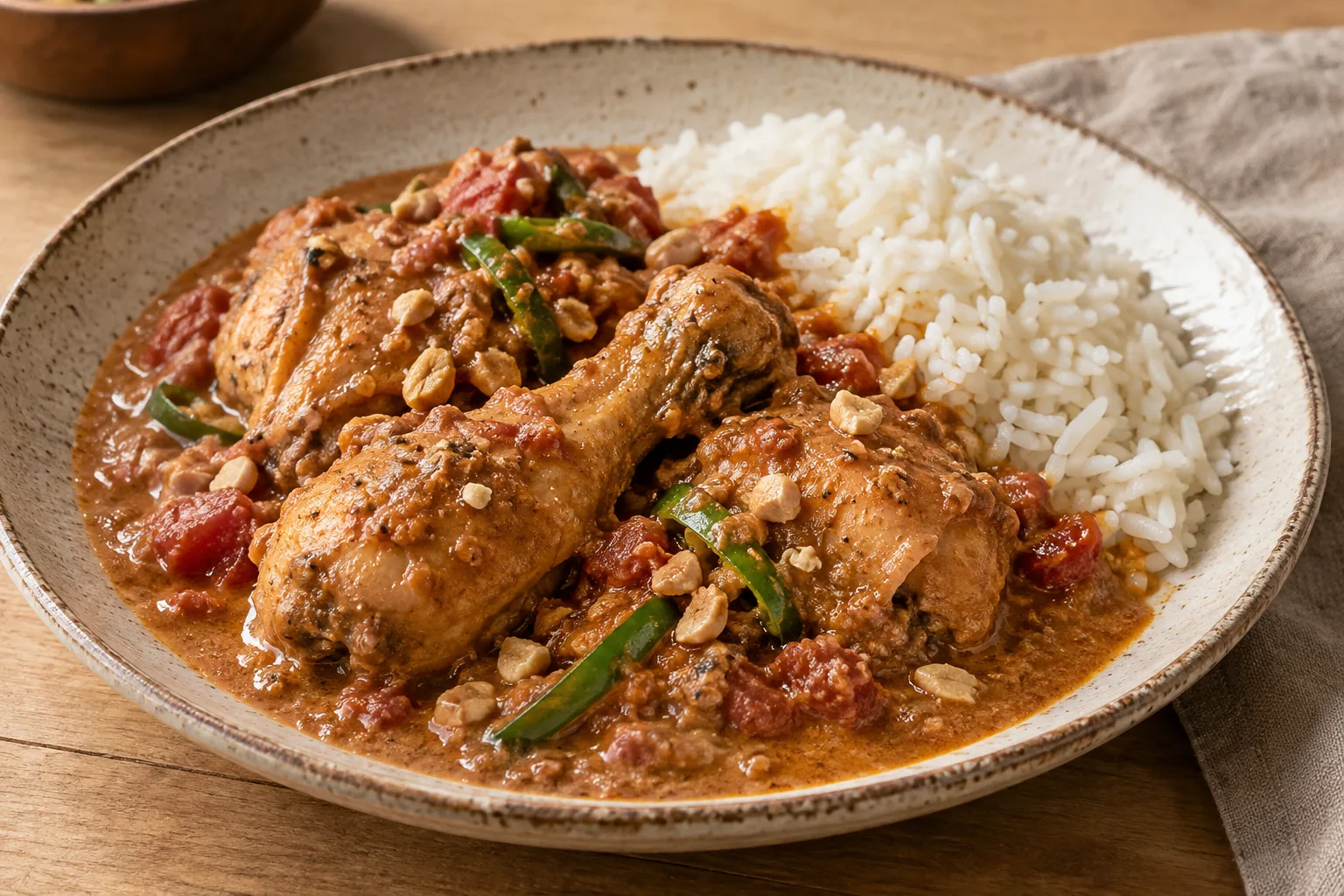
Choose these pieces for meals served as individual bone-in portions, or when the chicken will cook in a sauce, stew or rice dish. Bone-in pieces can also be used to add flavor to stocks and soups. Wings work well as a snack or accompaniment; thighs and drumsticks are often better suited to main dishes and longer cooking. If a recipe calls for pieces of similar size, check the package and choose or sort comparable cuts to help them cook evenly.
How to use it
Check which cuts are in the package and match the method to their size. You can roast or fry the pieces, grill them, or add them to stews, soups and rice dishes. In a stew or stock, bone-in pieces contribute flavor; remove bones before serving when practical. Pair the chicken with ingredients such as onion, garlic, tomato, rice, vegetables or herbs, and season to suit the dish. Do not assume every cut needs the same treatment: wings have less meat than other pieces, while thighs are suited to longer cooking. Handle raw chicken carefully, and clean hands, utensils and surfaces after contact.
Flavour and texture
Flavor and texture vary with the cut and cooking method. Bone can contribute flavor to stews and stocks, while skin affects the texture of the cooked piece. Wings have less meat than thighs; thigh meat is generally less tender than breast and is useful in longer-cooked preparations. The final result also depends on the cooking method and accompanying ingredients.
How to choose it
Check the label to see which cuts are included: “pieces” does not describe one fixed combination or size. Choose similarly sized cuts when a recipe calls for even cooking, and consider whether you want the skin and bone retained at serving. Follow the package directions for storage and the stated date; do not infer freshness from the product name alone.
Storage
Follow the storage directions on the label, and use or freeze the product within the period stated there. Keep the package separate from ready-to-eat foods, and do not leave raw chicken unattended while preparing other ingredients. If directions are missing or unclear, consult local official food-safety guidance rather than guessing a storage period.
Substitutions
Bone-in, skinless chicken pieces are an option if you do not want the skin, though the finished texture will differ. Boneless, skin-on pieces may be easier to serve, but the recipe's size and cooking time need to suit the particular cut. Choose a substitute for the dish and cooking method, not just by product name.
Common mistakes
Do not assume every piece has the same amount of meat or cooks in the same way: wings, thighs and drumsticks are different cuts. Avoid choosing a package without checking its contents if the recipe depends on a particular cut. Another mistake is touching ready-to-eat food after handling raw chicken without first cleaning hands, utensils and surfaces.
Safety and allergens
Handle raw chicken carefully. Wash hands, utensils and surfaces with soap and water after contact, and consult local official guidance for safe preparation.
Culinary uses
- Main dish
- Soup and stock ingredient
- Ingredient for stews and rice dishes
Recommended techniques
- Roasting
- Grilling
- Frying
- Braising and stewing
- Simmering for soup or stock
Pairs well with
- Onion and garlic
- Rice and vegetables
- Tomato and herbs
- Citrus or curry-style seasonings
Frequently asked questions
Which cuts may be included in bone-in, skin-on chicken pieces?
They may include wings, thighs or drumsticks, but the name does not guarantee a particular combination. Check the label or package contents.
What dishes can I make with these pieces?
They can be roasted, fried, grilled or used in stews, soups, stocks and rice dishes. The cut helps determine the best method.
What should I do after handling raw chicken?
Wash hands, utensils and surfaces that touched raw chicken with soap and water, and keep them from contacting ready-to-eat food.
Ingredient allergens
Allergen listThere are no verified associations for these ingredients yet.
Sources and review
Automatically researched, cross-checked and validated content. Sources consulted:
- 8 usos del pollo en la cocina que no conocías www.cashfresh.es/8-usos-del-pollo-en-la-cocina-que-no-conocias/
- Carne de pollo - Wikipedia, la enciclopedia libre es.wikipedia.org/wiki/Carne_de_pollo
- Los alimentos como medicina: la dieta antiinflamatoria | Children's Hospital of Philadelphia www.chop.edu/health-resources/food-medicine-anti-inflammatory-diet/es
- Vamos a Conservar Alimentos: Sopas extension.psu.edu/vamos-a-conservar-alimentos-sopas/
- ¿Qué partes del pollo son comestibles? - Tirso de Molina mercadotirsodemolina.es/partes-del-pollo/
- Comité Científico aesan.gob.es/dam/jcr:a7c4e553-46f5-4def-9ede-b6d1e19b3948/comite_cientifico_42.pdf
- ▶ Cómo aprovechar todas las partes del pollo en la cocina grupoplanes.com/como-aprovechar-todas-las-partes-del-pollo-en-la-cocina/
- Descubre todo sobre las Partes del Pollo | Recetas Nestlé www.recetasnestle.com.ec/escuela-de-sabor/coccion/preparaciones-pollo