- Category
- Vegetables
- State
- Fresh
- Usual unit
- g
What it is
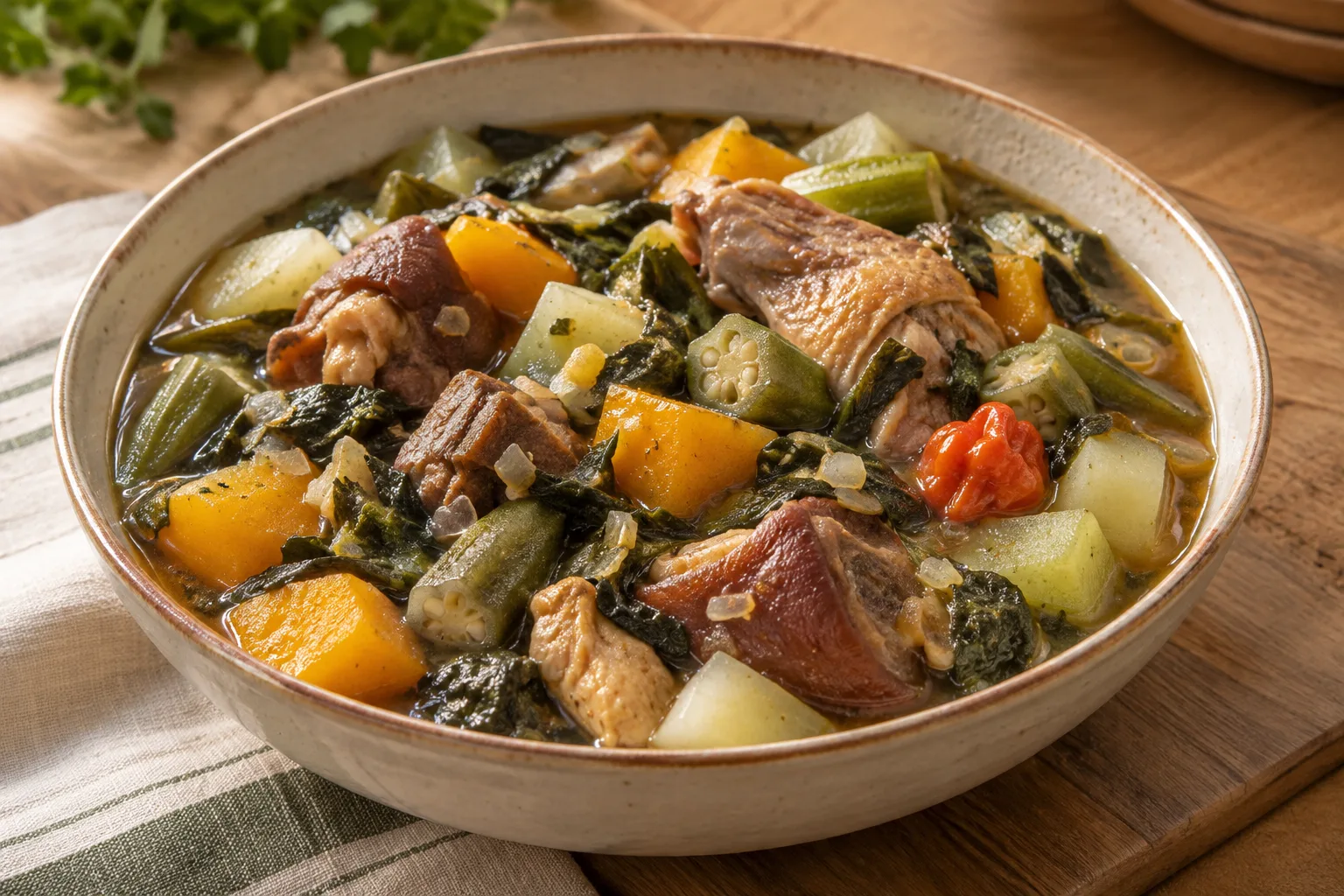
Callaloo does not always identify a single plant: the name is used regionally for different edible leaves and also for cooked dishes made with them. In some markets and recipes, it refers to the leaves of an amaranth plant. The species and appearance can therefore vary. This profile covers fresh callaloo sold as leafy greens, not a prepared soup or stew. It is used as a vegetable and can be cooked in sautés, soups, and stews. If the label names the plant, use that information to identify the variety; otherwise, follow the seller’s guidance and handle the leaves as a leafy vegetable.
When to use it
Use callaloo when you want cooked leafy greens in a meal, such as a sauté or a soup or stew. It can also serve as the vegetable component of a dish with a cooked grain, such as quinoa. The type of callaloo available and its character can differ by region, so check the package or ask the seller which plant it identifies. If callaloo is unavailable, spinach or collard greens are possible substitutes; the finished dish will have its own texture and character.
How to use it
Before cooking, separate the leaves and remove damaged parts. Wash the produce before preparation. For a sauté, cook the leaves with aromatics and other ingredients; one documented combination includes scallions, ginger, tomato, thyme, and hot pepper. You can also add the leaves to a soup or stew and cook them gently with the other ingredients. Serve them with cooked quinoa for a meal. Callaloo can refer to different plants, so leaf size and texture may vary; adjust the cut and cooking to the product you have rather than assuming every variety is identical.
Flavour and texture
Callaloo sold as leafy greens has a vegetal character and leafy texture, although its exact flavor and firmness depend on the plant and how tender the leaves are. When cooked, it fits readily into sautés and moist dishes such as soups or stews. The name is used for more than one plant in different regions, so no single flavor description applies to every product.
How to choose it
Choose leaves that look fresh and are not visibly wilted or damaged. Since callaloo can name different plants depending on the region, check the label or ask the seller if you need a particular kind, such as leaf amaranth. Buy the form suited to your planned dish and follow any handling guidance on the package when available.
Storage
Follow the storage instructions on the package or from the seller, and handle the leaves as fresh produce. Avoid storing damaged leaves with those in good condition. The available evidence does not establish a specific storage life for fresh callaloo; do not assume that every variety or form keeps in the same way.
Substitutions
Spinach and collard greens can stand in for callaloo in recipes that call for leafy greens, although the flavor and texture may change. Use either if callaloo is unavailable or the variety on hand does not suit your dish. Because the name covers different plants, no single substitute reproduces every regional form of callaloo.
Common mistakes
A common mistake is assuming that callaloo always means one species or one specific dish. Its use varies by region. Also, spinach, collard greens, and callaloo are not identical: they can replace one another in some preparations, but the result will differ in texture and flavor.
Safety and allergens
Wash the leaves before preparation. Follow any handling or storage directions on the package. Do not use leaves that show clear signs of spoilage.
Culinary uses
- Leafy vegetable in cooked dishes
- Green ingredient in soups and stews
Recommended techniques
- Sautéing
- Simmering in soups or stews
Pairs well with
- Scallions, ginger and tomatoes
- Thyme, hot pepper and quinoa
Frequently asked questions
Is callaloo one specific plant?
Not always. The name is used regionally for different edible leafy plants and also for dishes made with them. Some products refer to leaf amaranth.
How can I cook callaloo?
Sauté it or add it to a soup or stew. Scallions, ginger, tomato, thyme, and hot pepper appear in one callaloo preparation.
What can I use instead of callaloo?
Spinach or collard greens can substitute in some recipes. The dish’s flavor and texture may change.
Ingredient allergens
Allergen listThere are no verified associations for these ingredients yet.
Sources and review
Automatically researched, cross-checked and validated content. Sources consulted:
- Client Challenge doi.org/10.2307/jj.27939689.16
- Culinary Mestizaje: An Afro-Latino Collective Sensory ... via.library.depaul.edu/cgi/viewcontent.cgi?article=1404&context=dialogo
- - YouTube www.youtube.com/watch?v=j7j5mXykpgY
- Métodos de cocción: los tipos secos, húmedos y mixtos www.igi-la.com/blog/metodos-de-coccion-guia/
- Chapter 12: Culturally Centered Approaches to Culinary Medicine – Culinary Medicine opentextbooks.library.arizona.edu/culinarymedicine/chapter/chapter-12-culture/
- Técnicas modernas en gastronomía: guía práctica – Aflamas Restaurant aflamas.com/tecnicas-modernas-en-gastronomia-guia-practica/
- Q&A with NGI Alum, Chef Kofi | Institute of Culinary Education www.ice.edu/blog/qa-with-ngi-alum-and-army-chef-kofi
- Traveling with Food | Home & Garden Information Center hgic.clemson.edu/factsheet/traveling-with-food/
- Global Cuisine Cooking Lessons: African Chop | Fowler Museum at UCLA fowler.ucla.edu/events/global-cuisine-cooking-lessons-african-chop/
- Cooking by the Book - Chester Fritz Library Updates blogs.und.edu/cfl/2021/09/cooking-by-the-book/
- How to Cook a Tapir: A Memoir of Belize digitalcommons.unl.edu/cgi/viewcontent.cgi?article=1018&context=unpresssamples
- heat – Maryland Grows marylandgrows.umd.edu/tag/heat/
- Calalú - Wikipedia, la enciclopedia libre es.wikipedia.org/wiki/Calal%C3%BA
- La achira y su aplicación en la cocina de tendencia vanguardista | OpenAlex openalex.org/W586539709
- Técnicas de cocción: sabor, color, textura y nutrientes a buen recaudo - Dialnet dialnet.unirioja.es/servlet/articulo?codigo=7625301