- Category
- Pulses
- State
- Canned
- Usual unit
- Variable
What it is
Canned pigeon peas are a packaged legume for use in cooking. They can be added to a range of preparations, from salads and side dishes to rice dishes, soups, and stews. They can also be mashed or blended for a smoother result. Packing liquid may affect a recipe’s flavor or consistency, so decide whether you want to use it before adding it. Preparation and storage directions can depend on the product: check the label, including the ingredient list and drained weight. When adapting a recipe, add the peas at a suitable point for the dish, and avoid cooking them longer than necessary if you want them to keep their shape.
When to use it
Use them when you want to add a legume to a salad, rice dish, soup, stew, or side. They can also add body to a vegetable preparation or be used in a purée. If a recipe includes ingredients that need longer cooking, add the peas toward the end when the package directions allow; this lets you warm them without extending their cooking unnecessarily. For a cold preparation, drain them if you do not want the packing liquid, then mix them with the other ingredients. Check the label before use and follow its preparation directions.
How to use it
Read the package directions before preparing the peas. If you do not want the packing liquid to affect the flavor or consistency of your dish, drain them; rinse them only if removing liquid clinging to the peas suits your recipe. For a side dish, you can warm them briefly in a pan with onion, garlic, tomato, or herbs, provided the product directions allow it. In a soup, stew, or rice dish, add them near the end if they only need warming. You can also mix them into a salad or blend them with some of the recipe liquid for a purée or creamy soup. Taste the dish before adjusting its salt or consistency.
Flavour and texture
The flavor and texture of the finished dish depend on the preparation and the other ingredients. Packing liquid can also affect flavor and consistency, so draining is an option when you want more control over them. As a general way to help legumes keep their shape in a dish, avoid cooking them longer than needed and add them toward the end when the recipe and package directions allow. Blending them, on the other hand, makes them suitable for a smooth preparation.
How to choose it
Look for a container clearly labeled as pigeon peas and check the ingredient list, drained weight, and product directions. Make sure the label is readable and the container has no visible damage. If the peas will be the main ingredient, drained weight can help you compare products. Check the label for preparation and storage guidance; do not assume that every product has identical directions or packing liquid.
Storage
Store the unopened container according to its label and observe the dates stated on the product. After opening, follow the manufacturer’s instructions for storing any peas you do not use. If the label does not give clear directions for leftovers, consult local food-safety guidance rather than assuming a time or temperature. Protect the food from contamination while handling it and use clean utensils.
Substitutions
In salads, rice dishes, soups, and stews, you can try canned chickpeas or another cooked legume as a substitute. Cooked beans may also work in a blended preparation, although they will change the flavor and consistency. Cooked dried pigeon peas are another option, but they need separate preparation; follow their directions and adjust the amount with the canned product’s drained weight in mind.
Common mistakes
Do not automatically add all the packing liquid: it can change the flavor and consistency of a recipe. Drain the peas if you want more control over that result. Another mistake is cooking them longer than needed when you want them to keep their shape. Read the package directions and, if the recipe allows, add them near the end. Taste before adjusting the salt.
Safety and allergens
Follow the label directions for opening, preparing, and storing the product. Use clean utensils and apply the manufacturer’s guidance to leftovers; do not assume storage times or conditions that are not stated on the package.
Culinary uses
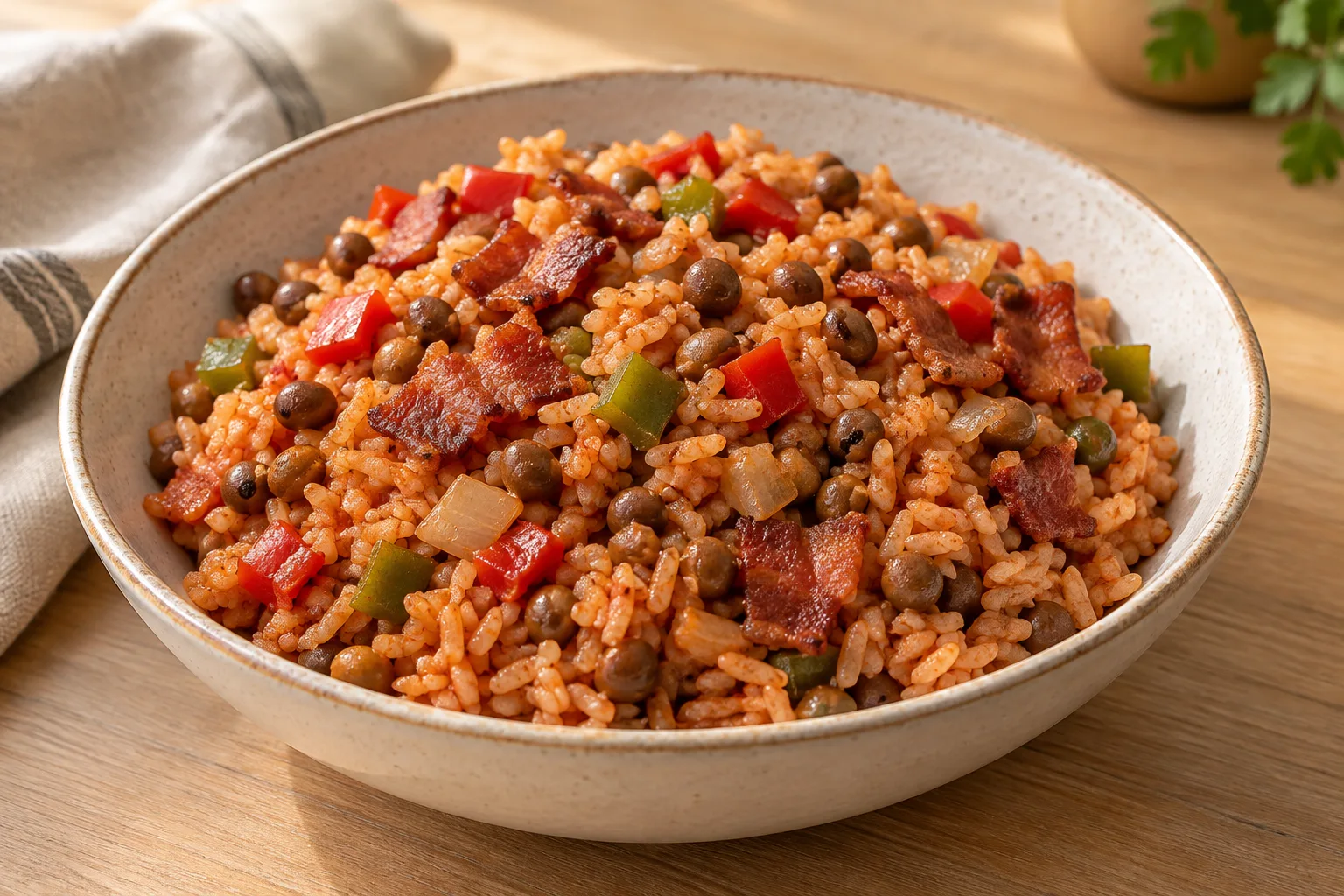
- A legume to add to salads, rice dishes, soups, stews, and side dishes
- A possible base for purées and blended soups
- An ingredient for rounding out a meal with vegetables or grains
Recommended techniques
- Drain before adding if you do not want the packing liquid in the dish
- Warm briefly or add near the end of cooking when the package directions allow
- Mash or blend for a smoother preparation
Pairs well with
- Rice and other grains
- Onion, garlic, and herbs
- Tomatoes and peppers
- Eggs and other vegetables
Frequently asked questions
Should I drain canned pigeon peas?
Drain them if you do not want the packing liquid in your recipe. If you choose to use it, remember that it can affect flavor and consistency.
When should I add them to a soup or stew?
If the recipe and package directions allow, add them near the end when they only need warming. This avoids cooking them longer than necessary.
Can I blend them into a purée?
Yes. Mash or blend them, then adjust the consistency with recipe liquid, adding it gradually.
Ingredient allergens
Allergen listThere are no verified associations for these ingredients yet.
Sources and review
Automatically researched, cross-checked and validated content. Sources consulted:
- Los guisantes en conserva pueden convertirse en un plato sorprendente con ingredientes sencillos que transforman por completo su sabor y textura www.elconfidencialdigital.com/articulo/gourmet/como-convertir-guisantes-conserva-plato-sorpr…
- Romanica Olomucensia : «¿Qué pinga es esto?». Usos disfemísticos en el español de Cuba doi.org/10.5507/ro.2021.007
- The Essential Glossary of Cooking Terms for the Culinary Arts - Escoffier www.escoffier.edu/blog/culinary-arts/the-essential-glossary-of-cooking-terms-for-the-culinar…
- El guisante en nuestra gastronomía www.afuegolento.com/articulo/el-guisante-nuestra-gastronomia/1315/
- Qué es (y qué no es) la estadística, usos y abusos de una disciplina clave en la vida de los países y las personas | Estudios económicos doi.org/10.52292/j.estudecon.2015.740
- Guisantes en conserva: el pequeño secreto verde que transforma tus recetas - Garpa Alimentación - Almacenamiento y Distribución para las Islas Canarias garpa-alimentacion.com/guisantes-en-conserva-el-pequeno-secreto-verde-que-transforma-tus-rec…
- Guisantes: Alegría verde en tu plato - Estudia Hostelería estudiahosteleria.com/blog/gastronomia/guisantes/
- How Food Shapes Our Culture | Annukhemera-t El | Servicio de Extensión de OSU extension.oregonstate.edu/es/video/how-food-shapes-our-culture-annukhemera-t-el
- Guisantes verdes, su uso en la cocina www.google.com/goto?url=CAESdQHrOzAVn3Ur2Aj5fKrZO92XfxVqLq3SMRjWfUzlyNizv_9niXa6pKEQg42D5Srb…