- Category
- Sugar and sweeteners
- State
- Dry
- Usual unit
- g
What it is
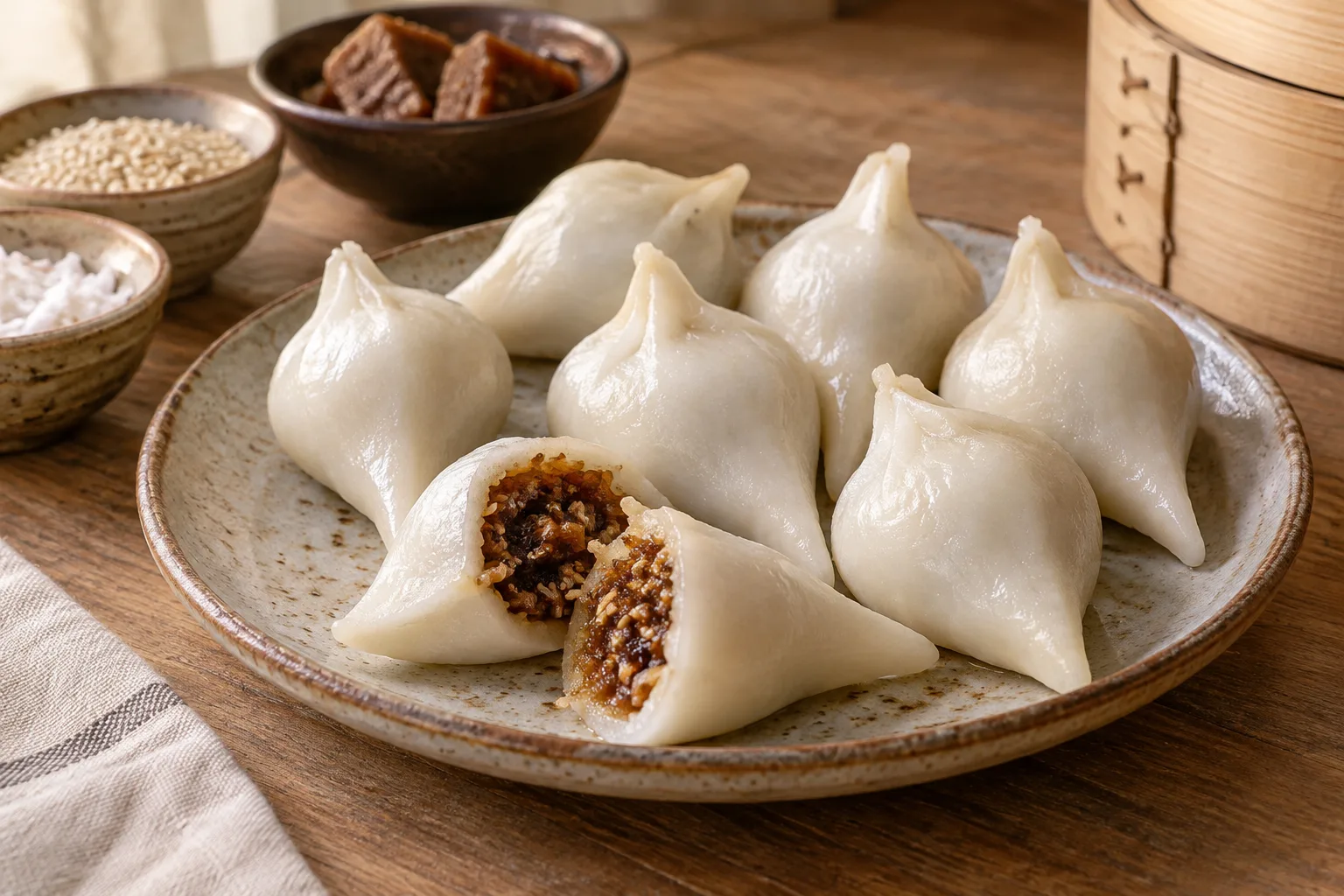
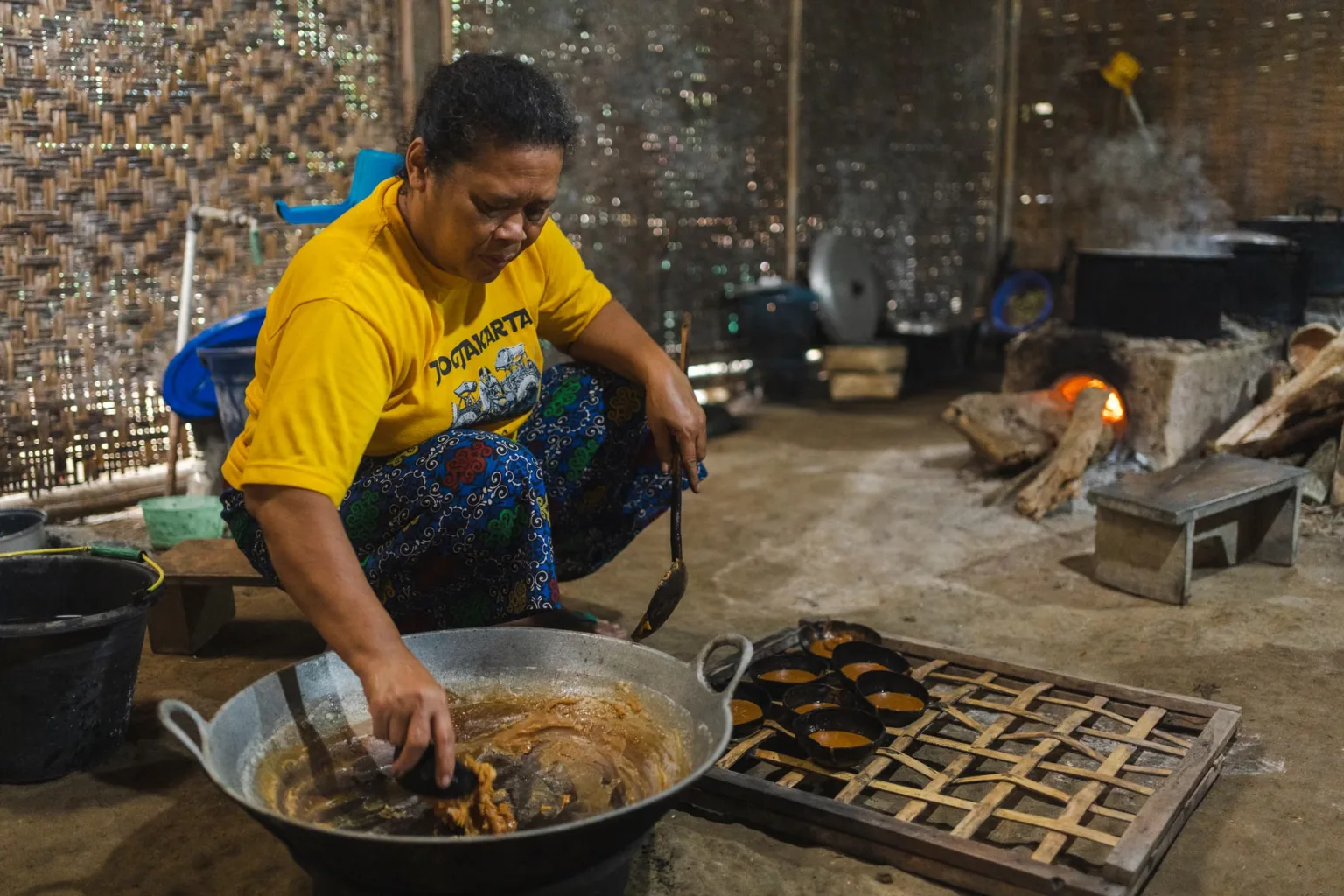
Chaku is presented here as palm sugar, a sweetener made from the sap of palm trees. It is sold in different forms, including blocks and granules, and its color and flavor can vary with the palm and processing. Some descriptions note caramel-like or brown-sugar-like flavors, but products are not necessarily identical. The name “chaku” alone does not confirm the palm species, production method or ingredients of a particular item. Check the product name and ingredient list on the package, especially if you need to establish its source or avoid specific ingredients.
When to use it
Use it when you want to sweeten desserts, baked goods, curries or sauces. In savory dishes it can add sweetness and a distinctive flavor; in sweet recipes it serves as a sweetener. Since products can differ in form, color, composition and flavor, consider the result you want and taste as you adjust sweetness. Do not assume that every product called palm sugar is identical or has the same flavor intensity.
How to use it
If it comes in a block, cut or grate it into a form that can be incorporated into the dish; if it is granulated, add it as the recipe requires. Stir it into curries or sauces to distribute the sweetness, or use it in desserts and baked goods. Palm sugar also appears in traditional sweet preparations. Available forms and ingredients vary, so check the package before cooking. There is no universal substitution ratio supported for every type of chaku: if you use a different sweetener, adjust to the recipe and desired flavor rather than assuming the result will be identical.
Flavour and texture
Palm sugar can range in color from golden to dark brown and may be sold in blocks or granules. It is described as having caramel-like notes and a flavor that can recall brown sugar, but the specific profile varies between products. Color and form alone cannot guarantee a particular flavor.
How to choose it
Check that the package clearly identifies the product as palm sugar and read its ingredient list. Products may differ in palm source, format and composition; some may contain other sugars. Choose a block or granulated form according to how you plan to incorporate it into your recipe, and check the information for the specific product.
Storage
Follow the storage directions on the package. Palm sugar products and formats differ, so do not assume that every product has the same directions after opening; check the label for the specific item and store it as instructed.
Substitutions
Brown sugar or cane sugar can provide sweetness if palm sugar is unavailable, but they will not necessarily reproduce its flavor. No universal quantity equivalence is established here; adjust to the recipe and the result you want rather than expecting an identical flavor.
Common mistakes
Do not treat every palm sugar product as identical or assume that the name “chaku” alone confirms its ingredients. Another common mistake is expecting brown or cane sugar to provide exactly the same flavor profile.
Safety and allergens
If you have a food allergy, check the ingredient list and allergen information for the specific product; commercial compositions can vary. Do not infer that a product is free of an allergen simply because it is sold as palm sugar.
Culinary uses
- Sweetener in desserts and baked goods
- Sweetener and flavor-balancer in sauces and curries
Recommended techniques
- Cut or grate block sugar so it can be incorporated into a dish
- Stir into sauces or curries; add granulated sugar as the recipe requires
Pairs well with
- Curries and savory sauces
- Desserts and baked goods
Frequently asked questions
What is chaku in this profile?
It is presented as palm sugar, a sweetener that can be made from the sap of different palms. Check the label to confirm the identity and ingredients of the particular product.
How can I use palm sugar?
Add it to desserts and baked goods, or stir it into curries and sauces for sweetness. It may be sold in blocks or granules.
Can I replace it with brown sugar?
Brown sugar can provide sweetness, but it may not give the same flavor. Do not assume an exact quantity-for-quantity substitution.
Ingredient allergens
Allergen listThere are no verified associations for these ingredients yet.
Sources and review
Automatically researched, cross-checked and validated content. Sources consulted:
- ¿Por qué la muerte es origen de miedos y tabúes? doi.org/10.64628/aao.fccyk3qj3
- Etiquetado de sustancias que causan alergias e intolerancias alimentarias www.aesan.gob.es/seguridad-alimentaria/informacion-alimentaria/etiquetado-sustancias
- Agencia Española de Seguridad Alimentaria y Nutrición www.aesan.gob.es/
- Qué es la psicología de emergencia y por qué es fundamental en La Palma doi.org/10.64628/aao.u7ghmcrc5
- ¿Qué es el azúcar de palma? Orígenes, producción y usos culinarios | Cuisinenet www.cuisinenet.com/es/ingredientes/azucar-de-palma/
- Azúcar de Palma — Open Spice Box openspicebox.com/es/ingredients/palm-sugar
- Azúcar de palma - Wikipedia, la enciclopedia libre es.wikipedia.org/wiki/Az%C3%BAcar_de_palma
- AZÚCAR DE PALMA - Sosa www.sosa.cat/producto/azucar-de-palma/
- Métodos de cocción: los tipos secos, húmedos y mixtos www.igi-la.com/blog/metodos-de-coccion-guia/
- - YouTube www.youtube.com/watch?v=BP0l2_RMqCs
- Amazon Los más vendidos: Mejor Azúcar de Palma para Hornear y Cocinar www.amazon.com/-/es/Los-m%C3%A1s-vendidos-Az%C3%BAcar-de-Palma-para-Hornear-y-Cocinar/zgbs/g…
- Azúcar de palma es.gastronomiac.com/glosario_de_productos/az%C3%BAcar-de-palma/
- Técnicas ancestrales de cocina que sí transforman - Escuela Ly Vega La Plantífera laplantifera.com/tecnicas-ancestrales-de-cocina/