- Category
- Meat
- State
- Fresh
- Usual unit
- g
What it is
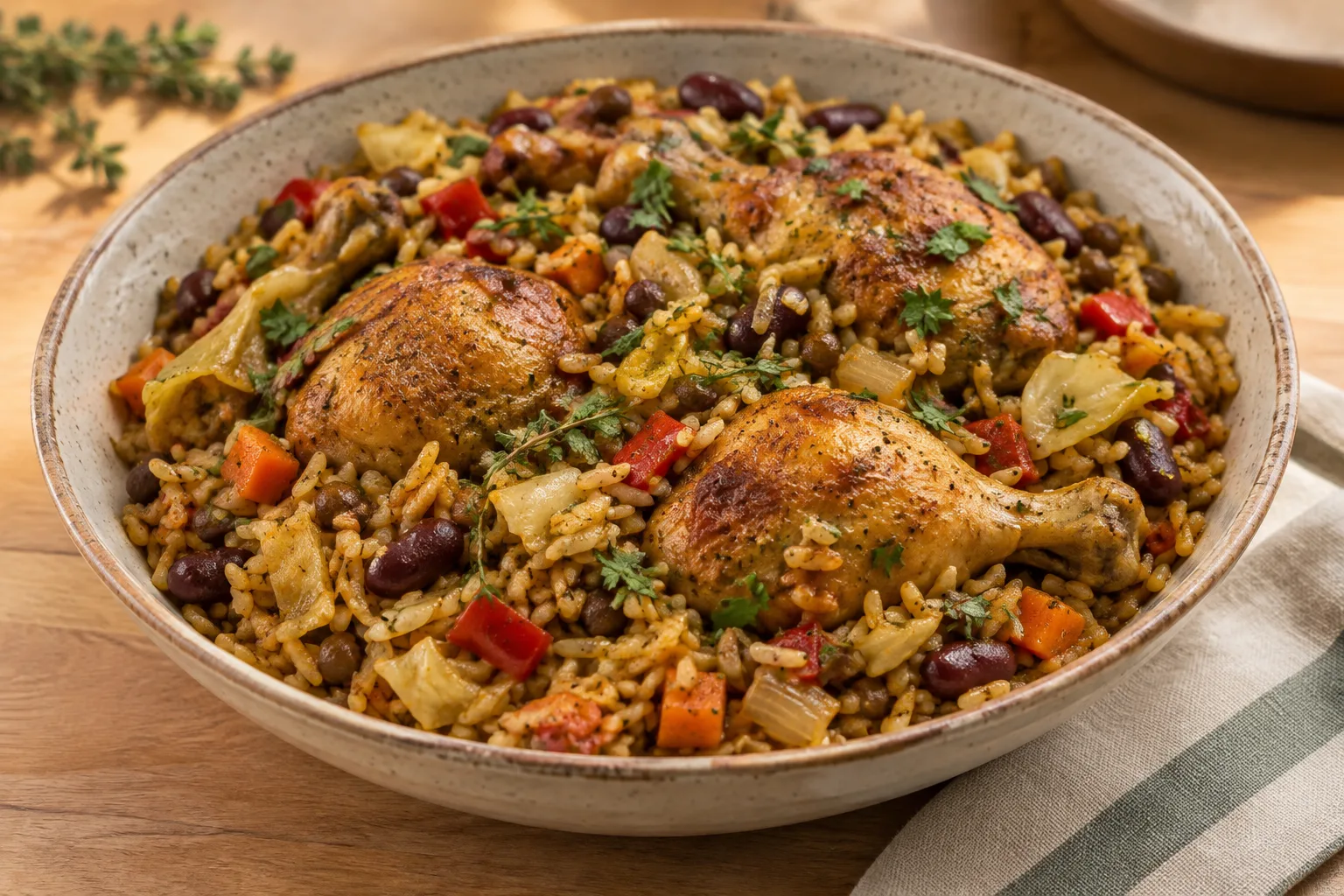
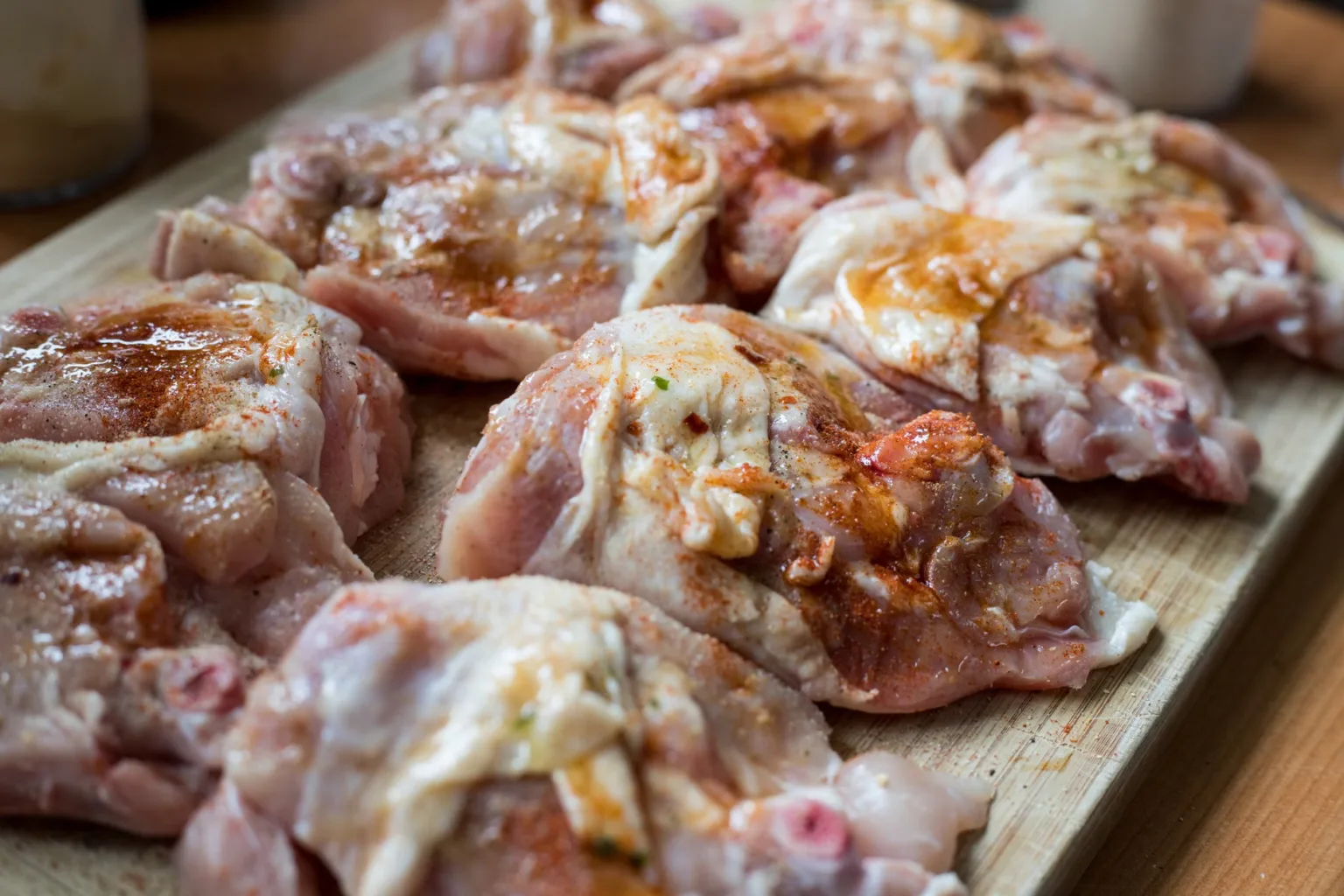
Chicken thighs are the upper part of a bird’s leg, distinct from the breast and wings. They are sold with the bone and skin, or boneless and skinless. Bone-in, skin-on pieces can develop browned skin and tend to stay succulent when cooked appropriately; boneless pieces are easier to portion and cut. Their flavor is fuller than that of chicken breast, and they work well in stews and other longer-cooked dishes. The exact names used for chicken cuts can vary by country and retailer, so check the package to see whether the pieces include bone and skin before planning a recipe.
When to use it
Choose chicken thighs when you want a flavorful piece of poultry for a stew, braise, or roast that can handle a longer cooking method. Bone-in pieces suit oven dishes and one-pot meals; boneless, skinless thighs are convenient for tacos, salads, stir-fries, and recipes where the meat will be sliced or shredded. Thighs can also add flavor to soups and broths. When substituting them for another cut, take account of the size of the pieces and whether they contain bone, as both affect cooking and serving.
How to use it
First check whether the thighs are bone-in and skin-on, since that affects handling, browning, and cooking. Pat the surface dry before browning if you want good color. Season with salt, spices, or a marinade, then roast, grill, or cook in a pan. For a stew or braise, brown the thighs if the recipe calls for it, then cook them with liquid and the other ingredients until fully cooked and tender. Boneless thighs can be sliced or diced for a stir-fry, or cooked whole and shredded for salads, tacos, and sandwiches. Handle raw chicken carefully and cook it thoroughly.
Flavour and texture
Chicken thighs generally have a fuller flavor than breast meat and a tender, juicy texture when properly cooked. Their structure makes them well suited to stews and longer cooking. Skin, when present, can brown and become crisp; the bone helps keep the piece intact and suits pot dishes. Boneless, skinless thighs are easier to portion, but still need attention to avoid overcooking.
How to choose it
Choose a well-sealed package that has been kept refrigerated and is within its stated use-by date. Check the cut’s format: bone-in or boneless, skin-on or skinless. The pieces should look typical for the product, and the package should not be damaged or leaking. For even portions, choose thighs of similar size; for a roast or stew, select the format that best fits the recipe.
Storage
Keep fresh chicken thighs refrigerated and follow the storage directions and date on the package. Keep raw chicken separate from ready-to-eat food and prevent its juices from contacting other ingredients. If you will not use the thighs within the stated period, freeze them in suitable packaging and follow the product’s instructions for thawing. After handling raw chicken, clean your hands and any surfaces that came into contact with it.
Substitutions
Drumsticks or other chicken leg pieces can work in many poultry dishes, though their size and bone content differ. Boneless thighs are convenient when a recipe calls for easy-to-cut pieces; bone-in thighs suit roasting and braising. Breast meat can replace thighs in some dishes, but it is leaner and may need a different cooking approach to avoid drying out.
Common mistakes
Do not assume every pack of thighs has the same size, bone, or skin: check the label and adjust portions. Avoid crowding a pan, which can interfere with browning. Do not extend the cooking unnecessarily just because thighs are suited to stews. Do not rely on the outside appearance alone to decide whether chicken is fully cooked.
Safety and allergens
Raw chicken may carry harmful microorganisms. Handle it carefully, keep it separate from ready-to-eat foods, and cook it thoroughly. Follow the storage directions on the package.
Culinary uses
- Main protein for roasted, grilled, braised, or stewed dishes
- Ingredient for soups, broths, rice dishes, tacos, and salads
Recommended techniques
- Roasting or baking
- Braising and stewing
- Grilling
- Pan-frying
- Simmering in soup or broth
Pairs well with
- Garlic, thyme, oregano, paprika, and cumin
- Lemon, yogurt, or other flavorful marinades
- Rice, potatoes, and vegetables
- Tomato-based sauces and broth
Frequently asked questions
Are chicken thighs the same as drumsticks?
No. Thighs are the upper leg portion; drumsticks are the lower portion. Names and retail cuts vary, so check the package.
What cooking methods work well for chicken thighs?
They can be roasted, braised, stewed, grilled, or added to soup. Choose according to whether the pieces are bone-in and skin-on and the texture you want.
Can I use boneless thighs in tacos or salads?
Yes. Boneless, skinless thighs are easy to slice or shred and can be used in tacos, salads, and many other dishes.
Ingredient allergens
Allergen listThere are no verified associations for these ingredients yet.
Estimated nutrition
- Fat
- 17.9 g
- Saturates
- 5.36 g
- Carbohydrate
- 0 g
- Sugars
- 0 g
- Fibre
- 0 g
- Protein
- 15.2 g
- Salt
- 0.18 g
Sources and review
Automatically researched, cross-checked and validated content. Sources consulted:
- ¿Por qué la muerte es origen de miedos y tabúes? doi.org/10.64628/aao.fccyk3qj3
- 8 usos del pollo en la cocina que no conocías www.cashfresh.es/8-usos-del-pollo-en-la-cocina-que-no-conocias/
- Por qué cada corte de pollo reacciona distinto al cocinar y cómo elegir el ideal www.elconfidencialdigital.com/articulo/gourmet/descubre-que-cada-corte-pollo-reacciona-difer…
- Carne de pollo - Wikipedia, la enciclopedia libre es.wikipedia.org/wiki/Carne_de_pollo
- Cómo cocinar muslos de pollo para que nunca queden secos: 20 métodos comprobados es.qz.com/mtodos-para-cocinar-muslos-de-pollo-jugosos
- - YouTube www.youtube.com/watch?v=IkEHaNw37ZQ
- Qué es (y qué no es) la estadística, usos y abusos de una disciplina clave en la vida de los países y las personas | Estudios económicos doi.org/10.52292/j.estudecon.2015.740
- Todo lo que debes saber sobre la carne de pollo - Estudia Hostelería estudiahosteleria.com/blog/cocina/todo-lo-que-debes-saber-sobre-la-carne-de-pollo/
- pentagrams people.sc.fsu.edu/~jburkardt/fun/wordplay/pentagram.html
- Apuntes de apicultura | OpenAlex openalex.org/W2484607441
- Tipos de marinadas para pollo | Especias Magenis magenis.es/tipos-de-marinadas-para-pollo/
- Guía definitiva del pollo al vacío - Anova Culinary anovaculinary.com/es/pages/sous-vide-chicken-guide?srsltid=AYCX9vJsuoGDrdHTViqtVcYaPwHXziVT6…