- Category
- Sauces and condiments
- State
- Fresh
- Usual unit
- tablespoon
What it is
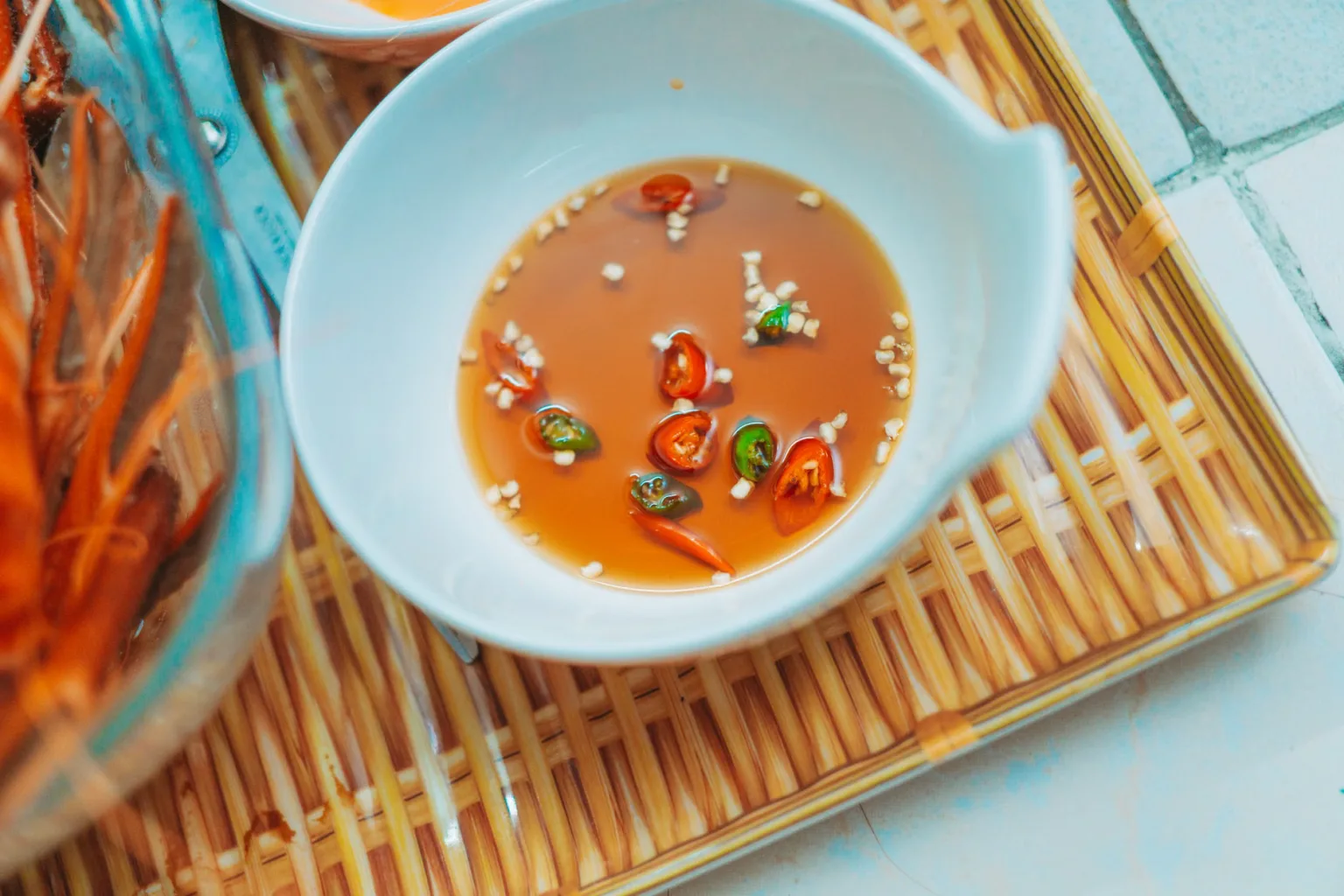
Chilli sauce is a condiment made with chilli, but the name does not describe one fixed recipe. Heat, consistency, color, and flavor can differ, and some sauces contain additional ingredients. Do not assume that all varieties are interchangeable or have the same composition. Depending on its style, chilli sauce can be served alongside food or added to a dish for a spicy accent. The label on the specific product is the place to check its ingredients and follow its storage instructions.
When to use it
Use chilli sauce when you want to add chilli flavor and heat to a meal, either as a table condiment or as a finishing touch. It can accompany tacos and enchiladas, or be served with eggs and other savory dishes. Since heat and intensity vary between products, begin with a small amount and taste before adding more. Use it sparingly when a dish already has assertive flavors, so the sauce does not overwhelm them.
How to use it
Check the label first, especially if you need to verify ingredients or storage instructions. Serve a small amount alongside the dish or spoon it over the food at the end; taste a bite and add more only if needed. You can also stir a little into a savory preparation, mixing and tasting before adding more. For tacos or enchiladas, let each person adjust the amount to taste. Do not assume a table sauce is suitable for every cooking method or preparation: follow the package directions and bear in mind that heat and texture differ from sauce to sauce.
Flavour and texture
Chilli gives the sauce its heat, but the particular flavor depends on the recipe and any added ingredients. Color and consistency vary too: some sauces are more fluid, while others are thicker. Check the label and taste a small amount before using it generously.
How to choose it
Choose according to the heat level and texture you want, and do not infer the ingredients from the name or color alone. Check the ingredient list and allergen information, especially if serving someone with an allergy or intolerance. Formulations differ between products.
Storage
Follow the package instructions for storing the sauce and for whether it needs refrigeration after opening. Keep the container closed and use clean utensils when serving. Do not assume its shelf life or storage requirements from the name chilli sauce alone; directions depend on the specific product.
Substitutions
Salsa roja or salsa verde can serve a similar role as accompaniments, but they will not necessarily have the same flavor, heat, or ingredients as the chilli sauce being replaced. Choose to suit the dish and check the label; do not assume an exact equivalent.
Common mistakes
Adding a large amount without tasting first can let the heat dominate a dish. It is also a mistake to assume every chilli sauce has the same texture or ingredients. Start with a little and check the product label.
Safety and allergens
Recipes and ingredients vary between sauces. If you need to avoid an allergen, check the label on the specific product and ask for information about unpackaged food; do not infer its composition from the name.
Culinary uses
- Table condiment for adding chilli flavor and heat
- Finishing sauce to add contrast to tacos, eggs, enchiladas, and other savory dishes
Recommended techniques
- Serve alongside food or spoon over a finished dish
- Stir a small amount into a dish, tasting as you go
Pairs well with
- Tacos and enchiladas
- Eggs, grilled meats, and tortilla chips
Frequently asked questions
Do all chilli sauces have the same heat level?
No. Heat and flavor depend on the specific sauce. Start with a little and add more after tasting.
What can I serve chilli sauce with?
It can accompany tacos and enchiladas, and can also be served with eggs and other savory dishes. Adjust the amount to taste.
How should I store opened chilli sauce?
Follow the instructions on the package. Storage directions can differ between formulations.
Ingredient allergens
Allergen listThere are no verified associations for these ingredients yet.
Estimated nutrition
- Fat
- 0 g
- Saturates
- 0 g
- Carbohydrate
- 37.5 g
- Sugars
- 31.2 g
- Fibre
- 1.6 g
- Protein
- 0 g
- Salt
- 1.33 g
Sources and review
Automatically researched, cross-checked and validated content. Sources consulted:
- ¿Por qué la muerte es origen de miedos y tabúes? doi.org/10.64628/aao.fccyk3qj3
- Etiquetado de sustancias que causan alergias e intolerancias alimentarias www.aesan.gob.es/seguridad-alimentaria/informacion-alimentaria/etiquetado-sustancias
- Salsa (gastronomía) - Wikipedia, la enciclopedia libre es.wikipedia.org/wiki/Salsa_(gastronom%C3%ADa)
- El chile, ingrediente esencial en la cocina de México - Formacion en Gastronomia www.formacionengastronomia.com/cocina-latina/chile/
- Chile de árbol: guía completa para cocinarlo en Europa – La Condesa lacondesabarcelona.com/chile-de-arbol/
- Tipos de Salsas y sus Características en la Gastronomía ... dialnet.unirioja.es/descarga/articulo/9482039.pdf
- Allergies - Food Safety - European Commission food.ec.europa.eu/food-safety/campaign-2026/allergies_en
- Food Allergies | FDA www.fda.gov/food/nutrition-food-labeling-and-critical-foods/food-allergies
- Allergen labelling for food businesses | Food Standards Australia New Zealand www.foodstandards.gov.au/business/labelling/allergen-labelling
- Food Allergy Labeling Laws: International Guidelines for Residents and Travelers - PMC pmc.ncbi.nlm.nih.gov/articles/PMC10169132/
- Food allergen labelling and information requirements technical guidance - GOV.UK www.gov.uk/government/publications/food-allergen-labelling-and-information-requirements-tech…
- México a través de sus salsas | Secretaría de Agricultura y Desarrollo Rural | Gobierno | gob.mx www.gob.mx/agricultura/articulos/mexico-a-traves-de-sus-salsas
- Qué es la salsa macha: origen, historia y usos de la salsa mexicana que conquista cocinas de todo el mundo | Gastronomía & Cía www.gastronomiaycia.com/que-es-la-salsa-macha-origen-historia-y-usos-de-la-salsa-mexicana-qu…
- Chile: El ingrediente de la gastronomía mexicana www.elyucateco.com/post/chile-el-ingrediente-de-la-gastronom%C3%ADa-mexicana
- Exportación de salsa de ají malagueta y ayuyo hacia Santiago de Chile | OpenAlex openalex.org/W2916363511
- Guía de texturas en salsas para comer mejor – Salsas Trucho salsastrucho.shop/blogs/news/guia-de-texturas-en-salsas?srsltid=AYCX9vLtY72MewOEHwMb6Nq8idc5…