- Category
- Sugar and sweeteners
- State
- Dry
- Usual unit
- g
What it is
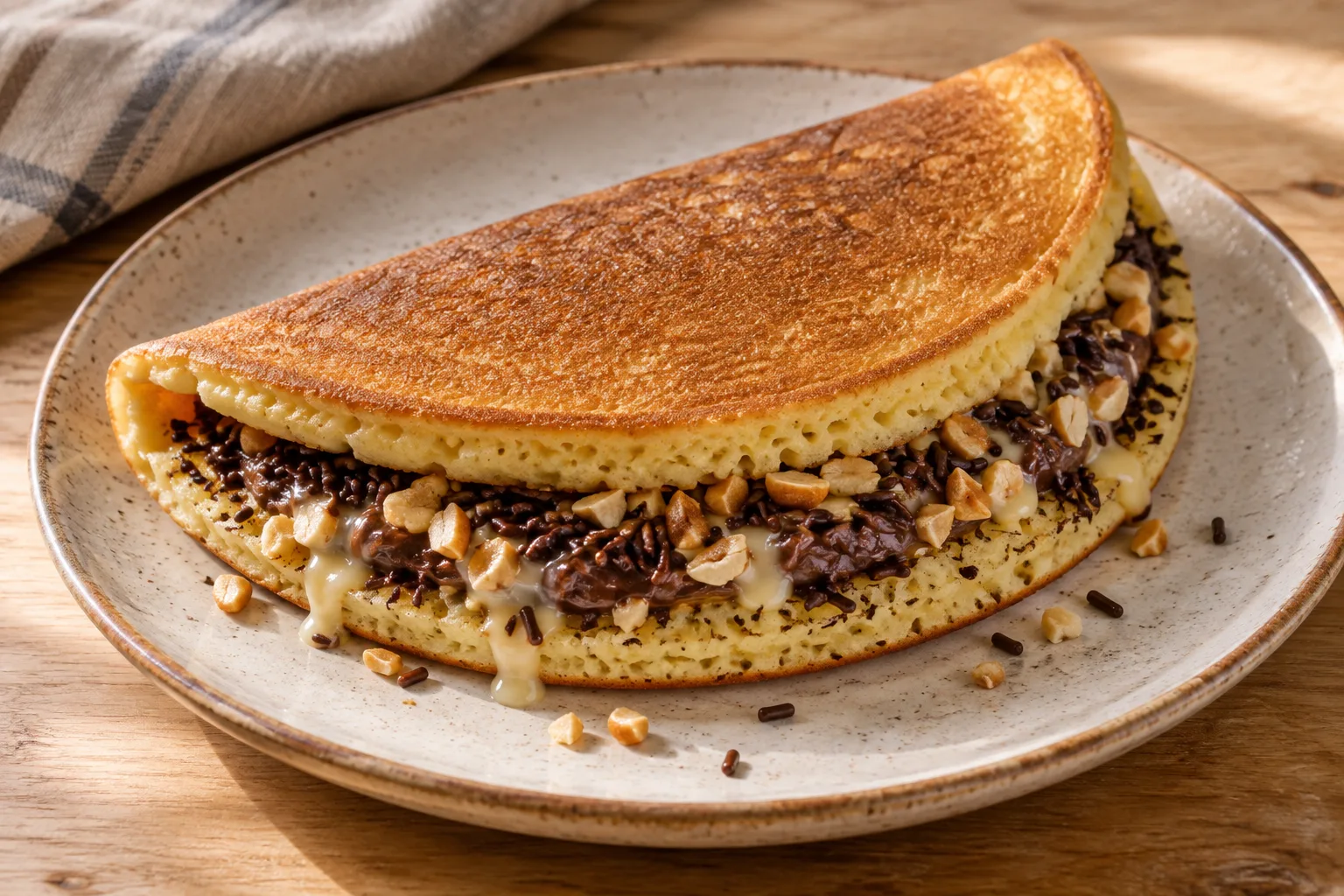
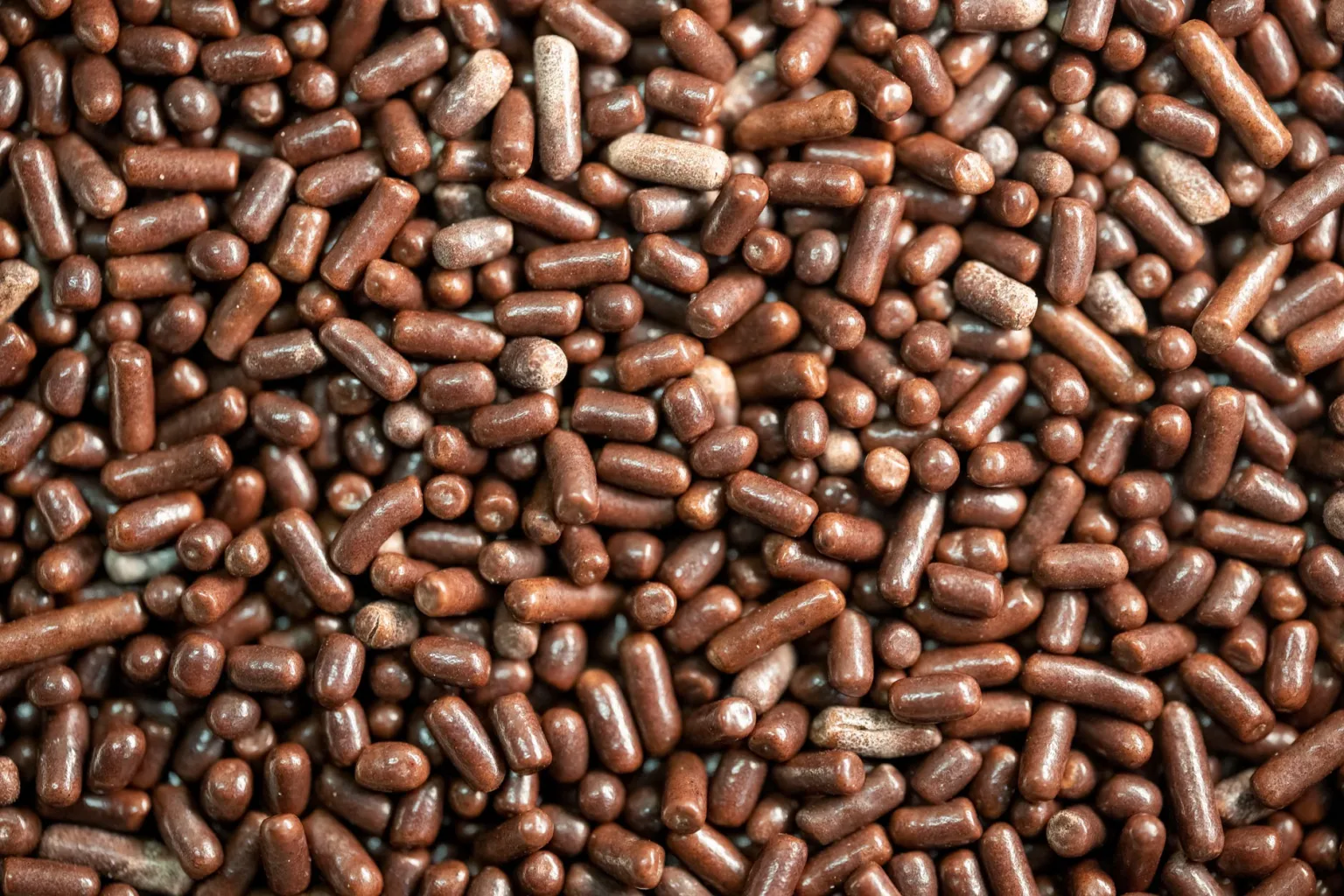
Chocolate sprinkles are small pieces or shavings of chocolate used chiefly to decorate and finish desserts. Their shape can vary: some products are small and granular, while others resemble fine shavings or curls. Check the specific product rather than assuming all sprinkles have the same size, composition, or behavior. Their usual role is to add a chocolate note and a decorative finish, not to replace a sauce or a complete coating. Similar shavings can also be made by scraping a solid piece of chocolate with a peeler or knife. The type of chocolate affects flavor and appearance, so read the package to understand the particular product you have.
When to use it
Use them when you want to add a chocolate finish to cakes, cookies, or other desserts without making a sauce or coating the entire surface. Adjust the amount to suit the look you want and each person’s taste, or let diners add their own. For a clearly visible garnish, add the sprinkles at the end or just before serving rather than repeatedly handling the finished dessert. If you want them to adhere, scatter them over a coating or surface that is still slightly soft; check the directions for the particular product first. They are also useful when you want a chocolate accent in the presentation without changing the main preparation.
How to use it
Open the package and scatter the sprinkles over the dessert, starting with a small amount and adding more as desired. Distribute them across the surface or concentrate them in the middle for a simple finish; for individual servings, let each person choose the amount. To make a similar garnish at home, scrape a solid piece of chocolate with a vegetable peeler or sharp knife. Work carefully and keep the tool steady. Add the pieces at the end if you want their shape to remain visible. If you want them to stick, place them on a coating that is still slightly soft, following the directions for the product used. Check the package before using a particular product, since forms and compositions can vary.
Flavour and texture
Flavor and intensity depend on the type of chocolate; not all sprinkles are equally sweet or pronounced. Their texture may be fine and light or more noticeable when the pieces are larger. Scattered over a dessert, they add a chocolate note and visible contrast against the decorated surface. Shavings made by scraping solid chocolate can be irregular in size and shape, unlike a more uniform commercial product. Check the package to identify the specific product rather than assuming all varieties behave alike.
How to choose it
Read the package to distinguish ready-to-use sprinkles from chocolate intended for grating or melting. Check the type of chocolate, piece size, and manufacturer’s directions, since presentation and composition can vary. Choose an intact, dry package and consider the finish you want: small pieces for more even coverage or larger shavings for a more prominent decoration. Read the ingredient list and allergen information for the specific product, especially if you need to avoid an ingredient. Do not assume that one brand has the same composition as another.
Storage
Follow the package directions first. As general guidance for chocolate, the consulted sources recommend a cool, dry place away from light, air, and odors, and an airtight container after opening. Avoid refrigeration unless needed, since moisture or condensation can affect its appearance. This guidance concerns chocolate generally and does not establish one universal storage period for all commercial sprinkles. If the manufacturer gives different directions for that product, follow its label.
Substitutions
If you do not have sprinkles, scrape solid chocolate with a peeler or knife, or finely chop it and scatter it over the dessert. The size and shape will differ, but it can provide a similar decorative function. Choose the chocolate type for the flavor and appearance you want. Commercial sprinkles and scraped chocolate are not necessarily identical, so check the visual result and adjust the amount when serving.
Common mistakes
Do not confuse decorative sprinkles with a chocolate coating: their main role is to finish and decorate a dessert. Avoid adding them too early if you want them to keep a distinct appearance. Do not assume every product has the same composition, size, or storage directions. Read and follow the package instructions before using or storing the sprinkles.
Safety and allergens
Check the package, especially its ingredients and allergen information, since composition can vary. Use clean, dry utensils and follow the manufacturer’s directions.
Culinary uses
- Dessert garnish
- Chocolate finishing touch for sweet dishes
Recommended techniques
- Scatter over a dessert as a finishing garnish
- Make a similar garnish by scraping solid chocolate
Pairs well with
- Cakes and cookies
- Strawberries and ice cream
Frequently asked questions
When should I add chocolate sprinkles?
Add them at the end or just before serving, particularly when you want them to remain visible as a garnish.
Can I make chocolate shavings at home?
Yes. Carefully scrape a solid piece of chocolate with a vegetable peeler or sharp knife.
How should I store an opened package?
Follow the label first. As general guidance for chocolate, keep it sealed in a cool, dry place away from light, air, and odors.
Ingredient allergens
Allergen listDocumented presence
-
Milk and milk products
Chocolate sprinkles
-
Eggs
Chocolate sprinkles
-
Tree nuts
Chocolate sprinkles
-
Peanuts
Chocolate sprinkles
-
Cereals containing gluten
Chocolate sprinkles
-
Soybeans
Chocolate sprinkles
Estimated nutrition
- Fat
- 25 g
- Saturates
- 25 g
- Carbohydrate
- 75 g
- Sugars
- 50 g
- Fibre
- 0 g
- Protein
- 0 g
- Salt
- 0 g
Sources and review
Automatically researched, cross-checked and validated content. Sources consulted:
- ¿Por qué la muerte es origen de miedos y tabúes? doi.org/10.64628/aao.fccyk3qj3
- A Chocolate Primer for Aspiring Chefs | Institute of Culinary Education www.ice.edu/blog/barry-callebaut-chocolate-tasting
- Chocolate Overload: Tips for Storing Various Forms of Chocolate | Home & Garden Information Center hgic.clemson.edu/chocolate-overload-tips-for-storing-various-forms-of-chocolate/
- Chocolate – Shelf Life, Storage, and Bloom • AnswerLine • Iowa State University Extension and Outreach blogs.extension.iastate.edu/answerline/2023/11/07/chocolate-shelf-life-storage-and-bloom/
- Maqueta.qxp:Maqueta Comità CientÃfico Nâ« 2 aesan.gob.es/dam/jcr:07120507-cbae-498b-85a7-2ec557b6becb/comite_cientifico_11.pdf
- Chocolate History Collection · VT Special Collections and University Archives Online digitalsc.lib.vt.edu/ChocolateHistory
- Dark Chocolate • The Nutrition Source nutritionsource.hsph.harvard.edu/food-features/dark-chocolate/
- From Bulletin Board to Grocery Store, Students Journey through the Food Product Development Process | Tsai CITY city.yale.edu/stories/2019/12/2/from-bulletin-board-to-grocery-store-students-journey-throug…
- Sandwich Lunches | Catering | Sandwich Lunches | Amherst College www.amherst.edu/campuslife/housing-dining/dining/catering/sandwich-lunches
- Virutas de chocolate | Gastronomía & Cía www.gastronomiaycia.com/virutas-de-chocolate/
- Aprende a hacer virutas de chocolate - Blogs MAPFRE www.hogar.mapfre.es/cocina/articulos/virutas-chocolate/
- Cómo hacer virutas de chocolate: 3 opciones enrolladas chocolatestorras.com/virutas-chocolate/
- - YouTube www.youtube.com/watch?v=LCQc_PnBr0g
- Nutrition | Label - Chocolate Sprinkles nutrition.umd.edu/label.aspx?RecNumAndPort=102005*1