- Category
- Herbs and spices
- State
- Dry
- Usual unit
- stick
What it is
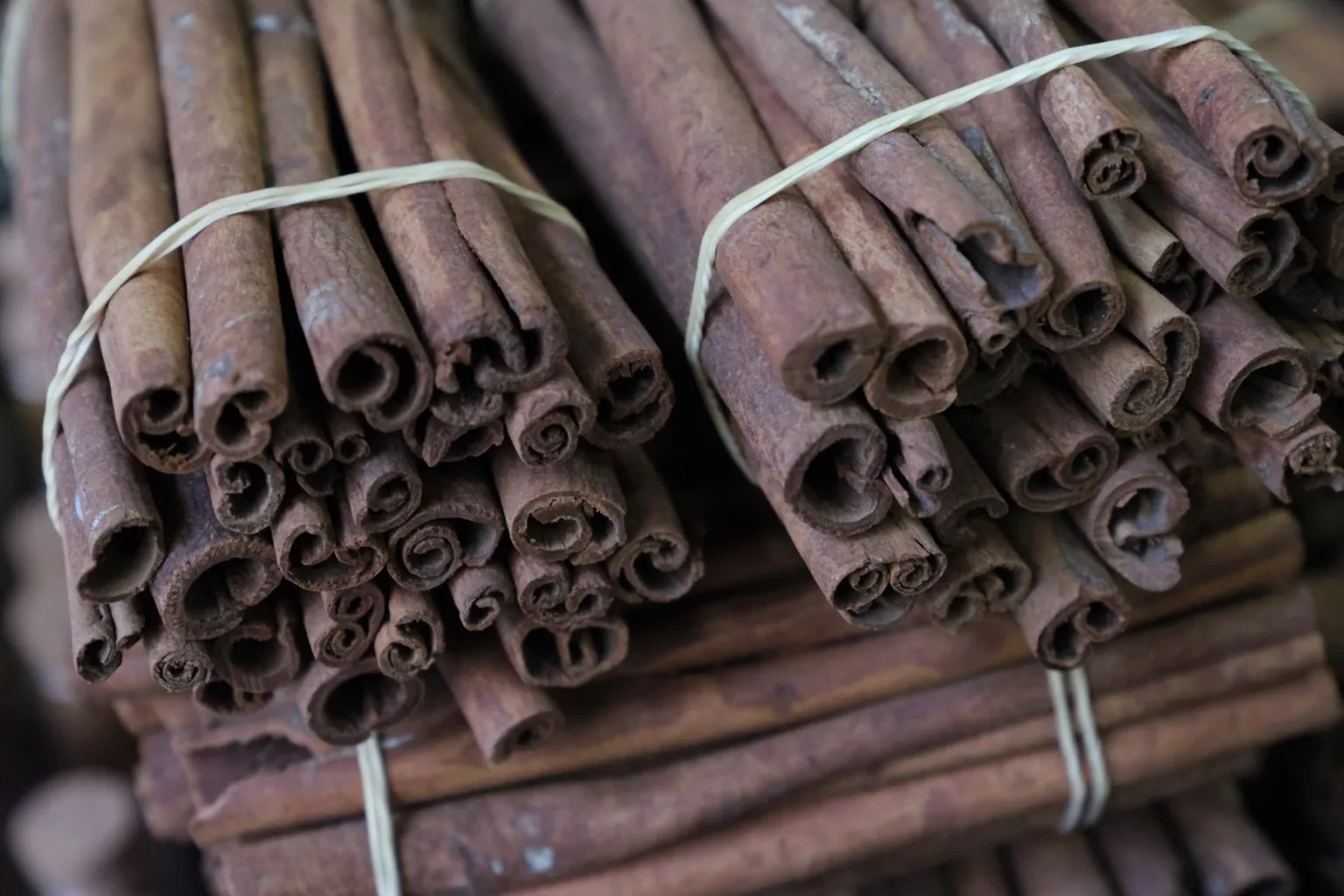
Cinnamon sticks are pieces of dried inner bark from trees in the genus Cinnamomum. As the bark dries, it curls into fragrant rolls or quills; cinnamon is also sold ground. The name covers several culinary varieties, so a stick’s thickness, color, rolled shape and flavor intensity can vary. Ceylon cinnamon is often described as finer and more delicate, while cassia is generally thicker and more robust in flavor. A whole stick can infuse a liquid without adding ground spice to the finished dish, and it can be removed when it has flavored the preparation. The specific variety matters when a recipe depends on a particular cinnamon profile.
When to use it
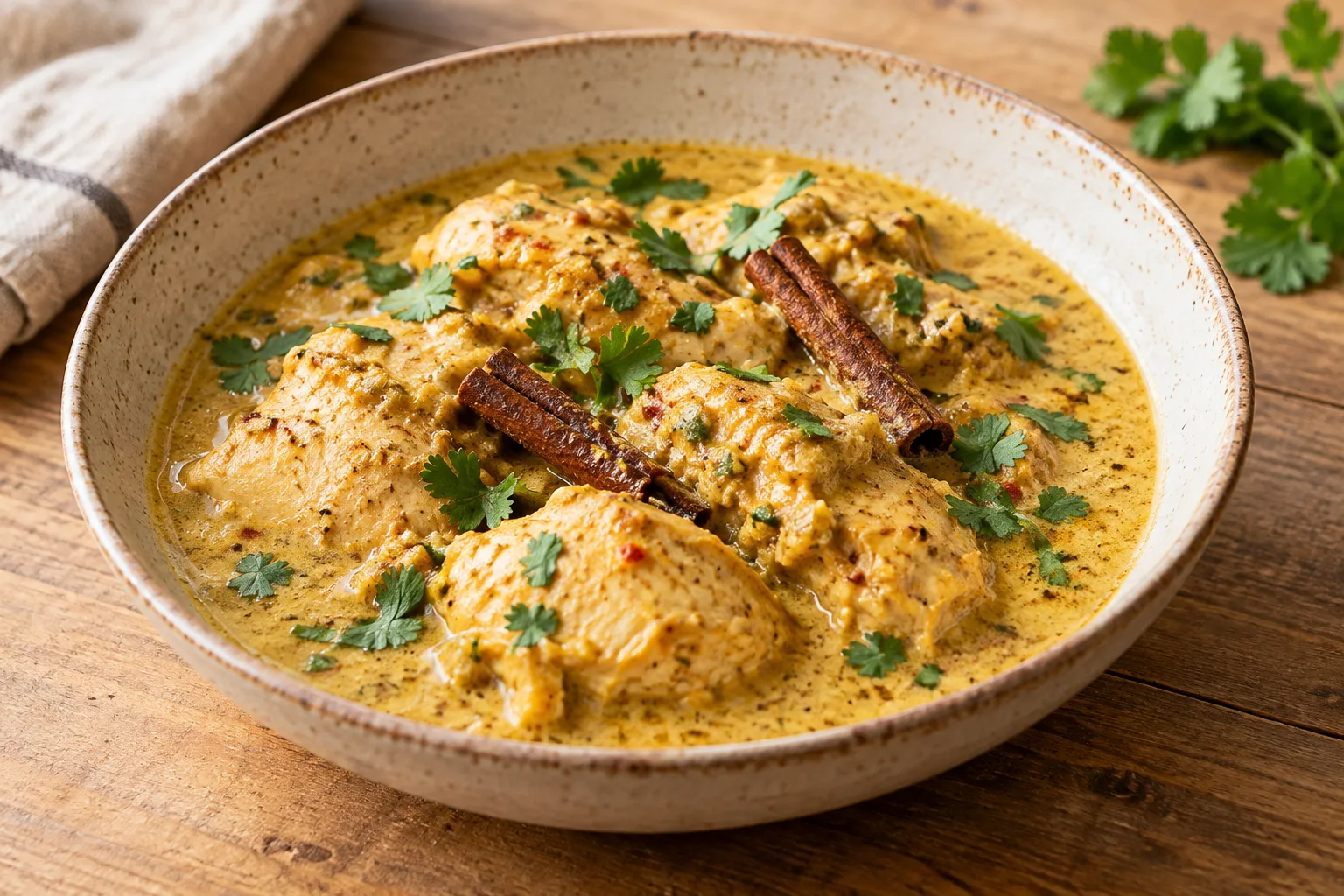
Choose a stick when you want to flavor a liquid during cooking or steeping and remove the bark afterward, as in hot drinks, rice pudding, custards, sauces, broths or stews. It is also useful when you want cinnamon to infuse gradually rather than adding ground spice directly to a dish. Cinnamon appears in baking and desserts as well as savory cooking, including some curries and meat dishes. Varieties can differ in intensity and character, so take the type named in a recipe into account when its flavor is central.
How to use it
Add a stick to milk, water or another liquid that the recipe heats, and let it infuse as the preparation cooks. Remove it before serving if the recipe calls for a liquid without pieces of bark; a cinnamon-milk recipe, for example, may direct you to remove the stick. Cinnamon sticks can also flavor infusions, drinks, creamy desserts, sauces, curries, broths and stews. If a recipe calls for ground cinnamon, use powder instead of a stick only when it is acceptable for the spice to remain in the dish; the available evidence does not establish a universal quantity conversion. Do not treat a stick as though it were ground spice: it is a piece of dried, rolled bark.
Flavour and texture
Cinnamon has a warm, fragrant and recognizable aroma, with a sweet, spicy flavor that can be slightly pungent. Intensity varies by variety: Ceylon is often more delicate, while cassia is more robust. A stick is dried, rolled bark rather than powder, and it contributes aroma to a liquid while it remains in the preparation.
How to choose it
Look for a product clearly labeled as cinnamon sticks and check whether the variety, such as Ceylon or cassia, is identified, since their profiles can differ. Sticks vary in thickness, color and shape depending on type, so appearance alone does not establish the variety. Buy from an identifiable supplier and check official food-recall notices. Whole cinnamon may require less grinding and processing than ground cinnamon, but that does not guarantee it is free of contaminants.
Storage
Cinnamon sticks are dried bark. Keep the product dry and follow the storage directions on its package; the available evidence does not establish a specific shelf life or support more detailed preservation instructions. Use any storage or use-by guidance on the package as your reference. The whole-stick format should not be treated as a guarantee that the product is free of contaminants.
Substitutions
Ground cinnamon can replace a stick when the recipe allows the powder to remain in the dish, but the texture will change and there is no universal quantity conversion. A stick of another culinary cinnamon variety may also work, though its flavor and intensity may differ. Choose according to the result you want and the recipe’s instructions.
Common mistakes
Do not assume every cinnamon stick has the same thickness, flavor or intensity; culinary varieties differ. Do not automatically replace a stick with powder without considering that the powder will remain mixed into the dish. Finally, whole form or marketing labels such as “natural” do not guarantee that cinnamon is free of contaminants.
Safety and allergens
Check official food-recall notices and, if your specific product is recalled, stop using it and follow the official instructions. Lead concerns have been reported for certain ground cinnamon products; whole sticks may require less processing, but they are not guaranteed to be free of lead or other contaminants. Do not rely on “natural” or “organic” labeling as proof that a product is uncontaminated.
Culinary uses
- Aromatic seasoning for desserts and baked goods
- Flavoring for hot drinks and infusions
- Warm spice in savory dishes, curries, stews and broths
Recommended techniques
- Infuse whole in a simmering liquid, then remove before serving when the recipe calls for it
- Add to baked goods or desserts as a whole stick or use ground cinnamon instead
- Use to flavor drinks, sauces, stews and broths
Pairs well with
- Milk, rice and custards
- Tea, chocolate and other hot drinks
- Fruit, cakes and sweet baked goods
- Curries, meat dishes and savory stews
Frequently asked questions
What is a cinnamon stick?
It is dried inner bark from trees in the genus Cinnamomum, rolled into a stick as it dries.
Can I use ground cinnamon instead of a stick?
Yes, if the recipe allows the spice to stay mixed into the dish. The texture changes, and there is no universal quantity conversion.
Are cinnamon sticks guaranteed to be lead-free?
No such guarantee is supported. Check official recall notices and follow their instructions if your product is affected.
Ingredient allergens
Allergen listThere are no verified associations for these ingredients yet.
Estimated nutrition
- Fat
- 0 g
- Saturates
- 0 g
- Carbohydrate
- 0 g
- Sugars
- 0 g
- Protein
- 0 g
- Salt
- 0 g
Sources and review
Automatically researched, cross-checked and validated content. Sources consulted:
- ¿Por qué la muerte es origen de miedos y tabúes? doi.org/10.64628/aao.fccyk3qj3
- Bebida de Arándano - myLLU - Loma Linda University myllu.llu.edu/utilities-fileManager/action:image/?item=%2Flivingwhole%2Frecipes%2FBebida%20d…
- Conocé más sobre la canela, tipos y recetas | Recetas Nestlé www.recetasnestle.com.ar/escuela-de-sabor/ingredientes/canela
- Todo sobre canela : origen, tipos, usos y beneficios - Spice and Colour www.spiceandcolour.com/todo-sobre-canela-origen-tipos-usos-y-beneficios/
- Canela: Tipos, Usos Funcionales y Propiedades | Alveus www.alveus.eu/es/blog/canela-tipos-y-usos/
- GASTRONOMÍA. LA CANELA | Revista Viajeros www.revistaviajeros.es/viajes-con-sabor/turismo-gastronomico/gastronomia-la-canela
- Preserving pears | Servicio de Extensión de OSU extension.oregonstate.edu/es/food/preservation/preserving-pears
- Lo que los productores de alimentos artesanales deben saber sobre el plomo en la canela | Extensión de la UMN es.extension.umn.edu/nodo/183101
- Canela rama Ceylán: Descubre sus beneficios y usos en la cocina dnng.es/blogs/especias-y-salud/canela-rama-ceylan-descubre-sus-beneficios-y-usos-en-la-cocin…
- Tipos de canela - Blog de La Parada de las Especias comprarespecias.net/blog/tipos-de-canela/?srsltid=AYCX9vIHKUi66euFlaye6zX2Xr5E-JT06sya_HmAue…