- Category
- Fish and seafood
- State
- Fresh
- Usual unit
- cup
What it is
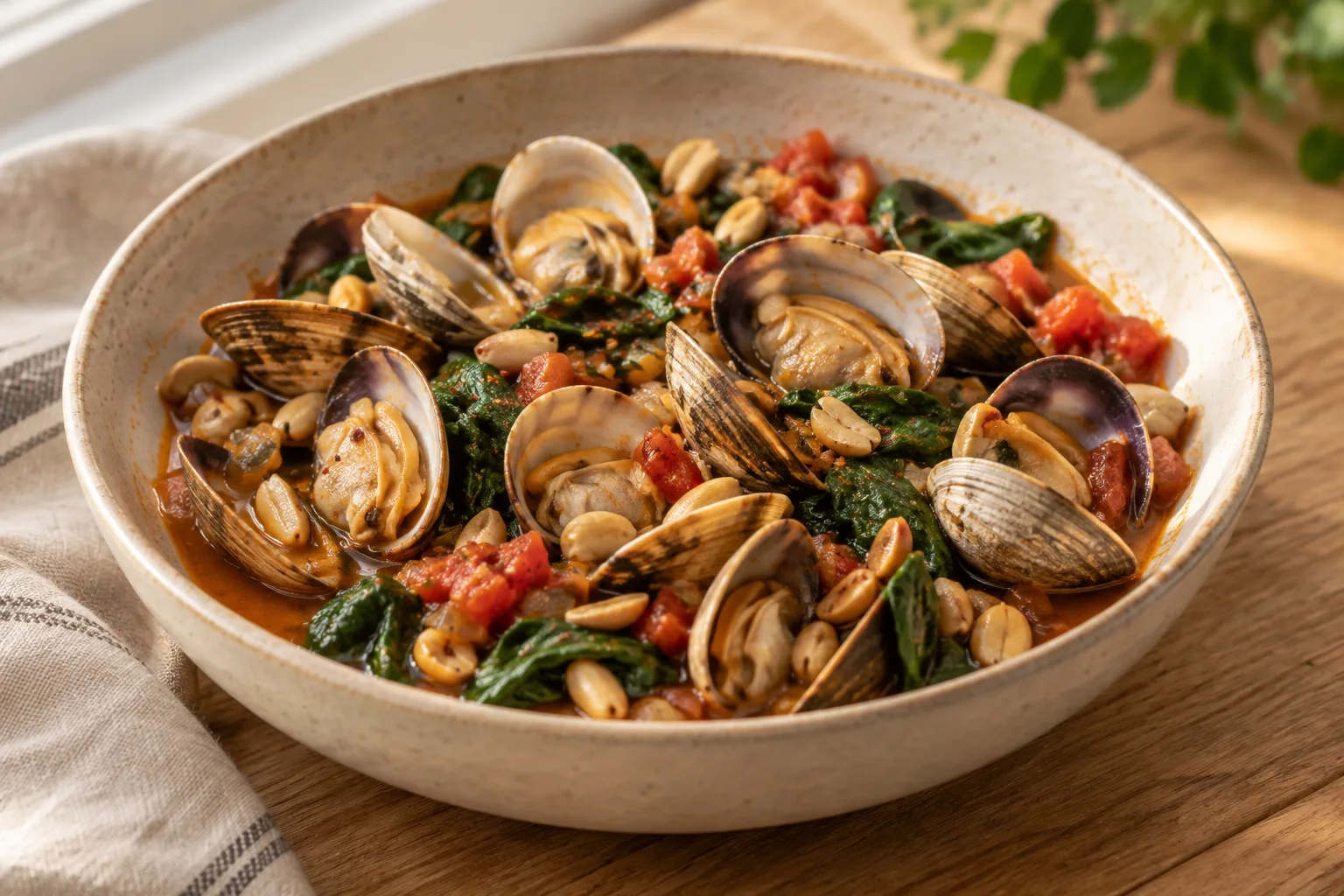
In this profile, “clams with their juice” means clams served with the liquid they release during cooking. That liquid can be collected and used to flavor a sauce or another dish. The phrase may also appear on products presented with liquid, but the available information does not establish a shared composition or storage method for such products. This profile therefore focuses on fresh clams and their cooking liquid. Clams are not all alike: varieties can differ in size, flavor and texture. Keep those differences in mind when choosing clams and adapt the preparation to the product in hand rather than assuming every variety needs exactly the same treatment.
When to use it
Use clams with their cooking liquid when you want a more pronounced marine flavor in a sauce, pasta, rice dish or soup. The liquid is particularly useful in sauced dishes, where it can blend with other ingredients and carry the clam flavor throughout the preparation. You can also serve the clams with the broth in which they were cooked. Since the phrase may appear with products in different forms, check the label if you are not starting with fresh clams that you cooked yourself, and follow the product-specific directions.
How to use it
Starting with fresh clams, cook them in a way that lets you collect the liquid they release, such as steaming them or cooking them in a sauce. Remove the clams when they are ready for the dish and reserve the liquid. If it may contain sand or other particles, strain it before adding it to a sauce, stew or rice dish. Add it gradually and taste before seasoning with salt, since its intensity can vary. You can also use it in a pasta sauce or serve the clams with their cooking broth. Avoid extending the cooking without a reason: size and variety affect texture. If a product is already presented with liquid, check its label rather than assuming that liquid is the same as freshly produced cooking juices.
Flavour and texture
Clam meat has a marine flavor, while size, firmness and intensity can vary by variety. The liquid released during cooking carries some of that character and can add depth to a sauce, rice dish or soup. Some clams are more tender and mild, while others can be firmer or more pronounced in flavor. The preparation also affects the result. Taste the liquid before seasoning so you can judge its intensity and adjust the other ingredients accordingly.
How to choose it
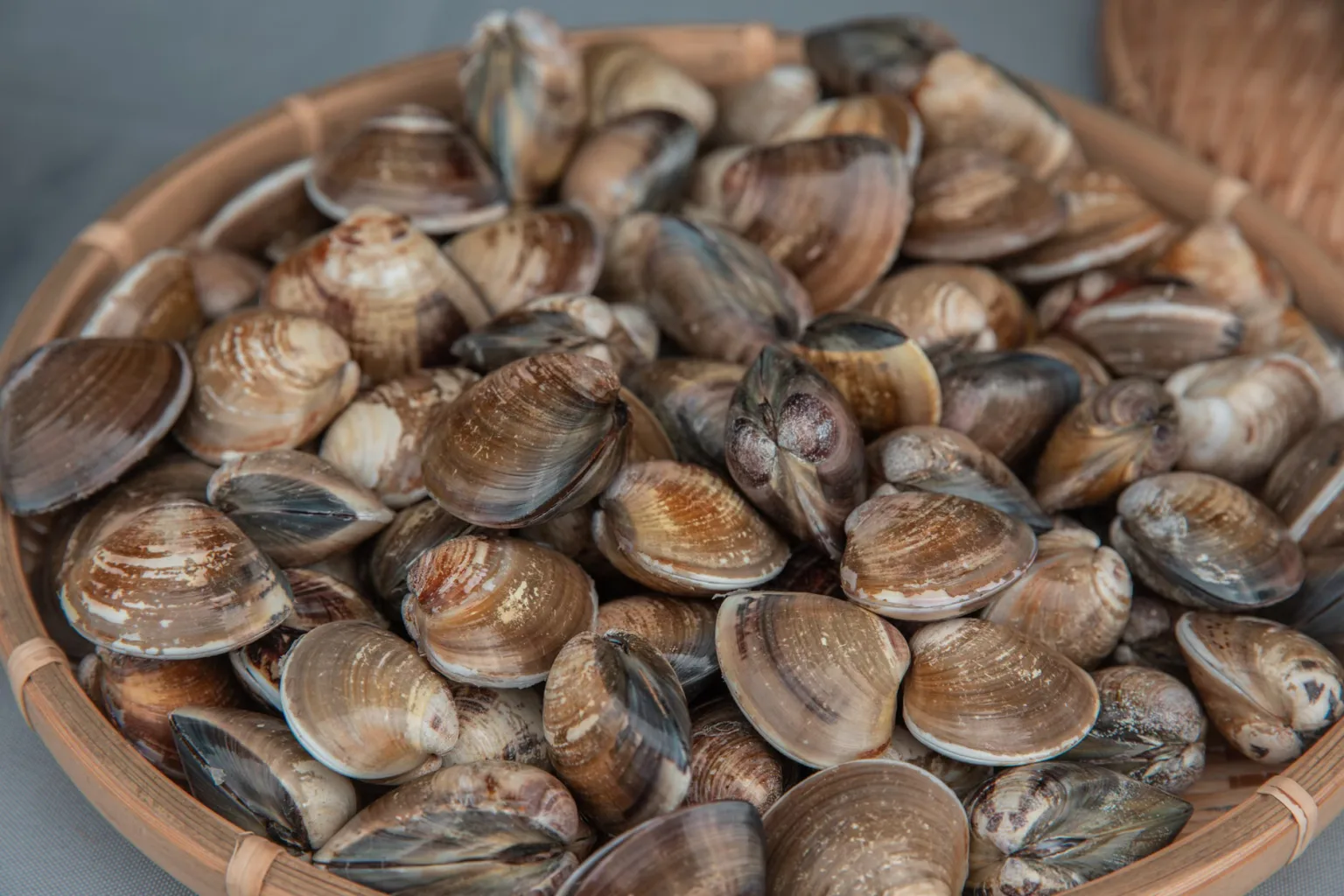
When buying fresh clams, look for shells without visible damage and choose product sold as live. If a shell is slightly open, a gentle tap can help check whether it closes. Varieties differ in size, flavor and texture, so choose with the dish in mind: different clams are used in simple preparations, sauces, soups or rice dishes. If you buy a product described as clams “with their juice,” read its label to identify the form and follow the product-specific directions.
Storage
The information available here does not establish a safe storage period that applies to every product described as clams with their juice. For fresh clams, follow the seller’s directions and applicable official food-safety guidance. For a packaged product, follow its storage instructions and label information. Do not infer a storage time from this profile, and do not use the liquid if the product shows signs of spoilage.
Substitutions
You can replace one clam variety with another, but the result may change: size, texture and flavor vary among varieties. Choose one suited to the dish and taste the liquid before adjusting the seasoning. The available information confirms differences among clam types but does not establish exact equivalents for quantity, flavor or cooking time; adapt the preparation to the clams you have.
Common mistakes
A common mistake is to add all the liquid at once and salt without tasting first; its intensity can vary with the clams and preparation. Do not assume every variety has the same texture or cooks in the same way. If the liquid contains particles, strain it before adding it. Do not confuse freshly produced cooking liquid with liquid from a prepared product; check the label for the directions that apply to that product.
Safety and allergens
Follow official food-safety guidance and the directions from the seller or on the product label. Handling and storage may depend on the specific product form; do not use this profile to infer a safe storage period.
Culinary uses
- Ingrediente principal servido con su jugo de cocción
- Aporte de sabor marino para salsas, pastas, arroces y sopas
Recommended techniques
- Cocción al vapor para recoger el líquido liberado
- Cocción breve en una salsa y aprovechamiento del jugo colado
- Incorporación gradual del jugo a salsas, arroces o sopas
Pairs well with
- Ajo y cebolla
- Perejil y limón o lima
- Vino blanco
- Pan para acompañar la salsa
Frequently asked questions
What is the juice from clams?
It is the liquid clams release during cooking. It can be collected and used in sauces, pasta, rice dishes or soup.
What dishes can I make with clams and their juice?
Use them in sauces, pasta, rice dishes and soups, or serve the clams with their cooking broth. Adapt the use to the variety and product form.
Does the name always mean packaged clams?
Not necessarily. The phrase can describe clams served with their cooking liquid. If you buy a prepared product, check the label and follow its directions.
Ingredient allergens
Allergen listThere are no verified associations for these ingredients yet.
Sources and review
Automatically researched, cross-checked and validated content. Sources consulted:
- Client Challenge doi.org/10.2307/jj.27939689.16
- The Essential Glossary of Cooking Terms for the Culinary Arts - Escoffier www.escoffier.edu/blog/culinary-arts/the-essential-glossary-of-cooking-terms-for-the-culinar…
- Gastronomía de Filipinas - Wikipedia, la enciclopedia libre es.wikipedia.org/wiki/Gastronom%C3%ADa_de_Filipinas
- Gastronomía de El Salvador - Wikipedia, la enciclopedia libre es.wikipedia.org/wiki/Gastronom%C3%ADa_de_El_Salvador
- Jams and jellies: Problems and solutions | Servicio de Extensión de OSU extension.oregonstate.edu/es/food/preservation/jams-jellies-problems-solutions
- Almejas | Cook for Your Life www.cookforyourlife.org/es/nuestro-blog-de-cocina/almejas/
- Comité Científico aesan.gob.es/dam/jcr:a7c4e553-46f5-4def-9ede-b6d1e19b3948/comite_cientifico_42.pdf
- Para la ciudadanía www.aesan.gob.es/para-la-ciudadania
- Client Challenge doi.org/10.2307/jj.25577257.6
- - YouTube www.youtube.com/watch?v=2Y9ufLVnVR4
- Receta de fabes o judiones con almejas www.eladerezo.com/recetas/fabes-con-almejas.html
- Dani García (49), chef Michelin, contundente: "Para hacer unas buenas almejas en salsa, la clave es utilizar el jugo que sueltan" www.google.com/goto?url=CAES9gEB6zswFd2L-_U5SgNlcmqGQLhLKxbt1d-hIWl2yV0CYUWjhobcUQUpR0iHhQa0…
- Almejas a la marinera con vino blanco: receta, trucos y maridaje con vinos de Petit Celler www.petitceller.com/es/blog/vinos/almejas-a-la-marinera-con-vino-blanco-receta-trucos-y-mari…
- Tipos de almejas y cómo las cocinamos www.google.com/goto?url=CAEScwHrOzAVjuvPMbawA9pZD3vn8yqulES5FjBcAqLXyLjCXceEzfd3pit79lB_LygM…
- Food allergen labelling and information requirements technical guidance - GOV.UK www.gov.uk/government/publications/food-allergen-labelling-and-information-requirements-tech…