- Category
- Oils and fats
- State
- Fresh
- Usual unit
- tablespoon
What it is
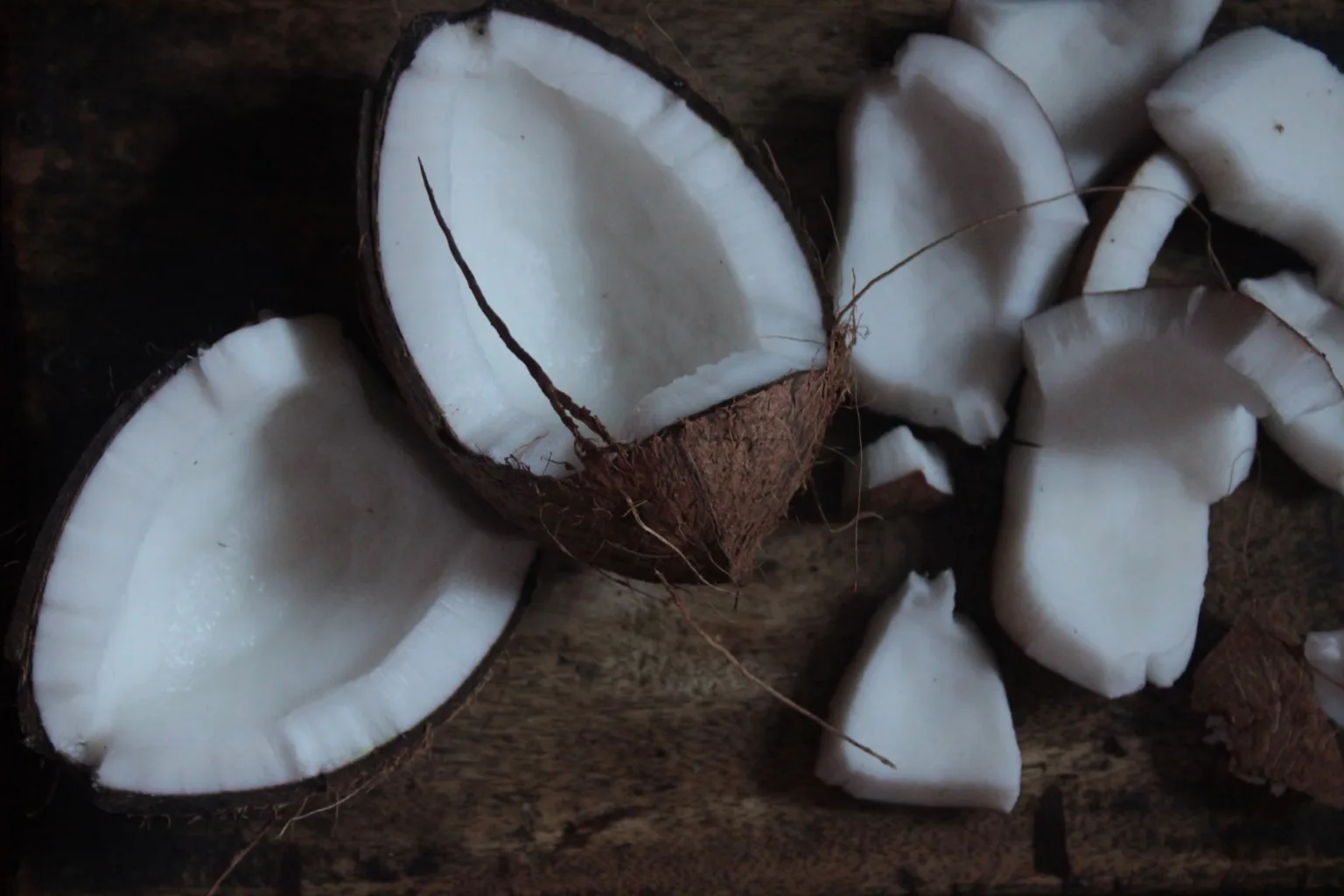
Coconut oil is a plant-based fat obtained from coconut flesh. Unlike many cooking oils that are usually liquid, it can be solid or semisolid at room temperature and melt when warmed; the change depends on conditions. Virgin varieties generally retain a more noticeable coconut aroma and flavor, while refined varieties tend to be more neutral. The products can therefore give different results, so choose a type that suits the flavor you want. Culinary coconut oil should not be confused with concentrated MCT oil, which is a different product.
When to use it
Use it when you want a fat to contribute a coconut note, for example in some curries, vegetable stir-fries, rice, noodles and desserts. Virgin oil suits dishes where its aroma is part of the intended flavor; refined oil can be a better fit when you want a more understated fat. It can also be used in batters, coatings and spreads where a fat that firms as it cools is useful. For salads or smoothies, melt it first and mix it thoroughly so it does not form small solid pieces when it meets cold ingredients.
How to use it
If the oil is solid, measure the amount you need and melt it gently before mixing. Use it to sauté vegetables or mushrooms, prepare rice and noodle dishes, or add fat to curries and other recipes whose flavors work with coconut. In baking, it can replace another fat when the recipe allows, but remember that coconut oil may firm up as it cools and change the final texture. For dressings, use it melted and combine it with the other ingredients. For smoothies, add the oil in liquid form while blending to help distribute it. Start with a modest amount if you do not want coconut to dominate the dish.
Flavour and texture
Virgin coconut oil usually has a recognizable coconut aroma and flavor; refined oil tends to be more neutral. Its texture changes with temperature: it can be firm or semisolid in cooler conditions and liquid when warmed. It may firm again as a preparation cools, affecting both flavor and the consistency of batters, coatings and spreads.
How to choose it
Check the label to distinguish virgin from refined oil and decide whether its flavor suits the recipe. Virgin oil usually brings more coconut character; refined oil is an option when you want a subtler result. Also check that the product is labeled for food use and follow the package directions. Do not confuse ordinary culinary coconut oil with concentrated MCT products, which are different.
Storage
Check and follow the storage directions on the package, since the available evidence does not support a universal storage period. The oil can change from solid to liquid with temperature; that change alone does not indicate a different variety. Keep the container closed between uses and avoid introducing water or food particles. If the package gives product-specific instructions, follow those directions.
Substitutions
In a savory recipe, a neutral-tasting vegetable oil can replace coconut oil when the coconut note is not needed. Butter or clarified butter may work in some preparations, but they change the flavor and butter adds dairy. In baking, match the replacement to the form of fat and the texture the recipe needs; oils do not all behave alike when cooled.
Common mistakes
Do not assume all varieties taste the same: virgin oil may make coconut prominent, while refined oil is generally more neutral. Avoid adding solid oil to a cold mixture when you need it evenly distributed, and do not assume it will replace another fat without changing texture. Ordinary coconut oil is also not the same as concentrated MCT products.
Safety and allergens
Use a product labeled for food use and follow its package directions. The available evidence does not identify a specific handling hazard for coconut oil; use it as a cooking fat and in moderation as part of the overall diet.
Culinary uses
- cooking fat for sautéing and stir-frying
- flavoring and texture-setting fat in baking and spreads
- fat for dressings and other uncooked preparations
Recommended techniques
- melt gently if solid before measuring or mixing
- stir-fry or sauté with a suitable amount
- cream or mix into baking recipes and spreads
- blend into a smoothie while melted to help it mix evenly
Pairs well with
- curries, vegetables and mushrooms
- rice and noodles
- cakes, biscuits and other baked sweets
- banana, berries and cocoa
Frequently asked questions
Is coconut oil always solid?
No. It can be solid or semisolid at room temperature and become liquid when warmed; its state depends on temperature.
Do virgin and refined coconut oils taste the same?
Not necessarily. Virgin oil usually has a more noticeable coconut aroma and flavor, while refined oil tends to be more neutral.
Can I use coconut oil in baking?
Yes. It can provide fat and flavor in batters, coatings and spreads, but it may firm as it cools and change the texture.
Is coconut oil the same as MCT oil?
No. Ordinary culinary coconut oil is different from concentrated MCT products, so they should not be treated as interchangeable.
Ingredient allergens
Allergen listThere are no verified associations for these ingredients yet.
Estimated nutrition
- Fat
- 100 g
- Saturates
- 93.3 g
- Carbohydrate
- 0 g
- Sugars
- 0 g
- Protein
- 0 g
- Salt
- 0 g
Sources and review
Automatically researched, cross-checked and validated content. Sources consulted:
- ¿Por qué la muerte es origen de miedos y tabúes? doi.org/10.64628/aao.fccyk3qj3
- Aceite de coco. Qué es, cómo usarlo en la cocina y cuándo merece la pena www.abc.es/recetasderechupete/aceite-de-coco-que-es-como-usarlo-en-la-cocina-y-cuando-merece…
- Szathmary Culinary Manuscripts - Special Collections - The University of Iowa Libraries www.lib.uiowa.edu/scua/msc/tomsc550/msc533/msc533.htm
- ¿Cómo cocinar con Aceite de Coco Virgen Extra Ecológico? - lamasia.es lamasia.es/como-cocinar-con-aceite-de-coco-virgen-extra-ecologico/
- Aceite de coco: propiedades, beneficios y usos www.inesalud.com/actualidad-sanitaria/investigacion/aceite-de-coco-propiedades-beneficios-us…
- Coconut Oil • The Nutrition Source nutritionsource.hsph.harvard.edu/food-features/coconut-oil/
- Preserving garlic | OSU Extension Service extension.oregonstate.edu/food/preservation/preserving-garlic
- opinión científica www.aesan.gob.es/en/dam/jcr:711cce41-8de5-461c-b787-05c58ba1d61c/establecimientos_minoristas…
- Is coconut oil good or bad for cooking? | Ohio State Health & Discovery health.osu.edu/wellness/exercise-and-nutrition/is-coconut-oil-good-or-bad-for-us
- Aceite de coco: Aplicaciones culinarias | Blog - Recetas www.cebanatural.com/aceite-coco-aplicaciones-culinarias-blog-375.html?srsltid=AYCX9vK9ZwrK9e…
- Usos y beneficios del aceite de coco - La Española Aceites www.laespanolaaceites.com/blog/sabes-que-es-el-aceite-de-coco-conoce-sus-usos-y-beneficios/