- Category
- Dairy and eggs
- State
- Liquid
- Usual unit
- ml
What it is
Cooking cream is a pourable dairy product made from the fatty part of milk. Products vary in formulation and processing, so their fat content, thickness and storage instructions are not all the same. Cooking cream is generally used to make savoury dishes feel smoother and creamier, rather than to create a firm whipped topping. It can be incorporated into sauces, vegetable soups, gratins and pasta dishes, and paired with vegetables, meat or fish. Check the product name, ingredients and package directions rather than assuming that every carton behaves alike. Cooking cream is usually not the right choice when a recipe depends on whipped cream: products intended for whipping have a higher fat content than many cooking varieties.
When to use it
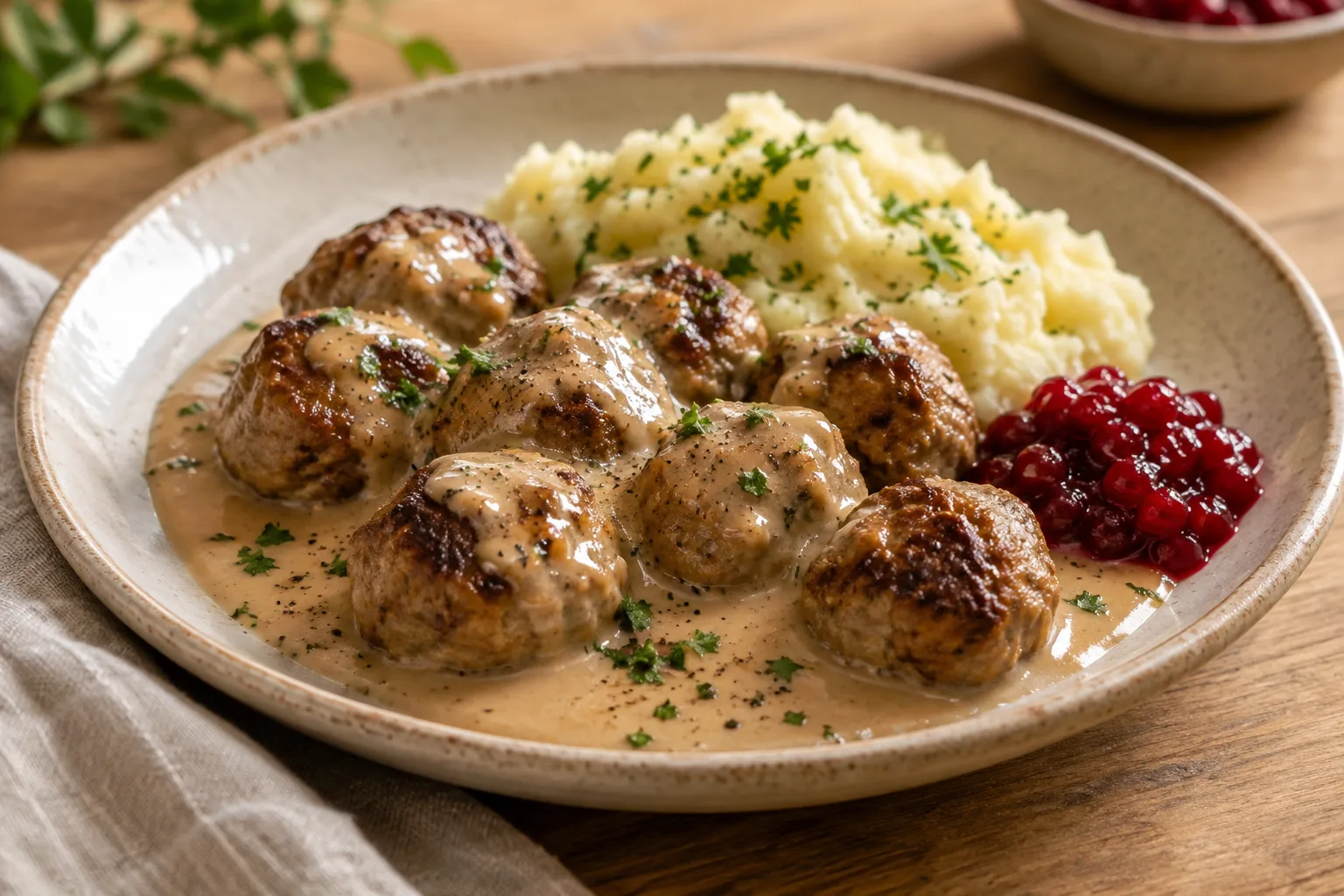
Use cooking cream when you want to make a sauce, vegetable soup, gratin, quiche or pasta dish taste and feel creamier. It can also be added to preparations with meat, fish or vegetables, where it blends with the other ingredients. It is suitable when a recipe calls for cooking cream and does not require the cream to be whipped. If you need a stable whipped topping, an airy dessert or a recipe that depends on whipped volume, choose cream labelled for whipping instead. Consider the fat content and consistency shown on the package when choosing a product, because formulations differ.
How to use it
Stir cooking cream into a sauce, soup or savoury mixture until it is evenly combined with the other ingredients. It is used in pasta dishes, vegetable soups, sauces for meat or fish, gratins and savoury bakes. Follow the recipe’s order of addition, and do not assume that one brand or formulation will behave exactly like another. If a dish needs more body, first check whether the recipe allows liquid reduction or another thickener; cream adds a creamy quality but is not the same as béchamel. For baking or desserts that require whipped cream, select a product made for whipping. Check the package for the storage instructions that apply to the particular product, including after opening.
Flavour and texture
Cooking cream has a mild, dairy-like flavour that usually does not overpower the other ingredients. Its pourable consistency makes it easy to blend into a dish, where it contributes a smooth, creamy mouthfeel. The final thickness depends partly on the product’s formulation and fat content, which can vary. Compared with cream designed for whipping, cooking cream is generally less suited to producing a firm whipped texture.
How to choose it
Look for a product specifically labelled cooking cream, then check its ingredients, fat content and storage instructions. The fat percentage is not identical across all products; culinary varieties are sold with differing specifications. If a recipe relies on a particular consistency, compare package labels rather than relying on the product name alone. Do not mistake dairy cream for a plant-based alternative.
Storage
Storage depends on the product’s processing and packaging. Cream may be pasteurised, sterilised or UHT-treated, and these products do not necessarily share the same storage conditions. Follow the package directions before and after opening, and observe the date shown. Do not assume that a carton must—or need not—be refrigerated just because it is called cooking cream; check the label on the product you bought.
Substitutions
Whipping cream can replace cooking cream in many savoury dishes if a richer result and higher fat content are acceptable. Cooking cream is not a dependable substitute when a recipe requires cream to be whipped and hold volume. Béchamel can provide body in dishes such as lasagne, but it is a sauce made with milk, flour and butter, so it changes both flavour and texture.
Common mistakes
A common mistake is choosing cooking cream for a recipe that needs firm whipped cream; cooking varieties are not designed for that result. Another is assuming that every brand has the same fat content, thickness or processing. Check the package, and do not confuse dairy cream with plant-based products sold as alternatives.
Safety and allergens
Check the package for storage conditions and the stated date, especially after opening. Processing and instructions can differ between products; do not infer that cream is safe to store at room temperature from its appearance or name.
Culinary uses
- Aporta cremosidad y cuerpo a salsas y cremas saladas.
- Enriquece gratinados, quiches, platos de pasta y preparaciones con verduras, carne o pescado.
Recommended techniques
- Incorporar a salsas o cremas para darles una textura más cremosa.
- Mezclar con otros ingredientes y calentar como parte de una preparación salada, siguiendo la receta.
Pairs well with
- Pasta y champiñones
- Verduras, carne y pescado en salsas o gratinados
Frequently asked questions
Can cooking cream be whipped?
It is generally not the right variety for firm whipped cream. Choose a product labelled for whipping when you need that result.
Can I use whipping cream in a sauce?
It can be used in many savoury preparations, though the result will be richer and higher in fat than with cooking cream.
How should I store cooking cream?
That depends on the product and its packaging. Follow the storage directions and date on the specific carton, including after opening.
Ingredient allergens
Allergen listThere are no verified associations for these ingredients yet.
Estimated nutrition
- Fat
- 1.5 g
- Saturates
- 0.24 g
- Carbohydrate
- 76.5 g
- Sugars
- 0.2 g
- Fibre
- 3.8 g
- Protein
- 10.5 g
- Salt
- 0.02 g
Sources and review
Automatically researched, cross-checked and validated content. Sources consulted:
- Client Challenge doi.org/10.2307/j.ctvndv9t9.22
- Sopa - Wikipedia, la enciclopedia libre es.wikipedia.org/wiki/Sopa
- Tipos de Nata: Diferencias y Usos | Central Lechera Asturiana www.centrallecheraasturiana.es/tipo-nata-postres/
- Diferencias entre la nata para montar y la nata para cocinar | Leche Larsa leitelarsa.es/blog/diferencias-entre-la-nata-para-montar-y-la-nata-para-cocinar
- Usos de la nata líquida – Botanical-online www.botanical-online.com/alimentos/nata-liquida-usos
- La Nata. ¿Qué es? • Leche Pascual lechepascual.es/articulos/nutricion/la-nata-que-es/
- Qué es eso llamado epistemología, para qué sirve, por qué es inexcusable para la universidad y para la paz | Reencuentro. Análisis de problemas universitarios doi.org/10.24275/uamxoc-dcsh/reencuentro/202386-14
- Para cocinar, montar, espesa, doble... ¿Qué nata utilizo? | Hostelería Salamanca www.hosteleriasalamanca.es/reportajes/tematicos/diferencias-nata-liquida-espesa-doble-creme-…
- La nata, un ingrediente indispensable en nuestra cocina www.directoalpaladar.com/ingredientes-y-alimentos/la-nata-un-ingrediente-indispensable-en-nu…
- - YouTube www.youtube.com/watch?v=5KZfcSfi-hM
- Guia_RGSEAA.pdf www.aesan.gob.es/dam/jcr:ebc1dca1-078f-400f-a649-6cc68ad1e1ef/Guia_RGSEAA.pdf
- Nata montada y nata líquida: usos y secretos elterralo.com/nata-montada-y-nata-liquida/?srsltid=AYCX9vKb3tDs8pI04qg6w0xnd8r6sXMPExvMWMb4P…
- Hazard analysis approaches for certain small retail ... www.aesan.gob.es/ca/dam/jcr:b24b67a0-9908-4652-bb81-36e3f4964d92/donaciones_alimentos.pdf.pd…
- Food allergen labelling and information requirements technical guidance - GOV.UK www.gov.uk/government/publications/food-allergen-labelling-and-information-requirements-tech…