- Category
- Vegetables
- State
- Fresh
- Usual unit
- unit
What it is
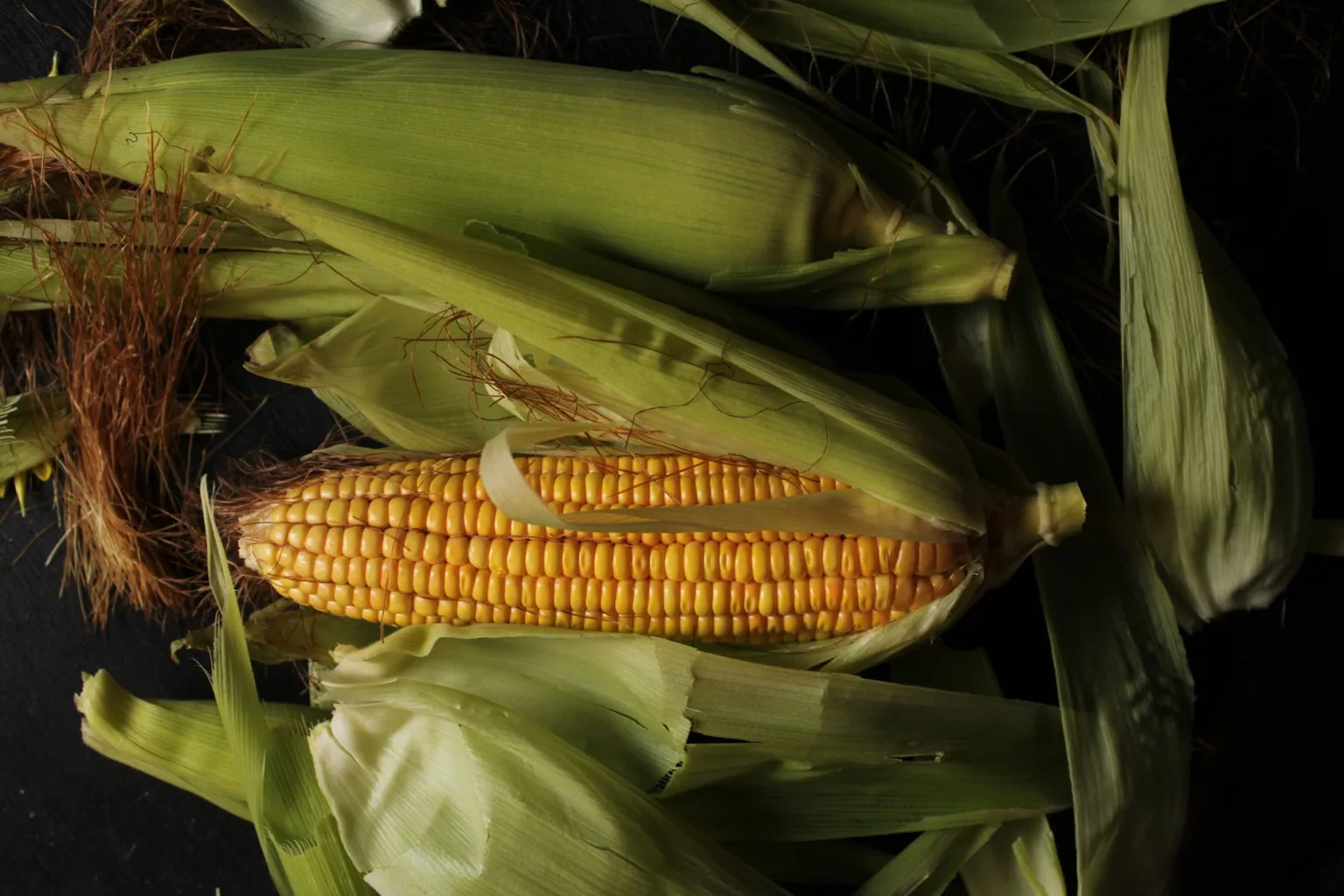
Corn, also called maize, is a grass cultivated for its grains. The name covers different varieties and stages of maturity: tender corn is eaten fresh, while dried grain is made into meal, dough and other foods. Its culinary uses vary across regions and varieties. Maize can be ground for dough, and nixtamalization involves cooking and steeping the grain in an alkaline solution before washing and grinding it. Foods made with maize include tamales, arepas, tortillas, cornbread and fritters. This profile focuses on fresh corn; it does not assume that every variety is interchangeable or will behave the same way in every recipe. Choose the form of corn that matches the preparation you want to make.
When to use it
Choose fresh corn when you want tender kernels and prefer to start with an ear rather than a canned product. The kernels can be used in dishes built around corn or alongside ingredients such as beans and squash. If a recipe calls for dough, meal or dried grain, check the specified form: fresh corn is not a direct replacement for those products. For tortillas and other dough-based foods, maize may be nixtamalized and ground; that process differs from removing kernels from a fresh ear. The best choice also depends on the variety and the texture the recipe calls for.
How to use it
Remove the husk and silks, then cut the kernels from the cob if your recipe calls for loose kernels. Rinse fresh produce under running water before preparing it. Use the kernels in a vegetable dish or in a preparation where corn is a main ingredient, following the recipe’s instructions for cutting and cooking because varieties and maturity can differ. If you need dough, do not simply grind fresh corn and expect the same result as meal or nixtamalized maize: nixtamalization involves cooking and steeping the grain in an alkaline solution, washing it and grinding it. For home canning, use tested instructions for the specific food and do not improvise the process.
Flavour and texture
Corn’s flavor and texture vary with variety and the grain’s maturity. Tender corn is different from dried grain, which is commonly directed toward milling and other preparations. Processing changes the result as well: nixtamalization and grinding turn the grain into dough with a different use from fresh kernels cut off the cob. When choosing corn, consider the texture your recipe needs rather than assuming fresh, dried and ground forms will behave alike.
How to choose it
Choose ears suited to the dish you plan to make and look for produce that appears clean and in good condition. Maize varieties differ in their characteristics and culinary uses, so check whether you need tender corn, dried grain or an already-ground product. Do not automatically substitute one form for another when a recipe specifies a particular one. For canned corn, check the package and the product’s condition before use.
Storage
The available evidence does not establish a specific storage period for fresh ears, so a precise duration should not be assumed. Keep the product under appropriate conditions for fresh food and follow any package or retailer instructions. Rinse the ear under running water before preparing it. If preserving corn at home by canning, use a tested process intended for that food and follow all of its directions; do not infer times or methods from a different recipe.
Substitutions
Canned sweet corn can replace fresh kernels in some recipes if drained and if its texture suits the finished dish. Dried maize is another form of the ingredient, but it needs different preparation and is not a direct substitute for tender kernels in every recipe. Cornmeal and corn dough likewise differ from a fresh ear. Check which form a recipe requires before making a substitution.
Common mistakes
A common mistake is treating tender corn, dried grain, cornmeal and dough as interchangeable. They are different forms with different uses and preparation. It is also easy to assume that every variety works equally well in every dish, although maize has a wide diversity of characteristics and culinary uses. Do not improvise home-canning steps; use tested instructions specific to the food.
Safety and allergens
Rinse fresh corn under running water before preparing it. For home canning, follow a tested recipe and process for corn; do not improvise methods or processing times.
Culinary uses
- Fresh vegetable and source of tender kernels
- Ingredient for maize-based dishes, including tamales, arepas, tortillas and cornbread
Recommended techniques
- Grind kernels or processed maize into a dough or meal
- Nixtamalize maize by cooking and steeping it in an alkaline solution, then washing and grinding it
Pairs well with
- Beans
- Squash
Frequently asked questions
Is corn a vegetable or a grain?
Corn is a grass cultivated for its grain. This profile classifies fresh corn as a vegetable ingredient for the form and use covered here; dried or ground maize is used differently.
Can I substitute canned corn for fresh corn?
Canned sweet corn can work in some recipes. Drain it and remember that its texture and preparation differ from fresh corn.
What is nixtamalization?
It is a process in which maize is cooked and steeped in an alkaline solution, then washed and ground. It is used to make dough and is different from cutting kernels off a fresh ear.
Ingredient allergens
Allergen listThere are no verified associations for these ingredients yet.
Estimated nutrition
- Fat
- 0 g
- Saturates
- 0 g
- Carbohydrate
- 12.8 g
- Sugars
- 6.4 g
- Fibre
- 0.8 g
- Protein
- 0.8 g
- Salt
- 0.6 g
Sources and review
Automatically researched, cross-checked and validated content. Sources consulted:
- Client Challenge doi.org/10.2307/jj.27939689.16
- Cooking Food Storage | USU extension.usu.edu/preserve-the-harvest/research/cooking-food-storage
- The Essential Glossary of Cooking Terms for the Culinary Arts - Escoffier www.escoffier.edu/blog/culinary-arts/the-essential-glossary-of-cooking-terms-for-the-culinar…
- Agencia Española de Seguridad Alimentaria y Nutrición www.aesan.gob.es/
- Make Your Own Mix | Cooperative Extension Service www.uaf.edu/ces/publications/database/food/make-your-own-mix.php
- Home Food Storage | UNL Food | Nebraska food.unl.edu/free-resource/food-storage/
- The Nutritional Content of Five Southwestern ... extension.cmn.edu/wp-content/uploads/2026/03/The_Nutritional_Content_of_Five_Southwes.pdf
- Maize History rilab.ucdavis.edu/maize_history.html
- Maíz dulce (Spanish) - National Center for Home Food Preservation nchfp.uga.edu/how/can/canning-vegetables-and-vegetable-products/maiz-dulce-spanish/
- Consumer food storage practices and methods at the ... ageconsearch.umn.edu/record/387592/files/Consumer%20food%20storage%20practices%20.pdf
- Assessment of the energy needs for cooking local food in ... ui.adsabs.harvard.edu/abs/2022ESusD..67...67K/abstract
- también es medicina www.argentina.gob.ar/sites/default/files/1_produccion_organica_de_cultivos_andinos.pdf
- o rojo llamado cusco; sin embargo, existían otras variedades como el chulpi, canguil y el morocho dspace.unl.edu.ec/jspui/bitstream/123456789/27984/1/Franco%20ndres_SotoCabrera.pdf
- Ancient cooking technique offers modern defense against dangerous food toxin | ASU News news.asu.edu/20260727-health-and-medicine-ancient-cooking-technique-offers-modern-defense-ag…
- Todo lo que tienes que saber sobre el maíz | Recetas Nestlé www.recetasnestlecam.com/escuela-de-sabor/maiz