- Category
- Vegetables
- State
- Fresh
- Usual unit
- Variable
What it is
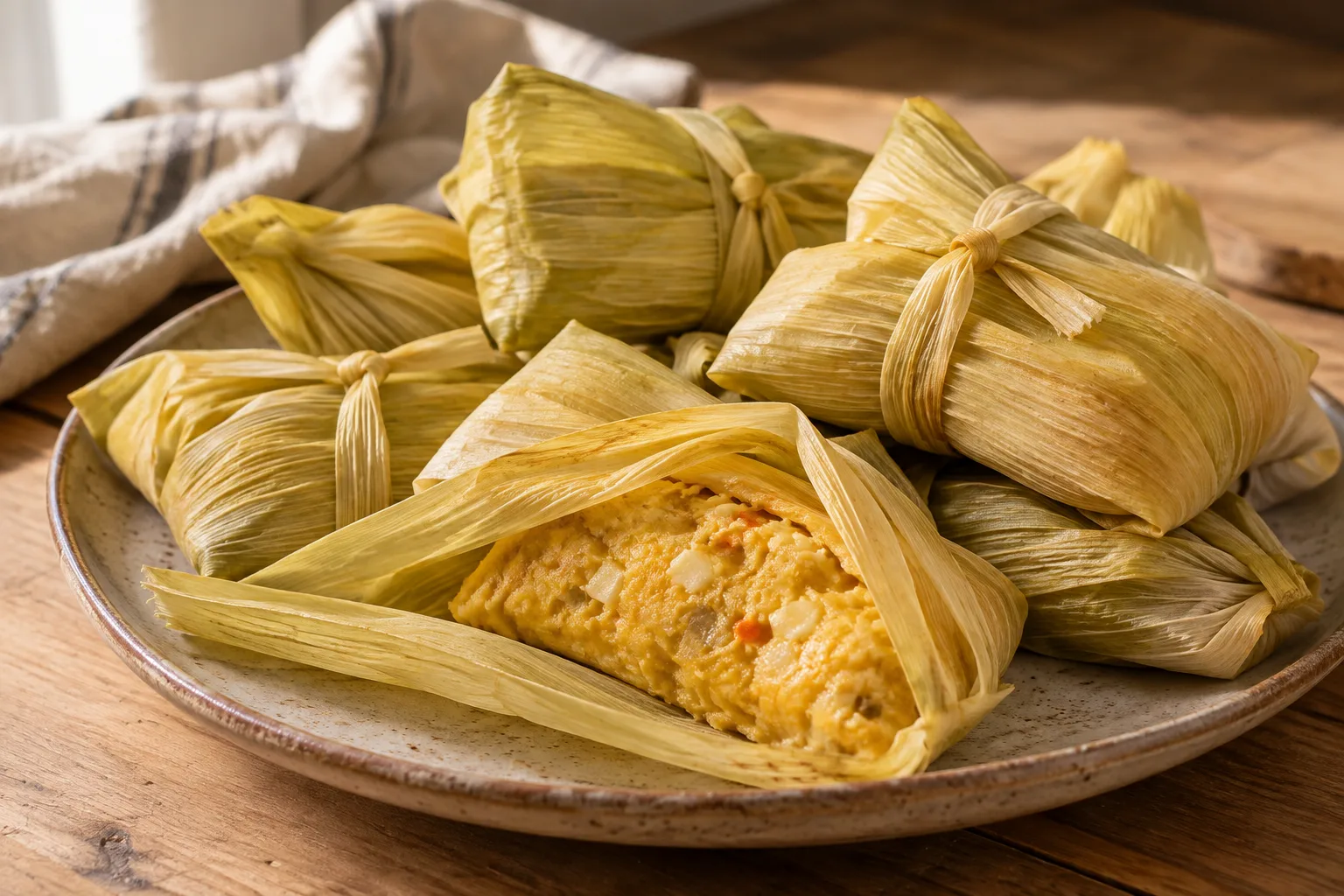
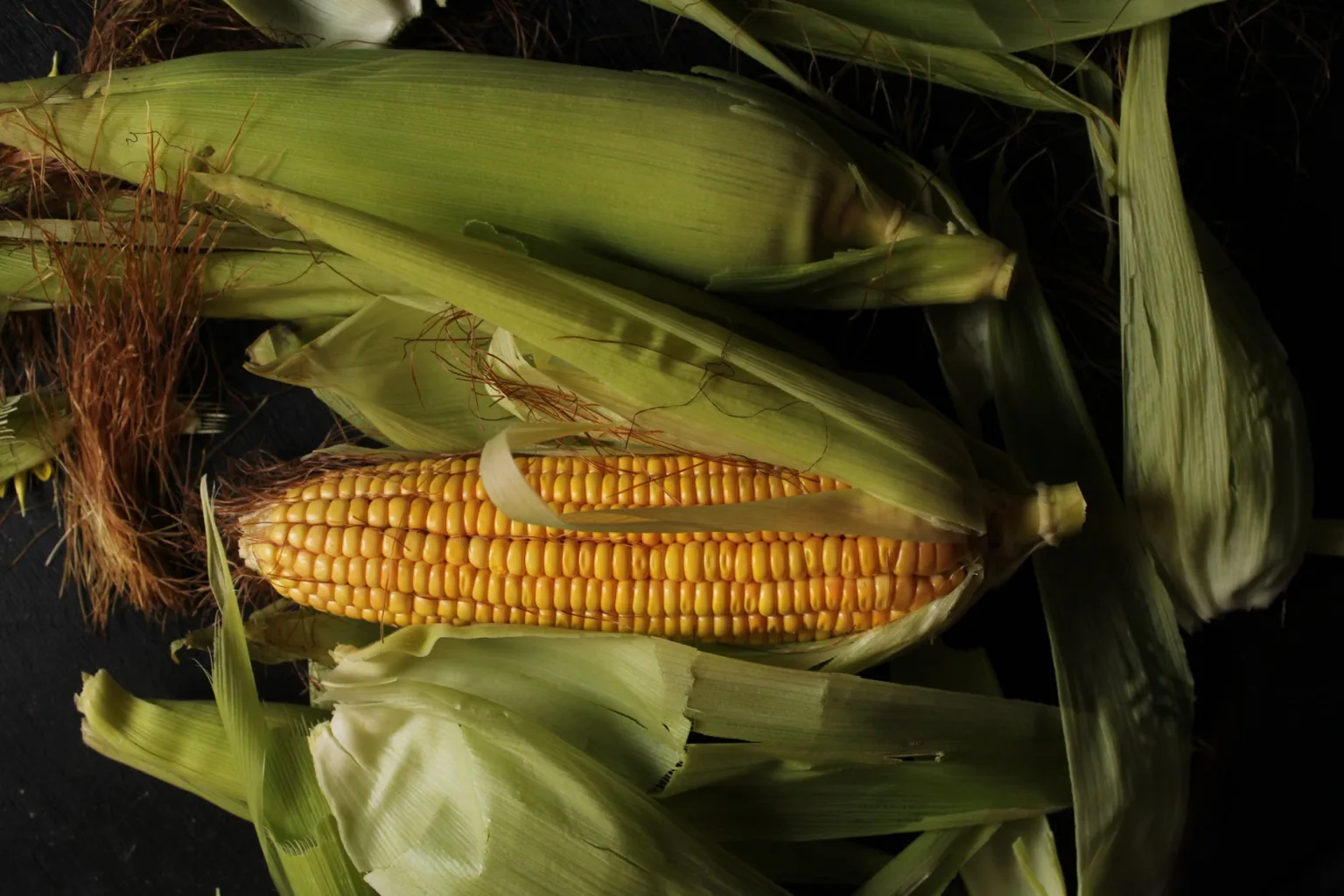
Corn husks are the outer leaves that cover an ear of corn. They are not the kernels or the corn silk, but the broad leaves that can be pulled back and folded around the cob again. In some corn-based preparations, they serve as a wrapper; some humitas, for example, are made in husks. The leaves can also stay around an ear of corn while it grills. In these uses, their role is to contain or cover the food, not to replace the kernels. In parts of South America, these leaves are called “chala.”
When to use it
Use corn husks when a recipe needs a leaf wrapper, as with some humitas, or when you want to grill an ear of corn with its own leaves around it. For grilling, the leaves are carefully pulled back and then folded around the cob again. They remain as a covering during cooking and are removed when serving. If a preparation does not require a wrapper, you can cook the corn without the husks; there is no need to add them as an ingredient.
How to use it
If you plan to wrap the ear again, carefully pull the leaves back without tearing them. Remove visible corn silk, then fold the husks around the cob before grilling; you can tie them in place. To make humitas in husks, use intact leaves to enclose the corn preparation according to the recipe’s shape. When cooking is complete, remove the wrapper before eating if the leaves were used only to contain or cover the food. Husks do not replace the kernels: their role in these preparations is to serve as a wrapper or covering.
Flavour and texture
Corn husks are mainly used as a covering or wrapper, not as an edible part of the served dish. When corn is grilled in its husk, the leaves stay around the cob during cooking and are removed so the corn can be eaten. There is no need to assign them a particular flavor or texture to describe their culinary use; their practical role is to cover or contain the preparation.
How to choose it
For wrapping a cob or a preparation, look for leaves that are intact and wide enough to close around the food. Check that they are not torn in a way that prevents them from being used as a wrapper and that they belong to an ear of corn. If the leaves have already been separated, make sure there are enough usable pieces for the recipe. Intact leaves are more practical when the food needs to be covered or contained.
Storage
If you buy corn with its husks attached, you can leave the leaves around the cob until you are ready to prepare the recipe. They will then be available to fold back around the cob or separate for use as a wrapper. When pulling them back, try to keep them intact if you need them for cooking. In the uses described, the leaves act as a covering and are removed before eating.
Substitutions
No other type of leaf is established here as a direct substitute. If a husk tears, use another intact leaf from the same ear to complete the wrapper. If the recipe does not need a wrapper, you can leave it out instead of replacing it; the result depends on the particular preparation.
Common mistakes
Do not confuse the husks with corn silk or kernels: they are different parts of the ear. If you plan to wrap corn again for grilling, avoid tearing the leaves when pulling them back. Also, do not assume the wrapper is meant to be eaten: in the uses described, the leaves cover or contain the food and are removed before eating.
Safety and allergens
Remove the husk before eating the corn when it has been used as a covering or wrapper. In these uses, the leaves serve that purpose; they are not the kernels.
Culinary uses
- Envolver preparaciones de maíz
- Cubrir la mazorca mientras se asa
Recommended techniques
- Apartar las hojas sin arrancarlas y volver a acomodarlas alrededor de la mazorca antes de asarla
- Usar hojas enteras para envolver preparaciones como las humitas
Pairs well with
- Mazorca de maíz
- Preparaciones de maíz como las humitas
Frequently asked questions
What are corn husks?
They are the outer leaves surrounding an ear of corn, not the kernels or the silk.
How are corn husks used in cooking?
They can wrap corn preparations such as some humitas or cover an ear of corn while it grills.
Do you eat corn husks?
In these uses, they act as a wrapper or covering and are removed before eating the corn.
Ingredient allergens
Allergen listThere are no verified associations for these ingredients yet.
Sources and review
Automatically researched, cross-checked and validated content. Sources consulted:
- ¿Por qué la muerte es origen de miedos y tabúes? doi.org/10.64628/aao.fccyk3qj3
- Qué es (y qué no es) la estadística, usos y abusos de una disciplina clave en la vida de los países y las personas | Estudios económicos doi.org/10.52292/j.estudecon.2015.740
- Pastel de choclo - Wikipedia, la enciclopedia libre es.wikipedia.org/wiki/Pastel_de_choclo
- Property Rights and Crop Choice in Rural Peru, 1994-2004 ageconsearch.umn.edu/record/58569/files/mtidp100.pdf
- 1 - Globalization, Crop Choice and Property Rights in Rural ... sites.duke.edu/ericafield/files/2018/02/Globalization-Crop-Choice.pdf
- ethnoarchaeology of minds.wisc.edu/bitstreams/248c4579-9f0b-466a-9e53-1c498869da9b/download
- Cusco después de Los zorros repositories.lib.utexas.edu/bitstreams/a0bb2e8a-0947-45bf-9034-95bb2ef10ddd/download
- Libro Memorias de Vicos_Final.p65 - vicos peru vicosperu.cornell.edu/Libro_Memorias_de_Vicos_Final_Low_Resolution.pdf
- EL LEGENDARIO GENERAL INDIO ALEJO SÁEZ digitalrepository.unm.edu/cgi/viewcontent.cgi?article=1468&context=abya_yala
- - YouTube www.youtube.com/watch?v=jDbHR5AW4Do
- cocina con luz verde: "Choclo en chala" asado (mazorcas con sus hojas) cocinaconluzverde.blogspot.com/2011/08/choclo-en-chala-mazorcas-con-sus-hojas.html
- Choclo perfecto: los métodos para cocinarlo, sin perder sabor ni propiedades www.lavoz.com.ar/recetas/choclo-perfecto-metodos-cocinarlo-perder-sabor-propiedades_0_nSucnr…